Tag: opioids

  • Medication-Assisted Treatment Saves Lives But Is Severely Underutilized

    Medication-Assisted Treatment Saves Lives But Is Severely Underutilized

    A new study found that in the year after an overdose less than one-third of patients were prescribed methadone, buprenorphine or naltrexone.

    A new study found that drugs used to reduce opioid use in people with addiction are seriously underutilized.

    The medical journal Annals of Internal Medicine published the study, which followed close to 18,000 adults in Massachusetts. The participants in the study had gone to an emergency room between 2012 and 2014 for a non-fatal drug overdose.

    Although using drug therapy to treat opioid addiction is considered a “gold standard” of treatment, the study found that just 30% received any of the Food and Drug Administration-approved medication-assisted treatments.

    The FDA advises treatment for opioid addiction as a combination of behavioral therapy and the parallel use of one of three drugs. Methadone, buprenorphine, and naltrexone are all drugs approved for assistance in reducing drug cravings in those addicted to opioids.

    Science Daily reported that the study showed a 59% reduction in fatal opioid overdose for those receiving methadone, and a 38% reduction for those receiving buprenorphine over a 12-month period. The drug naltrexone was unable to be evaluated due to a small sample size.

    In the past, naltrexone has been shown to be as effective as methadone and buprenorphine, but there are high dropout rates and a refusal to try the drug in the first place.

    Science Daily reports this could be due to the fact that patients utilizing naltrexone cannot use any opioids for seven to 10 days. Methadone and buprenorphine can be started much sooner.

    As the opioid addiction crisis worsens, health officials are eager to find ways to assist people with addiction in withdrawal and abstinence from the drug. The Fix reported on an FDA-approved device that helps reduce opioid cravings, called “Drug Relief.”

    The study also found that in the year after an overdose, not quite one-third of patients were prescribed one of the three FDA approved drugs—with methadone at 11%, buprenorphine at 17%, and naltrexone at 6%. Five percent received more than one medication.

    According to Science Daily, Dr. Nora Volkow, director of the National Institute on Drug Abuse (NIDA), said, “A great part of the tragedy of this opioid crisis is that, unlike in previous such crises America has seen, we now possess effective treatment strategies that could address it and save many lives, yet tens of thousands of people die each year because they have not received these treatments. Ending the crisis will require changing policies to make these medications more accessible and educating primary care and emergency providers, among others, that opioid addiction is a medical illness that must be treated aggressively with the effective tools that are available.”

    View the original article at thefix.com

  • Can IV Tylenol Help Curb The Opioid Crisis?

    Can IV Tylenol Help Curb The Opioid Crisis?

    Health experts are debating the efficacy of IV acetaminophen as a non-opioid pain management tool.

    An approach to cutting back on opioid use isn’t proving as affordable or as helpful as thought, according to the Washington Post.  

    In an effort to cut down on opioid use, some hospitals are turning to intravenous forms of medications like Tylenol. Boston Medical Center was one such entity, adding IV Tylenol as a method of pain management.

    However, David Twitchell, Boston Medical Center’s chief pharmacy officer, says the price quickly became concerning. 

    According to the Post, Mallinckrodt Pharmaceuticals increased the price of IV Tylenol and the medical center was projected to spend $750,000 on acetaminophen, which is the active ingredient in Tylenol, in 2015.

    The Post notes that a normal tablet dose of acetaminophen costs only cents, but Ofirmev, the IV version, is $40 per 1,000 milligrams.

    “It was going to cost us, without the intervention that happened, more than any other drug on our formulary. Think of the most expensive cancer drug,” Twitchell told the Post. “To me, that didn’t seem justified.”

    Though some medical centers are attempting to turn away from opioids and instead utilizing options such as IV Tylenol, a recent study found that this approach may not be any more effective than taking the medication in tablet form. Some studies, on the other hand, claim there is a benefit to the IV medication. 

    Another study published in the July issue of Anesthesiology examined seven years of data for bowel surgeries across 602 hospitals and determined that when it came to decreasing opioid use, IV acetaminophen seemed no more effective than taking a tablet form of the same medication. 

    “It just seems very often, physicians have magical thinking about a new preparation of an old drug,” Andrew Leibowitz, system chair of the department of anesthesiology, perioperative and pain medicine at the Icahn School of Medicine at Mount Sinai and co-author of the study, told the Post. “Doctors do seem, in general when a patient is in the hospital, to favor IV medications as a knee-jerk reflex, even when equally effective oral medications are available.”

    According to Mallinckrodt, the study was “significantly flawed” and argued that half the patients in the study had not even received a full dose of the medication.

    IV Tylenol isn’t the only generic painkiller to be offered in IV form, the Post states. The Post also says that more types of IV painkillers are expected in the future. 

    Erin Krebs, a staff physician at the Minneapolis VA Health Care System, led a study published in JAMA that determined that opioids were no more effective than non-opioids when it came to managing chronic back pain or hip and knee pain.

    She tells the Post that while it’s good that physicians are reexamining prescribing opioids, they should be careful not to buy into other new medications too early.

    “I think part of the reason we got into such a mess with opioids was really a lack of training and understanding of pain management,” Krebs told the Post. “It’s a symptom of how little research we’ve done on the appropriate management of these really common conditions. These are some of the most common human ailments, and they have not received enough research attention, research funding or education.”

    View the original article at thefix.com

  • Surgeon General Wary Of Marijuana As An Opioid Alternative

    Surgeon General Wary Of Marijuana As An Opioid Alternative

    Adams said that marijuana’s “potential negative consequences, including promoting cancer,” played a factor in his stance

    Jerome Adams, MD, the 20th Surgeon General of the United States, recently gave a far-ranging interview on opioids and his stance on marijuana as an alternative to their use.

    Adams, speaking at a forum on opioids hosted by the Washington Examiner, stated that concerns over the impact of marijuana on the developing brains of young people and its possible cancer-causing properties, were the impetus for him to reserve a recommendation for its use in pain management. “We know that exposing the developing brain to marijuana can prime the brain to addiction and have potential negative consequences including promoting cancer,” he said.

    But Adams added that he considered additional studies on the subject “important,” and voiced support for the use of the opioid reversal drug naloxone.

    Adams, an anesthesiologist and vice admiral in the U.S. Public Health Service Commissioned Corps, said that his opposition to marijuana for medical purposes was hinged largely on studies that suggested use among young people “can prime the brain for addiction.”

    Adams did not cite specific studies that asserted this notion, but added that marijuana’s “potential negative consequences, including promoting cancer,” was also a factor in his stance. 

    “It would be incredibly disingenuous of me to say that you shouldn’t smoke a cigarette, but it is fine to go out and smoke a joint,” said Adams, who also noted that as Surgeon General, his name is featured in the boxed warning about the health hazards of smoking featured on all cigarette packaging.

    However, Adams did state that he considered it important to examine studies pertaining to marijuana as an alternative to opioids for pain treatment, but again, added, “it is important that we not jump on something that may have more potential consequences down the road.”

    When the interview touched on the subject of opioid abuse and dependency, Adams expressed opinions on a wide array of issues regarding treatment and intervention. He voiced solid support for naloxone, dismissing opponents of the drug as “folks out there who will suggest that naloxone and these interventions are enabling drug use. I say they are enabling recovery,” he stated.

    But he was steadfast in his opposition to legalize safe injection facilities (SIFs), which have gained traction with some city and state governments as a harm reduction-based attempt to reduce chances of overdose among drug users.

    “I think it’s important for everyone to know that I took an oath to uphold the law,” said Adams. “And currently, injection facilities are illegal across the U.S. So, I can not and do not endorse safe facilities.”

    Adams also suggested that a primary line of defense against the opioid crisis could be found in most Americans’ homes.

    “I want everyone to know there’s a killer in our medicine cabinets,” he said. “Leaving pills around or unattended is the same thing as leaving a loaded gun.”

    View the original article at thefix.com

  • Walgreens Sued By Kentucky For Alleged Role In Opioid Crisis

    Walgreens Sued By Kentucky For Alleged Role In Opioid Crisis

    “While Walgreens’ slogan was ‘at the corner of happy and healthy,’ they have significantly harmed the health of our families in fueling the opioid epidemic,” says the Kentucky AG.

    The state of Kentucky is suing Walgreens, arguing that the pharmacy giant used “unlawful business practices” to fuel the state’s opioid crisis, CNN Money reports.

    State Attorney General Andy Beshear claims that the retailer not only filled “massive” and “suspicious” orders of opioids, but failed to report those same orders to authorities.

    Walgreens also played dual roles “on the opioid supply chain” as both distributor and dispenser, the lawsuit contended. As a distributor, Walgreens delivered opioids straight to its own pharmacies while, as a dispenser, it filled opioids prescriptions for consumers.

    Walgreens had “a unique and superior position of knowledge with regard to the gross amount of opioids pumped into its stores and poured out onto the streets of Kentucky,” Beshear said in the lawsuit.

    Nevertheless, Walgreens is being accused of filling orders “for such large quantities of prescription narcotic pain medication that there could be no associated legitimate medical purpose for their use.”

    Beshear added that the company ignored its own “safeguard systems” in the process.  

    The Walgreens lawsuit isn’t the first one Beshear has filed over Kentucky’s health crisis, either. This year alone, the Attorney General has leveled lawsuits at drugmaker Johnson & Johnson, as well as opioid distributors like AmerisourceBergen and McKesson Corporation.

    “While Walgreens’ slogan was ‘at the corner of happy and healthy,’ they have significantly harmed the health of our families in fueling the opioid epidemic. I want to make sure these billion dollar companies take responsibility and become a part of the solution,” Beshear said.

    His latest lawsuit seeks to stop Walgreens from “over-dispensing opioids,” in addition to have them pay back “the amount it earned from the allegedly illegal gains.”

    In the meantime, other companies have taken actions that they believe will help curb the crisis. Walmart, for one, recently introduced a method to safely destroy leftover opioids at home: DisposeRx, which, when it’s mixed with warm water, turns any form of opioid into a biodegradable gel. Walmart and CVS both announced that they would limit the lengths of opioid prescriptions.  

    Kentucky’s lawsuit also follows on the heels of other states that have sued drug makers and distributors in recent months. In May, the Texas Attorney General’s Office sued Purdue Pharma for allegedly fueling the opioid crisis and “misrepresenting the risks” of opioid addiction.

    “We must make those who have caused the opioid crisis feel the pain that they have inflicted on our community,” Texas Attorney General Ken Paxton said.

    Florida Attorney General Pam Bondi also filed an action against some of the nation’s largest opioid manufacturers claiming that they used deceptive techniques to increase prescriptions.

    “The complaint I filed today, seeks to hold some of the nation’s largest opioid manufacturers and distributors responsible for their role in this crisis and seeks payment for the pain and destruction their actions have caused Florida and its citizens,” Bondi said in a statement.

    View the original article at thefix.com

  • New York Plans To Allow Medical Marijuana As Opioid Alternative

    New York Plans To Allow Medical Marijuana As Opioid Alternative

    “We looked at the pros, we looked at the cons, and when we were done, we realized that the pros outweighed the cons,” said one public health official.

    The New York Department of Health will now recommend that the state allow adults to legally use medical marijuana instead of an opioid prescription, or if they are struggling with opioid addiction.

    According to U.S. News, state commissioner Howard Zucker announced that the Department of Health will create regulations that allow patients who have been prescribed opioids or become addicted to the drug, to instead enroll in the medical marijuana program.

    Dr. Zucker proposed that allowing medical marijuana use in place of opioids is backed by research which shows that having access to marijuana reduces opioid use and eliminates the risk of overdose, as well as the risk of addiction for those not dependent on the drug.

    The New York Times pointed out that New York Governor Andrew Cuomo referred to marijuana as a “gateway drug” in the past and was not a supporter of its medicinal use.

    Howard Zucker noted this change, stating in the NYT, “We looked at the pros, we looked at the cons, and when we were done, we realized that the pros outweighed the cons,” adding, “we have new facts.”

    The NYT reported that the New York State Department will now be supporting the legalization of marijuana after the results of their state-sponsored study, backed by Governor Cuomo, were released.

    Dr. Zucker was quoted in NYT, noting that the researchers behind the study were “experts from all across the government.” He said that the researchers had surveyed a broad array of issues, including age, and production and distribution, and decided that the legalization of marijuana in New York was workable.

    News outlet WHEC noted that as of now, the New York medical marijuana program allows only 12 conditions (which must be certified by a physician) in those who use the program. These conditions included HIV/AIDS, and chronic pain conditions such as arthritis and cancer.

    So far the regulations around the program have been strict: no smokeable forms of marijuana are allowed.

    Elizabeth Brico wrote in a recent feature for The Fix that medical marijuana was an integral part of her abstinence from opioids.

    “The ability to soften the blow of that transition helps some users acclimate to life without opioids. Even if the marijuana use doesn’t remain transitional—if someone who was formerly addicted to heroin continues to use marijuana for the rest of his or her life instead—the risk of fatal overdose, hepatitis C or HIV transmission through drug use, and a host of other complications still go down to zero.” 

    View the original article at thefix.com

  • Opioid Regulations Pushing Those In Need To The Dark Web

    Opioid Regulations Pushing Those In Need To The Dark Web

    Researchers found that since the prescription opioid crackdown began, dark web sales for the targeted medications have steadily increased.

    Rules meant to crack down on the use of opioids have instead turned some individuals to the black market, a new study has found.

    UPI reports that in 2014, the U.S. Drug Enforcement Administration (DEA) put new regulations on hydrocodone (e.g. Vicodin), making it more difficult to prescribe and taking away automatic refill options.

    From mid-2013 to mid-2015, the number of prescriptions decreased greatly. 

    However, some individuals had found another way to access the medications: the internet. Research published in the journal BMJ revealed that since the new regulations were put in place, more people are buying opioids online without a prescription, using “software-encrypted online portals that permit illegal sales and elude regulators.”

    Researchers found that in the four years since 2014, opioid sales on the dark web have increased by about 4% annually. 

    “This [DEA] action did have the hoped-for effect of reducing the number of prescriptions issued for these products,” study author Judith Aldridge, a professor of criminology at the University of Manchester in England, told UPI. “[But] our team found that sales on the so-called ‘dark net’ of opioid prescription medications increased following the DEA’s initiative.”

    Aldridge also says it was beyond the one type of medication. 

    “And this increase was not just observed for medications containing hydrocodone,” she said. “We also saw increased dark-net sales for products containing much stronger opioids, like oxycodone (OxyContin) and fentanyl.”

    A team of investigators used “web crawler” software to look in-depth at 31 “cryptomarkets” that operated before and after the new regulations. In doing so, they found minimal changes to the sales of sedatives, steroids, stimulants or illegal opioids (ones that are not prescribed by medical professionals).

    On the other hand, investigators found that dark web sales of prescription opioids had increased in overall sales in 2016, making up about 14% of the sales. They also found that of those, more purchases were made for fentanyl than hydrocodone. In 2014, fentanyl had been the least popular dark web prescription opioid, but in 2016 it was the second most popular.

    According to researchers, one difficulty with dark web sales is that they are more complicated to monitor. 

    “Solutions here are not simple,” Aldridge said. “However, we know very well that our results were entirely predictable. Solutions must combine cutting supply and tackling demand at the same time. This requires making prevention and treatment grounded in good science available for all.”

    View the original article at thefix.com

  • Serious Bacterial Infection Linked To Injection Drug Use

    Serious Bacterial Infection Linked To Injection Drug Use

    According to a new study, the number of MRSA cases in those who use injection drugs more than doubled from 2011 to 2016.

    Those who use inject illicit drugs may be at risk of more than an overdose, as new government data claims that such individuals are more susceptible to a potentially fatal infection.

    Individuals who use heroin or other injection drugs are 16 times more susceptible to develop infections or illnesses from MRSA, a dangerous bacteria. 

    MRSA, or methicillin-resistant Staphylococcus aureus, is an infection caused by a type of staph bacteria, the Mayo Clinic reports. However, unlike other forms of staph, it does not respond well to antibiotics, making it more dangerous.

    “Drug use has crept up and now accounts for a substantial proportion of these very serious infections,” said Dr. William Schaffner of Vanderbilt University, according to CBS News

    While other studies have shown that HIV and hepatitis C have spread among injection drug users, this is the first study to focus on this type of bacteria, referred to as a “superbug,” according to CBS.

    Although MRSA can be found on people’s skin, it does not tend to become dangerous until it enters the bloodstream, CBS notes. Health officials estimate that about 11,000 deaths per year in the U.S. are due to MRSA and that while the rate of infection in hospitals and nursing homes has decreased, the rate in those using illicit drugs continues to rise.

    Dr. Isaac See of the Centers for Disease Control and Prevention (CDC), also a study author, states that MRSA “is on the skin, and as the needle goes into the skin it brings the bacteria with it,” according to CBS.

    According to the study’s findings, the number of MRSA cases that involved those who use injection drugs more than doubled from 2011 to 2016, from 4% to 9%. 

    According to the news outlet, this study took into account MRSA infections at hospitals in Connecticut and in parts of California, Georgia, Minnesota, New York and Tennessee. Of the approximately 39,000 cases, about 2,100 were from individuals who had used injection drugs. 

    Study authors note that if the amount of people using injection drugs continues to rise as will the number of MRSA cases, this could be detrimental to efforts being made to curb the crisis.

    “Increases in nonsterile injection drug use are likely to result in increases in the occurrence of invasive MRSA infections among persons who inject drugs, underscoring the importance of public health measures to curb the opioid epidemic,” study authors wrote.

    View the original article at thefix.com

  • Generic Suboxone Strips Get The Green Light

    Generic Suboxone Strips Get The Green Light

    The FDA’s move could mean wider availability and more competitive pricing for the popular addiction-fighting drug. 

    The FDA last week sparked a flurry of legal wrangling when it gave the go-ahead for two drugmakers to sell generic versions of Suboxone strips.

    Part of an agency push to expand access to medication-assisted treatment, the move could open up the door to more competitive pricing for the popular addiction-fighting drug—but it also turns up the heat in an ongoing battle between drug companies intent on protecting profits. 

    “The FDA is taking new steps to advance the development of improved treatments for opioid use disorder, and to make sure these medicines are accessible to the patients who need them,” Commissioner Scott Gottlieb said in a statement. “That includes promoting the development of better drugs, and also facilitating market entry of generic versions of approved drugs to help ensure broader access.”

    Currently, the brand-name under-the-tongue strips are sold by Indivior and cost around $200 per month without insurance. The British company is already embroiled in litigation over claims that it strategically worked to block competition from generic Suboxone in order to maintain soaring profits. At one point, the drug brought in $2 billion in sales a year, according to FiercePharma.

    But now, the Pennsylvania-based drug maker Mylan and the India-based company Dr. Reddy’s both have the green light to bring out generic versions of the drug. Mylan did not immediately comment on the approval or its plans moving ahead, but the Hyderabad competitor issued a statement Friday praising the move and detailing its 2 mg, 4 mg, 8 mg and 12 mg formulations.

    “With opioid addiction becoming increasingly prevalent in America, the full approval and launch of our generic equivalent of Suboxone could not have come at a more critical time to help patients,” said Dr. Reddy’s CEO Alok Sonig. 

    But Indivior took the matter straight to the courthouse and on Friday—just a day after the FDA announcement—the company won a temporary restraining order blocking Dr. Reddy’s from moving forward with its product release in light of ongoing patent litigation. A judge will decide on the path ahead at a June 28 federal court hearing in New Jersey. 

    Indivior CEO Shaun Thaxter put out a statement expressing surprise at his competitor’s decision to launch the generic drug—and promised to keep up the courtroom fight.

    “We will continue to pursue all legal avenues, including an immediate injunction until the legal status of our intellectual property is confirmed by the courts,” he said.

    And Mylan won’t necessarily have an easier time pushing out its generic formulation of the medication-assisted treatment, as the company had previously agreed to delay its generic launch until 2023.

    Suboxone, which combines naloxone and buprenorphine to ease withdrawal and fight cravings, initially hit the U.S. market in 2002 as a pill. Five years later, Indivior announced plans to launch a sublingual film, a formulation that wouldn’t immediately have a generic alternative. 

    But in 2016, 35 states joined together to sue the company for anticompetitive practices. The states claimed that Indivior raised unfounded safety concerns to delay the FDA’s approval of the generic Suboxone tablet. Then, the company allegedly used those concerns to push strips over pills, a move that the states alleged was intended to prevent patients from taking generic versions of the pill. 

    The Federal Trade Commission (FTC) has since been investigating the company over antitrust claims, according to reports. 

    Whatever the legal drama surrounding the drug approvals, the FDA framed its announcement as an important step toward increasing access to lifesaving treatments and reducing stigma around medication-assisted treatments.

    “The FDA is also taking new steps to address the unfortunate stigma that’s sometimes associated with the use of opioid replacement therapy as a means to successfully treat addiction,” Gottlieb said. “When coupled with other social, medical and psychological services, medication-assisted treatments are often the most effective approach for opioid dependence.”

    View the original article at thefix.com

  • Wearable Device to Treat Opioid Withdrawal Symptoms Approved By FDA

    Wearable Device to Treat Opioid Withdrawal Symptoms Approved By FDA

    The device can curb anxiety, irritability, depression and opiate cravings without narcotics, according to its manufacturer.

    The U.S. Food and Drug Administration (FDA) has cleared a wearable device (simply named “Drug Relief”) that reduces common opioid withdrawal symptoms, according to Markets Insider.

    DyAnsys, the device’s manufacturer, claims the device will curb anxiety, irritability, depression and opiate cravings (among other such symptoms) without narcotics.

    Available with a prescription, Drug Relief is an “auricular neurostimulation device,” which sends electrical pulses through ear-fitted needles to help ease detoxification. The device is intended to stabilize people during the earliest stages of withdrawal, according to the company’s 501(k) application.

    Drug Relief can be used continuously for up to five days, the manufacturer said in its press release, with relief reportedly starting 30 to 60 minutes after someone starts using the device.

    DyAnsys added that the device was specifically designed to bring patients both mobility and comfort during detox.

    In terms of opioid detoxification, Drug Relief is something of a game-changer since it’s a uniquely non-addictive treatment method.

    “This device offers hope to those who are suffering from opioid addiction,” DyAnsys CEO Srini Nageshwar noted. “We are in a full-blown crisis and we need non-narcotic options and alternatives like this that can make a significant difference for individual patients and their families.”

    Just last month, the FDA also approved the first non-opioid medication to help manage opioid symptoms. And while Lofexidine (marketed under the brand name Lucemyra) alleviates the same things that Drug Relief does, it’s not intended to be a primary solution for opioid use disorder. Instead, the drug is intended to be part of a broader, more comprehensive treatment plan.

    The successive FDA approvals of Drug Relief and Lucemyra, though, indicate that drug companies and the federal government alike are aggressively seeking creative solutions to the nation’s opioid epidemic.

    “We’re dedicated to encouraging innovative approaches to help mitigate the physiological challenges presented when patients discontinue opioids,” FDA Commissioner Scott Gottlieb said. “We’re developing new guidance to help accelerate the development of better treatments, including those that help manage opioid withdrawal symptoms. We know that the physical symptoms of opioid withdrawal can be one of the biggest barriers for patients seeking help and ultimately overcoming addiction.” 

    And while Drug Relief is the first wearable device to manage opioid withdrawals, it’s not the first piece of wearable tech to help combat addiction.

    SmartStop is a device that aims to help smokers kick their habit, delivering specific doses of nicotine before a craving kicks in, not to mention offering real-time support through an app.

    Biochemical sensors that can detect alcohol in human sweat have also been developed, with some of them able to wirelessly alert people like probation officers if someone has been drinking.

    Empatica’s E4 wristband can reportedly help predict a wearer’s risk of relapse, too, detecting symptoms like drops in skin temperature, increased motion, and heartbeat. 

    View the original article at thefix.com

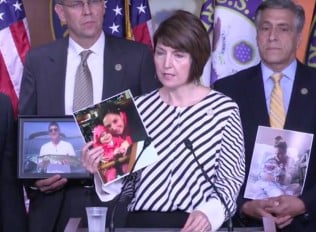
  • House Passes 25 Bills To Aid Fight Against Opioid Crisis

    House Passes 25 Bills To Aid Fight Against Opioid Crisis

    The bills cover a variety of issues ranging from improving sober living homes to disposal of unused medication.

    In an effort to lend legislative support to the fight against the national opioid epidemic, the House of Representatives passed 25 bills that would provide crucial support to both government and public organizations to combat the crisis on a number of fronts.

    The bills, authored by both Democratic and Republican representatives, include measures to expand access to the overdose reversal drug naloxone, develop new forms of pain medication that are non-dependency-forming, and allow medical professionals to view a patient’s medical history for previous substance abuse.

    Greg Walden (R-OR), the Energy and Commerce Committee Chairman, and Michael C. Burger (R-TX), Health Subcommittee Chairman, said in a joint statement that the bills are “real solutions that will change how we respond to this crisis.”

    Among the bills passed are:

    • H.R. 449, the Synthetic Drug Awareness Act of 2018, which will require U.S. Surgeon General Jerome Adams to submit a “comprehensive report to Congress on the public health effects of the rise of synthetic drug use among youth aged 12 to 18,” authored by Reps. Hakeem Jeffries (D-NY) and Chris Collins (D-NY)
    • H.R. 4684, the Ensuring Access to Quality Sober Living Act of 2018, which will authorize the Substance Abuse and Mental Health Services Administration (SAMHSA) to “develop, publish, and disseminate best practices for operating recovery housing that promotes a safe environment for sustained recovery,” authored by Reps. Judy Chu (D-CA), Mimi Walters (R-CA), Gus Bilirakis (R-FL) and Raul Ruiz (D-CA)
    • H.R. 5009, Jessie’s Law, which will require the Department of Health and Human Services to develop the best way to present information about substance use disorder in a consenting patient’s history for medical professionals to make informed decisions about treatment, authored by Reps. Tim Walberg (R-MI) and Debbie Dingell (D-MD)
    • H.R. 5012, the Safe Disposal of Unused Medication Act, which will allow hospice employees to remove and dispose of unused controlled substances after the death of a patient, authored by Reps. Walberg and Dingell
    • H.R. 5327, the Comprehensive Opioid Recovery Centers Act of 2018, which will establish such centers to “dramatically improve the opportunities for individuals to establish and maintain long-term recovery through the use of FDA-approved medications and evidence-based treatment, authored by Health Subcommittee Vice Chairman Brett Guthrie (R-KY) and Ranking Member Gene Green (R-TX)
    • And H.R. 4275, the Empowering Pharmacists in the Fight Against Opioid Abuse Act, which will give pharmacists more information and ability to decline prescriptions for controlled substances which they suspect to be fraudulent or for abuse, authored by Reps. Mark DeSaulnier (D-CA) and Buddy Carter (R-GA).

    Reps. Walden and Burgess noted in their statement that the bills will “make our states and local communities better equipped in the nationwide efforts to stem this tide” of opioid dependency and overdose.

    The House will continue to review related bills on January 14, including H.R. 6069, which will require the Comptroller General to conduct a study on how virtual currencies are used to facilitate goods or services linked to drug or sex trafficking.

    View the original article at thefix.com