Tag: opioids

  • What's Fueling The Rise Of Meth?

    What's Fueling The Rise Of Meth?

    Ohio, Nevada, Utah and parts of Montana have seen a recent rise in methamphetamine use. 

    In rural Ohio, an increasing number of opioid users are turning to methamphetamine to get high, driven in part by a medication that is meant to help them stay sober. 

    “Right now that’s our biggest challenge—is methamphetamines,” Amanda Lee, a counselor at Health Recovery Services in McArthur, Ohio, told NPR. “I think partly because of the Vivitrol program.”

    Vivitrol is an injectable medication used to support recovery from opioid addiction. It works by blocking opioid receptors in the brain, so that people are not able to get high off opioids. However, Lee points out that when the underlying cause of addiction—like pain or trauma—is not addressed, desperate users simply find a new substance to abuse. 

    “The Vivitrol injection does not cover receptors in the brain for methamphetamines, so they can still get high on meth,” Lee said. “So they are using methamphetamines on top of the Vivitrol injection.”

    Lee said that in her opinion, methamphetamine is much more debilitating than opioids. 

    “There’s paranoia. There is hallucinations. It almost looks like people have schizophrenia,” she said. “Methamphetamines scare me more than opiates ever did.”

    “You can’t really describe the smell,” said Detective Ryan Cain, lead narcotics detective for Vinton County, Ohio. “It’s a combination of lithium out of a battery. A lot of them use Coleman camp fuel. It’s a solvent. They use ammonium nitrate, which is usually out of a cold pack. And all of it’s very cancerous.”

    Trecia Kimes-Brown, the county prosecutor, has seen how meth addiction, like opioids, involves the whole family

    “When you’re living in a house where people are making meth, it’s not just the health effects. These kids are living in these environments where, you know, they’re not being fed,” she said. “They’re not being clothed properly. They’re not being sent to school. They’re being mistreated. And they have a front-row seat to all of this.”

    In addition to meth produced locally, cheap meth from Mexico is now trafficked into Ohio by drug cartels south of the border, according to officials. 

    Ohio isn’t unique in how the drug crisis has shifted. In Kentucky, the focus on preventing opioid addiction also contributed to an increase in meth addiction. 

    “People say, ‘Why do you not have an opioid problem? Why does Daviess County not suffer the same problems?’” Sheriff Keith Cain said last month. “I’d like to say it’s because of progressive police work. But I think the prime reason we don’t have an opioid problem here is because our people are addicted to meth.”

    Nevada, Utah and parts of Montana have also seen a rise in methamphetamine use recently. 

    “Meth is kind of the forgotten drug out there, and it’s still a huge problem in our society,” Lt. Todd Royce with Utah Highway Patrol said last month. “It’s a horrible epidemic and it destroys families.”

    View the original article at thefix.com

  • SAMHSA’s Opioid Overdose Prevention Toolkit Gets An Update

    SAMHSA’s Opioid Overdose Prevention Toolkit Gets An Update

    The refreshed online resource offers a variety of strategies, information and advice on how to prevent opioid overdoses. 

    The Substance Abuse and Mental Health Services Administration (SAMHSA) has updated its Opioid Overdose Prevention Toolkit, which contains resources about opioid overdose prevention.

    The toolkit is divided into various sections, depending on the target audience. 

    The beginning outlines the opioid crisis and strategies that can be implemented to minimize overdose deaths. Such strategies include encouraging people to learn how to prevent/manage an opioid overdose, making sure there is access to treatment, having naloxone be easily accessible, encouraging the public to call 911, and encouraging those prescribing medications to utilize state prescription drug monitoring programs.  

    Five Essential Steps For First Responders

    The guide then shifts into a section geared toward first responders and outlines five steps that they should take. The steps include evaluating a person for signs of an overdose, calling 911, giving naloxone, supporting the person’s breathing and monitoring their response. The guide also warns that what appears to be an overdose can sometimes be something else.

    “If a person does not respond to naloxone, an alternative explanation for the clinical symptoms should be considered,” the guide states. “The most likely explanation is that the person is not overdosing on an opioid but rather some other substance or may be experiencing a non-overdose medical emergency.” 

    Information For Prescribers

    The guide also has a section geared toward prescribers, which outlines 12 prescribing recommendations split into three categories: determining when to initiate or continue opioids for chronic pain; opioid selection, dosage, duration, follow-up and discontinuation; and assessing risk and addressing harms of opioid use.

    “When potentially harmful behaviors are identified (e.g., high-volume use of opioids; taking opioids in combination with alcohol, benzodiazepines, or other respiratory depressants; using illicit opioids where contents of substance cannot be confirmed), it is important to offer education that can reduce that individual’s risk for overdose,” the guide states. “Providing basic risk reduction messaging, overdose prevention education, and a naloxone prescription can be lifesaving interventions.”

    The guide also covers legal and liability topics, as well as claims coding and billing for prescribers.  

    Safety Advice For Patients & Family Members

    This section is geared toward patients and family members of patients and covers an array of topics, from the signs of an overdose to preventing an overdose.

    It also outlines best practices for naloxone use and storage. 

    “Store naloxone in a safe and quickly accessible place at room temperature and protected from light,” the guide reads. “Keep all medicine in a safe place where children or pets cannot reach it.” 

    Recovering From Opioid Overdose

    This is the section for those in recovery from opioid overdose. 

    “Survivors of opioid overdose have experienced a life-changing and traumatic event,” the guide states. “They have had to deal with the emotional consequences of overdosing, which can involve embarrassment, guilt, anger, and gratitude, all accompanied by the discomfort of opioid withdrawal. Most need the support of family and friends to take the next steps toward recovery.”

    The guide talks the user through why support is vital in recovery and also has a lengthy list of helpful resources at the end.

    View the original article at thefix.com

  • Opioid Deaths Have Surpassed Vietnam War Fatalities, Study Says

    Opioid Deaths Have Surpassed Vietnam War Fatalities, Study Says

    A new study examined the 15-year period from January 2001 to December 2016 to determine the number of American deaths caused by the opioid crisis.

    American deaths as a result of the opioid crisis have surpassed those during the Vietnam War, a new study has found. 

    According to the Washington Post, less than 1% of American deaths in the year 1968 were due to serving in the Vietnam war. Now, a new study has found that in 2016, 1.5% of deaths were at the hands of opioids. 

    The study, which was published in the Journal of the American Medical Association, looked at the 15-year period from January 2001 to December 2016 to determine the number of American deaths caused by the opioid crisis.

    It found that between 2001 and 2016, the number of deaths caused by the opioid crisis rose from 9,489 to 42 ,245—a 345% increase.

    According to the study, in 2001, opioids were responsible for 0.4% of deaths, or 1 in 255 people. But 15 years later, in 2016, that rose to 1.5%, or 1 in 65 deaths—a 292% increase. Study authors found that the greatest impact was on those ages 24 to 35, an age group in which 20% of deaths were associated with opioids. Study authors also found that deaths connected to opioids were more prominent in men than women.

    In all, study authors estimate that in 2016 alone, nearly 1.7 million years of life were lost in the U.S. population due to the opioid crisis. 

    “These findings highlight changes in the burden of opioid-related deaths over time and across demographic groups in the United States,” study authors wrote. “They demonstrate the important role of opioid overdose in deaths of adolescents and young adults as well as the disproportionate burden of overdose among men.”

    Study findings also indicated that there has been an increase in the number of opioid-related deaths in those 55 and older. 

    “The relative increase in recent years requires attention, as it could be indicative of an aging population with increasing prevalence of opioid use disorder,” study authors noted. “This is particularly problematic as recent estimates from the United States suggest that the prevalence of opioid misuse among adults aged 50 years and older is expected to double (from 1.2% to 2.4%) between 2004 and 2020.”

    Because of the impact on those of younger ages, study authors also indicated that there is a need to put more programs and policies in place.

    “Premature death from opioid-related causes imposes an enormous public health burden across the United States,” study authors wrote. “The recent increase in deaths attributable to opioids among those aged 15 to 34 years highlights a need for targeted programs and policies that focus on improved addiction care and harm reduction measures in this high-risk population.”

    According to the Post, this research leaned on Centers for Disease Control and Prevention (CDC) data, which is thought to underestimate the number of opioid deaths by 20 to 30%, resulting in a “conservative estimate” of the true impact of the crisis. 

    View the original article at thefix.com

  • So You Want to Write About Addicts

    So You Want to Write About Addicts

    At its best, addict lit satiates our quintessential human yearning for stories that may lead to salvation. We want warm fuzzies. We want sweet, sweet, redemption.

    We started each morning of residential treatment with burned muffins, a house meeting, and introductions.

    “My name is Tom and I’m a junkie here on vacation. My goal today is to lay in the sun and sample the delicious food in this all-inclusive resort.”

    Tom’s sarcasm made orange juice squirt out of my nose. Humor was an elixir for the boredom of early sobriety and monotony of the rehab center’s strict daily schedule.

    Our addiction counselor corrected Tom: “You need to take this more seriously. I need you to redo that and tell us your real goal for today.”

    The story that society tells about addiction is one of tragedy. When we talk about addicts, we talk about pain, drama, and heartbreak. Of course, addiction is all of these things, but it’s also a rich, multi-faceted story with humor and joy. When we let addiction define the entirety of a human being’s existence, we flatten people to one-dimensional caricatures.

    The story that society tells about my favorite tragic hero Kurt Cobain is a prime example; his sense of humor gets buried beneath his pain. The media glosses over parts of his personality, like how he wore pajamas on his wedding day and a puffy-sleeved, yellow dress to a heavy metal show on MTV. “The show is called Head Banger’s Ball, so I thought I’d wear a gown,” Cobain deadpanned. “But nobody got me a corsage.”

    Two weeks after Nirvana released Nevermind, they pranked the famous British show Top of the Pops. Wearing sunglasses and a smirk, Cobain infuriated producers and the audience when he dramatically sang “Smells Like Teen Spirit,” in a mopey style that evoked Morrissey from The Smiths.

    If you want to write about addiction, remember that two seemingly contradictory things can be true at the same time. Addicts can be both funny and tragic. Another example: Cobain’s original name for In Utero was I Hate Myself and Want To Die, but the record company opposed the title, fearing that fans wouldn’t understand the dark humor.

    While I love satire, I also understand why we don’t want to minimize the seriousness of addiction. Addicts suffer. Addicts bleed. Addicts, like Cobain, die too young.

    *

    I know a thing or two about almost dying.

    I recently discovered an old home movie of my ex Sam* and me. In the video, we were strung out like Christmas lights. Watching it made me feel like a voyeur in my own life.

    Thick tongued, I slur, “Let’s jaaammmm,” to my musician boyfriend. He pushes a tuft of blonde hair out of my face. My unruly David Bowie mullet always gets in the way.

    Sam’s strumming his acoustic guitar and singing “Needle and The Hay” by Elliot Smith, a classic junkie song.

    I’m taking the cure/ So I can be quiet whenever I want.

    He hands me a bass guitar, but I can’t hold it. My limbs go limp. Thunk. The maple-neck, cherry wood bass crashes to the floor.

    So leave me alone/ You ought to be proud that I’m getting good marks.

    The bass doesn’t break, but I do. I try to pick it up, but my body slumps into a question mark. I look like a bobble head doll, with glassy blue-green eyes. Doll eyes blinking open and shut. Opiate eyes. Open and shut. Haunting thing.

    Sam stops singing. “Are you okay? Tessa, did you take Klonopin this morning?”

    Shut. When my eyes roll in the back of my head, he grabs my shoulders and commands, “Wake up! Wake up!”

    “I’m fiiiinnnneeee,” I mumble as my pale skin turns blue.

    I wouldn’t be fine for years.

    *

    When I heard there was going to be an opioid overdose memorial, I was skeptical. When I saw that Showtime was releasing a new docuseries about the epidemic called The Trade, I was skeptical. When Andrew Sullivan christened a non-addict “Poet Laurette of the opioid epidemic,” in a New York Magazine essay, I was skeptical. But not surprised. Never surprised.

    I’m skeptical because I’ve been devouring books, essays, documentaries, and movies about the opioid epidemic for years, charting their predictable rhetoric, cliché story arcs, and stigmatizing portrayal of addicts: addicts as cautionary tales, signal fires, propellers for drama. We’re afraid to color outside these lines, to show the ways in which addicts contain multitudes.

    I wear skepticism like a shell. It feels safer than being vulnerable. My skepticism asks questions like: who has the right to tell the addict’s story? How can a writer dip their plume into the well of an addict’s pain without having been there herself? How can we do justice to addicts and the addiction story?

    If you want to write about addicts, you first need to familiarize yourself with the formula and conventions of the “addict lit” genre. The territory has been well-charted in recent books like Leslie Jamison’s The Recovering.

    Human beings are intrigued by conflict and drama. We are all complicit. I am, too. Even though I’ve been clean for multiple years and know that I shouldn’t be gawking, I do. Even though I feel like they exploit people’s pain for entertainment, I still watch shows like Intervention and Celebrity Rehab with Doctor Drew. These shows jolt us out of the doldrums of our own lives or, if we are addicts ourselves, they reassure us that we are not alone.

    We watch from a safe distance, with the luxury of returning to the comfort of our own cocoons. At its best, addict lit satiates our quintessential human yearning for stories that may lead to salvation. We want warm fuzzies. We want sweet, sweet, redemption.

    *

    If you want to write a story about the opioid epidemic, you must imagine how addicts hunger for stories that represent us, encourage empathy, and feel believable. We long for stories to be our anchors and buoys to keep us afloat. Unfortunately, some stories sink. We must study those too, as a lesson of what not to do.

    The Prescribed to Death Memorial is a dehumanizing failure. It features a wall of 22,000 faces carved on pills to pay tribute to those who overdosed in 2017. If I died of an overdose, I wouldn’t want my face carved on a pill.

    I’ve spent my whole life being carved out. Instead, I’d like to know what it feels like to be whole.

    When I heard about the docuseries The Trade, I quickly signed up for a free trial of Showtime and checked its Metacritic score: 84.

    Steve Greene of Indie Wire praises the series. The Trade “doesn’t purport to be a corrective or some magic key to unlocking the problem. But as a means for empathy and a way to understanding the human cost at each step of an international heroin trade, it does far more than hollow words and shallow promises.”

    Each episode shifts between three main story arcs: a Mexican drug cartel, law enforcement, and addicts and their families. It is technically well-made, with sharp cinematography and juxtapositions like masked members of the cartel guarding poppy fields in Mexico as children play in the street; a grieving mother and father at a memorial rally in Ohio flying signs that say, “Hope Not Dope.”

    But the series was predictable and flat. The addict’s story arc of The Trade is a simple five-part dramatic structure. In the exposition, we see white middle-class young adults are prescribed painkillers for a sports injury or surgery. As their physical dependence grows, they need more and more to manage their pain. At the climax, they switch to heroin because it’s cheaper and sometimes easier to find than painkillers. They fall deep into the well of addiction.

    Then they go to rehab or they don’t. Cut. End scene.

    Paste film critic Amy Glynn says it was “dangerous from a watchability perspective…Junkies don’t make good television because they are really, really damned boring. They are painfully uninteresting, because heroin turns most people into zombie reptiles who are deeply depressed and deeply depressing.”

    At first, I was taken aback by this quote. But Glynn has a point. If you want to write about the opioid epidemic, you might want to do more than rely on pain porn. The poetry of a needle plunging into the crook of a junkie’s arm, crimson swirling into the plunger. Junkies drifting through public streets like zombies.

    Glynn redeems herself: “Someone needs to start telling the rest of the story. Like now.”

    *

    If you want to write a story about addicts, you need to realize that it’s still a stigmatized condition. My friend had to leave a grief group because other parents said her son’s overdose death was his fault and not as sad as a child who died of cancer. It’s as though grief was some sort of competition of suffering and pain. But an entire super bowl stadium could be filled with dead bodies like her son. There were 64,000 overdose deaths in the US in 2016.

    If you want to write a story about addicts, you need to know that life-saving medication-assisted-treatments like Suboxone and methadone are still expensive and difficult to access. Unfortunately, many treatment centers are “abstinence-only,” meaning they don’t allow their patients to take Suboxone or methadone. For a more in-depth plunge into the world of harm reduction, read Tracey Helton, Tessie Castillo, or Maia Szalavitz.

    *

    In addition to these dire facts, we have to deal with our stories being appropriated and exploited. Enter the poet William Brewer, who has never used opioids or struggled with addiction himself. Brewer inhabits the voice of addicts in his poetry book, I Know Your Kind. The title derives from a Cormac McCarthy quote, but it’s very clear to me that Brewer doesn’t “know my kind.”

    I don’t want to be harsh on Brewer. Being from the polite Midwest where we’re supposed to avoid confrontation, I almost deleted this part. But Brewer’s words feel like a chisel mining people’s pain. I also feel it’s my responsibility as a recovering addict and writer to call it like I see it.

    Brewer writes lines like: “Tom’s hand on the table looked like warm bread. I crushed it with a hammer, then walked him to the E.R. to score pills” and “Who can stand another night stealing fistfuls of pills from our cancer-sick neighbors?”

    In a world where artists and writers are constantly being called out for cultural appropriation, I was surprised that nobody called Brewer out for appropriating the addict’s story for his own artistic gain. Brewer’s sole connection to the epidemic is that he was born and raised in Virginia, the state with the highest overdose death rate in the nation. In an interview with Virginia Public Radio, Brewer said when he visited over the holidays, he inquired about whereabouts of former classmates. “People replied, ‘They’re on the pills. We don’t really see them anymore.’”

    If you want to write about an addict, you should avoid infantilizing and dehumanizing addicts, along with the trope that addicts are all “lost and forsaken.” Some of the strongest, most courageous people I know are addicts. Active drug users like The People’s Harm Reduction Alliance in Seattle established needle exchanges, distributed the overdose reversal drug, naloxone, and are fighting to open supervised safe injection sites.

    *

    If you want to write a story about addiction, realize that most addicts struggle with whether or not they should publicly share this part of their identity. For a long time, I didn’t think I’d ever write about my addictions to alcohol, opiates, and benzos. I didn’t have the courage. Here in the Midwest, we keep the laundry to ourselves. We don’t air it out. When I wrote about my first struggle with alcoholism in 2011, my family warned me that it could impact my future job opportunities and dating. I knew they were just looking out for my “best interests.” But I insisted: my privacy, my mistakes, my choice. I hoped that sharing my addiction and vulnerability might be therapeutic for me and maybe even help others.

    If you ‘re going to write a story about addiction, realize how it’s affected by different identities. For example, I’m extremely lucky, because I have supportive friends and family. When I was broke and had nothing, they offered me food, shelter, and support. Also related to my privilege as a white, middle-class woman is that I don’t have a criminal record. Yes, my hospital records bother me, but they are protected by confidentiality laws.

    In a way, writing about my addiction felt like making these private records a public matter. I was hesitant. Brewer was also reluctant to write about the opioid epidemic, for different reasons. He said, “West Virginia is very rarely looked at in a positive light. And so here again is a situation where something really quite terrible is going on, but it became so clear that this thing wasn’t going to go away and was starting to seep into my daily life.”

    *

    Heroin doesn’t seep into most people’s daily lives. Heroin is a tsunami. Heroin drowns.

    *

    There may be value in writing beyond our own experience, as Brewer did. Representation is important and if we all followed the advice to only “write what we know,” things could get bland and boring. Artistic expression would suffer. But it’s a tightrope. It’s a practice in tremendous empathy, wanting to diversify representation, while also being respectful and staying in your lane.

    *

    If you want to write about addicts, you’d benefit from also depicting the humor of early recovery, a story that often falls outside the margins. When I was digging through my own videos and journals, I was of course humiliated by some of my own narcissism and self pity. But I was also surprised and heartened by the unexpected joys like my friendship with Tom at my first rehab.

    On my first day, I noticed him in the smoking tent, wearing bright red Converse, a beret, and long sleeves to hide his track marks. I noticed the way his brown eyes brimmed with both kindness and sadness as he deadpanned in meetings.

    “You guys are like The Wonder Twins of rehab,” staff said. Despite our 20-year age difference, we were inseparable.

    Tom bummed me Parliament menthols and lent me one of his ear buds, so we could listen to The Replacements, The Pixies or The Velvet Underground together. On weekends, we went to record stores, ate pizza, and he read my shitty poetry. We made beaded lizards and built crooked birdhouses bedazzled with feathers and glitter.

    One day in group, we had to watch a 1987 film called, The Cat Who Drank and Used Too Much.

    “Was I just daydreaming, or did you just say we are watching a movie starring a cat?” Tom asked.

    “Yes, it’s made for kids. Lost and Found Ministries recommended it as a good way for parents to explain addiction to their kids.”

    “Drunken cats, who knew?” I said.

    I later learned that the film was praised as an “audience favorite about a beer drinking, drug addicted cat,” when it was screened at the Oddball Film Festival in San Francisco.

    Our story begins in any town USA, a sleepy suburban neighborhood lined with rosebushes and plush green lawns. Cue sappy flute and piano elevator music with too much treble.

    The film opens as Pat the Cat is getting into a red car for his morning commute. We see Pat drinking alcohol from a pitcher and beginning to experiment with other things. A cigarette here, some prescription pills, a bit of coke there (powdered sugar).

    “He’d try anything, it was never enough. Then it was too much.” Pat crashes his car and almost loses everything, but then decides to go to rehab!

    “I’m not trying to be catty, but Pat seems to be pretty well-off to me,” Tom said.

    At the end of the movie, Pat has a cupcake to celebrate his sobriety. Ah, it seemed like only a few weeks!

    “If only it were that easy!” I said.

    “Sure, his life isn’t purr-fect, but it’s pretty close!”

    *

    What I’m trying to say is: If you want to write a story about an addict, we might not be perfect, but we can do better. Starting now.

    If you want to read stories about heroin or the opioid epidemic, I recommend starting with nonfiction. There is power in reading about people’s lived experiences.

    Of course there are also excellent and illuminating fictional books about the opioid/ heroin addiction. Check out this list by Kevin Pickard.

    View the original article at thefix.com
  • "Shock Value" Anti-Opioid PSAs Debut To Mixed Response

    "Shock Value" Anti-Opioid PSAs Debut To Mixed Response

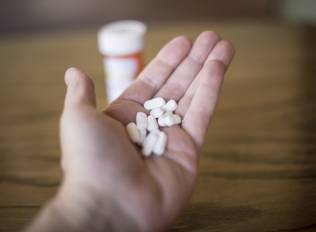
    The four videos feature actors portraying individuals who go to extremely violent lengths to enable their opioid dependency.

    The Trump administration unveiled a quartet of public service announcements (PSAs) as part of its proposed $4.6 billion fight against the opioid epidemic.

    The four videos, all purported to be based on true stories, feature actors portraying individuals who go to extreme lengths to enable their opioid dependency: one is seen smashing their hand with a hammer, while another drives a car into a dumpster.

    The videos, which began airing on television and and social media on June 7, have drawn not only comparison to the Partnership for a Drug-Free America’s “This is your brain on drugs” campaign of the 1980s, but also a mixed response from drug policy organizations, with some expressing positive views while others labeled the PSAs as “shock value” or “disingenuous and misleading.”

    The ad campaign, which is the first stage in an educational effort called “The Truth About Opioids,” is a joint effort between the Office of National Drug Control Policy (ONDCP), the Truth Initiative and the Ad Council.

    An array of media partners, including Facebook, Google, YouTube and Amazon have committed to donating airtime and ad space for the PSAs, which according to Ad Council CEO Lisa Sherman, is worth roughly $30 million.

    Jim Carroll, deputy director of the ONDCP, was unable to provide an exact figure on how much his agency spent on the campaign, but noted that “very few government dollars” were used, due to the Truth Initiative and Ad Council donating their work and the media partners’ donated airtime.

    Fred Mensch, president of the nonprofit Partnership for Drug-Free Kids—the Partnership for a Drug-Free America’s moniker since 2010—spoke highly of the PSAs, which he described as having “the potential to generate a dialogue between parents and kids on this complex health issue.”

    But Daniel Raymond, deputy director of planning and policy at the Harm Reduction Coalition, called the spots “the 21st century version of the egg-in-the-frying-pan” commercial, referring to the “your brain on drugs” spot, which was created by Partnership for Drug-Free Kids.

    “We don’t need shock value to fight the overdose crisis,” said Raymond. We need empathy, connection and hope for people struggling with opioids. The White House missed an opportunity to combat stigma and stereotypes, portraying people who use opioids as irrational and self-destructive.”

    Stefanie Jones, director of audience development for the Drug Policy Alliance, praised the Truth About Opioids web site for providing useful information and resources, but found that the ads “take really extreme cases,” she said. “It’s all about self-harm to seek opioids, and they also end with the same ‘fact’ about how dependence can start after five days, and that’s just an incredible simplification.”

    The nature of the PSAs seem to suggest what Trump alluded to in March 2018 about a “large-scale rollout of commercials” intended to raise awareness about opioid dependency.

    At the time, Trump said that he had long been in favor of “spending a lot of money on great commercials showing how bad [opioid dependency] is.” He added that his administration would make the spots “very, very bad commercials” in which “you scare [audiences] from ending up like the people commercials,” and cited similar examples in anti-smoking PSAs.

    In May 2018, Axios quoted an unnamed source with an alleged connection to the PSAs, who said that “[Trump] thinks you have to engage and enrage.”

    View the original article at thefix.com

  • Using Marijuana to Treat Opioid Addiction

    Using Marijuana to Treat Opioid Addiction

    When I’m on marijuana, the thought of injecting toxic drugs into my body seems totally unhealthy and unappealing.

    If you believe that medication-assisted treatment (MAT) for opioid use disorder (OUD) is wrong because it’s “just substituting one drug for another,” then you’re really not going to like this article. It’s not about one of the three major forms of MAT approved for opioid addiction: buprenorphine, methadone, or naltrexone. It’s about another medication, which does not cause a physical dependency, nor does it contribute to the 175 drug overdose deaths that take place each day in the United States. It has fewer harmful side effects than most other medications, and has even been correlated with a reduction in opioid overdose rates. Nonetheless, it is more controversial than MAT and, in most states, less accessible. In fact, Pennsylvania is the only state that has approved its use for OUD—and only as of May 17, 2018. In New Jersey, it was recently approved to treat chronic pain due to opioid use disorder.

    The medication I’m describing is, of course, marijuana.

    Abstinence-based thinking has dominated the recovery discussion for quite some time. Since Alcoholics Anonymous began in the 1930s, the general public has associated addiction recovery with a discontinuation of all euphoric substances. Historically, that thinking has also extended to medication-assisted treatment, even though MAT is specifically designed not to produce a euphoric high when used as prescribed by people with an already existing opioid tolerance. The bias against MAT is finally beginning to lift; there is now even a 12-step fellowship for people using medications like methadone or buprenorphine. But marijuana, which is definitely capable of producing euphoria, is still under fire as an addiction treatment.

    In addition to the ingrained abstinence-only rule, another reason that most states don’t approve the use of marijuana for OUD is that there is little to no research backing its efficacy. Even in Pennsylvania, the recent addition of OUD to the list of conditions treatable by marijuana is temporary. Depending in part on the results of research performed by several universities throughout the state, OUD could lose its medical marijuana status in the future. And other states that have tried to add it have failed, including Maine, Vermont, New Hampshire, and New Mexico. It’s not that any research has shown marijuana doesn’t work for OUD. There simply has not been much—if any—full-scale research completed that says it does.

    But street wisdom tells a different story. Jessica Gelay, the policy manager for the Drug Policy Alliance’s New Mexico office, has been fighting to get OUD added as a medical marijuana qualifying condition in New Mexico since 2016. Although she recognizes that research on the topic is far from robust, she believes cannabis has a real potential to help minimize opioid use and the dangers associated with it.

    “Medical cannabis can not only help people get rest [when they’re in withdrawal],” says Gelay, “it can also help reduce nausea, get an appetite, reduce anxiety and cravings…it helps people reduce the craving voice. It helps people gain perspective.” I can relate to Gelay’s sentiment, because that’s exactly what marijuana does for me.

    I am five years into recovery from heroin addiction. I don’t claim the past five years have been completely opioid free, but I no longer meet the criteria for an active opioid use disorder. Total abstinence does not define my recovery. I take one of the approved drugs for OUD, buprenorphine, but as someone who also struggles with post-traumatic stress disorder (PTSD) as the result of physical and sexual assault, I experience emotional triggers that buprenorphine doesn’t address, leaving me vulnerable to my old way of self-medicating: heroin. But what does help me through these potentially risky episodes? Marijuana. For me, ingesting marijuana (which I buy legally from my local pot shop in Seattle, Washington) erases my cravings for heroin. It puts me in touch with a part of my emotional core that gets shut down when I am triggered. When I’m on marijuana, the thought of injecting toxic drugs into my body seems totally unhealthy and unappealing—probably the way it seems to someone who doesn’t have an opioid use disorder. It’s not a cure-all, but it stops me from relapsing.

    High Sobriety is a rehabilitation program based out of Philadelphia that provides cannabis-based recovery for addiction, with a focus on addiction to opiates. Founder Joe Schrank, who is also a clinical social worker, says that treatment should be about treating people where they are, and for people with chronic pain or a history of serious drug use, that can often mean providing them a safer alternative—one that Shrank, who does not personally use marijuana, says is not only effective, but even somewhat enjoyable.

    “[Cannabis forms] a great therapeutic alliance from the get-go. Like, we’re here with compassion, we’re not here to punish you, we want to make this as comfortable as we possibly can, and the doctor says you can have this [marijuana]. I think it’s better than the message of ‘you’re a drug addict and you’re a piece of shit and you’re going to puke,’” says Schrank.

    People have been using this method on the streets for years, something I observed during my time in both active addiction and recovery. Anecdotally, marijuana’s efficacy as a withdrawal and recovery aid is said to be attributed to its pain-relieving properties, which help with the aches and pains of coming off an opioid, as well as adding the psychological balm of the high. The difference between opiated versus non-opiated perception is stark, to say the least. The ability to soften the blow of that transition helps some users acclimate to life without opioids. Even if the marijuana use doesn’t remain transitional—if someone who was formerly addicted to heroin continues to use marijuana for the rest of his or her life instead—the risk of fatal overdose, hepatitis C or HIV transmission through drug use, and a host of other complications still go down to zero. Take it from someone who has walked the tenuous line of addiction: that’s a big win.

    Marijuana may also be able to help people get off of opioid-based maintenance medications. Although there is no generalized medical reason why a person should discontinue methadone or buprenorphine, many people decide that they wish to taper off. Sometimes this is due to stigma; friends or family members who insist, wrongly, that people on MAT are not truly sober. Too often, it’s a decision necessitated by finances.

    For Stephanie Bertrand, detoxing from buprenorphine is a way for her to fully end the chapter of her life that included opioid addiction and dependency. Bertrand is a buprenorphine and medical marijuana patient living in Ontario, Canada. She is prescribed buprenorphine/naloxone, which she is currently tapering from, and 60mg monthly of marijuana by the same doctor. She says that marijuana serves a dual purpose in her recovery. It was initially prescribed as an alternative to benzodiazepines, a type of anxiety medicine that can be dangerous, even fatal, when combined with opioids like buprenorphine. The anxiety relief helps her stay sober, she says, because she’d been self-medicating the anxiety during her active addiction. She now also uses a strain that is high in cannabidiol (CBD), the chemical responsible for many of cannabis’ pain relieving properties, to help with the aches and discomfort that come along with her buprenorphine taper. She says the marijuana has gotten her through four 2mg dose drops, and she has four more to go.

    Bertrand would not have the same experience if she were living in the United States. MAT programs in the States tend to disallow marijuana use, even in states where it has been legalized. But studies tell us this shouldn’t really be a concern. Two separate studies, one published in 2002 and the other in 2003, found that MAT patients who used cannabis did not show poorer outcomes than patients who abstained. Although this reasoning alone doesn’t mean marijuana helps with recovery, these findings set the groundwork for future research.

    Do the experiences of people like me and Bertrand represent a viable treatment plan for opioid use disorder? It will likely be a few years before we have the official data. Until then, it’s high time we stop demonizing people in opioid recovery who choose to live a meaningful life that includes marijuana.

    View the original article at thefix.com

  • How US Public Schools Are Taking Action Against The Opioid Crisis

    How US Public Schools Are Taking Action Against The Opioid Crisis

    From drug searches to peer-support groups, schools across the nation are taking a number of approaches to combat the opioid epidemic.

    Some high schools aren’t wasting time and are confronting the opioid crisis head-on. 

    According to CBS 6 News, Shenendehowa High School in Clifton Park, New York is one such school. At the high school, drug searches with police K-9s take place about twice per month, says Saratoga County Deputy Sheriff Ken Cooper, who serves as the school resource and emergency liaison officer.

    “Kids start out with marijuana use, they don’t think that the next thing is heroin or another drug, but it is,” Cooper told CBS

    During the searches, trained K-9s locate any illegal items in a student’s locker. If the dog finds something, it scratches at a locker or barks. According to Cooper, students have reacted mostly positively to the searches. 

    “I think overall students, parents are OK with us coming in and searching. They don’t want drugs on campus,” he tells CBS

    Another step being taken at the high school is stationing school resource officers throughout, with the hope that students will feel comfortable talking to them if they have friends who may be using drugs. 

    “We want them to give us the good information, so we can actually help,” Cooper told CBS

    Additionally, CBS reports, the school has trained teachers, school nurses and other staff members about the signs of substance use disorders. The school also advertises a help hotline and students are even learning about opioids in their health classes. 

    Shenendehowa High School isn’t alone in taking an early approach to the crisis. 

    In Lakewood, Ohio, a peer-to-peer approach is being taken. High school students have partnered with a nonprofit called Recovery Resources of Cleveland and have created the Casey’s Kids program, according to Cleveland.com. In the program, high schoolers chosen by health teachers and counselors work to educate middle school students about substance use disorders. 

    “There’s a lot of research that says kids sort of have better outcomes in this program when it’s delivered by other kids. They’re more apt to listen and trust information that’s delivered by other kids,” said Lakewood City Schools’ Teaching and Learning Director Christine Palumbo. 

    Some states are even passing laws requiring schools to educate students about the opioid crisis, according to Education World.  

    In 2014, New York passed a law requiring schools to update their health curriculums to teach students about the opioid crisis.

    Recently, Maryland followed suit and passed the Start Talking Maryland Act, which mandates that public schools educate students about the dangers of opioid use, beginning in the third grade. The bill also mandates that nursing staff be trained to administer the opioid overdose antidote, naloxone. 

    “It’s a crisis that we need to identify and make educators as well as parents aware of it, and provide the resources to deal with it,” Thomas V. Mike Miller Jr. (D), the bill’s lead sponsor, told The Baltimore Sun.

    View the original article at thefix.com

  • Fentanyl-Related Deaths Skyrocket In Ohio

    Fentanyl-Related Deaths Skyrocket In Ohio

    “There is nothing that worries me more than synthetic opiates—and what will be the next, more powerful synthetic that hits the street,” said one police official.

    Fentanyl is taking over the illicit drug market in the greater Cincinnati area, sparking a 1,000% increase in overdose deaths in Hamilton County. 

    In 2013, authorities there logged 24 fentanyl-related deaths. Last year, they counted 324, according to the Cincinnati Enquirer

    The drug’s popularity has grown so explosively it’s overshadowed heroin deaths. Last year, the Hamilton County coroner found fentanyl involved in 85% of overdose deaths the office examined, while the county’s crime lab detected the substance in more than 90% of the drugs tested in the first five months of this year.  

    “Fentanyl and similar synthetic opiates have produced overdoses and deaths in not only unprecedented numbers but previously unimaginable,” Newtown Police Chief Tom Synan told the Ohio paper. “It is no longer a heroin epidemic but a synthetic-opiate epidemic.”

    The problem in Ohio mirrors the issue nationwide, Synan said. In 2016, according to a research letter published in the Journal of the American Medical Association, fentanyl was involved in roughly half of opioid-related deaths.

    “It’s the small amounts of the extremely deadly substances that are killing people,” Hamilton County coroner Dr. Lakshmi Sammarco told the paper.

    Just days after the Cincinnati paper published its report, the Billings Gazette in Montana detailed an apparent uptick in fentanyl-related deaths in the county that houses Fort Peck Indian Reservation. There, officials are bumping up naloxone training efforts and considering reactivating a regional drug task force. 

    And in May, the Minneapolis Star Tribune detailed a spike in fentanyl-related overdoses in Minnesota, where officials are pushing to treat fatal overdoses as homicides. 

    Even as the epidemic spreads, officials in Ohio are warning it could get worse as underground chemists start pumping out new analogues of the dangerous drug, some of which could be more potent. 

    And, as officials elsewhere have warned, fentanyl is starting to pop up in cocaine and meth supplies. 

    “The introduction of synthetic opiates like fentanyl has killed tens of thousands of Americans and should be seen as the country’s most pressing health, national security issue and social crisis we face right now,” Synan said. “There is nothing that worries me more than synthetic opiates—and what will be the next, more powerful synthetic that hits the street.”

    View the original article at thefix.com

  • Opioid Antidote Naloxone Recalled By Manufacturer

    Opioid Antidote Naloxone Recalled By Manufacturer

    A batch of units sold between February 2017 and February 2018 are being recalled by the manufacturer. 

    The life-saving opioid overdose antidote naloxone has been recalled by its manufacturer, the Food and Drug Administration (FDA) announced.

    Drug company Hospira and its parent company Pfizer issued the recall on Monday, CNN reported, after discovering “loose particulate matter on the syringe plunger.”

    While no one has yet reported problems with the drug, Pfizer isn’t taking any chances. “In the event that impacted product is administered to a patient, the patient has a low likelihood of experiencing adverse events ranging from local irritation, allergic reactions, phlebitis, end-organ granuloma, tissue ischemia, pulmonary emboli, pulmonary dysfunction, pulmonary infarction, and toxicity,” the drug maker said in its recall.

    Known by its brand name Narcan, naloxone has made headlines in recent years for its role in the nation’s opioid crisis, as it rapidly reverses the effects of overdoses.

    The drug is widely carried by ER doctors, paramedics and specially trained first responders, as well as the family members of people addicted to prescription painkillers and opioid users. (Previously, the drug was only available through hospitals, CNN noted.)

    First developed in 1961, naloxone quickly proved itself to be as effective as it is fast-acting. The drug has virtually no side effects and only stays in a person’s system for up to 90 minutes.

    “The sooner the drug is given, the better the result, because the brain of a person who isn’t breathing is being deprived of oxygen,” the Cleveland Clinic’s Dr. Thomas Waters told Health. It doesn’t reverse alcohol or non-opioid drug overdoses, though.

    There are currently three FDA-approved forms of naloxone, including injectable vials, autoinjectable devices and a pre-packaged nasal spray.

    According to the National Institute on Drug Abuse, naloxone acts as an opioid antagonist, binding to opioid receptors in the brain: “[The drug] can very quickly restore normal respiration to a person whose breathing has slowed or stopped as a result of overdosing with heroin or prescription opioid pain medications.”

    The drug recall affects single-use sterile cartridge units “with lot numbers 72680LL and 76510LL in 0.4 mg/ml, 1 mL in, and 2.5 mL strengths,” CNN reports.

    CNN added that the units were sold to wholesalers, hospitals and distributors in the United States, Puerto Rico and Guam between February 2017 and February 2018. 

    Fortune noted that the naloxone recall is just “the latest black eye” for Hospira, citing manufacturing shortages, lawsuits, staff cuts and warning letters from the FDA as problems that have plagued the company in recent years. The company’s Puerto Rico facilities, where many generic injectable and IV drugs were made, were shuttered after the “bombshell of Hurricane Maria” last year.

    View the original article at thefix.com

  • Trump Wants New Anti-Opioid PSA Campaign To "Engage And Enrage"

    Trump Wants New Anti-Opioid PSA Campaign To "Engage And Enrage"

    The White House’s new ad campaign will echo the “This Is Your Brain on Drugs” ad campaign first launched in 1987.

    The Trump administration’s anti-opioid ad campaign is coming soon, according to Axios.

    The PSA campaign, the product of a partnership between the White House and the Ad Council, will “shock the conscience,” a source disclosed to Axios. They added, “[President Trump] thinks you have to engage and enrage.”

    The president declared in March that the government will oversee a “large-scale rollout of commercials” to raise awareness about the dangers of opioid abuse.

    “The best way to beat the drug crisis is to keep people from getting hooked in the first place. This has been something I have been strongly in favor of—spending a lot of money on great commercials showing how bad it is,” said Trump at the time.

    “So that kids seeing those commercials during the right shows on television or wherever, the internet, when they see these commercials they [say], ‘I don’t want any part of it.’ That is the least expensive thing we can do. Where you scare them from ending up like the people in the commercials and we will make them very, very bad commercials. We will make them pretty unsavory situations and you have seen it before and it had an impact on smoking and cigarettes.”

    Indeed, research has estimated that the anti-smoking campaign by the Truth Initiative has prevented approximately 301,930 young Americans from smoking in 2015-2016. However, national anti-drug initiatives like “Just Say No” and “This Is Your Brain on Drugs” are generally considered unsuccessful in their attempts at keeping kids off drugs.

    The new ad campaign will echo the “This Is Your Brain on Drugs” ad campaign first launched in 1987. According to Axios’ source, Trump is a fan of the ad’s shock value and stark message.

    Since its debut, the ad has been re-made to feature Rachel Leigh Cook in a 1997 rendition. The actress appeared in a 2016 version of the ad as well, but this time to highlight a totally different message: “This is your brain on the war on drugs.”

    Cook, in partnership with the Drug Policy Alliance, resurrected the iconic egg and frying pan motif to bring awareness to all the ways that the War on Drugs is ruining people’s lives. “It fuels mass incarceration. It targets people of color in greater numbers than their white counterparts,” says Cook in the ad. “It cripples communities. It costs billions. And it doesn’t work. Any questions?”

    The ad was re-made a different way in the same year, with the original anti-drug message but for a new generation. The ad begins with the familiar image of an egg cracking into a sizzling frying pan: “This is your brain. This is your brain on drugs. Any questions?”

    But instead of ending there, as the original PSA did, a child responds:

    “Yeah, I have questions.”

    “Why is heroin so addictive?”

    “Weed’s legal, isn’t it?”

    “Prescription drugs aren’t as bad as street drugs, right?”

    And finally: “Mom, Dad, did you ever try drugs?”

    View the original article at thefix.com