Tag: opioids

  • Young People With Opioid Addiction Face Barriers To Treatment

    Young People With Opioid Addiction Face Barriers To Treatment

    Access to medication-assisted treatment is a major issue for young adults with opioid addiction.

    Opioid use among minors has drastically increased since the 1990s—parallel to adult use—yet young people with opioid addiction are largely without access to proper treatment.

    Yale University published a study revealing that nearly 9,000 minors (20 years old and under) in the U.S. died from prescription and illicit opioid poisonings between 1999 and 2016. The related mortality rate increased almost 270% during that same time period, and were mostly unintentional overdoses of kids ages 15 to 19.

    The youth in the study were addicted to and dying from the same opioids as adults, including fentanyl, the deadly drug that is often mixed in with other opioids.

    The National Institute on Drug Abuse writes that research shows that when treating opioid addiction, medication should be the first line of treatment, in tandem with behavioral therapy or counseling. The accepted medications to treat opioid addiction are buprenorphine, naltrexone and methadone.

    Lindsey Vuolo, associate director of health law and policy at the Center on Addiction, assured US News & World Report that these medications work.

    “Overall, approximately 50% of patients who receive medications for opioid addiction are successfully treated, while less than 10% of patients are successfully treated without these medications,” she said. Yet many rehabs do not offer any medication-assisted treatment.

    Adolescents with opioid addiction have an even more difficult road than adults in becoming aware of and accessing medication-assisted treatment.

    Dr. Scott Hadland, a pediatrician, assistant professor at Boston University and researcher at Boston Medical Center’s Grayken Center for Addiction, spoke with US News about the results of his study on opioid treatment and youth.

    Hadland and others looked at close to 5,000 Medicaid-enrolled young people between the ages of 13 and 22 with a diagnosed opioid use disorder in 2014 and 2015. The results were clear: less than a quarter received medication for their treatment within three months of being diagnosed, with most of the youths receiving only behavioral health services. A mere 5% of those under age 18 received timely treatment with medication. 

    Dr. Sharon Levy, director of the Adolescent Substance Use and Addiction Program at Boston Children’s Hospital and an associate professor of pediatrics at Harvard Medical School, was the lead author of the American Academy of Pediatrics’ 2016 recommendations that called for “increasing resources to improve access to medication-assisted treatment of opioid-addicted adolescents and young adults.”

    The recommendations urged pediatricians to consider offering medication as treatment for young patients with severe opioid use disorders. Levy says that negative perceptions about medicated-assisted recovery (that the person is replacing one addiction with another) are outdated and the benefits of the medications outweigh any associated risks.

    “Policies, attitudes, and messages that serve to prevent patients from accessing a medication that can effectively treat a life-threatening condition may be harmful to adolescent health,” her AAP article states.

    Naltrexone is approved by the Food and Drug Administration for patients age 18 and older, and buprenorphine is approved for patients 16 and older.

    View the original article at thefix.com

  • Charging Heroin Dealers With Homicide A Common Practice In Pennsylvania

    Charging Heroin Dealers With Homicide A Common Practice In Pennsylvania

    Pennsylvania leads the nation with more than 500 drug-induced homicide charges filed.

    In Lancaster County, deep in the heart of Amish country, authorities have gone after more drug-induced homicide charges than any other place in the nation, according to figures from Mission LISA, a data aggregation project.

    Last year alone, prosecutors in the southeast Pennsylvania county filed roughly 60 such charges, more than the 37 in nearby Bucks County or the 35 in York County. Four of the most prosecution-prone counties were in the Keystone State, which led the nation with more than 500 drug-induced homicide charges filed.

    It’s a controversial practice, often condemned by harm reduction advocates. But Lancaster County District Attorney Craig Stedman swears the charge—levied against dealers who sell fatal doses of the drug—is working. 

    “I don’t think this is a magic bullet that’s going to end the opioid crisis, but is it part of the solution?” he told WITF. “I’m absolutely convinced it is, and there’s just something about being held accountable.”

    By way of example, Stedman highlighted an interaction with one man accused of selling drugs. “One guy in particular, they arrest him, he’s a long-time heroin dealer, and he was arrested for cocaine. They said, what are you doing? You’re a long-time heroin dealer. And he said, look, message received. I’m not catching a body in Lancaster County.” 

    But advocates decry the practice, as Drug Policy Alliance attorney Lindsay LaSalle explained to the PA Post in 2018.

    “We see this kind of flip,” she said, “where you have the compassion for the person who used but you want to throw the hammer at the person who sold. And this is an absolutely false dichotomy. The distinction between user and seller is often patently false.”

    The high numbers in Lancaster County come amid a long-term increase in drug-related homicide charges, according to the Mission LISA data.

    Going all the way back to 1975, the organization’s data set accounts for 2,741 drug-induced homicide charges—but the figures show a sharp uptick starting around 2010. In that year, there were 67 such charges filed across the nation; by 2015 that figure rose to 300.

    In 2016, it peaked at just over 660, though since then has fallen to under 400.

    View the original article at thefix.com

  • Connecticut Judge Dismisses Opioid Lawsuits Against Purdue Pharma, Others

    Connecticut Judge Dismisses Opioid Lawsuits Against Purdue Pharma, Others

    The Connecticut lawsuits are part of a nationwide effort to make pharmaceutical companies pay for a portion of the damage caused by this crisis.

    Judge Thomas Moukawsher in Connecticut ruled against 37 cities and towns within the state that brought lawsuits against pharmaceutical companies accused of fueling the opioid crisis in the U.S.

    According to the Associated Press, the judge ruled that the lawsuits were “not allowed because they were not filed as government enforcement actions authorized by state public interest laws.”

    “Their lawsuits can’t survive without proof that the people they are suing directly caused them the financial losses they seek to recoup,” Moukawsher wrote. “This puts the cities in the same position in claiming money as the brothers, sisters, friends, neighbors, and co-workers of addicts who say they have also indirectly suffered losses by the opioid crisis. That is to say—under long-established law—they have no claims at all.”

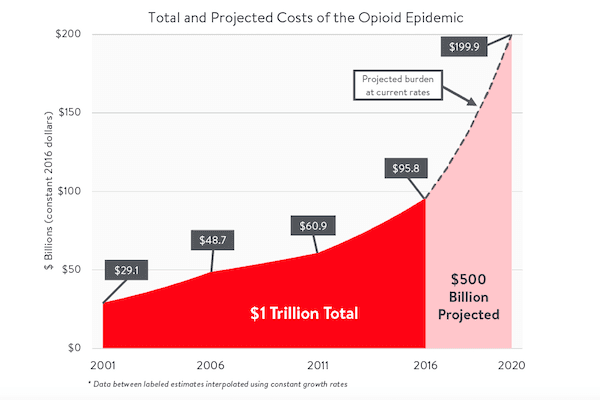
    Though this is a setback in the efforts of the plaintiffs to recoup the many billions of dollars spent to mitigate and combat the opioid crisis, appeals are already being considered.


    Source: ALTARUM

    The lawsuits in Connecticut are only a part of a nationwide effort to make pharmaceutical companies pay for a portion of the damage caused by this crisis. States, cities, counties and Native American tribal councils across the country are filing civil suits against some of the biggest drug manufacturers, claiming that misleading advertising and the alleged encouragement of physicians to over-prescribe opioids have fueled the epidemic of addiction and overdoses.

    According to Forbes, the collective action could become “the largest civil litigation settlement agreement in U.S. history.”

    The record is currently held by the settlement between 46 states and the tobacco industry—a case that some are pointing to as a precedent for the present-day opioid lawsuits. However, experts have pointed out that there are marked differences between these two cases.

    Addiction to prescription opioids is often caused by misuse, whereas there is a clear link between using tobacco products as directed and illness. This makes it easier to blame addiction, overdose and other health concerns on the opioid users themselves.

    “Individual plaintiffs who have sued pharmaceutical companies over how opioids have been marketed have rarely been successful, according to Richard Ausness, a professor at the University of Kentucky College of Law,” wrote Alana Semuels for The Atlantic in 2017. “Courts have made clear that they believe that individual victims are largely responsible for their addiction.”

    However, drug makers have been successfully sued in the past, though many of the lawsuits were settled out of court for a small portion of company profits. Purdue and others have continued to deny any allegations of deceptive marketing or other roles in the opioid crisis.

    Purdue Pharma released a statement about Judge Moukawsher’s ruling, praising him for “applying the law” and vowing to “help address this public health challenge.”

    View the original article at thefix.com

  • Death Certificate Project Goes Too Far, Addiction Specialist Says

    Death Certificate Project Goes Too Far, Addiction Specialist Says

    “Scaring providers into not prescribing opioids, I think that is not the ethically appropriate way to go forward,” said one addiction expert.

    Dr. Ako Jacintho, a family practitioner in San Francisco, says that he saw the opioid epidemic coming. His patients were asking for stronger medications and more pills. Instead of filling their requests, Jacintho trained as an addiction specialist, hoping to head off the problem, according to NPR

    However, that hasn’t protected him from an investigation that the California Medical Board is conducting into possible misuse of prescriptions. Jacintho received a letter from the board as part of the Death Certificate Project, which is examining death records in the state and seeking information from doctors who wrote prescriptions that may have contributed to fatal overdoses. 

    In Jacintho’s case, the board wanted to know about a 2012 methadone prescription that he wrote for a patient who later fatally overdosed on methadone and Benadryl. Jacintho reviewed the patient’s records—which the medical board had requested—but stuck by his decision to use methadone to treat the patient’s pain. 

    “If they’re looking for clinicians who are overprescribing, I’m the wrong doctor,” he said.

    Jacintho said that it’s especially unfair to look at prescribing practices from seven years ago in light of our new understanding of opioids. In 2012, when he wrote the prescription, doctors were told to treat pain aggressively, even by the California Medical Board’s own recommendations. 

    “It actually says that no physician will receive disciplinary action for prescribing opioids to patients with intractable pain,” Jacintho said. ”This person had intractable pain.”

    The letter from the board alleged that Jacintho prescribed toxic levels of the medication, but the doctor argues that it’s not that clear cut. “Toxicity is a very subjective word. What’s a toxic level for someone may not be a toxic level for someone else.”

    After the letter, Jacintho further reduced the amount of opioids that he prescribes to patients, something that worries Dr. Phillip Coffin, director of substance use research at the San Francisco Department of Public Health.

    “It’s like leaving a pair of scissors in an abdomen after surgery. If you’re just going to discontinue opioids, basically you’re ripping out the scissors and telling the person: ‘Good luck.’ Let them deal with the intestinal perforation on their own,” he said. “Scaring providers into not prescribing opioids, I think that is not the ethically appropriate way to go forward.”

    Kim Kirchmeyer, executive director of the medical board, said that most of the doctors who have received letters have not faced disciplinary action, although formal complaints have been filed against 25 doctors. She said that despite concern the death certificate project will continue, systematically working through records from previous years. 

    “If we save one life through this project, that is meeting the mission of the board, and that makes this project so worth it,” she said.

    View the original article at thefix.com

  • FDA Has "Cozy Relationship" With Pharmaceutical Companies, Says Adviser

    FDA Has "Cozy Relationship" With Pharmaceutical Companies, Says Adviser

    “The FDA has a lack of transparency. They use the advisory committees as cover,” said the head of the FDA’s opioid advisory council. 

    A Food and Drug Administration adviser says that the agency is putting the needs of pharmaceutical companies above the public by continuing to approve dangerous pain medications. 

    Speaking with The Guardian, Dr. Raeford Brown, head of the FDA’s opioid advisory council, said there are “cozy, cozy relationships between the pharmaceutical industry and various parts of the FDA.”

    Brown has been vocally opposed to the approval of the drug Dsuvia, an opioid more powerful than fentanyl that the FDA recently approved against the recommendation of the advisory committee. (The FDA is not bound by the recommendation of the committee.)

    Brown said that the committee voted to approve the drug while many committee members were away at a professional conference, which he believes was a willful manipulation of the system. 

    “There’s no question in my mind right that they did that on purpose. The FDA has a lack of transparency. They use the advisory committees as cover,” Brown said. 

    He pointed to Dsuvia’s approval as the latest sign that the FDA has allegiances to pharmaceutical companies. 

    He said, “I think that the FDA has learned nothing. The modus operandi of the agency is that they talk a good game and then nothing happens. Working directly with the agency for the last five years, as I sit and listen to them in meetings, all I can think about is the clock ticking and how many people are dying every moment that they’re not doing anything. The lack of insight that continues to be exhibited by the agency is in many ways a willful blindness that borders on the criminal.”

    This approach is fueling the rise in opioid-related deaths, he said. 

    “They should stop considering any new opioid evaluation. For every day and every week and every month that the FDA don’t do the right thing, people drop dead on the streets. What they do has a direct impact on the mortality rate from opioids in this country.”

    Brown pointed out that the FDA relies on pharmaceutical funding for 75% of the budget of the division that approves opioid medication. He explained that this allows pharmaceutical companies to unfairly influence the process, something that the FDA denies. Brown worries that despite the widespread deaths caused by the opioid epidemic and the resulting media coverage, little will change at the FDA.

    “Nothing is fundamentally being done to effect change in the regulation of opioids,” he said. “If the FDA continues to encourage the pharmaceutical industry to turn out opioid after opioid after opioid, and the regulation of those opioids is no better than it was in 1995, then we’ll be cleaning this up for a long time.”

    View the original article at thefix.com

  • Opioid Use May Be Tied To Intestinal Disorder In Newborns

    Opioid Use May Be Tied To Intestinal Disorder In Newborns

    A new report explores the connection between opioid use and the intestinal birth defect.

    Infants whose mothers use opioids during pregnancy are at risk for a host of issues from small head size to dependency on the drugs. Now, a new report suggests an additional health concern for babies exposed to opioids: a possible increased risk of gastroschisis, a birth defect that causes infants to be born with their intestines outside their bodies.  

    The report, published in the Morbidity and Mortality Weekly Report through the Centers for Disease Control and Prevention, confirmed that rates of gastroschisis are increasing around the globe, something that doctors had reported anecdotally. Instances of the condition rose 10% when researchers compared two periods, 2006 to 2010, and 2011 to 2015.

    During this time, the rates of infants born exposed to opioids also increased. The report authors found that gastroschisis was more common when the rate of opioid use was also more common. 

    “Gastroschisis prevalence was higher in areas with high and medium opioid prescription rates, compared with that in areas with low rates,” the authors of the review wrote. “This ecologic analysis supports the findings from a large case-control study, which suggested that self-reported prescription opioid use in the first trimester was associated with gastroschisis.”

    Although researchers looked at the rate of prescription opioids — not illicit opioids — the findings suggest a connection between opioid use and the birth defect, and researchers said there is a need for more information about how opioid use may contribute to gastroschisis.

    “These findings provide compelling evidence of the need to better understand the potential contribution of opioid exposure in the etiology of gastroschisis as well as the possible role opioids have played in the observed increases in gastroschisis,” the authors wrote. 

    Speaking with Live Science, Dr. Saima Aftab, medical director at the Fetal Care Center at Nicklaus Children’s Hospital in Miami, said “there’s something changing” in the prevalence of gastroschisis. Although the condition can be corrected with surgery, infants face risks with their digestion early on. Babies with the condition may have to be hospitalized for months following their delivery and surgery. 

    Because the CDC report does not provide any concrete answers about why and how opioids may contribute to gastroschisis, the authors said it will be important to conduct more research into the correlation.  

    “The findings … can be used to prioritize basic science, public health, and clinical research on opioid exposure during pregnancy and its potential impact on birth defects,” they wrote. “Having a better understanding of all possible effects of opioid use during pregnancy can help provide evidence-based information to health care providers and women about the potential risks to the developing fetus.”

    View the original article at thefix.com

  • How Big Pharma's Payments To Doctors Affected Overdose Deaths

    How Big Pharma's Payments To Doctors Affected Overdose Deaths

    A new study examined the link between large payments and gifts to doctors from pharma companies and overdose deaths.

    In counties and states where opioid manufacturers offered large payments or gifts to doctors to promote their product, a new study has suggested that both opioid prescriptions and opioid-related overdose deaths were higher than in other areas.

    Coverage of the study in The New York Times showed that the study culled information from a variety of sources, including the Open Payments database, which tracks payments by pharmaceutical companies to doctors, and data from the Centers for Disease Control (CDC).

    Information from these sources suggested that spending on physicians was most highly concentrated in the Northeastern United States, where certain cities and counties claim some of the highest overdose death rates in the country.

    The study, conducted by researchers from Boston University School of Medicine, Boston Medical Center and New York University School of Medicine, and published in the Journal of the American Medical Association, filtered data from the aforementioned national databases through three criteria: total dollar value of marketing efforts by companies spent on doctors, number of payments and number of physicians that received any marketing. 

    According to the researchers, the pharmaceutical industry spent approximately $40 million promoting their opioid products to nearly 68,000 doctors between 2013 and 2015. The marketing efforts included paid meals, trips and consulting fees.

    By referencing overdose data and opioid prescription numbers from the CDC, they determined that for every three additional payments made to doctors per 100,000 people in a county, overdose deaths involving prescription opioids would rise 18% over a year’s time.

    Marketing to doctors dropped significantly in the period immediately following the years included in the study by 33%, which The New York Times attributed to public pressure on companies after the opioid epidemic began reaching critical levels.

    Cities and counties in the Northeastern US that received some of the largest payments also had some of the highest overdose rates, including Salem and Fredericksburg in Virginia, Cabell County in West Virginia and Lackawanna County in Pennsylvania.

    As The New York Times noted, the study authors also suggested that the number of interactions such as free meals appeared to be more strongly linked to overdose deaths than the amount spent on such interactions. 

    “Each meal seems to be associated with more and more prescriptions,” said study lead author Dr. Scott Hadland of Boston Medical Center’s Grayken Center for Addiction. Hadland and his co-authors also wrote that the study did have limitations: They were unable to differentiate between overdose deaths involving prescribed opioids and those caused by painkillers obtained through illegal means.

    “We acknowledge that our work describes only one part of the very complex opioid overdose crisis in this country,” said Hadland. “Even still, prescription opioids remain involved in one-third of all opioid overdose deaths, and are commonly the first medications that people encounter before transitioning to heroin or fentanyl. It is critical that we take measures now to prevent marketing from unnecessarily exposing new people to opioids they may not need.”

    View the original article at thefix.com

  • Inside The Push For Over-The-Counter Naloxone

    Inside The Push For Over-The-Counter Naloxone

    The FDA has recently taken an unprecedented step to kickstart the development of over-the-counter naloxone products. 

    Last week the FDA took an unprecedented step to make the anti-overdose drug naloxone directly available to opioid users.

    Currently, naloxone requires a prescription. But in an effort to make approval for non-prescription versions of the drug easier for pharmaceutical companies to get, the FDA developed sample labels that would meet federal Drug-Facts Label requirements for over-the-counter products. It marks the first time the drug agency has ever proactively created labelling to expedite the process.

    “Naloxone is a critical drug to help reduce opioid overdose deaths. Prevention and treatment of opioid overdose is an urgent priority,” the agency wrote in an unsigned statement. “Increased availability of naloxone for emergency treatment of overdoses is an important step.”

    The agency created two model labels, one for a nasal spray version of the drug and one for an auto-injector version. Both versions include a short information box about the drug and its uses, followed by an illustrated guide on how to administer the life-saving treatment and a warning about the drug’s expected effects.

    “These efforts should jumpstart the development of OTC naloxone products to promote wider access to this medicine,” the FDA wrote. The agency tested the labeling through a research contractor to verify that potential users could understand the images and warnings.

    “This work builds on our ongoing efforts to get this life-saving drug into the hands of those who need it most,” the statement continued. “In addition to the approval of injectable naloxone for use in a health care setting and both prescription auto-injector and intranasal forms of naloxone, which facilitate use by laypersons, we also released draft guidance to advance development of generic naloxone hydrochloride nasal spray.”

    The move comes amid a long-term rise in overdose deaths, as close to 48,000 people died from opioids in 2017 – double what the figure was seven years earlier, according to the federal agency. Overdoses can cause drug users to lose consciousness and stop breathing, but naloxone reverses those effects if given quickly enough. 

    Though the injectable version is pricier, a two-pack of the brand-name nasal spray version sells for about $125, according to CNBC. The generic is around $40 per dose. In theory, offering up a label that could make over-the-counter access easier might help lower those figures further by eliminating the need for would-be buyers to spend money on seeing a doctor for a prescription.

    “While the person administering naloxone should also seek immediate medical attention for the patient,” the agency said, “the bottom line is that wider availability of naloxone and quick action to administer it can save lives.”

    View the original article at thefix.com

  • Death by Fentanyl: Should the Powerful Opioid Be Used in Lethal Injections?

    Death by Fentanyl: Should the Powerful Opioid Be Used in Lethal Injections?

    When it comes to executing people by lethal injection, “Fentanyl is just an obvious choice. You have unfortunately an inexhaustible supply of this drug in state custody – why can’t it be used?”

    As the end drew near, Carey Dean Moore’s face turned red, and then purple. He breathed heavily, according to the witnesses who were there to see it, and coughed. Roughly 20 minutes later, he died.

    In his final weeks, the two-time killer had given up efforts to seek a reprieve. He’d expressed his scant apologies and written the final words condemned men write

    It was the 1,481st execution in the modern era of capital punishment, but Moore’s death was a first on more than one front. Not only was it the Cornhusker State’s first execution in more than two decades, but also it was the nation’s first ever lethal injection using fentanyl, the deadly drug at the center of the opioid crisis.

    More than 28,000 Americans — none of whom were on death row — died in connection with the powerful painkiller in 2017, according to federal data.

    Yet, as politicians and public advocates wrung their hands over how to stem the flow of drugs and stop the scourge of overdoses, behind closed doors corrections officials quietly asked a very different question: Can we use this drug in executions?

    As long as it’s available, the answer is yes.

    But as death penalty states struggle to obtain lethal drugs, it’s unclear whether fentanyl is the future of death chambers or just a fleeting interest. Will more states switch to opioid-based execution? Or will the course of capital punishment take a different direction?

    “It’s Not Like Anyone Thinks This Makes It Less Painful”

    Nationally, executions have been on the decline for close to two decades. But last year saw new legal developments and twists in the process. Washington outlawed capital punishment, Alabama witnessed a badly botched execution attempt, Tennessee returned to using the electric chair and Nebraska carried out Moore’s execution, which was the first time fentanyl was used as part of the lethal injection.

    Initially, Nevada was slated to be the first state to use the powerful painkiller in its death protocol, for the planned July execution of Scott Dozier. But a last-minute lawsuit halted the procedure after a pharmaceutical company — the maker of one of the other drugs in Nevada’s three-drug cocktail — accused the state of illegitimately acquiring the sedative midazolam. (Dozier later killed himself before the state could execute him.)

    For the execution of Moore, the state used a previously untested four-drug cocktail. The protocol first called for a dose of diazepam, which is the generic name for Valium. Executioners followed that with a dose of fentanyl — at which point Moore began coughing and breathing heavily before turning purple, according to the Lincoln Journal-Star. One minute later, Moore was given cisatracurium, a paralytic that would have rendered him unable to breathe. Finally, the protocol ended with a shot of potassium chloride to stop the heart.

    All three of the other drugs have previously been used in executions, with some controversy — especially in the case of the cisatracurium, which experts worry could just mask signs of suffering with its paralytic effect.

    Supposedly, the fentanyl ensures the condemned is not conscious to feel the effects of the drugs that follow, but Dr. Joel Zivot, an associate professor of anesthesiology at Emory University School of Medicine who has testified as an expert in lethal injection litigation, questions that assumption.

    “Having given narcotics to maybe 10,000 or more people in my career, I can’t tell you that everybody gets high or gets pleasure out of it and even the pain relief is uneven,” he told The Fix. “I have certainly never given narcotics and thought, ‘This is going to take away the pain of dying.’ It’s not like anyone thinks this makes it less painful per se to die – it’s unmeasurable and unknowable.”

    It may be tempting to think that using a painkiller is a humane final gesture, but Zivot cautions against seeing it that way.

    “The Constitution doesn’t ask that you trade off cruelty for being stoned,” he said. “It’s not one or the other, or that being stoned takes away cruelty. It seems like a rather horrible and insensitive way of taking advantage of a terrible national epidemic.”

    To death penalty supporters, the opioid’s efficacy in killing — along with the ready abundance of the drug in confiscated supplies — is a selling point.

    “Every day people die from this, so it’s obviously effective,” said Houston-based capital punishment advocate Dudley Sharp. “Fentanyl is just an obvious choice. You have unfortunately an inexhaustible supply of this drug in state custody – why can’t it be used?”

    “Raised More Questions Than It’s Answered”

    Despite the finality of the outcome, some experts say it’s not entirely certain that the first fentanyl execution went as anticipated — because the witnesses couldn’t actually see key parts of the process.

    “The Nebraska execution has raised more questions than it’s answered,” said Robert Dunham, executive director of the Death Penalty Information Center. “It isn’t clear that the execution went as planned because the Nebraska prisons dropped the curtain before Carey Dean Moore died, and so none of the witnesses saw the actual death.”

    For 14 minutes, witnesses weren’t privy to the goings-on inside the execution chamber.

    And given the facial discoloration and signs of “air hunger” before the curtain closed, Dunham said, there’s a possibility the procedure “did not go properly,” a concern that could make fentanyl death protocols less appealing for other states considering the switch.

    “Had it been more transparent,” he said, “it might produce a different response from the other states – but the absence of transparency and the questions resulting from that make it unclear whether this was a quote-unquote ‘successful’ execution or just another problematic protocol.”

    Because They Could Get It

    Even though it’s come to be associated with overdoses, there’s no particular pharmacological reason to start adding fentanyl to death cocktails, according to experts.

    “Narcotics are not poison. You can die as a consequence of them,” Zivot said, “but they’re not poison; fentanyl is not made to kill.”

    It doesn’t kill better or quicker, and it’s not clear that it does so less painfully. But that’s not necessarily what states are looking for when they pick a new death drug; instead, they’re concerned with availability.

    “The way states have selected the drugs is pretty much: they see what other states do and then if it appears to work, they do it too,” Dunham said. “The history of which lethal injection drugs are used can be traced to which ones became unavailable and once drugs became unavailable — because drug companies didn’t want to sell them to prisons for executions — then states began looking for different drugs.”

    In recent years, drug companies have refused to provide their products to prisons planning to use them for executions and in some cases, as in Nevada, they’ve even filed suit to ensure their products aren’t used to kill. As a result, some drugs have become harder to get into the death chamber and new combinations have become more appealing.

    “When Nevada officials were asked why they chose fentanyl, they essentially said, ‘Because we could get it,’” Dunham said. But even fentanyl could become harder to obtain.

    “Eventually with any drug that the drug companies learn is being used in executions,” he continued, “the distribution controls will get progressively stricter.”

    But there’s one way to avoid the hurdles of those particular supply-side controls: use something that’s not a drug.

    “You Can’t Withhold Nitrogen Gas”

    1976: In Room 17 of a seedy Fort Worth motel, a handsome man named Charlie Brooks Jr. stuck a pistol to the face of used car dealer David Gregory.

    Six years later, Brooks became the first man in America executed by lethal injection. It was widely touted as a more “humane” way to kill, but the 40-year-old’s death gave pause to that claim.

    The four reporters who witnessed it all “appeared shaken by the experience” which “did not appear to be painless,” according to the New York Times.

    More than three decades later, the amount of pain condemned prisoners feel is still a source of debate and legal wrangling. It’s made its way into multiple lawsuits over the past year, formed the basis of last-minute appeals and requests for reprieve, and prompted some inmates to beg for alternate methods of execution.

    When Doyle Lee Hamm — who survived Alabama’s painfully botched execution attempt early in the year after executioners couldn’t find a suitable vein — sued the state, he cited the bloody procedure as reason not to try again. In June, Houston serial killer Danny Bible unsuccessfully argued that he, like Hamm, was in such bad health that any attempts to execute him could result in a similarly gruesome spectacle. (They did not.) Then in November, Joseph Garcia — one of the notorious “Texas 7” escapees — challenged his pending execution with questions about the safety record of the compounding pharmacy that allegedly supplied the drugs earmarked for his death. The courts refused his last-minute legal claims.

    And this winter in Tennessee, death row prisoners begged to die by a different method, ultimately choosing a return to electrocution rather than face the possibility of a botched injection.

    These concerns combined with the spread of roadblocks preventing states from getting the drugs they want could be enough to prompt a shift away from lethal injection altogether, some experts believe.

    “Lethal injection in the long-term is not viable,” said Sharp. “That’s why a lot of people have been saying to use nitrogen gas because you can’t withhold nitrogen gas.”

    In fact, Alabama, Oklahoma, and Mississippi have included nitrogen as part of their execution protocols, though none has actually used it yet. But, experts say, nitrogen might be the next logical option for executions, rather than fentanyl or any other injected drug.  

    So far, though, it’s an untested procedure.

    View the original article at thefix.com

  • How Opioids Hijack The Brain

    How Opioids Hijack The Brain

    Addiction experts and people who use opioids discuss how opioids impact their brains.

    Last year thousands of Americans died from opioid overdoses. Yet, despite the fact that the dangers of these drugs are well-publicized, new users continue to get hooked on opioids and succumb to their addictions. 

    To try to understand why, The New York Times spoke with addiction experts and users to understand just how opioids act on the brain, putting together a visual and text representation of what happens once someone tries opioids

    Twenty-four-year-old Amanda Ryan-Carr, of Pennsylvania, said that the first time she tried opioids was like a religious experience. 

    “It’s like being hugged by Jesus,” she said. 

    For Michigan resident Matt Statman, 48, the feeling was one of freedom from worry. 

    “I remember feeling like I was exhaling from holding my breath for my whole life. Just intense relief from suffering,” Statman said. 

    The Times pointed out that many opioid users remember where and when they were when they first used, and they end up chasing that euphoric feeling as addiction takes over their lives. 

    “It was like the high put on blinders to everything and made me not care about anything in the world, other than the heroin,” said Brandon N., a 26-year-old from Pennsylvania.

    Ivana Grahovac, 42, of California, said that opioids became her solution to any problem. 

    “Any time you start to feel like you’re getting antsy or anxious or a little stressed, your body says it knows exactly how to get out of this, and it’s telling you to just go get a little bit more of that heroin,” Grahovac said. 

    Once their bodies become used to having an opioid fix, users face painful withdrawals if they don’t take opioids. 

    Michigan resident Raj Mehta, 51, felt a sense of “doom and anxiety,” when withdrawals loomed, while Pennsylvania resident Jasmine Johnson, 29, said withdrawal was overwhelming. 

    “It’s like a demon crawling out of you. You’d rather just die and be done with it than go through that,” she said. 

    Eventually, users are no longer chasing a high, but just trying to hold off withdrawal symptoms. 

    “It’s like a time bomb,” Mehta said. “You’ve got 24 hours to get heroin, or you’re going to be really sick. You wake up, and your whole life is just based around it.”

    The lucky people are able to get access to treatment and begin a life in recovery. 

    “There was a push factor, which was the misery and the self-hatred and the depression and the cops, and then there was a pull factor, which was this amazing hope from this community of people who I knew understood me in a way nobody else in the world could,” Statman said. 

    However, many people feel like relapse is always looming. 

    “A lot of times in your addiction, things are getting better. You see a light at the end of the tunnel. And it ends up being the freight train coming at you,” Johnson said. 

    Even with bumps along the road, people in long-term recovery say that the work is worth it, allowing them to regain control of their lives and enjoy life without being fixated on their next high.

    “Colors get brighter and smells are more intense and emotions just are much more powerful, because opiates numb them,” said Dove Henry, a 26-year-old from Montana.

    View the original article at thefix.com