Tag: overdose death

  • Moving Obituary For Mom With Opioid Addiction Goes Viral

    Moving Obituary For Mom With Opioid Addiction Goes Viral

    The obituary recounts Madelyn Ellen Linsenmeir’s ensuing addiction to opioids and her family’s determination to help her overcome it.

    The heartbreaking and loving obituary written for Madelyn Ellen Linsenmeir after her overdose death has gone viral. Her family shared Madelyn’s long struggle with addiction while reaching out to those still struggling, asking them to hold on to hope and keep trying.

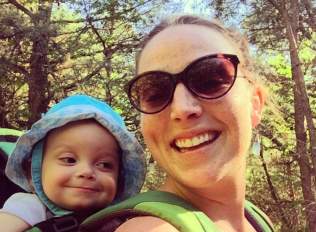
    Madelyn Ellen Linsenmeir died on October 7, 2018, leaving behind her family and a small son, Ayden. Madelyn’s family recounted how after a move from Vermont to Florida, she took her first OxyContin pill at a party.

    The obituary, which was originally published in the Burlington Free Press, recounts Madelyn’s ensuing addiction to opioids and her family’s determination to help her overcome it.

    Madelyn’s family also emphasized that she was, first and foremost, a human being who was loved.

    “It is impossible to capture a person in an obituary, and especially someone whose adult life was largely defined by drug addiction. To some, Maddie was just a junkie—when they saw her addiction they stopped seeing her. And what a loss for them. Because Maddie was hilarious, and warm, and fearless, and resilient. She could and would talk to anyone, and when you were in her company you wanted to stay. In a system that seems to have hardened itself against addicts and is failing them every day, she befriended and delighted cops, social workers, public defenders, and doctors, who advocated for and believed in her till the end.”

    Madelyn’s family wrote about her determination to stay sober after the birth of her son. “After having Ayden Maddie tried harder and more relentlessly to stay sober than we have ever seen anyone try at anything. But she relapsed and ultimately lost custody of her son, a loss that was unbearable.”

    The family continued with unusual honesty to recount the reality of what an ongoing drug addiction does to a person. “During the past two years especially, her disease brought her to places of incredible darkness, and this darkness compounded on itself, as each unspeakable thing that happened to her and each horrible thing she did in the name of her disease exponentially increased her pain and shame.”

    Yet they cherished every moment with her, writing, “For 12 days this summer she was home, and for most of that time she was sober. For those 12 wonderful days, full of swimming and Disney movies and family dinners, we believed as we always did that she would overcome her disease and make the life for herself we knew she deserved. We believed this until the moment she took her last breath.”

    In 2016, 63,600 Americans fatally overdosed with nearly two-thirds of deaths involving a prescription or illegal opioid. Since 2016 the problem has only increased.

    Linsenmeir’s family is just one of many that have written searingly honest obituaries illustrating the ultimate cost of addiction. When Gwen Knox lost her son Kurt to an overdose at 49 years old, she also wrote an honest and loving obituary on the reality of Kurt’s addiction that went viral.

    The family asked for donations in Madelyn’s name be made to the Turning Point Center. They asked those who judge addiction issues to “educate yourself about this disease, because that is what it is. It is not a choice or a weakness.”

    View the original article at thefix.com

  • Alleged Drug Dealer Indicted For Fentanyl Overdose Death

    Alleged Drug Dealer Indicted For Fentanyl Overdose Death

    Calvin Warren Jr. is the first person to be arrested and charged under a new Florida law.

    A new Florida law regarding the prosecution of drug dealers, signed by Gov. Rick Scott in 2017, has gone into effect. The law expanded the state’s first-degree murder code to include adults who sell a lethal dose of fentanyl.

    The Palm Beach Post reported that Calvin Warren Jr., 35, was arrested on first-degree murder charges in the overdose death of 36-year-old Thomas Matuseski. Warren is the first person to be arrested and charged under the new law.

    Thomas Matuseski died on January 28 after ingesting fentanyl; Warren is accused of providing the deadly drug. Warren remains in the Palm Beach County Jail without the possibility of parole. The indictment against him states that he caused Matuseski’s death “unlawfully from a premeditated design.”

    The Palm Beach County State Attorney’s Office announced that Warren distributed heroin, cocaine, and fentanyl. On January 28, Matuseski’s roommate found him collapsed on his bedroom floor in Boynton Beach, according to city police records. Matuseski’s friend called 911 but the Boynton rescue crews were unable to resuscitate him.

    Police reported no sign of drugs or paraphernalia in Matuseski’s home on Citrus Park Lane, and it was not announced how Warren was suspected to be linked to Matuseski’s death. Police records do show that Warren was arrested in February on a case that remains open and includes multiple drug-related charges.

    Greg Newburn, Florida’s state policy director for Families Against Mandatory Minimums, told The Daily Beast, “Most deaths we’ve seen since the rise of fentanyl in Florida have been a mixture of heroin and fentanyl.”

    Florida’s new law does not account for the mixture of drugs or if the dealer claims to have known they were using fentanyl. If a drug mixture containing any amount of fentanyl is involved in the drug user’s death, the dealer can be charged with first-degree murder, a charge for which “the only two sentences available are life without parole and the death penalty,” Newburn said.

    “We will aggressively charge drug dealers who spread fentanyl-laced heroin into our community,” Palm Beach County State Attorney Dave Aronberg said in a statement, as reported in The Palm Beach Post. “We will use all tools provided us by the Florida Legislature to hold drug dealers accountable for causing the deaths of others.” 

    Thomas Matuseski was a New York native, and according to his obituary was remembered as a loving father and son who loved sports.

    View the original article at thefix.com

  • Prince’s Half-Sister Talks About His Death, Fentanyl

    Prince’s Half-Sister Talks About His Death, Fentanyl

    Sharon Nelson says the music icon was just trying to control his pain when he took the fatal dose of fentanyl.

    First came prescription drugs and heroin. Now, the synthetic opioid, fentanyl, is ripping through the country, killing scores of people who take heroin, cocaine or prescription pills that have been laced with fentanyl.

    That’s exactly what happened to Prince, according to his half-sister, Sharon Nelson. 

    Speaking with ABC News correspondent Bob Woodruff for a 20/20 segment that will air Friday night, Nelson said that her brother was just trying to control his pain. 

    “He wouldn’t have taken a pill like that at all,” Nelson, Prince’s oldest sister, said in a preview released by ABC. “When you’re in pain, you’re going to take a pill, hoping it relieves it. You’re not thinking like that; you’re not thinking like a normal person who isn’t in pain.”

    Woodruff said that Prince’s death made fentanyl a household name and raised awareness about the drug. 

    “This is kind of a wakeup call for people around the country about the power and danger of these pills, from a man who—no chance given his intelligence and position in life—would never have taken a pill with so much fentanyl,” Woodruff said. 

    Fentanyl can be used in a medical setting to control severe pain. However, toxicology reports showed that the levels of the drug in Prince’s blood when he died in April of 2016 were extremely high and were a “smoking gun,” as to his cause of death. 

    “The amount in his blood is exceedingly high, even for somebody who is a chronic pain patient on fentanyl patches,” Dr. Lewis Nelson, chairman of emergency medicine at Rutgers New Jersey Medical School, told the Associated Press earlier this year. 

    However, there are reports that the singer thought that he was taking Vicodin, not fentanyl pills. Nelson said the fact that her brother, an experienced opioid user, died from an overdose shows how dangerous fentanyl is.

    She said she hopes fans will realize that fentanyl is extremely dangerous and that it can be lurking anywhere—even when people think they know what drugs they are taking. 

    “After all that’s happened to Prince, I know, I can say for sure that his fans will never take that pill,” she said.

    The episode of 20/20 that Nelson appears on is focused on fentanyl, including investigating the source of illicit fentanyl from China and speaking with families who have lost loved ones to fentanyl overdose. 

    View the original article at thefix.com

  • Journalist Reports On Daughter’s Overdose Death To Raise Awareness

    Journalist Reports On Daughter’s Overdose Death To Raise Awareness

    “The opioid epidemic has hit home in a tragic and devastating way for me, personally. On May 16, my 21-year-old daughter Emily died from an overdose.”

    South Dakota news anchor Angela Kennecke has reported on the opioid epidemic for a decade, but she never imagined that she would be sharing the news of her own daughter’s overdose death with viewers.

    However, that’s just what Kennecke did when she returned to work four months after her daughter fatally overdosed on fentanyl. 

    “The opioid epidemic has hit home in a tragic and devastating way for me, personally,”  Kennecke said from the news desk. “On May 16, my 21-year-old daughter Emily died from an overdose.”

    In an interview with CBS, Kennecke said that Emily’s father called her and said that he thought Emily had overdosed. “I can’t even describe to you what it’s like to hear those words,” Kennecke said.  

    After speaking at Emily’s funeral, Kennecke felt the need to take her family’s story public in order to raise awareness about opioid addiction, and the role it can play in all families. 

    “I never would have dreamed that, but because it’s hit home in such an awful, devastating way, I just feel so compelled to let everybody know what happened to my daughter can happen to you. It could happen to your child,” she said.

    Kennecke said that after years of asking people to talk about their most intimate losses, she felt that she should share her experience. 

    “I thought I can let this loss, this devastation destroy me, or I can do something about it. I thought I have to talk about it. I have an obligation to talk about it,” she said. “My number one reason to talk about it is to erase the stigma around addiction, especially the use of heroin and opioids.”

    Kennecke said that she knew Emily was using marijuana, but she never imagined that her daughter would be injecting opioids. 

    “It was the most shocking thing to me,” she said in the interview. “Needles? Middle-class kid, privileged, all these opportunities and things like that. It’s hard to explain addiction. It’s hard to understand. My child ran out of the doctor’s office once when she was going to get a shot.”

    Kennecke said that she had to walk a fine line between helping Emily and alienating her. She said that she was working to get Emily help, but said, “I just didn’t get there in time.”

    After her loss, Kennecke said she went from asking “why me” to “why not me,” when she realized that addiction can touch anyone. Now, she has set up Emily’s Hope, a fund that will help others afford treatment. 

    “That’s really all I can do with this,” said Kennecke. 

    View the original article at thefix.com

  • Lil Xan Says Mac Miller's Overdose Death Made Him Want To Quit Music

    Lil Xan Says Mac Miller's Overdose Death Made Him Want To Quit Music

    The 22-year-old rapper discussed how Miller’s death has impacted him during a recent podcast interview. 

    The death of hip-hop artist Mac Miller (born Malcolm James McCormick) has left many of his fans devastated, including fellow rapper Lil Xan, who has claimed that he will retire in the wake of his peer’s passing.

    In a recent appearance on a podcast, Leanos states that the news of McCormick’s death left him “crying in [his] apartment” and unwilling to “make music no more” [sic]. McCormick’s death, from what authorities have described as an apparent overdose, also gave Leanos pause to consider his own drug use and mental health issues, which he said he would be addressing in rehab if he did not have upcoming tour dates.

    Speaking live on Adam22’s podcast No Jumper on September 8—one day after McCormick was found dead in his home in Studio City, California—Leanos said that he was overwhelmed by the news. “I’ve been crying in my apartment, ‘Mac didn’t die, Mac didn’t overdose,”” he said. 

    He also recalled the last time he saw McCormick, which happened to be at the rapper’s final performance at the Hotel Café in Los Angeles shortly before his death. “Before I left, he was like, ‘Be safe,’” said Leanos. “People say that, you know: ‘Be safe.’ But he grabbed me, and he pulled me back, and he was like, ‘No, I mean, BE SAFE.’ That almost made me cry. That’s my idol right there. I keep thinking about that—how it resonated in my head, how those were his last words.”

    According to Leanos, the experience of McCormick’s words, followed by the news of his death, left him unwilling to continue his music career. “When your hero dies, f—k that s—t,” he said. “I don’t want to make music no more.” After the completion of his current recording contract, Leanos claimed that he planned to retire, though he did not elaborate on this particular decision.

    McCormick’s death also put Leanos in a reflective mood regarding his own substance use. His use of Xanax—the drug that gave him his stage name—and opiates like Norco have been well-publicized in the past, but in his No Jumper interview, Leanos suggested that he continued to struggle with sobriety.

    “I want to get sober now, completely sober, but it’s so hard,” he told Adam22, whose real name is Adam Grandmaison. “I just want to be off everything. I want to be like a normal person. If I didn’t have a tour coming up, I would be in rehab right now.”

    View the original article at thefix.com

  • Mac Miller Dies At Age 26

    Mac Miller Dies At Age 26

    Miller was found dead in his home of an apparent drug overdose.

    Rapper Mac Miller was found dead in his home in Studio City, California on Friday (September 7). The Los Angeles County Department of Medical Examiner-Coroner pronounced Miller dead at 11:51 am, People confirms, and a source says his death was caused by cardiac arrest following a drug overdose.

    “Malcolm McCormick, known and adored by fans as Mac Miller, has tragically passed away at the age of 26,” his family wrote in a media press release. “He was a bright light in this world for his family, friends and fans. Thank you for your prayers. Please respect our privacy. There are no further details as to the cause of his death at this time.”

    Miller was born in Pittsburgh and struck fame at age 18 with his fourth mixtape, K.I.D.S., in 2010. He was in a public relationship with pop star Ariana Grande for about two years until they broke up earlier this year.

    Just hours before he died, Miller was posting videos of himself in a recording studio on Instagram.

    He had struggled with substance abuse throughout his life. His most recent episode came just a week after his public breakup with Grande when he was arrested for drunk driving. He ran into a power pole and fled, but law enforcement was able to match the plates to his Mercedes-Benz G-Wagon and charged him with DUI and hit-and-run.

    “I made a stupid mistake. I’m a human being,” Miller explained at the time. “But it was the best thing that could have happened. Best thing that could have happened. I needed that. I needed to run into that light pole and literally have the whole thing stop.”

    Fellow musicians openly mourned Miller’s passing on social media.

    “I dont know what to say Mac Miller took me on my second tour ever. But beyond helping me launch my career he was one of the sweetest guys I ever knew,” Chance the Rapper tweeted. “Great man. I loved him for real. Im completely broken. God bless him.”

    Post Malone also shared condolences.

    “God fucking dammit. You were such an incredible person. You changed so many lives. Had so much love in your heart,” Malone wrote on Twitter, “You inspired me throughout highschool, and I wouldn’t be where I was today without you. Never a more kind and sincere and beautiful person. I fucking love you mac.”

    View the original article at thefix.com

  • Mom Starts Addiction Recovery Photo Project After Son’s Overdose Death

    Mom Starts Addiction Recovery Photo Project After Son’s Overdose Death

    The photo documentary project aims to promote recovery and reduce the stigma surrounding addiction. 

    Simone Ochrym lost her 26-year-old son the same day that she had begged for him to return to treatment for his opioid addiction.

    After a decade of drug abuse, recovery “was not in the cards” for Ochrym’s child. The Democrat and Chronicle interviewed Ochrym about her new photo project that includes 15 portraits and narratives of people in recovery from addiction.

    The project, entitled “ChasingNirvanaClean: The Addiction Recovery Project,” was birthed from a question: “I wanted to know, ‘How and why did you go from being an active user to wanting to go into recovery?’” Ochrym said.

    The photo documentary debuts September 7th, nearly two years after her son’s death. The photos are displayed at Flower City Arts Center in Rochester, New York.

    The project’s website states: “The purpose is to explore the how and the why people enter and stay in addiction recovery. It is by exploration of those in addiction recovery that we will find the answers to fight emerging and chronic addiction in our communities.

    The goals of the ‘ChasingNirvanaClean’ project are promoting that recovery is possible for all types of addiction, reducing the social stigma of addiction, and promoting peer-mentoring models of addiction treatment, 12-step programs, and old and new diverse methods of addiction recovery.”

    One documentary subject is Jeff Williams, who lost both his older brother and an uncle to opioid overdose. Jeff began using at age 12 or 13, and his addiction progressed rapidly. After gaining sobriety through a rehabilitation outpatient program, Jeff began drinking again in his early 20s. It was when he lost his best drinking buddy that he realized how isolated and self-destructive he felt.

    On “ChasingNirvanaClean,” Jeff says, “I had one last drink the night before I got sober. I went to a psychiatrist and told him I needed help. He gave me some medications for depression and generalized anxiety. That was when I got sober.”

    Jeff continued to struggle with mental health issues and it was not until he fully embraced therapy and medication that he was able to achieve sobriety and stability.

    Jeff’s imparted advice to the loved ones of someone with active addiction, “The best thing you can do is show your love, your compassion, and if they made that decision to become sober, they can come to you for that help. Showing that you will accept all of them, even the bad parts, makes it less scary for them to ask for help and can encourage them to get the help they need.”

    “I always see people either working in prevention or working in crisis, but I think the only way to figure out prevention is to hear the stories of people who have achieved long-term recovery,” Ochrym told the Democrat and Chronicle.

    View the original article at thefix.com

  • Prince’s Family Sues Doctor Who Reportedly Prescribed Him Pain Pills

    Prince’s Family Sues Doctor Who Reportedly Prescribed Him Pain Pills

    The lawsuit alleges that the doctor had to treat Prince’s opioid addiction prior to do his death but “failed to do so.”

    The family of Prince (born Prince Rogers Nelson) is suing a doctor accused of playing a “substantial part” in the music icon’s death.

    According to the Midwest Medical Examiner’s Office, the official cause of Prince’s April 15, 2016 death was an accidental overdose of fentanyl.

    The family is suing Dr. Michael Schulenberg in Hennepin County District Court in Minnesota, to replace the lawsuit filed in April in Illinois, according to the family’s attorney.

    The lawsuit alleges that Schulenberg and others—including the hospital where Schulenberg was working at the time)—had “an opportunity and duty during the weeks before Prince’s death to diagnose and treat Prince’s opioid addiction, and to prevent his death.” However, the family states, “They failed to do so.”

    The lawsuit seeks unspecified damages in excess of $50,000, ABC News reports.

    Authorities say the doctor admitted to prescribing oxycodone a week before his death, under his bodyguard’s name to protect his privacy.

    However, Schulenberg’s lawyer, Amy S. Conners, said in a statement that the doctor “never directly prescribed opioids to Prince, nor did he ever prescribe opioids to any other person with the intent that they would be given to Prince,” the New York Times reported in April 2017.

    Investigators later stated that it was possible that Prince was not aware that the medication he was taking contained fentanyl.

    “In all likelihood, Prince had no idea he was taking a counterfeit pill that could kill him,” said Carver County Attorney Mark Metz this past April, while announcing that no criminal charges would be filed in the musician’s death. “Others around Prince also likely did not know that the pills were counterfeit containing fentanyl.”

    Many of the medications found in the musician’s home were not in the original container provided by the pharmacy. “The evidence demonstrates that Prince thought he was taking Vicodin and not fentanyl,” Metz stated. “The evidence suggest that Prince had long suffered significant pain, became addicted to pain medications but took efforts to protect his privacy.”

    Walgreens Co., where some of the prescriptions were filled, is also named in the family’s lawsuit.

    Schulenberg’s attorney Paul Peterson maintained that the doctor did everything he could for the musician. “We understand this situation has been difficult on everyone close to Mr. Nelson and his fans across the globe,” said Peterson. “Be that as it may, Dr. Schulenberg stands behind the care that Mr. Nelson received. We intend to defend this case.”

    View the original article at thefix.com

  • Friend Who Found Bobbi Kristina Brown in Tub Dies from Apparent Overdose

    Friend Who Found Bobbi Kristina Brown in Tub Dies from Apparent Overdose

    Prior to his death, Max Lomas had successfully completed three months in a rehab facility and had recently found a job.

    Max Lomas, who gained notoriety after finding the late Bobbi Kristina Brown unconscious in a bathtub in 2015, has died from what has been described as a “probable” drug overdose.

    The 28-year-old, who lived with Whitney Houston and Bobby Brown’s daughter before her drug-related death in 2015, was found unresponsive, with a syringe by his side in the bathroom of a home in Saltillo, Mississippi on August 15, 2018. Lomas was rushed to a hospital where he was pronounced dead.

    According to People, a cause of death has not been determined, but death investigation papers obtained by the publication list heroin overdose as the probable cause of death.

    People noted that prior to his death, Lomas had successfully completed three months in a rehabilitation facility and had recently found a job.

    “He really worked the program,” said a source close to Lomas, who reportedly spoke to him on a weekly basis while he was in treatment. “He had come so far. There was so much he wanted to do.”

    Lomas had been taken in by Whitney Houston as a teenager, and was briefly linked to Bobbi Kristina Brown before the relationship came to a halt when he was incarcerated in 2011 for violating his probation.

    Upon his release, he found that Brown was dating Nick Gordon, and the trio soon began living together as roommates in Roswell, Georgia. By Lomas’ account, he and the couple were “pretty bad into drugs,” and Gordon and Brown fought on a regular basis, “mostly about jealousy.”

    Lomas also claimed that Gordon was abusive towards Brown, a statement that has been decried by Gordon’s lawyers.

    On January 31, 2015, Lomas found Brown floating face down in a bathtub in the trio’s townhouse. “I saw the color of her face and that she wasn’t breathing. I called for Nick and called 911,” he stated.

    Gordon was subsequently blamed for Brown’s death by her family, who served him with a $40 million civil lawsuit over the alleged abuse. In 2016, he was found liable for Brown’s death and ordered to pay $36 million to her estate.

    As People noted, no charges were filed against Lomas, who told the publication in 2016 that he was sober and no longer friends with Gordon.

    “I’m in utter disbelief because I knew he had gone and gotten help in Mississippi,” said Garry Grace, a friend of both Lomas and Gordon, to People on August 17. “I didn’t have to worry about him because I knew he was safe.”

    View the original article at thefix.com

  • Police Chief Allegedly Overdosed On Drugs Stolen From Evidence Room

    Police Chief Allegedly Overdosed On Drugs Stolen From Evidence Room

    The 35-year-old died two months after being appointed part-time police chief.

    An Ohio police chief who died in May of a fentanyl overdose allegedly swiped the drugs from his own department’s evidence room, according to local reports. 

    Kirkersville Police Chief James Hughes had only been on the job two months when he was found unresponsive in the bathroom of his Reynoldsburg home. Nearby, officials said, were three syringes—one empty and two filled with fentanyl. Authorities also recovered a bag that tested positive for cocaine

    The part-time police chief died a short time later, and in July the coroner officially deemed the cause of death a fentanyl overdose, according to the Newark Advocate.

    The larger Reynoldsburg Police Department investigated the fatality, and last week Lt. Ron Wright revealed where he apparently got the fatal dose: the village police evidence room. 

    “There was packaging that indicated that he was taking controlled substances from there,” said Wright, according to the Advocate. It’s not clear if that could impact any ongoing cases. 

    The 35-year-old was appointed to the 500-person village’s 20-hour-per-week job as top cop on March 13, during a two-minute council meeting. Almost a year earlier, then-chief Eric DiSario was shot to death in the line of duty during an incident at a local nursing home, according to WSYX. His replacement, Jeff Finley, resigned abruptly in early March, citing disagreements with the mayor. 

    Though village council members didn’t offer any comment to the local media on it, Hughes had a troubled past before his appointment as chief. 

    During the 14 months he previously worked at the local sheriff’s office, internal affairs investigated him three times. Once, he resigned after six months, though he was later rehired working at the jail. 

    “I believe that Deputy Hughes needs to think before he acts,” one supervisor wrote in a 2012 performance evaluation, according to the Newark paper. “Deputy Hughes is known to make bad decisions on and off duty.”

    A few months later, Hughes notched up a misdemeanor conviction for a drunken incident at a nearby fast food restaurant when he spit at a drive-through worker and called her a “bitch.” 

    Once Reynoldsburg police wrap up their investigation of the chief’s death, they’ll likely forward the case to state authorities, Wright said. 

    “It’s kind of gone beyond our level. You’re talking about another agency’s property room,” he said. “We think the state should probably intervene.”

    View the original article at thefix.com