Tag: painkiller addiction

  • How 76 Billion Opioid Pills Flooded The Country

    How 76 Billion Opioid Pills Flooded The Country

    Shocking data from a federal opioid lawsuit has been unsealed and made available to the public.

    Data that was recently unsealed by a panel of federal judges has revealed that drug companies flooded the country with 76 billion opioid pills between 2006 and 2012, enough to supply every American adult and child with 36 pills each year.

    In some rural areas in Appalachia, the rate was more than 300 pills a year for every resident. 

    The data was reported on by The Washington Post. It comes from a database maintained by the Drug Enforcement Administration (DEA), the Automation of Reports and Consolidated Orders System, or ARCOS. The ARCOS maintains a record of every legal drug sale in the country. 

    The ARCOS data has been instrumental in the federal lawsuits involving opioid manufacturers. However, the data was sealed by federal judge Dan Polster, even though he had said “the vast oversupply of opioid drugs in the United States has caused a plague on its citizens” and that releasing the data “is a reasonable step toward defeating the disease.”

    Making It Public

    The Washington Post and Charleston Gazette-Mail in West Virginia sued for access to the data, and in response the ARCOS was made public this week. 

    “The data provides statistical insights that help pinpoint the origins and spread of the opioid epidemic—an epidemic that thousands of communities across the country argue was both sparked and inflamed by opioid manufacturers, distributors, and pharmacies,” said Paul T. Farrell Jr., a lawyer for the newspapers. 

    The data shows that the distribution of opioid pain pills increased rapidly during that six-year period. In 2006, 8.4 billion pills were distributed, and that rose more than 50% to 12.6 billion pills in 2012. For comparison, morphine doses remained relatively steady during that period, with about 500 million per year. 

    The Culprits

    The ARCOS also showed that the biggest players in the opioid epidemic are not the ones commonly talked about. The three biggest opioid manufacturers controlled the vast majority of sales: SpecGx with 37.7% of the market, Actavis Pharma with 34.6% of the market, and Par Pharmaceutical 15.7% of the market. Purdue Pharma was the fourth-largest manufacturer, but controlled just 3.3% of the market. 

    Likewise, the three largest drug distributors were responsible for distributing more than half of the opioid pills during that time. They were McKesson with 18.4% of the market, Walgreens with 16.5% and Cardinal Health with 14%. The fourth largest manufacturer, AmerisourceBergen, controlled 11.7% of the market. 

    A spokesperson for AmerisourceBergen told The Washington Post that the data “offers a very misleading picture.”

    The database also helps show that the areas that received the most opioid pills were also those with the highest overdose rates. West Virginia, which had the highest death rate between 2006-2012, received an average or 66.5 pills per person during that time period, nearly double the national average.

    Other hard-hit states also had very high opioid sales: Kentucky with 63.3 pills per person, South Carolina with 58, Tennessee with 57.7 and Nevada with 54.7.

    View the original article at thefix.com

  • Majority Of Post-Op Patients Managed Pain Without Opioids, Study Finds

    Majority Of Post-Op Patients Managed Pain Without Opioids, Study Finds

    The study’s lead author believes that keeping people from taking opioids for the first time could help mitigate the opioid epidemic. 

    Patients who have undergone surgery may not always need opioid painkillers to manage post-operative pain, according to a new study. 

    The research, which is pending publication in the Journal of the American College of Surgeons, found that a majority of patients were able to manage their pain using a regimen of over-the-counter pills.

    For the study, researchers selected patients who were undergoing one of six surgical procedures. These patients were given the option to use acetaminophen (Tylenol) and ibuprofen (Advil) to control their pain. They were instructed to take an alternating dose of these over-the-counter medications every three hours. 

    The patients were also given a “rescue” opioid prescription to use in case they experienced breakthrough pain and needed more relief. However, 52% of patients did not use the opioids, and 98% used 10 opioid pills or fewer. People who used the opioids needed, on average, four pills. 

    “Patients reported minimal or no opioid use after implementation of an opioid-sparing pathway, and still reported high satisfaction and pain control,” study authors wrote. “These results demonstrate the effectiveness and acceptability of major reduction and even elimination of opioids after discharge from minor surgical procedures.” 

    Lead study author Michael Englesbe, a professor of surgery at the University of Michigan, told Medical Xpress that keeping people from taking opioids for the first time could help mitigate the opioid epidemic. 

    “We think a fundamental root cause of the opioid epidemic is opioid-naïve patients getting exposed to opioids and then really struggling to stop taking them postoperatively, and then moving on to chronic opioid use, abuse, addiction, and overdose,” he said. 

    The study proves that many patients can manage pain effectively without opioids. Englesbe will now expand the research to study an additional 12 types of surgical procedures. Demonstrating that patients can manage pain without opioids could change how prescriptions are handled, he said. 

    “Our overall goal is to have half the operations done in the state of Michigan without patients needing opioids and still getting excellent pain care,” he said. “There are alternatives to opioids for surgical pain that work well and we should be using them more.”

    However, he said that this involves talking openly to patients, and realizing that in some cases opioids are needed to effectively manage pain. 

    “Just not giving opioids is not the answer—we have to give the best pain care,” he said. “From the beginning, everyone was on the same page with talking to patients about their pain and letting them know that operations hurt.”

    View the original article at thefix.com

  • SNL’s Chris Kattan Alleges That On-Air Accident Led to Opioid Addiction

    SNL’s Chris Kattan Alleges That On-Air Accident Led to Opioid Addiction

    Kattan details his painkiller addiction in his new memoir Baby Don’t Hurt Me: Stories and Scars from Saturday Night Live.

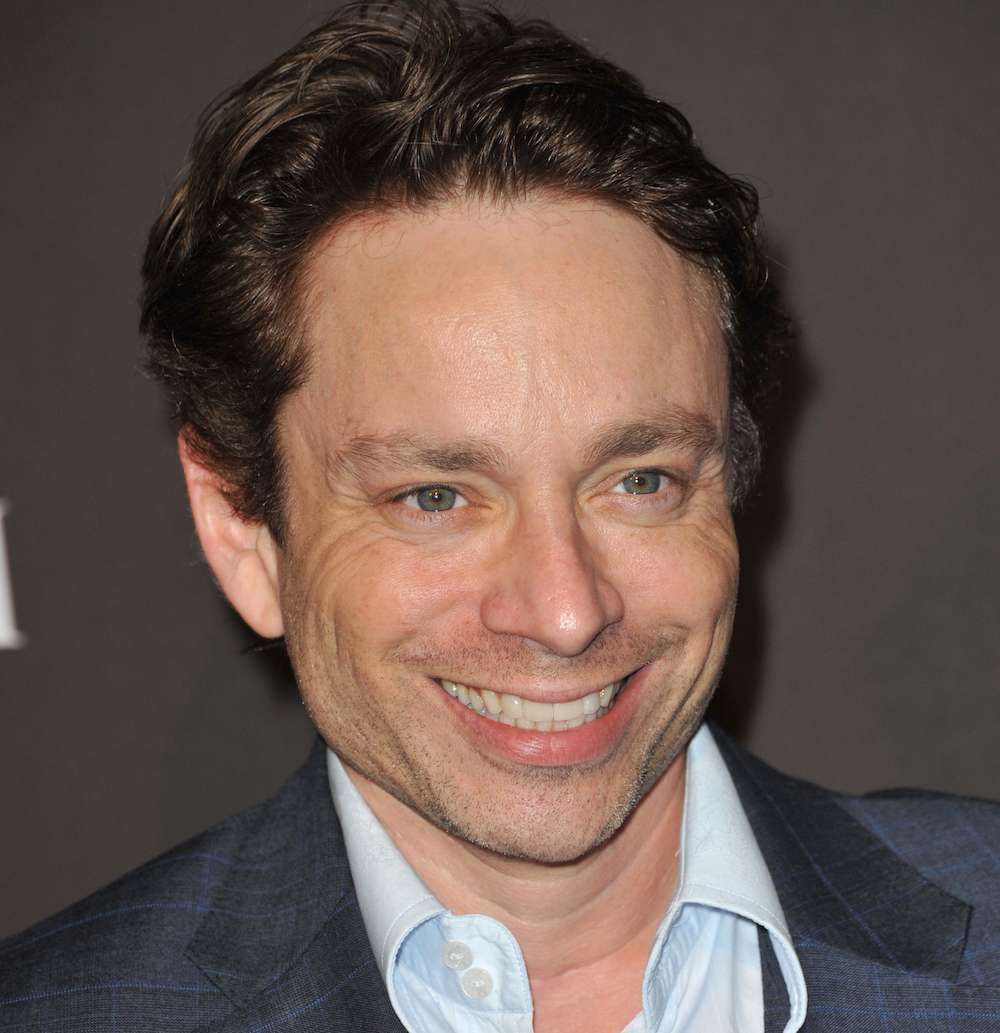
    Former Saturday Night Live player Chris Kattan has claimed that an accidental fall during a sketch in 2001 left him with a broken neck that ultimately led to a dependency on painkillers and the collapse of his acting career.

    Kattan, who starred on the NBC comedy series from 1996 to 2003, made the allegation in a new memoir, Baby Don’t Hurt Me: Stories and Scars from Saturday Night Live, which details how he struck his head after falling from a chair during the May 12, 2001 episode.

    According to Kattan, that fall left him with not only limited mobility, but also an addiction to opioids as a result of five surgeries to correct the problem, and the loss of his marriage and a burgeoning career in feature films. 

    Both Variety and New York Daily News have reported that individuals who worked on the show when Kattan’s accident allegedly took place have claimed that they have no recollection of the fall or any resulting injury.

    The Variety coverage also included comments by a surgeon who met with Kattan in 2005 and confirmed that the actor and comedian appeared to have suffered an incomplete spinal injury at some point.

    As Variety noted, Kattan, whose whose SNL characters included the exotic dancer Mango and one-half of the head-bobbing Butabi Brothers, mentioned an injury while appearing on Dancing with the Stars as a way to explain what was perceived as stiffness in his movements.

    But he never attributed that injury to any particular moment until penning his memoir, which was published on May 7, 2019. In the book, Kattan alleged that he was supposed to fall backwards from a chair during a sketch about children who imitate the characters on the Golden Girls.

    Though concerned about the safety of the pratfall, Kattan went through with the sketch and reportedly landed hard on his head. He also alleged that the pain he experienced lasted for months, which eventually prompted him to inform “SNL” executive producer Lorne Michaels about the injury. According to Kattan, NBC paid for two of an eventual five surgeries needed for treatment. 

    Kattan also alleged in the book that the injury marked the beginning of a long period of personal and professional setbacks, which included an addiction to painkillers, the death of his father and the collapse of his marriage in 2009 after just two months.

    “The impact that my injury and subsequent surgeries had on my career was immense, but more importantly, the fallout proved to be devastating to some of the closest relationships in my life.”

    Kattan enjoyed a brief period of movie stardom before and immediately after his departure from “SNL,” which included starring roles in a feature-length version of Night at the Roxbury and Corky Romano, but gradually transitioned to independent films and guest roles on television, including The Middle.

    Inquiries made about the accident to NBC and various SNL staffer members by both Variety and the New York Daily News have not yielded any confirmation that Kattan experienced the injury he described in the book. 

    Both Lorne Michaels and NBC declined to comment on the story, but SNL staff, some of whom worked closely with Kattan on the show, were unable to recall any injury, even after making their own internal inquiries. 

    However, Variety was able to speak with Kattan’s surgeon, Dr. Carl Lauryssen, M.D., who said that the comedian had suffered an incomplete spinal cord injury, though did not have specifics on the reported cause. Lauryssen also noted that Kattan had undergone a “complex surgery” to regain some function and mobility, but added that “he’s going to live with the effects for the rest of his life.”

    Kattan told Variety that in writing Baby Don’t Hurt Me, he “tried to tell the truth. It feels good to just finally say everything about it. I don’t think it really hurts anybody. It’s just something I needed to say.”

    View the original article at thefix.com

  • New Wrestling Doc "350 Days" Examines Sport's Mental & Physical Toll

    New Wrestling Doc "350 Days" Examines Sport's Mental & Physical Toll

    “The fact that it’s shown as cartoonish on TV doesn’t mean that those bumps don’t hurt or cripple or ultimately result in pain pill addictions or other drug dependency issues.”

    Professional wrestling remains one of the world’s most popular sport entertainments, and a lucrative industry for its promoters. For the wrestlers themselves, there’s fame and adoration, and even the chance for stardom outside the ring, as exemplified by Dwayne “The Rock” Johnson and John Cena.

    In recent years, several documentaries—including Beyond the MatThe Sheik, and The Resurrection of Jake the Snakehave peeled away the superhuman veneer of wrestling and looked at the real physical and emotional impact of a professional wrestling career.

    A new documentary, 350 Days, looks at the reality of wrestlers’ lives through conversations with legends like Greg Valentine, “Superstar” Billy Graham and the late Jimmy “Superfly” Snuka, who detail in both humorous and heartfelt terms the punishing conditions under which they rose to fame in the ring.

    The title of the film—which debuts on iTunes on April 2—refers to the number of days per year many wrestlers spend on the road and in the ring. The wear and tear of such a schedule has left many Hall of Famers and newcomers alike with debilitating physical injuries as well as mental health, emotional and drug dependency issues.

    The film’s co-producer Evan Ginzburg—who also served as associate producer on the Oscar-nominated drama The Wrestler, with Mickey Rourke—tells The Fix that addiction is “a prevalent issue” in professional wrestling.

    “The fact that it’s shown as cartoonish on TV doesn’t mean that those bumps don’t hurt or cripple or ultimately result in pain pill addictions or other drug dependency issues,” he says. “Wrestlers hate the word ‘fake,’ but they’ll say, ‘My hip replacement, my knee replacement, my bad back—those aren’t fake.’ Or, ‘Those three divorces aren’t fake. My kids not talking to me isn’t fake.’ And many—not all—will develop drug dependencies because of it. It’s just stating the facts.”

    Photo courtesy of Evan Ginzburg

    As Ginzburg notes, pain—physical, emotional and mental—is part and parcel of a wrestling career. “I was at a wrestling show with a chiropractor friend, and he said, ‘These [moves] are like mini-whiplashes. You can’t imagine what this is doing to their bodies,’” he explains. “That a couple of bumps in one show. Imagine the cumulative effect of all that.” The physical requirements of the job, combined with the potential for what Ginzburg calls “horrific” injuries, and a schedule that takes them away from their families for nearly an entire year, all take tolls, as do accompanying psychological stressors. 

    Photo courtesy of Evan Ginzburg

    “You’re told you need to be bigger, to look a certain way,” says Ginzburg. “What’s also addressed in the film is that they’ll wrestle injured, because they’re scared to lose their spot [on a bout card]. There’s always a younger guy, a new guy willing to take their place. So these guys keep going until the human body can’t go any more, and you see Abdullah the Butcher, the Iron Sheik in a wheelchair. And it’s not a secret how many guys have died from pain pills and steroids.”

    Photo courtesy of Evan Ginzburg

    Ginzburg says that major promoters like the WWE have attempted to resolve these issues by providing treatment to wrestlers who request it. “They go into rehab and World Wrestling Entertainment (WWE) pays for it,” he says. “How much came from public pressure, that may be a different issue.” But only a fundamental change to the structure of the industry is going to prevent the physical injury, the associate dependencies and the deaths that can occur as part of the job.

    Photo courtesy of Evan Ginzburg

    “A top promotion like WWE now goes from 350 days to 250 days a year,” he says. “That’s a good start, but wrestlers are still working 250 nights. WWE has so much talent that you forget some of them are actually there. How about taking the guys and women who are underutilized and putting them on during the holiday season—Thanksgiving through January 2—and giving the others time for their bodies to heal?”

    Photo courtesy of Evan Ginzburg

    Ginzburg hopes that viewers will learn some core truths about wrestling from 350 Days.

    “They sacrifice for the fans, and they’re not cartoon characters,” he says. “They are real people with bones that break and muscles that rip. It’s a brutal sport, and more has to be done for them.”

    View the original article at thefix.com

  • How The Situation's Wife Helped During His Journey To Sobriety

    How The Situation's Wife Helped During His Journey To Sobriety

    “She’s definitely my better half and the reason why I strive to be the best version of myself and to fight for our future,” the reality star says.

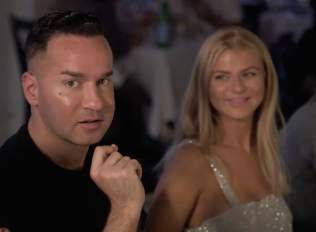
    With the popularity of Jersey Shore, Mike “The Situation” Sorrentino has become a reality TV fixture. He battled a painkiller addiction in the public eye, and now he is a recovery advocate, speaking candidly about his own experience.

    Now Sorrentino’s wife, Lauren Pesce, has been credited with helping Sorrentino stay sober, even as he’s preparing to serve an eight-month jail sentence for tax evasion, which is set to begin on January 15.

    As People reports, Sorrentino and Pesce met in junior college and dated for about four years. The couple took a break from each other during the Jersey Shore heyday, then got back together once the show had ended.

    Pesce has had to endure a lot as Sorrentino’s significant other, including witnessing his fight for sobriety. Having battled an addiction to painkillers, Sorrentino is reportedly nearly three years sober after two visits to rehab—the first in 2012 and the second in 2015.

    As a practicing Catholic, Pesce said she relied on her faith when Sorrentino needed help.  

    “It’s not so much just going to church,” she says. “It’s finding my belief, that God has a reason for everything, and knowing you’re able to overcome anything as long as you have your faith and trust in God. That’s what I did, and Mike really came into that as well and found his own spirituality.”

    Pesce adds, “What I dreamed of, the expectations I had set for him, him getting healthy and sober—I didn’t know that our relationship would survive had those miracles not happened, and they did. He put in the hard work and thanks to the faith in God that we have, we’re in the position we’re in today.”

    Sorrentino called Pesce “my better half and the reason why I strive to be the best version of myself and to fight for our future.” Sorrentino also wants to be “a good example to her, her family and everyone watching—because my life has been under a microscope. I have a lot to prove.”

    Right before Jersey Shore returned to MTV in April, Sorrentino hit a 28-month sober milestone the month before.

    He told Entertainment Tonight, “I’m very proud, it’s one of my finest accomplishments and it was a huge challenge. It’s a ‘one day at a time’ thing and [I’m] just showing people that it’s very possible.”

    Sorrentino also showed off his two-year Narcotics Anonymous medallion in an Instagram post: “28 months clean and sober. We do recover.” 

    View the original article at thefix.com

  • Former Pantera Frontman Phil Anselmo: I'm Nine Months Clean

    Former Pantera Frontman Phil Anselmo: I'm Nine Months Clean

    “I haven’t had a drink in almost three years. Man, I’m feeling better and better.”

    Lead singer Phil Anselmo of Pantera has had heavy bouts with heroin, painkillers and alcohol addiction. Now, the vocalist says he’s nine months sober and 45 pounds lighter.

    Anselmo is currently fronting a new band, Philip H. Anselmo & The Illegals, and on a recent podcast he spoke about the back injury that lead him to painkiller abuse.

    “I ruptured a lower disc at about the age of 24, and just up to this past January, I’ve been at war with it,” Anselmo recalls. “So chronic pain meets every medication that you can get from a doctor or not, I’ve done ‘em all. So that has been a battle, man. And if you mix the chronic pain and the hydrocodone, which is another catalyst for another drug, which could be Xanax—it commonly goes hand in hand—that is a toxic brew in the brain, man. So it’s a war. And I’ve gotta say now—I am nine months clean and I haven’t had a drink in almost three years. Man, I’m feeling better and better.”

    Anselmo turned 50 this June. “My 50th was better than my 30th and 40th by light years, man. Just peace of mind and knowing I wasn’t gonna wake up the next day with a hangover—that’s a good feeling, man, every day.”

    Anselmo told Decibel that he hasn’t had a drink since Mardi Gras in 2016.

    “My body feels like I woke up in a car wreck every day of my life anyway, so to put a hangover on top of it?” he said to The Daily Times. “And the only thing that’s going to beat it is more booze? I’m defeated. All hail the hangover—the thing that knocked Phil Anselmo on his ass!”

    Anselmo also told Decibel that 2016 was the first year he ever performed sober, and he claimed he doesn’t miss alcohol. “I don’t crave it… Now will I have a sip at some point in the future? I honestly don’t know. It’s a day-by-day thing. But I feel much better as far as being onstage and having that clarity.”

    In speaking about his past drug addiction to Loudwire, Anselmo said to fans, “First and foremost, don’t use hard drugs. There’s ways around things. Go to a doctor, get checked out. Don’t just take your friend’s word for it: ‘Hey, this pill’s gonna fix everything. This drug’s gonna fix everything.’ It’s not true. It’s fake. Don’t use hard drugs. And I learned the hard way, but here I am.”

    View the original article at thefix.com

  • Sia Celebrates Eight Years of Sobriety

    Sia Celebrates Eight Years of Sobriety

    “Eight years sober today. I love you, keep going. You can do it.”

    Pop star Sia celebrated eight years of sobriety this week, after recovering from alcoholism and an addiction to prescription pills. 

    “Eight years sober today. I love you, keep going. You can do it,” she tweeted on Sep. 10. 

    Since joining a 12-step program in 2010, Sia’s career has taken off. In 2014, her Grammy-nominated comeback single, “Chandelier,” included a nod to her past struggles: “Help me, I’m holding on for dear life, won’t look down won’t open my eyes / Keep my glass full until morning light, ’cause I’m just holding on for tonight.”

    Sia, who is now 42, told The New York Times in 2014 that her addiction was, in part, a way to cope with her rise to fame, which she was uncomfortable with at first. 

    “It’s horrible,” she said. “I just wanted to have a private life.”

    At the same time, her tour schedule made it easy to hide her substance abuse. 

    “When you’re in a different place every day, there’s this kind of madness that sets in. It’s easy to get away with getting high, because everybody’s drinking on the road,” she said. “None of my friends thought I was an alcoholic, and neither did I.”

    After Sia was diagnosed with bipolar disorder, she began abusing prescription pills. 

    “I was in the back lounge, high on Xanax and alcohol, watching every episode of ER from the beginning,” she said. 

    In 2013, she told Billboard that she was frustrated with her career at the time that she was abusing drugs. 

    “Then I got seriously addicted to Vicodin and oxycodone, and I was always a drinker but I didn’t know I was an alcoholic,” she said. “I was really unhappy being an artist and I was getting sicker and sicker.”

    Unfortunately, Sia’s initial sobriety didn’t help her mental health. She revealed to the New York Times that she came very close to suicide. She even left a note for her dog walker and the hotel manager explaining what was to happen.

    However, when her friend called, Sia changed her mind. 

    Although Sia is famously private, she said that her recovery program encourages her to share, which is why she’s spoken out about her struggles with her addiction and her success in sobriety. 

    View the original article at thefix.com

  • Inside Burt Reynolds' Addiction Struggles & Road To Recovery

    Inside Burt Reynolds' Addiction Struggles & Road To Recovery

    The late icon spoke openly about his battles with addiction throughout his life.

    When Burt Reynolds died on September 6 at the age of 82, many who worked with the iconic star expressed great sadness at his passing.

    With hit movies like Smokey and the Bandit and Hooper, Reynolds became one of the biggest sex symbols of the ‘70s, but his life and career became increasingly troubled in the following decades. (His career ended on a high note with the independent gem The Last Movie Star, and he was about to film a role in the latest Quentin Tarantino movie Once Upon a Time in Hollywood.)

    One of the tribulations of Reynolds’ life was his addiction to a controversial sleeping pill, which he spoke about openly. In the early nineties, Reynolds confessed he was addicted to Halcion, which he got hooked on when recovering from an injury he suffered during a movie shoot.

    “I broke my jaw and shattered my temporomandibular joint,” he recalled. “The pain was worse than a migraine. It is like having an army of people inside your head trying to get out through ears, eyes, your nose. It never stops.”

    Reynolds was hooked on Halcion for over four years. He told TV Guide he was taking up to 50 Halcion pills a day, and he went into a coma when he tried to stop cold turkey.

    “Doctors told me if I had taken one more pill I would have died.” (In 1992, Halcion came under scrutiny from the Food and Drug Administration, and it was also banned in Great Britain.)

    Even after having a near-death experience, Reynolds didn’t enter rehab at the time. He told People, “It was very important to me not to be portrayed as a drug addict.”

    He wrote in his autobiography that he didn’t take another Halcion after he regained consciousness, but he fell into addiction again in 2009, becoming addicted to prescription pills after he had back surgery.

    Reynolds finally surrendered and checked into rehab that September.

    “I felt that in spite of the fact that I am supposedly a big tough guy, I couldn’t beat prescription drugs on my own. I’ve worked hard to get off of them and really hope other people will realize they need to seek professional help, rather than ignoring the problem or trying to get off of the prescriptions on their own.”

    View the original article at thefix.com

  • Mike “The Situation” Sorrentino Celebrates Another Sober Milestone

    Mike “The Situation” Sorrentino Celebrates Another Sober Milestone

    Sorrentino announced his new sober milestone on Instagram and was showered with praise by his “Jersey Shore” castmates. 

    Mike “The Situation” Sorrentino has come a long way from his booze-fueled days on MTV’s Jersey Shore. The 36-year-old TV personality celebrated 33 months of sobriety on Saturday, announcing the milestone with a post on his Instagram account. “33 Months Clean & Sober #cleanchallenge,” he wrote. “Went from running into a wall to down on one knee. We do recover.”

    Sorrentino also tagged the Discovery Institute in his post, which he’s previously credited for helping him beat his addiction to alcohol and prescription painkillers.

    And despite having gone through a full year of treatment at Discovery (including both inpatient and outpatient counseling), he wasn’t initially sold on the idea.

    “I’ll be honest, I hated everything about [addiction treatment],” Sorrentino said. “But … I wanted better for myself and I was going to do whatever it takes to get there.” He noted that Discovery made him “humble” and that treatment forced him to understand that he didn’t have all the answers. “It costs zero dollars to be a kind person,” he added.

    Sorrentino’s Instagram post was applauded by several of his fellow Jersey Shore castmates, too. Former co-star Angelina Pivarnick commented “resilience,” while Snooki said “I am legit crying I’m so proud of you.” Sorrentino recently told E! News that he hopes to be a “good example” for the “recovery world” and demonstrate to others that it’s “possible to have fun and dance in the club without drinking.”

    That said, he admitted to People that shooting Jersey Shore Family Vacation in Miami Beach wasn’t without its problems. 

    “I had a very strong foundation for my recovery with over two years when I entered the house,” he said of the new show. “But I did have to challenge myself to go out and film a whole season of Jersey Shore and have fun without alcohol—to show the youth out there that it is possible.”

    He claimed that “it took a lot of hard work just to get there” as well as having to “challenge myself to do my job and be funny and be myself.”

    Following Jersey Shore’s cancellation in 2012, Sorrentino took to drugs and alcohol, eventually spending 60 days in rehab. “I had a year to settle down and find out who I was, and I wasn’t in the best shape,” Sorrentino told People. “I had to rebuild myself inside and out.”

    Unfortunately, after two years of sobriety, Sorrentino was indicted (along with his brother) with tax fraud on nearly $9 million of income. He was also prescribed painkillers (Sorrentino’s personal “drug of choice”) after cracking his ribs at the gym, which caused him to relapse.

    Now, with nearly three years of sobriety under his belt, Sorrentino appears to finally have his life in order: “I live my life today at peace. I try not to have any arguments,” he told E! News. “I mean, everything in my life has changed. I don’t speed. I don’t get into fights. I don’t get into arguments. I really feel awesome today.”

    View the original article at thefix.com

  • Lisa Marie Presley Discusses Past Addiction Struggles

    Lisa Marie Presley Discusses Past Addiction Struggles

    “I was not happy. The struggle and addiction for me started when I was 45 years old. It wasn’t like it was happening all my life.”

    Lisa Marie Presley, daughter of Elvis Presley, recently spoke on the Today show about her personal struggles with addiction.

    Presley spoke with Jenna Bush Hager at Graceland on the eve of the release of Where No One Stands Alone, a new compilation album of her father’s gospel songs. (She co-produced the album and sings a posthumous duet with her father on the title song.)

    Lisa Marie, who is now 50, said that her struggles with addiction began five years ago.

    “I was not happy,” she said. “And by the way, the struggle and addiction for me started when I was 45 years old. It wasn’t like it was happening all my life. I have a therapist and she was like, ‘You’re a miracle. I don’t know how you’re still alive.’”

    In a 2003 interview with Paper magazine, Lisa Marie credited Scientology for getting her clean after one last bender.

    “I was on a 72-hour bender,” she said. “Cocaine, sedatives, pot and drinking—all at the same time. I never got my hands on heroin, but it’s not like I wouldn’t have taken it. I just couldn’t be sober. I don’t know how I lived through it.”

    In 2016, Us Weekly reported that Presley checked into a high-end rehab for an addiction to painkillers.

    Along with her father’s iconic music career, Elvis was also legendary for his own struggles with addiction. Lisa Marie was nine years old when her father died of a heart attack on August 15, 1977 at the age of 42.

    Elvis’s death was a big shock at the time, and is still a strong cautionary tale against the excesses of fame and prescription drugs. Elvis had a personal doctor, Dr. George Nichopoulos, who came under fire for prescribing too many drugs to the singer, and after several medical board inquires his medical license was permanently suspended in 1995.

    According to Biography, the toxicology report from Elvis’s death showed he had high levels of Dilaudid, Quaaludes, Percodan, Demerol, and codeine in his system.

    Yet in the depths of her despair, Lisa Marie reached out to the spirit of her father for help. “I’m not perfect, my father wasn’t perfect, no one’s perfect,” she told Today. “It’s what you do with it after you learn and then you try to help others with it.”

    When Hager asked what she would ask her father, Lisa Marie said, “I would want to know he’s there. Yeah, it would be pretty much, ‘I could use your help right around now.’”

    View the original article at thefix.com