Tag: problem drinking

  • How long does a hangover last?

    How long does a hangover last?

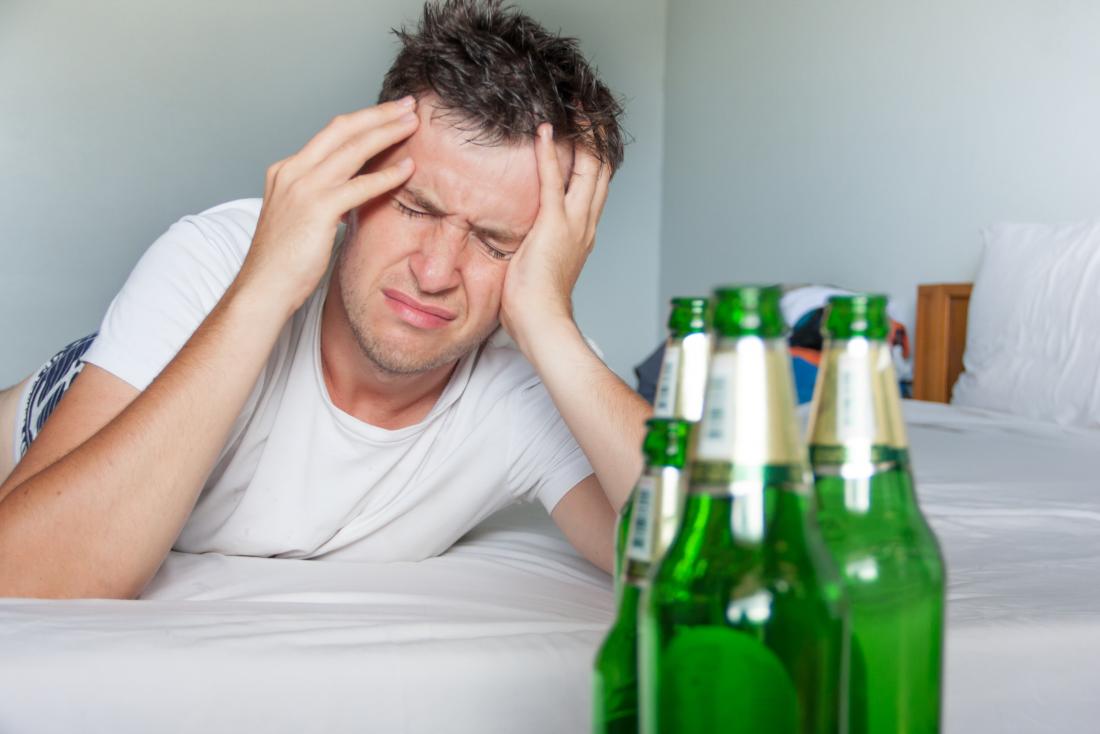
    It’s the morning after. You feel horrible. When will your hangover end?

    Hangover causes

    Hangovers are simply caused by drinking too much alcohol. It might make you feel better to know that some people report hangovers after drinking one to three drinks. But on the other hand, there are heavy drinkers out there that don’t get hung over at all. Although experts still don’t know officially what causes alcohol hangovers exactly, ten possible explanations for why you feel the hair of the dog include:

    1. acetaldehyde
    2. alcohol withdrawal
    3. dehydration and imbalance of electrolytes
    4. drug use
    5. gastrointestinal problems
    6. genetics
    7. low blood sugar
    8. methanol
    9. psychological traits
    10. sleep disturbance

    When will this hangover end?

    OK. Now a little wake up call. Hangovers exist for a reason: the hangover experience may deter us from future episodes of heavy drinking or intoxication. They are our body’s way of asking that we avoid binge drinking and a call for homeostasis, or balance. But when will they end?

    Typically, a hangover will end within 24 hours.  Hangovers begin within several hours after you stop drinking, when blood alcohol concentration (BAC) falls. Symptoms of a hangover usually peak about the time BAC is zero and may continue for up to 24 hours thereafter. Most cases of hangover end several hours after 0 level BAC, though. This is for somewhat “normal” cases of over drinking, and a typical average. But hangovers can continue for a couple of days in more severe cases or in times when alcohol withdrawal occurs.

    More severe cases of hangovers

    Generally, the greater the quantity and length of time drinking, the more prevalent is the hangover. Some hangovers go on and on and can last for 72 hours, especially if you are mixing drinks, drinking low quality and less refined alcohol or drinking certain types of alcohol (brandy, red wine or whiskey all contain methanol).

    How bad is your hangover?

    Hangovers suck. But time will ease the symptoms of illness and discomfort. There are also a few hangover remedies that you might want to try to help reduce the severity of symptoms or shorten its duration. But keep in mind that most folk remedies for hangovers have not undergone clinical tests, and experts believe that conservative management of symptoms combined with time are your best bet for feeling better.

    Hangover questions

    Please leave your hangover story below, or questions about hangovers. We are happy to answer and respond to all of your comments personally.

    Reference source: Mechanisms and Mediators of Alcohol Hangover

    View the original article at addictionblog.org

  • WHO Launches "Safer" Alcohol Campaign

    WHO Launches "Safer" Alcohol Campaign

    The campaign outlines steps that governments can take to reduce problem drinking.

    The World Health Organization has launched a campaign outlining high-impact strategies that can help governments address alcohol abuse, in order to work toward the organization’s goal of reducing harmful drinking by 10% worldwide by 2025. 

    The campaign, called SAFER, outlines steps that governments can take to reduce problem drinking. Alcohol contributes to 3 million deaths around the world each year, and is the 7th leading cause of premature death and disability according to WHO. 

    “The harmful use of alcohol is a major—yet often unaddressed—public health threat,” Dr. Adam Karpati, senior vice president of Public Health Programs at Vital Strategies, a global public health organization, said in a news release. “SAFER provides clear guidance to governments on how to save lives on a large scale. The greatest impact will be achieved by implementing all the SAFER interventions in full.”

    Each letter in the acronym stands for a strategy that governments can implement:

    S: Strengthen restrictions on alcohol availability

    The first step in the plan is to reduce the availability of alcohol. The idea is to establish restrictions to keep alcohol out of the hands of youth and other high-risk groups; this has been proven to cut back on alcohol-related issues. For example, in Brazil the decision to close bars at 11 p.m. led to a 40% reduction in homicide rates. 

    A: Advance and enforce drink driving counter measures

    One of the most dangerous aspects of alcohol use is driving while intoxicated, so SAFER urges governments to take a stricter approach to combat drunk driving. This includes reducing the legal limit. Lowering the legal limit from 0.08% to 0.05% blood alcohol content could eliminate 18% of crashes caused by drunk driving that result in injury or death. 

    F: Facilitate access to screening, brief interventions and treatment

    In order to reduce the negative health impacts of alcohol, healthcare providers need to screen people who may be at risk, and help people who have alcohol use disorder access treatment. Offering screenings in a primary care setting can increase access to treatment, and is especially important for pregnant women. 

    E: Enforce bans or comprehensive restrictions on alcohol advertising, sponsorship, and promotion

    People around the globe are constantly exposed to marketing from alcohol companies, which often downplays the negative effects of alcohol. Governments should restrict what advertising is allowed, particularly in places where it reaches young people who should not be drinking.  

    R: Raise prices on alcohol through excise taxes and pricing policies

    Raising taxes on alcohol and setting minimum prices can make alcohol less affordable to people, thus in theory, reducing the amount that they drink. 

    View the original article at thefix.com

  • Are Men More Likely To Engage In Risky Drinking?

    Are Men More Likely To Engage In Risky Drinking?

    Apparently men and women differ in how they approach the legal drinking age.

    Driving drunk, getting in physical fights and taking part in risky sexual behavior—all three of these are more common in men than women when the drinking age starts at 21, according to new research

    WUWM reports that while previous research supports the fact that there is an increase in alcohol-related deaths and violent crimes at age 21, Jason Fletcher, a professor and researcher at University of Wisconsin-Madison, wanted to reach beyond those statistics.

    Fletcher wanted to zone in on other “problem areas” that follow the legal drinking age. 

    To do so, Fletcher studied data from Add Health, a study covering adolescent to adult health in the U.S. What he found pointed to men facing more consequences than women after turning 21.

    “There is just nothing I can discern from the data of negative impacts along the outcomes that I examine for women,” Fletcher said, according to WUWM. “The individuals in the data, when they turn 21, they do drink more, but the consequences that I examined, women don’t seem to have those consequences.”

    According to WUWM, Fletcher says one possible response is for authority figures, such as parents, to step in and remind their children of the risks of drinking as they approach 21.

    “And, it might be a reasonable intervention to remind parents of individuals about to turn 21, that especially their sons, about these negative consequences,” Fletcher stated. “Maybe they could at least be part of these interventions, in terms of reducing these risky behaviors right around the legal age of drinking.” 

    Another part of Fletcher’s research was the discovery that parental involvement won’t necessarily deter children from risky drinking. The research actually found that children around age 21 living with parents have steeper increases in risky drinking than those children living away from their parents. 

    Last year, a bill to lower Wisconsin’s drinking age to 19 was presented in the state legislature. However, Fletcher’s solution would be to move in the other direction, by increasing the legal drinking age for men to 22 or 23—though he acknowledges that it’s not likely Wisconsinites would approve such a change.

    View the original article at thefix.com