Tag: Public Service Announcements

  • Why using fear to promote COVID-19 vaccination and mask wearing could backfire

    While the pandemic stakes might justify using hard-hitting strategies, the nation’s social and political context right now might cause fear tactics to backfire.

    You probably still remember public service ads that scared you: The cigarette smoker with throat cancer. The victims of a drunk driver. The guy who neglected his cholesterol lying in a morgue with a toe tag.

    With new, highly transmissible variants of SARS-CoV-2 now spreading, some health professionals have started calling for the use of similar fear-based strategies to persuade people to follow social distancing rules and get vaccinated.

    There is compelling evidence that fear can change behavior, and there have been ethical arguments that using fear can be justified, particularly when threats are severe. As public health professors with expertise in history and ethics, we have been open in some situations to using fear in ways that help individuals understand the gravity of a crisis without creating stigma.

    But while the pandemic stakes might justify using hard-hitting strategies, the nation’s social and political context right now might cause it to backfire.

    Fear as a strategy has waxed and waned

    Fear can be a powerful motivator, and it can create strong, lasting memories. Public health officials’ willingness to use it to help change behavior in public health campaigns has waxed and waned for more than a century.

    From the late 19th century into the early 1920s, public health campaigns commonly sought to stir fear. Common tropes included flies menacing babies, immigrants represented as a microbial pestilence at the gates of the country, voluptuous female bodies with barely concealed skeletal faces who threatened to weaken a generation of troops with syphilis. The key theme was using fear to control harm from others.
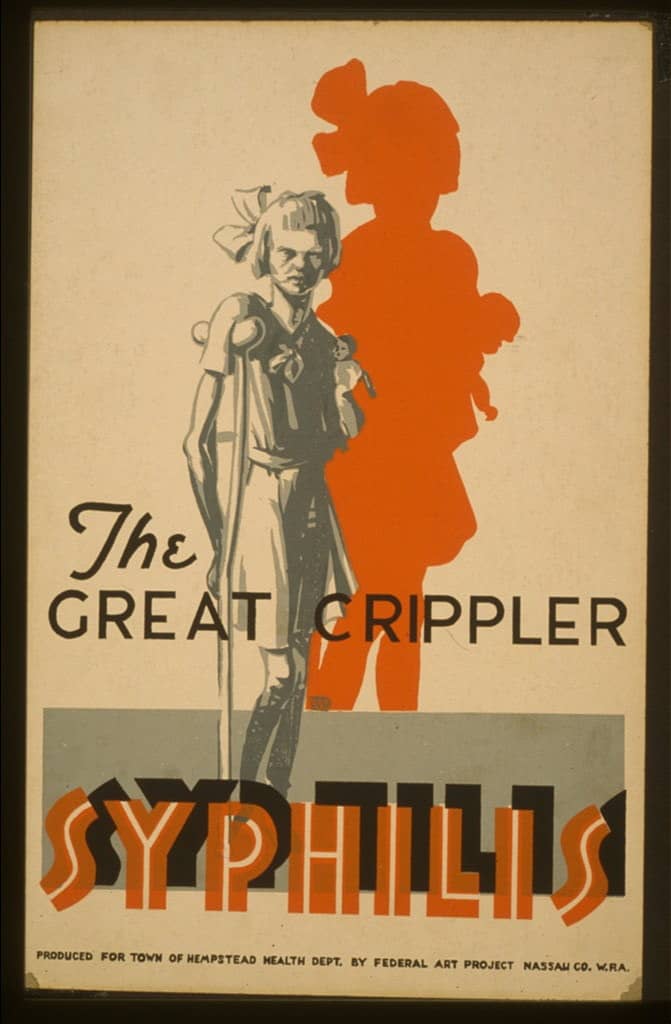
    Why using fear to promote COVID-19 vaccination and mask wearing could backfire
    Library of Congress

    Following World War II, epidemiological data emerged as the foundation of public health, and use of fear fell out of favor. The primary focus at the time was the rise of chronic “lifestyle” diseases, such as heart disease. Early behavioral research concluded fear backfired. An early, influential study, for example, suggested that when people became anxious about behavior, they might tune out or even engage more in dangerous behaviors, like smoking or drinking, to cope with the anxiety stimulated by fear-based messaging.

    But by the 1960s, health officials were trying to change behaviors related to smoking, eating and exercise, and they grappled with the limits of data and logic as tools to help the public. They turned again to scare tactics to try to deliver a gut punch. It was not enough to know that some behaviors were deadly. We had to react emotionally.

    Although there were concerns about using fear to manipulate people, leading ethicists began to argue that it could help people understand what was in their self-interest. A bit of a scare could help cut through the noise created by industries that made fat, sugar and tobacco alluring. It could help make population-level statistics personal.
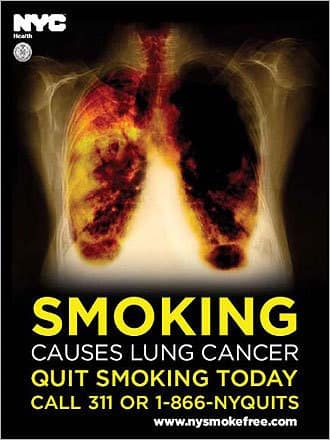
    Why using fear to promote COVID-19 vaccination and mask wearing could backfire
    NYC Health

    Anti-tobacco campaigns were the first to show the devastating toll of smoking. They used graphic images of diseased lungs, of smokers gasping for breath through tracheotomies and eating through tubes, of clogged arteries and failing hearts. Those campaigns worked.

    And then came AIDS. Fear of the disease was hard to untangle from fear of those who suffered the most: gay men, sex workers, drug users, and the black and brown communities. The challenge was to destigmatize, to promote the human rights of those who only stood to be further marginalized if shunned and shamed. When it came to public health campaigns, human rights advocates argued, fear stigmatized and undermined the effort.

    When obesity became a public health crisis, and youth smoking rates and vaping experimentation were sounding alarm bells, public health campaigns once again adopted fear to try to shatter complacency. Obesity campaigns sought to stir parental dread about youth obesity. Evidence of the effectiveness of this fear-based approach mounted.

    Evidence, ethics and politics

    So, why not use fear to drive up vaccination rates and the use of masks, lockdowns and distancing now, at this moment of national fatigue? Why not sear into the national imagination images of makeshift morgues or of people dying alone, intubated in overwhelmed hospitals?

    Before we can answer these questions, we must first ask two others: Would fear be ethically acceptable in the context of COVID-19, and would it work?

    For people in high-risk groups – those who are older or have underlying conditions that put them at high risk for severe illness or death – the evidence on fear-based appeals suggests that hard-hitting campaigns can work. The strongest case for the efficacy of fear-based appeals comes from smoking: Emotional PSAs put out by organizations like the American Cancer Society beginning in the 1960s proved to be a powerful antidote to tobacco sales ads. Anti-tobacco crusaders found in fear a way to appeal to individuals’ self-interests.

    At this political moment, however, there are other considerations.

    Health officials have faced armed protesters outside their offices and homes. Many people seem to have lost the capacity to distinguish truth from falsehood.

    By instilling fear that government will go too far and erode civil liberties, some groups developed an effective political tool for overriding rationality in the face of science, even the evidence-based recommendations supporting face masks as protection against the coronavirus.

    Reliance on fear for public health messaging now could further erode trust in public health officials and scientists at a critical juncture.

    The nation desperately needs a strategy that can help break through pandemic denialism and through the politically charged environment, with its threatening and at times hysterical rhetoric that has created opposition to sound public health measures.

    Even if ethically warranted, fear-based tactics may be dismissed as just one more example of political manipulation and could carry as much risk as benefit.

    Instead, public health officials should boldly urge and, as they have during other crisis periods in the past, emphasize what has been sorely lacking: consistent, credible communication of the science at the national level.

    Amy Lauren Fairchild, Dean and Professor, College of Public Health, The Ohio State University and Ronald Bayer, Professor Sociomedical Sciences, Columbia University

    This article is republished from The Conversation under a Creative Commons license. Read the original article.

  • Arizona Campaign Aims To Scare Kids Away From Opioids

    Arizona Campaign Aims To Scare Kids Away From Opioids

    “It kind of has a horror movie feel to it,” said one government official about the new opioid public service announcements.

    Officials in Arizona are taking inspiration from scary movies in an attempt to keep kids and teens from experimenting with opioids, despite controversy and conflicting reports over whether scare tactics actually work to deter teens from using drugs. 

    Two 30-second public service announcements aim to highlight the dangers of opioids by showing a teen trapped in a pill, with the message “Opioids: Getting in is easier than getting out.” One ad features a boy, while the other features a girl. At the end of the videos, a lifeless hand is shown next to pill bottles. 

    Arizona Department of Health Services Director Dr. Cara Christ said the images are intentionally frightening. 

    “It kind of has a horror movie feel to it,” she told Arizona Central. “This is part of the Arizona Opioid Epidemic Act. They (the Arizona Legislature) appropriated a little over $400,000 for us to develop this educational campaign and it had to be graphic, and it had to show the law enforcement consequences of opioids.”

    The campaign is meant to target kids ages 12-17 and will appear on websites that people of those ages use often, including YouTube, Facebook, Instagram, Snapchat, Spotify and Pandora.

    In addition to the videos, the campaign features still images that include a teen drowning in pills, and another behind bars, which turn out to be hypodermic needles. They all link to the state’s “Something Better” website, which provides information on the dangers of drug abuse. 

    Christ said that focus groups showed the movie-style ads caught teens’ attention while delivering the message. 

    “There is a scary component of it. People don’t realize how dangerous and how addictive these medications are,” she said.

    However, Graeme Fox, who does community outreach for a needle-exchange program run by volunteers in Maricopa County, said the images and videos might not be as effective as lawmakers are hoping.  

    “It could be a good thing but scare tactics aren’t necessarily the way to educate youths,” Fox said. “The state may think it’s a good thing but there are studies that show after a certain amount of time, scare tactics aren’t effective.”

    The campaign will run through June. 

    Results from the most recent Monitoring the Future Survey, which interviews 8th, 10th and 12th grade students about their substance use, found that rates of opioid use are actually falling among teens, reaching their lowest levels to date

    “With illicit opioid use at generally the lowest in the history of the survey, it is possible that being in high school offers a protective effect against opioid misuse and addiction,” said Nora D. Volkow, director of the National Institute on Drug Abuse. “We will be focusing much of our new prevention research on the period of time when teens transition out of school into the adult world and become exposed to the dangerous use of these drugs.” 

    View the original article at thefix.com

  • Recovery Advocates Respond To Trump's Opioid PSAs With New Video

    Recovery Advocates Respond To Trump's Opioid PSAs With New Video

    Two recovery advocates made a personal video about their addiction struggles in hopes of getting a meeting with the president to discuss opioid policies. 

    The Trump Administration’s quartet of “Know the Truth” public service announcements about the dangers of opioid use and abuse have garnered mixed reviews from the recovery community for their shocking tone.

    They have also spurred a response from an Ohio-based recovery advocate, who has created his own video that details a more personal take on dependency and recovery.

    Richie Webber, who recovered from heroin dependency to found Fight for Recovery, and his friend Chanda Lynn, of Jamestown, New York, talk openly about their struggles with dependency in the video in hopes of not only encouraging viewers to do the same, but also garnering a meeting with President Trump to discuss more compassionate opioid policies. The video has been submitted to a White House site for review.

    Webber has been sober for four years from a dependency on heroin that he developed in high school after suffering a sports injury. He currently operates Fight for Recovery, which offers support for those with dependency issues and their families and friends. He said that he was encouraged by Trump’s initial statements about dependency, which hinged on his brother, Fred, who struggled with alcoholism before his death in 1981. 

    But when he saw the “Know the Truth” videos, Webber said, “Wow, this isn’t going to work.” The strident tone reminded him of previous efforts, which he viewed as failed attempts. “We did the DARE commercials in the ’80s, and that clearly didn’t work,” he said.

    So with Lynn, whose previous videos about recovery have generated more than 8 million views, and Zach Yoney of Sandusky, Ohio, he created a message that talked directly to viewers—and Trump—about their paths to recovery.

    In the video, Webber discusses his “all-American” teen years, when he was a track star at Clyde High School, as well as the multiple overdoses, jail time and friends he lost to dependency. The piece concludes with a direct address to Trump: “Let us help you help America.”

    Since its release on Facebook in early July 2018, the video has been viewed more than 163,000 times. Webber and Lynn have plans to release additional videos, and hope to start filming a new effort in September 2018.

    He also remains active with Ohio-area events to raise awareness about dependency and recovery. “We’re just trying to cover as many bases as possible,” said Webber.

    View the original article at thefix.com

  • "Shock Value" Anti-Opioid PSAs Debut To Mixed Response

    "Shock Value" Anti-Opioid PSAs Debut To Mixed Response

    The four videos feature actors portraying individuals who go to extremely violent lengths to enable their opioid dependency.

    The Trump administration unveiled a quartet of public service announcements (PSAs) as part of its proposed $4.6 billion fight against the opioid epidemic.

    The four videos, all purported to be based on true stories, feature actors portraying individuals who go to extreme lengths to enable their opioid dependency: one is seen smashing their hand with a hammer, while another drives a car into a dumpster.

    The videos, which began airing on television and and social media on June 7, have drawn not only comparison to the Partnership for a Drug-Free America’s “This is your brain on drugs” campaign of the 1980s, but also a mixed response from drug policy organizations, with some expressing positive views while others labeled the PSAs as “shock value” or “disingenuous and misleading.”

    The ad campaign, which is the first stage in an educational effort called “The Truth About Opioids,” is a joint effort between the Office of National Drug Control Policy (ONDCP), the Truth Initiative and the Ad Council.

    An array of media partners, including Facebook, Google, YouTube and Amazon have committed to donating airtime and ad space for the PSAs, which according to Ad Council CEO Lisa Sherman, is worth roughly $30 million.

    Jim Carroll, deputy director of the ONDCP, was unable to provide an exact figure on how much his agency spent on the campaign, but noted that “very few government dollars” were used, due to the Truth Initiative and Ad Council donating their work and the media partners’ donated airtime.

    Fred Mensch, president of the nonprofit Partnership for Drug-Free Kids—the Partnership for a Drug-Free America’s moniker since 2010—spoke highly of the PSAs, which he described as having “the potential to generate a dialogue between parents and kids on this complex health issue.”

    But Daniel Raymond, deputy director of planning and policy at the Harm Reduction Coalition, called the spots “the 21st century version of the egg-in-the-frying-pan” commercial, referring to the “your brain on drugs” spot, which was created by Partnership for Drug-Free Kids.

    “We don’t need shock value to fight the overdose crisis,” said Raymond. We need empathy, connection and hope for people struggling with opioids. The White House missed an opportunity to combat stigma and stereotypes, portraying people who use opioids as irrational and self-destructive.”

    Stefanie Jones, director of audience development for the Drug Policy Alliance, praised the Truth About Opioids web site for providing useful information and resources, but found that the ads “take really extreme cases,” she said. “It’s all about self-harm to seek opioids, and they also end with the same ‘fact’ about how dependence can start after five days, and that’s just an incredible simplification.”

    The nature of the PSAs seem to suggest what Trump alluded to in March 2018 about a “large-scale rollout of commercials” intended to raise awareness about opioid dependency.

    At the time, Trump said that he had long been in favor of “spending a lot of money on great commercials showing how bad [opioid dependency] is.” He added that his administration would make the spots “very, very bad commercials” in which “you scare [audiences] from ending up like the people commercials,” and cited similar examples in anti-smoking PSAs.

    In May 2018, Axios quoted an unnamed source with an alleged connection to the PSAs, who said that “[Trump] thinks you have to engage and enrage.”

    View the original article at thefix.com

  • Trump Wants New Anti-Opioid PSA Campaign To "Engage And Enrage"

    Trump Wants New Anti-Opioid PSA Campaign To "Engage And Enrage"

    The White House’s new ad campaign will echo the “This Is Your Brain on Drugs” ad campaign first launched in 1987.

    The Trump administration’s anti-opioid ad campaign is coming soon, according to Axios.

    The PSA campaign, the product of a partnership between the White House and the Ad Council, will “shock the conscience,” a source disclosed to Axios. They added, “[President Trump] thinks you have to engage and enrage.”

    The president declared in March that the government will oversee a “large-scale rollout of commercials” to raise awareness about the dangers of opioid abuse.

    “The best way to beat the drug crisis is to keep people from getting hooked in the first place. This has been something I have been strongly in favor of—spending a lot of money on great commercials showing how bad it is,” said Trump at the time.

    “So that kids seeing those commercials during the right shows on television or wherever, the internet, when they see these commercials they [say], ‘I don’t want any part of it.’ That is the least expensive thing we can do. Where you scare them from ending up like the people in the commercials and we will make them very, very bad commercials. We will make them pretty unsavory situations and you have seen it before and it had an impact on smoking and cigarettes.”

    Indeed, research has estimated that the anti-smoking campaign by the Truth Initiative has prevented approximately 301,930 young Americans from smoking in 2015-2016. However, national anti-drug initiatives like “Just Say No” and “This Is Your Brain on Drugs” are generally considered unsuccessful in their attempts at keeping kids off drugs.

    The new ad campaign will echo the “This Is Your Brain on Drugs” ad campaign first launched in 1987. According to Axios’ source, Trump is a fan of the ad’s shock value and stark message.

    Since its debut, the ad has been re-made to feature Rachel Leigh Cook in a 1997 rendition. The actress appeared in a 2016 version of the ad as well, but this time to highlight a totally different message: “This is your brain on the war on drugs.”

    Cook, in partnership with the Drug Policy Alliance, resurrected the iconic egg and frying pan motif to bring awareness to all the ways that the War on Drugs is ruining people’s lives. “It fuels mass incarceration. It targets people of color in greater numbers than their white counterparts,” says Cook in the ad. “It cripples communities. It costs billions. And it doesn’t work. Any questions?”

    The ad was re-made a different way in the same year, with the original anti-drug message but for a new generation. The ad begins with the familiar image of an egg cracking into a sizzling frying pan: “This is your brain. This is your brain on drugs. Any questions?”

    But instead of ending there, as the original PSA did, a child responds:

    “Yeah, I have questions.”

    “Why is heroin so addictive?”

    “Weed’s legal, isn’t it?”

    “Prescription drugs aren’t as bad as street drugs, right?”

    And finally: “Mom, Dad, did you ever try drugs?”

    View the original article at thefix.com