Tag: recovery support

  • Cheaper Drugs, Access To Recovery Support Draw Transplants To NYC’s Transit Hubs

    Cheaper Drugs, Access To Recovery Support Draw Transplants To NYC’s Transit Hubs

    “They’re dope refugees. They’re looking for a better life,” said Dimitri Mugianis, a counselor in NYC.

    Whether you are seeking recovery or a place to score drugs, New York has it all. According to people interviewed by the The New York Times, many have been coming to the big city—and staying more often—to find what they couldn’t at home: harm reduction services, recovery support, or more drugs.

    The New York Times interviewed about three dozen people living on the streets near major transit hubs—Penn Station and Port Authority Bus Terminal (PABT) in Midtown Manhattan and Jamaica Station in Queens—to explore the growing visibility of drug use and homelessness surrounding these places.

    On its own, New York has had a pretty significant drug problem throughout the five boroughs, but as reporter Annie Correal observed, the problem is most visible around these parts. Ambulances, people who are in “critical condition,” panhandling or sleeping on the street are common.

    However, according to Denise Paone, senior director of research and surveillance of the city’s Bureau of Alcohol and Drug Use Prevention, only 1% of the total 1,487 fatal overdoses in New York in 2017 occurred at Penn Station, PABT or Jamaica Station.

    Dope Refugees

    But drug users, harm reduction advocates and paramedics reported to the NYT that the drug problem is indeed growing in these areas, due in part to the increasing number of people who come to the city for this reason.

    “They’re dope refugees. They’re looking for a better life,” said Dimitri Mugianis, a local counselor at New York Harm Reduction Educators. Mugianis explained that NYC is not just a place to score cheaper drugs, but where people can access recovery support like syringe exchange programs and medication-assisted treatment.

    “There’s more resources for us here,” said Grace Cohen, a 19-year-old woman who came to New York with her boyfriend from Georgia. They submitted an application to a family shelter in the area, but are sleeping on the street until they are approved.

    Five Years Ago

    The Midtown Manhattan landscape surrounding Penn Station and PABT, and the area around Jamaica Station in Queens, has seen more drug users who are coming to New York and staying, when in the past they would go home at the end of the day. According to the people interviewed by the NYT, the first wave came from Long Island, New Jersey and Connecticut about five years ago. Many of them were struggling with prescription opioid and heroin abuse.

    Now, longtime residents of the Midtown Manhattan area report being squeezed out of panhandling earnings as more people descend on the area seeking better drugs or a better future.

    View the original article at thefix.com

  • How to Resolve Your Addiction Past Once And For All

    How to Resolve Your Addiction Past Once And For All

    ARTICLE OVERVIEW: Recovery is about freedom. But how can you move beyond past hurt? How do you deal with the shame of addiction? This article aims to guide you towards resolution…and outlines consequences when you try to ignore the past. Your questions are welcomed at the end.

    TABLE OF CONTENTS

    The Baggage We All Carry

    There is no doubt that each of us who makes it to addiction recovery faces a certain burden about his/her addiction past. That past may not be pleasant. In addition, the past can be full of real trauma. Events from the past can continue to haunt us…for some of us, all of our lives.

    But however uncomfortable your addiction past may feel, you should acknowledge the fact that without this experience, your life would never have been the same. The past allows us to grow. It can teach us something. The past does not need to be about guilt or shame or anger or resentment.

    [banner variant=”article-1″]

    Facing and embracing yourself “as a person who made mistakes” is a new perspective. In addition, facing and forgiving past injury can help you let go of unnecessary emotional baggage. The experience can develop more maturity. No only do you take responsibility for your actions, but you accept what has happened.

    Guidance is Key

    So, how can you move past the memories and past time struggles that seem to keep haunting you? Managing complicated feelings can be successfully done by the help of a guide. That’s why we recommend that you seek help from  professionals that are trained to lead you on your way to sustained sobriety and long term addiction recovery. [1] But there are some things you can do to get a head start.

    Continue reading here and learn more about the ways to resolve a past that includes addiction…once and for all. In case you have any additional questions, or simply want to share a personal experience connected with releasing from your addiction past please feel free to use the section below. We always try to provide you with a personal and prompt response.

    Ignoring the Past

    There are no clear symptoms which show that you are not at peace with your addiction past, but there are some unwanted consequences which might occur as a sign of the lingering issue. The consequences of burdening yourself with your addiction past can be physical or emotional.

    [banner variant=”article-2″]

    The physical consequences

    Holding onto the past can cause long term stress and frustration. However, stress eats up you energy reserves and has an influence over your health and well-being. How does this typically manifest?

    Firstly, holding onto the past can influence your quality of sleep. This can result in troubled sleeping, difficulties falling or staying asleep. However, sleep influences EVERYTHING. Recent studies have shown us that less than 6-8 hours of sleep per night can result in disease. In fact, this 2017 meta-analysis found that notable health complications and diseases can be the result of sleep problems. [2] These include conditions such as:

    [banner variant=”sidebar-1″]
    • Cardiovascular diseases
    • Depression
    • Diabetes mellitus
    • Dyslipidemia
    • Hypertension
    • Obesity
    • Stroke

    In addition, repressed feelings related to the past can affect many body systems. In short, the inability to accept your  past can physically manifest through the following symptoms such as:

    • Eating disorders
    • Headaches and migraine
    • Infections
    • Muscle tension
    • Ulcers
    • Weight loss

    The emotional consequences

    Emotional imbalance is the second major sign that you haven’t dealt with the past. When we are stuck repeating our past experiences, the mind is preoccupied with negative thoughts. This can leave us feeling all sorts of backwards; we can feel insecure and full of doubts about our abilities; we can question our value; we can even hate ourselves.

    [banner variant=”sidebar-3″]

    When you enter addiction recovery, all of this can change.

    However, recovery is hard enough. To begin, you will be challenged…first to face your ear of failing. The fear of not succeeding can serve as a base for all further frustrations and emotional upheavals. The usual negative mental-case scenarios that people face when they are unable to release the chains of their addiction past includes the following questions:

    • What if I FAIL to complete my recovery program?
    • What if I LOSE my loved ones’ support along the way?
    • What if I CAN’T do it?

    If you pay a closer attention to these questions, you will see that they are all built upon negations, or negative assumptions. It won’t take too long before this emotional roller-coaster takes over.  The questions you should be asking are: “Is my past worth all this trouble? Isn’t it easier to surrender yourself to a recovery program, instead of being torn between the past and future?”

    Your only certainty is the present!

    Here and now is all you have! Why not make the best of it? Save your energy and put it all into your recovery. It will help you more than you can know. Isn’t that a good enough reason to let go of the  past? [3]

    What Do The Experts Say About the Past ?

    Here is what Brian McAllister, author and founder of the Full Recovery Wellness Center has to say about releasing your addiction past for good. [4] According to his opinion you have to pay attention to the way you talk to yourself. [5]

    [banner variant=”article-5″]

    “We talk to ourselves all day long. And the conversations either propel us forward or drag us backward. During active addiction many of us developed the habit of mentally beating ourselves up. This sadistic habit can stay with us long after we stop using. “The voice” in our head tells us: I’m not good enough, pretty enough or talented enough.” 

    Another expert shares suggestions about moving past guilt in addiction recovery. [6] Stephen Scoggins, teaches faith and self-understanding. Here is what he says from his personal experience:

    “Daily, my father had to relive the mistakes he made during the years he spent drinking. Once he identified an alcohol problem and committed to getting sober, he realized that he missed years of my life and that of my brother. He had a hard time holding down long-term jobs for extended periods of time. When his heart broke over those mistakes, my teenage heart broke too. I had never seen such a broken man. My father had tears in his eyes almost daily as he looked back at all the years he felt were wasted. He repeatedly asks for forgiveness from all hurt he caused, both intentional and unintentional”. [7]

    How Can You Get Rid the Past?

    I’m not an expert on behavioral change. But the following steps have helped me immensely. They just might lead you to freedom. Here are some suggestions that you can begin implementing … before you seek help from a mental health professional. For more guidance on how to find someone to help you in the process, see the next section below.

    STEP 1: Stop over exaggerating things!

    This behavior typically comes as the result of negative thinking. When you are burdened with shame or anger from past events, you tend to catastrophize the present. [8] You can make things seem worse than they really are, especially if you take the stance of a victim.

    In other words, people in recovery can make a mountain of a molehill.  Quite literally.

    I still do this. A missed appointment or unforeseen challenge can throw off my day. However, our most precious gift is experience. Once we learn to perceive issues with a new perspective, we’ll see how life throws things at us … so that we can learn. We have to experience both positive and negative in order to learn, but this does not mean that we have to reach the point of destruction in order to “get it”.

    Instead, try to look at life for what it REALLY is. Aim for objectivity. To exercise this, express yourself out loud…and ask for feedback. If you are catastrophizing and exaggerating, a close person can call you out on it. And then, you can do something to change the WAY you’re thinking.

    Step 2: The present is all you’ve got!

    This is obvious, but hard to grasp. To understand it better, there is a quote that goes like this: “You can’t start the next chapter of your life if you keep re-reading the last one.”

    HERE and NOW is all you’ve got, so make the most of it. Literally, shift your focus from the past to the present. Focus on your treatment and imagine what you want…you’ll never have to make your present a past regret. Recovery and letting go can occur only when you decide to.

    Step 3: The only thing the past offers us is a lesson.

    Re-framing the past as “experience” is very helpful. I remember when my first 12-Step sponsor told me that I never had to be that person with low self-esteem AGAIN. I never had to walk home, barefoot and hungover. Or, wonder what I did the night before.

    Instead, she taught me, “Who I am today is who I decide to be.”

    Previous hard times serve you as a stepping stone to something bigger. Maybe it’s more responsibility in your life. Maybe it’s a new direction, a new relationship, a new adventure. Looking to the past as a learning tool can help make you more mature. But it’s all in what you do … now.

    Step 4: Find the real reasons behind your addictive behavior.

    Substance use disorders are a short cut way to reach pleasure or to self-medicate. But taking drugs does not work for long. And it isn’t the only activity that brings pleasure or relief.

    If you want to make peace with your addiction past you need to get to the bottom of what lead to reaching for drugs in the first place. These issues are always discussed when a person enters a treatment program as a part of their addiction history. Call us to learn more about the rehab process.

    Together with a psychologist or psychiatrist you can get to the deepest issues of your addiction past, before you determine a treatment plan. Do not skip this phase, face your addiction past, understand it, in order to be able to accept it and move forward.

    Step 5: Target your goals in recovery and celebrate every accomplishment.

    Planning your recovery journey will include milestones. For me, these milestones morph. At the beginning, the milestone was 90 meetings in 90 days. I did about 75. Yay!

    Then, another milestone was to hold down a steady job. Check!

    Then, pay off debts…Check!

    Together with an addiction counselor, you develop a treatment plan that can lead you towards your new life. When you begin to map your future goals, you will move forward. This means that you will redirect your energy into taking some actions towards reaching your sobriety.

    However, do not forget to celebrate every small accomplishment on your recovery journey. This will motivate you to keep fulfilling your goals and eventually step by step reach a healthy and a drug-free life. Recently, I held a party for myself. I invited my closest colleagues and friends to celebrate the publication of a book, The Definitive Guide to Addictions. [9]

    Seriously, I never knew that this would happen…but one day at a time, I made goals and achieved them. You can, too.

    Who Can Help You?

    So, what professionals can help? When you seek for help, I suggest that you start locally. Ask for a referral from your primary doctor or someone you trust. You can also look through the member directories of the following professional organizations:

    • ABAM, the American Board of Addiction Medicine
    • APA, The American Psychological Association
    • APA, The American Psychiatry Association
    • The National Association of Addiction Treatment Providers

    Your Questions

    I hope that you’ve found this information applicable and useful. In the case you have something additional to ask, feel free to post all your questions in the comments section below. We do our best to provide you with a personal and prompt response.

    Reference Sources: [1] Addiction Blog: Addiction Recovery
    [2] Sleep Medicine: Short sleep duration and health outcomes: a systematic review, meta-analysis, and meta-regression.
    [3] Addiction Blog: Letting go of the past – How to let go of anger
    [4] Addiction Blog: Brian McAlister
    [5] Addiction Blog: Coping with life after getting sober: 3 TIPS!
    [6] Addiction Blog: Guilt and alcoholism recovery: How to move beyond guilt
    [7] Addiction Blog: Stephen Scoggins
    [8] Addiction Blog: Guilt and shame in addiction recovery: 10 activities to help cope
    [9] Routledge: The Definitive Guide to Addiction Interventions
    [banner variant=”article-6″]

    View the original article at addictionblog.org

  • How Exercise Can Help Addiction Recovery

    How Exercise Can Help Addiction Recovery

    By Chris Jansen

    ARTICLE OVERVIEW: This article reviews the benefits of exercise during addiction recovery….to give you some extra motivation to get your heart pumping!

    ESTIMATED READING TIME: 5 minutes

    TABLE OF CONTENTS

    Balance in the Body

    Addiction recovery is all about restoring balance to the body. Through therapy, training, practice and support, people suffering from addiction can overcome their dependence on a substance or behavior, and find healthier ways to live.

    Most accounts of addiction recovery tend to focus on mental aspects of recovery – and with good reason, as the mind is central to the process of personal growth and improvement. But the mind is also heavily influenced by the rest of the body, since changes in activity alter the body’s production of chemicals that help shape mood and behavior.

    Diet, sleep patterns, and a person’s immediate environment can all greatly affect the success or failure of an addiction recovery effort.

    But exercise is arguably as important as any of these factors, for reasons we list below. The main principle is this: When we ignore any of the three components of being – mind, body, or spirit – we are cutting off our lifeline to wellness.

    Why Exercise?

    So why do treatment centers or aftercare programs focus on exercise in the first place? Following are some of the reasons why recovery programs that include an exercise component were found by researchers to be more effective than programs that do not incorporate exercise.

    First, endorphins moderate brain chemistry. The brain is hard wired to experience and repeat pleasure. But when we use drugs and alcohol, this natural system gets tweaked. Exercise helps us establish balance again.

    Second, exercise offers us better overall health and energy levels. Just think about how you feel after a vigorous 30 minute walk. Now, compare that to 30 minutes in front of the T.V. Hands down, circulating blood and oxygenizing the cardiovascular system rewards us with energy…and wellness.

    Finally, exercise can be a part of structured daily activities. When we use drugs and alcohol, we throw off rhythm cycles of sleeping and eating. Exercise can help us get back into these rhythms. When we set a regular daily or weekly exercise regimen, we settle into routine. And routine is good!

    Benefits of Exercising in Recovery

    If you or a loved one are entering a period of addiction recovery, consider the following advantages of exercise as you plan out your effort:

    1. It puts you in a good mood.

    Exercise releases endorphins, which creates feelings of happiness and activates the brain’s reward system. When you are in a better mood, you will feel more motivated to continue the addiction recovery process. A bonus effect is that the body will find it easier to say goodbye to the addictive substance or behavior, because it is getting the chemicals it needs from a new source.

    2. It gives you energy.

    Exercise wakes up your muscles and gets the blood pumping, sending more oxygen throughout your body. This heightened body state allows you to be more vigilant in fighting off urges, and helps give you the endurance needed to succeed in the long term.

    3. It gets the stress out.

    Even as exercise gives you new and positive energy, it also lets you release the built-up energy that comes from stress, anxiety, or other negative feelings. By cleansing your body of these negative forces, you will find yourself more free – and ready to focus your full attention on the challenge of recovery.

    4. It gives you a new hobby.

    People who are facing addiction issues should remain active; otherwise, they will need to spend more time thinking about (and fighting) their addictive impulses. By making exercise a regular part of your daily schedule, you can train your body to settle into a newer and more healthy routine.

    5. It helps you sleep.

    By using up your spare muscle energy during the day, exercise lets your body get ready for a full rest at night. A healthy sleep cycle is important for your body as it works to stay internally balanced.

    What Kinds of Exercise?

    Aerobics, outdoor activities, and yoga have been singled out as particularly effective types of exercisefor people recovering from addiction. Aerobic exercise helps improve overall health, while yoga incorporates a meditative practice that enhances personal focus and reduces negative thoughts. By spending time outdoors, individuals can reconnect with nature and also boost their body’s production of vitamin D.

    These recommendations match well with the experiences of addiction recovery experts at rehab centers around the world, many of which are adding an exercise component to their recovery programs. We spoke with Tony Tan, Clinical Director at The Dawn, a rehab in Thailand, for his take on the subject. He told us:

    “When a person is trying to overcome addiction, the mind and body crave the substance that was producing endorphins and dopamine in the brain and creating the feeling of being “high”. Add to this is the stress of daily life, and the cravings can reach unbearable levels.

    Vigorous exercise can also release endorphins, causing the client to feel a “runner’s high” — the same sensation of euphoria that accompanies a chemical high. Although it may be less intense than what the client used to experience with drugs or alcohol, the effects can be pleasurable both mentally and physically.

    In fact, our experience of treating clients with substance abuse show that exercise can lead to a sense of accomplishment and increased confidence in staying sober. We have seen real success in their ability to maintain a strong recovery after treatment.”

    As with addiction therapy techniques, different exercises can be more effective with some people than with others. Some clients are more suited to lower-intensity exercises like walking, yoga and Pilates, while others benefit from strenuous exercises like:

    • Core strength building
    • Hiking
    • Long distance cycling
    • Rafting
    • Rock climbing

    Group exercise within natural settings can be a particularly effective way to foster unity during treatment. The exercise itself is a great help, but these activities also have the additional benefit of giving recovering addicts a feeling of family-like support as they participate, as well as exposing them to situations that require collaboration and peer support.

    Finding Peace through a Well-Rounded Recovery Process

    An ideal recovery process should include high-quality therapy that focuses on the body as well as the mind. A growing number of rehab centers are following this holistic model – including The Dawn, whose program includes advanced treatment techniques as well as a complementary program of physical healing and exercise.This combined physical and mental approach to recovery allows patients to have a rehab experience that is as enjoyable and revitalizing as it is effective.

    Your Questions

    Have questions about exercising?

    Please leave us your questions – or personal experience – in the comments section below. We try to respond to all real life questions personally.

    View the original article at addictionblog.org

  • Black Hawk Down Hero Fights For Veterans With Addiction

    Black Hawk Down Hero Fights For Veterans With Addiction

    The retired hero discusses the turning point that led him to become an advocate for veterans with addiction in a recent interview. 

    Heroes come in many forms, and now a soldier who fought in the battle documented forever in its namesake movie—Black Hawk Down—is finding himself a different kind of hero than he once was. After serving the country as a soldier, he now helps veterans with opioid addiction.

    The famous battle began Oct 3, 1993 when then—U.S Army Master Sergeant Norm Hooten went in as Delta force team leader for the assault force in Mogadishu, Somalia. Hooten and his team flew in to Somalia to capture command members fighting for a warlord.

    “It ended up being a lot more than we thought it was going to be,” Hooten recalled in KOMO News.

    Horrifically, as the American team left the completed mission, one of the helicopters—a Blackhawk—was brought down in enemy fire. Hooten and his team returned to find and rescue the downed copter, spending 18 hours of battle fighting toward the site, and then bringing home the dead soldiers. In the end, 18 American soldiers were killed. Hooten’s squadron was hit particularly hard with more than half wounded.

    “Not only were we rushing to get there,” Hooten said. “Every other hostile militiaman in that city was doing the same thing. We were going to go in and recover every person that went in if it took us forever to do so.”

    Twenty years later, one of Hooten’s team members died. He lost his life not to enemy soldiers, but to opioid addiction. “I used to think of it [drug addiction] as a choice,” Hooten admits. “But it’s really not a choice. It’s truly a disease.”

    Hooten was grief-stricken and enraged in a new way.” It was a different feeling losing a dear friend to a drug overdose than one in combat,” Hooten said. “Both are tragic but one is a little more acceptable than the other as far as I’m concerned.”

    Hooten felt a later-in-life call to service, and at age 55 he received his doctorate of pharmacy. He is now a clinical pharmacist at the Orlando Veteran’s Association, working to support and save veterans with addiction.

    A staggering statistic that moved Hooten to action: opioid abuse has killed more Americans than the Iraq, Afghanistan and Vietnam wars combined. Due to PTSD and pain resulting from injuries, veterans are prescribed opioids and more at risk for opioid addiction.

    This past Veteran’s Day, vets had a rally pushing for more access to legal cannabis for the treatment of pain through the Department of Veterans Affairs.  “Use cannabis, die less,” Mike Krawitz, a 56-year-old disabled U.S. Air Force veteran told Marijuana.com.

    If you are a veteran or a service member in crisis, there are resources to help. Please call the Veterans Crisis Line at 1-800-273-8255 and Press 1.

    View the original article at thefix.com

  • Get Rid of Drug Cravings Once and for All

    Get Rid of Drug Cravings Once and for All

    ARTICLE SUMMARY: There is no way to completely eliminate drug cravings. However, you can learn to live with them…and get through them. This article reviews why cravings occur and offers three practical ideas on how to cope.

    ESTIMATED READING TIME: 5-10 minutes.

    TABLE OF CONTENTS:

    Drugs and Pleasure

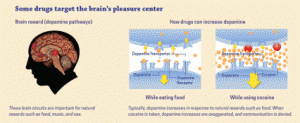
    To start to understand a craving, we need to look first at how drugs work in the brain. According to the National Institute on Drug Abuse (NIDA), experts used to think that a specific chemical neurotransmitter (dopamine) produced by drugs creates an extreme feeling of well-being. However, the reality is that the way drugs work in the brain is a little more complicated than that.

    Today, scientists now think dopamine has more to do with getting us to repeat pleasurable activities (reinforcement) than with producing pleasure directly. Large surges of dopamine “teach” the brain to seek drugs … while other, healthier activities such as exercise, creative pursuits, relationships, or even sex, get sidelined.

    The Definition of  a Craving

    So, what is a craving, exactly?

    Well, take away the drug-of-choice…and the need to feel pleasure still exists.  Our natural ability to feel pleasure can take some time to return as the brain returns to normal function. This is why people often feel the following in the first few months of addiction recovery:

    • depressed
    • flat
    • lacking motivation
    • lifeless

    The technical term for this is “anhedonia”. For some drugs – like meth, cocaine, heroin, or painkillers – it can take months or years for the brain’s chemistry to return to normal. And the amount of time it takes for the brain to return to homeostasis after a period of addiction will vary by individual.

    What’s important to know is that most of us are physically unable to enjoy things that were previously pleasurable. And naturally, we consciously and subconsciously seek out pleasure…to make life fun! This is why drug craving is natural outcome of drug use: it is a physical or psychological urge for your drug-of-choice.

    A craving is a deep yearning for the effect of your drug-of-choice.

    Triggers

    A craving can come out of the blue. It can also be”triggered”. Indeed, most cravings are usually prompted by a trigger. Triggers include external stimuli such as:

    • Certain people
    • Places
    • Situations
    • Smells
    • Other external stimuli

    Triggering situations affect the area of the brain called “amygdala”. When a triggering situation occurs, the amygdala sends signals to the other parts of the brain reminding you of your drug-of-choice. The amygdala regulates functions such as memory and learning, so you are in the company of a person, or in a certain situation that somehow reminds you of your previous addictive behavior… reaching for drugs again is a program running in your brain. The trigger sets of a pattern of decision making that can spiral you into an unconscious decision to use.

    During this process, you may even experience sensations such as shaking, cramps, anxiety attacks, nervousness… etc. A craving sensation can literally nearly take control over a person. However, you can stay in control by knowing the brain science behind them.

    Cravings occur as the result of powerful memories linked to substance abuse. When a trigger occurs, the amygdala lights up and in a moment, you can nearly feel the pleasure of your drug-of-choice. But cravings come and go. They do not last.

    They key to coping with cravings is to anticipate triggers and learn to avoid them. A craving may never go away compltely…the learned “reflex” can last a long time, even in people who haven’t used drugs in many years. Like riding a bike, the brain remembers. Cues that are linked with drug use can trigger uncontrollable cravings whenever you experience the cue, even if the drug itself is not available. However, you can stay in control of a craving and learn to ride it like a wave.

    Are Cravings Normal in Recovery?

    Yes.

    Almost every addict in recovery experiences craving. In fact, cravings are a very common and normal part of addiction recovery. The urge to take your drug-of-choice is rooted in brain chemistry.

    Again, they key is to be aware that they happen. When cravings appear out of nowhere they tend to take us by suprise. And if they come out of the blue, a craving can be sudden and very unpleasant. Indeed, the sudden and impulsive nature of cravings are one of the key factors for relapse.

    Therefore, it’s highly recommended that you ask for help when they strike. This because you’re working with long term memory association in the brain. A trigger can not be “deleted” as easily as people think. So, because cravings act as “automatic” and unconcious desire,s it’s best that you seek help from mental health professionals in order to manage them.

    A counselor, psychotherapist, social worker, or addiction doctor can help you to plan for cravings and teach you tools and strategies for managing them.

    Experiencing cravings and looking for ways to get rid of them? The next section offers you ideas aabout how to manage a craving and what to do when they appear.

    • Are your thoughts preoccupied with your drug-of-choice?
    • Can you literally taste your drug-of-choice on your tongue?
    • Do you experience a strong desire to see old friends?

    Do not worry, these are all normal.

    What you do next is key!

    What Do The Experts Say?

    Ph.D. Adi Jaffe defines cravings as programmed responses to environmental signals that have been connected to drug use through experience. His advice is that when you have a craving, recognize it for what it is. If the experience is overwhelming, make sure there’s someone you can talk to about it (a therapist, partner, parent, or 12 step sponsor). As time passes your cravings will become less and less frequent, though without specific treatment, their intensity will likely not go away. Like he says, cravings are a part of the reality of addiction – knowing what to do with them is a key to success.

    Randy Lindel, Facilitator at SMART Recovery says:

    “Everyone who’s engaged in addictive behavior will experience uncomfortable cravings (“I want it badly”) and urges (“I have to do it now”).”

    Again, this experts notes tha they are normal. And fortunately, h reminds us, they always pass with time. At the outset of recovery, they can be pretty intense, but each one will subside if you can wait it out and have a plan for relapse prevention. Cravings and urges will decrease in strength and frequency over time. You can make this happen by adopting some coping strategies that work best for you.

    3 Ways to Cope: How To Work with Cravings

    1. Learn your personal triggers.

    Being aware about the things that are associated with your addiction past is the first step towards learning how to take control of them. Most people are not aware about which things signal a craving. This is one of the main tricks of cravings. If they are not consciously recognized and registered they tend to act as automatic occurrences forcing your attention on using.

    Cravings may present themselves in any form, but the key thing is learning to recognize your personal triggers. When you are able to detect your personal triggers, you can avoid them. In fact, many professional recommend that you list alternatives to avoid certain people, places, smells or situations which can bring up old, unhealthy habits.

    2. Find a new brain circuit to reinforce pleasure. Or, occupy your mind.

    It’s vital as you identify triggers, you also look for other activities to replace drug use. The brain is re-programmable. So, here are some ideas for what you can do when cravings strike:

    • Ask for guidance and help from a trained treatment professional.
    • Change your routine.
    • Distract yourself: Read a book, see a movie, or talk to a friend.
    • Do something spontaneously from your bucket list.
    • Go out for a walk or exercise for 20 minutes.
    • Practice mindfulness meditation.

    3. Actively create a safe, healthy and drug-free environment.

    We are creatures that hunt for reward. The need to satisfy your cravings and/or desires is based on availability. When a drug-of-choice is completely unavailable, we are forced to shift our attention elsewhere. Know this about your own human nature and bring health into your environment.

    In sum, eliminate all the possible triggers from the place you live and the places you go and the people you hang out will at least make you feel safe. Take responsibility for what you surround yourself in. Then, adjust your lifestyle accordingly.

    Professional Help

    There are many professionals and treatment methods developed to help people deal with cravings and prevent relapse . You can seek professional help from the following:

    • Addiction counselors or psychotherapists (APA find a counselor)
    • Addiction specialist doctors, or MD (ABAM find a doctor)
    • Licensed clinical social workers
    • Hotlines such as SAMHSA’s National Helpline – 1-800-662-HELP.

    Mental health providers can engage you in the following treatment modalities:

    • 12-Step meeting facilitation
    • Cognitive Behavioral Therapy (CBT)
    • Individual Therapy or Group Counseling
    • Mindfulness techniques

    Your Questions

    We hope this article offers practical guidance and some useful ideas about how to get through cravings in addiction recovery. In case you still have a question or want to share a personal experience… please feel free to use the comments section below. We try to answer all real-life comments personally and promptly, or refer you to an expert in case we do not know the answer.

    Reference Sources: Alternatives In Treatment: What Are Drug Cravings and How Do They Impact an Addict’s Life?
    Psychology Today: Craving: When the brain remembers drug use
    Addiction Blog: How does a heroin craving feel?
    Recovery: Cravings Symptoms, Treatments and Relapse Prevention
    A Road To Recovery Rehab: Understanding Cravings and How it Helps Recovery
    Addiction Blog: Coping with urges and cravings
    Addiction Blog: Coping with drug and alcohol cravings: A skills list

    View the original article at

  • 7 Tips for Building Your Addiction Recovery Support Network

    7 Tips for Building Your Addiction Recovery Support Network

    Support and Addiction Recovery

    Recovery brings about a lot of changes in your life, including who you surround yourself with. It is critical that you reevaluate your current relationships and cut ties with anyone who is not supportive of your new sober lifestyle. While this might diminish your social circle, do not get discouraged. Forming new, positive connections is a rewarding part of recovery.

    While reaching out to new people can be intimidating at first, surrounding yourself with positive people will not only keep you motivated in your recovery but will improve your overall happiness. Below, you’ll find some tips on how to build a strong sober support network that can help you overcome any challenges ahead and will be there to celebrate all your victories.

    TIP #1: Be Honest.

    To form a strong support network that can effectively help you navigate through all the changes in your new life, you first need to ask yourself what you are looking for. Explore your true needs. Ask yourself:

    • Do I need someone who will go to meetings with me?
    • Do I need someone who will encourage you to I healthier and work out more?
    • Do I need someone who will tell me what I need to hear, even if it is not what I want to hear?

    Knowing what you need will make it easier to recognize who should be a part of your support network.

    While it is important that you are honest about your needs, you also need to be able to relay them to those around you. Your friends and family want to help but they may not know how. So, be open and honest. Do not be afraid to educate them about what you are going through, how you are feeling, and what they can do to help. If you need them to be more patient and understanding with you because you are having a tough day, let them know. If you are feeling lazy or uninspired and need someone to push you to go to a meeting or practice some self-care, ask for help. Remember, you cannot get what you want unless you ask for it.

    TIP #2: Choose Wisely.

    Who you include as part of your support network is very important. When making new friends, ask yourself:

    Do they abuse drugs or alcohol? If they do, they should not be a part of your network as they could be a source of temptations and triggers that could derail your progress. Note that not everyone in your network has to be in recovery. You will likely have friends or family who drink during social occasions. Just be sure to establish boundaries, such as asking them to not drink in front of you or not ask you to go to bars with them.

    How do they make me feel? Is their positivity contagious? Do they encourage you to go out of your comfort zone or inspire you to be better? Or does their negativity cause you stress or make you feel down? Being around negative people can be stressful, so avoid this trait when forming new friendships.

    Are they living healthy lives? Surrounding yourself with people who take care of themselves and value their well-being will encourage you to do the same.

    TIP #3: Embrace Diversity.

    While surrounding yourself with others like you provides a sense of comfort, having a diverse group of friends gives you access to fresh new perspectives. When building your support network, consider attending 12 Step meetings and introducing yourself to everyone and seeing who you click with. By including individuals of different ages, cultures, backgrounds, and years of sobriety in your life, you will be exposed to a wealth of knowledge.

    Another great way to make new friends is by attending sober events. Many treatment centers hold educational workshops and fun sober activities for their alumni to socialize with one another. If you went to treatment, reach out to the staff there and see if they have an alumni group. Sober events can range from open mic nights to mountain climbing and are a great way for you to not only meet new people but relearn to have fun sober.

    TIP #4: Go Beyond.

    Don’t limit yourself to only making friends in recovery. Go beyond your comfort zone and interact with others, even those who may have no experience with addiction. Know that while you are sober, sobriety is not your full identity. There are many other things that make you who you are. So, think about what you are passionate about and get involved ⎼ take a cooking class, go to the gym, start volunteering, take a computer course ⎼ and make an effort to meet others there, too.

    Befriending individuals outside of the recovery community can be intimidating for some. A common worry is explaining that you are sober. While this is an understandable concern, know that no one worth having as a friend will think of you any differently just because you are choosing to live a healthier life.

    TIP #5: Try Online.

    Spending too much time on your phone, particularly on social media, can distract you. It can also slow your progress in recovery. But going online does provide you access to many sober social networks where you can connect with others who may be going through similar things. Mobile apps like Sober Grid can help you connect to other sober people no matter the time of day, which can be particularly helpful when you are going through a crisis or experiencing cravings. Sites like MeetUp – and even using the hashtag #livingsober on Instagram – can also introduce you to others living healthy, fulfilling lives.

    TIP #6: Remain Open.

    A big part of recovery is rediscovering yourself, your passions, and how to enjoy life sober. To do this, you need to remain open-minded about trying new things and meeting new people. Try doing things you have never experienced before, such as going kayaking, singing karaoke, or painting. Even if you decide this is not the activity for you, you may end up making genuine connections with people there. It is not so much about what you do but who you spend that time with.

    In sum, fight back against any resistance you may feel towards trying new things and get out of your comfort zone. The more you put yourself out there, the more you and your support network will grow.

    TIP #7: Don’t Rush.

    Seeing all the positive changes in your life is exciting but be sure to take everything one step at a time. Do not rush into friendships because you feel the pressure to have a support network set up. Allow friendships to form naturally rather than forcing them. Similarly, once you have made new friends, practice tolerance. Recovery might be new to them and you cannot expect them to fully understand everything you have gone through. Understand that you are forming new connections and you need to build them up over time.

    Your Support Network Is Your Lifeline

    While addiction might have been isolating and lonely, your recovery should not be. Positive relationships are a key component of a healthy, fulfilling life. So, reinforce your current relationships and allow yourself to form new ones. Having a group of individuals you can both reach out to during tough times and celebrate your accomplishments with can make all the difference in your recovery.

    And if you need help, reach out. You can use this article as a place to begin. Please leave your questions or comments in the section below. We’ll do our best to respond to you personally and promptly!

    About the Author: John Hamilton is Chief Clinical Outreach Officer for Mountainside Treatment Center. He is a Licensed Marriage and Family Therapist as well as a Licensed Alcohol and Drug Counselor. At Mountainside, he communicates the depth and intricacies of the company’s portfolio of programs and offerings, which have redefined addiction treatment for thousands of individuals across the country. John has been a consultant for the National Institute for Drug Abuse (NIDA) and the Substance Abuse and Mental Health Service Administration (SAMHSA).

    View the original article at