Tag: valium

  • Finding Luxury Rehab for Valium Addiction

    Finding Luxury Rehab for Valium Addiction

    Need help finding a luxury Valium rehab? We can help.

    Table of Contents

    1. The drug
    2. Uses of the drug
    3. Slang names
    4. Definition of addiction
    5. Problems with addiction
    6. Addiction symptoms
    7. Withdrawal symptoms with the drug
    8. Drug Rehabs
    9. Types of rehabs
    10. Payment for rehab loans and insurance
    11. Conclusion

    The drug

    Valium (generic name diazepam) is a powerful drug that is used to treat anxiety, stress, alcohol withdrawal symptoms, as well as seizure episodes. It’s a benzodiazepine derivative. The drug is a colorless or light yellow crystalline compound, which is insoluble in water. 

    Uses of the drug

    Valium is used for the treatment of anxiety disorders, stress, and tension in everyday life. People suffering from acute alcohol withdrawal often resort to Valium because it helps in providing temporary relief to muscle cramps and tremors that are caused as a part of withdrawal syndrome. It also helps relieve acute agitation in patients, along with assisting them in calming down. It’s also effective in treating acute delirium tremens and hallucinosis, which is caused as a part of withdrawal syndrome. 

    Slang names

    The drug is commonly known as Valium and is used popularly among people all over the world. Some of the common Valium slang names are:

    >> V’s

    >> Yellow V’s

    >> Blue V’s 

    >> Benzo’s 

    >> Dead Flower Powers

    >> Foofoo 

    Definition of addiction

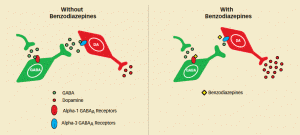
    Excessive use of Valium can cause an addiction in users. Valium affects the body through brain cells. It starts acting up by entering the central nervous system through your bloodstream and changes the cells in the brain’s pleasure center. Benzodiazepines weaken a group of cells that prevents the neurotransmitter of the brain, dopamine, from flooding through. Since these cells are inactive, dopamine is released in the brain thereby leading to a feeling of pleasure and intense joy. This also helps relieve the user from stress and anxiety. Soon, the brain gets used to this euphoric feeling and craves for more Valium. The person under addiction seeks more Valium for its pleasure-inducing effects. The more the person consumes Valium, the more the brain wants it; this pushes the user from a controlled user to an addict who can’t do without Valium. Gradually, the user becomes an addict and starts to lose control over themselves, as the drug craving episodes start controlling their actions and emotions.

    Problems with addiction

    Valium addiction is a significant problem that leads to an extreme craving for the drug. When the drug is denied, it can cause acute withdrawal symptoms, as well as muscle cramps and tremors. In severe cases, rehabilitation is needed for the recovery to be successful. Most people who are addicted to Valium are the ones prescribed to have it for a prolonged period. However, with an accepted gradual increase in the dosage, they become addicted to it and start craving for more. Over time, the users become tolerant to the drug. This means that they will need Valium every time they need to get that feeling of relief, along with the achievement of the desired sedative effects. This leads to increased consumption of the drug, in a larger dosage. Thus, pushing the patients into a more profound addiction. This causes the cycle of addiction, craving, and dependence to continue. 

    Addiction symptoms

    The initial addiction symptoms of Valium include the difficulty in controlling the use of the drug. The more the addict consumes, the more Valium he requires to get the desired effect of pleasure and sedation. As the addicts become more tolerant, they consume more Valium, thus leading to addiction. Other physical symptoms, while consuming the drug in excess, include heavy heartbeat and dry mouth. The addict will feel nervous and confused, having delusions of well-being, and paranoia along with frequent suicidal thoughts; these signs are relatively common in Valium addicts. With the increase in addiction and consumption, extreme health conditions such as seizures, slipping into a coma, and the risk of fatal overdose can also be categorized as a symptom of Valium addiction.

    Withdrawal symptoms with the drug

    Withdrawal symptoms from Valium are extreme and can cause various unpleasant physical symptoms, such as tremors, muscle cramps, or fainting; this happens when you’re trying to quit the drug suddenly. Addicts will also witness a significant increase in craving for the drug. The withdrawal symptoms can be categorized into four types:

    • Physical symptoms

    This includes various physical pain and illness, such as severe headaches, nausea, vomiting, intense stomach pains, extreme cramps, and tremors. Loss of appetite and dry mouth is also caused as a part of the withdrawal symptoms.

    • Cardiovascular symptoms

    This includes changes and fluctuations in the cardiovascular systems such as a sudden increase in blood pressure, variation in heart rate, sudden increase and decrease of pressure, and so on.

    • Neurological symptoms

    Neurological symptoms include a confused state of mind, lack of clarity in thoughts and actions, the development of seizures as well as lack of consciousness of mind. Reduced reflexes are also seen among the addicts.

    • Psychological symptoms

    People under withdrawal symptoms suffer from intense craving, extreme mood swings, sudden depression, and panic attacks. They may also face rebound anxiety due to the denial of the use of Valium.

    A variety of medications are given to addicts to help them fight and overcome withdrawal symptoms. The first step towards treating a Valium addiction or any other drug addiction is detoxification. This is done to ensure that the negative effects and the intake of drugs are completely removed. This helps the patient to become less tolerant of the drug than before and reduces dependency. This process of detoxification is done gradually in order to avoid fatal attacks. 

    Gradual reduction of the intake of Valium, along with other medications to reverse the effects of the drug helps the body get accustomed to performing normal body functions without Valium. If the dosage of Valium is stopped abruptly, it can cause adverse effects in the body, and in extreme cases, even death. During this process of detoxification, the addicts usually experience extreme physical conditions such as diarrhea, abdominal pains, irritation, mood swings, nausea, intense cravings, and so on. Extreme withdrawal symptoms such as joint and muscle pains, rapid breathing, fluctuation of heart rates might also be caused. Detoxification helps the addicts gradually get used to the fluctuating dose along with controlling the craving for the drug. Patients are usually given a certain amount of Valium initially. Once the medication reaches a certain level, it’s slowly tapered down and finally discontinued. Once the intake of Valium has stopped completely, the withdrawal symptoms can become worse. The medication list that is included to tackle withdrawal symptoms and reduce cravings are as follows:

    SSRI (selective serotonin reuptake inhibitors)

    This is a class of antidepressant medications. These are often effective to smooth out the instant effects of withdrawal symptoms, though results may vary from person to person.

    Melatonin

    It’s a hormone that is proven to ease anxiety, irritation, and induce sleep. This helps address tolerance and reduce the extreme effects of intense withdrawal symptoms.

    Anticonvulsants

    These are used when patients develop a seizure. Anticonvulsants are useful in reducing the overall effects of withdrawal symptoms and helping patients control the craving of Valium.

    Drug Rehabs

    One of the effective methods of treatment for Valium addiction is rehab centers. Choosing the most suitable rehab for addiction is essential since there are hundreds of centers all over the world. It’s important to select Valium rehabs that have a quicker rate of recovery. Moreover, for individuals suffering from Valium addiction, the approach is vital. Rehabs offering evidence-based medication are the best and most effective in treating substance abuse addicts. Evidence-based medication professionals are specially trained to use the latest technology, medications, and approach to treating patients suffering from prescription drug addiction and overdose. 

    Types of rehabs

    There are mainly three types of Valium rehabs for treating addicts. They are as follows: 

    Inpatient Rehabs

    Inpatient rehabs should be the choice for patients suffering from intense addiction of Valium. In these rehabs, the patients need to stay for round-the-clock observation under the supervision of doctors and counselors. In these rehabs, the treatment or rehab program varies between 30 days to 90 days, depending on the condition and needs of the patients. The treatment may go on for a longer time. The duration depends on the seriousness of the addiction and the recovery rate of the addict. The first step is medical detoxification, where the patients are treated with several medicines to detoxify the body from the effects of Valium. During this phase, the patient is monitored for withdrawal symptoms or seizure. Physicians keep the patients under constant monitoring, preventing them from fatal attacks.

    Inpatient rehabs often include the patients taking up daily chores of life as they recover gradually. This helps the patients interact with other addicts who are going through a similar phase of life and get motivated by each other. Patients find similar people around and hence, don’t feel out of place or isolated. This environment with similar people helps patients recover and get back to their normal life quickly. These rehabs are luxurious and aesthetically beautiful since the patients residing there should have a feeling of positivity and motivation, in order to restart their lives as a normal person that’s free from addiction.

    Outpatient Rehabs

    In these types of rehab centers, the patients have to make an appointment, and they can take part in the treatments and go back home, instead of staying back at the rehab. These rehabs are suitable for patients who have mild addiction or have recovered from addiction, and regular treatment is being done to prevent relapse. It’s seen that patients after they have been successfully treated in the Inpatient rehab and sent home, experience an addiction relapse, and they start consuming Valium again. This is done to prevent relapse and continuously monitor the patients even after they are sober. 

    Outpatient rehabs have become quite useful and accessible. These rehabs check the patients regularly and ensure that they do not indulge in drug addiction again since relapse is a common problem seen in most drug addicts. Counseling sessions are also a part of the treatment in the outpatient rehabs. This helps patients with self-motivation and keeps them away from drugs. Moreover, meditation sessions are also conducted, thus helping in self-reflection and realization. 

    Outpatient rehabs have special significance for the patients who are already treated in residential rehabs and are free from drug addiction. Patients who are cured of Valium addiction also get additional treatment, medication, and counseling to control the craving of drugs and lead a healthy life by forgetting the past.

    Residential Rehabs

    Often, it has been seen that patients resort to drugs and addictions again after being successfully treated in rehabs, and once they leave the inpatient rehabs. For such addicts, residential rehabs are the perfect option. Here, patients are kept under constant observation, along with counseling and meditation sessions. People staying in these rehabs undergo medication, take part in various activities and learning sessions, along with counseling sessions, which prevent them from indulging into addiction yet again. Residential rehabs offer long-term programs and treatments, especially for people who had been treated more than once, yet were taken to addiction once they went back to their normal course of life.

    Residential rehabs focus on motivating the patients along with treatments and activities, such that they can drive and motivate themselves to lead a normal life and refrain from Valium abuse and addiction. Residential rehabs involve the addicts into various individual and team activities, keeping them engaged and thus preventing the use of drugs again. These activities also help the addicts to reskill themselves and learning things that will help them earn a living or be employable once they leave the residential rehabs.

    Behavioral therapies play a key role in helping patients recover. The following are some of the therapies that the Valium addict patients must undergo:

    • Individual therapy

    The basic yet effective forms of behavioral therapy are individual therapy. In this kind of session, the counselor meets the patients for a one-to-one discussion. In these sessions, the patient can speak his heart out to the counselor; this helps the counselor understand the patient. Here, counselors can give separate time to each patient and motivate them to refrain from further drug addiction or relapse. Confidentiality and privacy are taken care of by the rehab centers and the counselors.

    • Group counseling

    Counseling a group of similar people, having the same difficulties in life, helps in empathizing with each other. These sessions help the patients to understand the disastrous effects of drug addiction and the importance of positivity. They also get inspired by each other’s journey towards a normal life. They also take part in various creative and recreational group activities, helping them to reskill themselves and become employable after they leave the rehabs.

    • Cognitive behavioral therapy

    This therapy is all about controlling your impulses, instead of your drug craving managing all the activities. This helps individuals regain positivity and get back to the mainstream of life. This kind of therapy guides people to help themselves and become their controller in matters of drug addiction and to refrain from any form of addiction. 

    Payment for rehab loans and insurance

    Rehab loans, as well as insurance, are available to financially support the addicts such that they can continue their treatment in the center for a long period. Since treatments in rehabs are expensive, and the duration of the programs are long term, the insurance and loans help the patients and their families cope with the cost of treatment.

    Conclusion

    Valium rehabs have helped thousands of drug addicts to quit drugs forever and get back to a healthy life. Rehabs form an essential part of treatment and recovery for drug addicts. People addicted to drugs for a long term need to undergo the entire process of detoxification, medication, rehabilitation, counseling, and medication to give up on drugs finally. Chances of drug addiction relapse are high since lack of acceptance in society, along with poverty caused due to drug addiction and unemployment in most cases, forces the patients to resort to the drug again. This is where friends and family need to play an active role. Support from close ones, along with motivating them to move on in life helps the addicts get back to the ordinary course of life.

    View the original article at thefix.com

  • Best Rehab Options for Diazepam Addiction Treatment

    Best Rehab Options for Diazepam Addiction Treatment

    Our guide can help you find a luxury Diazepam rehab.

    Table of Contents

    1. WHAT IS DIAZEPAM?
    2. WHAT ARE THE USES OF DIAZEPAM?
    3. WHAT ARE THE SLANG NAMES FOR DIAZEPAM?
    4. WHAT IS DIAZEPAM ADDICTION?
    5. WHAT ARE DIAZEPAM ADDICTION COMPLICATIONS?
    6. WHAT ARE DIAZEPAM ADDICTION SYMPTOMS?
    7. WHAT ARE DIAZEPAM WITHDRAWAL SYMPTOMS?
    8. WHAT ARE DRUG REHABS?
    9. Types of rehabs
    10. Payment for rehab loans and insurance
    11. Conclusion

    WHAT IS DIAZEPAM?

    Diazepam is a benzodiazepine derivative, a prescription drug that is often prescribed by doctors and physicians to treat extreme anxiety and unmanageable stress. It’s a tranquilizer and acts as a muscle relaxant, thus reducing tension and anxiety. This drug is colorless or light yellow and is a crystalline compound that is also water insoluble.

    WHAT ARE THE USES OF DIAZEPAM?

    Diazepam or Valium is a medicinal prescription drug often prescribed by doctors for the treatment of extreme anxiety or stress. It’s also useful in treating hypertension. This drug acts as a muscle relaxant and helps patients relax and unwind from the daily stresses in their lives.

    Diazepam is also useful for people suffering from acute withdrawal symptoms due to alcohol addiction. This helps the victim in getting relief from muscle cramps and tremors, along with other extreme physical symptoms caused as a negative side effect of the withdrawal effect. Patients suffering from acute agitation and irritation due to denial of alcohol are also prescribed Diazepam to help them calm down. 

    WHAT ARE THE SLANG NAMES FOR DIAZEPAM?

    There are several slang names that are used for purchasing Diazepam without a prescription. These names are used when a person is addicted to medicine and tries to make a clandestine purchase. With that said, here’s a list of some common slang names for the drug. 

    • Moggies 
    • Vallies 
    • Jellies
    • Eggs 
    • Blues
    • Yellows 

    WHAT IS DIAZEPAM ADDICTION?

    Diazepam, which is a prescription medicine, is popularly used by doctors and medical practitioners all over the world as a tranquilizer to help recover from stress or anxiety. However, with prolonged use of this drug, patients might become addicted to it. Excessive use and overdose of Diazepam cause addiction, as the patients start becoming tolerant of this drug with time.

    Diazepam affects the body through the brain cells. It mainly works on the cells in the brain’s pleasure center, thus triggering the feeling of joy, pleasure, and stresslessness. Diazepam or Benzodiazepines, as a whole, work on a group of cells that prevents dopamine from flooding into the brain. Thus, dopamine is released in excess in the brain when overdosed or consumed for too long.

    This leads to a sensation of pleasure, which the patients enjoy and would love to cherish for a longer time, thus consuming even more of Diazepam. Once the consumers get this intense feeling, the brain starts craving for more Diazepam. The more the person consumes, the more Diazepam tolerant he becomes.

    The pleasure-inducing effects are intense, and they need more of Diazepam to get the desired intensity, thus slipping deep into addiction. With more indulgence of Diazepam, the patients become addicts and start getting controlled by Diazepam, thus losing control over themselves. 

    WHAT ARE DIAZEPAM ADDICTION COMPLICATIONS?

    People suffering from Diazepam addiction have an extreme craving for the drug. When denied, acute withdrawal symptoms are seen in the patients, along with severe and adverse physical symptoms such as muscle cramps, pain, and irritation. Rehabilitation is the only way for successful cessation of the addiction for patients suffering from prolonged Diazepam addiction.

    It has been observed that most Diazepam addicts were once patients who were initially prescribed to take the drug for treatment. However, they have, over a prolonged period, a self-imposed increase in the dosage, leading to addiction. With regular overdose, the users become Diazepam tolerant, which leads to more craving of the drug. 

    This cycle goes on, and the addicts need more dosage than the previous time to get the feeling of intense pleasure and satisfaction. 

    WHAT ARE DIAZEPAM ADDICTION SYMPTOMS?

    Some of the addiction symptoms of Diazepam are pretty much like an addiction to any other drug. People witness difficulty in refraining themselves from the use of the drug. They develop a lack of interest in various activities and are unable to focus. As the addicts consume Diazepam in more massive amounts, they become more tolerant towards the drug.

    Physical symptoms may include a soothing state of mind, fluctuating heart rates, dry mouth, dizziness, and being in a subconscious state of mind. The addict feels nervous and confused. Other symptoms include delusions of well-being, and they often have random suicidal thoughts. These symptoms increase with time if not detected and treated immediately.

    WHAT ARE DIAZEPAM WITHDRAWAL SYMPTOMS?

    Once the victim stops having Diazepam, severe withdrawal symptoms can be seen, causing various extreme physical conditions, such as intense pain, shivering, tremor, muscle cramps. The victims might even collapse if they don’t take Diazepam for an extended period. This happens typically when the addict tries to quit the drug. The withdrawal symptoms for Diazepam addiction can be categorized as follows: 

    • Physical symptoms

    The main physical symptom of Diazepam withdrawal is severe pain, including headaches, muscle cramps, joint, and abdominal pains. Other symptoms are vomiting, shivering, and tremors. Addicts also experience loss of appetite and dry mouth.

    • Neurological symptoms

    Diazepam addiction causes the victims to feel confused and experience a lack of clarity when they stop having Diazepam. The lack of synchronization between thoughts and actions causes failure in comprehending properly. 

    • Cardiovascular symptoms

    The cardiovascular system of the body is adversely affected as a result of Diazepam withdrawal effects. Fluctuating heart rate, shortness of breath, and sudden rise or fall in blood pressure can cause discomfort in addicts. In extreme cases, cardiovascular fluctuations might even prove to be fatal.

    • Psychological symptoms

    Psychologically, not having Diazepam causes depression, extreme panic attacks, and increased cravings. Addicts often become violent and try to get their hands on Diazepam.

    The sudden stop of Diazepam, after a prolonged period of consumption, can be fatal for the victims. A wide variety of medicines are given to the patients as a part of the Diazepam withdrawal process to keep them calm and prevent fatalities. 

    As a first step, detoxification takes place, where the addicts are detoxified with medications to gradually decrease and then nullify the effects of Diazepam from the body. This helps the patients become less tolerant of the drug.

    Initially, the patients are given a certain amount of Diazepam, after which the doses are tapered down. The dose of Diazepam is finally discontinued, depending on the response of the patients. The medicines that may be used for the withdrawal symptoms include selective serotonin, melatonin, and anticonvulsants. All these are antidepressant medications that can reduce the effects of intense withdrawal symptoms.

    WHAT ARE DRUG REHABS?

    Rehab centers are the most effective places for the treatment of people suffering from any addiction. Rehabs take complete care of the addicts, and they are treated by expert teams, experienced doctors, and consultants. There are thousands of rehab centers, but not all of them are effective or best for treatment. It’s essential to choose the most suitable rehab care after considering the following factors:

    • The severity of the addiction
    • Success rate
    • Number of renowned and experienced doctors
    • Cost
    • Ambiance 

    Rehabs that offer evidence-based medication are most effective in treating Diazepam addiction. Rehabs using this medication technique have professionals who are specially trained and use the latest approaches, technologies, and medications for treating people with Diazepam addiction. Each patient is first analyzed and then treated based on the severity of the condition.

    Types of rehabs

    The rehabilitation centers can be categorized into three types. Here are the most common ones. 

    Inpatient Rehabs

    This is one of the types of rehabs popular for a severe Diazepam addiction. These are quite similar to the residential rehabs, where the patients need to stay until the treatment goes on. The patients are kept under observation all the time and are attended by the doctors and counselors.

    The period of treatment varies depending on the physical condition and the kind of improvement seen in the patients. Once the detoxification is carried out successfully, other therapies and medications, along with counsellings and motivational sessions, are planned and executed. This ensures that the patients can come back to a healthy life soon after the treatment period ends. 

    Inpatient rehabs are often more beneficial since they keep the patients busy throughout the day with a series of activities and leave no time for them to resort to addictive behavior again. Since these rehab centers accommodate lots of patients, each person interacts with other addicts and gets motivated from their journey.

    Since all have similar issues, no one judges the other, thus making the process of recovery smoother and comfortable. These rehabs offer training sessions and courses, helping the addicts in becoming employable after they complete their duration of treatment and are ready to go back to their regular routine. 

    Outpatient Rehabs

    Outpatient rehabs do not have in-house residential facilities. Patients can make appointments with the consultants and counselors for the required treatment. These rehab facilities are popular for patients who are being pushed to the verge of addiction or who has just recovered and are facing relapse of addiction.

    A regular visit, treatment, and checkup at these rehabs prevent relapse of drug addiction. Patients who have completed treatment and are sent home often face recursion of addiction. They start readministering Diazepam. To prevent that, outpatient rehabs keep monitoring the patient constantly through regular treatment and sessions even after they are free of addiction.

    Residential Rehabs

    Residential rehabs are rehabilitation centers where patients can stay and take up the course of treatment. These rehab centers offer 360-degree treatment with special care devoted to the physical and mental well-being of the patients. Mental and psychological treatment is equally important for curing Diazepam addiction.

    Medication only provides a short-lived relief from an addiction problem. A patient needs to develop a determination to lessen the chances of relapse. Residential rehabs help instill confidence and motivation. The residents also take part in various positive and creative activities, along with learning and counseling sessions. These activities help them build the determination to prevent them from indulging in drugs again.

    Residential rehabs also offer team building activities, helping the patients restore their social and human qualities, thus helping them prevent the use of drugs in the future. These activities are designed to reskill the residents and help them make their living and recognition after they leave residential rehab. Among the various treatments and therapies, some of the most effective ones are as follows. 

    • Individual therapy

    This is a basic form of therapy that has proved to be the most effective among all types of behavioral therapy. In this kind of treatment, the counselors meet the patients individually and indulge in a personalized discussion.

    In these sessions, the patients are encouraged to speak without hesitation and let out all the issues and problems in front of the counselors, who ensure the protection of privacy and confidentiality.

    These sessions are most effective because, after all, besides medications and efforts, it is the addicts themselves who have to realize the adverse effects of drugs and Diazepam addiction and pull themselves out of it. 

    • Group counseling

    Working in groups helps patients enhance human qualities and adapt to social regulations. These sessions of counseling a group of similar people who are suffering from a similar problem help in strengthening empathy in individuals.

    The patients interact and learn from each other, thus understanding the importance of refraining from drugs and moving towards positivity. They also get to interact with recovering drug addicts who might have much of advice to provide. That way, the patients who are still under treatment get inspired by the survivors and regain confidence.

    Payment for rehab loans and insurance

    Treatment for Diazepam addiction in rehabs can be expensive. Since the duration of the treatment, sessions, and medication takes time, financial assistance can sometimes be inevitable. Loans and insurances are available to support the expenses of treatment at the rehabs. These loans ensure that the victims who need treatment can continue their medication and courses at the rehab facility. You can consult the bank or your insurance company to know more. 

    Conclusion

    Diazepam addiction treatment has been made a lot easier with the help of rehab solutions. Mental health awareness has also helped in encouraging more people to take the necessary steps to treat mental health issues, like an addiction. For more information on the above, you can always conduct a search online.

    View the original article at thefix.com

  • How is Valium prescribed?

    How is Valium prescribed?

    Valium is the brand name for an anti-anxiety medication which contains diazepam, a Schedule IV controlled substance. Because people can abuse diazepam to get high, Valium is only available by prescription and can be used in tablet, gel and injectable form. More here on Valium costs, prescription doses and signs of Valium abuse. Plus, a section at the end for your questions about Valium prescriptions.

    What do doctors prescribe Valium for?

    Valium is a very versatile drug. Doctors may prescribe Valium to treat the symptoms of anxiety, muscle spasms, seizures, and even alcohol withdrawal. So, Valium works how?  The main ingredient in Valium, diazepam, is part of a class of medications called a benzodiazepine that causes sedation and relaxes the muscles. Valium is also knowns as a tranquilizer, sedative, or central nervous system depressant.

    Valium prescription dosage

    How long Valium lasts does not vary (about 4-6 hours).  But the dosage of Valium depends on the symptoms your doctor is hoping to treat. For example, someone suffering from anxiety may take between 2-10 mg of Valium several times a day. For alcohol withdrawal, 3-4 doses of 10 mg over the first 24 hours is the starting dose, but after that Valium prescription dosage will be reduced to 5 mg as needed. For muscle spasms and convulsive disorders, doctors recommend 2-10 mg of Valium between 2 and 4 times a day. In elderly people, the dose will be much lower, usually no more than 2.5 mg until the ability to tolerate Valium has been established.

    Valium prescription cost

    The cost of Valium will vary depending on your dosage and insurance coverage. Without insurance, the name brand version of Valium can cost upwards of $100 a month. However, the generic version of diazepam is usually less than $10. Unless there’s some reason why you can’t take the generic formula, it’s probably going to be much more affordable to buy generic Valium.

    Can you get Valium over the counter?

    No. You cannot get Valium over the counter. Valium is only available with a doctor’s prescription due the addictive potential of the drug. If you are suffering from anxiety or another disorder treated with Valium, your best option is to talk to your doctor and get his or her recommendation on the best medication to treat your symptoms. Valium isn’t the best option for everyone.

    Signs of Valium prescription drug abuse

    How addictive is Valium? – Very.

    Taking more Valium than prescribed, or taking Valium in a way other than directed usually indicated Valium abuse. If you’re using Valium to get “high”rather than to treat your symptoms, you’re abusing the medication. Regular abuse of Valium does have risks -including addiction and increased adverse effects. But, no need to worry because help is available! In fact, there are many rehab options and treatment programs for tranquilizer addiction available to help you get sober.

    Abusing Valium in conjunction with alcohol or other drugs can potentially cause illness or death.

    Valium prescription questions

    Do you still have questions about Valium prescriptions? Please leave your questions about Valium here. We are happy to help answer your questions personally and promptly. If we do not know the answer to your particular question, we will refer you to someone who does.

    Reference Sources: ToxNet: Diazepam
    Medline Plus: Diazepam
    NCBI: Addiction to diazepam (Valium) 

    View the original article at addictionblog.org

  • How long does Valium withdrawal last?

    How long does Valium withdrawal last?

    Valium (diazepam) withdrawal can last for weeks. Why?

    Valium is a benzodiazepine. It used to provide short term relief for anxiety and has been used to help to support alcoholics from recovery. Though Valium is used to help support initial chemical detox processes, Valium itself has a high dependency rate. This makes withdrawing from Valium, or Valium withdrawal syndrome, just as difficult as alcohol and other substances.

    If you are planning to stop taking Valium and want to know which side effects stop taking Valium to expect you are in the right place. Here, we explore the withdrawal process from diazepam and what you can expect over the course of the weeks after you stop taking Valium. We also invite you to ask any questions you may have about Valium at the end.

    How long until Valium withdrawal starts?

    If you become physically dependent on diazepam and have decided to stop taking Valium, youcan expect to go through the process of withdrawal. You will start to experience Valium withdrawal symptoms a few hours after the effects of your last dose of diazepam has worn off. The intensity of withdrawal from Valium symptoms depend on the duration of and amount of Valium dosage and/or if you are using Valium outside the prescribed parameters. Below is a list of symptoms you may encounter at any time during Valium withdrawal.

    • abdominal pains
    • dysphoria
    • extreme anxiety
    • headache
    • insomnia
    • muscle pain
    • restlessness
    • sweating
    • tension
    • tingling of extremities
    • tremors

    How long do Valium withdrawal symptoms last?

    It generally takes people longer to withdrawal from Valium than from other medications. Most people continue to experience Valium withdrawal at different levels of severity for several weeks after last dose of diazepam. Because of the nature of Valium, symptoms will seem to get easier and then suddenly spike with the strength you felt at the beginning of the withdrawal symptoms. Valium withdrawal symptoms: how long? Acute withdrawal lasts from 3-6 days, while other symptoms can persist for weeks or months later.

    Valium withdrawal timeline

    The onset of Valium withdrawal symptoms begins a few hours after the last dose of Valium has worn off. Symptoms will continue to intensfiy and last for several hours later. In fact, while acute symptoms of Valium withdrawal usually subside after the first few days of detox, more persistant symptoms of Valium withdrawal can last several weeks afterwards. Furthermore, “rebound symptoms” can occur, which may manifest in high levels of anxiety. However, these symptoms should begin to decline about 6-8 weeks after quitting Valium.

    24 – 72 hours Valium withdrawal: Withdrawal from Valium mimics that of alcohol. Your body will experience tremors, sweating, and agitation. Intense resurgence of anxiety or symptoms which where once taken care of by using Valium can also be present.

    Week 1 Valium withdrawal: There should be a lessening of withdrawal symptoms from diazepam after the first week of Valium withdrawal. Physical symptoms will be evening out. However, it is likely you will still experience sleep disturbances and mild aches and pain.

    Week 2 Valium withdrawal: It is during this time that acute withdrawal symptoms tend to resurface with the same original intensity.

    Week 3-4 Valium withdrawal: Symptoms of Valium withdrawal again tend to dip before possibly resurfacing. This week should be even better than week one, as the further away you are from that last does, the more you can feel your body returning to normal. Insomnia and anxiety may still be a problem you will have to deal with.

    Valium withdrawal: how long?

    As a benzodiazepine, diazepam withdrawal seems to fluctuate between highs and lows. One week you may feel great; the next week your body can manifest severe withdrawal symptoms and discomfort.you can expect some level of fluctuations during withdrawal.

    Depending on the amount of Valium you have been taking and the length of time you’ve taken it, you may go also exerpience PAWS,post-acute withdrawal symptoms. These are a set of persistent symptoms that last for several weeks to months after you have stopped taking Valium. What makes this process more difficult is that Valium withdrawal symptoms can mimic the original disorder(s) Valium was used to treat. However, keep in mind that although withdrawal does exacerbate anxiety, depression, and agitation … it passes. Other rebound symptoms such as panic attacks can be addressed by a psychologist or psychiatrist.

    How long Valium withdrawal questions

    If you have any more questions regarding withdrawal from Valium please ask. We do our best to respond to your question accurately and promptly. Also, we invite you to share your own experience of withdrawal from diazepam. What did you go through? What helped?

    Reference Sources: NCBI: Diazepam withdrawal Syndrome
    FDA: Valium
    National Library of Medicine: Controlled Study of withdrawal Symptoms 

    View the original article at addictionblog.org

  • How much Valium is too much?

    How much Valium is too much?

    Valium (diazepam) is an anti-anxiety medication used to treat panic and mood disorders. In this article, we’ll look at safe dosing of Valium as well death from Valium overdose. Your questions about safely taking Valium to prevent addiction or overdose are welcomed at the end.

    Valium strengths

    Valium is avilable as a tablet and may be prescribed in doses ranging from 2 mg to 10 mg, 2-4 times daily. It’s available in strengths of 2mg, 5 mg, and 10 mg. Is Valium addictive? Yes. You can develop a tolerance to the benzodiazepine medication. If you take Valium long term, you can also develop eventual dependence or Valium addiction, especially if you’re taking Valium in high doses.

    How much Valium is safe?

    The recommended daily dose of Valium is 4 to 40 mg throughout the day. People have been reported taking doses of up to 2000 mg and experiencing only minor toxicity. That’s about 50 times the maximum recommended daily dose. So Valium is incredibly safe and very difficult to overdose on if taken by itself.

    How much Valium can you take at once?

    Only up to 10 mg of Valium should be taken at one time, and that’s only in someone with a tolerance for the medication. Taking Valium in large quantities for the euphoric “high” can cause adverse side effects. Because Valium can impair your balance, judgment, and alertness, taking it puts you at risk for accidents. And snorting Valium high can also increase your risk of overdose.

    How much Valium to overdose?

    It’s hard to overdose on Valium. However, Valium overdose is possible, usually in combination with other drugs. Again, at over 1000 times the normal dose, Valium usually causes only minor symptoms. It’s very difficult to overdose just by taking Valium pills. However, when combined with alcohol or other central nervous system depressants, it becomes much easier to overdose on Valium, and can even be fatal. In fact, mixing Valium and alcohol is incredibly dangerous, even in small amounts.

    How much Valium is fatal?

    How much Valium is fatal depends on the situation. Low doses of Valium can be fatal if combined with alcohol, narcotics, or other CNS depressants. Even at very high doses, it’s unlikely to cause permanent harm in a healthy individual on its own. But the side effects of Valium abuse can include terrible withdrawal symptoms and addiction, so it’s still a bad idea to take high doses of Valium recreationally.

    How much Valium should I take?

    You should take the amount of Valium prescribed to you by your doctor. Never take more than recommended by a medical professional, and only take this oral medication as directed.

    Questions about too much Valium

    Want to learn more or have any questions regarding Valium (diazepam) use, addiction, available treatment methods, and what you can expect from your rehab program? We outline in this guide on Treatment Programs and Help for Valium Addiction.

    Please leave your questions  about safe levels of Valium here. We do our best to respond to your queries with a personal and prompt reply.

    Reference Sources: Toxnet: Diazepam
    Medline Plus: Diazepam
    PubMed Health: Diazepam

    View the original article at addictionblog.org

  • Is it Dangerous to Quit Valium?

    Is it Dangerous to Quit Valium?

    ARTICLE SUMMARY: Seek medical supervision anytime you want to quit Valium after you are physically dependent. Valium (main ingredient diazepam) is a strong benzodiazepine that triggers dangerous side effects during withdrawal. Valium withdrawal symptoms can be very unpleasant when not properly managed. This article review what happens in the brain and body when you quit Valium. Plus, we review how to safely and gradually get off Valium.

    ESTIMATE READING TIME: Less than 10 minutes.

    TABLE OF CONTENTS

    How Addictive Is Valium?

    First, produced in the 1960s, Valium is the trade name of one brand’s label for generic diazepam. Shortly after its introduction, Valium quickly became one of the most widely prescribed benzodiazepines in the U.S. The drug is medically used in the treatment of anxiety, muscle spasms, and seizures. But how addictive is it, really?

    Valium is a schedule IV drug under the Controlled Substance Act (CSA) which classifies Valium in the group of drugs with low potential for abuse and low risk of dependence. Regardless of its drug schedule, physical dependence on Valium develops quickly. Addiction is also possible if you do not use this medication as directed by your doctor.

    Generally, you should take Valium for a short period of time (no longer than 4 months) and in small doses. Valium is a potentially very addictive benzodiazepine. Researchers think this is because benzodiazepines trigger dopamine, causing a flod of “feel good feelings” in the brain. And if you take it longer than 4 months, even with a doctor’s prescription, you risk developing an addiction. The risk of addiction further increases with duration of use. Chronic use (even at therapeutic doses) may lead to the development of a true drug problem.

    What Makes Quitting Hard?

    Valium strongly affects your brain chemistry. In this way, Valium is difficult to quit because of the withdrawal symptoms which occur due to physical dependence. Why and how does dependence occur?

    Dependence is the expected outcome of regular, daily dosing of Valium over the course of a few weeks, or more. Once your body becomes accustomed to the chemistry of diazepam, it adjusts and adapts in order to continue functioning. But when you quit using after a period of dependence, it takes time for the body to return to homeostasis. Long term use profoundly changes the brain’s natural chemicals – so your body craves the substance that helps you feel “normal”.

    When you remove the drug, withdrawal occurs.

    Withdrawal symptoms of Valium many people experience in the first week after quitting can merge with more persistent symptoms that may last for many months. These prolonged symptoms are often related to long-term benzodiazepine use and can be very uncomfortable. They include:

    • anxiety as the result of a learning deficit
    • sensory symptoms
    • motor neurological symptoms

    The long-term nature of some of these symptoms have caused experts like Dr. Heather Ashton to question whether or not structural neuronal damage occurs, making withdrawal both difficult and potentially dangerous.

    Symptoms of Quitting

    According to this 1994 article published in the medical journal, Addiction, physiological dependence on benzodiazepines is accompanied by a withdrawal syndrome which is typically characterized by physical symptoms. If you used Valium for a longer period of time, you can expect to commonly reported withdrawal symptoms once you discontinue your regular Valium doses. The main reported symptoms of quitting include:

    • Confusion
    • Difficulty in concentration
    • Dry wretching and nausea
    • Hand tremor
    • Headache
    • Irritability
    • Increased tension and anxiety
    • Muscular pain and stiffness
    • Palpitations
    • Panic attacks
    • Perceptual changes
    • Restlessness
    • Sleep disturbance
    • Sweating
    • Some weight loss
    • Vomitting

    Most often, people experience a kind of  short-lived “rebound” anxiety and insomnia that usually surfaces within 1-4 days of discontinuation. However, some people experience full-blown withdrawal that can last for weeks.

    Potential dangerous side effects of quitting Valium include suicidal thinking, seizure, or depersonalization.

    Severe Symptoms

    Severe Valium withdrawal symptoms include:

    • Depersonalization
    • Derealization
    • Hallucinations or epileptic seizures
    • Hyperacusis
    • Hypersensitivity to light noise and physical contact
    • Numbness and tingling of the extremities

    Effects On Neurotransmitters

    Valium affects the gamma-aminobutyric acid (GABA) neurotransmitters in the central nervous system. This neurotransmitter is known as natural tranquilizer, since it is responsible for preventing anxiety. When Valium enters the brain, it increases the inhibitory effect of GABA, which then blocks serotonin ability to fire messages throughout the brain.

    Depending on Valium doses, the inhibitory effect of GABA is usually excessive, which decreases levels of serotonin down below the minimum required level. A balanced level of serotonin within the brain and body is important for the following reasons:

    • Controls the regular cycle of sleep
    • Prevents excessive mood swings
    • Reduces anxiety
    • Regulates the feeling of happiness

    We mention this because long -term Valium use and abuse affects GABA and serotonin causing an imbalance in the quantity of these neurotransmitters which results in the following consequences:

    • Depression
    • Headaches
    • Insomnia
    • Intestinal distress
    • Irritability
    • Panic attacks
    • Rage
    • Suicidal thoughts

    What Makes Stopping Valium Dangerous?

    It is dangerous to stop using Valium cold turkey, without medical supervision, or to discontinue your dosing abruptly. Any of these methods can result in severe withdrawal and health risks. Here are the reasons why you should NOT consider each of the mentioned quitting methods.

    1. Stopping Valium cold turkey

    This method of cessation can only be used for very short term users who are not drug dependent. If you’ve used Valium long term for more than a few weeks or if you are a chronic user, quitting cold-turkey should not be an option for you because of the potential withdrawal dangers. Furthermore, Valium cold turkey often leads chronic users to relapse.

    2. Stopping Valium without medical supervision

    Quitting Valium using self-help is never recommended because you can seriously hurt yourself. Instead of trying to stop using this medication on your own, consult a treatment center or a detox clinic for assistance. Or, seek a physican for consultation. The Ashton Manual outlines suggestions for how to approach benzodiazepine withdrawal, suggestions that come from Dr. Heather Ashton after decades of medical experience.

    3. Lowering doses of Valium suddenly and abruptly.

    Similarly to cold turkey, this is another unsafe method of Valium discontinuation. Individuals who have stop taking Valium suddenly, faced extremely uncomfortable withdrawal that required immediate medical assistance. This method of cessation has led many users to the emergency rooms and therefore is not recommended.

    Safe Alternatives

    Despite all the serious consequences of Valium withdrawal, this medication can be successfully discontinued using the following methods:

    1. Quitting Valium under medical supervision

    Medical supervision is always suggested anytie you want to quit Valium. So, first check with your prescribing doctor. If you get a doctor’s OK to quit at home, than you can do so by scheduling outpatient visits to your doctor’s office. Withdrawal from Valium can be successful with a combination of medical supervision and pharmacological therapy that usually includes:

    • Antidepressants to reduce your anxiety
    • Anticonvulsant medications to aid you with seizures
    • Kemstro, Gablofen, Lioresal (baclofen) to reduce cravings.

    Quitting Valium under medical supervision has the following advantages:

    • Regular tests for drug presence
    • Individualized tapering plan tailored to your specific needs
    • Doctors’ disposal 24/7 in case of emergencies.

    2. Tapering Valium

    Tapering Valium is considered as one of the best quitting methods. Gradual withdrawal and eventual stopping of Valium can takes several months. However, some individuals need a year to reduce the dose gradually before they finally stopping it.

    3. Valium detox clinic

    Withdrawal can be most successfully managed by experienced medical staff at detox clinics and even residential centers for people with more severe addictions. Physicians and addiction professionals can stabilize your symptoms and lessen the effects of withdrawal. Since withdrawal from Valium can be exceedingly uncomfortable it’s best to do it under professional monitoring in order to achieve best results and get rid of Valium for good. Rapid detox is never recommended as a quitting benzodiazepines, including Valium.

    4. Inpatient Valium treatment

    Inpatient Valium treatment is usually recommended for those with severe dependency as well as those who struggle with addiction to this medication. Checking in a treatment facility can provide you with many benefits such as: continued care, monitoring of emotional or mental distress because of the withdrawal and variety of treatment alternatives (Cognitive behavioral therapy, motivational therapy, group and family therapy, 12 step meetings, aftercare programs). Hospitalization generally lasts 30-60-90 days and includes counseling to help you understand the nature of your addiction, relapse coping techniques and skills to recognize cues to drug use.

    Your Questions

    We hope to have answered all your questions about safely stopping Vliaum. But do you still have questions about quitting Valium dangers? Please leave them here. We’ll be happy to try to answer you ASAP or refer you to someone who can help.

    Reference Sources: DEA: Drug Schedules
    Valium Addiction Help: Valium’s Effect on Serotonin
    FDA: VALIUM
    Addiction Hope: Valium Abuse Causes, Statistics, Addiction Signs, Symptoms & Side Effects
    Rehabs: Choosing the Top Private Valium Addiction Treatment Center
    American Addiction Centers: Duration of Valium Withdrawal

    View the original article at

  • Could Anti-Anxiety Meds Be The Next Prescription Drug Epidemic?

    Could Anti-Anxiety Meds Be The Next Prescription Drug Epidemic?

    “We have this whole infrastructure set up to prevent overprescribing of opioids and address the need for addiction treatment. We need to start making benzos part of that.”

    An increase in the number of drug overdose deaths among individuals who used benzodiazepines has some state and local health officials concerned that the drugs could be at the center of a new prescription drug crisis.

    Benzodiazepines, which include such medications as Xanax, Valium and Klonopin, are commonly prescribed for anxiety or insomnia, and in the past two decades-plus, the number of prescriptions written for these medications has risen from 8 million to 14 million adults in the United States. But when taken in combination with prescription or illicit opioids, the likelihood of death can increase as much as tenfold, prompting medical and government officials alike to propose greater attention to their use.

    According to an article in LiveWellNebraska, a joint publication by BlueCross BlueShield Nebraska and the Omaha World-Herald, the number of adults nationwide filling a prescription for benzodiazepines has increased two-thirds between 1996 and 2013—a period of time which, according to the Centers for Disease Control and Prevention (CDC), also saw the sales of prescription opioids quadruple in the U.S. 

    LiveWellNebraska also noted that while prescriptions for benzodiazepines appear to have leveled or declined slightly in the years—and opioid prescriptions have dropped by a fifth since 2013—the level of prescribing for benzodiazepines still remains higher than rates in the mid-1990s.

    Taken on their own or in combination with painkillers, the drugs carry health risks that range from debilitating withdrawal to possible fatality. Research from the CDC found that 23% of individuals who died from an opioid overdose also tested positive for benzodiazepine.

    Reaction from the medical community has been divided between support for benzodiazepines, which have shown to be effective at relieving serious cases of anxiety and insomnia.

    The International Task Force on Benzodiazepines, which counts scientists, researchers and pharmacologists in its number, has formed in response to what has been perceived as backlash against the drugs, despite their potential for positive impact.

    But other health officials and medical professionals have stated that increased focus on the potential health concerns from benzodiazepines may possibly prevent a widespread epidemic like the opioid crisis.

    “We have this whole infrastructure set up now to prevent overprescribing of opioids and address the need for addiction treatment,” said Dr. Anna Lembke, a researcher and addiction specialist at Stanford University. “We need to start making benzos part of that. What we’re seeing is just like what happened with opioids in the 1990s. It really does begin with overprescribing.”

    View the original article at thefix.com