Tag: war on drugs

  • More Than 3,000 Open Marijuana Cases To Be Dismissed In New York

    More Than 3,000 Open Marijuana Cases To Be Dismissed In New York

    The legal move stops short of expunging the pot-related cases.

    In what’s been described as an action “in the interest of justice,” Manhattan District Attorney Cyrus Vance has vacated more than 3,000 outstanding warrants for cannabis consumption and possession, some of which date back to 1978.

    The decision will only impact misdemeanor and violation cases where a warrant was issued because the defendant did not appear in court. Vance announced the “decline to prosecute” policy for possession and smoking cases in late July, with the goal of reducing such prosecutions to fewer than 200 per year.

    Vance dropped 3,042 open cases of marijuana possession—but as High Times noted, this stops short of expunging these cases. 

    Vance’s decision applies only to open cases where misdemeanor possession or use was the “only remaining charge,” and the defendant did not appear in court. It does not apply to sale or distribution cases, or any case in which the defendant was convicted. 

    Still, the dismissal of these cases would have several positive outcomes: it supports the implementation of new policy for the NYPD regarding misdemeanor marijuana cases, which has shifted from arrests to court summonses (or “weed tickets), which went into effect this month.

    It also seeks to address what Vance described as “decades of racial disparities behind the enforcement of marijuana in New York City.”

    According to his office, 79% of the dropped cases involve individuals of color, and nearly half of those were 25 years of age or younger at the time of their arrest.

    Additionally, it may remove some of the obstacles that individuals with open warrants may face, such as applying for jobs or housing. Background checks in both cases may reveal an open warrant and impact the individual’s chances, and may even affect applications for citizenship.

    “By vacating these warrants, we are preventing unnecessary future interactions with the criminal justice system,” said Vance at a press conference after declaring his motion. “We made the decision that it is really in the interest of justice.”

    The move is also in the interest of freeing up what Vance called the “burden” of backlogged cases that drain resources his office needs for more serious charges.

    In July, Vance said that the policy was expected to reduce marijuana prosecutions in Manhattan from approximately 5,000 per year to fewer than 200—a reduction of 96%.

    View the original article at thefix.com

  • Bangladesh Drug War Claims Hundreds Of Lives

    Bangladesh Drug War Claims Hundreds Of Lives

    Since May, It is estimated that more than 200 people have been killed and 25,000 more imprisoned in the country.

    The violent anti-drugs campaign in Bangladesh has claimed more than 200 lives, according to human rights advocates. 

    “It is unprecedented in Bangladesh. So many people have been killed in such a short period of time,” Sheepa Hafiza, executive director of Ain o Salish Kendra, told Agence France-Presse (AFP). 

    The group estimates that more than 200 people have been killed, with 25,000 more imprisoned, in Bangladesh since May, when Prime Minister Sheikh Hasina launched the “war on drugs.” While the authorities deny wrongdoing, reports of “cold-blooded murders by police and the elite security force” surfaced at that time, Deutsche Welle reported. 

    Due to the violent and aggressive nature of the anti-drugs campaign, it is being likened to the drug war in the Philippines, launched by President Rodrigo Duterte in 2016. 

    “This is very unfortunate. We condemn these extrajudicial killings and want fair investigations into each of these killings,” Hafiza told AFP.

    A former chairman of Bangladesh’s National Human Rights Commission, Mizanur Rahman, also condemned the government’s actions. 

    “By killing suspects during raids, the security forces are violating the country’s legal system,” Rahman said, according to Deutsche Welle. “Extrajudicial killings are unacceptable in a democratic country. The authorities must respect human rights and respect the rule of law during their operations.” 

    According to TIME, Bangladesh is not the only country that appears to be taking cues from the Philippines. Just this month, Sri Lankan President Maithripala Sirisena announced that after a 40-plus year moratorium, the country will resume giving out death sentences for drug offenders.

    “From now on, we will hang drug offenders without commuting their death sentences,” said Sirisena. 

    “We were told that the Philippines has been successful in deploying the army and dealing with this problem. We will try to replicate their success,” said a spokesman for the president, Rajitha Senaratne.

    The last time Sri Lanka applied the death penalty was in 1976, according to the Guardian. According to Senaratne, this decision applies to 19 drug offenders whose death sentences had previously been commuted to a life sentence; they will now face execution.

    Human Rights Watch estimates that the Philippines drug war has claimed at least 12,000 lives since 2016, primarily of “poor urban dwellers, including children.” 

    Prior to his election, then-presidential candidate Rodrigo Duterte had promised to kill 100,000 criminals in the first six months of his presidency. He has encouraged violent anti-drugs enforcement and praised mass killings of drug suspects.

    View the original article at thefix.com

  • "Social Equity" Program To Help Those Impacted By Drug War In Massachusetts

    "Social Equity" Program To Help Those Impacted By Drug War In Massachusetts

    The programs aims to help people who have been disproportionately affected by the drug war enter the cannabis industry with ease.

    The state of Massachusetts is rolling out a new “social equity” program to help certain individuals navigate the legal cannabis industry.

    Cannabis for adult (or “recreational”) use is a booming industry. It is legal in nine states and the District of Columbia, while more, including New Jersey and New York, may follow.

    Equity programs already exist in California, but the one in Massachusetts would be the first in the nation to be applied statewide.

    The idea is to provide assistance to people who have been disproportionately affected by the government’s long-waged “war on drugs.”

    To be eligible for the Massachusetts program, a person must either have a past drug conviction or be the spouse or child of a person with a drug conviction, who has lived in the state for the last year; or they must have lived in a community deemed an “area of disproportionate impact” for at least five years and earn below 400% of the federal poverty level.

    Eligible applicants will receive mentoring, technical assistance, and skills training to help them enter the cannabis industry with ease.

    “The social equity program is designed to create sustainable pathways into the adult use cannabis industry for both individuals and businesses,” said Shekia Scott, the director of community outreach for the Cannabis Control Commission (CCC), which was tasked with helping those disproportionately affected by the criminalization of marijuana get in on the growing industry.

    The program’s goal is to create a comprehensive program tailored to each applicant at any skill level—whether they want to start a business or find an entry level job.

    “We want applicants to specify their needs so we can meet them where they are,” said Scott, who introduced the social equity program at a Tuesday (June 26) meeting of the CCC. “We’re not making a one-size-fits-all program, that we know usually doesn’t fit all.”

    While the Massachusetts program does not specifically target certain people of color, inevitably many black and Latino residents will be eligible to participate.

    According to the American Civil Liberties Union, black Americans are arrested for cannabis possession at more than 3.7 times the rate of whites, despite the fact that marijuana is used at comparable rates by both groups.

    According to Marijuana Business Daily, owners and founders within the cannabis industry are 81% white, while just 4.3% are black and 5.7% are Latino.

    View the original article at thefix.com

  • How A Ballot Measure Decreased Racial Disparity In California Drug Arrests

    How A Ballot Measure Decreased Racial Disparity In California Drug Arrests

    Prop. 47 led to a 75% reduction in felony drug arrests in California.

    Four years after California voters approved Proposition 47 in 2014—which reclassified “non-serious and non-violent property and drug crimes” from a felony to a misdemeanor—a new analysis was able to quantify the impact that the measure has had on the state of California.

    Not only did Prop. 47 lead to a 75% reduction in felony drug arrests in California, it was also associated with a reduction in the racial imbalance of drug arrests. One month after the measure was enacted, the difference between the number of Black and white felony drug arrests decreased from 81 to 44 per 100,000 population, and “continued to decline over the course of the year,” according to a statement by the UC San Francisco (UCSF).

    The findings are encouraging to those who advocate for rolling back the harmful impact of the drug war, which includes a much-researched disparity in the number of Black and Latino Americans who are arrested and incarcerated for drug-related crimes compared with the number of white Americans.

    “Our findings suggest that efforts like Prop. 47 are an effective way to decrease the disparity in drug arrests between Blacks and Whites,” said Alyssa Mooney, MPH, a UCSF doctoral student and study author.

    “The collateral consequences of felony drug convictions are severe—affecting everything from whether someone can get a job to their ability to get housing and student aid,” Mooney said. “So, alleviating these disparities could help narrow the significant disparities we see between groups in important health and social outcomes.”

    Efforts to level the playing field for communities that have been disproportionately impacted by the long-waged “War on Drugs” are being applied all across California. Nearly all of its major cities—including Los Angeles, Oakland, Sacramento and San Francisco—have implemented some sort of “equity program” to give a boost to certain individuals who wish to enter the booming marijuana industry.

    And in San Francisco, officials have decided to retroactively apply Proposition 64, the measure that legalized the adult use of marijuana in California, to expunge thousands of marijuana convictions dating back to 1975.

    “A criminal conviction can be a barrier to employment, housing and other benefits, so instead of waiting for the community to take action, we’re taking action for the community,” said San Francisco District Attorney George Gascón.

    View the original article at thefix.com

  • Bipartisan Bill To Protect States With Legalized Marijuana Gains Traction

    Bipartisan Bill To Protect States With Legalized Marijuana Gains Traction

    The bill would allow states to determine “the best approach to marijuana within [their own] borders.”

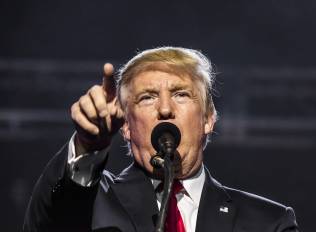
    Though Attorney General Jeff Sessions continues to wage war against marijuana, President Donald Trump has said that he is willing to support bipartisan legislation that would allow states to determine their own rules regarding the legalization and regulation of marijuana.

    The bill was introduced by Senators Elizabeth Warren (D-MA) and Cory Gardner (R-CO), who, as High Times noted, have taken distinctly opposite stances regarding marijuana in their respective states. But the pair has united over federal cannabis prohibition, which they view as impugning on not only states’ rights to determine their own laws, but also the legal cannabis industry’s ability to access safe banking and insurance.

    Their efforts appear to have earned a positive response from Trump, who told reporters that he would “probably” support the bill.

    The bill, called the Strengthening the Tenth Amendment Through Entrusting States, or STATES Act, would allow individual states, Washington, D.C., U.S. territories and federally recognized tribes to determine for themselves “the best approach to marijuana within [their own] borders.”

    This would be accomplished by amending the Controlled Substances Act (CSA) so that those states or tribes that comply with basic protection would be considered exempt from federal law regarding the “manufacture, production, possession, dispensation, administration, or delivery of marijuana.”

    The STATES Act would also remove industrial hemp from the CSA, and would implement several “common-sense guardrails” to ensure that states continue to regulate marijuana in a “safe and respectful manner” that is compliant with federal standards. These include prohibiting individuals under the age of 18 to work in marijuana operations and preventing sale or distribution of marijuana to individuals under the age of 21 for reasons other than medical purposes.

    Additionally, and most crucially for legal cannabis business, the bill would allow federally insured banks to do business with such entities.

    In a statement, Senator Warren wrote, “The federal government needs to get out of the business of outlawing marijuana.” She added that current federal laws have negatively impacted the criminal justice system, scientific research and economic development, while states like Massachusetts have implemented commonsense marijuana legislation that has supported these categories. “They have the right to enforce their own marijuana policies,” she wrote.

    Senator Gardner took similar aim at government policies in his statement while focusing his argument on states’ rights issues.

    “The federal government is closing its eyes and plugging its ears while 46 states have acted,” he wrote. “The bipartisan, commonsense bill ensures the federal government will respect the will of the voters—whether that is legalization or prohibition—and not interfere in an states’ legal marijuana industry.”

    At a press conference on June 6, President Trump said that he knew “exactly what [Senator Gardner’s] doing,” and “probably will end up supporting” the STATES Act.

    Given Trump’s penchant for spur-of-the-moment decisions that often take his cabinet and party by surprise, it remains unclear whether he will ultimately voice approval for the bill, but the statement flies in the face of Attorney General Sessions’ stance on marijuana, which was crystallized in a January 2018 memo granting federal prosecutors the “necessary tools” to crack down on cannabis.

    View the original article at thefix.com

  • Trump Wants New Anti-Opioid PSA Campaign To "Engage And Enrage"

    Trump Wants New Anti-Opioid PSA Campaign To "Engage And Enrage"

    The White House’s new ad campaign will echo the “This Is Your Brain on Drugs” ad campaign first launched in 1987.

    The Trump administration’s anti-opioid ad campaign is coming soon, according to Axios.

    The PSA campaign, the product of a partnership between the White House and the Ad Council, will “shock the conscience,” a source disclosed to Axios. They added, “[President Trump] thinks you have to engage and enrage.”

    The president declared in March that the government will oversee a “large-scale rollout of commercials” to raise awareness about the dangers of opioid abuse.

    “The best way to beat the drug crisis is to keep people from getting hooked in the first place. This has been something I have been strongly in favor of—spending a lot of money on great commercials showing how bad it is,” said Trump at the time.

    “So that kids seeing those commercials during the right shows on television or wherever, the internet, when they see these commercials they [say], ‘I don’t want any part of it.’ That is the least expensive thing we can do. Where you scare them from ending up like the people in the commercials and we will make them very, very bad commercials. We will make them pretty unsavory situations and you have seen it before and it had an impact on smoking and cigarettes.”

    Indeed, research has estimated that the anti-smoking campaign by the Truth Initiative has prevented approximately 301,930 young Americans from smoking in 2015-2016. However, national anti-drug initiatives like “Just Say No” and “This Is Your Brain on Drugs” are generally considered unsuccessful in their attempts at keeping kids off drugs.

    The new ad campaign will echo the “This Is Your Brain on Drugs” ad campaign first launched in 1987. According to Axios’ source, Trump is a fan of the ad’s shock value and stark message.

    Since its debut, the ad has been re-made to feature Rachel Leigh Cook in a 1997 rendition. The actress appeared in a 2016 version of the ad as well, but this time to highlight a totally different message: “This is your brain on the war on drugs.”

    Cook, in partnership with the Drug Policy Alliance, resurrected the iconic egg and frying pan motif to bring awareness to all the ways that the War on Drugs is ruining people’s lives. “It fuels mass incarceration. It targets people of color in greater numbers than their white counterparts,” says Cook in the ad. “It cripples communities. It costs billions. And it doesn’t work. Any questions?”

    The ad was re-made a different way in the same year, with the original anti-drug message but for a new generation. The ad begins with the familiar image of an egg cracking into a sizzling frying pan: “This is your brain. This is your brain on drugs. Any questions?”

    But instead of ending there, as the original PSA did, a child responds:

    “Yeah, I have questions.”

    “Why is heroin so addictive?”

    “Weed’s legal, isn’t it?”

    “Prescription drugs aren’t as bad as street drugs, right?”

    And finally: “Mom, Dad, did you ever try drugs?”

    View the original article at thefix.com