Category: Take Control

  • The Connection Between Technology Overuse and Stress: How to Take Control

    The Connection Between Technology Overuse and Stress: How to Take Control

    Technology use is an essential part of our daily lives, but its overuse can lead to stress and other negative effects on our mental and physical health. Studies have shown that excessive, or over, use of technology can cause negative effects on our mental and physical health, including stress, anxiety, and depression.

    One study published by the American Psychological Association found that excessive use of technology can lead to a lack of face-to-face communication and social interaction, which can contribute to feelings of stress and isolation. Additionally, the constant stimulation and distractions provided by technology can make it difficult for individuals to relax and unwind, leading to increased levels of stress.

    Another study published in the Journal of American College Health, found that there is a positive correlation between social media use and stress among college students. The study found that students who spent more time on social media had higher levels of perceived stress. Furthermore, the study also suggests that social media use may displace other activities that are beneficial for mental health, such as physical activity and face-to-face social interaction.

    The Royal Society for Public Health also conducted research on the topic and found that technology use can cause sleep deprivation and lack of physical activity which can lead to an increased risk of stress, anxiety, and depression. Furthermore, the constant notifications and pressure to respond to messages can cause feelings of pressure and anxiety, which can lead to increased stress levels.

    Tackling technology and stress

    So, how can we take control of our technology use and reduce the stress it can cause? Here are some practical tips to help you get started:

    1. Set boundaries: One of the best ways to take control of your technology use is to set boundaries for yourself. This can include setting specific times of the day when you will not use technology, such as during meals or before bed. Additionally, you can set limits on the amount of time you spend on certain apps or websites. Research has shown that setting clear boundaries can help reduce feelings of stress and improve overall well-being.
    2. Take breaks: Another important tip is to take regular breaks from technology. This can include stepping away from your device for a few minutes every hour, or taking a technology-free day once a week. Research has found that taking breaks from technology can help reduce symptoms of stress and improve focus and productivity.
    3. Prioritise face-to-face communication: In today’s digital world, it is easy to rely on technology for communication, but research has shown that face-to-face interactions can be more satisfying and beneficial for our mental health. Try to make an effort to have more in-person conversations, whether it’s with friends, family or colleagues.
    4. Get enough sleep: The blue light emitted from electronic devices can disrupt our natural sleep patterns, making it harder to fall asleep and stay asleep. Research has shown that this can lead to feelings of stress and fatigue. To combat this, try to limit your technology use in the hour leading up to bedtime, as well as looking at the total time on screens during the day, and consider using a blue light filter on your devices.
    5. Engage in other activities: It’s important to have a balance in your life, and not to rely solely on technology for entertainment or socialising. Engage in other activities such as reading, exercising, or spending time outdoors.
    6. Seek professional help if necessary: If you find that your technology use is causing you significant stress, anxiety or depression, it may be helpful to seek professional help. A therapist or counsellor can work with you to develop a plan to manage your technology use and address any underlying mental health concerns.

    Setting boundaries, taking regular breaks, prioritising face-to-face communication, getting enough sleep, engaging in other activities, and seeking professional help if necessary – these can all be effective ways of managing technology use and reducing stress. Be aware of the potential negative effects of too much time with tech and take steps to control your technology to promote well-being and reduce overall stress.

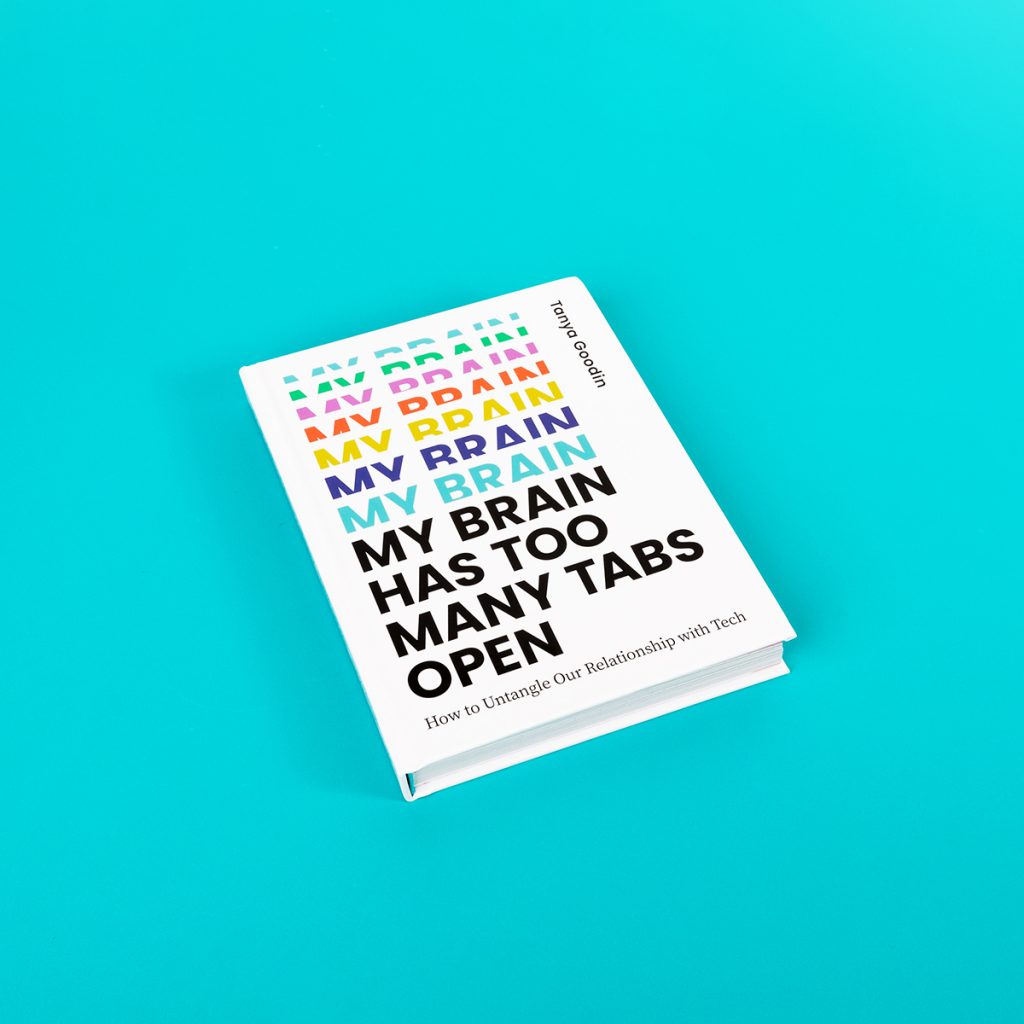
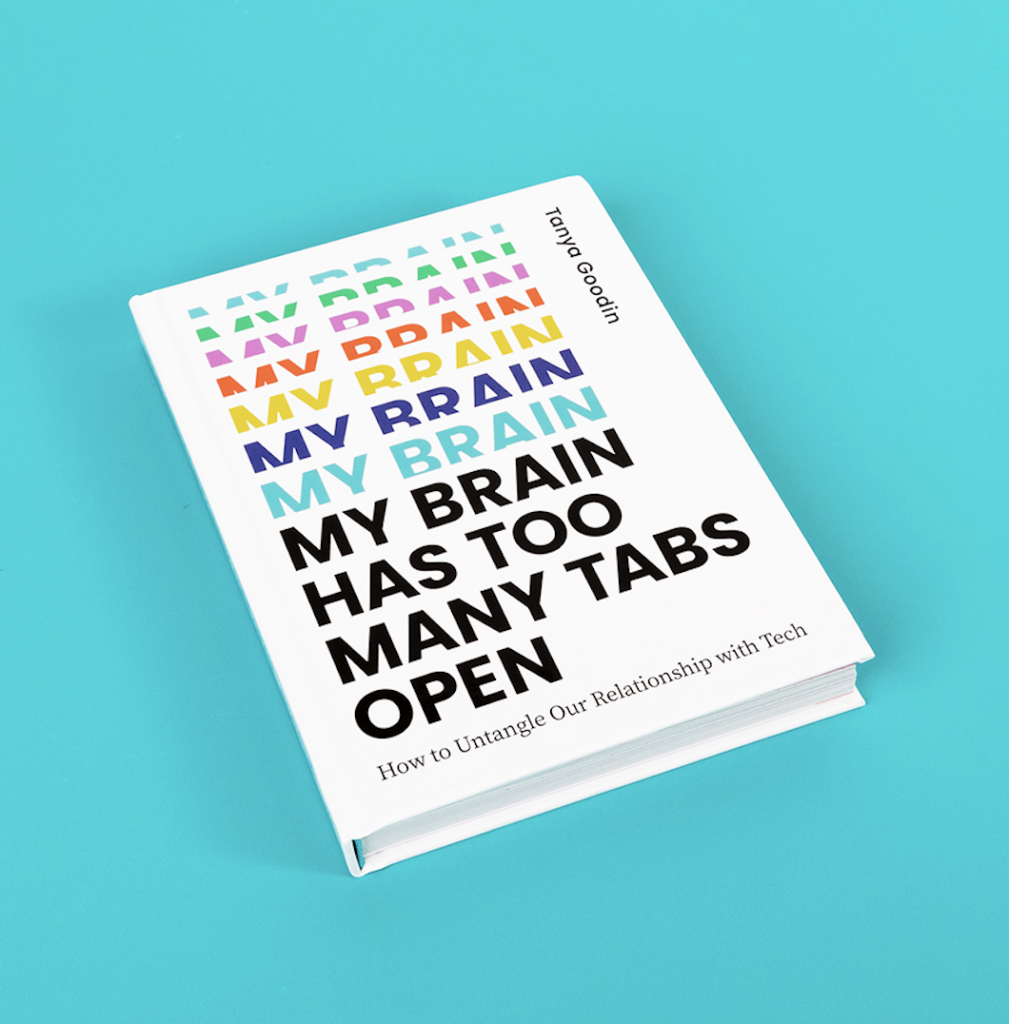
    Improve your relationship with social media with My Brain has Too Many Tabs OpenImprove your relationship with social media with My Brain has Too Many Tabs Open

    For more about improving your relationship with technology, check out our book ‘My Brain has Too Many Tabs Open‘.

     

    View the original article at itstimetologoff.com

  • Generative AI and Digital Well-being

    Generative AI and Digital Well-being

    Generative AI, a form of artificial intelligence that creates new content such as text, images, and videos based on a set of parameters or a training dataset, has the potential to revolutionise many industries including digital media and marketing. However, it also poses a significant threat to digital well-being and the ability to disconnect from tech.

    The logging-off movement, also known as the digital detox movement, or digital well-being, is a growing trend of people disconnecting from technology from time-to-time to improve mental and physical health, productivity, creativity and relationships. The movement is driven by concerns about the negative effects of technology on well-being such as addiction, anxiety, and depression. However, generative AI could potentially make it even harder for people to log off and disconnect from technology.

    Keeping us even-more connected…?

    One of the significant ways generative AI could impede our ability to disconnect is through the creation of highly realistic and hyper-engaging digital content. With the ability to generate text, images, and videos that are indistinguishable from those created by humans, generative AI could make it even more difficult to distinguish between real and fake content online. This could make it harder for individuals to disconnect from technology, as they may actually not be able to tell when they are interacting with real people or AI-generated content, leading to an endless cycle of interacting with technology.

    Generative AI could also impact digital well-being through the creation of highly personalised digital experiences. With the ability to generate content tailored to a person’s individual preferences and interests, generative AI could make it even more difficult for individuals to disconnect from tech, as they may get hooked on cleverly personalised content, leading to an endless cycle of reliance on screens. We have already seen how this plays out with ad targeting and the attention-based economy of social media platforms.

    Generative AI and digital well-beingGenerative AI and digital well-being

    Or…helping us disconnect?

    However, generative AI also has the potential to help people disconnect from technology;

    1. Generative AI could help users disconnect by creating personalised “digital detox” plans that suggest activities and tasks that do not involve technology.
    2. By using generative AI to automate repetitive tasks, users may be able to spend less time on their devices and more time on other activities.
    3. Generative AI could also be used to create personalised reminders for users to take breaks and disconnect from technology, similar to how some apps currently remind users to stand or move around.

    But generative AI will not be one-size-fits-all solution. It is crucial for individuals to be aware of its potential negative effects and take steps to ensure that they are using technology in a way that promotes their well-being and allows them to disconnect when necessary. It is also crucial for companies and developers to consider the impact of their technology on individuals’ well-being and to design technology that allows for healthy disconnection from technology.

    In conclusion, generative AI and digital well-being look likely to have a complicated relationship. AI has the potential to revolutionise digital media and marketing, but it also poses a significant threat to the ability to disconnect from digital technologies. It is important for individuals, companies and developers to consider the potential effects of generative AI on digital well-being and take steps to ensure that it is used in a way that promotes well-being and allows for healthy disconnection from technology.

    Improve your relationship with social media with My Brain has Too Many Tabs OpenImprove your relationship with social media with My Brain has Too Many Tabs Open

    For more about improving your relationship with technology, check out our book ‘My Brain has Too Many Tabs Open‘.

     

    View the original article at itstimetologoff.com

  • How to Stay Logged Off at Work

    How to Stay Logged Off at Work

    As we all head back to work and school after summer break it can be hard to maintain the habits we made during the holidays and stay logged off at work. Whether you were enjoying a 3-month university holiday, spent a couple weeks with family or only got away for a weekend, the culture of summer is hard to ignore. The office will inevitably be emptier than usual as everyone takes their annual leave (33% of people taking over 2 weeks!), and so, making concerted efforts to reduce your screen time, and spend time with loved ones is easier. However, as September returns and the workforce is back in full those habits are harder and harder to keep. So, we have put together some top tips to keep you logged off this autumn

    #1 Go into the office

    After a couple years of a pandemic, forced to work from home, many of us have become comfortable with this dynamic: rolling out of bed just before our first meeting, dressed in pjs from the waist down, generally more at ease. However, as we wrote about during the pandemic, this only exacerbates our issues logging off from work as the lines between work and home become blurred, leading to poor concentration, poor sleep and worse work-life balance! So, we recommend you make the effort and go in: it can be a far more enjoyable atmosphere we promise!

    #2 Keep working hours

    Along a similar line of attempting to maintain a differentiation between work and home we recommend you keep working hours! Whether you are working flexibly, compressed or a classic 9-5 it is important to have down time! You can mark this for yourself by going in to work, not using your work laptop after hours, or by moving to a separate part of your home. Whatever you do: try to recreate that summer feeling of disconnection at the end of every day.

    #3 Separate communication

    A good way to draw a distinct line between work and home is to separate your communication (most likely emails!). This could mean only having your work email on your laptop, setting slack to turn off notifying after 5pm or switching your devices to airplane mode at the end of a day. You could even add an OOO (Out of Office) each day to gently remind your colleagues/ clients that you are not working and will reply once you are back.

    logged off at worklogged off at work

    #4 Turn off notifications

    During the summer holidays some of us are able to go whole days (or even weeks!) without constant reminders of work. But we don’t have to mourn that now it is Autumn! You can try to keep that culture alive in weekends, bank holidays and annual leave at other times of year by turning off your notifications. Let everyone know you will be away and then make sure you are logged off at work. One tip if you are worried about missing vital crises is to tell your colleagues to ring you (not text: ring!) if they need you. You’ll be amazed how all their worries cease once they have to call!

    #5 Relax offline

    Whilst we are on holiday we are able to relax both digitally and through analogue activities. We can play card games and watch Netflix without feeling the affect of the screens too greatly. However, with the average UK employee spending nearly 2000 hours of our annual working lives in front of a screen: after work we need to find other ways to relax.

    View the original article at itstimetologoff.com

  • Our Top 10 most-read digital wellbeing articles of 2022

    Our Top 10 most-read digital wellbeing articles of 2022

    This is post 7 of 7 in the series “Top Ten”

    1. Our Top 10 digital detox posts of 2015
    2. Our Top 10 digital detox posts of 2017
    3. Our Top 10 digital detox posts of 2018
    4. Our Top 10 digital detox blogs of 2019
    5. Our Top 10 digital detox blogs of 2020
    6. Our Top 10 most-read digital detox articles of 2021
    7. Our Top 10 most-read digital wellbeing articles of 2022

    We’ve had another fantastic year of visits to our blog for advice, research, and how-tos on how to live healthily and happily with screens. We’ve looked back through our archive to see which content resonated the most – here are our top then digital wellbeing articles in 2021:

    10. Six Simple Steps to Beat Your Tech Addiction

    Coming in at number ten, and one of our first blogs of the new year, tech addiction was obviously something on all your minds after 2021. This piece had some deceptively simple steps to help you get a grip on it. (Read more).

    9. Social Media Harms Boys and Girls at Different Ages

    We always share the latest research with our readers and fresh out this year was some fascinating research suggesting that boys and girls may be vulnerable to the harms of social media at slightly different ages. This piece had all the details. (Read more)

    How long should a digital detox beHow long should a digital detox be
    What are the most vulnerable ages to social media by gender?

    8. Six Signs of a Compulsive Phone Checking Habit

    Another piece which aimed to give you some guidelines on which habits you should be worried about, and which might be fairly harmless. FOMO is a big part of this syndrome we discovered. (Read more)

    7. It’s OK to Ignore a Text (Sometimes)

    Everyone hates being ignored, or even ghosted, online but there are some occasions where it really is OK to ignore a message. Sometimes it’s the best thing to do for your health – we tell you when. (Read more)

    It's ok to ignore a text (sometimes)It's ok to ignore a text (sometimes)
    When is it OK to ignore a text?

    6. How Long Should a Digital Detox Be?

    We get asked a lot how long you need to log off for before the positive effects of disconnecting are felt. So we decided to write a piece on exactly this subject and it proved very popular. (Read more)

    5. These Three Clever Tricks Will Help Get You Off Your Phone

    Another tips-filled piece for the phone addicts amongst you, this one had some easy-to-try tricks to encourage you to get off your phone and interact with the real world more often. (Read more)

    4. Persuasive Technology 101

    We thought we really ought to give you all a primer in how persuasive tech works, as we refer to it so often. This proved popular and landed just outside the top three most read blogs all year. (Read more)

    So our top three were…

    3. 10 Things to Do to Get Off Your Phone

    Yes, more tips and ideas on things you can do if you really, really, want to spend more time away from your smartphone but are finding it hard. (Read more)

    2. How to Do a Digital Detox, Without Giving up Your Phone

    A tricky subject, but one on all your minds – can you get the benefits of digital detox without throwing your phone away altogether and becoming a hermit? We had an encouraging take. (Read more)

    Which brought us to…

    1. “Am I Addicted to Social Media?” – Take Our New Quiz

    Our no.1 post this year was our brand new quiz, adding to the portfolio of popular quizzes on our site, and it’s on the subject all of you worry about – social media addiction. If you haven’t already tried it, give it a go! (Read more)

    We hope one of our top ten blogs, or one of the many others we published, helped in some way this year. Do let us know!

    digital detox bookdigital detox book

    For more ideas, suggestions and help on living healthily with the digital world, pick up a copy of our latest book.

    View the original article at itstimetologoff.com

  • 12 ways to improve your relationship with social media in 2023

    12 ways to improve your relationship with social media in 2023

    Social media has become a ubiquitous part of life, and it can be both a blessing and a curse. On the one hand, it allows us to connect with friends and loved ones, share our thoughts and experiences, and stay up to date with the latest news and trends. On the other hand, it can be addictive, distracting, and even harmful if not used wisely. If you want to improve your relationship with social media in 2023, here are 12 ways to get started:

    #1 Set limits on your usage.

    One of the easiest ways to improve your relationship with social media is to simply use it less. Set limits on the amount of time you spend scrolling through your feed or checking notifications, and stick to those limits as much as possible. You might also consider setting specific times of day when you will not use social media, such as during meal times or before bed.

    #2 Be mindful of what you post.

    Social media is a public platform, and everything you post is potentially visible to anyone who follows you. Before you hit “post,” think about how what you’re sharing might be perceived by others. Avoid posting negative or controversial content that could offend or upset people, and try to focus on sharing positive, uplifting messages instead.

    #3 Take breaks from social media.

    It’s not uncommon to feel overwhelmed or burnt out after spending too much time on social media. If you’re starting to feel this way, it might be time to take a break. Step away from your phone or computer and do something else for a while. You might be surprised at how refreshing it can be to disconnect from social media for a little while.

    #4 Use social media to connect, not just to consume.

    Social media is a great way to stay in touch with friends and loved ones, but it’s easy to get caught up in consuming content rather than actually interacting with people. Make an effort to engage with others on social media by commenting on their posts, sending messages, or even just “liking” or “sharing” their content. Research shows an active, rather than passive, use of social media is the healthiest approach.

    #5 Be selective about who you follow.

    Your social media feed is a reflection of the people and organisations you follow. If you’re constantly seeing content that doesn’t interest you or that makes you feel negative, consider unfollowing or muting those accounts. On the other hand, if you’re not seeing enough content from people or organisations that you do care about, consider following more accounts that align with your interests and values.

    #6 Don’t compare yourself to others.

    It’s easy to fall into the trap of comparing ourselves to others on social media, especially when we see people posting about their seemingly perfect lives. Remember that what people post on social media is often a highly curated and filtered version of reality. Don’t compare yourself to others – instead, focus on your own life and accomplishments.

    #7 Be aware of algorithms.

    Social media algorithms are designed to show you content that you’re likely to engage with, which means you might not be seeing a diverse range of views or perspectives. Be aware of this when you’re consuming content on social media, and make an effort to seek out diverse viewpoints and sources of information.

    #8 Use social media to learn and grow.

    Social media can be a great source of information and inspiration if you use it wisely. To improve your relationship with social media, follow accounts that share useful or interesting information, and use social media as a tool to learn and grow.

    #9 Protect your privacy.

    It’s important to be mindful of your privacy when using social media. Be selective about what personal information you share online, and consider using the privacy settings on your social media accounts to control who can see your content.

    #10 Seek out positive communities.

    The communities you are part of can have a big impact on your social media experience. Seek out accounts that inspire, educate, or bring joy to your feed.

    #11 Be cautious about oversharing.

    While it’s important to be authentic, it’s also important to be mindful of what you share on social media. Consider whether you’re comfortable with a wide audience seeing the information you’re posting and whether it could potentially have negative consequences in the future.

    #12 Use social media for good.

    Instead of using social media to just pass the time or mindlessly scroll through your feed, try to use it for good. Share positive messages, engage with content that promotes social justice and raises awareness of causes you want to shine a light on.

    Improve your relationship with social media with My Brain has Too Many Tabs OpenImprove your relationship with social media with My Brain has Too Many Tabs Open

    For more about improving your relationship with social media, check out our book ‘My Brain has Too Many Tabs Open‘.

     

    View the original article at itstimetologoff.com

  • 7 keys to freedom from social media addiction

    7 keys to freedom from social media addiction

    For many people social media has become an unhealthy obsession. Constantly checking your phone and scrolling through your feed can take up valuable time and energy, and it can even lead to feelings of anxiety, depression, and low self-esteem. If you feel like your social media habits are starting to take over your life, here are seven clever keys to unlock freedom from social media addiction and take back control:

    1. Set limits on your usage: One of the easiest ways to reduce your social media intake is to set limits on the amount of time you spend on these platforms. There are a number of apps and tools that can help you do this, such as Freedom, Cold Turkey, and StayFocusd. These tools allow you to block certain websites or apps for a set period of time, so you can focus on other tasks without the distraction of social media.
    2. Take breaks from your phone: In addition to setting limits on your social media usage, it can also be helpful to take regular breaks from your phone altogether. Try setting aside specific times of the day when you will not use your phone, such as during meal times or before bed. This will give you the opportunity to disconnect and engage in other activities, such as reading a book or spending time with loved ones.
    3. Find other ways to connect: Social media can often give us the false impression that we are more connected to others than we really are. To combat this, try to find other ways to connect with people in your life. This could be through face-to-face conversations, phone calls, or participating in activities you enjoy together. By building deeper, more meaningful connections with others, you will be less reliant on social media for social interaction.
    4. Practice mindfulness: Mindfulness is the practice of paying attention to the present moment without judgment. When it comes to social media, this means being fully present and engaged with what you are doing, rather than mindlessly scrolling through your feed. To practice mindfulness, try setting aside a few minutes each day to simply sit and focus on your breath. You can also try using apps like Headspace or Calm to guide you through mindfulness exercises.
    5. Use social media for good: Instead of using social media as a source of distraction or entertainment, try using it to do something positive. This could be sharing articles or information that you find interesting or inspiring, participating in online communities centered around a cause you care about, or simply being a supportive and positive presence for your friends and followers.
    6. Find other hobbies and interests: One of the benefits of reducing your social media usage is that you will have more time and energy to pursue other interests and hobbies. Whether it’s reading, painting, or playing a musical instrument, finding activities that bring you joy and fulfillment can help to reduce your reliance on social media for entertainment and fulfillment.
    7. Seek support: If you are struggling to reduce your social media usage on your own, it can be helpful to seek support from others. This could be through therapy, support groups, or simply talking to friends and loved ones about your struggles. By reaching out for help, you can gain the insights and resources you need to break your social media addiction and live a happier, healthier life.

    Social media addiction can be a difficult habit to break, but with the right strategies and support, it is possible to take control of your usage and find a healthier balance. Whether it’s setting limits on your usage, finding other ways to connect with people, or pursuing other hobbies and interests, there are many ways to tackle your social media addiction and live a more fulfilling life.

    Which is the most important step?

    It’s difficult to decide which of our seven keys to freedom from social media addiction is the most powerful. Different strategies may work better for different people. However, the key that may be particularly helpful is to set limits on your social media usage. By setting specific times of the day when you will not use your phone or access social media, you can create healthy boundaries and reduce your reliance on these platforms. This can be especially helpful for those who find themselves constantly checking their phone or scrolling through their feed, as it provides a clear structure and helps to reduce the temptation to engage in these behaviours. And, setting limits also helps you to be more mindful of your social media usage and to make more intentional choices about when and how you use the platforms.

    Improve your relationship with social media with My Brain has Too Many Tabs OpenImprove your relationship with social media with My Brain has Too Many Tabs Open

    For more about improving your relationship with social media, check out our book ‘My Brain has Too Many Tabs Open‘.
     

    View the original article at itstimetologoff.com

  • These three clever tricks will help get you off your phone

    These three clever tricks will help get you off your phone

    For many of us, the main practical step to a successful digital detox is managing to spend enough time away from our phones. With so much of our lives available at our fingertips, it’s not surprising that we can sometimes find it difficult to extract ourselves from “the tiny tyrant in our pocket”. There are ways to not only reduce this dependency but also create a more productive and healthy phone usage. Here are three clever tricks that will help you get off your phone.

    #1 Turn Off Push Notifications

    In a world where there are a million-and-one different apps to regulate our every whim, constant notifications keep us alert but also tied to our phones in an unhealthy way. Going entirely cold turkey and shutting off all distractions would probably be the most extreme version, but for most this is impractical. A good middle ground would be only having notifications for apps that are necessary for daily functions such as Uber, Gmail and other utility apps. The regulation of notifications is by no means a one-size fits all approach and can be managed differently depending on your needs. Whether a small or big change, turning off push notifications will allow for more freedom away from your phone and will allow you to focus on more important information.

    #2 Keep Phones Out of the Bedroom

    Good sleep is one of the most important aspects of our health, but with the advent of phones in the bedroom and living areas of our homes, research shows that our sleep duration and quality are suffering like never before. Having no phone usage in general in the hours before you go to sleep is one approach to take, with the obvious upside of reducing anxiety before bed. A useful halfway house could also be using the Night Shift feature (or similar) that shifts the colour of the screen during certain hours of the night in order to facilitate a better night’s sleep. Whatever works best, keeping phones out of the bedroom is an ideal way to create boundaries for phone usage and have a better quality of sleep.

    #3 Hold Yourself Accountable

    If you have no way to judge your phone usage, it’s impossible to see any improvement in overall viewing habits. Most models and makes of smartphones now come with a ScreenTime settings page that allows the user to schedule downtime and app limits. Even if this is not exactly to your taste, there are plenty of applications such as QualityTime or Freedom that perform more or less the same task. Holding oneself to account need not be just on apps of course. You can also have set periods in the day to stop phone usage (meals for instance) and the aforementioned no phones in the bedroom rule. Whatever the method is, self-accountability will allow you to measure progress off your phone and towards a more healthy relationship with tech.

    View the original article at itstimetologoff.com

  • How long should a digital detox be?

    How long should a digital detox be?

    One question we get asked a lot is “How long should a digital detox be?” If you’re wondering if an hour off your phone really counts as a digital detox, or whether you need to take yourself off for a fully unplugged retreat in the wilds – we have the answers for you.

    What are you trying to achieve?

    The first thing you need to think about when you’re asking yourself ‘how long?’ is what you’re trying to achieve with your digital detox. If you’re feeling frazzled and need a break from work, or if social media and its comparison culture has got too much for you, then a quick break of 30 minutes or an hour may be exactly what you need. If, on the other hand, you’re focused on improving sleep, reducing longer term anxiety and improving your relationships, then longer and more frequent breaks of half a day or a day may be the answer.

    How long have you got?

    It’s no good deciding that you need a break of two or three days from digital devices when you’re working remotely and need to stay connected. So, as well as thinking about what your goals are, give some thought to how long is a practical length of time for you to stay away from your phone and laptop. If you only have an hour, or a day, then that’s what you need to make work for you.

    What results can you expect?

    The good news is that results from a digital detox come quite quickly and we’ve never encountered anyone who thought it was a complete waste of time! Improvements in sleep, stress levels, anxiety, and a boost in overall happiness are all things that have been linked to time off screens.

    The effect is even more powerful when you combine time away from your screens with doing something that connects you with nature. At its simplest, for every minute you spend away from a screen, try and spend 30 second (half of that time) outdoors. Being in a green space has been found to improve sleep and reduce stressincrease happiness and reduce negative emotions, promote positive social interactions and even help generate a sense of meaning in your life life

    Tips for deciding how long your digital detox should be

    • Focus on what you’re trying to achieve.
    • Work out how long you have to spare, without it causing problems in your life.
    • Remind yourself of the benefits.
    • Start small – 30 minutes is a good first step.
    • Work up to longer and longer breaks if you enjoy the results.

    For more about dipping your toe into a digital detox, and other suggestions on how get a healthy balance with the digital world: My Brain Has Too Many Tabs Open is out now

    View the original article at itstimetologoff.com

  • Is ‘Slowcial Media’ The Answer?

    Is ‘Slowcial Media’ The Answer?

    Is ‘Slowcial Media’ The Answer?

    Social media addiction is on the rise with more and more people struggling to stop endlessly scrolling through their feeds. Could ‘slowcial media’ be the answer to using social media intentionally and avoiding some of the harmful side-effects?

    What is slowcial media?

    Slowcial media is all about slowing down the rush to connect with tech and making it intentional, meaningful and mindful. It can be applied to the ways in which we use social media – or it can be applied to a whole new type of tech which focuses on mindfulness and meaningful connection.

    Slowcial Media: Platforms that foster unhurried and meaningful connection between humans”.

    Urban Dictionary

    In that sense, slowcial media can be compared to other ‘slow’ cultural movements to slow down life’s pace, such as the slow food movement or slow fashion, both of which ask for considered consumption, thinking about the sources of products, and emphasising sustainability.

    The slow movement is thought to have begun in 1986 when Carlo Petrini protested against the opening of a McDonald’s restaurant near the world-famous Spanish Steps in Rome. His protest sparked the creation of the slow food movement which over time developed into the full-blown slow subculture.

    “It is a cultural revolution against the notion that faster is always better. The Slow philosophy is not about doing everything at a snail’s pace. It’s about seeking to do everything at the right speed. Savouring the hours and minutes rather than just counting them. Doing everything as well as possible, instead of as fast as possible. It’s about quality over quantity in everything from work to food to parenting.”

     Carl Honoré  In Praise of Slow

    Can using social media itself ever be ‘slow’?

    The attention economy and persuasive tech encourages us to use social media at break-neck speed, scrolling from one feed and account to another, FOMO making us worry that we might be missing out. But, we can learn to use social media intentionally and mindfully if we follow a few simple rules:

    • Set limits for time spent online.
    • Set an intention before you connect with social media – what’s your purpose in using it?
    • Keep checking in with how social media makes you feel.
    • Use social media to be inspired and informed – follow accounts that celebrate achievement, not appearance.
    • Reply thoughtfully to online interactions, pause before responding.
    • Put hurdles and obstacles in place to make you slow down before you use apps.

    Your hurdles and obstacles can be very personal and specific to you. Some ideas; putting your phone in another room, uninstalling social media apps at certain times, leaving messages for yourself on the home screen of your phone. Think creatively about how you can design behavioural nudges like these to ensure you’re being mindful about your use.

    "Am I addicted to social media?" QUIZ

    Are you addicted to social media? Try our social media addiction quiz.

    Other uses which help you to go slow

    Of course, it’s not just about using social media apps in a way that’s more intentional. There are a range of other apps which exist purely for the purpose of developing mindfulness and meaningful connection. Some ideas might be;

    • Headspace – an app for everyday mindfulness and meditation.
    • Freedom – an app and website blocker, to enable you to focus and be productive.
    • Reflection – a journalling-focused app that guides a meaningful reflection practice.
    • Forest – another app to help focus, but this one plants a tree in the real-world if you meet your goals.

    The slowcial media action plan

    Here’s our simple plan to help you reap the benefits of a more slowcial approach

    1. Use existing social media and other apps mindfully.
    2. Prune notifications and alerts that distract you.
    3. Set an intention every time you use an app that might be encouraging you to be mindless.
    4. Look for alternatives that encourage meaningful connection.

    If you want to try out a full disconnection from tech to slow down, check out all the resources on our website for how to do a digital detox.

    digital detox bookdigital detox book

    For more about using tech intentionally pick up our new book: My Brain Has Too Many Tabs Open. Available to order here.

    View the original article at itstimetologoff.com

  • A Week off Social Media Reduces Depression and Anxiety

    A Week off Social Media Reduces Depression and Anxiety

    A new study has revealed that taking just a week off social media can reduce depression and anxiety and increase a sense of wellbeing. 

    The University of Bath study found that people who took a break from apps such as TikTok, InstagramTwitter and Facebook for just seven days reported an increased sense of wellbeing.

    How did the study work?

    Researchers split their sample of 154 people aged 18 to 72 into two groups. One group was banned from social media while the other was not. On average, participants used social media for eight hours a week.

    Participants were quizzed before the study on their baseline levels of anxiety and depression, and their sense of wellbeing, using three widely-used tests;

    • To measure their wellbeing they were asked to rate their agreement with statements like “I’ve been feeling optimistic about the future” and “I’ve been thinking clearly”.
    • To measure depression they were asked questions such as “how often during the past two weeks were you bothered by little interest or pleasure in doing things?”
    • Their anxiety was monitored using the General Anxiety Disorder Scale, which asks how often a person is bothered by feeling nervous or on edge, or an inability to stop worrying.

    What did the results show?

    Those who took a one-week break from social media saw their wellbeing climb from an average of 46 to 55.93 on The Warwick-Edinburgh Mental Well-being Scale.

    Levels of depression in this group dropped from 7.46 to 4.84 on the Patient Health Questionnaire-8 while anxiety fell from 6.92 to 5.94 on the scale.

    Lead author Dr Jeff Lambert, of the University of Bath’s Department for Health, said the changes represented a moderate improvement in depression and wellbeing, and a small improvement in anxiety.

    “Many of our participants reported positive effects from being off social media with improved mood and less anxiety overall. This suggests that even just a small break can have an impact.”

    Dr Jeff Lambert, Department for Health, University of Bath

    Have other studies shown the same results?

    The research findings support previous research around the globe linking regular social media use with higher rates of depression and anxiety.

    The ‘chicken and egg’ relationship between social media and mental health has still not been established however. ie whether social media use leads to mental health problems, or whether pre-existing feelings of low self-worth drives people to social media as a means of validation.

    In the UK the number of adults using social media increased from 45% in 2011 to 71% in 2021. Among 16 to 44-year-olds, as many as 97% use social media and scrolling is the most frequent online activity performed.

    The researchers say that in future they hope to study the impact of stopping social media use on specific parts of the population, such as younger people and those with physical and mental health conditions. They also hope to follow up with people beyond one week to see if the benefits of the social media break have a lasting effect.

    What steps can we take to improve our own wellbeing?

    #1 Log off

    Logging off for either a small or longer period of time would seem to be a good idea, as suggested by this study and many others.

    #2 Cut down

    If logging-off completely isn’t feasible, then cutting down on the amount of time spent on social media (particularly the time spent passively scrolling) is also linked to improvements in mental health.

    #3 Be more mindful

    A mindful approach, which takes a note of how we are feeling before and after episodes on apps, is also recommended to monitor the unique impact it may be having on our own wellbeing. Checking in with ourselves from time to time and asking the question “how does this make me feel?” is top on our list of strategies to build a healthier relationship.

    My Brain Has Too Many Tabs Open by Tanya GoodinMy Brain Has Too Many Tabs Open by Tanya Goodin

    My Brain Has Too Many Tabs Open

    For more about how the digital world is impacting our wellbeing. Out now on Amazon and in all good bookshops.


    View the original article at itstimetologoff.com