Category: Addiction News

  • Is ‘Slowcial Media’ The Answer?

    Is ‘Slowcial Media’ The Answer?

    Social media addiction is on the rise with more and more people struggling to stop endlessly scrolling through their feeds. Could ‘slowcial media’ be the answer to using social media intentionally and avoiding some of the harmful side-effects?

    What is slowcial media?

    Slowcial media is all about slowing down the rush to connect with tech and making it intentional, meaningful and mindful. It can be applied to the ways in which we use social media – or it can be applied to a whole new type of tech which focuses on mindfulness and meaningful connection.

    Slowcial Media: Platforms that foster unhurried and meaningful connection between humans”.

    Urban Dictionary

    In that sense, slowcial media can be compared to other ‘slow’ cultural movements to slow down life’s pace, such as the slow food movement or slow fashion, both of which ask for considered consumption, thinking about the sources of products, and emphasising sustainability.

    The slow movement is thought to have begun in 1986 when Carlo Petrini protested against the opening of a McDonald’s restaurant near the world-famous Spanish Steps in Rome. His protest sparked the creation of the slow food movement which over time developed into the full-blown slow subculture.

    “It is a cultural revolution against the notion that faster is always better. The Slow philosophy is not about doing everything at a snail’s pace. It’s about seeking to do everything at the right speed. Savouring the hours and minutes rather than just counting them. Doing everything as well as possible, instead of as fast as possible. It’s about quality over quantity in everything from work to food to parenting.”

     Carl Honoré  In Praise of Slow

    Can using social media itself ever be ‘slow’?

    The attention economy and persuasive tech encourages us to use social media at break-neck speed, scrolling from one feed and account to another, FOMO making us worry that we might be missing out. But, we can learn to use social media intentionally and mindfully if we follow a few simple rules:

    • Set limits for time spent online.
    • Set an intention before you connect with social media – what’s your purpose in using it?
    • Keep checking in with how social media makes you feel.
    • Use social media to be inspired and informed – follow accounts that celebrate achievement, not appearance.
    • Reply thoughtfully to online interactions, pause before responding.
    • Put hurdles and obstacles in place to make you slow down before you use apps.

    Your hurdles and obstacles can be very personal and specific to you. Some ideas; putting your phone in another room, uninstalling social media apps at certain times, leaving messages for yourself on the home screen of your phone. Think creatively about how you can design behavioural nudges like these to ensure you’re being mindful about your use.

    "Am I addicted to social media?" QUIZ"Am I addicted to social media?" QUIZ

    Are you addicted to social media? Try our social media addiction quiz.

    Other uses which help you to go slow

    Of course, it’s not just about using social media apps in a way that’s more intentional. There are a range of other apps which exist purely for the purpose of developing mindfulness and meaningful connection. Some ideas might be;

    • Headspace – an app for everyday mindfulness and meditation.
    • Freedom – an app and website blocker, to enable you to focus and be productive.
    • Reflection – a journalling-focused app that guides a meaningful reflection practice.
    • Forest – another app to help focus, but this one plants a tree in the real-world if you meet your goals.

    The slowcial media action plan

    Here’s our simple plan to help you reap the benefits of a more slowcial approach

    1. Use existing social media and other apps mindfully.
    2. Prune notifications and alerts that distract you.
    3. Set an intention every time you use an app that might be encouraging you to be mindless.
    4. Look for alternatives that encourage meaningful connection.

    If you want to try out a full disconnection from tech to slow down, check out all the resources on our website for how to do a digital detox.

    digital detox bookdigital detox book

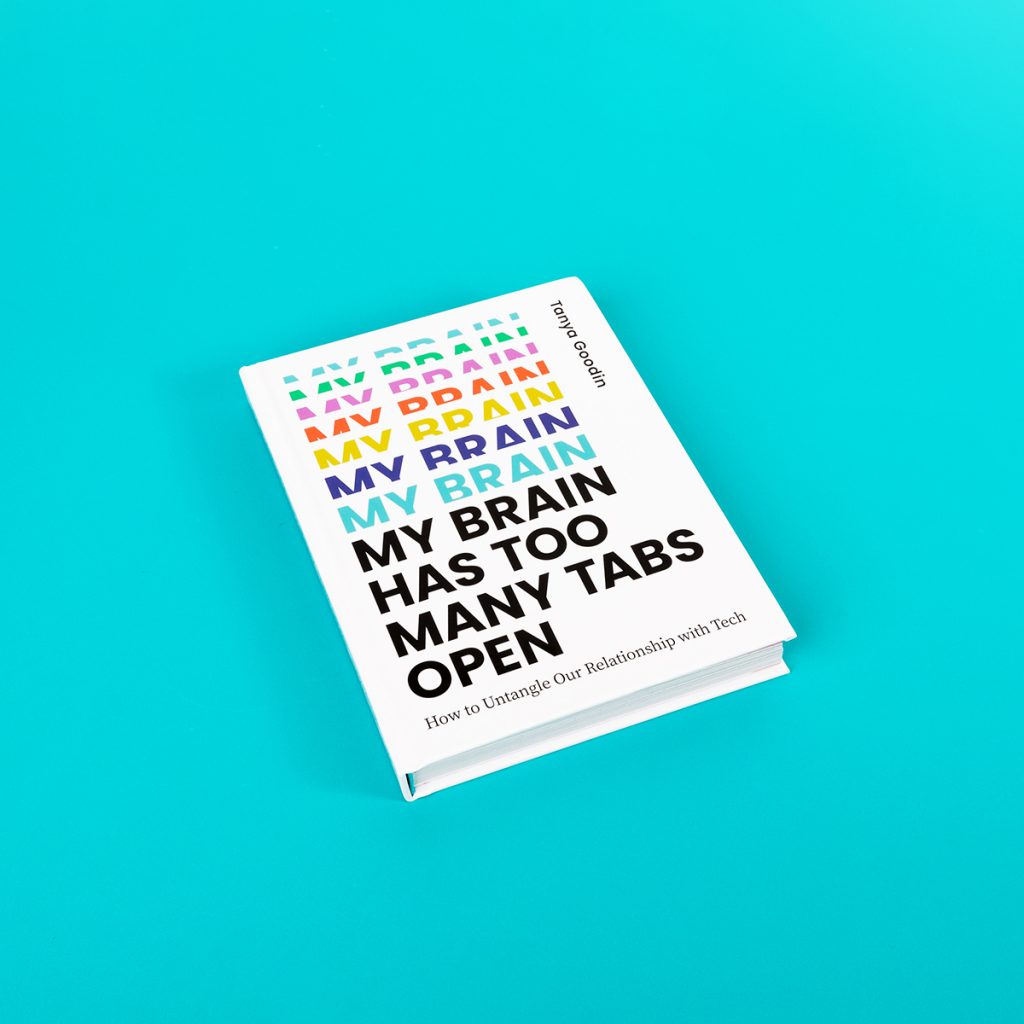
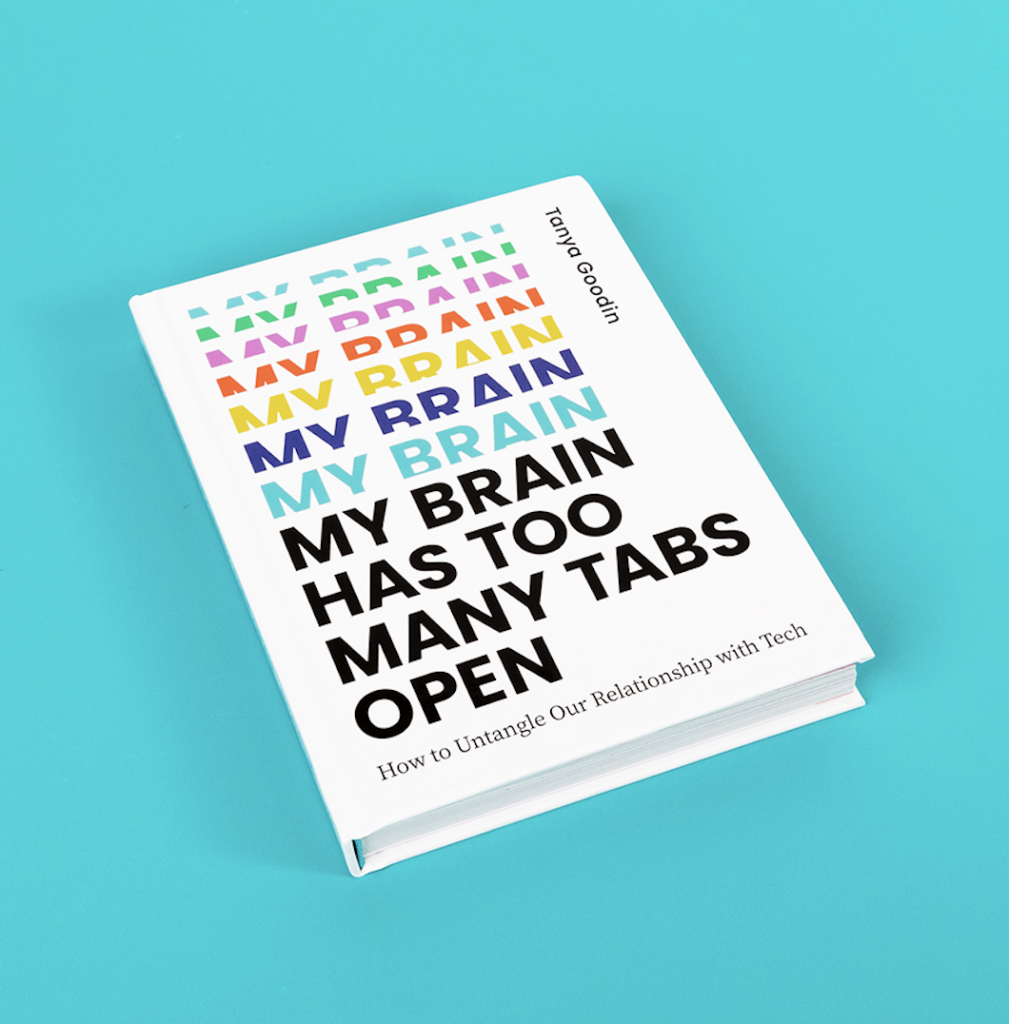
    For more about using tech intentionally pick up our new book: My Brain Has Too Many Tabs Open. Available to order here.

    View the original article at itstimetologoff.com

  • A Week off Social Media Reduces Depression and Anxiety

    A Week off Social Media Reduces Depression and Anxiety

    A new study has revealed that taking just a week off social media can reduce depression and anxiety and increase a sense of wellbeing. 

    The University of Bath study found that people who took a break from apps such as TikTok, InstagramTwitter and Facebook for just seven days reported an increased sense of wellbeing.

    How did the study work?

    Researchers split their sample of 154 people aged 18 to 72 into two groups. One group was banned from social media while the other was not. On average, participants used social media for eight hours a week.

    Participants were quizzed before the study on their baseline levels of anxiety and depression, and their sense of wellbeing, using three widely-used tests;

    • To measure their wellbeing they were asked to rate their agreement with statements like “I’ve been feeling optimistic about the future” and “I’ve been thinking clearly”.
    • To measure depression they were asked questions such as “how often during the past two weeks were you bothered by little interest or pleasure in doing things?”
    • Their anxiety was monitored using the General Anxiety Disorder Scale, which asks how often a person is bothered by feeling nervous or on edge, or an inability to stop worrying.

    What did the results show?

    Those who took a one-week break from social media saw their wellbeing climb from an average of 46 to 55.93 on The Warwick-Edinburgh Mental Well-being Scale.

    Levels of depression in this group dropped from 7.46 to 4.84 on the Patient Health Questionnaire-8 while anxiety fell from 6.92 to 5.94 on the scale.

    Lead author Dr Jeff Lambert, of the University of Bath’s Department for Health, said the changes represented a moderate improvement in depression and wellbeing, and a small improvement in anxiety.

    “Many of our participants reported positive effects from being off social media with improved mood and less anxiety overall. This suggests that even just a small break can have an impact.”

    Dr Jeff Lambert, Department for Health, University of Bath

    Have other studies shown the same results?

    The research findings support previous research around the globe linking regular social media use with higher rates of depression and anxiety.

    The ‘chicken and egg’ relationship between social media and mental health has still not been established however. ie whether social media use leads to mental health problems, or whether pre-existing feelings of low self-worth drives people to social media as a means of validation.

    In the UK the number of adults using social media increased from 45% in 2011 to 71% in 2021. Among 16 to 44-year-olds, as many as 97% use social media and scrolling is the most frequent online activity performed.

    The researchers say that in future they hope to study the impact of stopping social media use on specific parts of the population, such as younger people and those with physical and mental health conditions. They also hope to follow up with people beyond one week to see if the benefits of the social media break have a lasting effect.

    What steps can we take to improve our own wellbeing?

    #1 Log off

    Logging off for either a small or longer period of time would seem to be a good idea, as suggested by this study and many others.

    #2 Cut down

    If logging-off completely isn’t feasible, then cutting down on the amount of time spent on social media (particularly the time spent passively scrolling) is also linked to improvements in mental health.

    #3 Be more mindful

    A mindful approach, which takes a note of how we are feeling before and after episodes on apps, is also recommended to monitor the unique impact it may be having on our own wellbeing. Checking in with ourselves from time to time and asking the question “how does this make me feel?” is top on our list of strategies to build a healthier relationship.

    My Brain Has Too Many Tabs Open by Tanya GoodinMy Brain Has Too Many Tabs Open by Tanya Goodin

    My Brain Has Too Many Tabs Open

    For more about how the digital world is impacting our wellbeing. Out now on Amazon and in all good bookshops.


    View the original article at itstimetologoff.com

  • A Week off Social Media Reduces Depression and Anxiety

    A Week off Social Media Reduces Depression and Anxiety

    A Week off Social Media Reduces Depression and Anxiety

    A new study has revealed that taking just a week off social media can reduce depression and anxiety and increase a sense of wellbeing. 

    The University of Bath study found that people who took a break from apps such as TikTok, InstagramTwitter and Facebook for just seven days reported an increased sense of wellbeing.

    How did the study work?

    Researchers split their sample of 154 people aged 18 to 72 into two groups. One group was banned from social media while the other was not. On average, participants used social media for eight hours a week.

    Participants were quizzed before the study on their baseline levels of anxiety and depression, and their sense of wellbeing, using three widely-used tests;

    • To measure their wellbeing they were asked to rate their agreement with statements like “I’ve been feeling optimistic about the future” and “I’ve been thinking clearly”.
    • To measure depression they were asked questions such as “how often during the past two weeks were you bothered by little interest or pleasure in doing things?”
    • Their anxiety was monitored using the General Anxiety Disorder Scale, which asks how often a person is bothered by feeling nervous or on edge, or an inability to stop worrying.

    What did the results show?

    Those who took a one-week break from social media saw their wellbeing climb from an average of 46 to 55.93 on The Warwick-Edinburgh Mental Well-being Scale.

    Levels of depression in this group dropped from 7.46 to 4.84 on the Patient Health Questionnaire-8 while anxiety fell from 6.92 to 5.94 on the scale.

    Lead author Dr Jeff Lambert, of the University of Bath’s Department for Health, said the changes represented a moderate improvement in depression and wellbeing, and a small improvement in anxiety.

    “Many of our participants reported positive effects from being off social media with improved mood and less anxiety overall. This suggests that even just a small break can have an impact.”

    Dr Jeff Lambert, Department for Health, University of Bath

    Have other studies shown the same results?

    The research findings support previous research around the globe linking regular social media use with higher rates of depression and anxiety.

    The ‘chicken and egg’ relationship between social media and mental health has still not been established however. ie whether social media use leads to mental health problems, or whether pre-existing feelings of low self-worth drives people to social media as a means of validation.

    In the UK the number of adults using social media increased from 45% in 2011 to 71% in 2021. Among 16 to 44-year-olds, as many as 97% use social media and scrolling is the most frequent online activity performed.

    The researchers say that in future they hope to study the impact of stopping social media use on specific parts of the population, such as younger people and those with physical and mental health conditions. They also hope to follow up with people beyond one week to see if the benefits of the social media break have a lasting effect.

    What steps can we take to improve our own wellbeing?

    #1 Log off

    Logging off for either a small or longer period of time would seem to be a good idea, as suggested by this study and many others.

    #2 Cut down

    If logging-off completely isn’t feasible, then cutting down on the amount of time spent on social media (particularly the time spent passively scrolling) is also linked to improvements in mental health.

    #3 Be more mindful

    A mindful approach, which takes a note of how we are feeling before and after episodes on apps, is also recommended to monitor the unique impact it may be having on our own wellbeing. Checking in with ourselves from time to time and asking the question “how does this make me feel?” is top on our list of strategies to build a healthier relationship.

    My Brain Has Too Many Tabs Open by Tanya GoodinMy Brain Has Too Many Tabs Open by Tanya Goodin

    My Brain Has Too Many Tabs Open

    For more about how the digital world is impacting our wellbeing. Out now on Amazon and in all good bookshops.


    View the original article at itstimetologoff.com

  • The opposite of addiction is not sobriety.

    “Get a rat and put it in a cage and give it two water bottles. One is just water, and one is water laced with either heroin or cocaine. If you do that, the rat will almost always prefer the drugged water and almost always kill itself very quickly, right, within a couple of weeks.

    So there you go. It’s our theory of addiction.

    Bruce comes along in the ’70s and said, “Well, hang on a minute. We’re putting the rat in an empty cage. It’s got nothing to do. Let’s try this a little bit differently.”

    So Bruce built Rat Park, and Rat Park is like heaven for rats. Everything your rat about town could want, it’s got in Rat Park. It’s got lovely food. It’s got sex. It’s got loads of other rats to be friends with. It’s got loads of coloured balls. Everything your rat could want. And they’ve got both the water bottles. They’ve got the drugged water and the normal water. But here’s the fascinating thing. In Rat Park, they don’t like the drugged water. They hardly use any of it.

    None of them ever overdose. None of them ever use it in a way that looks like compulsion or addiction. There’s a really interesting human example I’ll tell you about in a minute, but what Bruce says shows that both the right-wing and left-wing theories of addiction are wrong.

    So the right-wing theory is it’s a moral failing, you’re a hedonist, you party too hard. The left-wing theory is it takes you over, your brain is hijacked. Bruce says it’s not your morality, it’s not your brain; it’s your cage. Addiction is largely an adaptation to your environment.

    We’ve created a society where significant numbers of our fellow citizens cannot bear to be present in their lives without being drugged, right? We’ve created a hyperconsumerist, hyper individualist, isolated world that is, for a lot of people, much more like that first cage than it is like the bonded, connected cages that we need.

    The opposite of addiction is not sobriety.

    The opposite of addiction is connection.

    Johann Hari

    Our whole society, the engine of our society, is geared towards making us connect with things, not people. If you are not a good consumer capitalist citizen, if you’re spending your time bonding with the people around you and not buying stuff—in fact, we are trained from a very young age to focus our hopes and our dreams and our ambitions on things we can buy and consume.

    Drug addiction is really a subset of that.”

    ~ Johann Hari

  • An Addicts Mind

    I lay on this bed encased by these walls. sober now.

    I can feel the pain of all my flaws.

    Peaceful and lost in the illusion I slept thru all my loved ones’ cries.

    Even her kind eyes couldn’t keep me from wanting to end my life.

    Caged outside my mind also brings confinement inside.

    My willpower shatters faced with all the brain cells I’ve fried.

    I was captivated by her pinprick of charm.

    Why didn’t God save me from sticking her into my arm?

    How could a bag bring such pleasure and pain?

    I still sit N stare, insanely at my veins.

    The bruises of this Lust affair dance up n down my body.

    Track marks tell the world far too much about me.

    Only time I felt Joy was with the pull of the plunger.

    Within the next few seconds, a nodded out slumber.

    Blue in the Lips N White in the Face.

    But with a shot or 2 of Narcan, it becomes just another day.

    Awakening startled I just overdosed, Yet still cursing at the E.M.T…

    “Next time just let me Go!”

    This tragedy to U has become my Life, U see?

    Inside I feel I’m No One.

    Just a junkie In long sleeves.

    I’ve become the monster U all made me out to be.

    And with a needle and a spoon, I’d nod my way to peace.

    Sleep away the day and steady search thru the nite.

    The daily fucking routine of a stupid dope heads Life.

    I snatch the mirror that I see myself in off the wall.

    As I looked inside I loathed the person that I saw.

    Sometimes in my Heart creeps a tiny bit of hope.

    I wish upon a star for the power to just stop shooting dope.

    But then Bam reality hits.

    So I’ve stopped throwing pennies and seeking shooting stars.

    Because I’ve learned prayers don’t get answered for those who are the likes of ours…

    “THIS IS A HEROIN ADDICT’S MIND”
    “Or at least this addicts mind”

    HOWEVER, IF YOU FIRST LISTEN TO YOUR HEART AND EMBRACE CHANGE, YOU CAN CHANGE YOUR THINKING AND USE IT AS YOUR COCOON. AND I PROMISE IF YOU DO THIS CONFIDENTLY AND PATIENTLY THEN U2 WILL EMERGE AND FLY LIKE A BUTTERFLY.LEAViNG OLD REGRETS BEHIND AND NEW MEMORIES AHEAD.

    mwah

    Luv y’all

    Michael Henry Roberts

  • Persuasive Technology 101

    Persuasive Technology 101

    The digital environment isn’t all bad, but our time spent in it is dominated by a small number of large platforms that use sophisticated manipulation techniques to keep us on screens. Amazon, Instagram, Snapchat, Facebook, Twitter and TikTok are all built around these techniques. It’s called persuasive technology.

    All these companies are part of what’s been called the attention economy, an online environment that treats our human focus and attention as a commodity and where each company or platform is vying to keep more and more of it focused on their products, apps and platforms.

    But what exactly is persuasive tech? And, more importantly, what do we need to do if we don’t want to be manipulated by it? Here’s our starter guide on how persuasive technology works.

    #1 What is persuasive technology and where did it come from?

    Persuasive technology was pioneered largely by one man, Professor BJ Fogg, at Stanford University in the late 1990s. He began formulating the principles of persuasion in technology while studying for his doctorate in psychology. In 1998 he founded the Stanford Persuasive Tech Lab, subsequently re-renamed the ‘Behavior Design Lab‘, for the study and promotion of technologies which can change and/or modify human behaviour.

    “​In written form, my model looks like this:

    ​B=MAP

     Here’s the simplest way to explain it: “Behavior (B) happens when Motivation (M), Ability (A), and a Prompt (P) come together at the same moment.”

    BJ Fogg ‘Fogg Behavior Model’

    All the features of persuasive tech use the three factors of Fogg’s ‘Behavior Model’ to manipulate their users – motivation, ability, and prompts – and get them behaving in the way they want. 

    • Motivation  – a desire to connect with other people (social media) or a desire for a product (online shopping) for example.
    • Ability – the ability to actually do what the technology or app wants us to do (click on a button, input a credit card, share a post). 
    • Prompts – features like banners, app badges, sounds and notifications, ‘prompting’ us what to do.

    Good examples are those red numbers on our app icons ( ‘badges’) or the banners that pop up on our phone lock and home screens. They all get us going back and reconnecting with an app, even when we had no desire to use that app right now – or were happily doing something else.

    Fogg’s influence can be seen everywhere in Big Tech. The co-founder of Instagram was a student of his and there are now numerous former students of his lab working in tech. His 2007 ‘Facebook class’, which encouraged students to design and launch Facebook apps at rapid speed, made many of his students millionaires before they’d even finished the course at Stanford.

    #2 What makes persuasive technology work so well?

    Persuasive tech works so brilliantly because it manipulates human psychology and exploits our weaknesses (and sometimes also our strengths) to make us do its bidding.

    We tend respond to urgent alerts, for example, because as humans we are primed to recognise danger and warnings (all app badge notifications tend to be red, the classic warning colour). This tendency to be hyper-alert to dangers and threats in our environment is what kept us alive in our hunter-gatherer days and our brains haven’t changed much since then, though the world around us has.

    Persuasive technology manipulates our hunter-gatherer brain today

    We’re also primed as humans to seek out human connection and to look for signs of approval from those around us (another tendency that kept us safe – keeping us within a larger group). Signs of approval from those around us ‘reward’ our primitive brains with bursts of dopamine – the feel good brain hormone.

    Persuasive technology is now mostly built using artificial intelligence (AI) which can work at break-neck speed to track how each of us is responding in real-time to different prompts and techniques and then refine and hone the tricks that work best on our unique psychology. You might be immune to red badge icons on apps for example, but particularly susceptible to app banners on your home screen. Or, you might respond very speedily to the type of messages telling you what you’ve missed on an app while you’ve been away from it.

    Of course, people trying to ‘sell’ a product or service have always used human psychology to manipulate their customers into buying. But what is happening now is on a huge scale with billions of dollars invested in it and with computing power more powerful than anything seen before in our history.

    #3 What harm is persuasive tech doing to all of us?

    Persuasive technology is manipulating human behaviour on a global scale and with that has come many unintended consequences. At its most basic level it’s causing us to waste hours of time on social media. At its most concerning it’s changing society by manipulating our opinions, our world views, our view of ourselves and our bodies and facilitating the spread of damaging misinformation online.

    Wasting our time

    Scrolling through social media may seem benign and spending just a little bit more time than we really intended to may not seem much of a problem. But evidence is building that these apps are wasting hours and hours of our days and causing us to scroll aimlessly for those tiny brain rewards, neglecting important areas of our lives. We now spend an average of nearly two and a half hours a day on social media – up from an hour and a half in 2012 just ten years ago.

    Changing society

    The unintended consequences and societal changes are the most concerning aspect of persuasive technology. Some scientists believe that the increasing time on social media is causing widespread mental health damage for example. And disinformation spread by anti-vaxxers or climate-change deniers has done real damage to society and to the planet. YouTube’s recommendation engine, built around persuasive technology, has been found to amplify outrage, conspiracy theories, and extremism to keep us watching.

    BJ Fogg actually warned about the damage persuasive technology could potentially do at some point in the future. This video was put together by him and his students as far back as 2006.

    The inventor of persuasive technology warns about its use.

    #4 What can we do about it?

    If we don’t want to be manipulated by Big Tech and persuasive technology we need to take back control. We need to put our scrolling and viewing habits firmly back under the charge our own conscious decision-making abilities, rather than blindly allow ourselves to go down internet rabbit holes designed to ensnare us. Here are some suggestions;

    • Turn off notifications – persuasive tech isn’t magic. The prompts only work if you can see or hear them (or feel them if you have vibration mode on). Turn off as many as possible on your devices so you choose when to engage with your apps – not Big Tech.
    • Cull social media apps – be ruthless and eliminate as many as possible. We have very little good news, and lots of bad, on what these apps are doing to us. Use them sparingly.
    • Be wise to emotional triggers – sharing of disinformation and propaganda largely relies on stirring up strong emotions. Be very careful if a post or video makes you feel very angry or indignant. Resist the temptation to share outrage.
    • Use anti-distraction tools – digital wellbeing tools and apps have developed a lot in the past few years as persuasive tech has been more widely discussed. Apps like Forest and Freedom will help you stay focused.
    digital detox bookdigital detox book

    For more about how persuasive tech and the attention economy and how to resist it, without switching off completely – pick up a copy of our new book: My Brain Has Too Many Tabs Open. Available to order here.

    View the original article at itstimetologoff.com

  • Are You a Phone Addict? How Would You Know?

    Are You a Phone Addict? How Would You Know?

    One of the the things that most worries users of our site is whether they are a real phone addict. If you’re using your phone for hours every day, is that in itself a symptom of addiction? Or are there other tell-tale signs that might tell you if things are getting out of control?

    Four common signs and symptoms of an addiction are:

    • Losing interest in activities, hobbies or events that were once important to you.
    • Continuing to engage in certain behaviours, despite negative consequences.
    • Withdrawing from responsibility and socialising.
    • Trying, but failing, to reduce or stop.

    So, let’s take them one by one to see if you’re really a phone addict, or if you just might want to think about cutting down.

    #1 Losing interest in other activities

    This is a classic hallmark of addiction and might tell you if you are really a phone addict or if you just need to rebalance your relationship with your device a bit more.

    Think about all the off-screen activities that bring you joy and make you feel healthier and happier; spending time with friends and family, time for exercise and sport, being outside in nature, any form of creative activity that stimulates you. Now, think about whether time spent in those different activities has increased or decreased over the past few months in favour of time wasted on your phone.

    Look at the tools on your phone to see if you’ve got a good grip on how much time you’re actually spending on it and then think about whether other activities are being curtailed as a result?

    #2 Continuing, despite negative consequences

    Now, think about whether the time you’re spending on your phone is having any negative consequences in your life. Are you missing out on work? Or not completing it properly? Are you spending less and less time eating healthily? Is your sleep suffering because of hours spent on your phone late at night?

    Be honest with yourself about what the downside might be of your existing phone habits. It might be that others have complained that they have less and less of your time and attention because you’re glued to your phone. Does that sound familar?

    #3 Withdrawing

    More serious than just neglecting other hobbies and interests is when you find yourself withdrawing from responsibilities or socialising with other people, because your phone habits have simply taken over your life. Are you spending hours scrolling on your phone caught up with social media but not seeing friends in real life? Do you hardly come out of your bedroom at the weekend because you’re glued to your phone?

    #4 Trying but failing to stop

    This last one is the killer sign. Have you worried about being a phone addict in the past and set yourself boundaries and limits to curb your screen time but then failed to stick to them? Do you really want to spend a lot less time on your phone but simply can’t put it down? When your behaviour is at odds with the goals you set for your life, that’s something that should worry you.

    If you’re starting to become concerned then you should see a professional such as a psychiatrist or psychologist. If you think that you probably aren’t a real phone addict, but are still keen to cut down, then read up on the tricks adopted by the persuasive technology industry which keep you hooked to your phone. Understanding how the tech works to keep you there longer than you intended could well help you set boundaries and stick to them better.

    And check out all the resources on our website for how to do a digital detox and step away from tech from time-to-time.

    View the original article at itstimetologoff.com

  • Is ‘Slowcial Media’ The Answer?

    Is ‘Slowcial Media’ The Answer?

    Social media addiction is on the rise with more and more people struggling to stop endlessly scrolling through their feeds. Could ‘slowcial media’ be the answer to using social media intentionally and avoiding some of the harmful side-effects?

    What is slowcial media?

    Slowcial media is all about slowing down the rush to connect with tech and making it intentional, meaningful and mindful. It can be applied to the ways in which we use social media – or it can be applied to a whole new type of tech which focuses on mindfulness and meaningful connection.

    Slowcial Media: Platforms that foster unhurried and meaningful connection between humans”.

    Urban Dictionary

    In that sense, slowcial media can be compared to other ‘slow’ cultural movements to slow down life’s pace, such as the slow food movement or slow fashion, both of which ask for considered consumption, thinking about the sources of products, and emphasising sustainability.

    The slow movement is thought to have begun in 1986 when Carlo Petrini protested against the opening of a McDonald’s restaurant near the world-famous Spanish Steps in Rome. His protest sparked the creation of the slow food movement which over time developed into the full-blown slow subculture.

    “It is a cultural revolution against the notion that faster is always better. The Slow philosophy is not about doing everything at a snail’s pace. It’s about seeking to do everything at the right speed. Savouring the hours and minutes rather than just counting them. Doing everything as well as possible, instead of as fast as possible. It’s about quality over quantity in everything from work to food to parenting.”

     Carl Honoré  In Praise of Slow

    Can using social media itself ever be ‘slow’?

    The attention economy and persuasive tech encourages us to use social media at break-neck speed, scrolling from one feed and account to another, FOMO making us worry that we might be missing out. But, we can learn to use social media intentionally and mindfully if we follow a few simple rules:

    • Set limits for time spent online.
    • Set an intention before you connect with social media – what’s your purpose in using it?
    • Keep checking in with how social media makes you feel.
    • Use social media to be inspired and informed – follow accounts that celebrate achievement, not appearance.
    • Reply thoughtfully to online interactions, pause before responding.
    • Put hurdles and obstacles in place to make you slow down before you use apps.

    Your hurdles and obstacles can be very personal and specific to you. Some ideas; putting your phone in another room, uninstalling social media apps at certain times, leaving messages for yourself on the home screen of your phone. Think creatively about how you can design behavioural nudges like these to ensure you’re being mindful about your use.

    Other uses which help you to go slow

    Of course, it’s not just about using social media apps in a way that’s more intentional. There are a range of other apps which exist purely for the purpose of developing mindfulness and meaningful connection. Some ideas might be;

    • Headspace – an app for everyday mindfulness and meditation.
    • Freedom – an app and website blocker, to enable you to focus and be productive.
    • Reflection – a journalling-focused app that guides a meaningful reflection practice.
    • Forest – another app to help focus, but this one plants a tree in the real-world if you meet your goals.

    The slowcial media action plan

    Here’s our simple plan to help you reap the benefits of a more slowcial approach

    1. Use existing social media and other apps mindfully.
    2. Prune notifications and alerts that distract you.
    3. Set an intention every time you use an app that might be encouraging you to be mindless.
    4. Look for alternatives that encourage meaningful connection.

    If you want to try out a full disconnection from tech to slow down, check out all the resources on our website for how to do a digital detox.

    View the original article at itstimetologoff.com

  • Let’s Ditch Disaster Porn

    Let’s Ditch Disaster Porn

    Disaster porn is defined by the Australia Macquarie dictionary as media coverage of disasters which seeks to

    “satisfy the pleasure that viewers take in seeing other people’s misfortunes, as by constantly repeating vision of an event, often without commentary or context”.

    Macquarie

    The term has roots in fictional depictions of disasters, such as war films. However, it has become a fitting description for much news coverage of catastrophes.

    The term entered this dictionary in 2011: the same year as the Queensland floods which claimed 33 human lives and damaged 28 000 homes. It likely gained popularity as a descriptor of the continuous scenes of tragedy displayed by the almost constant continuous media coverage.

    The coverage prompted an outpouring of sympathy and aid from the general public. Therefore, at the time it was widely agreed that the effects of larger public awareness and sympathy towards catastrophic events negated the moral ambiguity of disaster porn. Despite the the gratuitous and often exploitative nature of disaster porn, it was acknowledged that ‘it does much more good than harm’.

    Was this ever true? If it was, it certainly is not now. The birth of 24 hour news coverage was damaging enough, but with the rise of smartphones and thus increased accessibility to news throughout the day (exacerbated by social media), our consumption of bad news has rocketed. As a result of our over-exposure to shocking and upsetting scenes, we have become simultaneously addicted and desensitised by disaster porn. And not only does this have a damaging effect on our wellbeing, it undoes any positive effect this type of coverage could have had in the first place.

    Why do we find bad news so enticing?

    Psychologists argue that humans are predisposed to be more attracted to bad news, as it enables us to identify danger and react accordingly. However, if you survey a group of people, they tend to say that they prefer reading and watching good news. Furthermore, many of the public even feel that news coverage broadcasts too much bad news. Throughout the pandemic, many households became increasingly bored and frustrated with the constant coronavirus coverage and the lack of any other stories on the evening news.

    So why do we continue to feed this negativity bias, against our proclaimed preferences?

    Our over-consumption of distressing news stories is not entirely our fault. Media sites know that – due to this ‘negative bias’ – bad news garners more clicks than good news. Therefore, there is simply more bad news pushed at us than good. In the aftermath of the 2004 Indian Ocean earthquake and tsunami, news broadcasters sites saw their ratings ‘soar’ as they displayed images of what journalist Susan Llewelyn Leach deemed as nothing other than ‘gratuitous gore’.

    Furthermore, this is fed back into the algorithms responsible for curating our news feed. Our feed is designed to suggest the articles which we are most likely to interact with, based on our past reactions. Therefore, the more bad news we consume, the more that is pushed at us.

    What makes disaster porn harmful?

    Desensitisation

    The more graphic content we consume, the less shocking it becomes. This continuous desensitisation dampens the compassion we may feel towards victims of the catastrophes broadcasted into our living rooms.

    This can also harm the victims of the catastrophe in question. Media coverage will have to voyeuristically rely on increasingly graphic, exploitative, scenes in order to still attract public interest. This causes journalists to hunt for more and more disturbing and personal content, often disregarding the privacy and dignity of catastrophe victims.

    Hopelessness, Helplessness and Immobilisation

    Too often, catastrophe journalism instils in us such a bleak outlook on a situation that we lose all hope of it being resolved. In a study looking at how teachers could motivate children to try to make a difference about climate change, it was found that when fear-based messaging caused an individual to feel a particularly low level of agency or control, it was likely to backfire and immobilise that individual.

    Therefore, ironically, the graphic reporting that will supposedly call us to arms dries up what hope we may have had. Having retreated into this state of hopelessness, we don’t see any way to proactively help.

    How can we achieve balance?

    Of course, it is often inevitable and important that we interact with bad news. It is a consequence of evolution that we find bad news enticing. And there certainly is an argument that it is important for us to have a social awareness of the suffering, and need for aid, of people across the globe.

    Doomscrolling

    However, if we do not reevaluate our consumption of media, we can find ourselves addicted to disaster porn, which harms both its subjects and ourselves. Doomscrolling is what has tipped our genuine concern into an alarming thirst for distressing scenes. The lengthy amount of time we spend consuming bad news online encourages our personal algorithm and our news providers to push more negative information at us. We need to limit our time, be more careful about what content we choose to interact with, both for our own state of mind, and also to start teaching media sites that lazy ‘catastrophe journalism’ is not the way forward.

    If you find you have a habit of doomscrolling, check out here how you can rebalance your news consumption. Take a look at where you get your news from, whether in print, digitally or on social media. Analyse the type of reporting. A good way of gauging if something has been written out of sensationalism of genuine concern is by checking throughout the piece to see if it signposts any ways you can actually help.

    We usually fall into the habit of doomscrolling because we are not consciously interacting with the news. We are reading the material pushed at us, but we are not thinking about it actively. This is key to our consumption of news media. Some of the graphic images shown to us could inspire compassion and action if we were to pause and digest the stories, rather than just move on, chasing the next shock.

    View the original article at itstimetologoff.com

  • New Data Show Disturbing Racial Disparities in Combined Opioid-Cocaine Overdose Rates

    The problem is not just increased use of stimulants and opioids, it is also a lack of recovery resources, substance use disorder treatment, and a historical mistrust of healthcare providers.

    An exclusive interview with researcher Tarlise Townsend, Ph.D., reveals a definitive need for harm reduction policies plus investment in treatment in marginalized communities. In these communities, particularly lower-income African American and Latino neighborhoods, the opioid epidemic has combined with stimulant abuse to create a sharp spike in overdoses. These findings, from a study funded by the National Institutes of Health that examined death certificate data in the dozen years before the start of the COVID-19 pandemic, were published last month in the American Journal of Epidemiology.

    Driven by the three-headed dragon of fentanyl, prescription painkillers, and heroin, drug overdoses kill over a hundred thousand people every year in the United States. However, from 2007 to 2019, drug overdose deaths involving more than one substance increased dramatically across the board nationwide. Additionally, these multi-drug overdoses had a more noticeable spike in traditionally marginalized communities that lack substance disorder education, prevention efforts, and treatment opportunities.

    The Fix is honored to interview Dr. Tarlise Townsend about the implications of her study.

    The Fix: Why is the combination of stimulant abuse like cocaine or methamphetamines and opioid use disorder like heroin or prescription painkiller misuse hitting marginalized racial and ethnic communities so hard? As opposed to one or the other, what do you think is the reason for the two-headed dragon?

    Dr. Tarlise Townsend: The overarching response to that question, unfortunately, is that we don’t have an answer. Although we have diagnosed and identified the problem, we still desperately need to understand what’s driving it: Why are marginalized communities, particularly Black Americans, being hit proportionately hard by these combined overdose deaths? At the same time, the reality is that structural racism shapes everything, including access to resources. There is a lack of harm reduction options in this community, a historical lack of trust in healthcare providers, and a profound lack of access to treatment for substance use disorder.

    Also, criminalization is a really big factor when it comes to the increased risk of overdose. It is so much less likely that authorities will be contacted in time to administer overdose antagonists like Naloxone. After all, Black Americans, particularly men, are so much more likely to be criminalized for just being in possession of these drugs.

    As a result, there are many factors contributing to these racial disparities. Also, these disparities may not be specific to just these two types of drugs; stimulants and opioids. It may be a more systemic problem that right now is just manifesting as increased overdose due to the combination of stimulants and opioids. When you put this issue into the context of fundamental cause theory, you realize that the fundamental causes of health issues like socioeconomic status or racism affect health outcomes in almost every context in these communities. These overarching causes fundamentally affect people in so many ways because they basically bleed into everything.

    Even if you try to address other causes of these health disparities, socioeconomic status and racism will find another way to generate other challenges. Indeed, socioeconomic status and racism have been and continue to be fundamental causes of adverse health outcomes in these marginalized communities. The problem is not just the increased use of stimulants and opioids leading to more overdoses. It also is a lack of recovery resources, educational opportunities, and substance use disorder treatment in these communities.

    What drug is playing the driving role in this overdose crisis? Is heroin or cocaine proving to be more destructive in these communities?

    Our study did not look specifically at the type of opioids contributing to these overdose deaths. However, other recent research looking at the problem of opioid-stimulant deaths has found that fentanyl is playing the driving role. The story of this rise in overdoses is due primarily to a surge in fentanyl exposure. There is a contamination of these street drugs that the person who is using does not realize. Despite the increase in combined opioid-stimulant use, the inclusion of fentanyl in that picture is the driving force. 

    In developing countries, particularly in Southeast Asia, methamphetamine use has been connected with working long hours. Is that happening in the U.S. as well?

    I don’t feel like I can answer that question with any expertise or confidence, but it does bring up another perspective. There is evidence of people who use opioids in homeless populations on the street intentionally using stimulants to stay alert. First, these people are more readily targeted and criminalized for using. Second, they cannot afford to be oblivious when living in such extreme conditions. It could be that the stimulants counteract the opioids, allowing these people to avoid what we would describe as loitering and remain aware of external threats.

    Thus, the co-use of these two drugs by homeless populations could be described as an effort to cope with really trying conditions. However, despite such hypotheses about what is going on, there is not a lot of proven research. Thus, we know very little about those specific dynamics. Still, the idea of homeless people addicted to opioids using stimulants as a survival mechanism is a notion that deserves greater investigation.

    Specifically, what kind of harm reduction and evidence-based SUD treatment services are needed in Black and Latino neighborhoods? For example, if you had a billion dollars in funding to fight this crisis, how would you spend it?

    We need to look at both the money is no object question, and money is an object, so what do we do question. For the first, we need all the things. There is no specific policy solution or harm reduction solution that is going to address everything. There is no quick and easy fix to eliminate rising disparities in opioid and stimulant overdose deaths. We would think that when we implement a societal health intervention, the population in our society that needs the most help will receive the most benefit from such an intervention. However, this is not the case because health disparities will often widen unless you specifically target the communities with the greatest needs. If you want to help those communities, you have to target the barriers preventing them from accessing the help they need, like resource barriers, stigma issues, socioeconomic gaps, and racial and ethnic challenges. Often, the people who benefit the most from societal health interventions are the people with the most resources. The lack of resources in marginalized communities results in such health interventions often proving ineffective.

    In general, when we are thinking about policies and programs designed to target disparities in substance use and overdose, we need to be intentional about tailoring those interventions to the communities that need them most. We need culturally informed and competent efforts tailored to address the needs of these specific communities that are being hit the hardest by opioid and stimulant overdose deaths. Highlighting such tailoring, we need education and outreach materials translated into the languages primarily spoken in these communities. Awareness of substance use disorder treatment and harm reduction programs need to be raised in contexts that people in these communities trust. A great example is the role that Black churches are playing in Black communities. Since that setting implies a greater trust, it leads to a greater uptake of these recovery options. There is a lot of distrust in these communities when it comes to traditional healthcare settings.

    Beyond these efforts, I also think we need to be thinking bigger. For example, the safe consumption sites that just opened in New York are encouraging, and initial evaluations are already underway. Researchers are looking at how effectively they reduce opioid mortality and increase the uptake of treatment for substance use disorder and other health intervention efforts. I’m also eager to see what effects decriminalization like we are seeing now in Oregon will have on overdose mortality trends. When it comes to spending money to combat these problems, whether it is the limited funds that are now accessible or an imaginary unlimited amount, researchers need in-depth cost-effectiveness analyses. No matter how much money is being spent, many health interventions that people thought would lead to major results did not give us the greatest bang for our buck. In reality, resources are limited and scarce. Thus, the money spent needs to be used in the best way possible. We need to study which of these programs and policies will prove cost-effective. 

    An example of such a cost-effective study is seen today in the use of Naloxone, the opioid antagonist that can reverse an overdose in an emergency. Distributing Naloxone to people who most likely will experience overdose is highly cost-effective and saves lives. It has proven to be one of the most cost-effective medications on the market. Our experience with Naloxone so far is a good model for figuring out how we can best use limited resources to address this crisis and reduce the health disparities in these marginalized communities.

    View the original article at thefix.com