Author: The Fix

  • Marijuana Legalization Remains Low Priority For Most Americans

    Marijuana Legalization Remains Low Priority For Most Americans

    Only 2% of Americans polled said that legalization was an important issue for them when deciding who they will vote for in the 2020 election.

    While more Americans than ever are in favor of legalizing recreational marijuana, most believe that there are more pressing priorities that the government needs to focus on, according to polling. 

    Last fall, Gallup released a poll showing that for the first time ever two-thirds of Americans said that they are in favor of legalizing recreational marijuana

    “Like support for gay marriage—and in prior years, interracial marriage—support for marijuana legalization has generally only expanded, even if slowly, over the course of multiple decades—raising the question of where the ceiling in support might be,” the Gallup poll concluded. “As the percentage of Americans who favor legalizing pot has continued to grow, so has the number of states that have taken up legislation to allow residents to use the substance recreationally.”

    Despite that, Americans don’t seem to think that legalizing marijuana is a priority for the government right now. A recent CNN poll asked voters to rank what issue is most important to them when deciding who they will vote for in the 2020 election. Just 2% said marijuana is the most important issue for them. 

    Likewise, in a Gallup poll released in February asking Americans about the biggest problems the country faced, no respondents mentioned marijuana policy. Interestingly, the opioid epidemic also did not rate in that poll. Instead, Americans are mostly concerned about “the government/poor leadership,” immigration and healthcare. 

    A Pew poll from January asked what the government’s priorities for 2019 should be. In that poll, marijuana policy did not rank, but 49% of respondents said that addressing “drug addiction” should be a top priority. 

    Despite the fact that very few Americans believe that marijuana policy should be prioritized by the government, it has become an issue for 2020 presidential candidates and other political hopefuls.

    U.S. Senator Kamala Harris, a Democrat from California who is running for president, has spoken out in favor of legalization. 

    “Something else it’s past time we get done is dismantling the failed war on drugs—starting with legalizing marijuana,” she wrote in her book, The Truths We Hold: An American Journey. “We need to legalize marijuana and regulate it, and we need to expunge nonviolent marijuana-related offenses from the records of millions of people who have been arrested and incarcerated so they can get on with their lives.”

    The World Health Organization has also called for marijuana to be rescheduled into a less restrictive class. 

    View the original article at thefix.com

  • HIV Prevention Pill Offered to Opioid Users in Philadelphia

    HIV Prevention Pill Offered to Opioid Users in Philadelphia

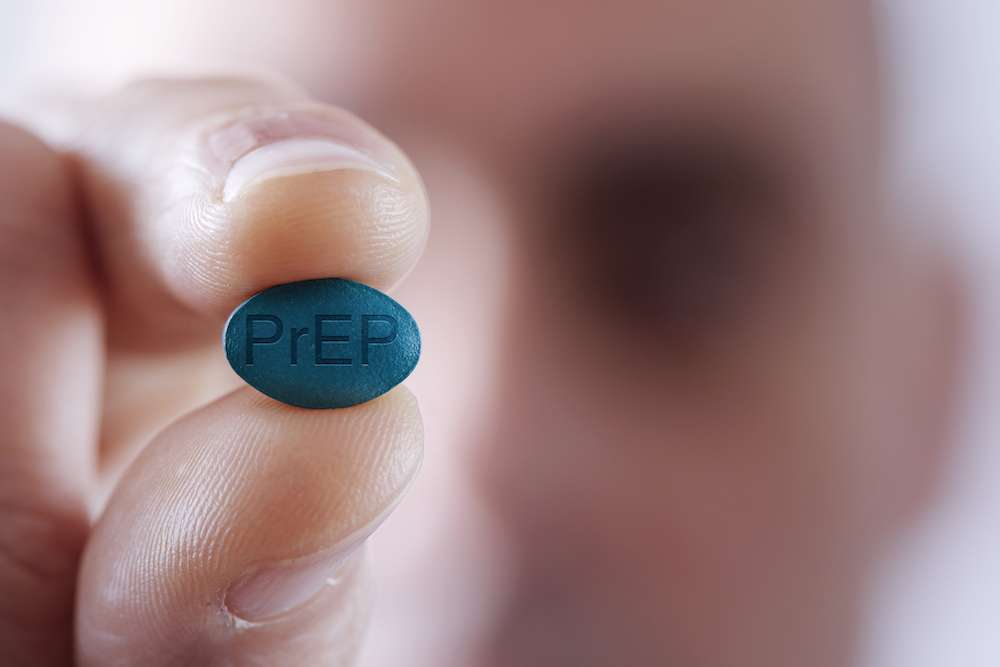
    A recent op-ed makes the case that Philly doctors should evaluate all medication-assisted treatment patients for PrEP. 

    An increase in the number of IV drug users infected with HIV in Philadelphia has spurred the city’s health department to train medical providers in the use of pre-exposure prophylaxis (PrEP), a pill that can prevent HIV infection.

    An op-ed piece in the Philadelphia Inquirer suggested that making PrEP and medication-assisted treatment (MAT) available to this demographic could not only provide much-needed assistance to an at-risk population, but as the story’s author noted, would also place Philadelphia at the forefront of helping to prevent the spread of HIV among that demographic. 

    The Inquirer noted that while the overall number of new HIV cases has been on the decline since the mid-2000s, with current statistics showing that 19,199 Philadelphia residents live with HIV, the number of individuals who acquired HIV through IV drugs rose from 45 cases in 2017 to 61 in 2018.

    The newspaper also cited a study by the National HIV Behavioral Surveillance System, which linked the rise in new infections to a high number of sex workers in Philadelphia. According to the study’s findings, 51% of women with new infections and 30% of male subjects had traded sex for money, drugs or other goods.

    Coverage of the rise in cases by the Philadelphia Tribune found that city health agencies have increased education efforts regarding the use of PrEP among HIV patients. These include the Philadelphia Department of Public Health, which trained doctors in areas with high rates of HIV about talking to their patients about the medication.  

    The non-profit syringe exchange program Prevention Point worked directly with IV drug users to let them know about how to get PrEP. The Tribune piece noted that the emergency departments of Temple University Hospital and Episcopal Hospital offered screenings for HIV and STDs. 

    The city’s Federally Qualified Health Centers and many primary care physicians offer PrEP as well. If the patient is found to be HIV-positive, doctors at these hospitals, centers and practices work with the individual to begin immediate treatment with PrEP. The medication is fully covered by most health plans, and when taken under the supervision of a medical provider, has reportedly few to no side effects.

    Despite this, the Inquirer op-ed noted that many local providers and treatment centers may not be aware of the availability of MAT with PrEP for HIV. The story advocated consistent referral of the medication to not only stem the tide of new cases, but to establish Philadelphia at the forefront of such treatment.

    “These type of local emerging best practices offer a way bridging national policy, clinical guidelines, local contexts and patient choice,” wrote the op-ed’s author, Kevin Moore, who serves as director of care coordination at ARS Treatment Centers.

    View the original article at thefix.com

  • Ohio Bill To End Death Penalty For Those With "Serious Mental Illness"

    Ohio Bill To End Death Penalty For Those With "Serious Mental Illness"

    The bill would also allow all prisoners on death row within the state to petition for resentencing.

    A bipartisan bill would ban the death penalty in Ohio for anyone found to have “serious mental illness,” which the bill limits to diagnosed schizophrenia, schizoaffective disorder, bipolar disorder, major depressive disorder or delusional disorder.

    It must also be determined that said mental illness “significantly impaired the person’s capacity to exercise rational judgment” during the moment of the crime.

    The bill, which is currently making its way through the Ohio legislature, would also allow all inmates on death row within the state to petition for resentencing under this new policy. Prosecutors are opposing the bill based on the concern that death row inmates will use this as an opportunity to delay their sentence. Allen County Prosecutor Juergen Waldick testified that it’s “likely that every single person on death row would file such a motion,” which could overwhelm the courts.

    However, the bill is supported by multiple mental health professional and advocacy groups, including the Ohio Psychological Association, the Ohio Psychiatric Physician’s Association and the National Alliance on Mental Illness of Ohio (NAMI Ohio).

    “People with these mental illnesses don’t always know what they’re doing,” said NAMI Ohio Executive Director Terry Russell. “We don’t think it’s ethically or morally right to take their life because of it.”

    Bill sponsor, Republican Rep. Brett Hudson Hillyer, argued that most Ohioans “will concede executing an individual found to be suffering from a serious mental illness at the time of the crime is neither fair nor just, and this punishment should be reserved for those who have intentionally done.”

    A report by the Charles Hamilton Houston Institute for Race and Justice at Harvard University found that 75% of executions in 2015 involved defendants and situations of “crippling disabilities and uncertain guilt.”

    Seven of the 28 cases examined surrounded individuals who were found to have serious mental illnesses. Additionally, five executed prisoners had experienced “extreme” childhood trauma or abuse.

    One individual had been classified by the Veterans Administration as being 100% disabled due to severe PTSD resulting from his service in the Vietnam War.

    Defendants found guilty of capital offenses who are found to have severe mental illnesses will still be given harsh sentences such as life in prison without parole or life in prison with parole eligibility after 25 or 30 years.

    Proponents of the bill have stressed that people who commit crimes while being mentally ill will still be held responsible for their actions. However, they argue that treatment is a better option for these individuals than execution.

    “The stigma of these illnesses is so misunderstood in the community,” Russell said. “When the law is broken, we’re not going to use mental health as an excuse. We send them to treatment facilities instead of prisons.”

    View the original article at thefix.com

  • Loopholes May Lead FDA to Block New Buprenorphine Alternatives

    Loopholes May Lead FDA to Block New Buprenorphine Alternatives

    Despite an ongoing epidemic, alternatives to Sublocade are not allowed to enter the market.

    Thanks to so-called “orphan drug” legal loopholes, Sublocade might be the only buprenorphine product on the market until 2024.

    For any medical issue, patients have to try different avenues of treatment to find the most effective one. This need for alternatives is especially important for finding treatments for opioid addiction considering the crisis is taking around 130 lives in the U.S. each day.

    “It’s important to have multiple different treatment options for different patients, different circumstances,” says Carolyn Bogdon, a South Carolina-based family nurse practitioner.

    Several methods for opioid addiction treatment exist. For example, there is the daily dosing of methadone or the once-monthly Vivitrol injection. Another alternative is buprenorphine, an opiate that blocks the same receptors that opioid painkillers would without providing the high. It can be taken as a film or tablet once or twice a day.

    One buprenorphine product, called Sublocade, only needs to be taken once a month. Currently, there aren’t any comparable alternatives, but that’s not for lack of competition. A company called Braeburn has produced at least one long-lasting buprenorphine alternative, called Brixadi, but it just can’t be sold right now.

    “It’s ready for market now,” said Mike Derkacz, CEO of Braeburn. “We are deemed safe and effective by FDA, but we are unable to make the product available to patients during this crisis.”

    When Sublocade was released in 2017, it enjoyed three years of exclusivity as part of the standard allowance for any new drug. However, Sublocade seems to be in line to get seven years of exclusivity as the FDA may consider it an orphan drug.

    Typically, an orphan drug is defined by the FDA as a medication that treats ailments that affect less than 200,000 people a year. Technically speaking, the opioid crisis does not qualify, with 2.3 million people addicted and 47,000 who died in 2017 alone.

    The decision to consider Sublocade an orphan drug is made even more perplexing to Derkacz by the fact that the Trump administration declared the opioid crisis a national emergency.

    “There have been studies that show a reduction in mortality by 40% with buprenorphine,” claimed Derkacz. “That keeps people alive. That gives people a chance to get back to their lives and recover fully.”

    Drugs like Sublocade and Brixadi are especially useful for people who can’t or don’t want to take daily doses of methadone.

    “It provides a little bit more anonymity for patients that don’t want to disclose that they have an opiate use disorder,” said Michelle Lofwall, a Kentucky-based psychiatrist.

    “Some patients have felt stigmatized when going to the pharmacy, like they don’t feel like they’re necessarily treated all that well once they show their prescription.”

    View the original article at thefix.com

  • Slipknot Drummer’s Daughter Dies Days After Posting Sobriety Chip

    Slipknot Drummer’s Daughter Dies Days After Posting Sobriety Chip

    Her family asks that people not pry and speculate during their time of mourning.

    Gabrielle Crahan, the youngest daughter of Slipknot drummer Shawn Crahan, has died at 22 years old. Her sudden passing came just days after she shared a photo of her five month sobriety chip on Instagram.

    “FIVE MONTHS,” Gabrielle wrote in the caption of her photo of the red Alcoholics Anonymous chip.

    Shawn, who is known as “clown” in Slipknot, shared the news on the band’s official Instagram account.

    “It is with a broken heart, and from a place of the deepest pain, that I have to inform all of you that my youngest daughter, Gabrielle, passed away yesterday – Saturday May 18th, 2019. She was 22 years old,” he wrote alongside a black-and-white photo of Gabrielle. “Funeral arrangements will be forthcoming. My family and I ask that our privacy be respected moving forward. Thank you. Much love, clown.”

    Gabrielle’s older sister, Alexandria, also shared words of mourning. Posting a childhood photo of herself and Gabrielle, she lamented the loss.

    “Yesterday my little sister Gabrielle passed away. I am in shock and have no idea how to process the wave of emotions I am experiencing. The comforts I have in these moments are my family, friends, and cats,” she wrote. “Please put good energy out for my parents and my brothers. This loss leaves the biggest hole and our lives will never be the same. 22 is too young to die.”

    Alexandria also took it upon herself to combat the prying questions around whether Gabrielle died of an overdose or suicide.

    “She died yesterday. Stop speculating stop with the assumptions if you’re going to be negative, leave my family alone,” Alexandria wrote.

    Gabrielle’s actual cause of death has not yet been made public knowledge.

    This is not the first time that members of Slipknot have been affected by addiction. The band’s lead sober singer, Corey Taylor, has long struggled with addiction, as he’s shared before. Paul Gray, Slipknot’s bassist, tragically died of an overdose in 2010. Gray’s doctor was eventually held accountable for enabling Gray’s Xanax addiction.

    “I just knew it was his drug of choice, that he’d struggled with it,” said his widow, Brenna Gray. “So I just wasn’t really sure why he was on it, why he needed it along with the medication he was taking for addiction.”

    View the original article at thefix.com

  • Weezer, Pete Wentz Join #MyYoungerSelf Mental Health Campaign

    Weezer, Pete Wentz Join #MyYoungerSelf Mental Health Campaign

    Weezer, Pete Wentz from Fall Out Boy and producer/songwriter Butch Walker are the latest to create videos for the campaign.

    The Child’s Mind Institute’s annual #MyYoungerSelf campaign aims to raise mental health awareness by providing a platform where celebrities can get candid about overcoming their struggles, and share what they would tell their younger selves about their mental health journey today. 

    Members of the band Weezer, Pete Wentz from Fall Out Boy, and producer/songwriter Butch Walker are the latest to create videos for #MyYoungerSelf, in the hopes that young people will find comfort in their advice.

    As Rolling Stone reports, Weezer bassist Scott Shriner describes himself in his childhood years as “super sick, different and weird.” He was full of self-hatred and “scared of everything, [I] hid under the bed when it was time to go to school.”

    In the video, Shriner encourages young people to “find something that you really enjoy and just work really hard at it and know that you’re not alone and that you’re not always going to feel that way. If I knew then how I would turn out now, I probably could’ve relaxed a little bit… Find some of the weirdos like you to talk to.”

    Wentz also said, “It’s super normal to be unsure of yourself and feel lonely. One of the things I would have told myself 10 or 20 years ago is that it’s alright to feel that anxiety, it’s alright to feel down, but you’ve gotta know that tomorrow might have a different feeling.” He also said, “It’s important to know that you can reach out to people. Sometimes you start feeling like, ‘I’m feeling down, and I’ll just keep it to myself.’ I think it’s important to reach out to your friends.”

    Walker, who has worked with Fall Out Boy and Weezer, among other bands, recalled coming from a small town “and feeling different… it was a lot of people who were scared out of the box of being ‘normal’ and scared to like things that other people didn’t necessarily like or weren’t into. I gravitated toward doing things and loving things that a lot of my friends did not. And because of that I got made fun of a lot—ridiculed, teased, mocked.”

    Yet Walker today says, “I know I’m not alone,” and now his son also has to deal with being “different” at school.

    “I guess the bottom line here is I want to tell you, ‘Don’t be afraid to be different. Don’t be afraid to challenge yourself.’ Just love what you love, and be yourself because everyone else is taken.”

    View the original article at thefix.com

  • Everybody Knows: 10 Lessons from 10 Years of Sobriety Without AA

    Everybody Knows: 10 Lessons from 10 Years of Sobriety Without AA

    In early sobriety, someone told me that since I’d gotten sober without AA, I wasn’t an alcoholic, and that since I didn’t go to meetings and ate the occasional mushroom, I wasn’t sober.

    On May 26th, I celebrated ten years of sobriety. People have found my story noteworthy because I got sober without rehab and stayed sober without AA. I don’t understand my story to be a unique miracle; in my travels in the last ten years, I’ve encountered a lot of folks with similar experiences. But I struggled in early sobriety with no roadmap for recovery. Much of what “everybody knows” to be true about alcoholism, getting sober, and recovery simply did not apply to me.

    Here’s what I learned as I forged my own path and created my recovery. Whether you’re deeply immersed in sobriety, newly sober, considering getting sober, or just feel like the structure of AA isn’t serving you, I hope this will help. 

    1. You Don’t Need to Be an Alcoholic in Order to Stop Drinking

    Seems obvious, doesn’t it? But when the monolithic sobriety support group that eclipses all others has “alcoholic” in the title, it’s a small logistical leap in the mind of someone reluctant to quit drinking.

    “It says ‘Alcoholics Anonymous,’ and I’m not totally sure I’m an alcoholic, and everybody knows that AA is the only way to get sober so… let’s do shots!”

    After 17 years of problem drinking, I still wasn’t certain I was an alcoholic. I’d filled out questionnaire after questionnaire — haven’t we all? Sure, there were a few warning signs: I’d blacked out repeatedly and I’d pissed the bed repeatedly and I drank alone and I sometimes drank in the morning and my life had become an uncontrollable mess… But there were still a lot of loopholes. Several times, I had been able to quit drinking for a week or a month or a couple months; once even a year. I didn’t drink at work or show up late or call in sick. Sometimes I was able to have one drink and go straight home (usually when I was already so hungover I felt like my heart was going to stop, but they didn’t ask for those specific details in the questionnaire). 

    For simplicity, I’ve winnowed all those questionnaires down to one question: Would your life be better, easier, more manageable if you stopped drinking? If the answer is yes, then stop drinking, just for a month. If you can’t do it, then yes, you’re an alcoholic and you need to stop drinking. And if you can, why not just go another month? And then another? Once you’ve been sober for nine months, then let’s tackle the scary question of whether you’re an alcoholic or not. I think I’d been sober for nearly a year before I could cop to that ugly word and by then I was so entrenched in sobriety that there was no turning back.

    2. AA Does Not Define Alcoholism or Sobriety

    In early sobriety, someone told me that since I’d gotten sober without AA, I wasn’t an alcoholic, and that since I didn’t go to meetings and ate the occasional mushroom, I wasn’t sober. This neatly dismissed my life-defining problem, my hard-won solution, and the humiliating, laborious hell I had endured in order to find a solution to my problem. I wish I’d had the confidence to respond with one word: bullshit.

    The Oxford English Dictionary defines alcoholism as “addiction to the consumption of alcoholic drink; alcohol dependency.” It defines sober as “not affected by alcohol; not drunk.” Dependence upon AA is not specified as a requirement for alcoholism. Nor is there any mention of attendance at AA as a necessary qualifier for sobriety. Another secretive society that tries to own both the illness and the cure is Scientology, which is to say these tactics are the mark of a cult. If you have accepted that you’re sick and you recognize that you are getting better, do not let anything slow you down.

    3. If You’re Waiting to Hit Rock Bottom, You’ve Stumbled Into Something Worse

    “Everybody knows” that an alcoholic has to hit bottom before they’re ready to quit drinking. A friend once marveled to me that I plowed through life-changing experience after life-changing experience without changing at all. Similarly, I endured low after low without making any corrections.

    A staple of my childhood cartoon viewing was The Mighty Hercules, a low-budget animated series created in the 60s that played early mornings on public access TV in the sticks in Canada where I was born. Nearly every episode revolved around the evil wizard Daedalus nearly destroying Hercules before he put on his magic ring and… listen, it hasn’t aged well. But the show was my first introduction to the concept of a bottomless pit, this horrifying sensation of falling for all eternity.

    That bottomless pit is where I found myself in early 2009. The Handsome Family neatly capture the alcoholic’s escapist conundrum in the final lines of their song “The Bottomless Hole”:

    And still I am there falling, down in this evil pit / but until I hit the bottom, I won’t believe it’s bottomless.

    I never found bottom. Mercifully, I had the realization one day that I never would, that I would just keep falling. In terror, I stopped immediately. I never went back.

    4. There Is No Singular Epiphany, No Billboard From God Stating YOU MUST CHANGE YOUR LIFE

    When I quit drinking, I had no inkling that I was quitting for good. I just knew that I couldn’t go on. I put a couple of days together, then a couple weeks, then a couple of months. After ten years, yes, I recognize now that I was quitting for good. But it wasn’t because I knew the next bender would kill me. It was an accumulation of small grievances that, in aggregate, made me want to die. I always had a headache, I never had any energy, I was always nauseous, I had exhausted all excuses and apologies beyond reason, I had no prospects, I knew my drinking life was unsustainable, and I couldn’t see a future. You can waste your entire life waiting for that crystalline, cataclysmic epiphany. Instead, I made a big change for small reasons and discovered a new life.

    5. Cry As Much As You Can

    Quitting is hard. Jesus, before you even get to quitting, life is hard, mornings are a hell both reliable and surprising, working for a living is a sustained slow-motion nightmare. Quitting drinking is admirable and you should not be expected to suffer in stoic silence. It’s okay to feel sad, it’s okay to get mad, it’s okay to mourn your old life and fear the future and hate yourself. Soak your pillow every chance you get. Eventually, you’ll run out of tears. You’ll cry yourself dry and you’ll have to get on with the living.

    6. Quitting Drinking Immediately Makes You a Hero, But It Doesn’t Immediately Make You a Good Person

    In early sobriety, I was lost. I was depressed, humorless, anxious, silent as a stone, exhausted and insomniac, quietly fuming and easily enraged. I imagine my friends hoped I wouldn’t relapse… and also prayed I would so they could bear to hang out with me again.

    Be generous and forgiving with yourself as you ride out these extended unpleasant withdrawals. Be forthright with your peers if you can, and ask them to be generous and forgiving with you. Getting sober is to be admired and supported even in the ugliest phases. In the first few days, the first few weeks, even, let it be enough just to not drink. The rest will come, in time.

    7. Emotions Are Temporary

    The word “emotion” is comprised mostly of “motion,” which is to say emotions are always in flux, storming into us with no warning and often retreating as suddenly. I had poison ivy often as a kid and I learned that cold water temporarily lessened the itching, but if I could submit myself to a blazing hot shower and moments of torturous itching, the heat burned the itch receptors out and then I’d feel no itching at all, sometimes for hours.

    In early sobriety, I was subject to unexpected attacks of fury or terror or paralyzing sadness. Fighting the feeling only prolonged it, sometimes for the entire day. Sitting in it, marinating in the negative emotion —actively trying to get as mad or scared or sad as possible for as long as possible — burned through it quickly and released me.

    8. Every Illness Is a Physical Illness

    Mental illness lives in the brain… but the brain lives in the body. If you deny a schizophrenic water, dehydration will end their life before mental illness can even damage it. I once made the mistake of posting a Bill Philips quote on my Facebook — “Food is the most widely abused anti-anxiety drug in America, and exercise is the most potent yet underutilized antidepressant” — and watched my feed catch fire, my friends suffering from mental illness protesting that they didn’t need to go for a walk in the woods, damn it, they needed their pills, and how could I diminish their suffering?

    Mental illness is real. But if you smoke cigarettes, pound coffee and soda and energy drinks, eat Burger King and Sour Patch Kids and lie on the couch in front of the TV all day, you won’t need mental illness in order to feel insane. I have clinically diagnosed anxiety and depression. When I got sober, I treated it with anti-depressants… and exercise and sunshine and tons of fresh fruits and vegetables and vitamins and lots of water. I’ve been off meds for years now, but I think getting a clinical diagnosis and a prescription for psychiatric medication were integral to my early success. If you need medication, by all means, take your meds and feel proud for practicing self-care. But caring for your body — exercise, sunshine, sleep, fresh fruits and vegetables, lots of water — helps everything.

    9. Getting Sober Doesn’t Have to Mean Being Reborn; Reinventing Yourself Is Optional

    I wanted to quit drinking for years but I feared AA and “inspirational” sobriety so much that I was willing to endure the worsening horrors of my alcoholism. When I finally stopped, I certainly didn’t feel like an image on Instagram of a sun peeking through clouds. I felt shell-shocked, with no idea who I was. Could I still laugh at dick jokes? Could I still resent America and fear capitalism and think the world was basically full of shit? Could I still play in fun, dumb, dead-end bands and listen to the Murder City Devils and flip off assholes who cut me off on the BQE? Yes, yes, yes.

    Sobriety doesn’t come with mandatory enrollment in some flowery cult of positivity. Making the decision to quit alcohol means that and only that, everything else is optional. Sobriety and long-distance running helped soften my dead-end nihilism and my contempt for humanity but that’s because it was a change I elected to make. After ten years of sobriety, I’m healthier and happier and less self-loathing but still largely the same cynical prick I was before, because that works for me. 

    10. There Are No Straight Lines in Nature, There Are No Straight Lines in Recovery

    In my ten years of sobriety, I’ve infrequently used marijuana, mushrooms, DMT, MDMA, prescription painkillers, etc. Pot has always felt like a flawed way to unwind, usually just a waste of time. CBD, on the other hand, has been tremendously helpful for managing pain and getting to sleep at night. Mushrooms have been integral to my sobriety, and I honestly believe they’ve made me a better person. DMT was painfully intense and deeply transformative, too complex to describe as “good” or “bad” but I’m grateful to have done it. None of these substances have ever made me crave alcohol. Painkillers have gotten me through muscle spasms and surgery and MDMA has provided great connection with people I care about, but neither has felt particularly therapeutic and both have left me depressed and craving alcohol at times.

    Though some of these experiences have not supported my sobriety, none of them have compromised my sobriety. I am a pure alcoholic and I know one drink would be my undoing. But as my sobriety is solely my creation, I own it. I define its parameters.

    Two months after my “official” sobriety date in 2009, I flew out to Colorado for three days to play a music festival. I got drunk before my flight and stayed drunk the entire weekend. I blew an important show, I embarrassed myself in front of a woman I’d had a crush on since we were kids, and I threw up scotch out of my nose on the street. I drank on the flight home but when I woke up the next day, I went right back to sobriety and haven’t taken a drink since.

    When I tried to write about this episode in The Long Run, my first narrative about getting sober, my editor took it out. When I wrote it into a book proposal, my agent took it out. When I wrote it into my memoir, I Swear I’ll Make It Up to You, my editor took it out. People love this bullshit Hollywood narrative of “hopeless alcoholic hits bottom, has a lightning bolt epiphany, and goes forth to never drink again.”

    Fuck that. Getting sober is a messy process. Stick with it, it’s worth it.

    View the original article at thefix.com

  • Recovery of a Real-Life "Nurse Jackie"

    Recovery of a Real-Life "Nurse Jackie"

    Before I ever stole a pill from work, before I was ever a daily drinker and habitual pill-popper, I was just a burned-out nurse, exhausted and in pain.

    Nurses are often referred to as “angels in scrubs.” It certainly fits. 

    Who else but an angelic being can provide unconditional comfort in the throes of tragedy, hold your hands through unspeakable heartbreak, and save your loved one’s life all while cleaning up an array of bodily fluids?

    Nurses do it with a smile.

    Florence Nightingale left her predecessors with big shoes to fill. Nurses must function as caregivers under extraordinary pressure, possess superhuman resilience, scrupulous morals, exceptional coping skills and be immune to afflictions that trouble the general population. Nurses need to be available to care, comfort and to cure. There’s no time to be ill or emotionally fragile. 

    By striving to live up to Nightingale’s standards, we’ve earned the #1 spot on Forbes list of trusted professionals, but we’re also the most susceptible to job burnout. We’re brimming with intelligence and compassion, but far from celestial beings. Nurses are 100% human and just as likely, if not more so, to employ unhealthy coping mechanisms. 

    A Registered Nurse for over 14 years, I can attest to this. I mismanaged work stress and job burnout in the worst way possible: by turning to drugs and alcohol. 

    It’s estimated that around one in 10 nurses struggle with substance use disorder. That’s no small statistic, considering there are around 3 million nurses in the US.

    Alcohol, opiates and benzodiazepines are an all-too-accessible source of fuel to get through the work day. They’re also excellent numbing agents to sleep off the stress of a shift. It’s not uncommon to hear a nurse exclaim “This shift calls for wine!” or to joke about the necessity of drugs to wash away the day.

    Nurses readily encourage drinking as a coping skill, use of anti-anxiety medicine is socially approved of and sleeping pills are shared between friends. But admitting one has lost control of one or more of these highly addictive substances is absolutely taboo. 

    It was eight years into my career at the hospital that I became physically and psychologically dependent on Vicodin. Migraines interfered with my ability to work and be a mother. My doctor prescribed an opiate, and I experienced blissful relief as the migraine melted away and euphoric energy filled the void. 

    The progression of my addiction was insidious but certain. Since graduation from nursing school, I could count on one hand how many hangovers I’d woken up with. Recreational drugs, including smoking pot, was out of the question. Yet when all the factors fell into place – a legit prescription, disengaged from my work, overwhelmed at home and sleep deprived working nights – my fate seemed inevitable.

    Slowly and steadily I transformed from a Florence Nightingale prodigy – working overtime, volunteering, climbing the ladder to nursing success – into a real-life Nurse Jackie

    Eventually I became tolerant and my personal prescription wasn’t enough. I engaged in behavior I’d previously considered appalling and unthinkable. I stole from my employer. Compulsion to use and desperation to avoid withdrawal won over any rational thought process. Opiates had become a cure-all for the physical and emotional exhaustion that consumed me.

    Like so many other nurses, when I realized the line had been crossed from medical and occasional recreational use to abuse and dependence, I felt trapped. I couldn’t just tell my manager. I couldn’t even tell a friend. Too much was at stake. Drowning in opiate addiction, (and drinking heavily to boost the effects or stave off withdrawal) I saw no safe shore to swim to. 

    Washington State, along with most states in the US, offers an “alternative to discipline” program due to the high incidence of substance abuse in healthcare professionals. But since the problem isn’t talked about, the solution isn’t either. The organizations are spoken of in whispers, as are the nurses who “ended up in the program.”

    I wasn’t ignorant to the existence of these resources, but I was completely misguided as to their intention and function. 

    I’d heard rumors of nurses who were caught “diverting” – the fancy term we use for stealing the leftover or extra amounts of drugs that are supposed to be “wasted” at work in the proper receptacle.

    According to gossip, they were escorted off campus by security or police as the state program was notified. At worst they were forced to relinquish their license. At best, job opportunities were limited to grueling shifts at nursing homes earning half the pay they deserved. 

    It was a living nightmare. Imprisoned by addiction, paralyzed by fear. Terrified of being recognized, I refused to attend any type of peer-support group meeting. Finally, out of desperation I contacted a private counselor. She declined to treat me based on duty to report.

    “Oh, you’re a nurse? I can’t treat you. Too much liability. But good luck I’m sure you’ll find someone.” 

    Fortunately, I found rock bottom. Not in the form of an overdose, which I was dangerously close to many times, but in being caught by my employer. Someone had informed them of my suspicious behavior. I was required to give a urine sample, and when it came back glowing dirty with the truth of my drug use, I was given a choice according to my state’s department of health policy: Enter into treatment or face criminal charges and potential loss of my license.

    Both options felt like professional suicide. For the next two weeks as I contemplated the decision, I also contemplated actual suicide. With the support of one family member I felt I could confide in, I made my way to treatment; sick with shame and certain I’d destroyed my reputation, my dignity and life as I knew it. 

    Out of work as a nurse, but intentionally working on recovery, my outlook began to change. One month of sobriety turned into multiple, and the chemical fog began to clear. I made connections with nurses who had or were recovering. I began practicing mindfulness, cultivating resilience and digging deep to understand what had transpired. 

    As I researched, I discovered my story isn’t unique. Being an excellent nurse and having an addiction are not mutually exclusive. In fact, they often go hand-in-hand. The highest functioning, hardest working, most in-depth critical thinkers end up stealing and ingesting drugs from work. Numerous factors play into this, the most basic of which is drugs and alcohol offer instant relief from a mind that won’t shut off, and they are physically addictive. Nurses in particular feel invincible as the caregivers – “it’s others who are sick.”

    Our comprehensive knowledge of medications and how to ingest or inject “safely” gives us a false sense of security. And 75-80% of nurses are adult children of alcoholics, including me. We’re essentially predisposed and then enter into a pressure cooker of a career. 

    My research also uncovered that sober, recovering and/or “graduated” from an alternative to discipline program nurses still don’t disclose this part of their lives. This is a tragedy in itself. When nurses keep their recovery in their dark, still-suffering nurses keep their active addictions in the dark. 

    Healthcare as an occupation does a disservice to professionals who enter into it by neglecting to educate, advocate and adequately treat. 

    Nursing schools should provide courses in mindfulness and self-awareness, encouraging nurses to uncover the sometimes-hidden nature of addictive tendencies and teaching strategies to manage them. This should be done long before ever exposing them to the workforce and giving access to a plethora of pills and injectables. 

    Educational institutions and employers should offer free education, confidential counseling and allow time off work for treatment. Lunch breaks should be mandatory and enforced; employees should be trained in self-care. 

    Instead of shaming nurses who are under suspicion or undergoing treatment by posting names and license numbers on public lists, the department of health should be involved in the development of peer- support groups.

    Trauma-informed rehabilitation programs need to be implemented for nurses and first responders who have been repeatedly subject to high stress and high stakes patient care. 

    Asking for help shouldn’t be a trauma itself. We need to change the narrative from “being reported” to being “given an opportunity to receive treatment and protect your license.” Treatment providers need to change the verbiage from “You can’t tell me anything, I have a duty to report.” To “This is an opportunity for honesty, to find you the best treatment possible so you can achieve health and well-being again.”

    I never wanted to be known as a real-life Nurse Jackie. It would have been easier to quietly complete my time in treatment and live out my career with a well-kept secret. But I know that there are many more angels in scrubs still suffering. Neglecting themselves while striving to meet the needs of their patients, too afraid to ask for help and too sick to overcome addiction on their own. 

    Before I ever stole a pill from work, before I was ever a daily drinker and habitual pill-popper, I was just a burned-out nurse, exhausted and in pain. I needed a safe place to admit I was hurting and an outlet to vent the pressure. I needed somewhere to take off my scrubs, shed the angel wings, and become vulnerable without being made to feel inferior. I needed to know I wasn’t alone, and that treatment was not the end of my career; only the end of my addiction. My career would have a chance to flourish.

    Stigma must be eradicated for recovery to be possible. Prevention, early intervention, and treatment must be advocated for fiercely in order for nursing to be filled with thriving, healthy individuals. I live sober out loud because I believe this change is possible.

    Tiffany Swedeen, RN, BSN, CPC/CPRC is a certified life and recovery coach, She Recovers Designated Coach, and a registered nurse in recovery herself from opioids and alcohol. Tiffany lives “sober out loud,” proudly sharing her story through advocacy and blogging and is passionate about helping others do the same. Her goal is to eradicate shame and empower all to live a life of radical self-love.

    You can contact Tiffany through her website Recover and Rise, read her blog www.scrubbedcleanrn.com and follow her @scrubbedcleanrn. 

    View the original article at thefix.com
  • Ohio Officials Issue Warning After Spike In Drug Overdose Deaths

    Ohio Officials Issue Warning After Spike In Drug Overdose Deaths

    Fentanyl is widely believed to be the major cause of a recent overdose wave that hit multiple Ohio counties.

    Ohio law enforcement and health officials are warning residents to be extra cautious around illicit drugs, following a spike in overdoses this week that officials believe was caused by fentanyl found in cocaine and methamphetamine. 

    On Sunday (May 19), officials in Hamilton County, which includes the city of Cincinnati, warned about a spike in overdoses. The county saw at least 15 emergency room visits caused by overdoses in the 24 hours leading up to 6 a.m. on May 19.

    “Fentanyl continues to be a major cause of overdose and is being mixed with cocaine and meth,” Tom Synan, a local police chief, said in a Facebook post sharing the press release. “Stopping fentanyl coming into the country should be the national priority. This will continue until it is. More needs to be done.”

    In the release, officials warned law enforcement to not field test drugs, and to use safety equipment like gloves. The warning encouraged people to carry extra doses of the overdose drug Narcan, and to administer it any time someone was overdosing, even if they didn’t think they had ingested opioids. It also encouraged active drug users to take precautions like never using alone.

    In addition, it warned people not to leave the hospital against medical advice after receiving Narcan, the opioid overdose-reversing drug, since certain opioids can last longer than the drug and people can possibly overdose again hours after receiving it. 

    On May 23, officials in Cuyahoga County, which includes Cleveland, issued a similar warning. There, seven people died from overdoses over two days, according to Fox 8 Cleveland

    “The recent spike in overdose deaths, which has also been noted across Ohio, is concerning and still likely a result of fentanyl. Fentanyl is continuing to impact our communities, both in the City of Cleveland and suburbs,” said Dr. Thomas Gilson, Cuyahoga County medical examiner, in a statement on Thursday (May 23). 

    In a post sharing that statement, Synan wrote, “Fentanyl is still cause of immediate OD/deaths on its own in cocaine & meth. Those using any street drugs should carry Narcan. If you use drugs no matter where you live, your race or religion—fentanyl could be in your drugs. Almost half of OD deaths across the country involving cocaine and meth have had fentanyl in it or used with it. You don’t know what’s in your drugs. Even if you do—you are not being ‘safe’ with illicit fentanyl. No illicit drug is ‘safe.’”

    View the original article at thefix.com
  • Austin Eubanks, Columbine Survivor, Discussed “Emotional Pain” Before His Passing

    Austin Eubanks, Columbine Survivor, Discussed “Emotional Pain” Before His Passing

    Back in April, Eubanks spoke about addiction and trauma at a harm reduction summit. 

    The recent passing of Austin Eubanks, a school shooting survivor who became a vocal advocate for mental health and substance use disorder, was a jarring reminder that recovering from trauma and addiction is a lifelong battle.

    Eubanks, who survived the Columbine High School shooting of 1999, turned the traumatic event that unfolded that day—and his ensuing battle with addiction—into a calling to help others.

    In April, a little over a month before his untimely passing, Eubanks spoke at the Kentucky Harm Reduction Summit. “We live in a culture today that is ill-equipped to address emotional pain in a healthy fashion,” he told attendees, USA Today reported.

    Jeff Howard, the director of the Kentucky Department of Public Health, helped bring Austin to the summit to speak about addiction.

    “It’s an unbelievably heartbreaking scenario, just incredibly sad,” said Howard. “Frankly, it reinforces the message: Even when people seem like they have it together, you have to understand that this disease is chronic and relapsing.”

    Howard mentioned no sign of trouble when he saw Austin at the summit. “For those who suffer from this disorder, it’s a constant battle day in and day out. It’s a lesson to us all, that even when someone seems well, they still need our support.”

    Just this year, Austin had already attended speaking engagements in Florida, Vermont, Georgia, Connecticut and more, with future engagements in Idaho, Iowa and Arizona planned for the summer.

    Eubanks died some time last weekend, found in his home in Steamboat Springs, Colorado. He was 37 years old. While the cause of death has not yet been determined, his family released a statement saying that Austin “lost the battle with the very disease he fought so hard to help others face.”

    The Littleton community, where Columbine High School is located, recently marked the 20th anniversary of the Columbine shooting in April. Then, in early May, there was another shooting at Highlands Ranch STEM School, just a 15-minute drive from Littleton.

    “It’s incredibly difficult to find hope when this kind of thing keeps happening,” said Zachary Cartaya, 38, a former classmate of Austin’s. Cartaya, too, struggled with depression and suicidal thoughts after the shooting. He has since co-founded The Rebels Project, connecting trauma survivors with each other and with professional counseling.

    A supportive community can lift up someone who is going through it alone. People like Austin, who even years later are living with horrific trauma, need support. “Here’s someone 20 years later who had all these demons and was taken as a result,” said Frank DeAngelis, the principal of Columbine at the time.

    Eubanks’ family said in their statement that they will “continue his work” to help build communities of support.

    View the original article at thefix.com