Author: The Fix

  • Connection Between Heavy Marijuana Use & Psychosis Explored

    Connection Between Heavy Marijuana Use & Psychosis Explored

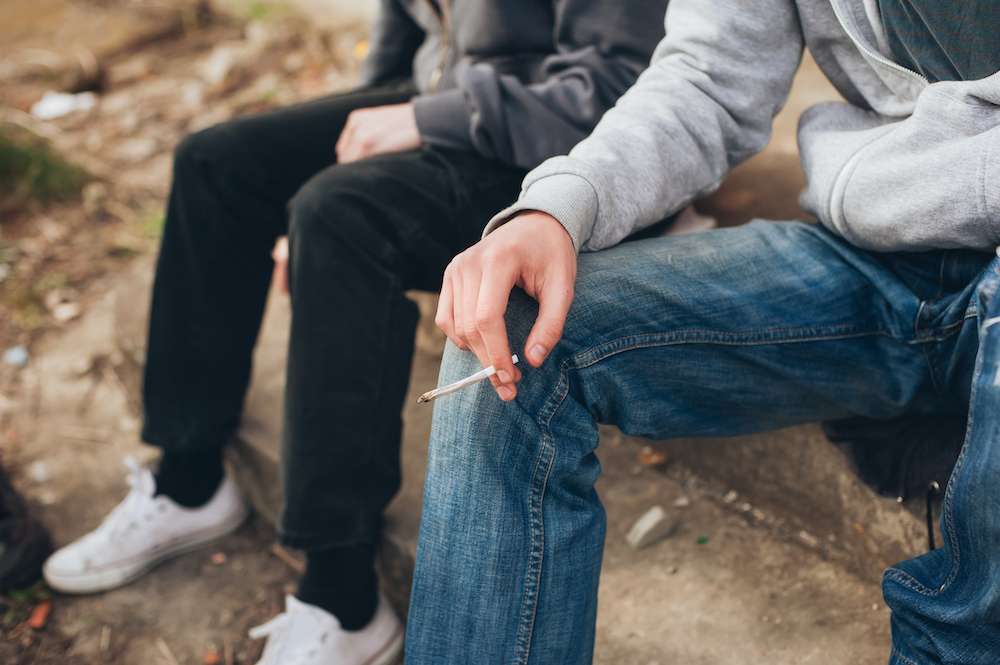
    Those who used high potency marijuana—with a THC content above 10%—quadrupled their risk for psychosis, according to a new study. 

    Legal weed is becoming more socially acceptable, but a study published this week reaffirms the connection between heavy marijuana use and psychosis—highlighting the fact that despite its legal status, the drug continues to have real effects on health. 

    The study, published in The Lancet Psychiatry, looked at the connection between marijuana use and first-time psychotic episodes. The authors found that people who smoked weed frequently and who used high-potency cannabis were more likely to experience psychotic episodes than people who did not use marijuana

    Krista M. Lisdahl, who works at the University of Wisconsin as a clinical neuropsychologist, said that the study contributes to the body of evidence that indicates a link between marijuana use and psychosis. 

    “This is more evidence that the link between cannabis and psychosis matters,” Lisdahl, who was not involved with the study, told NPR

    The study authors found that people who used pot daily were three times more likely to have a psychotic episode than people who didn’t use marijuana. Those who used high-potency marijuana—with a THC content above 10%—quadrupled their risk for psychosis. The increased risk was even more pronounced for people who starting using cannabis before they were 15. 

    Marta Di Forti, the study author and a psychiatrist, said that the findings are concerning because high-potency marijuana is more readily available than ever. “Almost 20 years ago, there wasn’t much high-potency cannabis available [in the market],” she said. 

    The cities that had the most availability of high-potency weed—London, Paris and Amsterdam—also had the highest rates of new psychosis cases. This finding strengthened the connection between THC content and psychosis, says Suzanne Gage, a psychologist and epidemiologist who wrote a commentary that accompanied the study. 

    “That’s a really interesting finding, and that’s not something anyone has done before,” she said. 

    Lisdahl agreed. “One of the things that’s really novel is that they could show that variation of use and potency of cannabis was related to rates of first-episode psychosis,”she said. 

    Despite the link, Dr. Diana Martinez, who researches addiction at Columbia University, said that the research does not point to a causal relationship between marijuana use and psychosis. 

    “You can’t say that cannabis causes psychosis,” she said. “It’s simply not supported by the data.”

    Instead, there are likely multiple factors that influence the emergence of psychosis.

    “In all psychotic disorders, there is this multiple hit hypothesis,” she said. Those factors include genetic and environmental causes, possibly including marijuana exposure. 

    Despite this, Di Forti says that the study should be cause for caution in people who use marijuana regularly. 

    “There are people across the world who use cannabis for a variety of reasons,” she said. “Some of them recreationally, some of them for medicinal purposes. They need to know what to look for and ask for help, if they come across characteristics of a psychotic disorder.”

    View the original article at thefix.com

  • San Diego Considers Cannabis Cafes

    San Diego Considers Cannabis Cafes

    Opponents of the idea cite drugged driving as a reason not to open the cafes.

    Officials in San Diego are gathering information and debating whether the city should allow establishments where patrons could purchase and consume legal marijuana products. 

    “When we have a cool place like this where people can gather and participate in the legal market, that’s ultimately going to take people away from the illicit market and bring revenue back to the city,” Dallin Young, board member for the Association for Cannabis Professionals, told The San Diego Economic Development Committee last week, according to NBC News San Diego

    City Councilmembers asked the city’s independent budget analyst to research the benefits and drawbacks of cannabis cafes. However, some councilmembers are concerned that the cafes would draw more resources than they would bring in.

    Scott Chipman, a representative of San Diegans for Safe Neighborhoods, said that the cafes would open the door for many problems. “There’s a big concern with drug-impaired driving,” he told the committee. “The economic benefit would be far outweighed by the cost.” 

    Chipman says that the data shows this to be true. According to federal data, states that have legalized cannabis have seen a 6% increase in traffic accidents, for example.

    “They’re spending way more on pot enforcement, impaired driving, medical bills and other things than the economic revenue and taxes coming in,” Chipman said. 

    Despite that, some California towns and cities are approving cannabis cafes. Although the California legalization legislation prohibits public use, the cafes would be an exception. 

    West Hollywood issued approval for cannabis cafes that will begin operation this year, according to Eater

    “We’re totally stoked the city is excited about our concept, and can’t wait to bring it to life. West Hollywood’s nightlife has it all, save for one thing: the world’s best cannabis restaurant and lounge,” said Kirk Cartozian, who is a founder of The Antidote, which will be an edibles-only lounge. “Did we say we’re totally ecstatic about this?”

    According to Leafly, there were only nine cannabis cafes operating in the nation in 2018. Many of those are in San Francisco, a city that has been an early adopter of the idea, according to Charles Pappas, a medical cannabis commissioner. 

    “San Francisco has the best regulations of anywhere,” he said. 

    Pappas said that concerns over drugged driving are misplaced in a society that has already accepted that adults can consume some mind-altering substances, namely alcohol, in public. 

    “If bars are safe why can’t lounges be safe? A lounge owner can say, ‘OK you’ve smoked enough, that’s it.’ Just like a bar,” he said. 

    View the original article at thefix.com

  • Dramatic Rise In Fentanyl Deaths Marks Third Wave Of Opioid Crisis

    Dramatic Rise In Fentanyl Deaths Marks Third Wave Of Opioid Crisis

    From 2011 to 2016, Black Americans experienced the sharpest rise in fentanyl-related deaths with a 141% increase.

    Fentanyl overdose rates have been rising at very sharp rates among minorities, including African Americans and Hispanic Americans, according to new data compiled by the Centers for Disease Control and Prevention (CDC). 

    The data looked at fentanyl overdose rates between 2011 and 2016. Researchers found that the fentanyl overdose rate for African Americans rose the fastest out of any ethnic group—increasing, on average, 141% each year.

    Hispanic Americans also showed a dramatic increase of 118% each year. Non-Hispanic whites saw their rates of fentanyl overdoses increase 61% each year, on average. 

    African Americans and Hispanic Americans still have lower overdose rates overall—5.6 and 2.5 deaths per 100,000 respectively. Whites, by comparison, continue to have the highest fentanyl overdose rates at 7.7 deaths per 100,000.

    However, lead study author, Merianne Rose Spencer, said it’s important to note that the overdose rate for Black Americans is rising at more than double the rate of white Americans, according to The Washington Post

    Overall, the data showed shocking increases in fentanyl overdoses in all demographics. 

    “Beginning in the fourth quarter of 2013, the number of deaths increased every quarter. From 2013 through 2014, the death rate more than doubled, nearly doubled again from 2014 through 2015, and more than doubled again from 2015 through 2016,” report authors wrote. 

    The CDC’s mortality statistics branch’s chief, Robert Anderson, said that the severity of the fentanyl overdose crisis is clear. “We’re seeing it across the board,” he said.

    The rate of overdose accelerated in 2014, when, according to Ohio Senator Rob Portman, fentanyl “came on with a vengeance.” “We were making progress, starting to get this stuff in the right direction, and the fentanyl just overwhelmed the systems,” he said this week. 

    Although the recently released data didn’t cover 2017 or 2018, there are indications that the pace of increase of overdoses has slowed in the last two years. Preliminary numbers show that 70,424 died by August of 2018, compared with 72,287 deaths by November of 2017. 

    Anderson said the numbers suggest that the rate has plateaued, but is not yet truly reversing. “We would look at that and say that’s pretty flat. We’d be reluctant to call it a real decline,” he said.

    Still, Portman said that the numbers show a step in the right direction, particularly after a long period of dramatic increases. 

    “It is a very significant story that for the first time in eight years we’re not seeing an increase in overdose deaths,” he said. “We feel like it’s still unacceptably high, but we’re cautiously optimistic that we’ve finally turned the corner after eight years.”

    View the original article at thefix.com

  • New Wrestling Doc "350 Days" Examines Sport's Mental & Physical Toll

    New Wrestling Doc "350 Days" Examines Sport's Mental & Physical Toll

    “The fact that it’s shown as cartoonish on TV doesn’t mean that those bumps don’t hurt or cripple or ultimately result in pain pill addictions or other drug dependency issues.”

    Professional wrestling remains one of the world’s most popular sport entertainments, and a lucrative industry for its promoters. For the wrestlers themselves, there’s fame and adoration, and even the chance for stardom outside the ring, as exemplified by Dwayne “The Rock” Johnson and John Cena.

    In recent years, several documentaries—including Beyond the MatThe Sheik, and The Resurrection of Jake the Snakehave peeled away the superhuman veneer of wrestling and looked at the real physical and emotional impact of a professional wrestling career.

    A new documentary, 350 Days, looks at the reality of wrestlers’ lives through conversations with legends like Greg Valentine, “Superstar” Billy Graham and the late Jimmy “Superfly” Snuka, who detail in both humorous and heartfelt terms the punishing conditions under which they rose to fame in the ring.

    The title of the film—which debuts on iTunes on April 2—refers to the number of days per year many wrestlers spend on the road and in the ring. The wear and tear of such a schedule has left many Hall of Famers and newcomers alike with debilitating physical injuries as well as mental health, emotional and drug dependency issues.

    The film’s co-producer Evan Ginzburg—who also served as associate producer on the Oscar-nominated drama The Wrestler, with Mickey Rourke—tells The Fix that addiction is “a prevalent issue” in professional wrestling.

    “The fact that it’s shown as cartoonish on TV doesn’t mean that those bumps don’t hurt or cripple or ultimately result in pain pill addictions or other drug dependency issues,” he says. “Wrestlers hate the word ‘fake,’ but they’ll say, ‘My hip replacement, my knee replacement, my bad back—those aren’t fake.’ Or, ‘Those three divorces aren’t fake. My kids not talking to me isn’t fake.’ And many—not all—will develop drug dependencies because of it. It’s just stating the facts.”

    Photo courtesy of Evan Ginzburg

    As Ginzburg notes, pain—physical, emotional and mental—is part and parcel of a wrestling career. “I was at a wrestling show with a chiropractor friend, and he said, ‘These [moves] are like mini-whiplashes. You can’t imagine what this is doing to their bodies,’” he explains. “That a couple of bumps in one show. Imagine the cumulative effect of all that.” The physical requirements of the job, combined with the potential for what Ginzburg calls “horrific” injuries, and a schedule that takes them away from their families for nearly an entire year, all take tolls, as do accompanying psychological stressors. 

    Photo courtesy of Evan Ginzburg

    “You’re told you need to be bigger, to look a certain way,” says Ginzburg. “What’s also addressed in the film is that they’ll wrestle injured, because they’re scared to lose their spot [on a bout card]. There’s always a younger guy, a new guy willing to take their place. So these guys keep going until the human body can’t go any more, and you see Abdullah the Butcher, the Iron Sheik in a wheelchair. And it’s not a secret how many guys have died from pain pills and steroids.”

    Photo courtesy of Evan Ginzburg

    Ginzburg says that major promoters like the WWE have attempted to resolve these issues by providing treatment to wrestlers who request it. “They go into rehab and World Wrestling Entertainment (WWE) pays for it,” he says. “How much came from public pressure, that may be a different issue.” But only a fundamental change to the structure of the industry is going to prevent the physical injury, the associate dependencies and the deaths that can occur as part of the job.

    Photo courtesy of Evan Ginzburg

    “A top promotion like WWE now goes from 350 days to 250 days a year,” he says. “That’s a good start, but wrestlers are still working 250 nights. WWE has so much talent that you forget some of them are actually there. How about taking the guys and women who are underutilized and putting them on during the holiday season—Thanksgiving through January 2—and giving the others time for their bodies to heal?”

    Photo courtesy of Evan Ginzburg

    Ginzburg hopes that viewers will learn some core truths about wrestling from 350 Days.

    “They sacrifice for the fans, and they’re not cartoon characters,” he says. “They are real people with bones that break and muscles that rip. It’s a brutal sport, and more has to be done for them.”

    View the original article at thefix.com

  • NIDA's Nora Volkow: There's No Evidence That Cannabis Can Treat Opioid Addiction

    NIDA's Nora Volkow: There's No Evidence That Cannabis Can Treat Opioid Addiction

    Volkow says that patients using cannabis for opioid use disorder treatment may be putting themselves at risk of relapse.

    National Institute on Drug Abuse (NIDA) Director Nora Volkow has stated that there is no evidence that cannabis use is an effective treatment for opioid use disorders.

    This statement comes as NIDA is planning to assess the possibility of such a treatment, with two or three studies either planned or already underway, according to USA Today

    Though Volkow says it’s not impossible that cannabis compounds could help treat addiction to opioids, she stresses that no evidence exists yet.

    Meanwhile, the Maryland General Assembly is currently considering allowing medical marijuana for this purpose, and New York, New Jersey, Pennsylvania, and Illinois have already passed laws green-lighting cannabis as an acceptable treatment for this growing issue.

    Volkow’s concern is that if cannabis compounds are not effective for treating opioid addiction, then patients being treated in this way are at high risk of relapse, and by extension, overdose and death.

    “If you don’t treat it properly, your risk of dying is quite high,” Volkow said in an interview with USA Today. “My main concern is by basically misinforming potential patients about the supposedly beneficial effects of cannabis, they may forgo a treatment that is lifesaving.”

    Opioid addiction relapse is particularly dangerous due to the fact that opioid tolerance can be drastically reduced by extended periods of non-use. If an individual relapses by going back to the same dose they were using before they quit, there is a greater chance of overdose and death.

    However, there may be some preliminary evidence on the effectiveness of cannabis in treating opioid use disorder. One 2018 study by Beth Wiese of the University of Missouri, St. Louis and Adrianne R. Wilson-Poe of the Washington University School of Medicine reviewed “emerging evidence” of this type of therapy.

    In their conclusion, they wrote that the “compelling nature of these data and the relative safety profile of cannabis warrant further exploration of cannabis as an adjunct or alternative treatment” for opioid addiction.

    For the most part, the only accepted treatments for opioid use disorders are methadone, buprenorphine, and naltrexone—which reduce cravings without producing a full-blown high.

    However, access to these medications can be restricted due to price, stigma, lack of education, and regulatory limits. Young people, people of color, and those living in rural communities have the most difficulty accessing this type of treatment.

    Cheryl Glenn, Maryland delegate and sponsor of the Maryland bill to allow cannabis as treatment for opioid use disorder, argues that the situation is too dire to bar people addicted to opioids from any treatment that could be effective.

    The Maryland legislature will soon consider an amendment to Glenn’s bill that would require patients to try other treatments before resorting to cannabis. Glenn currently opposes this amendment, arguing for patient choice in their health care.

    “My mother died from kidney cancer, and no one told the doctor he had to try this medication first, second or third,” she said. “I think the same respect ought to be given when you look at opioid disorders.”

    View the original article at thefix.com

  • Macklemore To Receive MusiCares Award For Addiction Recovery Work

    Macklemore To Receive MusiCares Award For Addiction Recovery Work

    The rapper has been vocal about his personal experience with addiction and recovery.

    Rapper and songwriter Macklemore will be the next musician to receive the annual Stevie Ray Vaughan Award from the MusiCares Foundation for his ongoing advocacy for those with substance use disorders.

    Macklemore himself is in recovery from drug and alcohol addiction and has been quite vocal about his own struggles with the disease.

    Macklemore became widely known for his activism in 2012 with the release of his single “Same Love” with Ryan Lewis. The song voiced strong support for LGBTQ rights and same-sex marriage, which was legalized in his home state of Washington that same year.

    In 2012, the rapper also spoke out about his addiction issues in a short documentary by Jabari Johnsonand released the song “Starting Over,” about a relapse he suffered in 2011.

    “Those three-plus years, I was so proud of,” Macklemore says in the song, “Then I threw them all away for two Styrofoam cups. The irony, everyone will think that ‘He lied to me.’ Made my sobriety so public, there’s no f—ing privacy.”

    Macklemore checked himself into rehab in 2008 and has been open about his experiences ever since he first topped the charts with “Thrift Shop.”

    In 2016, he produced an MTV documentary on the opioid epidemic titled Prescription for Change that included conversations with then-President Obama. In the same year, he appeared at one of Obama’s weekly addresses to speak out about addiction stigma.

    “When you’re going through it, it’s hard to imagine anything being worse than addiction,” he said. “But the shame and stigma associated with the disease keeps too many people from seeking the help they actually need. Addiction isn’t a personal choice or a personal failure.”

    On May 16 of this year, he will perform at the MusiCares Concert for Recovery in Los Angeles, where he will be given the award. According to CEO of the Recording Academy and MusiCares, Neil Portnow, the award is well deserved.

    “Macklemore’s artistic gifts are clearly recognized, as evidenced by the celebration of his music by fans all around the world,” said Portnow. “In addition to his musical contributions, we’re honoring him for what he has done since the beginning of his career—shine a light on his own struggles with addiction as a beacon of hope for those who suffer. It is a powerful testament to his talent and his generosity of spirit.”

    Other Washingtonian musical artists to receive the Stevie Ray Vaughan Award include Jerry Cantrell of Alice in Chains, Mike McCready of Pearl Jam, and Chris Cornell of Soundgarden and Audioslave. Cornell died by suicide in 2017, a tragedy that his wife attributes to his use of prescription drugs.

    View the original article at thefix.com

  • Activists Want Legalization For Psychedelics

    Activists Want Legalization For Psychedelics

    Oakland activists are holding a rally to push for the legalization of psychedelic drugs. 

    As legalized marijuana creeps into the mainstream, advocates for drug policy reform are setting their sights on a new goal—legalizing psychedelics. 

    Organizers in Oakland, California are the latest to push for legalizing psychedelic drugs including mushrooms, according to Marijuana Moment

    A Meetup post advertising efforts to “decriminalize nature” invites people to participate in a rally on March 22 in the city. 

    “With your help we can make this happen, but we need everybody’s support. Join the movement to restore our relationship to nature and advocate for our inalienable right to cognitive liberty and the freedom to explore our own consciousness,” the post reads.

    It continues, “Wouldn’t it be nice to have the freedom to work with these ancient sacred medicines that offer direct knowledge without the fear of persecution? Wouldn’t it be nice to address the set and setting elephant in the room—to reduce the immediate fear of persecution involved while engaging our right to access natural healing and insight—by decriminalizing entheogenic plants and fungi?”

    A representative of the meetup told Marijuana Moment that more details would be shared at the rally. 

    The event in Oakland isn’t entirely unusual. In Denver, an area that helped lead the movement to legalize marijuana, voters will consider a ballot measure to decriminalize psilocybin mushrooms in May. The effort is lead by Decriminalize Denver, and director Kevin Matthews said that just getting the measure on the ballot is significant. 

    “This has never been done before in the history of the U.S., so the fact that we were able to turn out the signatures and make the ballot is a strong statement that there are a lot of people who support this,” Matthews told Marijuana Moment. “We’ve created a platform where we can spread the right information about psilocybin as opposed to the misinformation and, really just downright propaganda from the government, and the war on drugs for the last almost 50 years now.”

    Matthews said that if decriminalization passes in Denver, the group may focus on more widespread change to laws regulating psychedelics. 

    He said, “We are confident that when this passes in May that it’ll open some doors to further conversation. Our big mission here is to work on reintegrating psilocybin back into society.”

    In Iowa, a new Republican lawmaker, Rep. Jeff Shipley, submitted legislation that would allow psilocybin, MDMA and ibogaine to be used in medical treatments by removing a ban on them. 

    “Exploring these issues are paramount to solving the healthcare crisis,” Shipley said in an email to Marijuana Moment. “There’s so much potential for research and clinical applications. I hope we can empower and trust patients to make their own best decisions.”

    View the original article at thefix.com

  • Whoopi Goldberg Talks Cannabis

    Whoopi Goldberg Talks Cannabis

    Goldberg discussed the benefits of marijuana and her company’s mission to offer women relief from cramps with her products. 

    Whoopi Goldberg has never been shy about speaking her mind. As a budding entrepreneur, she’s focusing her line of cannabis-based products on women’s health.

    Goldberg had been a big believer in cannabis for a long time. She says it’s helped her with menstrual cramps since she was young.

    “I realized it helped my cramps [then], and I’ve had a good relationship with it since,” she tells Forbes. “It continues to help me feel better as I get older. I’m a big fan of our products and my vape pen… they provide me relief as I get older.”

    Like many celebrities, Goldberg has gotten into the cannabis business herself, forming the company Whoopi & Maya with her partner Maya Elisabeth. As Goldberg explains, “I asked a friend in the cannabis industry if anyone was doing marijuana for menstrual cramps; and when he said no, I knew someone had to—and that it may as well be us.”

    Elisabeth founded the company Om Edibles in 2008, and she’s also the winner of seven High Times Cannabis Cup awards. “When we started looking for someone to help us make products, we saw that Maya won the most Cannabis Cups and was involved in a women-run collective,” Goldberg continues. “We met and we hit off immediately.”

    As Goldberg says her business isn’t about getting high—it’s about providing relief for women during their menstrual cycles.

    “Our goal is to make you feel better, not get you high. There are plenty of products out there that will get you high, but we want to make sure you are feeling OK. We want to help women who have bad cramps be able to work a full work day without excruciating pain.”

    Goldberg enjoys having control of where her company is going. “This is a long-term plan and we’re still a relatively small company. Entertainment projects come and go and there are so many things outside your control. I like that we can own this and have control over the direction of our business.”

    Now that Whoopi & Maya are providing the world with a cannabis wellness product for women, Goldberg says, “The response has been incredible and it’s very rewarding to offer a product that helps so many. Jump in and try it, you never know what can happen until you do.”

    View the original article at thefix.com

  • Are Women Less Likely To Seek Help For Alcohol Abuse?

    Are Women Less Likely To Seek Help For Alcohol Abuse?

    A new study found that women were significantly more likely than men to believe their alcohol abuse would resolve on its own.

    A recent study found that drinking affects women’s bodies differently than men—and now a new study shows that women approach getting help for drinking differently as well.

    Iowa Now reported that a new study from the University of Iowa reveals blatant gender differences, and confirmed the need for gender-disparate studies on health issues. Women were significantly more likely than men to believe their alcohol abuse would resolve on its own, with 47% of women responding affirmatively versus 23% of men.

    Paul Gilbert, assistant professor of community and behavioral health in the UI College of Public Health and the study’s lead author, told Iowa Now that his study was the first survey-data analysis to examine differences in why adult men and women do not seek help.

    “Men and women think differently about how they overcome alcoholism,” Gilbert said. “Women are more independent-minded and self-reliant, thinking it can be done independently. Men are more pessimistic based on failed past experiences, or they don’t know where to go to get help.”

    Gilbert’s worked with George Pro and Grant Brown of the UI College of Public Health, and Sarah Zemore and Nina Mulia of the Public Health Institute in Oakland, California, to compile the research for the study, which was published in the April 2019 edition of the journal Alcoholism: Clinical and Experimental Research.

    The study analyzed random survey data from the National Institutes of Health (NIH). The survey asked general health questions and was conducted both in 2000-2001 and 2004-2005. Professor Gilbert’s study focused on 2,600 respondents who met criteria for both alcohol abuse and participated in both surveys.

    Both men and women cited embarrassment as their primary reason for not seeking treatment, but men were significantly more likely than women to report having failed in previous attempts to get help.

    Research has already shown that alcohol abuse manifests itself differently in female and male bodies. Women generally have less water in their bodies pound for pound than men—and alcohol resides primarily in body water, according to the Women’s Health Research Institute at Northwestern University. In addition, even one drink a day puts women at a higher risk for breast cancer.

    Professor Gilbert told Iowa Now that women might seek help more often if women-based programs for drinking problems were developed specifically for them.

    View the original article at thefix.com

  • New Meds May Provide Quick Relief From Postpartum Depression

    New Meds May Provide Quick Relief From Postpartum Depression

    The Food and Drug Administration is expected to approve the new medication some time in March.

    After giving birth to her son in 2017, Marie McCausland began experiencing feelings of exhaustion and guilt, and started suffering from panic attacks. 

    At the urging of her husband, McCausland sought help for postpartum depression—something that 1 in 9 women in the United States are diagnosed with, according to the Centers for Disease Control and Prevention (CDC). 

    McCausland was encouraged to seek help from a psychiatrist and antidepressants, which are the typical treatments for postpartum depression. However, the issue with these treatments is that they can take time to become effective. 

    But soon, a faster form of treatment may be an option. Market Watch reports that the Food and Drug Administration (FDA) is expected to approve a new medication called brexanolone sometime in March. Brexanolone was created by Sage Therapeutics and would be marketed as Zulresso.

    If approved, it would become the first “drug therapy approved to specifically treat postpartum depression,” Market Watch reported. 

    Brexanolone is administered via intravenous infusion over a 60-hour period, according to Market Watch, and typically takes effect within days instead of weeks. The medication works by increasing allopregnanolone, a progesterone metabolite that affects mood regulation and increases in the body when a woman is pregnant, but decreases quickly after birth. 

    Market Watch reports that studies involving the medication have been promising. In one, researchers examined 246 women with varying degrees of postpartum depression and administered brexanolone or a placebo. To determine effectiveness, they used the Hamilton Rating Scale for Depression. 

    Researchers found that after 60 hours, scores fell more in the group that had taken brexanolone, indicating that it had worked for some women.

    “This is unlike anything we currently have available,” Samantha Meltzer-Brody, the lead author of the study, told Market Watch. “We now [have] an opportunity to treat women quickly, within days.”

    Brexanolone may not be an obvious choice for everyone. Some women experienced side effects like dizziness, fatigue and headaches. 

    Then, there’s the price. According to Sage Chief Business Officer Michael Cloonan, one treatment of brexanolone could run $20,000 to $35,000. Cloonan says the company is currently navigating coverage options. 

    There’s also the time commitment, as women opting for the treatment can expect to spend two to three days in the hospital. 

    “We think this is a novel mechanism that’s not been explored before,” Sage Chief Executive Jeff Jonas tells Market Watch. “Zulresso is, in many ways, just the tip of the spear.”

    View the original article at thefix.com