Author: The Fix

  • "Killing Pain" Docu-Series Spotlights Oklahoma's Opioid Crisis

    "Killing Pain" Docu-Series Spotlights Oklahoma's Opioid Crisis

    Oklahoma’s Attorney General, who is interviewed for Killing Pain, lauded its coverage of the “many tragic aspects” of the state’s opioid crisis.

    A new seven-part documentary focuses on the impact of the opioid crisis on Oklahomans.

    Killing Pain, which is free to watch online, is a multi-faceted exploration of the opioid crisis, from the perspective of Oklahomans.

    The seven-part series was produced by the Oklahoma City-based non-profit organization Fighting Addiction Through Education (FATE). The docu-series is just another arm of founder Reggie Whitten’s fight to spread awareness about the risks of opioid drugs.

    Whitten has been doing this for 16 years, since the death of his son Brandon. Brandon’s addiction to alcohol and prescription drugs led to his death in 2002 at the age of 25.

    “That’s when a part of me died and my life changed forever,” said Reggie Whitten. “I really don’t even remember who I used to be. It’s hard to believe the power of this little molecule called an opioid.”

    Whitten travels to Oklahoma communities to tell Brandon’s story and speak about the opioid crisis. “You can’t fight an enemy until you know everything there is to know about it and I’ve spent the last 16 years obsessively learning about the enemy,” said Whitten. “Addiction is a very difficult adversary.”

    Whitten noted that opioid-based prescription drugs are important for some, but that education about the risks is just as important. “For every one person that dies, we have tens of thousands who are living a life of misery,” said Whitten. “They’re highly addicted to this… drug.”

    FATE also offers various programs designed for specific audiences such as the Life of an Athlete program, Native Fate (designed for Native American communities), elementary schoolers, college students, working professionals, and everyone in between.

    Oklahoma Attorney General Mike Hunger, who is interviewed for Killing Pain, lauded the documentary’s coverage of the “many tragic aspects” of Oklahoma’s opioid crisis.

    “Although the reality of the story is painful, the good news is, Oklahoma is rising to meet this challenge,” said Hunger, according to News 4. “State officials, business leaders and community organizers are tired of watching our families suffer and are stepping up and doing something about it.”

    The entire Killing Pain series is available to watch for free on YouTube.

    View the original article at thefix.com

  • Thrift Store Workers Uncover Massive Pot "Donation"

    Thrift Store Workers Uncover Massive Pot "Donation"

    The unusual donation was worth a few thousand dollars, according to police.

    Employees at a Florida thrift store found much more than the usual faded blouses and old shoes when they were sorting through donations this week and found five pounds of marijuana outside the store’s donation box. 

    According to Fox 13, employees at Pines Thrift Store in Sarasota found a large tote outside the donation box, where items for the store can be left after hours.

    Initially, employees ignored the tote, but when they opened it on Thursday they found a taped paper bag containing four plastic bags.

    When they cut into a bag it became clear what was inside: 2,100 grams of vacuum-sealed marijuana, according to 7 News Miami. That’s when they decided to call the police. 

    The unusual donation left area residents and store employees wondering about the motives of whoever left the cannabis behind. 

    “Somebody probably had a change of heart or something and wanted to turn it in, but didn’t want to get themselves in trouble,” said Bles Mclean, who was interviewed about the find. “So they just probably thought they were doing a good deed in donating it. I guess. I don’t know.”

    Mclean speculated that it could have been a joke gone wrong.

    “Maybe someone is being vindictive,” she said. “It doesn’t sound like a prank. I wouldn’t know, but it’s very shocking.”

    If it were a prank, it would be an expensive one. The drugs have a street value of a few thousand dollars. No arrests have been made, and no one knows where the drugs might have come from or how they came to be in the donation box. 

    “Either someone lost track of a really big package or someone didn’t calculate the numbers right or something,” Mclean said. “How it got in the donation box is definitely baffling.”

    Finding the drugs at the thrift store, which is part of The Pine Retirement Community, was jarring for some residents. 

    “That’s pretty shocking to hear about, to know it was in the donation box,” Jacueline Aguilera said. 

    Police have requested surveillance video from the store and from neighboring businesses, hoping that that might help them identify the person who left the tote outside the donation box.  

    Police are also doing testing on the drugs to try to identify where they may have come from, according to ABC News

    Although Florida does have a medical marijuana program, recreational use of cannabis is illegal under state law. 

    View the original article at thefix.com

  • Archway House

    Archway House

    Location and Primary Services

    Situated in beautiful Ventura County, near Camarillo and Thousand Oaks, Archway House is a newly established (founded in 2018) sober living facility for adult men in recovery from alcohol and substance use disorders. Southern California resident Charlie Smith thought of creating the home when he recognized the need for more independent sober living options for males in his area. Archway House is a space for men in recovery from addiction to have ready access to support from like-minded individuals, but also maintain their privacy and independence.

    Residential Features

    The upscale residence has six bedrooms that are all fully furnished. The rooms each have a bed, bedside table, dresser and closet. Linens are provided to each resident. Bathrooms are shared but since there are four available, each client can expect to share a bathroom with no more than one other person.

    Archway House also features a Ping-Pong table, a pool table, a hot tub and an outdoor space for barbecues with a fire pit. There is also a designated space for exercise complete with gym equipment. Residents enjoy the perks of a fully equipped kitchen in the home, but are expected to provide their own food and cook their own meals, in keeping with the spirit of independence that Archway House fosters. Laundry facilities are also available to residents, along with WiFi and Direct TV.

    The home is in close proximity to restaurants, grocery stores, shopping and plenty of other sundries. It’s also a short trip away from both the mountains and the beach. While living at Archway House, residents can easily pursue recreational outlets like horseback riding, swimming, hiking, surfing and biking.

    Rules and Requirements

    Archway House only admits residents who are employed, fully detoxed and at least 90 days clean and sober. The men are subject to random drug testing, which is conducted by an operations manager who checks in on the residents at least once a day. Otherwise, the only other staff member is Smith, who comes to the home every Sunday to cook dinner for and enjoy a meal with the residents.

    Unlike a typical sober living, there aren’t too many rules or restrictions at Archway House, beyond just staying sober and being respectful of fellow residents. This isn’t an environment where residents are transported to meetings all day, or closely monitored around the clock. There are weekly housekeeping meetings and weekly 12-step meetings held on site that the men are expected to attend. Otherwise, they are granted free rein over their own schedule. They are required to be active in AA/NA and working with a sponsor; step work is highly encouraged and supported in every way possible.

    Residents are not only expected to be working full-time but also to have a valid driver’s license. They are permitted to keep their vehicle at the house. It’s a month-to-month lease so clients do not have to lock into any set length of time at Archway House and can stay as long as they like.

    Bonus Amenities

    The complimentary Direct TV that’s included in the monthly rent comes with a special NFL package for avid football fans to enjoy. Additionally, the home is close to myriad 12-step meetings in all the nearby communities.

    Summary

    Archway House is an incredible resource for sober men who are recently out of inpatient or outpatient rehab and looking for affordable, comfortable housing in a supportive setting. It’s also a great option for someone in recovery going through a major life transition. Individuals who have the resourcefulness to be proactive in their own recovery and maintain full-time employment might do well with the solid balance of privacy and community that this facility provides.

    Archway House

    Address undisclosed to protect client privacy.

    (866) 370-9355

    Archway House Cost: $1,800 (per month, including utilities); small security deposit required.

    To learn more about how we create Rehab Reviews, click here

    Read more Rehab Reviews

  • Kristen Bell Writes Message To Dax Shepard On Sober Anniversary

    Kristen Bell Writes Message To Dax Shepard On Sober Anniversary

    “I know how much you loved using. I know how much it got in your way. And I know, because I saw, how hard you worked to live without it.”

    Actress Kristen Bell took to Instagram to write a message to her husband, Parenthood star Dax Shepard, to celebrate his 14 years of sobriety. 

    “I know how much you loved using. I know how much it got in your way. And I know, because I saw, how hard you worked to live without it,” Bell wrote on Instagram

    Shepard has been open about his addiction and how it could have led to more severe consequences. 

    “I just loved to get fucked up—drinking, cocaine, opiates, marijuana, diet pills, pain pills, everything. Mostly my love was Jack Daniel’s and cocaine,” he told Playboy in 2012. “I was famous for going out on Thursday night to have a couple of beers and that just led all the way to Saturday night… Of course, come Monday I would be tallying up all the different situations, and each one was progressively more dangerous. I got lucky in that I didn’t go to jail.”

    In her post, Bell talked about the ongoing, daily work that it takes Shepard to stay sober. “I will forever be in awe of your dedication, and the level of fierce moral inventory you perform on yourself, like an emotional surgery, every single night,” she wrote. 

    She pointed out how Shepard puts the tenants of recovery into action, as a husband and as a father to their daughters, who are 2 and 5. 

    “You never fail to make amends, or say sorry when it’s needed. You are always available to guide me, and all of our friends, with open ears and tough love when it’s needed most,” Bell wrote. “You have become the fertilizer in the garden of our life, encouraging everyone to grow.”

    In addition, Bell said that she has learned from how open Shepard is about his recovery.

    “I’m so proud that you have never been ashamed of your story, but instead shared it widely, with the hope it might inspire someone else to become the best version of themselves,” she wrote. “You have certainly inspired me to do so.”

    Bell has spoken in the past about how Shepard’s experience has changed her perception of addiction and people who abuse drugs, making her more empathetic toward those who need help.

    “Seeing the world through his eyes has really opened mine to knowing that it is a disease and nobody is choosing to drink more than others,” she told The New York Daily News in 2016. “They are doing it because of a variety of reasons and they deserve the attention of a mental health professional, and not the county jail or however else we’re choosing to pretend we’re fixing the problem.”

    View the original article at thefix.com

  • Lady Gaga Reflects On Drugs, "Loneliness" Behind Stardom

    Lady Gaga Reflects On Drugs, "Loneliness" Behind Stardom

    “There was a buffet of options. When I first started to perform around the country doing nightclubs, there was stuff everywhere.”

    Six-time Grammy-winning singer Lady Gaga makes her feature film debut as an aspiring performer who falls for a rocker (Bradley Cooper) with dependency problems in the upcoming A Star is Born.

    The confluence of substance abuse and fame is an issue with which Gaga (born Stefani Germanotta is familiar, having battled cocaine dependency early in her career. And in an interview about the film with the Los Angeles Times, Germanotta recalled how she traveled a path similar to that of her screen character, where drugs were frequently offered as a panacea to the emotional turmoil of striving to achieve your dreams.

    In the film—which is the third remake of the 1937 film, with previous iterations starring Judy Garland and Barbra Streisand in Germanotta’s role— Cooper is musician Jackson Maine, whose career is in crisis due to his drug and alcohol dependency. He finds what appears to be creative and emotional salvation in Germanotta’s Ally, a gifted singer. But as her star ascends, his substance issues threaten to upend their happiness. 

    In her interview with the Times, Germanotta said she fully understood the emotional turbulence that was part and parcel of the pursuit of a career in front of an audience. “It’s very lonely being a performer,” she said. “There’s a certain loneliness that I feel, anyway—that I’m the only one that does what I do. So it feels like no one understands.”

    Feelings of isolation and insecurity can spur some aspiring performers to seek comfort in the substances that can proliferate behind the scenes. “There was a buffet of options,” recalled Germanotta. “When I first started to perform around the country doing nightclubs, there was stuff everywhere, but I had already partied when I was younger so I didn’t dabble. I was able to avoid it because I did it when I was a kid.”

    As Us Weekly noted, Germanotta has spoken often about her struggles with cocaine in the past. The publication quoted her 2011 interview on The Howard Stern Show, where she said, “I think that I was lonely and there was something about the drugs that made me feel like I had a friend. 

    “I did it all alone in my apartment while I wrote music. And you know what? I regret every line I ever did.”

    View the original article at thefix.com

  • Enabling, Self-Seeking, and Recovery

    Enabling, Self-Seeking, and Recovery

    Every moment there’s the possibility of falling back into self-seeking after having recovered much of our spiritual, financial, and physical health.

    Recently, I was accused on a community website of being an enabler. The article and discussions that followed were regarding a proposed affordable housing project in our community and how some members of the local city council were concerned that if fed and housed, the persons in poverty would become dependent. After I participated in a recent homelessness count that provided the government and other organizations with information on the population of homeless people, I felt I was informed enough about the topic to comment on my recent experiences. I wondered about the label someone attached to me and how valid it was. The question I ask myself is, “how do I know if I’m an enabler?”

    As an addict, I am going through a set of steps with a sponsor, which is a big part of the success of the 12-step program. Currently I’m on step 6, which states: “We were entirely ready to have God remove all these defects of character.” It seemed an appropriate time to look at this behavior—and to find out if in fact it is a “defect of character.” What is an enabler?

    en·a·bler (From Wikipedia)

    noun

    1. a person or thing that makes something possible.

    “the people who run these workshops are crime enablers”

    1. a person who encourages or enables negative or self-destructive behavior in another.

    “he criticized her role as an enabler in her husband’s pathological womanizing”

    I liked “A person that makes something possible,” but then the definition erodes into some negative rhetoric. Could I be attaching my own definitions to justify my behaviors? I also wondered about alternatives to enabling.

    What is the opposite of enabler? From Word Hippo:

    Noun antonyms include: deterrent, hindrance, impediment, inhibitor, preventer, and prohibitor.

    I don’t particularly like those words either. It almost seems like a lose/lose scenario. I can attempt to clarify both sides of an argument and chose to either “make something possible” or be a “preventer” of a possible catastrophe. These implied absolutes can place people on opposite sides of the fence of their own making and create polarity and strife. 

    Before I started down the path of recovery, choices were a lot easier. I was just concerned with myself—because at its core, addiction is about being self-obsessed. If something benefited me, made me feel better or allowed me to avoid uncomfortable feelings or just looked fun, I could justify the choices and my actions.

    Today, through the recovery process, I choose a new way of living:

    I invite a higher power into my life and my decisions. It is a manner of living that involves more than my own self-seeking ways. I know some people do not agree with terms like “God” or “Higher Power” or even the concept of a spiritual existence. I struggled with the concept too when I first started in recovery. At some point, those who live a life based on the principles learned in 12-step recovery must decide what concept is working for them today. The idea is that a higher power, whether it is “God” or my support group, it is a greater power than myself. As the saying goes, “it was my best thinking that got me here.”

    I try not to complicate things too much these days, but difficult choices are inevitable. The fact that I have difficult choices to make is a choice…but that train of thought gives me a headache and might be overthinking things – another seemingly common trait among addicts. I often wonder if life would be easier if I was less concerned about those around me and more concerned about myself- as that is also a common trait among those in active addiction. After all, addicts without recovery really only think about themselves and how to satisfy their compulsion to use.

    It makes sense that the early successes of living free from active addiction re-opens the door to self-seeking behaviors. Every moment there’s the possibility of falling back into self-seeking after having recovered much of our spiritual, financial, and physical health. In fact, all those healthy options are affected by the choices we make and are part of what molds us into who we are and what the fellowship of recovering addicts around us looks like. The literature in Narcotics Anonymous even warns about the dangers of self-seeking, but some people fall back into that habit:

    “…However, many will become the role models for the newcomers. The self‐seekers soon find that they are on the outside, causing dissension and eventually disaster for themselves. Many of them change; they learn that we can only be governed by a loving God as expressed in our group conscience.” 

    In Alcoholics Anonymous, they have The Promises: “Self-seeking will slip away.” 

    If you are no longer self-seeking, then the choice of what, if anything, to seek becomes apparent. I remember very clearly in early recovery when my wife suffered a life-threatening incident. After an invasive surgery to correct a serious defect in her foot and ankle bone structures, she developed a blood clot. A piece broke off and went through her heart and damaged her left lung. She was in the hospital for quite some time as they dissolved the clot with drugs and dealt with the damage to her body.

    I tried to balance work, looking after our two small daughters, recovery meetings, and support for my wife. I thought often of praying to this new “God” I was developing a relationship with. I questioned what I should pray for. Save my wife’s life? There are many people who deserve to live but their lives end. A prayer came to mind: “Please don’t leave me a single father who is barely capable of looking after himself.” This seemed to be a desire for my own selfish needs. In the end I prayed for knowledge that I should be at the right places, doing the right things, and to find the strength for myself and others, including for my wife, regardless of what happens. Also, “Please don’t leave me alone” – and I wasn’t. Friends stepped up and many offered support. 

    In time, my wife recovered. The point to this story and how it relates to enabling is that at no time did anyone criticize the choices I made. People did what they could to support me and let me live with the consequences of my choices. 

    Mother Theresa dedicated her life to easing the suffering of the poor and destitute in India. Did she spend her entire life simply enabling people, with little or nothing to show for her work? Possibly she could have become a motivational speaker and had a far greater effect by inspiring those same people to change their lives. Not that my actions are comparable to Mother Theresa, but the choice I make today is that rather than accomplishing 100 tasks to benefit myself, I would rather accomplish 100 tasks to benefit others, even if a few lives are changed as a result. Even if only a single life is affected, or no lives at all, I would still rather spend the time for the benefit of others. In early recovery it was explained to me that I needed to separate my “needies from my greedies.” What I do after my needs are met is the basis of my recovery. Recovery from addiction and the 12 steps are based on a single premise- which is explained in the 12th step:

    “Having had a spiritual awakening as the result of these steps, we tried to carry this message to addicts, and to practice these principles in all our affairs.”

    I don’t always have answers to life’s questions. I might not be doing the right things at the right moment. I always try to be grateful for the life I lead. Gratitude isn’t a feeling, it’s a virtue. Gratitude is a manner of living that expresses our love for what we have by sharing and not hoarding. Sharing is best when it’s unconditional, as is love, and if that looks like enabling, well, I guess I’m okay with that.

    In the end what I share is freely given and my needs are met. I’m not looking for platitudes, but an appreciative “thank you” is always welcome since that can be your gratitude. What you receive and what effect that has is all on you. You choose how to apply the help someone gives you. I can be free of the burden of expectation or false hope. In the end did I enable you? That’s not for me to judge, is it?

    View the original article at thefix.com

  • Marijuana-Involved Traffic Death Report Shows Mixed Results For Colorado

    Marijuana-Involved Traffic Death Report Shows Mixed Results For Colorado

    The number of fatal crashes in which the driver tested positive for cannabinoids rose from 75 in 2014 to 139 in 2017.

    A new report on traffic deaths involving marijuana in Colorado has presented what seems like contradictory information: the number of fatal vehicular accidents involving Centennial State drivers who tested positive for marijuana rose in 2017, but the number of such fatalities in which the driver could be considered legally impaired by marijuana experienced an even greater decline.

    The dichotomy between the results underscored, as Reason noted as one of the primary challenges of ascribing marijuana use with traffic fatalities: that THC, the psychoactive compound found in cannabis, can be detectable in the system for up to 30 days, depending on a number of factors, so drivers who test positive at the time of a crash may not be legally impaired.

    The CDOT study essentially summed up the conundrum by noting, “The presence of a cannabinoid does not necessarily indicate recent use of marijuana or impairment.”

    According to the CDOT report, the number of fatal crashes in which the driver tested positive for cannabinoids rose from 75 in 2014—when legal recreational sales began in Colorado—to 139 in 2017.

    However, the number of fatalities in which the active THC level in the driver’s blood concentration could be considered legally impaired—which by state law is five nanograms per milliliter or more—dropped sharply during the same time frame, from 19 “cannabis-involved fatalities” in 2014 and 2015, which rose to 52 in 2016 before dropping again to 35 in 2017.

    CDOT spokesperson Sam Cole said that the department regards the number of traffic deaths in which the driver was legally impaired to be the most accurate means of measuring how the drug is impacting road safety in Colorado. As the Colorado Springs Gazette noted, that would indicate that marijuana-related deaths as a whole were on the decline.

    And while Cole reiterated the study’s assertion that the presence of THC does not necessarily indicate impairment, he told the Denver Westword, “Marijuana and driving is still a huge problem in Colorado. About 10% of our fatalities involve a driver who was at or above the legal limit for active THC, and we need to get that number way down. Any fatality above zero is one fatality too many.”

    Henny Lasley, co-founder of Smart Colorado, a non-profit that formed after the passage of Colorado’s recreational marijuana law, essentially echoed statements by the National Highway Traffic Safety Administration and the AAA Foundation for Traffic Safety, which noted, “The science of impairment is lacking.”

    What concerned Lasley in the report was an increase in the number of traffic fatalities involving drivers with more than one substance in their systems; drivers that tested positive for cannabis, alcohol and any other drug tripled from eight in 2016 to 25 in 2017.

    “The combination is very concerning,” she said.

    View the original article at thefix.com

  • Meth Remains Greater Issue Than Opioids In Rural Minnesota

    Meth Remains Greater Issue Than Opioids In Rural Minnesota

    “In 2009 meth use shot upward and it’s been steadily climbing,” said one city official.

    While many areas of the United States are battling the opioid epidemic, parts of rural Minnesota are facing a different battle: meth

    According to the Mankato Free Press, a new study by the Center for Rural Policy and Development has found that treatment admissions for meth are increasing, as are fatalities from the drug.

    The study determined that in 2016, 7,664 people in Greater Minnesota entered treatment for meth, which was a 25% increase from 2015 and about double the amount of people seeking treatment for meth in the Twin Cities.

    “We’ve been bombarded with the news of all the deaths from opioids. Our job is to find out what may be the same or different in Greater Minnesota than in the Twin Cities,” Marnie Werner, interim executive director of the Center for Rural Policy and Development, told the Mankato Free Press. “As soon as we started talking to a few county administrators, we found that opioids are a problem, but meth is a bigger problem.”

    According to Werner, the state as a whole appears to have a large issue with opioids due to the size of the Twin Cities. “The Twin Cities is so large it skews the statewide data,” she said. 

    For Blue Earth County Attorney Pat McDermott, the report’s findings were not new information.

    “Meth continues to be the drug of choice and probably the primary controlled substance we deal with and the drug task force deals with,” he told the Mankato Free Press. “Meth crimes are what’s driving our numbers and the drug task force’s numbers. There are five times as many meth cases than cocaine… (and) four times more meth cases than prescription cases.”

    While Werner says that meth use dropped in the early 2000s—when it became required that pseudoephedrine cold medicines, often used to make meth, be sold behind pharmacy counters and be limited in quantity. However, she says, meth manufacturing then picked up in Mexico and entered the U.S.

    “In 2009 meth use shot upward and it’s been steadily climbing,” Werner told the Free Press. “The way it’s being mass produced, prices have dropped and it’s very affordable to people. So these people who have underlying addiction or mental health problems who maybe couldn’t afford drugs before can now.” 

    Blue Earth County has some initiatives in place to help combat drug issues, such as the Yellow Line Project, which allows first-time offenders to seek treatment rather than go to jail. 

    “If you get them connected to services sooner rather than later, you’re better off. If you put someone in prison for three years, they’re going to come out with the same mindset they had,” McDermott told the Free Press.

    View the original article at thefix.com

  • Mom Accused Of Accidentally Killing Child With Drug-Tainted Breast Milk

    Mom Accused Of Accidentally Killing Child With Drug-Tainted Breast Milk

    Prosecutors argue that the child died because the mother had used methamphetamine and amphetamine.

    The homicide case against a Pennsylvania mother accused of accidentally killing her baby with drug-tainted breast milk will move forward, a judge ruled last week during an initial court appearance. 

    Samantha Jones was arrested in July after an autopsy found methadone, amphetamine and methamphetamine in the dead 11-week-old’s system. The Bucks County mother was charged with homicide from the start, but on Wednesday, Magisterial District Judge Lisa Gaier upheld the charge after hearing more from defense and prosecutors. 

    “They don’t know what happened here,” defense lawyer Louis Busico said, pointing out that investigators never tested his client’s breast milk. “I’m asking the court not to criminalize the death of this little child.”

    But prosecutors argued that the drugs “had no business being inside that baby,” according to a news release

    “We are not alleging that this was an intentional killing of this baby,” prosecutor Kristin McElroy said. “But it certainly was reckless to know these drugs were in your body and continue to breast feed.”

    The New Britain Township woman previously told investigators she was prescribed the methadone and that she’d stopped breastfeeding her boy three days before his death, when she switched to formula.

    But the morning of April 2, the baby started crying and Jones decided to breastfeed because it was late and she was tired, she told police

    When her husband woke up for work, the baby was crying, so he made a bottle of formula and Jones fed him. Afterward, she fell asleep—and when she woke up an hour later the baby was white, with blood around his nose. 

    Jones and her mother tried CPR and called 911, but first responders were unable to save the baby, who died that day in the emergency room. 

    In court last week, Jones’ lawyer tried getting the homicide charge dismissed, saying the woman would never have hurt her boy and that the breast milk hadn’t actually tested for drugs.

    “She was a wonderful mother to this little boy. I can tell you she was a loving mother to this little boy, and she was doing everything possible to improve herself and provide both her children and herself with a nice life,” Busico told ABC News. “She has another child who she loves dearly. She has an amazingly close and wonderful relationship with her own mom. But every day is a little piece of hell on earth, make no mistake about it.”

    View the original article at thefix.com

  • Couple Accused Of Running Mobile Home Drug Drive-Through

    Couple Accused Of Running Mobile Home Drug Drive-Through

    A string of overdose cases led authorities back to a mobile home with a makeshift drug-dealing drive through.

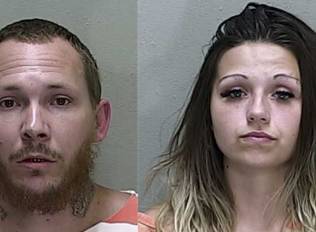
    Authorities busted a drug-dealing couple in Florida who were found running a drive-through service for illicit drugs out of the kitchen window of their mobile home. The drive-through experience was complete with signs directing traffic flow and open/closed signs.

    William Parrish Jr., 32, and McKenzee Dobbs, 20, reportedly put together the whole system, according to Ocala Police, to prevent their business from drawing unwanted attention from customers constantly entering and exiting their abode. But several overdoses in the area, presumably by their products, were what finally brought the long arm of the law to their door.

    “We were seeing some overdose incidents that were happening in this particular area, specifically at this particular location,” said Capt. Steven Cuppy of the Ocala Police. “There [were] some heroin sales that were going on there. Subsequently, through the investigation, we were able to determine that product was laced with fentanyl.”

    Parrish has been charged with driving under the influence, keeping a dwelling used to sell drugs, possession of drugs with intent to sell and resisting arrest without violence. Dobbs was slapped with keeping a dwelling used to sell drugs, possession of drugs with intent to sell, possession of fentanyl and possession of fentanyl with intent to sell.

    Parrish’s father, William Parrish Sr., claimed his son was trying to get his life back on track and was visiting a methadone clinic. “He’s been trying to get himself straightened out,” Parrish Sr. said.

    Parrish Sr. maintains that the reports of the overdoses are “a lie.”

    This isn’t the first time dealers have tried to use the convenience of a drive-through to do business. Last year, a pair of Burger King employees were caught using the fast food chain’s drive-through to deal cannabis.

    Customers in the know would speak to the drive-through in code, asking if “nasty boy” was working and, if so, if they could have their “fries extra crispy.”

    This was the cue for Garrett Norris, 20, and Meagan Dearborn, 19, to slip a little bit of marijuana in with the order and collect the payment at the second window. The pair were caught in a police sting, though Dearborn later claimed that she simply handed over the food and never knew what was stashed inside.

    View the original article at thefix.com