Author: The Fix

  • Police Chief Quits Job After Cocaine Arrest

    Police Chief Quits Job After Cocaine Arrest

    Michael Coppola was accused of buying cocaine and attempting to ship it through the post office. 

    A New Jersey police chief has resigned after investigators say that he bought cocaine and had it shipped to his post office box. 

    Michael Coppola, 43, was chief of the Palisades Interstate Parkway police department from 2014 until he resigned on August 15.

    According to NJ.com, Coppola was charged with attempting to possess cocaine and possession of drug paraphernalia after investigators found that he was ordering cocaine online.

    They delivered a package containing “imitation cocaine” to Coppola’s post office box, and Coppola was arrested during a traffic stop shortly after picking up the package. He is due in court later this week.

    Coppola’s arrest and resignation are the latest controversies for the Palisades Interstate Parkway police department. The department has about 25 officers and is in charge of patrolling an 11-mile stretch of highway, something that many people believe is unnecessary. 

    “There is no need for a force to patrol an 11-mile stretch of roadway,” said Declan O’Scanlon, a Republican who serves on the New Jersey state senate. “Other departments can cover that area with no increase in manpower. Let’s be done with it.”

    Calls to disband the department have intensified after an investigation into the department showed many questionable practices. Coppola rewarded cops who made the most traffic stops with meal allowances, better parking spots and newer vehicles.

    The department’s officers engaged in police chases that violated state policy, and Coppola used a company that he owned to provide technology services to the department. 

    All of this was revealed in a report launched by state attorney general Gurbir Grewal that was released last month. It is not clear whether the investigation into Coppola’s purchase of cocaine was part of the investigations undertaken in writing the report. 

    However, O’Scanlon said that Coppola is the latest person to be part of department leadership that “has been fatally flawed” for years.”

    “The ticket quotas. The rewards for writing tickets. That should not go on in any police department, let alone one that is not needed. Every revelation I read screams at me that it’s time to dissolve this force. There is no reason for it. It’s victimizing the people it is supposed to be protecting,” he said.

    Last year, data indicated that cocaine use was rising for the first time in almost ten years. In addition, the drug is becoming more dangerous as it is laced with fentanyl.

    In New York City the problem is so severe that the health department issued a warning about cocaine laced with opioids. 

    View the original article at thefix.com

  • Are Construction Workers Hit Hardest By Opioid Addiction?

    Are Construction Workers Hit Hardest By Opioid Addiction?

    A new survey examined the occupations of those who died from opioid-related causes. 

    It’s been considered a problem for years, and a new study in Massachusetts has proven that the construction industry is the worst affected from opioid-related overdose deaths. Architecture and engineering are the only careers with higher death rates among women than men.

    “The primary workforce in construction is male, and they’re twice as common to abuse prescription drugs than females,” Eric Goplerud told Forbes. Goplerud is senior vice president of the Department of Substance Abuse Mental Health and Criminal Justice Studies at NORC at the University of Chicago.

    Dezeen magazine reported that the Massachusetts Department of Public Health published a report on the opioid epidemic in a state that had opioid overdose deaths more than double between 2011 and 2015. The Opioid-Related Overdose Deaths in Massachusetts by Industry and Occupation survey reviewed death certificates from those years to compile data about industry and occupation, gender, race, and age among the deaths.

    Between 2011 and 2015, 5,580 Massachusetts residents died from opioid-related overdoses. Some of these deaths were excluded from the study.

    Construction and extraction workers were found to make up over 24% of the total, the highest amount of any particular profession. The analysis of the study authors believe this is due to the high amount of injuries people in this field endure. The report quotes a statistic that four out of every 100 construction workers are injured on site.

    “Pain is a common feature among injured workers and previous research indicates that opioids are frequently prescribed for pain management following work-related injuries, which has the potential to lead to opioid use disorders,” according to Dezeen. The study was first reported by the Architect’s Newspaper.

    According to experts interviewed in the Forbes piece, changing the construction company owners’ approach to opioid abuse is not going to be easy. Many (if not most) construction companies have a zero tolerance policy regarding positive drug tests of workers. If a worker tests positive, it often means he or she loses the job.

    “You go on construction sites, and you see those signs saying ‘you’re out of there if you test positive,’” Boston Properties Life Safety and Security Assistant Director John Tello told Forbes. “It seems like there is a divide in what’s going on and what needs to be done to help these people.”

    “Helping wean workers off opioids as they prepare to return to work should be part of any rehabilitation treatment,” Goplerud told Forbes.

    View the original article at thefix.com

  • 2017 Worst Year Yet for Drug Deaths

    2017 Worst Year Yet for Drug Deaths

    Last year has usurped the dubious title from 2016 with the most lives claimed by drug overdoses ever.

    According to a preliminary report by the Centers for Disease Control and Prevention (CDC), over 72,000 people in the United States died from a drug overdose in 2017. The number translates to nearly 200 people lost per day.

    This shatters the record previously held by the year 2016, which saw about 64,000 overdose deaths. In both 2016 and 2017, “at least” two-thirds of the deaths could be linked to the use of opioids.

    For comparison, the number of drug overdose deaths in 2017 exceeds the number killed by guns, car accidents, or HIV/AIDS within the span of a single year. The number is also larger than the casualties in both the Vietnam and Iraq conflicts combined.

    These figures are simply estimates, with more accurate figures due later. However, the CDC claims a trend is clear: the massive uptick is correlated to the rise of fentanyl.

    Fentanyl is an opiate stronger than heroin, sometimes used to lace other opioid products. Its potency makes it a dangerous high, especially when added to heroin, especially east of the Mississippi. But apparently, this “trend” is moving West.

    “Dr. [Chris] Jones said there is some early evidence that drug distributors are finding ways to mix fentanyl with black tar heroin, which could increase death rates in the West,” reported New York Times’ Margot Sanger-Katz. “If that becomes more widespread, the overdose rates in the West could explode as they have in parts of the East.”

    Fentanyl has been exacerbating the already burgeoning opioid crisis in the United States. Experts say the crisis is a fixable one, with one solid step in the right direction being making access to addiction treatment more available.

    In France, doctors were given the green light to prescribe buprenorphine in 1995, leading to a 79% decrease in opioid deaths in four years, Vox noted.

    Another recommended step would be to enact harm reduction policies, including needle exchanges and making naloxone, the overdose reversal drug, more available. Such measures have resulted in steep drop-offs of deaths in states that have put such plans in place.

    The Trump administration, however, has not made significant progress in these steps, according to Senator Elizabeth Warren.

    “Experts and observers have concluded that your efforts to address the opioid crisis are ‘pathetic,’ and ‘ambiguous promises’ that are ‘falling far short of what is needed’ are ‘not… addressing the epidemic with the urgency it demands,’” she wrote in a letter to President Trump. “I agree, and I urge you to move quickly to address these problems.”

    View the original article at thefix.com

  • Emma Stone Talks To Jennifer Lawrence About Her Anxiety Struggles

    Emma Stone Talks To Jennifer Lawrence About Her Anxiety Struggles

    In an interview for Elle magazine, Emma Stone spoke candidly about mental health to her close friend Jennifer Lawrence.

    Emma Stone has been very open about her struggles with anxiety, which she’s had since she was a child. Now, Stone and fellow actress Jennifer Lawrence have interviewed each other for Elle magazine, in which the Hollywood BFFs spoke about struggling with anxiety and how acting can be a release.

    In the interview, Lawrence asked Stone, “What do you think caused your anxiety? Do you think you were born like that, or do you think something happened that made you extremely sensitive, or do you think that you’re naturally pathetic?”

    Stone, who has battled anxiety since she was seven years old, replied, “I think your wiring is just kind of what you are. My mom always says that I was born with my nerves outside of my body. But I’m lucky for the anxiety, because it also makes me high-energy.”

    Stone has reached out to Lawrence on the phone, on what Lawrence calls Emma’s “frequent sleepless nights.” Stone’s racing thoughts have also been kicking up lately because she’ll soon be turning 30.

    Stone is currently taking a break from Hollywood. “I haven’t shot anything for six months, which has been amazing because there’s been more time to be with friends or travel.”

    Lawrence also pointed out that Stone doesn’t have a “big social media presence,” to which Stone replied, “I think it wouldn’t be a positive thing for me. If people can handle that sort of output and input in the social media sphere, power to them.”

    While Lawrence didn’t talk about her own anxiety in her conversation with Stone, the Hunger Games star did talk about her mental health struggles to Esperanza. Like Stone, Lawrence used acting as an escape and as a way of healing her self-image.

    Growing up, Lawrence felt like she was “a weirdo… I’ve always had this weird anxiety. I hated recess. Parties really stressed me out. I was having trouble at school and I had a lot of social anxieties.”

    Lawrence’s parents also took her to a therapist, and like Stone, she realized performing “was the one that that [made] anxiety go away. I didn’t feel good about myself until I discovered acting and how happy it made me feel.”

    View the original article at thefix.com

  • Addiction Medicine Coming To San Francisco's Homeless Community

    Addiction Medicine Coming To San Francisco's Homeless Community

    The outreach program is a response to the “striking increase” in the number of people who inject drugs in public spaces.

    The city of San Francisco is rolling out a program that will bring buprenorphine, a medication used to treat opioid use disorder, to its homeless community. City officials say it’s time to start meeting this community where they’re at.

    Back in May when the outreach program was introduced, Mayor Mark Farrell told the San Francisco Chronicle, “The consequences of standing still on this issue are unacceptable. Drug abuse is rampant on our streets, and the recipe of waiting for addicts to come into a clinic voluntarily is not working. Plain and simple. So we’re going to take a different approach.”

    Dr. Barry Zevin, medical director for Street Medicine and Shelter Health, who has provided medical care to the city’s homeless community since 1991, echoed the mayor’s sentiment.

    In a new interview with the New York Times, Zevin explained that meeting the homeless where they’re at may expedite the healing process, rather than waiting for them to seek help. He noted that this population, in particular, has a dire need for mental health and substance abuse services, as well as medical care.

    “On the street there are no appointments, and no penalties or judgments for missing appointments,” said Zevin.

    Following a yearlong pilot program, 20 out of the 95 participants were still using buprenorphine under the care of the city’s Street Medicine Team, the NYT noted.

    With a two-year budget of $6 million, the program is setting out with a goal of providing buprenorphine to 250 more people—just a fraction of the estimated 22,500 injection drug users in San Francisco, but a start.

    Zevin noted that there is a concern that the same-day buprenorphine prescriptions may end up being abused, but said that the city is prepared to deal with it on a case by case basis.

    “I do have to worry about diversion, but I want to individualize care for each person and not say that the worry is more important than my patient in front of me, whose life is at stake,” he told the NYT.

    The outreach program is a response to the “striking increase” in the number of people who inject drugs in public spaces.

    “Ultimately, this is about helping these individuals, but it’s also about improving the conditions of our streets,” said Mayor Farrell.

    View the original article at thefix.com

  • Ariana Grande Talks Manchester Attack, Anxiety In Emotional Interview

    Ariana Grande Talks Manchester Attack, Anxiety In Emotional Interview

    “You try not to give in to fear. You want to keep going. You want to not be afraid.”

    In a new interview, singer Ariana Grande described how “everything” changed after the 2017 bombing attack on her concert at Manchester Arena in England.

    Ebro Darden of Beats 1 radio addressed speculation that “Get Well Soon,” a song on her new album Sweetener, had to do with the aftermath of the Manchester attack.

    “You have really been working through recovering from what took place in Manchester with your fans, with your family, with yourself,” Darden said. “Was that song important to put out some of that energy and let people know that we’re all working to get well?”

    In her emotional response, Grande said the song was about that and more. “[The song is about] just being there for each other and helping each other through scary times and anxiety,” she said. “We just have to be there for each other as much as we can because you never fucking know.”

    She continued, “It’s also about personal demons and anxiety, more intimate tragedies as well. Mental health is so important. People don’t pay enough mind to it… People don’t pay attention to what’s happening inside.”

    At the time, NBC News reported that 22 people were killed and about 59 were wounded.

    “You try not to give in to fear,” Grande said. “That was the point of finishing my tour, to set an example for my fans, who were fearless enough to show up to the shows. You want to keep going. You want to not be afraid.”

    Less than a month after the attack, Grande returned to Manchester for the One Love Manchester benefit concert, which featured Justin Bieber, Miley Cyrus, Katy Perry, Pharrell Williams, and Coldplay. The pop star performed in front of 55,000 people that night.

    Grande, who previously addressed the emotional scar that the attack left on her in a Vogue interview, told Darden that in the aftermath of Manchester, she can’t help but fear for her safety.

    “You don’t want to give in, you don’t want to be afraid, but it’s still there,” she said. “It changes everything, changes your life quite a bit. You want to be more present and follow happy impulses and figure it out later and stay in the moment.”

    In a June interview with Vogue, Grande said the attack left her with a crippling amount of anxiety. “I think a lot of people have anxiety, especially right now. My anxiety has anxiety,” she said. “I’ve always had anxiety. I’ve never really spoken about it because I thought everyone had it, but when I got home from tour it was the most severe I think it’s ever been.”

    View the original article at thefix.com

  • How to Stay Sober at Burning Man and Have the Best Burn of Your Life

    How to Stay Sober at Burning Man and Have the Best Burn of Your Life

    I mean, really, you’re never going to be at a meeting in the “default world” sitting between a rainbow unicorn and a naked old guy.

    Have you ever been to Burning Man, that strange, magical world where anything is possible? Where strangers become friends in under an hour? Where food, water, gifts, and substances are shared freely through the “gifting economy,” and the parties rage 24/7 for eight days straight? If so, maybe we’ve shared some common experiences on “the playa.” Have you ever woken up in a pile of dust, impossibly far away from your own camp, trying to piece together the events that led you to your blackout dust pile? Have you ever taken LSD so many nights in a row it actually stopped working? Have you come into Black Rock City with the best intentions of practicing yoga and meditating every day, only to fail once you got three PBRs deep by 10am? Have you booked it out of Burning Man to the nearest Motel 6 like a bat out of hell, driving your car feeling like it’s the most challenging video game you’ve ever played? Has coming down and getting “back to normal” after the burn felt like a torturously long, horrible process? Have you left the playa feeling like you had an incredible time but kind of wishing you could remember more of it? Me too.

    If you’ve only heard stories or seen news reports about Burning Man, the infamous “playa” is usually depicted as nothing but a mecca for party drugs, weird sex, apocalyptic art, and daytime debauchery. It’s the last place on earth a recovering alcoholic could willingly go to and stay sober. In actuality, behind all the psychedelic media-portrayed madness and in the midst of the drug-fueled frenzy, there exists a whole community of sober “Burners” who do the seemingly unfathomable. We come to this crazy place every year and let our freak flags fly, share our art and our experiences, dance until dawn, make new connections, survive in this thrilling temporary society, love it and hate it, and do it all SOBER.

    My first two burns were driven by my love for alcohol and drugs, so my Burning Man experiences reflected that. My third burn, however, came almost one year after some shit hit the fan in my life, forcing me into the reluctant journey of recovery. Despite my hesitant beginning, by the time I hit the one year sobriety mark and took off to Burning Man, I was fully in love with my new sober, sane (“saner” than I had been before but still going to Burning Man so not too sane, obviously) state of mind and my ability to be fully present and remember the adventures I was having. Thus, my third burn, which I experienced as a sober woman in recovery, while very different from my first two years on the playa, was actually the best Burning Man experience I’ve had yet! Here’s why it was so great and why I can’t wait to go back to Black Rock City—still sober—this year.

    There are endless opportunities to explore in Black Rock City: classes, workshops, lectures, parties, music, art tours, ultramarathons, you name it. When you get to Burning Man, you get a book that’s a couple hundred pages long of all the events and activities available. Before I got sober I would look through this book in wonderment, circling things and making grand plans for all the workshops I would attend and everything I would learn. In reality though, I would usually get distracted by a Blood Mary oasis on the way to whatever wellness-oriented activity I was trying to find. The self-improvement plan would end there.

    Nowadays, I can actually make it to a few of these events I pick out of the wonderful guidebook, because I have the willpower and determination to get to where I am going without “free vodka FOMO” stopping me. Well, sometimes I’ll still stop for a virgin Bloody Mary bar experience to giggle at and feel superior to all the raging hangovers around me. I’ve gotta let the misery of others remind me why I’m sober occasionally. Most of the time, I can make it to my intended destination. Having my activity options limited because of my sobriety is actually very helpful in that it forces me to focus my attention on a narrower but still huge range of the healthy “woo woo” non-booze-oriented options.

    I’m so grateful my sobriety allows me to participate in Burning Man more fully than I was ever able to when I was fucked up. Today I get to make real connections with fellow burners, give something back, and freely express myself, sober, along with all the best of Black Rock City.

    Seven tips for how to actually stay sober at Burning Man:

    1. Go to meetings, even if you don’t regularly attend them in the “default world.” Burning Man meetings are awesome, and you can even get your own Burning Man token for your 1st, 2nd, 3rd and so on sober burns. Anonymous Village is the biggest sober camp and is located at 5:30 & G, with multiple “Any-A” meetings for anyone in recovery from any addiction every day. Other sober camps—Camp Run Free and Camp Stella—also offer daily open meetings. I mean, really, you’re never going to be at a meeting in the default world sitting between a rainbow unicorn and a naked old guy.
    2. Practice good self-care and rock your boundaries. If you don’t wanna stay up all night every night, then you don’t have to! If you don’t want to be a dirty, sleep-deprived dustball all week, you don’t have to be! Go find those life-saving nail salons or hair-washing stations when you feel the need for some real TLC. And if you’re an introvert like me, don’t be afraid to lie in your tent and read a book or nap when you need some down time to recharge your batteries. Sleep is great, and can really help you enjoy your burn more. If you’re not enjoying a party or activity or person, then politely excuse yourself and go find something else, or go home. The week stretches long when you’re sober, especially if you don’t take care of yourself.
    3. Find other sober burners! They are out there. Last year one of my best friends on the playa was four months pregnant, so we both had good reasons to have lots of sober fun together and practice lots of self-care.
    4. Choose one sober activity to structure your day around, then go from there. That overwhelming little booklet of activities can help you find a mind-blowingingly awesome good time that’s not caused by mind-altering substances. So next time you find yourself jonesing for an adventure, just page through your book and choose between “Naked Fire Spinning for Complete Beginners,” “Make Your Own Tutu and Pasties Party,” watching Tuesday’s Ultramarathoners run dusty laps around the city, an appointment with a Monkey Psychiatrist, or a classical orchestra concert with homemade ice cream at an art piece in deep playa. Get excited about that one sober activity and all the awesome people you will meet, then let the rest of your day flow from there.
    5. Embrace the daytime activities and workshops that you were too hungover to enjoy in the past.  Before I got sober, I would miss out on so much of the art and yoga and educational offerings on the playa because I would start every day with those morning Bloody Marys and beers. My FOMO and addiction would take over and not let me say no to a drink or a drug. Now with those options off the table, I have some of the most fun riding my bike around the playa in the early morning while most other people are still sleeping off the party or just trudging home. Last year I made it to an aerial silks class, two Shamanic breathwork sessions, multiple yoga classes, and a few guided meditations. Thanks to all these workouts and personal development activities, I left the burn actually feeling more physically and mentally fit then when I got there.
    6. Be of service. Be available to be of service to other burners. Participate in the gifting economy by bringing something to share, no matter how small. It could be fruit, coffee, cookies, hula hoops or Chapstick to give away. Or you could teach something, or set up a table of art supplies for passersby to stop and get creative. I’ve found that most burners really appreciate heartfelt, healthy offerings, because they’re rare in a popup city crowded with bars and clubs. You can also take on a temporary sponsee from one of the many meetings in the city.
    7. Enjoy being fully present.  Whatever happens on the playa, you get to notice it all, feel it all, and remember it all. Take the bad with the good and always look for opportunities to be of service. Remember, sobriety is a gift that lets us go anywhere and do anything! So enjoy it!

    Burning Man is from August 26-September 3. More info here about experiencing the playa clean and sober.

    2016 Burning Man Festival in Black Rock City, Nevada, USA

    View the original article at thefix.com

  • Friend Who Found Bobbi Kristina Brown in Tub Dies from Apparent Overdose

    Friend Who Found Bobbi Kristina Brown in Tub Dies from Apparent Overdose

    Prior to his death, Max Lomas had successfully completed three months in a rehab facility and had recently found a job.

    Max Lomas, who gained notoriety after finding the late Bobbi Kristina Brown unconscious in a bathtub in 2015, has died from what has been described as a “probable” drug overdose.

    The 28-year-old, who lived with Whitney Houston and Bobby Brown’s daughter before her drug-related death in 2015, was found unresponsive, with a syringe by his side in the bathroom of a home in Saltillo, Mississippi on August 15, 2018. Lomas was rushed to a hospital where he was pronounced dead.

    According to People, a cause of death has not been determined, but death investigation papers obtained by the publication list heroin overdose as the probable cause of death.

    People noted that prior to his death, Lomas had successfully completed three months in a rehabilitation facility and had recently found a job.

    “He really worked the program,” said a source close to Lomas, who reportedly spoke to him on a weekly basis while he was in treatment. “He had come so far. There was so much he wanted to do.”

    Lomas had been taken in by Whitney Houston as a teenager, and was briefly linked to Bobbi Kristina Brown before the relationship came to a halt when he was incarcerated in 2011 for violating his probation.

    Upon his release, he found that Brown was dating Nick Gordon, and the trio soon began living together as roommates in Roswell, Georgia. By Lomas’ account, he and the couple were “pretty bad into drugs,” and Gordon and Brown fought on a regular basis, “mostly about jealousy.”

    Lomas also claimed that Gordon was abusive towards Brown, a statement that has been decried by Gordon’s lawyers.

    On January 31, 2015, Lomas found Brown floating face down in a bathtub in the trio’s townhouse. “I saw the color of her face and that she wasn’t breathing. I called for Nick and called 911,” he stated.

    Gordon was subsequently blamed for Brown’s death by her family, who served him with a $40 million civil lawsuit over the alleged abuse. In 2016, he was found liable for Brown’s death and ordered to pay $36 million to her estate.

    As People noted, no charges were filed against Lomas, who told the publication in 2016 that he was sober and no longer friends with Gordon.

    “I’m in utter disbelief because I knew he had gone and gotten help in Mississippi,” said Garry Grace, a friend of both Lomas and Gordon, to People on August 17. “I didn’t have to worry about him because I knew he was safe.”

    View the original article at thefix.com

  • Could Informing Doctors Of Patients' Opioid Deaths Curb Prescribing?

    Could Informing Doctors Of Patients' Opioid Deaths Curb Prescribing?

    How are doctors’ prescribing behavior affected when they’re notified of their own patients’ opioid-related deaths?

    Some California doctors have recently received letters that changed how they prescribed opioids, according to new research.

    The letters informed doctors of the deaths of patients to whom they had prescribed opioids, according to the Washington Post. Such letters were part of a study conducted by researchers at the University of Southern California and published Thursday (August 9) in the journal Science.

    The letters were sent by the San Diego County Medical Examiner Office to hundreds of doctors who, in the past year, had prescribed opioids to a patient who later died.

    “This is a courtesy communication to inform you that your patient [name, date of birth] died on [date]. Prescription drug overdose was either the primary cause of death or contributed to the death,” the letters read. “We hope that you will take this as an opportunity to join us in preventing future deaths from drug overdose.”

    According to the Post, the idea behind the study was to close the gap between a doctor’s care and a doctor’s knowledge about the potential consequences of prescribing opioids.

    While many doctors are aware that opioid use disorder is a widespread issue, they may believe that the consequences affect other doctors’ patients rather than their own, the Post noted. 

    According to the results of the study, doctors who learned of a patient’s death at the hands of opioids were 7% less likely to prescribe opioids to new patients. Doctors who received a letter also had a tendency to prescribe fewer high-dose prescriptions within the next three months  of receiving the letter. The total amount of opioids these doctors prescribed decreased by 9.7%. 

    “What’s particularly interesting to me is the personal nature of it,” Alexander Chiu, a surgeon at Yale New Haven Hospital who was not involved in the study, told the Post. “Depending on what field you’re in, [the opioid epidemic] can feel a little remote. If you’re not a pain doctor or a primary-care doctor, it’s not quite as common to know or see your actions having a negative impact, which is what this is showing—it makes it very real. As evidence-based as we are as a profession, sometimes anecdotes can be really powerful.”

    Lead researcher Jason Doctor, director of health informatics at the University of Southern California’s Schaeffer Center for Health Policy and Economics, tells the Post that while doctors have knowledge of facts, they are still human.

    “One of the takeaways I’d like people to have is that doctors learn a lot of clinical facts, but when it comes to clinical judgment and decision-making, they fall prey to the same biases that we all do,” he said. 

    According to Doctor, San Diego County plans to continue sending these letters, and other counties have also said they are interested in doing something similar.

    View the original article at thefix.com
  • Fentanyl, Other Synthetic Drugs Drive National Overdose Rates Up

    Fentanyl, Other Synthetic Drugs Drive National Overdose Rates Up

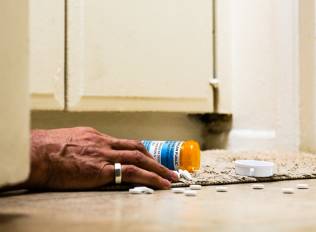
    Nearly 30,000 Americans died from overdoses stemming from fentanyl and other synthetic opioids in 2017.

    Driven in large part by widespread opioid use, the number of drug overdoses nationwide shot up nearly 10% last year, according to preliminary federal figures. 

    The U.S. clocked more than 72,000 drug fatalities in 2017, the Centers for Disease Control and Prevention (CDC) reported last week. That’s up by more than 6,000 from the 2016 figures, bringing the tally to nearly 200 deaths a day—more than the total number of gun, car crash or HIV deaths in any single year, ever. 

    But the new numbers—which represent a two-fold increase over 10 years ago—could actually be underestimating the true scope of the problem as full data from some states still isn’t in yet. 

    A big chunk of the increase—nearly 50,000 fatalities—comes from opioid deaths, a category that’s more than quadrupled since 2002. An increase in cocaine fatalities is also feeding into the higher figures. 

    Meanwhile heroin, painkiller, and methadone fatality figures have started to flatten out; it’s fentanyl deaths that are continuing to rise. Last year, close to 30,000 Americans died from overdoses stemming from fentanyl and other synthetic opioids.

    “Seventy-five percent of the deaths we get are fentanyl-related,”  Al Della Fave, a spokesman for the Ocean County, New Jersey prosecutor, told the Washington Post. “It’s the heroin laced with synthetic opioids that we’re getting creamed with.”

    The biggest increases are in some of the East Coast states already hardest hit by opioids, including Ohio, West Virginia and New Jersey. 

    In part, that’s due to the geography of drug-trafficking patterns. On the East Coast, heroin typically comes in a stronger powdered form—a form more easily mixed with deadly fentanyl. But in the western part of the country, cartels bring in black tar heroin from Mexico, which is both weaker and harder to mix with fentanyl. 

    “It is the 2.0 of drugs right now, the synthetics,” Tom Synan, the police chief in Newtown, Ohio, told the Post

    The current influx in opioid fatalities is commonly traced back to the 1990s, when drugmakers pushed addictive painkillers and doctors overprescribed them.

    Over a decade later, heroin took hold again when a cheap supply reshaped the market. But in recent years, it’s the introduction of fentanyl and other powerful synthetics that has driven the crisis to a deadlier point.

    And now that there’s finally been a downturn in some types of opioid fatalities, experts predict that any downward trend could be gradual given the nature of addiction and the stigma surrounding it.

    “Because it’s a drug epidemic as opposed to an infectious disease epidemic like Zika, the response is slower,” University of California San Francisco professor Dan Ciccarone told the New York Times. “Because of the forces of stigma, the population is reluctant to seek care. I wouldn’t expect a rapid downturn; I would expect a slow, smooth downturn.”

    View the original article at thefix.com