Author: The Fix

  • Snapchat Dysmorphia: A Growing Trend Among Social Media Users

    Snapchat Dysmorphia: A Growing Trend Among Social Media Users

    Snapchat dysmorphia was first identified in a 2017 plastic surgery survey.

    Apparently, some people are taking their love of photo filters a bit TOO far. That’s according to a recent paper published in JAMA Facial Plastic Surgery, which describes the emerging phenomenon known as “Snapchat dysmorphia.”

    Body dysmorphic disorder is characterized by obsessive thoughts of the flaws in one’s appearance, though these perceived flaws may not be noticeable to others.

    Photo filters and retouching tools in smartphone apps like Snapchat and Facetune allow just about anybody to edit away any perceived flaws in their “selfies”— but for some people, this just isn’t enough.

    Some doctors say that while previously, cosmetic surgery patients would bring in images of celebrities whose features they want to emulate, these days, patients will try and emulate the “filtered versions” of themselves.

    “Most of the time, [patients] want to talk about how they appear in their edited photos. And they are looking to explore options of how to translate that into reality,” Noëlle Sherber, who runs a dermatology and plastic surgery practice in Washington, DC, told Vox.

    The term “Snapchat dysmorphia” appears in a paper published in JAMA Facial Plastic Surgery on August 2, based on a trend first identified in the 2017 Annual American Academy of Facial Plastic and Reconstructive Surgery (AAFPRS) survey.

    The paper cited a recent study that found that adolescent girls who “manipulated their photos more reported a higher level of concern with their bodies and an overestimation of body shape and weight.” A higher level of body dissatisfaction was also associated with a higher level of engagement on social media. 

    According to the AAFPRS survey, in 2015, 42% of patients requested surgery to improve their selfies. That number is now 55%.

    The paper in JAMA notes that many of the features that appear in retouched selfies are unattainable with cosmetic surgery. This “trend” of “Snapchat dysmorphia” is alarming, the authors say, because it is “blurring the line of reality and fantasy.”

    Sherber echoed this point to Vox, “Some of the changes [patients] are making to their faces are not achievable. We can’t do that in real life. And if they really can’t be made to match that, they will be inherently disappointed.”

    Rather than cosmetic surgery, the authors of the paper say that behavior indicative of body dysmorphic disorder should be addressed with counseling.

    View the original article at thefix.com

  • SAMHSA Voice Awards Honor Walter Ginter’s MARS™ Project

    SAMHSA Voice Awards Honor Walter Ginter’s MARS™ Project

    Many people on MAT feel unwelcome at meetings, and this sense of alienation and rejection often leads to relapse. That’s where MARS™ comes in. We want people on MAT to be embraced and accepted in recovery.

    Held at Royce Hall on the UCLA campus in Westwood, the 13th annual SAMHSA (Substance Abuse and Mental Health Administration) Voice Awards recognized an essential figure in the national battle against the opioid epidemic. As the founder of the Medicated Assisted Recovery Support (MARS™) Project, Walter Ginter was honored with a Special Recognition Award for his efforts in combating the opioid epidemic and helping people who use Medicated-Assisted Treatment (MAT) stick to the path of recovery. In the greater recovery community– ranging from treatment centers across the country to 12-step groups—many people have a negative view of MAT which has led to a lack of support for people trying to overcome opioid addiction. 

    SAMHSA has been at the helm of national efforts to destigmatize the medications typically used in MAT such as buprenorphine, methadone, and naltrexone. Beyond supporting physicians and researchers, SAMHSA has tried to reduce the negativity associated with traditional perspectives on opioid recovery. According to many loud voices in Narcotics Anonymous (NA), if a person is on medication that has been prescribed to help them overcome opioid withdrawal symptoms or to refrain from using heroin or other illicit opioids, then they are not really clean. In contrast to this judgmental perspective, the SAMHSA website states: “Medicated-Assisted Treatment (MAT) is the use of FDA- approved medications, in combination with counseling and behavioral therapies, to provide a ‘whole-patient’ approach to the treatment of substance use disorders.”

    Indeed, a “whole-patient” approach is what is needed to stem the tide of what has become the greatest drug epidemic in U.S. history. With the introduction of fentanyl and other powerful prescription narcotics to the illegal drug trade, the stakes are higher than ever before. According to the National Institute on Drug Abuse, “Every day, more than 115 people in the United States die after overdosing on opioids.”

    Given such a devastating statistic, Arne W. Owens hopes the SAMHSA Voice Awards can raise awareness by bringing the recovery community together with the entertainment industry. As the Principal Deputy Assistant Secretary, Owens was the highest-ranking member of SAMHSA at the Voice Awards Show on August 8, 2018. Asked by The Fix how the Voice Awards can make an impact on the opioid epidemic, Owens said, “We hope to incentivize more positive portrayals in film and television of treatment and recovery for substance use disorders. We believe hearing positive stories about treatment and recovery helps to inspire others, shifting negative attitudes. For example, it would be good to see writers and directors positively represent MAT in film and television. Beyond raising awareness, such representation would help to reduce stigma.”

    Walter Ginter is an ideal example of someone who has dedicated his life to reducing stigma and raising positive awareness about MAT. Dedicated to improving the recovery community, Ginter has been a board member of both the National Alliance for Medication Assisted Treatment and Faces & Voices of Recovery. In collaboration with the New York Division of Substance Abuse, Yeshiva University and the National Alliance for Medication Assisted (NAMA) Recovery, Walter Ginter became the founding Project Director of the Medication Assisted Recovery Support (MARS™) Project.

    MARS™ is designed to provide peer recovery support to persons whose recovery from opioid addiction is assisted by medication. To be in a MARS™ group through the Peer Recovery Network PORTAL™, a person has to be in a MAT program. As Ginter writes on the MARS™ website, “The Peer Recovery Network was created as a way for peers in recovery to more effectively organize their community, to communicate with each other, and to have a stronger voice for advocacy efforts.”

    In 2012, Ginter helped create the Beyond MARS Training Institute at the Albert Einstein College of Medicine. With a variety of models and options, Ginter created a curriculum where opioid treatment programs and recovery professionals can be trained to implement MARS™. The original MARS™ project has expanded from its beginnings to include 17 programs across the United States and two in Haiphong, Vietnam. Ginter believes this is just the beginning of the expansion, both nationally and internationally.

    On the red carpet before the Voice Awards ceremony, Walter Ginter spoke with us about the struggles he has faced as an early advocate of MAT, revealing both an innate decency and a keen sense of humor. With a smile, he mentioned how people always ask him why MARS™ uses the trademark symbol. Some of them even think that he’s trying to corner the name of the planet for profit.

    But MARS™ has a trademark for a particular reason, Ginter explains. In the vast majority of cases, the organization does not mind when people use the name. They do enforce the trademark, however, when people who are not certified as trainers try to set-up MARS™ groups and conduct MARS™ trainings. In most cases, rather than follow the protocols, they are hijacking the name to do what they want and make a profit. As an organization with a mission that envisions “the transformation of medication-assisted treatment (MAT) to medication-assisted recovery (MAR),” Ginter believes that protecting the integrity of the organization must remain a priority.

    Sitting inside, away from the hot Los Angeles sun and the red carpet, Walter Ginter went into more detail about the early struggles that MARS™ faced. “Very few people come to MAT as their first course of treatment. In the vast majority of cases, they’ve already been to 12-step meetings, particularly Narcotics Anonymous. Although they initially felt welcomed at those meetings, those feelings shift after they start to work a program that includes medication-assisted treatment. Suddenly, you no longer feel welcome at the meetings, and this sense of alienation and rejection often leads to relapse. To fill in the resulting hole, we want MARS™ to give the same type of mutual support that 12-step provides. We want people on MAT to be embraced and accepted in recovery.“

    We asked Walter Ginter to detail this rejection in context. Scratching his chin, he said, “Look, telling people that they are not in recovery is evil. People on MAT were told that they couldn’t share in NA meetings since they weren’t really clean. By not allowing people to talk in meetings, they become alienated. However, it’s worse than alienation because it undermines what they’re doing to get well. The thought process goes something like this: If taking the medication that I need means I’m not in recovery, then why should I act like I’m in recovery? What does it matter if I do a line of coke on the side or have a drink?”

    Walter Ginter saw too many people on the verge of getting well through medication-assisted treatment subvert their recovery with this line of thinking and some other thought processes as well. Not wanting to take any chances, he set up MARS™ as a viable alternative both to treatment centers hostile to MAT and non-supportive recovery support groups like many NA meetings. In the past several years, MARS™ has had remarkable success with people on MAT. It has helped them find true recovery, a fact that has left initial opponents quite frustrated.

    In fact, Ginter ended our talk with a description of one of these encounters. As he told the following story, Ginter’s smile appeared again. “One day an opioid treatment counselor from a local New York rehab burst into my office and banged her fist on my desk. She said ‘What kind of voodoo are you doing here?’ Surprised by such an accusation, I replied “Excuse me?” She went on to explain: “Well. I have a client that wouldn’t stop doing coke. She would get off the heroin, but she always tested positive for cocaine. Since she’s joined your program, now she’s not only off the heroin, she’s no longer testing positive for coke or any other drug. How did you make that happen?’”

    Ginter shook his head as if he’d gone through the same rigmarole many times before. He describes how he sat the recovery counselor down and explained to her quietly: “There’s no magic or voodoo or anything else. We simply gave her medication that worked while telling her that she was now in true recovery. We gave her a vision of medication-assisted recovery, then let her make her own choice. She realized on her own, ‘Well, now I really can be on medication and in recovery. However, I can’t be in recovery if I’m still doing other drugs on the side. Today, I like being in recovery and the future it promises, so I’m going to stop doing the coke. Indeed, I will embrace this path that is set before me.’” 

    Given the promising picture that he painted, it makes perfect sense that Walter Ginter was honored with the Special Recognition Award at the 2018 SAMHSA Voice Awards. After all, how many people are dedicating themselves in such a precise fashion to saving lives by shifting perspectives and offering a viable alternative like Medication Assisted Recovery Support (MARS™)?

    View the original article at thefix.com

  • Can Exercise Prevent Cocaine Relapse?

    Can Exercise Prevent Cocaine Relapse?

    Researchers used animals to model the effects of exercise on addictive behaviors for a new study.

    According to researchers, the possibility of a cocaine relapse can be reduced with exercise.

    The discovery comes thanks to research at the University of Buffalo led by Panyotis Thanos.

    “Cocaine addiction is often characterized by cycles of recovery and relapse, with stress and negative emotions, often caused by withdrawal itself, among the major causes of relapse,” said senior scientist Thanos.

    In the study, Thanos and his team used animals to model the effects of exercise on addictive behaviors.

    To this end, he and his team observed that test subjects who did regular aerobic exercise (one hour on a treadmill five times a week) were less likely to exhibit “stress-induced cocaine-seeking behaviors.” Not only were they more likely to be drug-free, they also changed the way they responded to stress, both behaviorally and physiologically.

    Cocaine addiction causes these behavioral and physiological shifts in response to stress. Thanos’ research found that physical exercise can change the mesolimbic dopamine pathways in the brain. These pathways are the same ones that cocaine acts on, creating the rewarding feeling that makes cocaine so addictive.

    Exercise can also help boost mood and cut down on the hormones responsible for stress, which could keep those mental formations that tempt relapse at bay.

    There are also the other known benefits to aerobic exercise, including the prevention of heart disease, diabetes, and arthritis, that make regular aerobic exercise worthwhile.

    “Our results suggest that regular aerobic exercise could be a useful strategy for relapse prevention, as part of a comprehensive treatment program for recovering cocaine abusers,” explained Thanos. “Further research is necessary to see if these results also hold true for other addictive drugs.”

    The use of exercise has helped at least one person: country superstar Tim McGraw. He previously used alcohol to help with pre-show jitters, but in his recovery, replaced that with a long run instead.

    “The ritual now is to run,” McGraw explained. “Me and a few of the guys in the band—I do my meet and greet and right after the meet and greet, we take off and run for 4 or 5 miles. It is literally timed so I run straight into the dressing room, get ready and hit the stage.”

    View the original article at thefix.com

  • New Book "Dopesick" Explores The Opioid Crisis From All Angles

    New Book "Dopesick" Explores The Opioid Crisis From All Angles

    “My goal with this book was not to just show you how we got here and what it’s going to take to get out of it but also to inspire people to care,” says author Beth Macy.

    Journalist Beth Macy set out with a mission: to address the opioid epidemic from every possible angle. 

    In her new book, Dopesick: Dealers, Doctors and the Drug Company that Addicted America, she does that through examining the opioid epidemic from the very beginning to its current state. 

    According to NPR, Macy begins the book by detailing the story of Jesse, a 19-year-old whose struggles began with pills and ended with heroin. Jesse is one of the many lives taken at the hands of the opioid crisis.

    “He was one of these rambunctious kids who rarely napped,” Macy told NPR. “As a little boy, he would fall asleep with toys still in his hands. And early on, they put him on ADHD medication. He also had some football and snowboarding injuries when he was 15 and 16 and was prescribed opioid painkillers then.

    “His mother isn’t exactly sure at what point he became hooked, at what point he realized he was dope sick. But he knew he could trade his ADHD medicine for the opioid pills. And one thing led to another. When the pills got harder to get because of doctors cracking down on prescribing, that’s when the heroin started coming in.”

    Initially, Macy tells CBS, Jesse’s mother was unaware of the depths her son’s use had gone to.

    “She said something else that I heard a lot, which is ‘I thought it was just pills,’ and it had progressed to heroin unbeknownst to her, and he never missed a day at work,” Macy told CBS.

    As journalists do, Macy comes at the opioid epidemic from all angles. Her book also details her conversations with a drug dealer named Ronnie Jones, who “ran one of the largest heroin rings in the mid-Atlantic region,” according to NPR.

    Jones had tried a few times to recreate his life after spending time in jail, but with little luck.

    “Ronnie’s story illustrates how little we do for felons trying to re-enter our society. You know, we don’t make it easy for them to get jobs,” Macy told NPR. “They often come out, and they owe lots of fines. And he tries to go legit. And he ends up—you know, he starts out selling weed again, which he had been selling before. But meanwhile, since he’s been in prison, this opioid thing has exploded. And somebody tells him in the break room of George’s Chicken, hey, man, if you want to make the real money, you need to be bringing heroin in.”

    Also in her book, Macy examines the role that Purdue Pharma (the manufacturer of OxyContin) has played in the epidemic. She states that when Purdue introduced OxyContin, it was marketed as being more safe than other painkillers because of its 12-hour time release mechanism.

    For the past three years, Macy says, she has been following Google alerts for articles pertaining to the opioid crisis. However, she says, none of them addressed every angle of the crisis as she hoped to.

    “Each of them only deal with a little piece of something going on right now,” she tells NPR. “And my goal with this book was not to just show you how we got here and what it’s going to take to get out of it, but also to inspire people to care. And I really hope that that’s what I’ve done.”

    View the original article at thefix.com

  • FBI Raid Nets 20 Suspected Cartel Traffickers, Nearly A Ton Of Cocaine

    FBI Raid Nets 20 Suspected Cartel Traffickers, Nearly A Ton Of Cocaine

    Three sprawling federal indictments unsealed last week named 57 defendants snared in the operation—and 35 of them are still on the run.

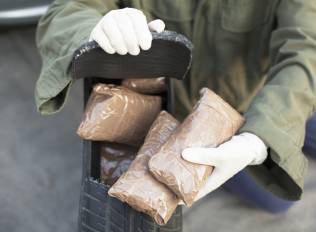
    Twenty alleged Sinaloa Cartel drug traffickers were arrested early Wednesday in a web of raids that netted 850 pounds of meth, nearly 1 ton of cocaine, 93 pounds of heroin and $1.42 million in cash. 

    Over the course of a three-year investigation involving a slew of government agencies from the Internal Revenue Service (IRS) to Los Angeles police, investigators uncovered a massive drug-trafficking ring regularly hauling in kilograms of narcotics from south of the border. Law enforcement also seized nearly 50 pounds of cannabis.

    Three sprawling federal indictments unsealed last week named 57 defendants snared in the operation—and 35 of them are still on the run. Most are believed to be in Mexico, according to the U.S. Department of Justice.

    “More than simply seizing large quantities of drugs and money, this investigation was able to identify the top-level, Mexican-based traffickers who directed the transactions, and who thought they were using secure communication devices to commit their crimes,” First Assistant United States Attorney Tracy L. Wilkison said in a statement. “Our ability to obtain those communications continues to be an important part of our ability to solve these crimes.” 

    The investigation—known as Operation Narconetas—zeroed in on three drug trafficking organizations accused of using vehicles with hidden compartments to smuggle large quantities of drugs from Mexico to the U.S., sometimes storing the substances in stash houses before distributing them throughout the country.

    The indictments outline allegations of vast drug trafficking conspiracies, and also include asset forfeiture requests as the government seeks to seize any property or resources used in the smuggling operation.

    “Today’s arrest of multiple defendants for their alleged role in smuggling funds from illegal drug transactions in and out of the United States is a victory for the American public and a defeat to drug traffickers everywhere,” said IRS Special Agent in Charge R. Damon Rowe of the Los Angeles Field Office. “The special agents of IRS Criminal Investigation continue in their mission to disrupt the flow of ill-gotten gains that is the life-blood for these criminals.”

    The multi-agency task force behind the arrests, known as the Los Angeles Strike Force, was formed in 2014 to target Mexican drug cartels in Los Angeles, which authorities identified as a major hub for drug trafficking and money laundering.

    The strike force, led by the Federal Bureau of Investigation (FBI) and the Drug Enforcement Administration (DEA), also included the Bureau of Alcohol, Tobacco, Firearms and Explosives; the California Highway Patrol; Torrance Police Department; U.S. Immigration and Customs Enforcement’s Homeland Security Investigations; Los Angeles Police Department and others.

    The arrests and indictments are just the latest federal offensive against the violent cartel. Earlier this year, prosecutors in San Diego indicted 75 people in a $6 million money laundering bust using WhatsApp, according to the Los Angeles Times

    View the original article at thefix.com

  • Paramedics Use Laughing Gas In Lieu Of Opioids To Treat Pain

    Paramedics Use Laughing Gas In Lieu Of Opioids To Treat Pain

    “We feel if we can prevent someone from getting an opioid we are ahead of the game,” said one Indianapolis emergency responder.

    Paramedics in one Indiana town have decided to switch from fentanyl to laughing gas in an effort to keep injured patients from taking the drug, a synthetic opioid which has a high potential for addiction. 

    The move comes as fentanyl is tightening its grip on the state’s capital, accounting for nearly 50% of opioid-related deaths in 2017—up from just 14% in 2013. 

    The shift won’t entirely eliminate the Fishers Fire Department’s use of the addictive painkiller, but it could cut it down by about two-thirds, Capt. John Mehling told the Indy Star

    “If it hurts a little, why give a lot?” Mehling said. “If you are going squirrel hunting, don’t bring an elephant gun.”

    For some cases—including head injuries and collapsed lungs—paramedics will still give out fentanyl. But when it comes to things like broken bones, they’ll turn to laughing gas instead. 

    “We feel if we can prevent someone from getting an opioid we are ahead of the game,” Mehling told the Indianapolis paper.

    After decades of use in dentistry, it wasn’t until relatively recently that laughing gas started making its way into emergency room settings. It offers some advantages over other painkiller options, including the fact that it’s not addictive and doesn’t require an IV. Also, it typically takes effect within about a minute and has a good safety record.

    But to use nitrous oxide, the patient has to be in good enough condition to put on the mask or tube and inhale to self-administer the gas. Then, three to five minutes later, they’ll need to do it again. Also, there have been some fatalities, and it can still present the potential for abuse, which makes it a potential target for thieves. 

    The shift at the Fishers Fire Department is just the latest in a growing trend. Paramedics in more than two dozen states have already started buying laughing gas for ambulances—though not always in an effort to avoid using opioids, according to the Associated Press.

    For some departments, laughing gas is convenient because it offers a means to combat pain even when medical workers who can legally provide narcotic painkillers are not along for the ride. 

    View the original article at thefix.com

  • "Breaking Amish" Star Almost Died of Heroin Overdose

    "Breaking Amish" Star Almost Died of Heroin Overdose

    Reality star Sabrina Burkholder opened up about the overdose on Facebook.

    Sabrina Burkholder, a star of TLC’s reality television series Breaking Amish, revealed to her fans on Facebook that she recently suffered from an overdose that nearly took her life. She wrote that the incident happened while she and her boyfriend Jethro were out and about in June.

    “A few days before my 32nd birthday, almost 2 months ago, Jethro and I were with our friend Sean in York County, PA,” she wrote on the Facebook post. “I was almost a year clean from heroin. For whatever reason that day, I was in a mood. We all were.”

    Her friend Sean then produced drugs for the trio to take.

    “We did the molly and then Sean did some heroin and handed me a capful of it. I asked him if it was all for me because it looked like a lot. He was like ‘Yeah happy birthday.’ So I mixed it up and shot it,” she recalled on the post.

    The next thing she knew, she woke up to paramedics and her distressed boyfriend around her.

    “I remember feeling very weird and that was my last conscious thought. Half an hour later I woke up surrounded by paramedics,” she continued the post. “I remember seeing Jethro staring at me with tears running down his face. And I was suddenly hit with memories of what happened when I was dead. Yes, dead.”

    It turns out that while she was unconscious, both Sean and Jethro were fighting for her life.

    “Sean did CPR on me and kept on going even after my heart had stopped beating. Jethro was kneeling on the ground crying out to God to save me,” she wrote in the post. “Sean and Jethro both told me later that Sean tried to stop after he realized I was gone, but Jethro kept screaming at him to keep on going and wouldn’t let him stop giving me CPR.”

    Fortunately, paramedics were able to revive her with Narcan, which reversed the effects of the overdose to keep her alive.

    “They had to narcan me twice to bring me back. They only had 2 narcans on them; had I needed another, I wouldn’t be here,” she recalled. “That experience shook me to my core and forced me to look at the shitty person I’ve allowed myself to become.”

    Burkholder is now focused on recovery, according to a more recent post.

    “Trying not to lose my mind on this road trip… I am so excited to get to rehab,” she wrote on August 4. “3 more hours of this bs and then I’m off the map. Adios.”

    The incident represents only the latest of her struggles. On the show Breaking Amish, Burkholder was one of a handful of Amish or Mennonite people who traveled to New York to experience the outside world. Fans of the show have been following her struggle with sobriety since season one in 2012.

    In 2017, Burkholder was charged with manufacture of a controlled substance, possession of a controlled substance and criminal conspiracy.

    View the original article at thefix.com

  • Kelly Osbourne Discusses Relapse, Celebrating One Year Sober

    Kelly Osbourne Discusses Relapse, Celebrating One Year Sober

    “To cut a long story short things got really dark. I gave up on everything in my life but most of all I gave up on myself.”

    When Demi Lovato ended up hospitalized last month for an apparent overdose, one celebrity to speak out and support her was Kelly Osbourne. 

    Osbourne has been public in the past about her own battles with substance use, but she only recently spoke out about her own relapse and celebrating one year of sobriety in a post on Instagram.

    “To cut a long story short things got really dark,” she wrote. “I gave up on everything in my life but most of all I gave up on myself. Life on life’s terms became too much for me to handle. The only way I knew how to function was to self-medicate and go from project to project so I never had to focus on what was really going on with me.”

    Osbourne thanked her family for the role they have played in the past year of her sobriety. 

    “I want to take this time to thank my brother @jackosbourne who answered the phone to me one year ago today and picked me up from where I had fallen yet again without judgment,” she wrote. “He has held my hand throughout this whole process. Thank you to my Mum and Dad for never giving up on me.” 

    In 2009, Osbourne spoke to People about her battles, beginning at the age of 13. 

    “I had my tonsils taken out, and they gave me liquid Vicodin,” she told People. “I found, when I take this, people like me. I’m having fun, I’m not getting picked on. It became a confidence thing.” 

    In the next few years, Osbourne says she started seeking out pills from friends and doctors. In 2002, during filming of The Osbournes, she says she was self-medicating every day to manage her anxiety and “not be me.”

    In 2004, People reports, Osbourne’s parents sent her to Promises Treatment Center in Malibu. Then, in 2005, she went to treatment again. For the following three years she lived in London, with what she tells People were high and low points. 

    When she returned to Los Angeles in 2008, Osbourne says she hit an ultimate low and an intense relapse. When her friends and family stepped in and demanded she get help, she says she was relieved. 

    “I knew if I didn’t go, I would die,” she told People. “I thought, ‘Thank God someone’s going to make this pain go away.’”

    While it isn’t clear how long of a stretch of sobriety Osbourne had previous to this relapse, she says she is now content with where she is and where her sobriety stands.

    “I still don’t know who the fuck I am or what the fuck I want but I can wholeheartedly confess that I’m finally at peace with myself and truly starting to understand what true happiness is,” she concluded in her Instagram post. 

    View the original article at thefix.com

  • Re-Balancing Act: How to Restore Marital Equilibrium in Recovery

    Re-Balancing Act: How to Restore Marital Equilibrium in Recovery

    Was I really at an AA meeting as I claimed, or was this the night that I—and all hope for our marriage—would vanish anew?

    For my wife Patricia and me, it’s been a long road to even. Ish.

    My wife said “I do” in April 2007 to a man who, despite depression and anxiety issues, did not suffer from addiction. The honeymoon period didn’t last long: By 2009, I was a full-blown alcoholic. A year later I became unemployed and, as substances other than alcohol steepened my spiral, unemployable.

    After a semi-successful rehab stint in early 2011, I began stringing together sober weeks instead of days, disappearing once a fortnight while my wife waited hopelessly. Finally, with one of Patty’s feet firmly out the door, I started my current and only stretch of significant sobriety in October 2011.

    We’d been wed just 4½ years, and the rollercoaster marriage dynamic was about to take its third sharp turn. Patty had gone from a warm wife to a cold caretaker – from a blushing bride to blushing with anger and embarrassment as her husband descended into addiction and all its indignities. She was fed up and worn down.

    And now she would be asked to transition yet again, to cede the necessary high ground she’d claimed so that someday, hopefully, we could once again stand on even footing.

    Our journey together has been imperfect, but has taught us both about how addiction warps the dynamics of a marriage – and how that damage can be repaired in recovery. For couples committed to staying together in addiction’s aftermath, let’s explore likely marital dynamics at three stages of single-spouse alcoholism: active addiction, fledgling sobriety and long-term recovery.

    Active Addiction

    Ironically, perhaps the least complicated dynamic any marriage can have is when one partner is mired in active addiction. One spouse has lost all credibility and the capability to make mutually beneficial contributions, while the other has, onerously, had the scales of responsibility tilt completely into her lap – or, more accurately, fall on her head. The addict has been stripped of all rightful respect and authority; he is a nuptial nonentity, because adulthood is a prerequisite for marital influence.

    Simply put, my wife signed up for a husband and got a child instead.

    The logistical stress my wife shouldered—scraping by on one income, coming home to a drunk husband in a smoke-filled apartment, the transparent excuses and laughable lies—should be familiar to most spouses of alcoholics.

    Throughout this stage, the marital power dynamic is non-negotiated and unsustainable. It is also deeply scarring, for both parties. My guilt and shame, her resentment and disappointment. My elaborate schemes and emphatic denials, her eroding ability to give me the benefit of the doubt. For us both, a creeping sense of confusion, hopelessness and doom.

    All of this creates a silo effect. The deeper my bottom fell, the higher the wall between us rose. For the marriage to once again become… well, a marriage—a union of two equal halves—the walls would need to crumble. But they had to crack first.

    And then, after one last humiliation comprised of a drunken hit-and-run and handcuffs, I was finally done.

    A marriage stumbling on a high wire now had a chance to regain some balance. But for couples, one spouse’s early recovery can shake like an earthquake, causing seismic shifts to a power dynamic that, though broken, proves nonetheless stubborn.

    Fledgling Sobriety

    However simple (albeit awful) the marital dynamic during active alcoholism, the relationship during nascent sobriety becomes, conversely, exceedingly complex. This timeframe is crucial to the marriage’s long-term survival, as both parties simultaneously try to heal fresh wounds, regain some semblance of normalcy and find a workable path forward together.

    For Patty and me, my fledgling sobriety was, at the same time, emergency and opportunity. This might not have been my last chance at recovery, but it was likely our marriage’s last chance at enduring.

    In those vital first months, the power dynamic shifted dramatically, despite my wife’s understandable reluctance to budge an inch lest I take several yards. After being on the receiving end of years of lying about our actions and whereabouts, our spouses struggle to believe we’ll come home at all, let alone come home sober. Was I really at an AA meeting as I claimed, or was this the night that I—and all hope for our marriage—would vanish anew? The PTSD of a waiting wife, burned too many times to trust, is an excruciatingly slow-mending injury.

    That injury is soon joined by insult. Because my wife watched as perfect strangers did something her most fervent efforts could not: get and keep her husband sober.

    She felt suspicious, and scornful… and guilty for feeling either. Her downsized role in my recovery seemed unfair given the years wasted playing lead actor in a conjugal tragedy.

    For alcoholics, swallowing pride is a life-and-death prospect pounded into our heads by program literature, AA meetings and sponsors. For their spouses, though, this ego deflation is just as necessary to the survival of their marriage, and generally comes without guidance or reassurances. Considering this, my wife’s humility-driven leap of faith was far more impressive than my own.

    And throughout this, she was forced to cede more and more marital power to a man who, mere months ago, deserved all the trust afforded an asylum patient. I was gaining friends, gaining confidence and, sometimes, even gaining the moral high ground.

    When your spouse has been so wrong for so long, the first time he’s right is jarring. Somewhere in my wife’s psyche was the understandable yet unhealthy notion that the one-sided wreckage of our past absolved her of all future wrongdoing. Fights ensued as I argued for the respect I was earning while she clung to a righteousness never requested but reluctantly relinquished. Unilateral disarmament—intramarital or otherwise—is counterintuitive and, given my history, potentially unwise.

    The harsh truth was that the marriage had to become big enough for two adults again, and the only way that could happen was for one partner to make room. This is patently unfair and, I believe, a key reason many marriages end in early recovery. That my wife and I navigated this turbulent period is among the most gratifying achievements in each of our lives.

    Long-term Recovery

    Our road became considerably less rocky when my wife, for the first time, became more certain than not that her husband’s sober foundation was solid enough to support a future. For us, that unspoken sigh of relief came about 18 months into my recovery, though this timeframe can vary widely.

    For couples, an invaluable asset ushered in by long-term recovery is the ability to openly address not only each individual’s feelings, but the likely influencers behind those feelings – especially those concerning the disparate, often difficult-to-pinpoint damage one spouse’s alcoholism inflicted upon both partners’ psyches. My wife and I each have our own semi-healed, often subconscious wounds that, still frequently, reopen in the form of a visceral repulsion, reflexive resentment or other knee-jerk reaction.

    At times, then, there remains residual weirdness between us. But the reassurance of my reliable recovery provides safe harbor to explore these issues as our marriage’s power dynamic draws ever closer to even.

    Many of these mini-problems are a blend of individual personalities and lingering, addiction-related trauma. My wife and I both have foibles that, we agree, are part intrinsic and part PTSD; fully parsing the two is impossible, even when examining ourselves rather than each other.

    An example: My wife is markedly introverted, and I certainly know her better than anyone. But even for her closest comrade—me—praise and positive acknowledgement come sporadically at best. At least some of this, she admits, is not simply her quiet nature but rather a prolonged hangover from years of my alcoholic drinking. Perhaps seven years is too little time for proactive cheerleading; check back with us in another seven.

    There are also times when my 12-step recovery delivers on its promise of making me, as the saying goes, “weller than well.” For my wife, who’s been consistently well enough her whole life—insomuch as she’s never sideswiped a taxi blind drunk and then tried to outrun a cop car—sometimes this growth is mildly threatening, especially in terms of our still-tightening power dynamic. Her character defects were never so dangerous that they required emergency repair. Still, as my demeanor has become less volatile, there has been a softening of her own character. Whether this is her absorbing some of my progress or simply letting her guard down another notch is anyone’s guess – including hers.

    No matter the progress, we will both always be damaged, however minimally, by my addiction – a permanent weight that makes truly equal marital balance unlikely, if not impossible. We will always be better at forgiving than forgetting, and the inability to accomplish the latter carries a weight that tips scales, slightly but surely.

    We have, we believe, as much balance as possible considering where we were and where we are now. For couples with a spouse in long-term recovery, appreciation for that tremendous leap forward in fortune can more than make up for the inherent inequality addiction inflicts on a marriage – a gap that shrinks substantially but never completely closes.

    View the original article at thefix.com

  • Long-Term Opioid Use Linked To Wisdom Teeth Extraction

    Long-Term Opioid Use Linked To Wisdom Teeth Extraction

    Researchers examined whether opioids prescribed to manage pain from wisdom teeth extraction heightened the risk of long-term use.

    Nearly 85% of people will need to have their wisdom teeth extracted at some point during their lives, and a new study shows that this routine dental procedure can have severe consequences—with young people who use opioids after the procedure three times more likely to fill opioid prescriptions long-term. 

    “From our findings, we should strongly consider not prescribing any opioids routinely after wisdom teeth are pulled. Particularly since there is evidence that anti-inflammatories may be just as good, if not better, for pain management after wisdom teeth are pulled,” Dr. Calista Harbaugh, lead study author and a general surgery resident at the University of Michigan, where the research was conducted, told ABC News.

    For the study, published in the Journal of the American Medical Association on August 7, researchers looked at 71,000 insured people from 2009 to 2015.

    About 60,000 filled prescriptions for opioids intended to relieve the pain from the tooth extraction. Researchers then looked at future opioid use and found that young people were most likely to fill additional opioid prescriptions in the future. 

    This is not the first time that researchers have connected dental work with risk for long-term use of opioids. Last summer, another study published in JAMA warned that doctors and dentists should be weighing opioid dependence as a potential complication from surgery. 

    “New persistent opioid use represents but previously underappreciated surgical complication that warrants increased awareness,” they wrote. 

    Harbaugh said wisdom tooth extraction is especially risky because it comes at a time when people may be more likely to become addicted, and it is a very common procedure, with more than 3.5 million extractions taking place each year. 

    “Teens and young adults are an important population to understand the effects of exposure to opioids for predictable reasons, like having wisdom teeth pulled,” she said. “They are vulnerable from the standpoint of ongoing development as well as social pressures.”

    Despite increased awareness about the dangers of opioids, dentists have been accused of over-prescribing painkillers as rates of opioid prescription continue to climb. In March, the American Dental Association announced new guidelines meant to limit opioid prescribing. 

    “As president of the ADA, I call upon dentists everywhere to double down on their efforts to prevent opioids from harming our patients and their families,” ADA President Joseph P. Crowley said in a news release. “This new policy demonstrates ADA’s firm commitment to help fight the country’s opioid epidemic while continuing to help patients manage dental pain.”

    The newest study suggests that these efforts are critical. 

    “It will be important to find areas where we can help eliminate the exposure to opioids in this group to show long-term decrease in opioid use,” said Dr. Chad Brummett, an assistant professor of anesthesiology at the University of Michigan.

    View the original article at thefix.com