Author: The Fix

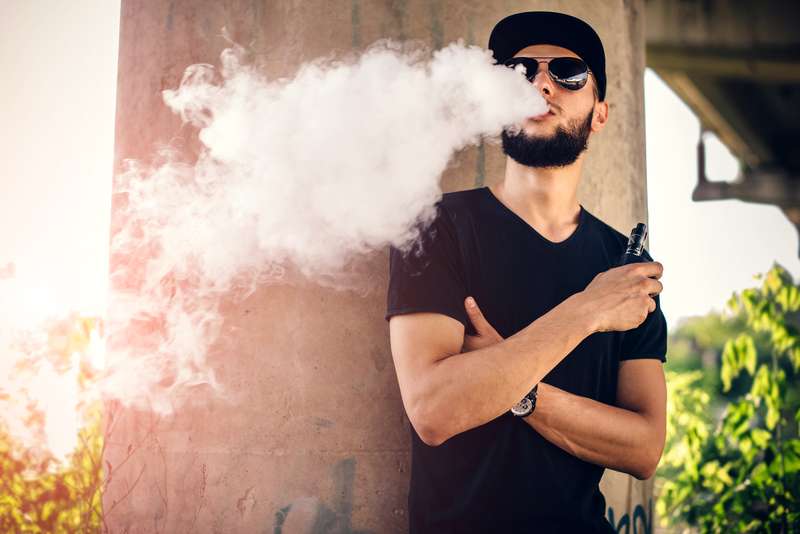
  • Former FDA Chair "Skeptical" That Vaping Can Cause Cancer

    Former FDA Chair "Skeptical" That Vaping Can Cause Cancer

    However, he does believe that vaping is harmful overall.

    The former head of the Food and Drug Administration says that he is “skeptical” that vaping can cause lung cancer, despite a research paper released last week that indicated that vaping nicotine increases lung cancer risk.

    “It Might Be A Tumor Promoter”

    Scott Gottlieb, a physician who led the FDA from 2017 until April of this year, made his comments during an appearance on Squawk Box last Monday (Oct. 14), CNBC reported

    “I’m skeptical that nicotine causes cancer,” he said. “It might be a tumor promoter, [researchers] have said that there’s a potential that nicotine is a tumor promoter, but it doesn’t cause cancer.”

    Tumor promotion is a process that stimulates the growth of existing tumors, but does not cause new tumors to form, according to the National Cancer Institute

    Gottlieb did not say why he believed that vaping nicotine could be a tumor promoter, but not cause cancer. However, he did emphasize that he believes vaping is harmful overall. 

    “That said, we had a signal when I was at the FDA of damage that vaping was causing to the lungs in an animal study,” he said. “You can’t inhale something into the lungs that way on a repeated basis and not cause some damage to the lung.”

    What About The Vaping Mice?

    Gottlieb was responding to a study published last week that found that vaping caused lung cancer in mice. The study found that 22.5% of mice that were exposed to e-cigarette vapor with nicotine for 54 weeks developed lung cancer. More than 57% of the mice developed pre-cancerous lesions on their bladder. 

    However, there was a small silver lining: mice that were exposed to e-cigarette vapor that did not have any nicotine did not develop cancer, even when they were followed for four years. 

    More Studies Needed

    Lead study author Moon-Shong Tang said the study showed that vapes were potentially dangerous and needed to be studied more carefully for their cancer risk in humans. 

    “Tobacco smoke is among the most dangerous environmental agents to which humans are routinely exposed, but the potential of E-cig smoke as a threat to human health is not yet fully understood,” he said in a news release. “Our study results in mice were not meant to be compared to human disease, but instead argue that E-cig smoke must be more thoroughly studied before it is deemed safe or marketed that way.”

    In an interview with CNBC, Tang said, “It’s foreseeable that if you smoke e-cigarettes, all kinds of disease comes out [over time]. Long term, some cancer will come out, probably. E-cigarettes are bad news.”

    View the original article at thefix.com
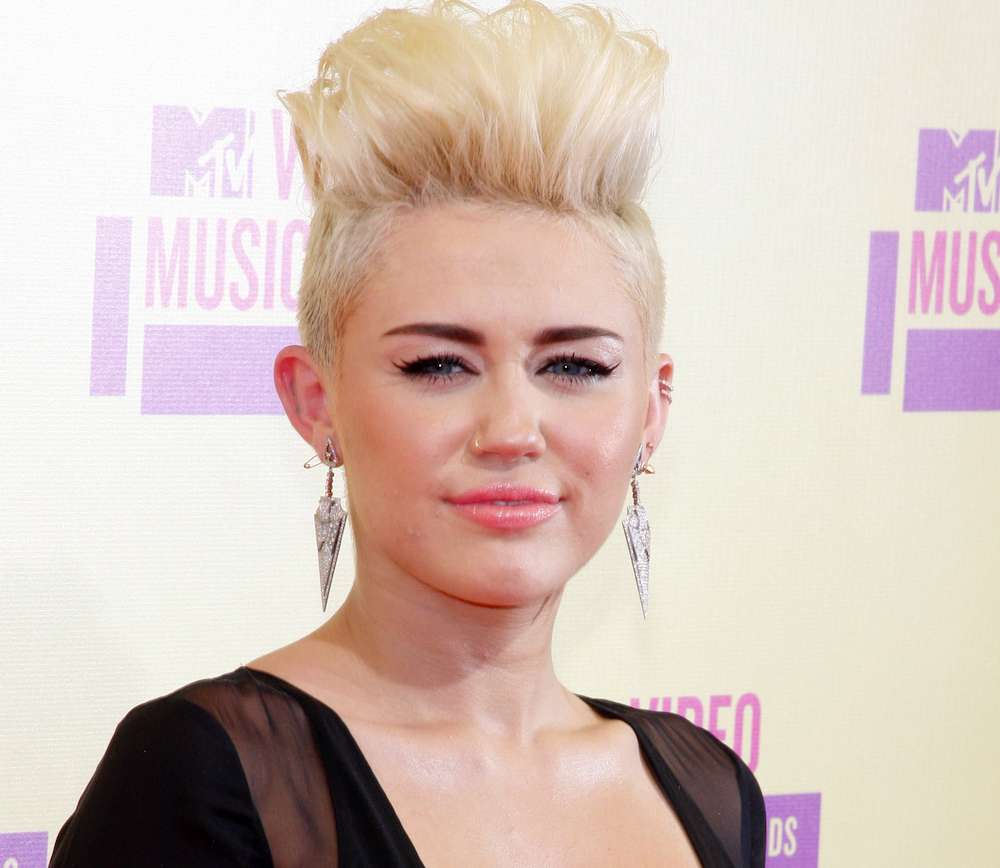
  • Miley Cyrus: "I'm Four Months Sober"

    Miley Cyrus: "I'm Four Months Sober"

    The pop star took to Instagram live with her big news.

    Despite the end of her long time on-again, off-again relationship with husband Liam Hemsworth, singer Miley Cyrus is sober and “radiating.”

    “I’m four months sober. It’s the best I’ve ever felt. I’m radiating,” the “Wrecking Ball” singer shared on Instagram live on Sunday (Oct. 20).

    A Marriage Ends

    Cyrus and Hemsworth separated in August, and soon after, Hemsworth filed for divorce citing “irreconcilable differences.”

    According to TMZ, Miley “tried valiantly to save the marriage” but could not reconcile the fact that “Liam was drinking a lot and using certain drugs, and she wanted no part of it, especially since she struggled with substance abuse in the past.”

    However, Hemsworth’s side denies this narrative, instead accusing Miley of covering up the fact that it was her infidelity that ended the marriage.

    Miley, who rose to fame as the Disney Channel’s Hannah Montana, gained a reputation for partying hard, with hits like “We Can’t Stop.”

    We Can’t Stop” was released in 2013 and attracted speculation that she was singing about partying with Molly (MDMA) and cocaine. But she’s calmed down since then, she says.

    Brief Stint Of Sobriety In 2017

    Cyrus said she was “evolving” in a 2017 interview with Billboard. “I haven’t smoked weed in three weeks, which is the longest I’ve ever [gone without it.] I’m not doing drugs, I’m not drinking, I’m completely clean right now! That was just something that I wanted to do,” she said at the time.

    But her mom Tish Cyrus got her smoking again. “My mom got me back on it,” Miley said last year. Still, her relationship with weed has some clear boundaries. “When I’m just working, I don’t think I function at my highest, most intelligent, most being-able-to-be-as-aware-and-as-present, so I don’t smoke when I work,” she told The Sun last December.

    A New Relationship

    Fans are now buzzing about Miley’s new relationship with Australian singer and long-time friend Cody Simpson. The two appear to be on the same page in regard to partying—they’d rather wake up early for yoga, according to HollywoodLife “sources.” 

    “We both met back in the day when we were partying a lot and had a lot of fun then, but now we found each other in a space where we’re not partying, working real hard, and it just keeps things healthy,” Cody told HollywoodLife at a recent event.

    View the original article at thefix.com
  • DMX Returns To Rehab

    DMX Returns To Rehab

    The announcement was met with supportive comments from several of his peers in the hip-hop industry.

    Veteran rapper DMX has canceled a slate of upcoming live performances and returned to rehab, according to statements issued via his social media account and management.

    Commitment To Family & Sobriety

    According to Rolling Stone, the performer, who has publicly struggled with substance dependency and mental health issues, was absent from several recent high-profile performances prior to the announcement about his return to rehab on October 13, which cited his “commitment to putting family and sobriety first” while also thanking fans for their support.

    The rehab check-in is the second for DMX in the last two years, and comes on the heels of a productive year following his release from prison in January 2019. After serving a year for tax evasion charges, the 48-year-old launched a 32-city tour to celebrate the 20th anniversary of his debut album, It’s Dark and Hell is Hot, including a performance at Coachella in April 2019 before signing with Def Jam Recordings in September 2019. 

    Long-time producer Swizz Beatz, who reunited with DMX for recording sessions in March 2019, said, “It’s going to be a good year for him, God willing. I just want it to happen so he can go to where he been supposed to have went.”

    Rolling Stone noted that DMX was slated to perform at the Rolling Loud festival in New York on October 13, but was not included on the list of performances when it was released that morning. He was also absent from a 35th anniversary party for Def Jam in Brooklyn for “personal reasons,” according to Page Six.

    His Peers Speak Out

    DMX’s announcement, which was posted on his Instagram account, was met with supportive comments from several of his peers in the hip-hop industry, including Def Jam co-founder and Rush Communications CEO/chairman Russell Simmons, who wrote, “Love you and always will Keep your head up,” while rapper Casanova wrote, “Prayers to you my brother.”

    In an interview with GQ in September 2019, DMX (born Earl Simmons) spoke about his motivation after so many ups and downs in his career and personal life.

    “I don’t need to have a goal in mind,” he said. “I just need to have a purpose. And I don’t even know that purpose, because God has given me that purpose since before I was in the womb, so I’m going to fulfill that purpose, whether I want to or not, whether I know it or not, because the story has already been written. If you appreciate the good, then you have to accept the bad.”

    View the original article at thefix.com

  • Safehouse Founders Talk Overdose Prevention Sites’ Recent Victory, Future Challenges

    Safehouse Founders Talk Overdose Prevention Sites’ Recent Victory, Future Challenges

    The Philadelphia-based organization was given the green light to open the first overdose prevention sites in the U.S.

    Soon after a judge ruled in their favor, the organization set to open the first ever overdose prevention sites in the United States reflected on their recent victory in an op-ed.

    This month, a federal judge ruled that Safehouse may go ahead with efforts to open two sites (also known as harm reduction sites or supervised injection facilities) in Philadelphia. The ruling was a clear victory over the federal government, which argued in court that the proposed facilities violated a provision of the Controlled Substances Act.

    “Opioid users would be free to come to the sites and inject their products with clean needles, and health workers would be on hand to make sure no one overdoses. At no point would we distribute or even touch controlled substances; the user would bring them to our facility. This isn’t a substitution of treatment, but it is safer than having people use drugs alone or on the streets,” wrote the three founders of Safehouse, the organization that proposed to open the sites, in a Washington Post opinion piece.

    They would be the first such (legal) facilities in the United States.

    We Could No Longer Wait As The Death Toll Continued To Rise

    Ed Rendell, a former governor of Pennsylvania, Jose A. Benitez, executive director of Prevention Point Philly and Ronda B. Goldfein, executive director of the AIDS Law Project of Pennsylvania founded Safehouse because “we could no longer wait as the death toll continued to rise almost unabated,” they wrote.

    The face of Philadelphia’s drug crisis is Kensington, a neighborhood so notorious for its drug problem that The New York Times called it “the Walmart of Heroin” in a feature last year. 

    Rendell, Benitez and Goldfein noted that 1,217 people in Philadelphia died of opioid overdoses in 2017. “The problem was, of course, that most people who overdose do so alone, and even if naloxone was on the table next to them, they couldn’t administer it because an overdose renders a person unconscious,” they wrote.

    Safehouse’s mission is to save lives, which overdose prevention sites have proven to do in Canada and about 120 other such sites around the world.

    “It is important to note that we, like other harm reduction advocates, do not believe supervised injection sites are the answer to the opioid crisis… but we do know that supervised injection sites will save lives,” they wrote.

    With the momentum from their recent victory in court, the founders say, “We hope it will be one of many across the country.”

    Suits Followed By Countersuits

    This month, U.S. District Judge Gerald A. McHugh ruled that the facilities were not in violation of federal law, as the federal government tried to argue in court.

    Pennsylvania prosecutors and the Department of Justice filed a civil lawsuit against Safehouse in February, trying to stop the organization from moving forward with opening the facilities, which had the endorsement of local officials including Mayor Jim Kenney.

    In suing Safehouse, the government argued that the facilities would violate the “crack house” statute under the Controlled Substances Act, which made it a crime to “knowingly open, lease, rent, use, or maintain any place, whether permanently or temporarily… for the purpose of unlawfully manufacturing, storing, distributing, or using a controlled substance.”

    Safehouse countersued in federal court, which concluded with the judge’s recent ruling.

    McHugh said in his decision that it was clear that overdose prevention sites were not intended targets of the Congress in 1986 when they created the “crack house” statute.

    “There is no support for the view that Congress meant to criminalize projects such as that proposed by Safehouse,” McHugh wrote. “Safe injection sites were not considered by Congress and could not have been, because their use as a possible harm reduction strategy among opioid users had not yet entered public discourse.”

    McHugh determined that Safehouse’s mission did not clash with the law. “The ultimate goal of Safehouse’s proposed operation is to reduce drug use, not facilitate it, and accordingly, [the “crack house” statute] does not prohibit Safehouse’s proposed conduct.”

    Despite their victory, the founders—Rendell, Benitez, and Goldfein—acknowledged in the Washington Post op-ed that the fight is far from over.

    “While we may have won that first legal battle, we still have hurdles to clear,” they wrote.

    “We hope that our victory emboldens other cities to venture into setting up their own harm reduction sites. While our federal ruling is not binding on other jurisdictions, we believe its logic and reasoned interpretation will help proposed facilities in places such as New York, San Francisco, Boston, Seattle and Denver when and if they face court challenges,” they wrote.

    View the original article at thefix.com

  • Johnson & Johnson Fined $107M Too Much In Opioid Settlement

    Johnson & Johnson Fined $107M Too Much In Opioid Settlement

    “That’s the last time I use that calculator,” an Oklahoma judge said, according to CNN.

    The judge who ordered Johnson & Johnson to pay $572 million said that he made a mathematical error that resulted in the settlement being $107 million too much. 

    Bad Math

    As part of the settlement, Judge Thad Balkman allotted $107,683,000 to help treat babies born dependent on opioids. However, Balkman said this week that he came to that sum by misguided math. He unintentionally added an extra three zeros. In reality, he only meant to assign $107,683 for the treatment of babies. 

    “That’s the last time I use that calculator,” Balkman said, according to CNN.

    Because of that, the landmark judgment against Johnson & Johnson will be reduced by nearly a quarter. 

    Lawyers for Johnson & Johnson were the first to notice the error. 

    “No evidence supports this higher amount, which appears simply to reflect a mistaken addition of three zeros to the calculation of the annual average, yet the state’s proposed judgment fails to account for this discrepancy,” the lawyers wrote in court paperwork. 

    Drugmaker Requests Further Reduction in Payout

    Johnson & Johnson also requested that Balkman reduce the amount that the company will be required to pay to account for the fact that Purdue Pharma and Teva Pharmaceutical Industries will be contributing $355 million to the state. That amount was decided on during a pretrial settlement. 

    Balkman has not yet said whether he will amend the Johnson & Johnson fine because of the settlement with Purdue and Teva. However, he will reduce the fine to account for his math error. The settlement amount will be updated, but Johnson & Johnson has said that it plans to appeal the ruling regardless. 

    The state of Oklahoma had asked for $17 billion in damages from Johnson & Johnson. Christopher Ruhm, professor of public policy and economics at the University of Virginia, helped the state decide how much to ask for. He said that $17 billion would have allowed Oklahoma to address the opioid epidemic over the next 30 years. 

    Opioid Settlements Pale in Comparison to Big Pharma Profits

    “It is a lot of money. It’s also a major public health crisis,” Ruhm said.

    Balkman used that plan to allot $572,102,028, roughly the amount that the state asked for per year. 

    “The state did not present sufficient evidence of the amount of time and costs necessary, beyond year one, to abate the opioid crisis,” he wrote in his ruling. 

    Although settlements around the opioid lawsuits can seem large, many people argue that they pale in comparison to the profits that companies made from opioids that were allegedly marketed in misleading ways. The settlement amounts are also small compared to the money that cities, counties and states spend to address the epidemic. 

    View the original article at thefix.com

  • Video Games: A South Korean National Pastime…Or Addiction?

    Video Games: A South Korean National Pastime…Or Addiction?

    The digitized nation grapples with the good and bad of competitive computer gaming.

    South Korea’s $13 billion competitive gaming industry doesn’t like the World Health Organization’s addition of “gaming disorder” to its 2022 revision of the International Classification of Diseases. Mental health experts in the country say a nuanced examination of the hobby is long overdue.

    The nation has seen some gripping examples of gaming addiction. A grandmother watched as her grandson locked himself away in his room to play games, not even stopping his gaming at his grandfather’s funeral.

    Some in the country have died for their hobby, neglecting their need to sleep and eat until they collapse. Gaming even led one couple to neglect their baby daughter until she died of malnutrition. They were put away for negligent homicide.

    The South Korean government is taking the issue seriously, putting together a panel of experts to detangle the whole thing. Much to the chagrin of the nation’s massive gaming industry, the panel is looking into whether to add gaming disorder to the 2025 edition of the Korean Standard Classification of Diseases.

    There’s big money at stake, considering that South Korea exported $6 billion in video games in 2017. That’s more than 10 times more than what K-pop brought in.

    “It’ll be a disaster,” says Kim Jung-tae, a professor of game studies at Dongyang University. “The entire ecosystem of the game industry could collapse.”

    A Witch Hunt Or Real Issue?

    Kim is on a task force formed to combat the classification of gaming as a disorder. He calls the whole thing a “witch hunt” by those who stand to profit from addiction research and treatment, spurred by concerned parents looking for a scapegoat for what’s become of their kids.

    “It’s part of a phobia of new media,” Kim said. “Games, like air, are already a part of our lives.”

    Those on Kim’s side believe that the gaming industry stands to lose $9 billion and 8,700 jobs if the classification of gaming as a disorder goes through. However, mental health advocates say that the gaming industry and its fans have nothing to worry about.

    “Alcoholics don’t blame the company that makes the liquor,” said Roh Sung-won, an addiction specialist. “You don’t stop manufacturing cars because there are automobile accidents.”

    Playing For 3 Days Straight

    He recalls the owner of an internet cafe calling his hospital on behalf of a man who had been playing games for over 72 hours straight. But opponents of the classification say that such people aren’t suffering from gaming disorder, but are gaming because of some other underlying mental health issues.

    South Korea is far from the only nation grappling with compulsive gaming issues. Epic Games, the American creators of the immensely popular game Fortnite, is facing a class-action lawsuit from a Montreal-based firm for purposely putting out a game built to be addictive to teenagers.

    View the original article at thefix.com

  • Chocolate Chip Cookies Are Like Cocaine To Your Brain

    Chocolate Chip Cookies Are Like Cocaine To Your Brain

    The addiction response from the delicious baked treats are indistinguishable from drugs.

    Researchers at the University of Bordeaux say that the brain’s response to chocolate chip cookies is the same as its response to cocaine and THC. While such equivalencies are overblown, the claims are rooted in sound science—a testament to the complexity of mental health and addiction.

    “Available evidence in humans shows that sugar and sweetness can induce reward and craving that are comparable in magnitude to those induced by addictive drugs,” the study’s abstract reads.

    Your Brain’s Response

    The reason for the addiction responses in the brain by chocolate chip cookies are due to the effects of its individual components, the study explains. The sweetest ingredient in cookies, sugar, has a powerful effect on the human mind, lighting up similar pathways as cocaine.

    There’s a biological reason for this, as evolutionary pressures drove our ancestors to seek sustenance that was extremely high in calories. In other words, seeking out that feelgood hit of sugar was what separated those who lived and those who died back in the stone age. Our inheritance of this sugar-seeking trait is what makes dessert so darn tempting to us today, manifesting as a literal primal urge to cram it in our mouths.

    Chocolate & Marijuana

    Chocolate, on the other hand, gives us pleasure in a different way. Its bittersweet, melty flavor and texture hits our brains the same way as marijuana.

    Putting these two potent ingredients together is what drove the chocolate chip cookie to become a timeless classic that has driven many children—and adults—to eat so many that they literally get sick.

    Junk food and fast food companies know we can’t stop, driving Americans into a high-calorie, low-nutrient diet that leads to heart disease, cancer and diabetes—the leading causes of death and disability in the United States, according to the CDC.

    Research has shown that the pull of sugars is so powerful that lab rats actually prefer a hit of sugar to a hit of drugs. It’s reasonable, considering cocaine does not contain life-sustaining sustenance.

    “Overall, this research has revealed that sugar and sweet reward can not only substitute to addictive drugs, like cocaine, but can even be more rewarding and attractive,” the study’s abstract continues. “At the neurobiological level, the neural substrates of sugar and sweet reward appear to be more robust than those of cocaine (i.e., more resistant to functional failures), possibly reflecting past selective evolutionary pressures for seeking and taking foods high in sugar and calories.”

    This research hasn’t proven to be an accurate model of human behavior, however. In 2016, the sales of marijuana in legal states exceeded the expenditures on Girl Scout Cookies, Oreos, Pringles, and Dasani bottled water…combined.

    View the original article at thefix.com

  • Rachel Maddow On Cyclical Depression: "You Sort Of Disappear"

    Rachel Maddow On Cyclical Depression: "You Sort Of Disappear"

    “I still can’t tell when I’m depressed because part of depression is not being able to have emotional cognizance.”

    MSNBC host Rachel Maddow opened up about her long-term struggles with depression, how it affects her, and what helps her get through it in an interview with comedian Marc Maron on his biweekly podcast, WTF With Marc Maron. 

    Maddow described her experience with the mental illness as cyclical, hitting her for a few days at a time every few weeks.

    “And when it happens, I sort of lose the will to live,” she said. “Nothing has any meaning.”

    This has been going on more or less since she was 10 years old. Though Maddow has trouble recognizing it in the moment, her partner Susan Mikula has learned how to spot it and has been crucial in Maddow’s ability to get through each episode.

    Finding Ways to Cope

    “Even after living with it for 36 years, I still can’t tell when I’m depressed because part of depression is not being able to have emotional cognizance,” she explained. “Having a partner who can tell me that’s what’s going on, even if I can’t emotionally process it, like I can’t hear it, it can remind me to make sure you exercise, make sure you sleep, make sure you don’t do anything dumb.”

    Exercise is one of the main ways that Maddow combats her depression, which she does without the benefit of medication. She has also increasingly been using prayer to the point that she now considers herself to be religious.

    “The act of stopping what your brain is otherwise going to do to do a deliberate thing which is based around giving thanks, I think is a reset that’s like a psychic pause, but I also think it helps you get your head on straight.”

    She also experiences periods of mania, though she says that these episodes have lessened in frequency: “It’s like one-sixth of what it used to be.”

    You Just Don’t Connect with Anything — You Sort Of Disappear

    Maddow has spoken on her depression in interviews in the past. In 2012, she spoke with Terri Gross of NPR on the subject and how it relates to her struggles with imposter syndrome.

    “People are going to realize that I’m a great fraud and it’ll end, so I better make sure this is a good show because it’ll be my last,” she admitted. “Part of me feels that way every day.”

    After so many years, however, the renowned political commentator has become used to the ups and downs, scheduling her life around it when she can tell it’s coming on and powering through her difficulty focusing when she has to. Her experience has also allowed her to come up with an unusual, yet accurate, metaphor for depression.

    “And you know, when you are depressed, it’s like the rest of the world is the mothership and you’re out there on a little pod and your line gets cut, and you just don’t connect with anything, you sort of—you sort of disappear.”

    View the original article at thefix.com

  • Michael Douglas Relieved To Have Son Back After Long Addiction Battle

    Michael Douglas Relieved To Have Son Back After Long Addiction Battle

    Cameron will soon be releasing a memoir about his decades-long struggle with addiction to cocaine and heroin.

    Michael Douglas spoke to People this week about his son Cameron’s long battle with addiction and his six-year stay in prison.

    The 75-year-old actor, who recently appeared in Avengers: Endgame, addressed the fear of losing his child and the cautious relief he has felt since Cameron returned to acting in 2017.

    “There were moments when hope dwindled… and then it’s just a train out of the station,” said Michael. “You go from compassion for somebody you love and worry about and you balance that with your own hostility and anger as it begins to increase… I remember him looking at me and I said, ‘Listen, you know I love you but I am going to protect myself and the family.’”

    Losing His Half-Brother To Overdose 

    Michael knows the pain of losing a family member to addiction, having lost his half-brother Eric to an overdose in 2004. Eric was only 46 when his maid found him dead in his Manhattan apartment. Toxicology reports found that he overdosed on a mix of alcohol, tranquilizers, and painkillers.

    However, after a lot of personal work and some time in a halfway house, Cameron has remained sober and hope has returned to the family.

    “It went from feeling [cautious] to relief, to the joy of having Cameron back,” Michael told People. “It’s like this huge storm has passed and the sun came out and you can enjoy your life again without looking over your back. It’s a wonderful feeling of being complete.”

    Long Way Home

    Cameron will soon be releasing a memoir about his decades-long struggle with addiction to cocaine and heroin titled Long Way Home. He also appeared in the short film Dead Layer in 2018, but he’s mostly been enjoying forming a closer bond with his father as well as his 22-month-old daughter Lua.

    He hopes that his book will inspire others struggling with addiction to get help and that he might even “save a life.”

    “It’s the sneaky power, the stranglehold that addiction has when you’re in the throes of it,” he said of his disease. “When you get that far down the rabbit hole, there are a couple options: there’s prison and then there’s death.”

    Michael expressed his pride in his son for sticking with the treatment program and passing his story on to others.

    “I’m very proud of him, not only for the book but for the way he conducts his life,” he said. “He’s talking the talk and walking the walk.”

    View the original article at thefix.com

  • Halloween Special: Tales of Addiction Horror

    Halloween Special: Tales of Addiction Horror

    “Addicts are like vampires. We hide our behavior and feed off the living, siphoning their money, their sanity, their trust.”

    Mark Matthews spent years fighting the insatiable monster that screams for more. He says that he still dreams about the electricity of cocaine, the soothing caress of heroin, the heaven in a bottle of Stoli vodka. But the party for him ended long ago. By age 23, Matthews was a wreck. He had alcoholic hepatitis of the liver, swollen pancreas, and a bleeding stomach. 

    After several failed detoxes, Matthews finally hit bottom and crawled into residential treatment. Getting sober was excruciating, yet rewarding. Equipped with his new recovery tools, he learned to manage life without killing himself. He returned to college and earned a Masters in Counseling and a BA in English.

    Now, with 25 years sober, Matthews has built a thriving career that encompasses his two passions. As a certified addictions counselor, he’s dedicated to helping minds heal. As an author, he’s a master at using his characters’ addictions as a metaphor in the genre he calls “addiction horror.” 

    The Fix: What made you combine horror and addiction?

    Mark Matthews: There is nothing more diabolical than the voice of addiction hijacking thoughts, rationalizing atrocious behavior. It plagues us with lies. Aw, come on, you can get high one last time. That monster’s voice that lurks within ignites seductive memories of how good that first hit feels. Addiction is deep in my blood. When I write, I put a knife in my heart and it spills all over the page. That force to get high can be equal to the will to survive.

    Like a mirror image? 

    Yes. It’s the same strength that makes a drowning person fight to the surface for air. With addiction, the will to live is flipped and becomes self-destruction. Addicts are like vampires. We hide our behavior and feed off the living, siphoning their money, their sanity, their trust. We live in shadows, cursed with our affliction but unable to stop the compulsion.

    Your stories show such empathy for your characters.

    Oh yeah. I’m not demonizing the addict. Some of the greatest fiction comes from the deepest of personal pain. The blood we suck out of our families reminds me of The Exorcist, the most terrifying horror movie ever made. I see an analogy—a desperate, powerless mother trying to save her daughter from addiction.

    What can you tell me about your new book, Lullabies for Suffering: Tales of Addiction Horror?

    It’s available for preorder October 22. It’s a thrill that great horror writers are in this collection. It’s six novellas written by different authors—Gabino Iglesias, Caroline Kepnes, Kealan Patrick Burke, John FD Taff, Mercedes M. Yardley. 

    That’s five.

    [Laughs] I’m the sixth. Addiction horror is an important reminder. Even after 25 years in recovery, if I used, everything I’ve worked so hard for—family, career, sanity—it would all be gone. But that monster doesn’t stop begging to be fed. My mouth waters just by thinking of vodka. There’s a jolt in my spine when a TV character snorts powder. I have using dreams. But it’s up to me to find joy in living and there’s nothing more badass than facing every day sober.

    * * *

    Caroline Kepnes’ exquisite contribution to Lullabies for Suffering is “Monsters,” but you may remember her as the writer of YOU, the best seller that became the binge-worthy Netflix series. Horror master Stephen King tweeted about YOU, calling it “Hypnotic and scary. A little Ira Levin, a little Patricia Highsmith, and plenty of serious snark.”

    YOU follows the demented path of creepy yet sexy stalker Joe Goldberg. Joe’s a sociopath who meets a woman in a book store, becomes obsessed with her, and uses social media to stalk and manipulate her. He’s a narcissist convinced that only he knows what’s best for her. Booklist called the sequel Hidden Bodies, “the love child of Holden Caulfield and Patrick Bateman.”

    “Monsters” is another disturbing trip into the mind of Kepnes. Like all of her work, “Monsters” grabs you by the ankle. Interviewing Kepnes for The Fix was a titillating highlight in my lifelong devotion to dark humor and the scary books I’d push way under my bed. I love that thrill of terror.

    The Fix: Any vivid memories of Halloweens past?

    Caroline Kepnes: I grew up in Massachusetts, on Cape Cod. It’s a place so primed for Halloween. The seasons change, the days are shorter and the library is rumored to be haunted. My elementary school always had a parade. I loved being creeped out. In high school I went to a haunted house and got so scared that I punched someone dressed up as a zombie (sorry, Zombie).

    Any plans for this Halloween?

    In LA it lasts for a month and you see people in costumes in the grocery store at all hours.

    Ever struggled with dependency on drugs or alcohol?

    I’m a really addictive person. I saw myself in a lot of artists who battled addiction and it was so easy for me to imagine myself finding one thing that obliterates everything else. In high school, Sassy Magazine gave me an honorable mention for a story about a girl who is speaking from the afterlife. She died from an angel dust overdose. [My] guidance counselor was concerned.

    Painkillers were tricky for me.

    I get it. When I had emergency throat surgery they gave me liquid Percocet. Oh God, the way I held onto that bottle and begged for more. When my doctor refused, I couldn’t sleep. I was shaking all the time. Brutal. It gave me so much empathy for people who are in the throes of that growling, incessant beast.

    In every book, and in “Monsters” for Mark’s anthology, I think of the height of my [Percocet] dependency and how to put that level of pain on the pages. When your brain is an exasperating place to be, there’s no escape.

    Do you know anyone in recovery?

    Some of the kindest, most thoughtful people I know are in recovery. They have so much heart. They root for people [and] have this enormous capacity to care about others. That dazzles me … because my God, what a powerful thing, to be in the intimate, internal process of overcoming [an addiction] and simultaneously be so generous with your heart.

    What makes you write such dark stuff? Black comedy seems so necessary during America’s surreal political nightmare.

     [Laughs] When anyone says “black comedy” I light up inside like “Ooh-where-what-gimme.” I love being in the whirlwind of feeling amused, mortified, scared, disgusted, enraptured all at once. It feels genuine to what it’s like to be a living, breathing human.

    Where do your ideas come from?

    It’s just the way my brain works. I look at a basement [and] think, “Gee, I wonder who’s trapped down there?” I’m always wondering what people are capable of, why they do what they do, how they got there. I knew this was my jam in high school when I was in this summer-long intelligence experiment at Yale University. It was a college level class on abnormal psych. [We read] about serial killers, violent kids, case studies. I didn’t want to sleep.

    Have you known any stalkers or scary fans like Annie Wilkes in Stephen King’s Misery?

    Ha! Annie Wilkes [is] one of my all-time favorite gals. But I did have a stalker many years ago…. It was a terrifying experience and there was nothing even remotely funny or rom-com about it. It was a humiliating mind fuck. 

    Was Joe based on him?

    In a sick way, Joe was … a way of revising that history, a personal coping mechanism for processing those phone calls and that terror that was with me for so long…. You watch movies where dreamy guys break boundaries to get with women. But [with my stalker] there wasn’t an ounce of Cusack in him.

    Why do you think thrillers appeal to people?

    I’ve met my share of monsters…I like to read about people who lack self-awareness and empathy and have logic systems that enable them to do terrible things. It’s empowering, in a know thy enemy sort of way.

    Do you have a favorite movie?

    I love The End of the Tour and watch it a lot because of the conversations about addiction to television. That was part of my way into Joe Goldberg—the danger of one-way street friendships that we cultivate with characters in books, TV shows, and movies. I go through phases where I’m depressed and hide in the TV, my drug of choice.

    TV is in our phone 24 hours a day. People [like me] with addictive tendencies can get our hands on so much. What a miracle that a bottle of vodka can appear on your doorstep—a miracle and a horror. Writing helps me stay happy. It gives me a purpose and a healthy place to put my obsessive energy.

    What thoughts do you have when writing about Joe?

    I made him up out of that self-critical voice in my head. That’s the worst demon of all, your own inner-hater. The voice that sounds like the mean girls from middle school, the creepy stalker, the bitch from that time, a violent monster who gets away with it. That voice is the part of me that gets disgusted with myself, with others, that voice in my head is the most helpful thing in the world where writing is concerned.


    Lullabies for Suffering: Tales of Addiction Horror will be available in January, 2020.

    Read You or binge watch it on Netflix.

    View the original article at thefix.com