Author: The Fix

  • Expert Breaks Down How HBO Shows Tackle Mental Health

    Expert Breaks Down How HBO Shows Tackle Mental Health

    For a new video series, a mental health expert explores popular characters with mental health issues on HBO. 

    A new initiative by HBO tries to break down the portrayal of mental health on popular series like Game of Thrones and Succession, helping spark important conversations and debunking common misconceptions.

    Doctor Commentaries

    Cognitive behavioral therapist Dr. Ali Mattu is HBO’s resident mental health expert featured in a series of “HBO Doctor Commentaries” that are available to watch on YouTube. Each video focuses on a different HBO show in which a character is dealing with some aspect of mental health (or illness).

    In one video, Mattu explains the difference between real OCD vs. people who say “I’m so OCD,” by using the example of the character Hannah Horvath on the HBO show Girls.

    The term OCD, short for obsessive-compulsive disorder, is often misapplied to describe much less severe symptoms. “‘I like to keep things organized,’ or ‘I can be very picky with things’—that’s not OCD,” Mattu says.

    Hannah Horvath, played by Lena Dunham, is “a very realistic example of what OCD can look like,” Mattu said.

    “If you’re not diagnosed with OCD, try not to joke about it. It can be really hard to talk about OCD. It’s why I’m so happy shows like this exist. It gives us a place to start a conversation that hopefully move things forward,” said Mattu.

    Tyrion’s Anhedonia

    Another video touches on the anhedonia of Tyrion Lannister in Game of Thrones. Mattu explains that anhedonia is a “core symptom of depression” where you no longer experience joy, motivation or pleasure from your usual hobbies.

    “What I love about Tyrion (played by Peter Dinklage) is his story is about connecting with a larger purpose, doing what’s best for Westeros, owning who he is, and the unique ways he can help others,” Mattu said.

    “We’ll never know if Tyrion was struggling with a mental illness, but whatever he was dealing with didn’t get in the way of him being a hero. And that’s true for all of us. No matter what you’re experiencing, it doesn’t have to get in the way of living the life you want to live.”

    A PSA For Mental Health Awareness Day

    HBO’s mental health awareness campaign, launched on World Mental Health Day (Oct. 10), also released a public service announcement video featuring a broad spectrum of HBO favorites that tackle mental health issues through drama, stand-up, or talk show.

    “It’s more common than you think. And it’s OK,” the PSA says in the end, encouraging people to call the hotline 1-833-HBO-NAMI or visit NAMI.org.

    The cable network also added new mental health disclaimers before certain shows like Euphoria that inform viewers of the portrayal of certain subject matter like bipolar disorder, depression, and substance use disorder.

    View the original article at thefix.com

  • Tallulah Willis Discusses Mental Health, Suicidal Thoughts

    Tallulah Willis Discusses Mental Health, Suicidal Thoughts

    The 25-year-old used Instagram to bring attention to smiling depression.

    Demi Moore’s long-awaited autobiography, Inside Out, has been making headlines for her confessions about her past drug abuse, and the mental health issues she dealt with growing up in a dysfunctional family. Now her daughter, Tallulah Willis, is speaking out on Instagram about her own mental health issues as well.

    Back in December 2018, Willis posted a video of herself dancing in a pink bikini, seemingly happy and carefree. Now she writes, “We are not what we show. When I filmed this video I remember everyone telling me over and over how they wished they had my energy, my freeness, a ownership of self.”

    High-Functioning Depression

    Yet nothing could have been further from the truth. “When this video was filmed I was three months into the deepest suicidal hole I had ever been in.”

    Willis’s confession was timed to coincide with Mental Health Awareness Day, and she continued, “I’m not ready to share my story yet, but I’m with you…Pain is pain. It’s different and enters each of our lives through a myriad of ways, but each electric stab or dull ache is real. The kind of pain that you can’t see, the pain that lives in the space behind your throat. I’m scared of my brain, the capacity for pain it has and will continue to bear. My fight is daily and for the duration of my life and each day I chose to find the glowed moments, a thefted giggle, or true peaceful pause.”

    While Willis said she’s not ready to share her story, she has spoken out about her mental health issues before in the press. In 2015, she spoke about suffering from depression with Teen Vogue, explaining, “I haven’t felt OK with who I am since I was 11 years old.”

    Her Own Worst Critic

    Coming from a famous family, Willis eventually succumbed to the taunting from cyberbullies, and she “became my own worst critic.” Willis eventually developed an eating disorder and her weight plummeted to 95 pounds. Once her depression engulfed her in college, she went into a treatment center. “It’s not night and day,” she explains. “It’s not like now I completely love myself and have no problems. That isn’t how it works. But there are the starting points of that, and that’s really exciting.”

    View the original article at thefix.com

  • Prevent Opioid Overdose Deaths: A Call for Specific Prescribing Laws and Physician Oversight

    Prevent Opioid Overdose Deaths: A Call for Specific Prescribing Laws and Physician Oversight

    Make doctors precisely explain why they are prescribing opioids and why they decided on the pill count and refill allowance for each patient. 

    Recently, a friend’s teenage daughter underwent a procedure common for young adults: she had her wisdom teeth extracted. I had the same procedure performed in the late 1990s, at age 20. Back then, I was given a bottle of ibuprofen for the pain and, for the bleeding, told to apply tea bags. My friend’s daughter was given something just a tad stronger: 

    Vicodin.

    A teenager was given a strong opioid painkiller to numb the pain of a routine tooth extraction. It’s absurd that this is the accepted medication for this procedure when there are no complications, nothing that would indicate breakthrough pain on a level of requiring a narcotic that is given to cancer patients.

    However, the fight against opioid abuse is finally gaining promising victories by wielding an effective weapon: lawsuits. 

    Holding Big Pharma Accountable

    As the epidemic grew, many – myself included – called for state and local authorities to take drug companies to court for knowingly encouraging large-scale consumer usage of highly addictive prescription painkillers such as OxyContin, Vicodin and Percocet. Thousands of lawsuits have now been filed and in August, the $572 million decision won by Oklahoma against Johnson & Johnson became the first large-scale trial ruling concerning Big Pharma’s role in creating the opioid crisis. The state argued that J&J, which had supplied 60% of the opioids drug makers used for painkillers, aggressively marketed the drug to doctors and patients as safe. 

    Most recently the Sackler family – owners of Purdue Pharma, which makes OxyContin – reached a tentative settlement for$10-12 billion, a move that will result in the company’s bankruptcy

    They lied, we died, and now they have to pay up. Hopefully these are just the first few drips in an oncoming flood of restitution owed Americans by companies responsible for an unprecedented addiction crisis. They deserve whatever fates come their way – criminal, civil, or, as the 800-pound spoon left at Johnson & Johnson’s headquarters intended, shame-filled. 

    Now, as the overdose death rate shows signs of ebbing but has by no means abated – 68,000 Americans died in 2018 compared with 72,000 in 2017, hardly cause for celebration – it’s time to ask what’s next. 

    For years, drug companies pushed opioids as a panacea for all things pain-related. The result was an absolute avalanche of prescriptions: 191 million in 2017 alone, which averages to 58 opioid prescriptions for every 100 Americans. And despite guidelines intended to discourage opioid painkillers as a first-step approach to easing pain, primary care clinicians – most patients’ initial gateways to healthcare – wrote 45% of all opioid prescriptions. 

    Surgeons also have been implicated in widespread overprescribing. One study of nearly 20,000 surgeons, led by Johns Hopkins School of Public Health researchers, noted the common practice of prescribing dozens of opioid medications even for low-pain operations. Some prescribed over 100 opioid pills for the week following a surgery, along with usage instructions far exceeding guidelines from several academic medical centers. No wonder some six percent of all patients prescribed opioids post-surgery become dependent

    The diagnosis is simple: Doctors have proven incapable of, or unwilling to, exercise responsible discretion in determining which conditions and medical procedures necessitate painkillers notoriously linked to addiction, misuse, and overdose. 

    A Painful Backlash

    Complicating matters, the opioid crisis has become a two-way street. 

    In response to the backlash to the initial opioid free-for-all, many doctors have become so wary of prescribing opioids that those who truly need them are unjustly suffering. Much of this hesitancy is a reaction to guidelines issued by the Centers for Disease Control in 2016 that, according to Richard Lawhern, founder of the Alliance for the Treatment of Intractable Pain, has subjected patients with legitimate chronic pain to a “draconian reduction” in doctors willing to meet their needs with opioid-based medication.

    The problem with the CDC’s directive was vagueness of language. The guidelines state that opioids are appropriate for pain caused by cancer, end-of-life care, and “palliative care.” But “palliative” is a subjective term, and therefore confusing for doctors who, understandably, now have their guards up against malpractice suits in addition to opioid addiction and abuse. In a February 2019 reiteration of its guidelines, the CDC clarified that opioids are reasonable for chronic pain but, unfortunately, repeated its ambiguous wording concerning specific conditions. 

    However unintended, the result is patients who rely on opioids for legitimate medical reasons suffering for the sins of Big Pharma and, subsequently, the incompetence of government officials and the inadequacies – including cowardice – of doctors.

    The scale of the crisis and forcefulness of the backlash also has resulted in patients who, through no fault of their own, became dependent on opioids and, at the drop of a guideline, found themselves completely cut off from a highly addictive drug and dropped into a hellish withdrawal. The unsurprising consequence of this overreaction by doctors is patients turning to the streets for unregulated, often fentanyl-tainted heroin. Any laws written to specify opioid painkiller administration must include reasonable ways of relieving already-addicted patients through treatment centers and weaning agents like methadone and buprenorphine (suboxone). 

    However, the conviction permeating the chronic pain community – that doctors rather than laws should be the primary determinant of opioid prescriptions – simply doesn’t hold water. It’s become clear that doctors don’t necessarily know best. We need rules that hamstring the parasitic overprescribers while unhandcuffing the paranoid underprescribers.

    Guidelines Aren’t Enough

    It’s time for legislators to take the mystery out of this branch of medicine. If doctors can’t stop writing opioid prescriptions to those who don’t need them, or refusing to write prescriptions for those who do, then we must enact laws with clear prescribing instructions. 

    We’re all familiar with mandatory sentencing guidelines; we need mandatory dispensing guidelines – laws that bring harsh punishment for overprescribing pain medication when it’s not indicated, while reassuring doctors that they will not be unfairly punished for providing chronic pain patients with the relief they require.

    The time has come for customized ailment and procedure-related opioid painkiller dosing laws, complete with extensive medical rationale requirements. Make doctors precisely explain why they are prescribing opioids and why they decided on the pill count and refill allowance for each patient. 

    We also need to look at something else: ourselves. Especially in post-surgery settings, the opioid overprescribing epidemic was exacerbated by the naïve, altogether modern notion that patients should never feel discomfort or pain. 

    If alternatives to opioids don’t kill 100% of post-procedure pain, the new one-word answer should be “tough.” The idea that we can go through life without ever experiencing pain is not only delusional but, as we’re seeing, destructive. Things heal. Patients will need more, well, patience. 

    Numbing people literally to death is not the answer. It is irresponsible and dangerous to prescribe opioids for an ingrown toenail. Or for carpal tunnel syndrome. Or to a child following a tonsillectomy or, of course, a teenager after a tooth extraction. 

    On the flip side, it is cruel and flat-out stupid to deny patients with serious chronic pain access to a now-demonized family of medicines that for many has meant the difference between functioning and debilitation. 

    The time for general guidelines is behind us. We need strict, specific statutes that greatly diminish doctors’ discretion while placing transparency and responsibility squarely on their shoulders. 

    View the original article at thefix.com

  • Vaping Illnesses Ensnarl Pax Labs, Juul's Former Sister Company

    Vaping Illnesses Ensnarl Pax Labs, Juul's Former Sister Company

    With the government warning all Americans to immediately stop vaping cannabis products, the future of Pax is uncertain. 

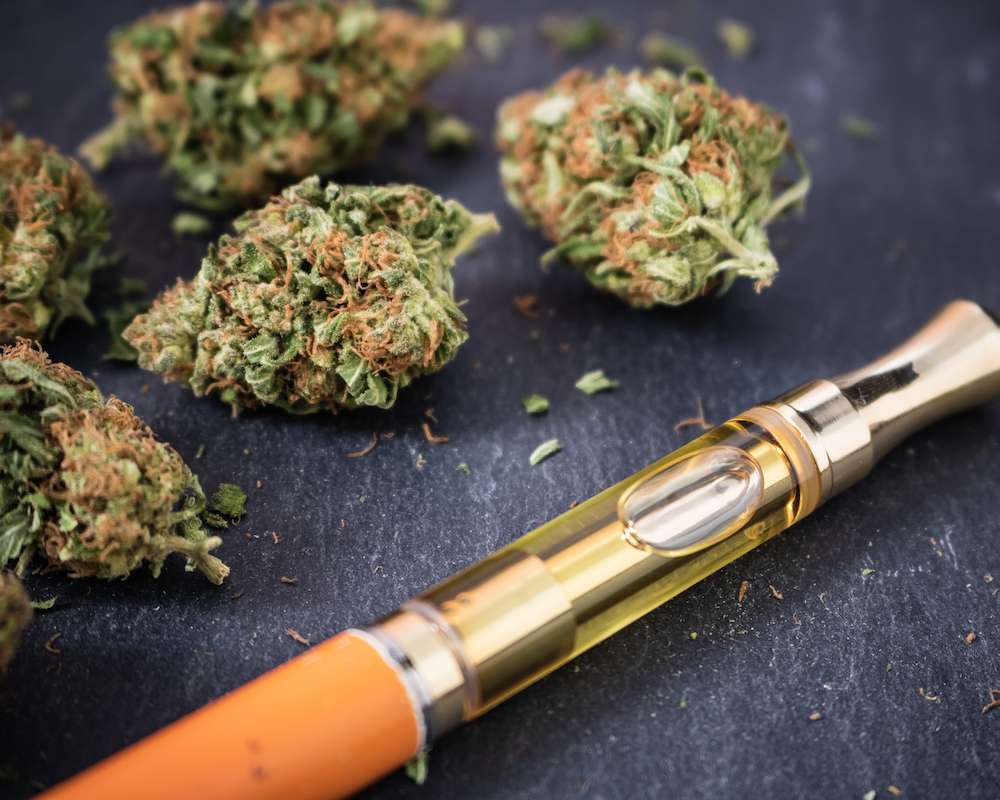
    As consumers and health officials around the country try to figure out what, exactly, is harming vape users and leading to a growing number of vape-related deaths, Pax Labs, a former sister company of the vaping giant Juul, is coming under scrutiny. 

    Juul and Pax Labs were once under the same company, but they parted ways in 2017, USA Today reported. Since then, Juul has sold nicotine-based vaping products, while Pax Labs has produced vapes and empty cartridges that are primarily used to vape cannabis products. 

    Black Market Cannabis Oil

    While Pax cartridges are supposed to be filled through approved partner companies—who presumably have an above board safety record—some people refill the cartridges with their own cannabis oil or black-market cannabis products. This is concerning, since the majority of cases of vape-related illness have occurred after a person vaped cannabis. 

    Pax has been clear that its products are not directly related to the injuries, according to a September statement from the company.

    “No PAX products have been involved in any of these cases,” the statement said. “While the cause is yet to be determined, none of the brand partners who fill and distribute our pods use Vitamin E acetate in PAX formulations, and all pods are subject to rigorous state regulatory compliance and testing. We select our partners with careful diligence.”

    A New Leader Steps In

    However, in late September Pax’s CEO suddenly left the company. A new leader, Lisa Sergi, came in and established a health advisory board at Pax. 

    “Amid growing concern about the risks—and prevalence—of illicit cannabis, our top priority at PAX remains consumer safety,” the company said in a statement released on Sept. 25. 

    The company is hoping to salvage its financial future. Less than six months ago, Pax received $420 million in new funding, and the company was valued at $1.7 billion. Now, with the government warning all Americans to immediately stop vaping cannabis products, the future of the company is uncertain. 

    “There is great risk for Pax right now. The problem is that we don’t really know yet—the science isn’t there—what is causing all these illnesses,” said University of Michigan’s Marianne Udow-Phillips, who researches health policy.

    Stanford University otologist-neurotologist Robert Jackler said it would be difficult for Pax to know for sure that its products haven’t been tied to vape-related illnesses, or even deaths.

    “We don’t know whether Pax pods are injuring people,” he said.

    Others agree. Last month former FDA commissioner Scott Gottlieb tweeted, “These tragic illnesses are focusing legislative attention on nicotine e-cigs. At what point do they also instigate efforts to reign in dangerous THC and a proliferation of unregulated cannabis vape products, especially national brands of CBD vape hardware?”

    View the original article at thefix.com

  • Judge Orders Pause On Suits Against Sacklers, Purdue

    Judge Orders Pause On Suits Against Sacklers, Purdue

    The Sacklers had asked for a months-long stay on lawsuits while they dealt with Purdue Pharma’s bankruptcy. 

    A federal judge has put a temporary hold on further lawsuits of Purdue Pharma or the Sackler family, but not as long of a hold as the Sacklers wanted. 

    Robert D. Drain, a bankruptcy judge based in New York, is overseeing the proceedings for Purdue (the maker of OxyContin), part of the company’s settlement in opioid litigation. Drain put a stay in place that will last until November 6.

    According to the New York Times, Drain said that this will keep the parties from unnecessary spending on litigation, but also ensure that the settlement is moving forward. 

    States that oppose the settlement agreement are trying to go after the Sacklers’ personal wealth, which the states argue was gained through their company’s harmful and possibly illegal marketing practices.

    The Sacklers Wanted A Longer Stay To Deal With Bankruptcy

    The Sacklers are contributing $3 billion to the settlement, but states argue that is little compared to the amount the company profited from OxyContin and other prescription drugs. The Sacklers asked for a months-long stay on lawsuits while they dealt with the bankruptcy. 

    The judge, it seemed, ruled in the middle. During the seven-hour hearing, Drain emphasized that the bankruptcy court could craft a binding agreement that would help states reach their ultimate goal: getting damages to help them cover the costs of the opioid crisis. He said that Purdue (and the Sacklers) would not be able to use delay tactics in his court. 

    Midway through the hearing, the Times reported that Drain shouted, “No one wastes time in front of me! Everyone, the debtor first and foremost, would engage in good faith.” 

    Learning From The Big Tobacco Settlement

    Drain pointed out that his court has the power to make a settlement that will dictate what the funds are used for. He pointed out that this could help avoid issues like those that happened with the tobacco settlement, where funds that were intended for smoking prevention were instead used to cover general budget shortcomings. 

    “That could not happen in a bankruptcy plan, because a bankruptcy plan is binding,” he said. 

    The states agreed to voluntarily abide by Drain’s decision, since a federal judge cannot compel states to a certain action. By November 6, the states will have more information from the Sacklers and Purdue, including how much, exactly, the family profited, said William Tong, Connecticut’s Attorney General. 

    “We are disappointed by the court’s ruling, but pleased that it is limited in time to less than 30 days,” he said. “We will use this time to ensure that we get access to the Sacklers’ financial information and will be ready on Nov. 6 to make our case to hold Purdue and the Sacklers accountable.”

    View the original article at thefix.com

  • Mental Health Disorders Rising Among Millennials 

    Mental Health Disorders Rising Among Millennials 

    Working long hours and stagnant wages may play a role in the rise. 

    Millennials are struggling with mental health at an alarming rate, according to Business Insider.

    In connection with World Mental Health Day, Business Insider spent time studying the state of mental health in millennials. Among the main takeaways of the research were the facts that both depression and “deaths of despair” are increasing among 23-38 year olds, and that the job market—specifically long hours and stagnant wages—is affecting their mental health. 

    Depression Diagnoses Increase By Nearly 50%

    When it comes to depression, a report from the Blue Cross Blue Shield Health Index indicates that millennials and teens are dealing with increased rates of depression in comparison to other generations. Since 2013, the report found, millennial depression diagnoses have increased 47%. 

    Going hand-in-hand with the increase in depression, more millennials are also dying as a result of drugs, alcohol and suicide, often referred to as “deaths of despair.” According to Time reporter Jamie Ducharme, deaths of despair have increased for all ages in the last 10 years, but have increased the most in the younger generations. In 2017 alone, about 36,000 millennial deaths were considered deaths of despair with drug overdoses as the most common cause. 

    Financial Pressure May Be A Factor

    Finances may be another factor contributing to the mental health of millennials, Business Insider reports. It’s thought that the financial stress of student loans, healthcare, childcare and housing may factor into the rate of mental health disorders in the generation.

    “Studies have found a correlation between people with debt and mental-health problems,” Business Insider reports. “While this research, by its nature, can’t identify causality, the likelihood of having a mental-health disorder is three times higher among those with unsecured debt… People who have died by suicide were eight times more likely to have debt.”

    As a result of financial stress, some millennials may not be able to afford treatment for such mental health struggles.

    Workplace Burnout

    Also contributing to deteriorating mental health are feelings of loneliness and burnout, both in and out of the workplace.

    “It’s a growing problem in today’s workplace because of trends like rising workloads, limited staff and resources, and long hours,” Business Insider states.

    Despite the obstacles they are facing, Business Insider reports that millennials are still more likely than other generations to attend therapy and as such, are starting to destigmatize it.

    According to Wall Street Journal reporter Peggy Drexler, millennials view therapy as a way to improve themselves, but also as a way to cope when they haven’t met their own expectations. 

    “Raised by parents who openly went to therapy themselves and who sent their children as well, today’s 20- and 30-somethings turn to therapy sooner and with fewer reservations than young people did in previous eras,” Drexler wrote. 

    View the original article at thefix.com
  • Father Pens Powerful Obituary For Daughter Who Died Of Overdose

    Father Pens Powerful Obituary For Daughter Who Died Of Overdose

    The mother of four passed away during a rehab stay in New Hampshire at the age of 31.

    A Vermont father shed light on the issue of separating families impacted by substance abuse by sharing his late daughter’s experience as a mother of four.

    Megan Webbley died on September 29 at a treatment facility in New Hampshire. She was 31 years old. Her obituary, written by her father Edwin Webbley, was published recently in Vermont’s local Seven Days alt-weekly.

    Mr. Webbley did not hide the fact that Megan struggled with substance use disorder. “Specifically, she died of an overdose, finally losing her battle with addiction,” he wrote. “She was in Manchester, NH, seeking treatment for her addiction. We have no clear picture of what went wrong.”

    He described his daughter’s empathy, love for music and dancing, and her “big smile and an infectious laugh”—though “shadowed by opiate addiction.”

    Megan was a mother to four children, who were “collectively the light of her dark life.” Her father remembered a happy moment in 2018 she spent playing in the pool with her children. “It was at that point when she was the happiest we had seen her in years.”

    Her Addiction Journey

    Megan’s battle with substance use disorder began with a severe accident in 2005, where she fell off of a cliff—“I was told that she had been pushed off the cliffs and hit the rocks below.” She was stitched up and her jaw was wired shut.

    “They suspected a (traumatic brain injury), but when they prescribed her liberal doses of opiates, she lost control of her life. She would be in and out of rehab—and jail—for the next 14 years,” Mr. Webbley wrote.

    A Plea To Stop Separating Parents With Addiction From Children

    He concluded by shedding light on the harrowing experience of losing custody of one’s children because of a substance use disorder.

    “To editorialize, I am hoping that the Department for Children and Families (DCF) rethinks its mission to be the punisher of addicted mothers, the separator of families and the arbiter of children’s futures, and instead embrace a mission of enhanced rehabilitation,” he wrote.

    “We, as a state, are overwhelmed by addiction. We have almost nowhere to turn. I encourage enhanced funding for treatment in general and using DCF as a gateway for mothers with addiction to get help. Because, as one would guess, once the mother is separated from her children, desperation sets in, even with the brightest and most determined of mothers—and Megan Angelina Webbley was that bright and determined mother…with a fatal disease and a dearth of treatment options.”

    View the original article at thefix.com

  • Heather Locklear Completes Court-Ordered Treatment

    Heather Locklear Completes Court-Ordered Treatment

    Locklear’s lawyer says the actress is“committed to therapy, compliant and participatory, as well as actively engaged.”

    Heather Locklear has completed a 30-day inpatient rehab stay that allowed her to avoid jail time, but one source says that the actress is more focused on meeting her legal obligations than on getting serious about sobriety. 

    Misdemeanor Charges

    In August, Locklear pled no contest to eight misdemeanor charges. They stemmed from a domestic argument in which Locklear assaulted her partner, and later police officers as well. A judge could have sentenced her to 120 days in jail, but instead opted to sentence her to 30 days of treatment. 

    According to PEOPLE, the Melrose Place actress finished her rehab stint on Sept. 20. She’s now engaged with an outpatient treatment plan. On Oct. 8 Locklear’s lawyer, William Haney, updated the court with a letter from her treatment provider. It said that Locklear was “committed to therapy,” “compliant and participatory, as well as actively engaged.”

    However, other people close to the situation were not convinced that Locklear is committed to sobriety. 

    “She’s got such great legal representation… so the result is, she isn’t being held accountable,” an anonymous source said. “It [could be] back to the same square she was on before. Who knows but her daughter and her are getting along great.”

    In May, a source said that Locklear had a history of being flaky with treatment in the past. 

    “She went back to rehab two weeks ago. She went back to the place she left before Christmas. She had left for three days right before Christmas and never gone back… Heather’s problem is she doesn’t get serious about anything. She was continuing to drink.”

    The source said that Locklear has issues with mental health, which she tries to quell by abusing alcohol and pills. 

    The source explained, “Her issue is alcohol, pills, and her mental health. She doesn’t want anybody to hold her accountable. She has no job, nothing to keep her accountable.”

    Locklear’s family, including her 22-year-old daughter Ava, have had to live with her being unstable, the source said. 

    “This has been tearing up her family. It’s been an ongoing issue for many many years. It has been horrible for Ava,” they told PEOPLE

    Drunken Arrest

    During Locklear’s June arrest, EMTs and police came to her house following a disturbance call. Although it’s not clear what in particular led to the call, the first responders noted that Locklear was “arguing with friends and family” and “extremely intoxicated.” She was arrested and released at that time, but hours later was hospitalized for a possible overdose. 

    Locklear’s treatment provider will continue to provide updates on her treatment, as the court requires. 

    View the original article at thefix.com

  • Elton John: Sobriety Lit The "Pilot Light In My Soul"

    Elton John: Sobriety Lit The "Pilot Light In My Soul"

    “I so wish I’d never taken a drug. But in the end, unless I’d have got sober, I wouldn’t be the person I am today,” John told CBS News. 

    Legendary singer/songwriter Sir Elton John told CBS News that he wished he’d never taken drugs, but also acknowledged that he would never have achieved the personal happiness he has attained since gaining sobriety 29 years ago, including marriage, children, Academy and Tony Awards, and induction into the Rock and Roll Hall of Fame.

    New Autobiography

    John, who was promoting his recent autobiography Me, said that his dependency on drugs and alcohol at the height of his fame in the 1970s and 1980s “nearly destroyed his soul,” but discovered by admitting that he needed help, he was able to reignite the “pilot light in [his] soul.” 

    Speaking with CBS correspondent Tracy Smith, John recalled the first time he used cocaine, which took place in 1974. The experience made him physically sick, but as John noted, “I wanted to join in so much and be part of the gang, [so] I went back and asked for another line.”

    “Isn’t that crazy?” he said. “But that’s what being a drug addict is – crazy.”

    His Friendship With Ryan White

    Drug dependency – one of several addictions that John battled, including alcoholism, eating disorders and sex addiction – left John with a spiritual center that felt “black, like a charred piece of steak,” as he told CBS News. But his friendship with Indiana teenager Ryan White, who contracted AIDS via a blood transfusion in 1984, helped him find the strength to regain direction for his life.

    “I had the luck to meet Ryan White and his family,” John said at Harvard University in 2017, where he was honored with the Peter J. Gomes Humanitarian Award for his work with the Elton John AIDS Foundation. “I wanted to help them, but they ended up helping me much more. Ryan was the spark that helped me recover from my addictions and start the AIDS foundation. Within six months, I became sober, and clean.”

    “I said, ‘I need help,’” John recalled to CBS News. “And suddenly, a little pilot light in my soul came along, going, ‘Yes, I’m still here. I’m still here. I’m still here. I can be rescued.”

    John’s career in the nearly three decades since that date has been as remarkable as the height of his pop stardom, which included worldwide sales of 300 million albums, 27 Top 10 hits and nine No. 1 singles. Knighted in 1998 for his charitable work – which has raised more than $450 million – John also netted three Oscar nominations, including a 1995 win, a Tony Award for “Aida” in 2000, and joined the ranks of the Rock and Roll Hall of Fame, Songwriters Hall of Fame (with Bernie Taupin), Grammy Hall of Fame, and received the Kennedy Center Honors in 2004.

    “I so wish I’d never taken a drug,” said John to CBS News. “But in the end, unless I’d have got sober, I wouldn’t be the person I am today.”

    View the original article at thefix.com

  • Mike Ness From Social Distortion On 34 Years Of Sobriety

    Mike Ness From Social Distortion On 34 Years Of Sobriety

    “I hit an emotional bottom early on, and I’m grateful. I was lucky,” said the lead singer.

    Social Distortion, the LA-based punk band, have hit their 40-year anniversary, and lead singer/founder Mike Ness is lucky to be here to enjoy it.

    Ness had his battles with addiction and hardship as a young punk, tough experiences that he chronicled in his music, but he cleaned up his act when he was 23, and has been sober for 34 years.

    As Ness tells Altpress, he left home when he was a teenager, and was not on good terms with his parents for years. “I had to figure out everything again on my own,” he explains.

    “I got sober when I was 23, and I thought, As long as I’m sober, everything’s good. It wasn’t until almost 20 years into my marriage that I realized my upbringing and stuff that happened to me as a kid was affecting my behavior and relationships with the people immediately close to me – my wife and kids. So I had to really confront that.”

    17 & In The Throes Of Alcoholism

    Ness said by the time he was 17 years old, “I was in full-blown alcoholism, a really fucked-up kid, damaged. And I was really, really luck to have gotten pulled out of that. I could easily have just been a small paragraph in {punk fanzine] Flipside saying, ‘We lost him.’”

    Before Ness got sober, he spent a lot of time in jail. He was stealing and committing burglaries to support his habit, and he finally had to confront his difficult childhood.

    “I hit an emotional bottom early on, and I’m grateful,” he says today. “I was lucky. Here’s the thing: I was not successful with the band yet. I didn’t have handlers. I wasn’t shooting dope in the St. Regis or in the back of a limousine. But I’m grateful for that, because those people end up enabling you…I had nothing like that.”

    Ness said he “started at the bottom. And ended up even a little lower…you’re out on the streets of Santa Ana [California] and the dope man doesn’t even want you around because you’re such a pathetic mess…it’s a very lonely existence.”

    Looking Back On Past Mistakes

    As Ness is nearing his sixties, he tells writer DX Ferris, “I don’t know if I make fewer mistakes. They’re just different kinds of mistakes. I guess they’re adult mistakes…I still have plenty to write, because I’m still trying to figure out what it is to be a man and navigate through life.”

    View the original article at thefix.com