Author: The Fix

  • Could Cannabis-Based Meds Help Treat Cannabis Dependency?

    Could Cannabis-Based Meds Help Treat Cannabis Dependency?

    Researchers believe cannabis-based medicine could have a similar effect in cannabis-dependent patients as nicotine replacement therapy.

    The results of a new study suggest that cannabis-based medication could prove useful in treating patients who are seeking help with dependency on cannabis.

    Researchers from the Universities of Sydney, Tasmania and New South Wales, as well as health districts throughout Australia, claimed in the study that nabiximols, a cannabis concentrate containing equal amounts of cannabidiol (CBD) and THC could have a similar effect in cannabis-dependent patients as nicotine replacement therapy, which provides nicotine to individuals seeking to quit tobacco use, but without any of its harmful chemical content. 

    According to the researchers’ findings, a course of nabiximols given to study participants over a period of 12 weeks resulted in “significantly fewer days of illicit cannabis use,” as well as fewer health-related side effects.

    Nabiximols, sold by GW Pharmaceuticals under the brand name Sativex, has been used primarily in Australia to treat symptoms associated with multiple sclerosis, including neuropathic pain and spasticity. It is currently approved for use in over 25 countries worldwide, but not the United States.

    Epidiolex

    However, one of GW’s cannabis-based medications, Epidiolex, was approved by the Food and Drug Administration (FDA) to treat two types of rare epileptic syndromes in 2018.

    The study, published on July 15 in JAMA Internal Medicine, detailed the randomized clinical trial used by the researchers to determine their findings, which utilized 128 participants (30 women and 98 men) at four outpatient alcohol and drug treatment services in New South Wales, Australia. 

    The participants, all between 18 and 64 years of age, were seeking treatment for cannabis dependency—defined in the DSM-V as a “problematic pattern of cannabis use leading to clinically significant impairment or distress”—who had been nonresponsive to prior treatment attempts and had no other substance use disorder or medical or psychiatric conditions.

    Over the course of 12 weeks, the patients either received a nabiximols spray up to 32 times per day each week, or a placebo spray. Both applications were combined with cognitive behavioral therapy and other therapeutic support.

    The Results

    According to the study’s findings, the patients that received the nabiximols spray reported fewer days of cannabis use than the placebo group, and suppression of withdrawal and cravings. Both groups showed “comparable” improvements in health status, and tolerated the medication with few negative side effects. 

    The researchers reported their findings as a successful attempt to demonstrate the viability of nabiximols as a treatment for cannabis dependency.

    “We’ve never had the evidence before that medication can be effective in treating [it],” said lead author Nick Lintzeris. “This is the first big study to show this is a safe and effective approach.”
    View the original article at thefix.com

  • South Korea Facing Digital Addiction Crisis

    South Korea Facing Digital Addiction Crisis

    Almost 10 million people in South Korea are at serious risk of digital addiction.

    Experts say that South Korea is facing a public health crisis, with nearly 20% of the population (almost 10 million people) at serious risk of Internet addiction, NPR reports. And they say the United States could be in trouble, too, if we are not proactive.

    NPR focused on problematic Internet usage in South Korea, but countries like Japan, Switzerland and Brazil are also contending with rising numbers of internet “addicts.”

    In May, the World Health Organization added “gaming disorder” to its International Classification of Diseases (ICD-11), defining the condition as having impaired control over gaming, giving increasing priority to gaming over other activities, and doing so despite the negative consequences.

    Firsthand Account

    NPR interviewed Sungwon Roh, a psychiatrist at Hanyang University in Seoul, who sees firsthand the effects of gaming or Internet use disorder in South Korea.

    “Here I see dramatic cases of both adolescents and adults come to seek professional help because they started to have serious problems in their health, relationships with their family or studies at school from game addiction,” said Roh. “Some students will refuse to go to school or even inflict physical force on their parents.”

    Facilities like the National Center for Youth Internet Addiction Treatment give South Koreans, many of them teenagers, a place to separate from electronic devices and engage in other activities like board games, art class and volunteering.

    “We help students find a new hobby. Students who are overly dependent on Internet and smartphones will be doing only that [using their phones] when they have extra time. So, we are showing them many other options so they can spend their free time in a healthier way,” said Yong-chool Shim, director of the National Center.

    Treatment Programs

    Teenagers who arrive at the National Center for Youth Internet Addiction Treatment go device-free from the day they arrive and for the remainder of the 2-4 week program.

    “My hands get shaky, I can’t concentrate. When I go back to the dormitory to get some rest, I keep thinking of Facebook,” said one 14-year-old girl at the National Center.

    Another girl, 16, had better luck with digital detox. At first she told NPR, “I’ve had my phone since my first year in elementary school, I’ve never been without it since. So I was worried.” But five days in, she said she was feeling more comfortable being without her phone.

    Shim says the problem in South Korea is only growing, and more facilities are opening to accommodate the demand.

    “The percentage of teenagers dependent on Internet and smartphones is actually increasing,” said Shim. “So, our organization is expanding and trying to get ready to accept more students.”

    View the original article at thefix.com

  • Quarterback Reinstated After "Cocaine" On Car Turned Out To Be Bird Poop

    Quarterback Reinstated After "Cocaine" On Car Turned Out To Be Bird Poop

    The arrest was the latest challenge for the player, whose family lost almost everything in a house fire last year. 

    When Shai Werts, Georgia Southern’s starting quarterback, was pulled over for speeding on July 31, the police tested a while substance on the hood of his car, which they thought was cocaine. Werts knew what it really was. 

    “I swear to God that’s bird poop,” he told the officer, according to footage of the incident reported by WSOCTV.

    But when the officer administered a field drug test, it turned positive for cocaine

    The officer said, “If anything, there’d be a one in 1,000 chance that these things are faulty, but I don’t think they just turn pink.”

    He continued, “It’s not bird poop.”

    False Positive

    Wets was arrested and spend the night in jail, but when the drug test was sent to the lab, it showed that a false positive had occurred and the substance was likely exactly what Werts said: poo. 

    Still, Werts, who is black, said his arrest and temporary suspension from the team was jarring.

    “It was just more frustration than anything because I know I didn’t do anything wrong,” he told Savannah Now. “But I’m just glad it’s over with. But yeah, I would definitely say it was frustration more than anything because I wasn’t worried about (the drug tests) coming back saying it was what they said it was. If you know me, then you know I wouldn’t do stuff like that.”

    Werts said he just had to wait, knowing that the lab test would clear him from a misdemeanor cocaine charge that he was facing. 

    “It’s been difficult,” he said. “I stayed down and I knew that the truth was eventually going to come out. Just didn’t know how long it would take. It’s definitely been hard to deal with.”

    The false arrest was the latest challenge for Werts, whose family lost almost everything in a house fire last year. 

    He said, “When something gets taken away from you that you love, it sucks. I’ve had to suffer through that. But I’ve done been through so much in my life, that it actually kind of helped me with this situation.”

    Werts will still have to deal with a speeding ticket he got that night, but the cocaine charge was dropped after the lab tests came back. He said that result felt like he was getting his life back: “After the charge was dropped, it was a whole different ballgame now. I feel like I’m kind of free from it all.”

    View the original article at thefix.com

  • Can 12-Step Programs Treat Dual Diagnoses?

    Can 12-Step Programs Treat Dual Diagnoses?

    Effective treatment needs to include both the substance use disorder and the co-occurring disorder in an integrated approach because the two conditions build on each other.

    Thirty-three percent of people with mental illness also have a substance use disorder (SUD); that number rises to 50 percent for severe mental illness. Fifty-one percent of people with SUD have a co-occurring mental health disorder. Effective treatment needs to include both the SUD and the co-occurring disorder in an integrated approach because the two conditions build on each other. People with mental illness may turn to substances to alleviate symptoms and severe substance misuse can cause lasting psychological and physiological damage.

    12-step programs are free, prolific, and available throughout the world. These mutual-help organizations are designed to facilitate recovery from addiction, but are they suitable for treating the large segment of people with addiction who also have other mental health conditions or psychiatric diagnoses?

    A 2018 meta-analysis  undertook a literature review on 14 years of studies related to dual diagnosis and Alcoholics Anonymous (AA). This extensive quantitative look into the effiicacy of AA for people with dual diagnosis found that participation in AA and abstinence “were associated significantly and positively.” The research supports the clinically-backed notion that an integrated mental health approach that encourages participation in mutual help programs is the best approach for treating patients with comorbid SUD and mental illness.

    Does it Depend on the Dual Diagnosis?

    There is enormous variation in mental illnesses, so does the potential effectiveness of 12-step programs change based on the type of disorder or diagnosis? The co-founder of AA, William Wilson (known as Bill W.), was afflicted with a co-occurring disorder. Wilson struggled with “very severe depression symptoms” and today his mental health issue may have been diagnosed as major depressive disorder.

    A study published in the Journal of Substance Abuse Treatment followed 300 alcohol-dependent people with and without social anxiety disorder who went through hospital-assisted detox followed by participation in AA. Social anxiety disorder is characterized by an intense fear of being rejected or disliked by other people. This study found that there was no significant difference in relapse or abstinence rates between the two groups and concluded that social anxiety disorder was “not a significant risk factor for alcohol use relapse or for nonadherence to AA or psychotherapy.”

    Do Sponsors Matter?

    People with dual diagnoses tend to participate in 12-step programs like AA as much as people with just SUD and receive the same benefits in recovery. Those people with co-occurring conditions may actually benefit more from “high levels of active involvement, particularly having a 12-step sponsor.”

    In many 12-step mutual help organizations, people enter into an informal agreement with another recovering person who will support their recovery efforts and hold them accountable for continued sobriety. This one-on-one relationship of sponsor and sponsee has been compared to the “therapeutic alliance” that is formed between patients and their clinicians. The therapeutic alliance is positively correlated with treatment outcomes and abstinence.

    The therapeutic alliance is one of the most important aspects of effective psychotherapy, as it helps the therapist and the patient to work together. The relationship is based on a strong level of trust. Patients need to feel fully supported, and know that that their therapist is always working towards the best possible outcome for the patient. In the sponsor-sponsee relationship, a similar level of trust and belief is essential if sponsorship is going to be beneficial. 

    As with therapy, it may take many tries with many different people to find the right fit. Not all people are suitable to be sponsors and not all sponsorships go well. A sponsor is generally expected to be very accessible to their sponsee, and available at any time, day or night. They are supposed to help with completing the 12-steps, and they often provide advice and suggestions from their own experiences. It’s a lot of responsibility.

    A strong therapeutic alliance has been found to be an excellent predictor for treatment outcomes. Does that mean a failed therapeutic alliance could derail treatment? In short, the answer is yes. Trust is critical to healing from any mental illness.

    Trauma and the Therapeutic Alliance

    Traumatic events have a serious impact on mental health. People with mental illness are at a higher risk of being further traumatized and people who are traumatized are at a higher risk of developing mental illness than the general population. Childhood trauma “doubles risk of mental health conditions.”

    Recovery from trauma is based on empowering the survivor and developing new connections to life, including re-establishing trust. Judith Herman, a leading psychiatrist specializing in trauma is adamant that recovery is not a solitary process. This may be why 12-step programs have been successful in helping some people recovery from trauma. 

    Being a sponsor to someone who has been traumatized requires a fine balance between listening and giving space. Herman explains that survivors need to know they’re being heard when telling their story. At the same time, “trauma impels people both to withdraw from close relationships and to seek them desperately.” Meaning that when the sponsor does not go away, their motives may seem suspect in the eyes of the survivor. Yet, if the sponsor doesn’t stay, it can reinforce negative self-appraisal and stoke a fear of abandonment.

    Individuals with psychological trauma can struggle to modulate intense emotions, such as anger. A sponsor or therapist has to have healthy boundaries with a sponsee/patient if the relationship is going to work. Providing good sponsorship is a huge undertaking that requires a firm commitment.

    The good thing about the 12 steps is that they are considered a long-term program which encourages revisiting the steps many times to sustain successful recovery. This is useful in terms of trauma recovery because most trauma is never fully resolved. A traumatized person will likely experience reappearance of symptoms; traumatic memories can surface in different stages of life. Stress is a major cause of these recurrences and having a place to process these events as they come up is important.

    Do 12-Step Programs Have a Role in Treating Dual Diagnoses?

    Integrated holistic treatment that addresses how the two conditions interact and affect each other will provide the best outcomes. Ultimately, what we want is to improve quality of life and to return to ordinary life with an open door to future support when necessary. The research shows that when the principles of 12-step programs are integrated with other treatments, we see improvements in self-esteem, positive affect, reduced anxiety, and improved health.

    Further research is necessary to compare 12-step programs with other emerging mutual and self-help organizations, as they have been around for less time and there are fewer published studies on their efficacy. 

    View the original article at thefix.com

  • Doctors Remain Skeptical Of Marijuana For Pain Relief

    Doctors Remain Skeptical Of Marijuana For Pain Relief

    “We have given marijuana the status of medicine with none of the standards,” said one medical official.

    As more and more patients turn to cannabis for pain relief in hopes of avoiding opioids, many doctors remain skeptical about what they see as an unproven and unregulated substance taking the place of a proven medication. 

    “We have given marijuana the status of medicine with none of the standards,” Stanford University psychiatrist Keith Humphreys told Pew Trusts

    New York, Illinois and Colorado now allow physicians to recommend cannabis instead of opioids for pain relief, while other states allow people with opioid use disorder to access a medical marijuana card. 

    Proponents of these measures, including Colorado Rep. Edie Hooton, say that there are few risks to cannabis, while opioids can be deadly. 

    “We’re talking about an alternative to managing symptoms to a narcotic, or to a pharmaceutical with severe side effects,” Hooton said. 

    Opponents Speak Out

    However, medical professionals aren’t convinced. In Colorado, fewer than 2% of doctors have recommended cannabis to patients. Some doctors, like pain specialist Ken Finn, say the policy is foolish. 

    Finn said that the new bill is “the worst policy I’ve ever seen,” and that the interest in it “tells me what lengths people will go to to try to get some relief.”

    Ziva Cooper, research director of the UCLA Cannabis Research Initiative, said that studies have shown that cannabis has promise as a pain reliever. However, most of those studies were done using specific compounds in tightly-regulated circumstances.

    In addition, most of the study participants were on other pain medications, too. The results may be less predictable with bud from dispensaries. 

    Cooper said, “We don’t know yet how effective cannabis and cannabinoids are for pain when they’re administered by themselves. We also don’t know how cannabis and cannabinoids stack up next to opioids for pain relief.”

    Cooper added that powerful personal stories can sway lawmakers and public opinion, but they do little to prove the effectiveness of cannabis scientifically. 

    “It’s more based on anecdotes—people reporting that they can wean themselves off opioids,” Cooper said. 

    Robert Valuck, executive director of the Colorado Consortium for Prescription Drug Abuse Prevention, said that the benefits of cannabis haven’t been proven to outweigh the risks.

    “The science is thin,” he said. “We’re seeing increases in what people call cannabis use disorder.”

    Many doctors, including Children’s Hospital Colorado’s Jennifer Hagman, cannabis has not yet been proven as good medicine.

    “There’s no condition right now where I feel there’s enough information for me to recommend marijuana to a family for a child or an adolescent,” she said.

    View the original article at thefix.com

  • Former Eagle Scout Turned Fentanyl Kingpin Gets His Day In Court

    Former Eagle Scout Turned Fentanyl Kingpin Gets His Day In Court

    Although the Utah man is only charged in connection with one death, prosecutors say that his pill operation has been linked to “dozens” of fatal overdoses. 

    A former Eagle Scout from Utah is on trial facing 13 federal charges connected with running an organization that used imported fentanyl from China to produce counterfeit OxyContin and sell it on the dark web, reaping millions in profits. 

    The prosecution argues that Aaron Shamo, 29, was the kingpin behind the operation. The defense argues that Shamo was roped into the organization and did not fully understand the consequences of his actions because of a learning disability, according to the AP.

    Prosecutor Michael Gadd was blunt during his opening statement: “Death, drugs and money. That’s why we’re here.”

    Shamo is being charged with criminal enterprise, drug trafficking and money laundering. He is also facing charges in connection to the death of one customer who snorted a pill that Shamo made and died. However, his defense attorney said that he is only guilty of some of the charges. 

    “He’s guilty of many of these counts. Aaron’s owning what he did,” defense attorney Greg Skordas said, according to Deseret News. However, “the evidence will not establish that Aaron Shamo caused the death of another, or that he was the organizer, leader, mastermind of this organization,” Skordas added.

    The Big Raid

    Law enforcement raided the home where Shamo lived with his parents in 2016. They found a pill press in the basement, along with hundreds of thousands of pills and more than $1 million in cash. Shamo—who had up to 20 employees at some points—reportedly paid people to allow fentanyl to be shipped to their homes. He collected the drugs, cut them with other substances, pressed pills and stamped them so that they resembled authentic prescription pills. That allowed him to produce a pill for 1 cent, and sell it for up to $20 on the dark web.

    Despite that level of sophistication, Shamo’s parents insist he should not be found guilty of all charges. 

    “They’re just a bunch of kids who did really bad things,” his mother Becky Shamo said. “He’s a good kid. He’s only 29. He deserves a chance at life.” 

    His father Mike said, “He was brought in and saw the opportunity for making money, and he didn’t truly understand the danger behind what he was doing, how dangerous the drugs were. I think he was able to separate what he was doing because he never saw the customer. To him, it was just numbers on a screen.”

    Although Shamo is only charged in connection with one death, prosecutors say that his pill operation has been linked to “dozens” of fatal overdoses. 

    View the original article at thefix.com

  • Bam Margera Heads Back To Rehab After Drunken Arrest

    Bam Margera Heads Back To Rehab After Drunken Arrest

    Margera’s arrest comes on the heels of a Dr. Phil-led intervention where the skater agreed to enter rehab.  

    A bizarre video obtained by TMZ shows Bam Margera of MTV’s Jackass fame sitting on the floor outside of a Hollywood hotel bar and refusing to move after the police were called because he was allegedly harassing bar patrons. He can be heard arguing with a police officer off-camera.

    “This is not a f—ing reality TV show,” the officer says. “I know you’re fresh out of rehab, so let’s get your s— together.”

    This happened just days after Bam agreed to enter rehab after an intervention involving his wife and talk show host Dr. Phil. According to TMZ sources, he did check into a rehabilitation facility, but it appears that he left quite early in the program.

    After being arrested and charged with trespassing on Wednesday (Aug. 14), he was quickly released and readmitted to rehab after agreeing to commit to the program and submit to a number of conditions set by the facility.

    Where It Began

    Margera began his career as a skateboard stunt performer making videos with his friends and eventually ended up as the star of Jackass and later the MTV reality show Viva La Bam. He has reportedly struggled with alcoholism since his twenties, often appearing drunk on episodes of Viva La Bam and in behind-the-scenes footage of Jackass.

    In 2009, he was rushed to the hospital following a four-day drinking binge. Late that year, his family staged an intervention that got him into rehab for the first time, but he left before completing the program.

    His drinking reportedly became worse in 2011 after fellow Jackass star Ryan Dunn died in a car crash. A post-mortem toxicology report found that Dunn had a blood alcohol level nearly twice the legal limit when he drove his car off the road and struck a tree. 

    In 2012, bone spurs forced Margera to take a break from skateboarding. Three years later, he once again entered rehab and left shortly after. Not long after that, he appeared on Family Therapy with Dr. Jenn with his mother and was able to quit drinking for several months. In 2017, he opened up about his anxiety and struggles with bulimia to People.

    “We would go out to dinner and he would immediately excuse himself and go to the bathroom,” said his mother April. “I’d say, ‘Are you throwing up?’ And he says, ‘Yeah, yeah. Sometimes I throw up and that way I’m not gonna get fat.’ “

    Rehab Stints

    This latest incident led to family members telling TMZ that Margera is currently off his medication for bipolar disorder.

    Earlier this month, things got so bad that Margera started making Instagram posts asking Dr. Phil for help. After leaving rehab again, he posted a video to his Instagram of himself getting a tattoo that says “Dr. Phil” on his neck. 

    View the original article at thefix.com

  • Woman Pleads Guilty To Killing Sober Home Roommate

    Woman Pleads Guilty To Killing Sober Home Roommate

    The convicted woman believed that her roommate had told on her for being drunk during her sober home stay.

    A Minnesota woman pled guilty to drunkenly murdering her roommate at a sober living facility, because she thought the woman had reported her for being drunk and she would get kicked out of the facility. 

    Donna M. Bastyr, 47, killed Corrine L. Gibbs, 69, in May 2018, according to The Star Tribune. Early reporting by the paper said that Gibbs was found dead at about 8 p.m. by the women’s third roommate. She had been severely beaten and had an electrical chord tied around her neck. She had broken ribs, and a dumbbell and bowl nearby were covered with blood. 

    Police spoke to a man who Bastyr had been out with the day of the murder. The man said that she was “extremely intoxicated,” and that Bastyr had said that Gibbs “was ‘going to get hers.’ ” The man said that when he was with Bastyr later that day, she admitted to the murder.

    The man disclosed that Bastyr said Gibbs “had reported [her] for drinking at the sober house and … believed she was going to get kicked out of the program,” police documents said. 

    On Sept. 11, Bastyr will be sentenced for the murder. She is facing 23 to 32½ years in prison, but because of time she has already served she will likely be in prison for 14 to 21 years, the paper reported. 

    Unregulated Industry

    Gibbs’ death highlights the dangers of the sober home industry, which is almost entirely unregulated. Recently, bones were found at a sober home in Massachusetts. They were later identified as belonging to Clifford Bates, a resident at the home who had gone missing the year before. Bate’s family said that it was unacceptable that the home hadn’t conducted a more thorough search for him. 

    “While we accept his death, we never, ever thought he would be found at Lakeshore [the sober living home], a fenced-in property of less than half an acre!!” Bates’ family said in a statement. “That part makes no sense. It makes us ill, angry, and we can’t shake it from our minds.” 

    Brian Palmucci, a city councilor in Quincy, Massachusetts, who has advocated for better oversight of sober homes in the state, said that the industry needs more oversight so that people trying to get sober are not put in dangerous situations. 

    “It’s a legal loophole that costs lives,” said Brian Palmucci, city councilor in Quincy, Massachusetts, who has advocated for better oversight of sober homes. “We have these charlatans who are taking advantage of the opioid crisis to get rich.”

    View the original article at thefix.com

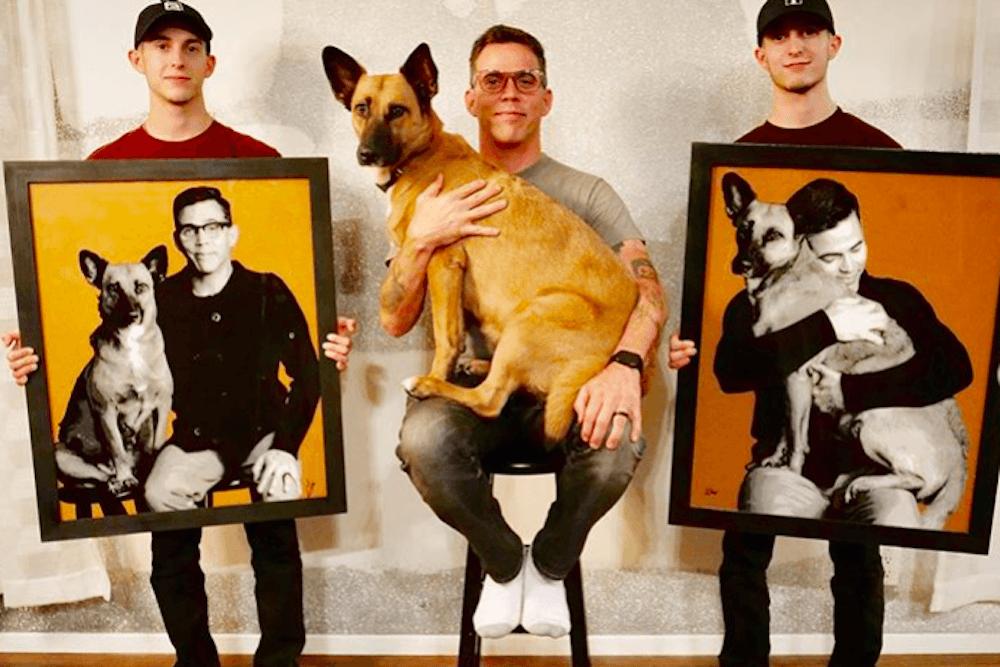
  • Steve-O Describes Rescue Dogs' Role In His Long-Term Recovery

    Steve-O Describes Rescue Dogs' Role In His Long-Term Recovery

    “Caring about something other than me is fundamentally helpful for recovery,” Steve-O said in a recent interview.

    In a recent interview, Jackass alum Steve-O said that having his rescue dogs had a positive impact on his long-term recovery, by giving him something to care for other than himself.

    While playing a round of Wikipedia: Fact or Fiction? with Loudwire, Steve-O (born Stephen Gilchrist Glover) addressed whether statements found on his Wikipedia page were truth or fiction.

    When asked if he “credited his two rescue dogs, Walter and Bernie, with helping him to maintain sobriety,” as it is stated on his page, Steve-O replied, “I credit them with contributing to it, sure. It’s said that alcoholism and addiction in general is driven mostly by selfishness and self-centeredness. It’s a disease that’s centered in the mind. And selfishness and self-centeredness is at the root of all of our problems.”

    He added, “So to have rescued my first dog, it was a meaningful exercise in dedicating myself to a priority which wasn’t me. So caring about something other than me is fundamentally helpful for recovery.”

    Hitting Rock Bottom

    Steve-O committed to recovery in 2008 following a dramatic hospitalization that became the starting point of his journey.

    “When I got to the hospital, I was spitting on people, I was just generally so unlovely,” he told Loudwire in a separate conversation. “They had me for two weeks… It was time. My life was a disaster. I decided about seven days in that I not only wanted to go into treatment, but that I didn’t want to waste my time in treatment.”

    He expanded on this moment in a 2011 interview with The Fix: “Basically, I took an honest look at myself and at my actions, and was horrified and felt like I couldn’t forgive or live with myself. The answer was to stop doing the shit that made me feel bad and create a new history.”

    Since then, Steve-O has been consistent in his recovery. Last year he celebrated a decade sober, and thanked his Jackass family including Johnny Knoxville for pushing him to get help.

    “Hard to believe it’s been an entire decade since I’ve had a drink of booze or any drug stronger than Advil,” he said on social media. “I just can’t put into words how grateful I am for @johnnyknoxville and the rest of the guys who locked me up in a psychiatric ward on March, 9, 2008, where this journey began. Thank you, dudes, I love you.”

    It’s not always easy to stay the course, Steve-O admitted. “Certainly, I’ve had plenty of periods of discomfort,” he told Loudwire. “It’s always pretty scary, but you’ve just gotta stay plugged in and do the deal.”

    These days, Steve-O is active on his YouTube channel and is currently on tour in the U.S. and Canada until late November.

    He and fellow sober Jackass alum Brandon Novak have been vocal about supporting their friend Bam Margera, another member of the Jackass family, who has garnered a reputation for his erratic behavior amid a reported battle with bipolar disorder and substance abuse. As of Thursday morning, Margera was back in a treatment facility after being arrested in Los Angeles early Wednesday.

    “Us sober people love it when you reach out for help,” Steve-O told Loudwire. “Join the pack, find someone who’s already sober and let us show you the way.”

    View the original article at thefix.com

  • NYPD Suicides Continue To Rise, Police Officers Urged To Seek Help

    NYPD Suicides Continue To Rise, Police Officers Urged To Seek Help

    “This isn’t something that we can speak of in hushed tones anymore. We need to talk openly about it,” said an NYPD official. 

    The New York City Police Department has lost two more police officers to suicide this year.

    On Tuesday, the New York Times reported that 2019 has been “one of the worst years for police suicides in the last decade,” after the suicide death of NYPD police officer Johnny Rios.

    The following day, on Wednesday evening, another police officer, 56-year-old Robert Echeverria, died by suicide. He was a 25-year NYPD veteran. 

    Echeverria, from Queens, marked the NYPD’s ninth suicide death this year, and the seventh since June. That month alone, the NYPD lost four officers to suicide.

    NYPD officials once again urged police officers to seek help, and called attention to the support and services available to them.

    Gerard Rios, Johnny Rios’ older brother, said that Johnny had been depressed since losing their father in April and the suicide death of fellow officer Kevin Preiss in June. Rios, 35, served in the 50th Precinct in the Bronx and had been with the NYPD for seven years.

    In June, NYPD Commissioner James P. O’Neill declared a mental health crisis in the department. “In less than 10 days’ time, the NYPD has lost three of its own to suicide,” O’Neill said on June 14. “This is a mental health crisis. And we—the NYPD and the law enforcement profession as a whole—absolutely must take action. This cannot be allowed to continue.”

    The Times noted that more police officers die by suicide every year than are killed in the line of duty. Since 2014, the NYPD has lost, on average, five officers each year to suicide.

    Mental Health Resources

    NYPD officials have urged officers to seek help available to them including department chaplains, peer-support groups and phone and text message hotlines.

    On Tuesday, following Rios’ death, NYPD Chief of Department Terence A. Monahan reiterated the importance of speaking up about this issue, and expressed the need for increasing the number of clinicians and peer volunteers available to counsel officers in crisis.

    “We want a person, when they are in a real dark period—low point in their life—to realize they can come, they can talk to someone. That it is OK to ask for help,” he said, according to the Times.

    “This isn’t something that we can speak of in hushed tones anymore,” Monahan continued. “We need to talk openly about it. Every precinct, every officer in the department. This is like any other disease. You get treated. You get well. You get back to work.”

    O’Neill told CNN in a recent interview that this month the NYPD will begin “retraining” staff, and ultimately officers, on mental health matters, stress and suicide. “The goal is to have a peer representative in every precinct and every command who’s specifically trained to help an officer step back from the brink and find a trained professional to help,” CNN reported.


    This note was posted on Pix 11’s coverage of this story:

    On their website, the NYPD lists numbers for their Employee Assistance Unit, Chaplain’s Unit, peer assistance program, and other resources.

    The NYPD also recommends POPPA — Police Organization Providing Peer Assistance. It’s a “volunteer police support network committed exclusively to providing a confidential, safe and supportive environment for police officers and retirees.” Their helpline is 1-888-COPS-COP (1-888-267-7267).

    If you or someone you know is considering suicide, contact the US National Suicide Prevention Lifeline at 800-273-TALK (8255). It’s a free, 24/7 service that offers support, information, and local resources. You can also click here for additional hotlines within the tri-state area and the nation.

    View the original article at thefix.com