Author: The Fix

  • David Sackler Speaks Out: My Family Didn’t Cause The Opioid Crisis

    David Sackler Speaks Out: My Family Didn’t Cause The Opioid Crisis

    The third-generation Sackler defended his family, Purdue Pharma and OxyContin in an eye-opening interview with Vanity Fair.

    David Sackler — a former board member at Purdue Pharma and son of Richard Sackler, whose infamous comments about opioids have been made public this year — says that his family’s role in the opioid epidemic is misunderstood. 

    Speaking with Vanity Fair, Sackler called the focus on the family “vitriolic hyperbole” and “endless castigation.” However, he said that his entire family has the utmost sympathy for people whose lives have been upended up opioid abuse. 

    “We have so much empathy,” he said. “I’m sorry we didn’t start with that. We feel absolutely terrible. Facts will show we didn’t cause the crisis, but we want to help.”

    Sackler decided to speak out because he felt that by staying silent the family has let other people take control of the story about Purdue Pharma, his family and opioid abuse. He wanted to begin “begin humanizing” the family

    “We have not done a good job of talking about this,” Sackler said. “That’s what I regret the most.” 

    Sackler said that it was true that Purdue was one of the first companies to emphasize the pain-relieving qualities of opioids. 

    “We were. But as the science changed, we put safeguards in place,” he said. 

    Although OxyContin is often pinpointed as the start of the epidemic, Sackler said that idea is inaccurate. 

    “To argue that OxyContin started this is not in keeping with history,” he said. 

    He added that people are judging the company’s actions through a modern lens, without taking into account the prevailing wisdom at the time. 

    “I really don’t think there’s much in the complaints, frankly, that’s at issue that’s not just, ‘Oh, you shouldn’t have marketed these things at all,’” he said. “Right? And I guess that’s a hindsight debate one can have.”

    Sackler argued that OxyContin is not as addictive as is often portrayed, but also said that regulatory bodies share the blame for allowing the drug to move forward. He said that ultimately the Food and Drug Administration decided that the pain relief benefits of OxyContin outweighed the addiction risk.

    “The FDA approved this medication with that balance in mind,” Sackler said. “So like any medication that has unintended side effects, you knew that this was one. It was approved as one. Doctors understood it, right?”

    When the risks became clear, Purdue put protective measures in place, including barring sales reps from contacting doctors who operated pill mills, Sackler said. 

    “None of the facts support the notion of these craven people just blithely ignoring the risks,” he said. “The company was trying to do the right thing under incredible stress.”

    Sackler revealed that his father Richard, who once referred to people abusing OxyContin as “reckless criminals,” has poor communication skills. 

    “He just cannot understand how his words are going to land on somebody,” Sackler said. That is made even worse when Richard’s written remarks are released to the public, he noted. “For a person like that, email is about the worst medium possible to communicate in, because there is no other cue. And so he’s saying things that sound incredibly strident and sound incredibly unsympathetic, and that’s not the person that he is.”   

    He emphasized that while Purdue was not responsible for the opioid epidemic, the family certainly should not be held personally responsible. 

    “The suits are grasping at the notion that the Sacklers were in charge of the operation,” he said. “That’s just so not true. I was on the board from 2012 to 2018, and I was voting on information I was given.”

    Sackler insisted that Purdue and his family have done good over the years. 

    “It’s overwhelming what the company over the years was trying to do to fix this problem, and the money they spent,” he said. “And it’s heartbreaking for all of us in the family, not only to be attacked personally for this, but just to know the truth, and to know what the rest of the industry did in comparison—nothing. Nothing at all. Not a thing at all.”

    He continued, “We have gone past the point where no good deed goes unpunished into the theater of the absurd.”

    View the original article at thefix.com

  • Halsey Gets Candid About Bipolar Disorder, Sobriety

    Halsey Gets Candid About Bipolar Disorder, Sobriety

    “I’ve been committed twice since [I became] Halsey, and no one’s known about it,” the singer revealed in a recent Rolling Stone interview.

    Singer Halsey revealed that she has been admitted to a psychiatric hospital twice since becoming famous in a recent interview with Rolling Stone. She had been able to successfully hide both stays from the public but decided to open up about her experiences and how her mental illness affects her songwriting.

    “Halsey says that the album she’s currently working on is ‘the first I’ve ever written manic,’” writes Alex Morris. “Her ferocious writing process has been the same. ‘She’ll be like, “OK, I’m gonna go smoke a cigarette,” and literally when she comes back the song is done,’ marvels producer Benny Blanco.”

    Her upcoming third studio album, set to be released sometime this year, will be “hip-hop, rock, country, f*****g everything — because it’s so manic. It’s soooooo manic. It’s literally just, like, whatever the f**k I felt like making; there was no reason I couldn’t make it,” says Halsey.

    According to the Depression and Bipolar Support Alliance, bipolar disorder affects 2.6% of the adult U.S. population. There’s also quite a long list of celebrities with the disorder, including Demi Lovato, Sinead O’Connor, and Mariah Carey.

    Halsey was diagnosed with bipolar disorder when she was 17, shortly after a suicide attempt that resulted in her first stay in a psychiatric hospital. Thankfully, the visit was successful, and Halsey’s musical career launched not long after. Since then, she’s taken an active role in managing her mental health.

    “I’ve been committed twice since [I became] Halsey, and no one’s known about it,” she said in the interview. “But I’m not ashamed of talking about it now. It’s been my choice. I’ve said [to my manager], ‘Hey, I’m not going to do anything bad right now, but I’m getting to the point where I’m scared I might, so I need to go figure this out.’ It’s still happening in my body. I just know when to get in front of it.”

    In a 2018 interview with Elle, she even talked about embracing her disorder because it helps her to feel and experience deep empathy.

    “The thing about having bipolar disorder, for me, is that I’m really empathetic,” she said. “I feel everything around me so much. I feel when I walk past a homeless person, and I feel when my friend breaks up with someone, or I feel when my mom and my dad get into a fight and my mom’s f****n’ crying over dishes in the sink.”

    Halsey also revealed that she’s given up drugs and alcohol due to the fact that she has so many responsibilities and people who rely on her, including employees with children. “I just can’t be out getting f***ed up all the time,” she says.

    View the original article at thefix.com

  • Summertime Can Bring Increase In Anxiety For Kids

    Summertime Can Bring Increase In Anxiety For Kids

    A recent parenting column explored the various aspects of summertime that can affect kids in a negative way.

    Despite the widely believed idea that kids live for summertime, those three months away from structured routine can actually be anxiety-inducing for some. 

    A column in the Washington Post’s On Parenting section, written by child and adolescent psychotherapist and parenting educator Katie Hurley, brings up the fact that some children struggle when faced with three months off. 

    For one of her patients, an 8-year-old girl, this anxiety was rooted in having two working parents and having to attend various day camps over the summer, each with its own set of rules and routine. 

    “We think of the summer months as carefree and relaxing, but many kids actually experience an uptick in anxiety during the break,” Hurley writes. “Anxious kids rely on carefully crafted routines, and too little structure or shifting routines can feel overwhelming.”

    According to Hurley, there are various aspects of summertime that can affect kids in a negative way. A common one is over-scheduling children. 

    “Many parents view the summer months as a time for children to ‘catch up,’ improve or gain an edge, and enroll them in numerous classes or activities, leaving little or no time for kids to relax and rejuvenate,” Susan Newman, a social psychologist and author, says. “Piling on and filling time only adds to their stress and anxiety that, ideally, summer break is theoretically designed to reduce.”

    Screen time can also be a minor player in childhood anxiety, according to recent research

    “Although it might be tempting to focus on the words “small increased risk” or state that more research is needed (it is), it’s also important to note that any risk is too much when it comes to our kids’ mental health,” Hurley writes. 

    Additional factors that can increase anxiety include changes in eating and sleep habits and worrying about travel plans.

    So what can be done to limit the likelihood of increased anxiety in children over the summer? Hurley suggests focusing on the basics, such as a balanced diet, consistent sleep schedule and water and exercise. 

    “Preserving the sleep routine that your child relies on during the school year can prevent him or her from losing sleep or getting caught in a pattern of constant adjustments,” Hurley writes. 

    Setting screen-time boundaries, planning for travel, not over-scheduling and spending quality time with children can also be helpful. 

    “Doing fun things together — be it a hike or a trip or backyard picnics or even cooking together on a regular basis — is more important for your children’s mental health than sports camps or summer academics to get ahead for the next school year,” Newman said. “You will build bonds and memories that will last a lifetime.”

    View the original article at thefix.com

  • CBD Use Linked To Liver Damage

    CBD Use Linked To Liver Damage

    This isn’t the first time that CBD use has been linked to liver disease.

    In recent years, CBD has been hailed as a health product by everyone from hipsters to health professionals, but a new study indicates that taking CBD could have a nasty effect on your liver, much like other drugs that affect the organ.  

    The study, published in the journal Molecules, looked at the effects of CBD on the livers of mice. The mice were given doses that aligned with the human equivalent of the maximum dose of CBD in Epidiolex, the only marijuana-based medication approved by the FDA.

    The researchers found that CBD quickly had a detrimental effect on the mice’s liver. In addition, the way that the compound affected the mice indicated that it could have dangerous interactions with other drugs. 

    “CBD exhibited clear signs of hepatotoxicity, possibly of a cholestatic nature,” study authors wrote. “The involvement of numerous pathways associated with lipid and xenobiotic metabolism raises serious concerns about potential drug interactions as well as the safety of CBD.”

    Speaking with Nutra, lead study author Igor Koturbash said that the results show that more information is needed about the safe use of CBD.

    “I don’t want to say that CBD is bad and we should ban it,” he said. “But in my opinion there is clearly not enough research.”

    This isn’t the first time that CBD use has been linked to liver disease. In fact, the FDA requires Epidiolex to carry a warning about liver issues, and patients who receive the drug have their livers monitored regularly. Even in the testing phases of the drug, there were indications of adverse liver reactions. 

    “There is a potential for liver injury,” Koturbash said. “If you look at the Epidiolex label, it clearly states a warning for liver injury; it states you have to monitor the liver enzyme levels of the patients. In the clinical trials 5% to 20% of patients developed elevated liver enzymes and some patients were withdrawn from the trials.”

    Koturbash explained that the way that CBD affects the body could also cause a host of other unintended side-effects, including in the way that other drugs are processed. 

    “CBD differentially regulated more than 50 genes, many of which were linked to oxidative stress responses, lipid metabolism pathways and drug metabolizing enzymes,” he said. “There is a potential for herb/drug interactions.”

    In fact, Koturbash has another study about drug and herb interactions with CBD that is pending publication. In the meantime, he cautioned that there is still much to be discovered about CBD. 

    View the original article at thefix.com

  • Meth And Opioids: Exploring The Dual Addiction

    Meth And Opioids: Exploring The Dual Addiction

    Researchers speculate that meth has become a more viable option as the price of heroin has risen and opioid painkillers are harder to get.

    The number of people who are addicted to both opioids and methamphetamine is rising, particularly in the West of the country, complicating recovery efforts and leaving users even more at risk. 

    “You’re like a chemist with your own body,” said Kim, a former meth and heroin user who spoke to NPR. “You’re balancing, trying to figure out your own prescription to how to make you feel good.”

    Kim has been in recovery for a year, and her experience of trying to get off both heroin and meth is becoming more common. In San Francisco, 22% of people who use heroin starting rehab said they also had a problem with meth; that’s up from 14% in 2014. 

    University of California professor Dr. Dan Ciccarone, who teaches family community medicine, said that is a very high rate. 

    “That’s alarming and new and intriguing and needs to be explored,” he said. 

    While heroin and cocaine — a speedball — is traditionally a more common drug combination, using meth and opioids is an odd choice, he said. 

    “Methamphetamine and heroin are an unusual combination” that makes people feel “a little bit silly and a little bit blissful,” he said. 

    For Amelia, who has also been in recovery from heroin and meth addiction for a year, using both drugs was a matter of survival. She started using heroin to keep up with work. When that became too expensive, she turned to meth

    “The heroin was the most expensive part. That was $200 a day at one point. And the meth was $150 a week,” she said. 

    A study published in December 2018 found that 34% of heroin users said they also use meth. In 2011, only 19% of heroin users took meth as well. Researchers speculated that as opioids became harder to come by and heroin more expensive, drug users turned to meth, which is cheaper and more readily available, especially in the west. Meth — an upper — can also help people feel and function more normally despite using opioids. 

    “Methamphetamine served as an opioid substitute, provided a synergistic high, and balanced out the effects of opioids so one could function ‘normally,’” study authors wrote. 

    However, for Kim, the progression went from meth to heroin, not the other way. 

    “I thought, ‘Oh, heroin’s great. I don’t do speed anymore.’ To me, it saved me from the tweaker-ness,” she said. 

    No matter which drug comes first, the San Francisco Department of Public Healths’ Director of Substance Use Research, Dr. Phillip Coffin, said there is certainly a connection between opioid and methamphetamine use. 

    “There is absolutely an association,” he said. 

    View the original article at thefix.com

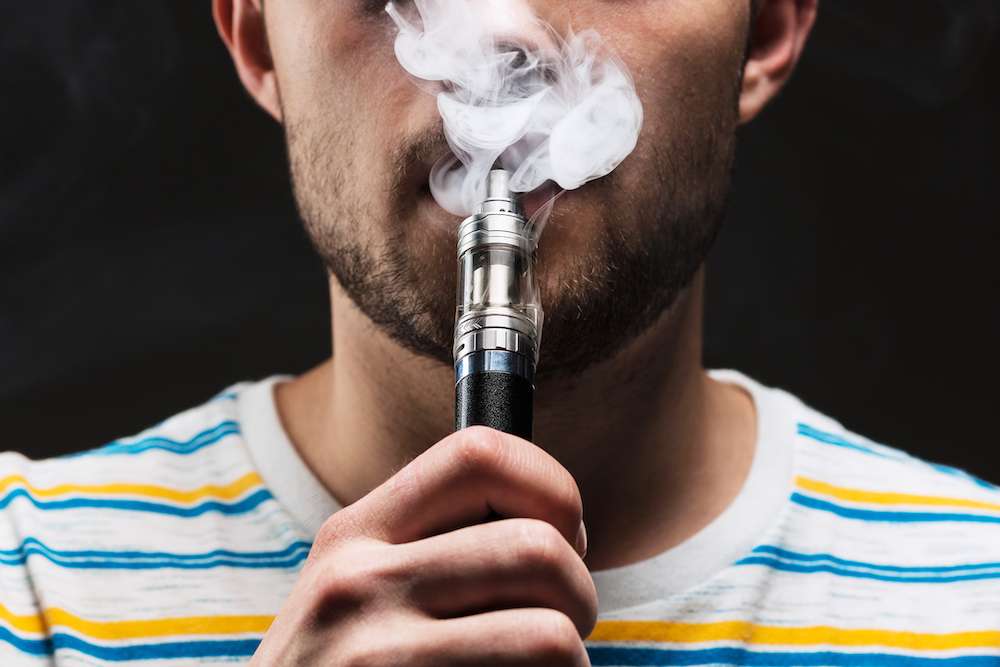
  • Teen Injured By Exploding E-Cigarette

    Teen Injured By Exploding E-Cigarette

    The e-cigarette explosion caused extensive wounds to the young man’s mouth, including a broken lower jaw and missing teeth.

    A 17-year-old boy suffered severe facial injuries, including a broken jaw, when an e-cigarette exploded in his mouth.

    The incident and the extent of his injuries were detailed in a report published in the New England Journal of Medicine and penned by the pediatric trauma surgeon who treated him after the explosion.

    While incidents of e-cigarettes or “vapes” exploding are rare, they can cause serious injuries, and two fatalities have been reported as the result of such an explosion.

    According to coverage of the report by Live Science, the explosion, which took place in March 2018, required the teenager to be sent more than 200 miles from his home in Ely, Nevada to an emergency room in Salt Lake City, Utah, where he was treated by the report’s co-author Dr. Katie Russell, a pediatric trauma surgeon at the University of Utah and Primary Children’s Hospital in Salt Lake City. The boy had suffered extensive wounds to his mouth, as well as several missing teeth and a broken lower jaw.

    Russell and other doctors had to remove several additional teeth from the boy’s mouth because their sockets had been irreparably damaged. A dental plate was installed under his lower gums to stabilize his jawbone, and his jaw was wired shut for six weeks to allow his mouth to close properly.

    Russell told Live Science that she and her colleagues published the report because they had been shocked by the extent of the damage caused by the explosion.

    “When I met this patient, I had no idea that a vape pen could do this,” she said. “It takes a lot of force to break your jaw.”

    According to a report issued by “Tobacco Control,” an estimated 2,035 burn and explosion injuries from e-cigarette use were reported by U.S. hospital emergency rooms between 2015 and 2017.

    Since the event reported in the case study, more explosions have been reported, including an incident in January 2019 when a 24-year-old Texas resident died after a metal shard from an exploding vape entered his neck and severed an artery.

    The exact reason for the explosion has yet to be determined, but as the Times reported, various sources have suggested that the lithium-ion battery used in vape products can overheat to the point of explosion.

    A 2017 report from the Federal Emergency Management Agency noted that such batteries “are not a safe source of energy for such devices,” while a blog post from the Massachusetts General Hospital Research Institute said that vaping devices that employ an “open system” – which include a rechargeable battery with reservoirs that are filled with e-liquid – are less safe than ones with closed systems, which use pre-filled cartridges that attach to a rechargeable battery, or ones that can’t be recharged.

    The Food and Drug Administration offered a list of safety suggestions for e-cigarette users, including the use of devices with safety features, keeping loose batteries away from metal objects (to prevent an accidental charge), replacing wet or damaged batteries, and keeping vape devices away from extreme heat or cold.

    View the original article at thefix.com

  • Florence Welch Discusses Sobriety And Anxiety While Touring

    Florence Welch Discusses Sobriety And Anxiety While Touring

    “Most of the things in my life have got exponentially better from not drinking, but it’s lonely being sober on big tours,” Welch revealed. 

    Florence Welch, frontwoman of the indie rock band Florence + The Machine, recently opened up about the loneliness of touring while sober and the anxiety that comes at the beginning of every tour. Though it’s not easy on her, Welch says that it’s the fans that get her through it and eventually get her to enjoy the shows.

    “Most of the things in my life have got exponentially better from not drinking, but it’s lonely being sober on big tours,” she said in an interview with ES Magazine. “But really it’s the people at the shows that save me.”

    Welch has been open about her issues with alcohol use, as well as her depression and anxiety, for years. In a 2018 interview with The Guardian, she spoke on how she used alcohol in order to cope with the stress of touring.

    “That’s when the drinking and the partying exploded as a way to hide from it,” she explained. “The partying was about me not wanting to deal with the fact that my life had changed, not wanting to come down.”

    However, by her 10th year as a high-profile singer, Welch had decided that she didn’t want to go down that path anymore. Like an increasing number of people, she decided to go sober even though she didn’t necessarily have a severe addiction. Thankfully, she found that becoming sober from both drugs and alcohol has significantly reduced her overall anxiety.

    “I think I’ve probably had it low-level, and sometimes extreme, for as long as I can remember,” she told ES. “Stopping drinking and taking drugs has had a hugely helpful effect.”

    Welch, a self-described introvert, said that she feels like she’s “going into shock” during the initial days of any tour — an experience that keeps her up at night and drives her to call her manager to say “I just can’t do this. This is the last one.” Thankfully, she soon gets into the flow and by the end, she “can’t wait to go back and play.”

    Mental illness and substance use disorders often overlap. According to the Anxiety and Depression Association of America, “it isn’t unusual for people with social anxiety disorder – or other anxiety disorders – to drink excessively to cope with symptoms or try to escape them.”

    Approximately 20% of individuals suffering from social anxiety disorder also struggle with an alcohol use disorder, compared to 6.2% in the general population.

    View the original article at thefix.com

  • Outreach Vans Increase Sobriety, Survival For People With Addiction

    Outreach Vans Increase Sobriety, Survival For People With Addiction

    The mobile outreach program provides Suboxone prescriptions, syringe exchange, health screenings, disease management and other free services for individuals who are homeless and struggling with addiction.

    The CareZONE van in Massachusetts is providing treatment and hope to those with addiction who are experiencing homelessness. Funded by The Kraft Center for Community Health at Massachusetts General Hospital and the GE Foundation, the goal of the program and the van is to bring preventative health care, addiction treatment, and harm reduction services to any person with addiction who wants it.

    There are only six or so of these mobile treatment programs around the country, testing the effect of their services on the rate of overdose and recovery in the community.

    The CareZONE van provides an impressive range of free services, including in-patient detox, medications for addiction treatment (such as Suboxone), Naloxone (Narcan), syringe exchange, health screenings, disease management and more. 

    WYBR reported that the CareZONE team consists of experienced outreach workers, doctors and case managers. Dr. Jessie Gaeta, chief medical officer with the Boston Health Care for the Homeless Program, works with compassion and patience as she earns the trust of her patients.

    “We’re trying to let people know we’re not there to arrest them. We’re not there to clean up their encampment and kick them out,” Gaeta told WYBR. “All we want to know is, do we have something you need and want, and if we do, great, here it is. And so we gradually build a relationship that way.”

    If the patient is willing, Gaeta treats infected injection sites, checks for heart and lung infections (common with certain drug addictions), and offers vaccinations as well as buprenorphine (the active ingredient in Suboxone), a drug that reduces opioid cravings. If Gaeta believes the patient may have a more serious condition, she requests that they come back to the van for a more extensive check-up.

    According to those involved, the CareZONE van has been successful. WYBR reported that in its 18-month lifespan, 316 prescriptions for Suboxone have been supplied from the Care Zone van, and 90% of them are filled, with 78% of those being refills.

    Dr. Andrew Kolodny, co-director of opioid policy research at Brandeis University, told WYBR that he believes this could be a solution. 

    “Once [they’re] in every county in the United States, there’s a place somebody can go and get started on treatment for free, that same day,” Kolodny affirmed, “that’s when we’ll really start to see overdose deaths come down, significantly.”

    View the original article at thefix.com

  • I Can’t Wait to Hug My Brother: A Conversation with White Boy Rick’s Sister Dawn Wershe

    I Can’t Wait to Hug My Brother: A Conversation with White Boy Rick’s Sister Dawn Wershe

    Whenever they needed something, our police and government, the FBI, they made all these big promises: You do this and we’re going to give you this. But when it came down to it, nobody was there for Rick.

    When Rick Wershe was 14 years old, his older sister Dawn didn’t live at home. She was shacked up with her boyfriend smoking crack. She remembers the day her dad came over to tell her that Rick had been shot. They rushed to the hospital where Rick was in a bed, hooked up to all these wires and monitors. Dawn just lost her mind. She was hysterical and the nurses had to give her a Valium to calm her down.

    The .357 bullet entered Rick’s stomach and came out his back, just barely missing his main artery and blowing his large intestine in half. After Rick was discharged, Dawn moved back home to take care of him. His recovery was long and slow, and Dawn didn’t understand why he was so paranoid. Later she found out that Rick had been informing on local drug crews to the FBI, DPD and Prosecutor’s Office.

    You’ve probably heard of White Boy Rick. His odyssey has been covered in magazine, newspaper, and internet articles, a feature documentary, and a major motion picture with Matthew McConaughey. But while the injustices of his case have been widely profiled, the collateral damage to Rick’s family has received less attention.

    As Rick remained in the public eye, Dawn faced her own problems, including battling a 30-year addiction to crack cocaine. The Fix sat down with Dawn to discuss her drug use, how she’s dealt with her brother’s continued incarceration, how it felt to be portrayed on the big screen, and what it will be like to finally have him home.

    The Fix: When did you get involved with using drugs and do you recall the first time you experimented with drugs?

    Dawn Wershe: The first time I’d ever smoked crack cocaine was actually at my father’s house when he was in California. It was my girlfriend and these two guys. They’re like, “Hey, we’re going to go get this stuff. We want you to try it.” I think I was 15 years old. After that I smoked it now and then. When I was 17, I had a boyfriend who used to go rob people. Then we would go smoke. It was crack, but back in the 80s they called it freebase.

    When we were freebasing in the 80s, it was pure cocaine. It was an unbelievable high. I became addicted. My boyfriend ended up going to jail when I was 18 and I struggled with my addiction for probably a good year until my family said it’s either rehab or we don’t know what to do with you, so I checked myself into rehab. It was over on Michigan Avenue. I met a lot of strange characters there. I got clean and had my daughter. I stayed clean for a long time. I had a relapse when she was two.

    You battled addiction off and on for close to thirty years, what was that like?

    I got clean and had my second daughter. Another relapse, got clean, and had my third child, my son. Another relapse, got clean, and had my fourth child. It was a vicious cycle. Sometimes I’d only relapse for a

    day or two. After I had my fourth child, another son, I just said enough is enough and I was clean for over ten years. But after he turned ten, I relapsed again. My relapses were like daytime trips: going places I

    shouldn’t have been. Soon my relapses started becoming more frequent, and some longer than day trips. They became two-day trips, three-day trips, depending on how much money I had to spend. Always crack cocaine, that was my drug of choice.

    My addiction started spiraling again, I was using more frequently. I would disappear for a day or two back then. Maybe I went a month without crack, maybe I went a week. It depended on the situation, but it all was bad looking back. I can’t think of one time that I was happy and smoking crack or freebasing. Most of the time I was paranoid and worried my family was going to know; it was like how am I going to deal with this? I have to get back home. The streets are ugly. I saw and heard things that nobody wants to see or hear.

    How do you think your addiction hurt and affected you and your family?

    My addiction crushed my family. It was horrible. Now that I look back and see things I did, and what the outcome of them was, it mortifies me that I’ve put them through that. Especially my kids when they were younger. It’s something I would never want to put anyone through again. The biggest regret I have is putting my family through that. Something [would] happen in my life, let’s say my husband cheated on me and I found out. I’d be off to the races. Bam, I’m gone. Because I’m going to show him, I’m going to pay him back. But in actuality I was hurting myself and I was killing my family.

    It didn’t hurt him, he didn’t care. I would leave and then I would feel so guilty. The guilt consumed me. As soon as you take that first hit, it’s like, “Oh my God. They’re going to know I’m high. They’re going to be so disappointed.” That was the worst thing I could’ve done. I never robbed anyone, I never stole anything, I never sold my body. I never did any of that. I would just leave and lie to everyone. I’d say, “I’m going to the gas station” and just not come back. It breaks my heart. I just thank God that my children have unconditional love for me.

    When was your last relapse and how long have you been clean now?

    I relapsed in March of 2017. Right after the documentary about my brother premiered in Detroit. I was clean 11 months prior to that. Right now I’ve been clean a little over two years. I don’t think I’ll ever relapse again at this point, because I hit the bottom of the barrel and that last time I had an epiphany. It wasn’t a good epiphany, it was me dying. And my children having to deal with that: having to deal with the way I died, where I died, how I died. And it devastated them. Nothing anyone says or does to me at this point in my life could make me want to use drugs. Not a boyfriend, not a man, not my kids, not a stranger. Not anyone could say or do anything to me that would make me say, “Well, I’m going to go get high. I’ll show them.” That Dawn is gone.

    What’s it been like watching your brother go through his ordeal with the criminal justice system and the insane amount of time he’s been forced to remain incarcerated?

    When Rick started selling drugs on his own, I was there with him. I told him it was going to be bad. He ended up going to jail not too long later. He was only selling for a year on his own after he wasn’t an informant. And when they sentenced him, I was mortified. I mean, I had just lost my little brother. Then the very next day they took my dad. They arrested my dad for threatening a federal officer at Rick’s trial. They ended up dropping that and charged him with components to make silencers. He got convicted on that.

    In two days I lost the only family I had. The only one I had left was my grandmother, my dad’s mother who helped raise us. And she wasn’t good, she was in and out of the hospital and living in a nursing home. I wish back then we had home healthcare where I could’ve let her live with me, because she raised Rick and I with my dad. It was very devastating to lose my dad and my brother, and then nine months later, I lost my grandmother.

    Every week I went to the prisons to see my dad and my brother. I would gather up my kids, sometimes go get Rick’s kids, sometimes pick up my mom and go visit them at the prison, which is an all-day thing. It killed me because I didn’t have my family. That was my whole support system — my brother, my dad, you know? It was the Three Musketeers, and now we’re no longer. I feel that they used Rick as a child. They took away his childhood from him.

    People talk about them doing it in China and foreign countries, but our police and government, the FBI, they did it here. They did it to Rick. Whenever they needed something, they made all these big promises. You do this and we’re going to give you this. But when it came down to it, nobody was there for him. Nobody came to bat for Rick at his trial. Nobody came to bat for Rick at his parole hearings until 2003 and then more recently.

    What was it like to see yourself portrayed on screen in a big Hollywood movie and be a part of the Shawn Rech documentary?

    I was in the documentary, which I’m quite certain helped gain my brother his parole in 2017. And that was put together and orchestrated in the best way possible. It gives the solid answers and the truth. In the documentary we don’t talk about my drug addiction.

    When the Hollywood movie came out, I saw it for the first time in public and cried the first 30 or 45 minutes. They had me on screen looking like I was a dope fiend. They had my dad — Matthew McConaughey — with greasy hair; the clothes he was wearing and the car he was driving were never anything that my father wore or had. I told everybody before it happened it wasn’t going to be real, it wasn’t going to be right. That movie just caused me so much grief, aggravation, and pain that it’s a wonder I didn’t relapse.

    Rick got paroled from Michigan and now he actually has a date, what’s it going to be like having him finally come home?

    He had to go to Florida to do a five-year sentence for something that happened while he was in prison involving a car theft ring. He was turned down for clemency in March 2019. But next year in 2020 he’ll come home. I can’t wait to stand there and watch him walk through that gate, because it’s going to be so surreal. I probably will pass out because I won’t believe it.

    I can’t wait to be able to hug my brother. To have him home. To show him how different life is out here now from the life that he left. To be with us as a family. To be around his grandkids, my grandkids, and to just spend time together. It’s just going to be one good time after another. It will be dinners, barbecues, trips, just family time. It’s going to be family time for a long time with us when he comes home.

    (Images of Dawn and Rick Wershe via author)

    View the original article at thefix.com

  • Can Taking Opioids During A Hospital Stay Lead To Long-Term Risk?

    Can Taking Opioids During A Hospital Stay Lead To Long-Term Risk?

    Researchers found that 48% of patients who had never before had opioids were given opioids during their hospital admission.

    While the medical community has rethought outpatient opioid use in recent years and drastically reduced prescriptions, little has changed in the way that opioids are prescribed to patients in a hospital setting.

    Now, a new study indicates that receiving opioids even in a hospital setting can increase a patient’s risk of long-term opioid use.

    The study, published in the journal Annals of Internal Medicine, found that prescribing opioids is still extremely common for hospitalized patients.

    “I was surprised by the level of opioid prescribing to patients without a history of opioid use,” lead author Julie Donohue, professor in Pitt Public Health’s Department of Health Policy and Management, told Science Daily. “About half of the people admitted to the hospital for a wide variety of medical conditions were given opioids. The stability of this prescribing also was surprising. Nationally and regionally, as people have become more aware of how addictive opioids can be, we’ve seen declines in outpatient opioid prescribing. But we didn’t see that in inpatient prescribing.”

    In fact, researchers found that 48% of patients who had never before had opioids were given opioids during their hospital admission.

    The study, which looked at 191,249 hospitalizations between 2010 and 2014, found that people who were prescribed opioids for the first time in an inpatient setting were twice as likely to still be using opioids three months after they were discharged, compared with those who did not receive opioids in the hospital.

    The time when people were given opioids also made a difference in their long-term use of the drugs. Only 3.9% of people who had no opioids for 24 hours before their discharge were still using opioids three months later. By comparison, 7.5% of patients who took opioids within 12 hours of discharge reported long-term use.

    The study also found that opioids were often the first line response to pain. Less dangerous options like over-the-counter painkillers were given first only 8% of the time, researchers found.

    “Inpatient opioid use has been something of a black box,” Donohue said. “And, while our study could not assess the appropriateness of opioid administration, we identified several practices—low use of non-opioid painkillers, continuous use of opioids while hospitalized, opioid use shortly before discharge—which may be opportunities to reduce risk of outpatient opioid use and warrant further study.”

    Another recent study found that about half of patients who underwent surgery were able to manage their pain without opioids, using just over-the-counter painkillers. Research like that indicates that opioids are likely unnecessary for some patients who receive them, even in a hospital setting.

    “There are alternatives to opioids for surgical pain that work well and we should be using them more,” said lead study author Michael Englesbe.

    View the original article at thefix.com