Category: Addiction News

  • So You Want to Move to a New City in Recovery? First Ask Yourself These Five Questions

    So You Want to Move to a New City in Recovery? First Ask Yourself These Five Questions

    Moving might be the right choice, but examine your motives. When we were drinking and using, we were irrational, impulsive, and at the whim of our heartbreakingly horrible decisions. We get into recovery to be more than that.

    The journey of a thousand miles begins with a single step. – Lao Tzu
    Wherever you go, there you are. – Unknown

    We’ve all heard or tried the myth of the geographic cure: that we can change the unmanageability of our addictions simply by changing locations. The program suggests waiting a year to make major changes in our lives, such as moving to a new place or getting divorced. That suggestion directly contradicts another recovery recommendation: that we should change people, places, and things. And some of us, myself included, struggle for years or even decades to get to that one-year mark, and finally decide—maybe on our own, maybe after a psychic brings it up dozens of times—that the place we are living in isn’t working for us and it’s time to make a move. How do you know if it’s a viable idea? Here are five questions to ask yourself when considering a move.

    1. Do you have a safe, sustainable place to live?

    I cannot stress this enough, especially for the dream cities like New York and Los Angeles. Success in one does not necessarily translate to success in another. This may seem like common sense to some of you, but something about Los Angeles, where I currently live, makes people think they can show up with a dream, a few grand, and a month in an AirBnb in Koreatown.

    The feeling of home, sanctuary, and security is important for all humans, but it’s of paramount importance for those in recovery. The refrain I frequently hear is: “I never felt like I belonged anywhere.” Well, this feeling is exacerbated dramatically by a less than ideal living situation, so make absolutely sure you have a safe place. Is it as good as or better than where you currently live? And can you stay there for at least four to six months?

    1. Is this an impulse move?

    I’ve wanted to live in California my entire life, so much so that when I partied at the University of Hartford at the ages of 14 and 15, I told everyone I was a student at UCLA. I exposed myself when someone burst into the dorm asking where the Bruin was and I stared blankly ahead, not knowing the mascot of the school I pretended to attend. However, there were other moves I made or contemplated that were pure fantastical escapism; in fact, for a few years while I struggled in fauxbriety (marijuana and/or kratom and kava kava, Adderall, Xanax if you’re holding, mushrooms in the summer), I seriously contemplated moving to nearly every place I visited. I travel for my job as a stand-up, and for a few years I traveled desperately trying to “find myself.” Each and every time, I was sure the move would solve the problem of myself. I am now grateful I didn’t have the money and agency then.

    A lot can be said for waiting in recovery. Waiting for the miracle to happen, waiting to date, waiting to speak (so guilty on this), waiting to move. Most things in life that are meant for you will be there when you are ready. Unless you relapse. Sobriety is the only thing that is imperative to grab onto NOW.

    1. Do you know what it’s like to actually live in this place rather than be a tourist?

    Visiting a place is often not a good indicator of whether you will like it as a resident. I really thought I would hate LA. When I got here, it hit me that what I really hated (other than myself and my fauxbriety) were all the costs and inconveniences of staying in a hotel, and not knowing anyone or where the good meetings were. In short, #touristprobs.

    If you’re a person who goes to recovery groups or does a community-based activity like yoga, this is the time to use those resources and talk to other people. If for some reason you aren’t able to spend time in a place before you move there, get creative in searching out Facebook groups, Insta hashtags (actually maybe not that one) and message boards (Miami has an excellent resource for this: MiamiBeach411.com).

    1. Are you motivated by people, places, and things or is this a geographic trap?

    This one is perhaps the trickiest question of all. For me, I don’t know if I would have been able to stay away if I hadn’t first moved away from my ex-husband. Moving away from a person can also lead you to the important but painful conclusion that the hate is coming from inside the house. Our external realities reflect our internal state of being. There are always more of that archetype waiting for you wherever you go. Even Thailand. Costs and benefits, baby.

    Miami, for me, was a people, a place, and a thing. I can go there now if I have a reason to, and even enjoy it. At one year out, I went to meet with my divorce lawyer and send some stuff home that I had left at a friend’s. I relapsed off the plane on mojitos, which led to cocaine, which led to spending days holed up with my ex-husband, missing my meeting and flight home, and trusting him to ship off my journals and personal effects. Soon I received an email that said, “You wrote in here I was BAD IN BED, here are detailed instructions on how to hang yourself, I threw out your shit.” I guess what I am saying is: usually you don’t have to make a dramatic move, like crossing state lines, to escape people, places, and things. However, if you have been in an abusive relationship where you were using together, moving across state lines or even across the country may be the best thing to do—that is, if you have a safe place to live. Which leads us to the final question…

    1. Work, work, work, work, work, work?

    It is a sometimes unfortunate fact of life that most of us must work, even in early sobriety. If you are lucky enough to not have to, I say hold off as long as you can. Your career isn’t going anywhere. Momentum is somewhat of a myth. It can be achieved later, from a more stable foundation. But if you can’t afford or don’t have time to scope out the job situation in advance of your move, you might not be able to make this move in a healthy and sustainable way.

    Imagine this scenario: You are a sober bartender in New York to great applause. However, you don’t have a great online presence, which seems to matter here in Los Angeles. Pride keeps you from raising your hand when suggested, but eventually sharing outside of meetings gets you an offer with a sober-owned cater waiter company. It isn’t bartending, and doesn’t fit in with your idea of yourself, so you decline, deciding the problem is that you keep getting asked about your Insta followers at interviews. Soon you will know what it’s like to follow your dreams across the country; you’re gonna sleep in your car. My point is this: manage your expectations on the job front, and research as much as you can. Visit and meet locals. Ask them questions. Listen… If you are working on recovery, less than stellar work opportunities are SO temporary. I promise you that. So take them. And try to appear grateful.

    I hope I’ve got you thinking seriously about your possible plan to move, or perhaps made you feel a little better about your lack of plan to move. Either way, amassing information and managing pride and expectations, otherwise known as willingness, stands at the forefront. It all comes down to love and fear. Examine your motives. Safety concerns are paramount. Talk to someone (you are welcome to email me: [email protected]) before you go. Get a second opinion. Nobody knows everything. Meditate on it. Make lists of pros and cons. Pray.

    When we were drinking and using, we were irrational, impulsive, and at the whim of our heartbreakingly horrible decisions. We get into recovery to be more than that. Perhaps you are thinking, well, that just isn’t how I operate! Try it. I spent years wanting to move to California. Now that I am finally here, I am so grateful I didn’t move one moment earlier—had I done so, I’d be smoking meth in a tent in DTLA right now. I’m really glad I don’t have to do that. And that you don’t either.

    Did you make a move in early recovery? Give us the details: was it a good or bad experience? 

    View the original article at thefix.com

  • Connecticut Judge Dismisses Opioid Lawsuits Against Purdue Pharma, Others

    Connecticut Judge Dismisses Opioid Lawsuits Against Purdue Pharma, Others

    The Connecticut lawsuits are part of a nationwide effort to make pharmaceutical companies pay for a portion of the damage caused by this crisis.

    Judge Thomas Moukawsher in Connecticut ruled against 37 cities and towns within the state that brought lawsuits against pharmaceutical companies accused of fueling the opioid crisis in the U.S.

    According to the Associated Press, the judge ruled that the lawsuits were “not allowed because they were not filed as government enforcement actions authorized by state public interest laws.”

    “Their lawsuits can’t survive without proof that the people they are suing directly caused them the financial losses they seek to recoup,” Moukawsher wrote. “This puts the cities in the same position in claiming money as the brothers, sisters, friends, neighbors, and co-workers of addicts who say they have also indirectly suffered losses by the opioid crisis. That is to say—under long-established law—they have no claims at all.”

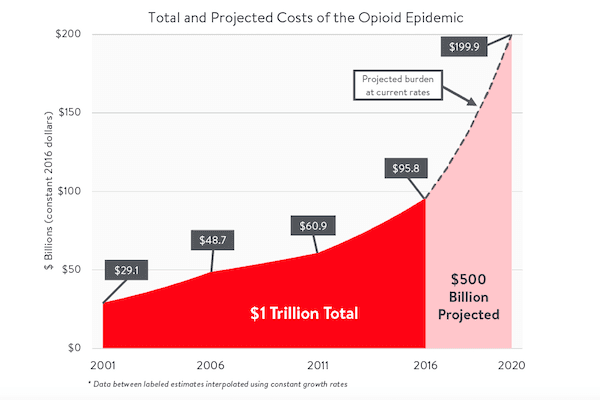
    Though this is a setback in the efforts of the plaintiffs to recoup the many billions of dollars spent to mitigate and combat the opioid crisis, appeals are already being considered.


    Source: ALTARUM

    The lawsuits in Connecticut are only a part of a nationwide effort to make pharmaceutical companies pay for a portion of the damage caused by this crisis. States, cities, counties and Native American tribal councils across the country are filing civil suits against some of the biggest drug manufacturers, claiming that misleading advertising and the alleged encouragement of physicians to over-prescribe opioids have fueled the epidemic of addiction and overdoses.

    According to Forbes, the collective action could become “the largest civil litigation settlement agreement in U.S. history.”

    The record is currently held by the settlement between 46 states and the tobacco industry—a case that some are pointing to as a precedent for the present-day opioid lawsuits. However, experts have pointed out that there are marked differences between these two cases.

    Addiction to prescription opioids is often caused by misuse, whereas there is a clear link between using tobacco products as directed and illness. This makes it easier to blame addiction, overdose and other health concerns on the opioid users themselves.

    “Individual plaintiffs who have sued pharmaceutical companies over how opioids have been marketed have rarely been successful, according to Richard Ausness, a professor at the University of Kentucky College of Law,” wrote Alana Semuels for The Atlantic in 2017. “Courts have made clear that they believe that individual victims are largely responsible for their addiction.”

    However, drug makers have been successfully sued in the past, though many of the lawsuits were settled out of court for a small portion of company profits. Purdue and others have continued to deny any allegations of deceptive marketing or other roles in the opioid crisis.

    Purdue Pharma released a statement about Judge Moukawsher’s ruling, praising him for “applying the law” and vowing to “help address this public health challenge.”

    View the original article at thefix.com

  • Will Florida Repeal Its Ban On Marijuana Smoking?

    Will Florida Repeal Its Ban On Marijuana Smoking?

    Florida’s newly elected governor says the ban was not “up to snuff.” 

    Newly elected Florida Governor Ron DeSantis has asked his state’s legislature to drop a ban on smoking marijuana.

    DeSantis, a Republican, announced his decision at a press conference on January 17, where he said the ban was not “up to snuff,” and doubled down on his decision by stating that if lawmakers don’t implement the change by mid-March, he’ll drop former governor Rick Scott’s appeal of a judge’s ruling which prohibited the ban because it violated the state’s amendment to legalize medical cannabis

    Amendment 2 was intended to legalize the use of medical marijuana for individuals living with a variety of debilitating conditions or ailments with the approval of a licensed state physician. Though 71% of voters approved the bill in 2016, the state legislature did not implement Amendment 2 in 2017, prompting Scott to call for a special session in the summer of that year to address its implementation.

    The Florida State Legislature then passed Senate Bill 8A, which established regulations for the amendment. These included a cap on the number of retail dispensaries, as well as a ban on smoking medical marijuana—though cannabis in spray, oil or vapor form was allowed.

    Orlando attorney John Morgan filed a lawsuit to challenge the smoking ban, which a Leon County circuit court judge ruled in favor of in May 2018. The Florida Health Department appealed the ruling, which is the subject of DeSantis’ request.

    “What the Florida legislature has done to implement the people’s will has not been done in accordance with what the amendment advised,” said DeSantis at the January 17 announcement. “Whether patients have to smoke it or not, who am I to judge that? I want people to be able to having their suffering relieved. I don’t think this law is up to snuff.”

    DeSantis also plans to remove regulations and drop appeals in several other cases involving licensing for medical marijuana companies to grow, manufacture and sell their own product. 

    “We have a lot of fish to fry in Florida,” he said. “The last thing I want to be doing is cleaning up something that should have been done two years ago. I don’t want to continue fighting some of these old battles.”

    In an interview after the press conference, John Morgan called the governor’s decision a “victory for the people of Florida. This plant was put into nature by God for us, and it works.”

    View the original article at thefix.com

  • Binge Eating Now Most Common Eating Disorder In US

    Binge Eating Now Most Common Eating Disorder In US

    Binge eating disorder is more common than schizophrenia, HIV and breast cancer.

    Binge eating is now the most common of all eating disorders, despite the fact that it has only been recognized as a specified eating disorder since 2013. 

    According to Cooking Light, there are three times more cases of binge eating disorder (BED) than there are of anorexia and bulimia combined. The Binge Eating Disorder Association notes that binge eating disorder is more common than schizophrenia, HIV and breast cancer. 

    Binge eating, according to the National Eating Disorder Association (NEDA), is “a severe, life-threatening, and treatable eating disorder.” 

    Some of the signs of BED include eating large amounts of food at least once weekly for three months or longer, a feeling of lack of control when eating, feelings of guilt or shame afterward, and using unhealthy methods such as purging afterward. 

    “Binge eating disorders differ from bulimia, as binge eaters don’t always use exercise, laxatives, or other forms of purging to try to ‘erase the binge,’” Cooking Light reports. “Instead of falling into binge-purge cycles, those with a BED will most likely isolate themselves,  or even try to go to sleep, instead of attempting to fix the problem with harmful interventions.”

    NEDA says a binge-eating episode includes three or more of these behaviors within two hours: eating faster than normal, eating to discomfort, eating large amounts of food even if not hungry, feeling out of control and lacking ability to stop, eating alone due to embarrassment and feeling shame or guilt afterward. 

    Binge eating can happen any time of day. In some cases, it can be the result of restricting calories throughout the day, not addressing emotional and mental health problems, or can be done out of boredom. 

    Chevese Turner, chief policy and strategy officer for NEDA, told Cooking Light that subjective binges are also something to be aware of. A subjective binge is when a person eats a normal amount of food but still battles feelings of being out of control or guilty. 

    While about 70% of those with BED are overweight or obese, anyone can struggle with the eating disorder. Past research has shown that women who diet are about 12 times more likely to battle BED. Men who diet are also more likely to have it.

    Additionally, those with mental health issues or substance use disorders may be at higher risk of developing BED.

    Turner also tells Cooking Light that those with “a perfectionist or overachiever mentality” may be more likely to struggle with BED. 

    There are a number of consequences of BED, including weight cycling, the body becoming insulin-resistant, and gastrointestinal problems. There is also a high risk of emotional trauma. 

    One way to determine if you or a loved one is struggling with BED is by using NEDA’s screening tool. NEDA can also be reached at 1-800-931-2237.

    View the original article at thefix.com

  • Inmates With Mental Health Issues Kept After Release Dates, Lawsuit Alleges

    Inmates With Mental Health Issues Kept After Release Dates, Lawsuit Alleges

    “Our clients are told, often on the day they expect to be released from prison, that they will not be leaving and must stay until community housing is located,” said the executive director of Disability Rights New York.

    In theory, MG is not in prison. His release date was in May 2017.

    And yet, every day he wakes up in a windowless cell in the Auburn Correctional Facility. He wears green prison clothes, stands for count and identifies himself by the seven-digit number emblazoned on his shirt.  

    That’s because MG is mentally ill and bound for community-based mental health housing—but there’s no space. So instead, the New York prison system has kept him, locking him up even after his sentence has technically ended. 

    But MG isn’t the only prisoner held long past the expiration of his sentence. That’s why the Legal Aid Society and Disability Rights New York last week filed a class action lawsuit against the state’s prison system, the New York State Office of Mental Health, the prison system and Governor Andrew Cuomo, claiming violations of the Americans with Disabilities Act and demanding that the state come up with better mental health housing options.  

    “Our clients are told, often on the day they expect to be released from prison, that they will not be leaving and must stay until community housing is located,” said Timothy Clune, executive director of Disability Rights New York. “Further, documents produced by the Defendants show that New York State is well aware of the shortage of mental health housing for this population. Instead of addressing this shortage the State has been ignoring the problem and our clients.”

    The six prisoners at the center of the new federal lawsuit are all mentally ill and at risk of homelessness, so the state decided they should be sent to supportive housing. But right now there isn’t enough, and when that happens, officials instead transfer prisoners like MG to one of 13 “residential treatment facilities”—all of which are in medium and maximum security prisons.

    In effect, according to the lawsuit, the prison system is lengthening their sentences because they’re mentally ill, in the process “undermining the most basic principle undergirding the criminal justice system: that a criminal sentence, once imposed by a judge, means what it says.”

    The state hasn’t responded in court to the legal claim just yet, and an Office of Mental Health official said they hadn’t been formally notified when reporters first started asking for comment.

    “This lawsuit was served to the media before it was served to us, so we can’t comment on its details,” spokeswoman Jessica Riley told The Albany Times-Union. “However, New York funds one of the most robust supportive housing networks in the nation for individuals with mental illness.”

    The state pours nearly $500 million a year into community-based housing for people with serious mental illness. Currently, that funds around 44,000 housing units statewide, and there’s plans to have 6,000 more online by 2021. 

    The other men in the lawsuit have stories similar to MG’s. 

    CJ, who has bipolar disorder, was supposed to get out of prison in September 2017—but he’s still locked up in the Green Haven unit in Stormville, according to the legal filing. He got a GED and vocational certificate during his time behind bars, and had hoped to get a job and rebuild a life for himself near his family in Orange County. Instead, he’s spent the past year-and-a-half in and out of barren psychiatric observation cells where he’s been put on suicide watch after repeatedly telling prison staff he’d rather die than stay in prison.

    MJ, who also has bipolar disorder, expected to get out in June 2018, according to court papers. Instead, he too was sent to Green Haven, where he’s been put in solitary twice for rules infractions—even though he shouldn’t be in prison to begin with.

    JR has depressive disorder and post-traumatic stress. He’s repeatedly attempted to harm himself, and he should already be out of prison—but he’s still at the Fishkill Correctional Facility in Beacon. Prison staff have already asked him to sign release papers and told him he’s considered a parolee instead of an inmate, even though he’s still in prison, the suit claims.

    DR, who has bipolar disorder, was slated for release in December 2017.

    Yet, he’s still being held at the Fishkill facility, the suit alleges. He proposed living with his aunt, but officials denied him and insisted that he must wait for community-based mental health housing to open up, according to the federal claim.

    It’s stories like these that prompted the legal advocates to file suit. They’re asking for class status; an order declaring the state’s actions unconstitutional; money for lawyers’ fees; and a permanent injunction forcing the state to make sufficient housing available and to come up with a better plan for mentally ill inmates in the future. 

    It’s not part of their requested relief but, as the suit notes: “Plaintiffs want to be free from prison.”

    View the original article at thefix.com

  • Kevin Zegers Defends Decision To Tell His Young Kids About Alcoholism

    Kevin Zegers Defends Decision To Tell His Young Kids About Alcoholism

    After posting a video where his three-year-old twins call him an alcoholic, Kevin Zegers later explained his decision to inform them about his condition.

    Kevin Zegers won praise for his response to online uproar about a post on his Instagram page in which his young children described their father as an “alcoholic.” Zegers, 34, an award-winning actor whose credits include Transamerica, Fear the Walking Dead and most recently, Dirty John, is currently in recovery for alcohol dependency, which in his response, he described as “part of his life.”

    He defended his decision to inform his children about his condition as an effort teach the girls “some empathy and understanding about addiction,” and chose to share the video as a means of “crack[ing] the window open so others can see what’s possible on the other side.”

    In the video, posted on January 22, 2019, Zegers’ wife, talent agent Jamie Feld, is heard asking the couple’s twin three-year-old daughters, “What is Daddy?” Both answer, “An alcoholic.” She then asks them where Zegers is at that moment, and then tells them that he is at an Alcoholics Anonymous (AA) meeting. Zegers himself added the caption, “Learning ’em young. #aameeting.”  

    While response from some of Zegers’ followers was positive, others considered the couple’s transparency as giving the children information that may beyond their understanding.

    On January 23, 2019, Zegers himself posted a response to the latter followers, which began simply with “Being in recovery is a part of my life. Being an ‘alcoholic” doesn’t mean that I drink.”

    Zegers went on to explain that his decision to inform his daughters about his condition was inspired by their own questions about where he was at their bedtime. “Instead of lying to them, or projecting an archaic stigma, we choose to tell them the truth. ‘Daddy’s at a meeting,’” he wrote.

    In addition to imparting “empathy and understanding” about addiction on his children, Zegers also hoped that they would come to understand that inspite of his dependency, he has “chosen to live a clean and sober life that involves much more than drinking” for the past eight years.

    He also noted that his decision to make the video public was an attempt to directly address people like those who posted negative or questioning comments, whom he described as “want[ing] to share people with addiction and mental health issues back into the shadows. My choice is to crack the window open so others can see what’s possible on the other side.”

    Zegers has been frank about his alcohol dependency in the past. In a 2013 interview for the Canadian Broadcasting Corporation, Zegers said that while he never drank while working on a film or television show, he did find that his career had leveled off after the critical success of Transamerica in 2006 because he either refused or “messed up, either intentionally or unintentionally” film projects that followed because of his struggles with alcohol. “But once I actually got sober, things started falling back into the order they were before,” he noted.

    View the original article at thefix.com

  • Demi Lovato Celebrates Six Months Of Sobriety

    Demi Lovato Celebrates Six Months Of Sobriety

    Demi Lovato took to Instagram to acknowledge her sober milestone.

    Six months after an overdose led to her hospitalization, singer and actress Demi Lovato is celebrating her recovery. 

    On Friday, Jan. 25, according to People, Lovato shared a photo of her six-month sobriety medallion on her Instagram story. She also shared a photo of a Funfetti dessert from Susiecakes along with a note that read “Happy 6 Mo. We are so f—ing proud of you,” which she captioned “Best day ever.”

    On July 24, 2018, Lovato was reportedly hospitalized after overdosing in her home in Hollywood Hills. According to People, she remained hospitalized for about two weeks before leaving the hospital for an inpatient treatment facility. 

    In August, she posted a message to her Instagram account, which was her first post on social media since the incident.

    “I have always been transparent about my journey with addiction,” she wrote. “What I’ve learned is that this illness is not something that disappears or fades with time. It is something I must continue to overcome and have not done yet. I want to thank God for keeping me alive and well.” 

    “To my fans, I am forever grateful for all of your love and support throughout this past week and beyond. Your positive thoughts and prayers have helped me navigate through this difficult time,” Lovato added.

    In November after leaving treatment, according to People, a source reported that Lovato was focusing on maintaining her recovery after the overdose.

    “Demi seems to be doing well,” the source stated, according to People. “She looks really good and is in a great mood. She also seems happy about being out and about, but her focus is definitely still her recovery. She attends meetings and receives treatment. Her number one priority seems to be her health.”

    Lovato again reached out to her fans on social media in December, when she posted a number of tweets about her recovery. 

    “Someday I’ll tell the world what exactly happened, why it happened and what my life is like today.. but…I still need space and time to heal,” she wrote. “All my fans need to know is I’m working hard on myself, I’m happy and clean and I’m SO grateful for their support. … I’m so blessed I get to take this time to be with family, relax, work on my mind, body and soul and come back when I’m ready.”

    Then, to ring in the New Year, Lovato again posted on her Instagram story and stated she was thankful for the previous year. She reportedly spent the night celebrating with sparkling cider and her sober friend Henry Levy, who, according to People, has been rumored to be her boyfriend.

    “So grateful for the lessons I’ve learned this year,” Lovato wrote. “I will never take another day in life for granted, even the bad ones. Thankful for my fans, friends, family, and everyone who supported me throughout this year. God bless.”

    View the original article at thefix.com

  • How Exercise Can Help Addiction Recovery

    How Exercise Can Help Addiction Recovery

    By Chris Jansen

    ARTICLE OVERVIEW: This article reviews the benefits of exercise during addiction recovery….to give you some extra motivation to get your heart pumping!

    ESTIMATED READING TIME: 5 minutes

    TABLE OF CONTENTS

    Balance in the Body

    Addiction recovery is all about restoring balance to the body. Through therapy, training, practice and support, people suffering from addiction can overcome their dependence on a substance or behavior, and find healthier ways to live.

    Most accounts of addiction recovery tend to focus on mental aspects of recovery – and with good reason, as the mind is central to the process of personal growth and improvement. But the mind is also heavily influenced by the rest of the body, since changes in activity alter the body’s production of chemicals that help shape mood and behavior.

    Diet, sleep patterns, and a person’s immediate environment can all greatly affect the success or failure of an addiction recovery effort.

    But exercise is arguably as important as any of these factors, for reasons we list below. The main principle is this: When we ignore any of the three components of being – mind, body, or spirit – we are cutting off our lifeline to wellness.

    Why Exercise?

    So why do treatment centers or aftercare programs focus on exercise in the first place? Following are some of the reasons why recovery programs that include an exercise component were found by researchers to be more effective than programs that do not incorporate exercise.

    First, endorphins moderate brain chemistry. The brain is hard wired to experience and repeat pleasure. But when we use drugs and alcohol, this natural system gets tweaked. Exercise helps us establish balance again.

    Second, exercise offers us better overall health and energy levels. Just think about how you feel after a vigorous 30 minute walk. Now, compare that to 30 minutes in front of the T.V. Hands down, circulating blood and oxygenizing the cardiovascular system rewards us with energy…and wellness.

    Finally, exercise can be a part of structured daily activities. When we use drugs and alcohol, we throw off rhythm cycles of sleeping and eating. Exercise can help us get back into these rhythms. When we set a regular daily or weekly exercise regimen, we settle into routine. And routine is good!

    Benefits of Exercising in Recovery

    If you or a loved one are entering a period of addiction recovery, consider the following advantages of exercise as you plan out your effort:

    1. It puts you in a good mood.

    Exercise releases endorphins, which creates feelings of happiness and activates the brain’s reward system. When you are in a better mood, you will feel more motivated to continue the addiction recovery process. A bonus effect is that the body will find it easier to say goodbye to the addictive substance or behavior, because it is getting the chemicals it needs from a new source.

    2. It gives you energy.

    Exercise wakes up your muscles and gets the blood pumping, sending more oxygen throughout your body. This heightened body state allows you to be more vigilant in fighting off urges, and helps give you the endurance needed to succeed in the long term.

    3. It gets the stress out.

    Even as exercise gives you new and positive energy, it also lets you release the built-up energy that comes from stress, anxiety, or other negative feelings. By cleansing your body of these negative forces, you will find yourself more free – and ready to focus your full attention on the challenge of recovery.

    4. It gives you a new hobby.

    People who are facing addiction issues should remain active; otherwise, they will need to spend more time thinking about (and fighting) their addictive impulses. By making exercise a regular part of your daily schedule, you can train your body to settle into a newer and more healthy routine.

    5. It helps you sleep.

    By using up your spare muscle energy during the day, exercise lets your body get ready for a full rest at night. A healthy sleep cycle is important for your body as it works to stay internally balanced.

    What Kinds of Exercise?

    Aerobics, outdoor activities, and yoga have been singled out as particularly effective types of exercisefor people recovering from addiction. Aerobic exercise helps improve overall health, while yoga incorporates a meditative practice that enhances personal focus and reduces negative thoughts. By spending time outdoors, individuals can reconnect with nature and also boost their body’s production of vitamin D.

    These recommendations match well with the experiences of addiction recovery experts at rehab centers around the world, many of which are adding an exercise component to their recovery programs. We spoke with Tony Tan, Clinical Director at The Dawn, a rehab in Thailand, for his take on the subject. He told us:

    “When a person is trying to overcome addiction, the mind and body crave the substance that was producing endorphins and dopamine in the brain and creating the feeling of being “high”. Add to this is the stress of daily life, and the cravings can reach unbearable levels.

    Vigorous exercise can also release endorphins, causing the client to feel a “runner’s high” — the same sensation of euphoria that accompanies a chemical high. Although it may be less intense than what the client used to experience with drugs or alcohol, the effects can be pleasurable both mentally and physically.

    In fact, our experience of treating clients with substance abuse show that exercise can lead to a sense of accomplishment and increased confidence in staying sober. We have seen real success in their ability to maintain a strong recovery after treatment.”

    As with addiction therapy techniques, different exercises can be more effective with some people than with others. Some clients are more suited to lower-intensity exercises like walking, yoga and Pilates, while others benefit from strenuous exercises like:

    • Core strength building
    • Hiking
    • Long distance cycling
    • Rafting
    • Rock climbing

    Group exercise within natural settings can be a particularly effective way to foster unity during treatment. The exercise itself is a great help, but these activities also have the additional benefit of giving recovering addicts a feeling of family-like support as they participate, as well as exposing them to situations that require collaboration and peer support.

    Finding Peace through a Well-Rounded Recovery Process

    An ideal recovery process should include high-quality therapy that focuses on the body as well as the mind. A growing number of rehab centers are following this holistic model – including The Dawn, whose program includes advanced treatment techniques as well as a complementary program of physical healing and exercise.This combined physical and mental approach to recovery allows patients to have a rehab experience that is as enjoyable and revitalizing as it is effective.

    Your Questions

    Have questions about exercising?

    Please leave us your questions – or personal experience – in the comments section below. We try to respond to all real life questions personally.

    View the original article at addictionblog.org

  • Is AA Too Religious for Generation Z?

    Is AA Too Religious for Generation Z?

    “What I try to teach is: if you don’t buy into any kind of a supernatural higher power, navigate the 12-step world, filtering the god-stuff out, working the program in your own way; there is lots that really works.”

    Are today’s mutual-aid recovery groups ready to satisfy Generation-next?

    “More than any other generation before them, Gen Z does not assert a religious identity. They might be drawn to things spiritual, but with a vastly different starting point from previous generations, many of whom received a basic education on the Bible and Christianity. And it shows: The percentage of Gen Z that identifies as atheist is double that of the U.S. adult population.”

    Released early this year, Barna Group’s Generation-Z Report (Americans born between 1999 and 2015) surveyed over 2,000 13 to 18-year-olds. The oldest of this generation turn 20 in 2019.

    According to AA’s most recent triennial membership survey, 1% of AA is under 21—that’s about 20,000 sober teenagers in AA rooms right now. What’s my personal affinity with this demographic? It’s two-fold: I have two millennial children and one 18-year-old stepson; secondly, while I am a grey-haired Baby Boomer, I was a teen at my first 12-step meeting. My 20th birthday was 1980, three months shy of my fourth anniversary clean and sober.

    I was a second-generation AA member and—like Barna’s youth focus group—my worldview seemed incompatible with the old fogies of 12-step rooms. My mother mused about finding god’s will for her from meditation or her daily horoscope. She was such a Virgo, you know. Horoscopes, higher powers, legends of Sasquatch, these were all fictional symbols as far as I was concerned. Reasonable people didn’t take such constructs literally, did they?

    Bob K, like me, is a second-generation AA. He’s currently between historical book projects; Key Players in AA History will soon have a prequel. Bob’s follow-up research will produce a book about pre-AA addiction and treatment. At age 40, Bob made it into AA as a result of his dad 12-stepping him. He also was uncomfortable with the emphasis on “God.” 

    “When I was a month sober, it was ‘God-this, God saved me’ and I was going to put my resignation in. I didn’t think I could stand it in AA any longer. I went to the internet of the day—which back then was the library—and I looked for non-religious alternatives to AA. They had them in California but nothing in Ontario Canada. So it was AA or nothing. If I tried to brave it alone, I’d be drunk; I knew it.”

    Today, Bob enjoys the likeminded company at his Secular AA home group, Whitby Freethinkers, which meets in the local suburban library just East of Toronto. 

    If I were confronting addiction/recovery as a teen today, I wonder if I would go to AA or NA? If AA was once “the last house on the block,” today it’s one house in a subdivision of mutual-aid choices. Today, newcomers have access to Refuge Recovery, SMART Recovery, Secular Organizations for Sobriety (SOS), or Medically Assisted Treatment, none of which existed in the 1970s.

    On Practically Sane, therapist Jeffrey Munn states: “I like to take a practical approach … I’m not a fan of the ‘fluff’ and flowery language that is often associated with the world of psychology and self-help.” Jeffrey came into the rooms at 20, stayed sober for 2 ½ years, relapsed, came back and is now 13 years clean and sober.

    “I was mandated to three 12-step meetings per week to stay in the program I was in. Since I was young I have been agnostic. I wanted to find a higher power that was common sense-based, but in the rooms I felt pulled towards a more dogmatic spiritual idea of higher power. Back then, I needed to come up with my own conception of what was happening on a psychological level.” Recently, Jeffrey wrote and published Staying Sober Without God: the Practical 12 Steps to Long Term Recovery from Alcoholism and Addiction.

    “I looked at SMART Recovery,” Jeffrey tells The Fix. “I looked at Moderation Management, too—that one struck me as being an organized resentment against AA—I wasn’t feeling it. When it comes down to social support and a practical plan of action, it’s hard to beat 12-step programs. What I try to teach is: if you don’t buy into any kind of a supernatural higher power, navigate the 12-step world, filtering the god-stuff out, working the program in your own way; there is lots that really works.”

    Barna reports, “Nearly half of teens, on par with Millennials, say, ‘I need factual evidence to support my beliefs.’” Jeffrey hopes Staying Sober Without God—which joins a growing secular 12-step recovery offering—offers the rational narrative today’s youth crave. Barna calls today’s youth “the first truly post-Christian generation [in America].”

    Certified Master Addiction Counselor David B. Bohl of Milwaukee understands the value of other-oriented care. David tells The Fix: “As head of a 20-bed coed dual-diagnosis treatment center, emerging adults, 18 to 25 years old, came into our care. I wouldn’t say that they universally shrugged off the 12-step approach but almost universally, in reaction to our volunteers, alumni, and traditional AA community, younger clients didn’t want what the volunteers and alumni had. And I wouldn’t say it was the religiosity always. Sometimes it was an age-thing or life approach. So, our recovery management function became that much more important in terms of building individualized treatment that suits everyone.

    “In the USA, 75% of all residential treatment centers identify as 12-step facilitators,” David tells us. “In the simplest form, our job is to introduce people to the language and the concept of the 12 steps and then to introduce the clients to support groups or people in support groups when they are discharged from acute care.

    Where trauma is involved—religious trauma in particular—traditional AA language and rituals trigger that shame they feel from negative formal religion experiences.”

    Let’s put this overbearing religion caution to a real-life test: Suwaida F was the second oldest of 11 children to Somalian refugee parents who fled to Canada in the 1980s.

    “In Kindergarten I didn’t have to wear a hijab; my parents weren’t super religious. I went to an Islamic school in grade one. It was normal for teachers to have belts with them, they would hit you; child abuse was normalized. They didn’t really teach us that much math, science, history. The Islamic teachers weren’t that educated. My parents took me out and put me in public school. Then, some of my mom’s Somalian-Canadian friends started moving their kids to Egypt. My friends would stay in Egypt two years, finish the Qur’an and the girls came back wearing burqas and head-scarves. Some Muslim friends would come to school in their hijab, take them off and put them back on when they went home. We called them The Transformers.

    My parents really wanted us to learn the Qur’an; I don’t speak Arabic, so it was difficult. And I never believed it. I asked my mom and dad, ‘How do you know that this stuff is real?’ They got frustrated and mad and said, ‘Don’t ever ask that question again.’ I knew it wasn’t real. Mom got more and more religious. Pictures of her at age 19 — she wore no head-scarf when she was my age. My mom expected me to be religious and I rebelled. I had to leave home.”

    Suwaida misses her sisters. She feels unwelcome in the family home unless she is dressed in the Islamic custom and that wouldn’t be true to herself. Away from home, Suwaida found the welcoming community she craved in the booze and cocaine culture.

    “It wasn’t a matter of having no money; I had no sense of hope. People at work didn’t know I was hopped from shelter to shelter at night. One winter I was told, ‘Suwaida, you’ve been restricted from every youth shelter in the city of Toronto.’” As addiction progressed, Suwaida recalls an ever-descending patterns of compromises, bad relationships and regrets.

    “Today, it’s like I still never unpack my suitcase; I’m always ready to go.” During a stay at St. Joe’s detox, Suwaida went to her first NA meeting.

    “At 7 PM, a woman spoke. I made it clear that I thought it was stupid; I wouldn’t share. At the end, everyone was holding hands to pray and I said, ‘I’m not holding any of your hands.’ I didn’t go back. When I was discharged, I went drinking at the bar with my suitcase, not knowing where I was going to stay that night.

    My second meeting I consider my first, because I chose it. I thought I should go to AA. I googled atheist or freethinker AA to avoid a repeat of my NA experience. I found Beyond Belief Agnostics and Freethinkers Group on the University of Toronto campus. I went there last February. For a while, I had wine in my travel-mug, and I didn’t say anything. In August I felt like the woman beside me knew I was drinking, and I ask myself, ‘What am I doing?’ So, my next meeting, I went sober. I’ve been clean and sober ever since.”

    Despite the child-violence of Islamic school and rejection from her family, Suwaida isn’t anti-theist. “I do believe in God or in something. I feel like I’m always looking for signs. I don’t believe in a god in the sky but to say there’s nothing beyond all this doesn’t make any sense to me. Sometimes the freakiest things happen. Maybe it’s because I’m a storyteller, I try to make a story out of everything; you think of someone, then they phone you, is that random?

    I feel a part-of in secular or mainstream AA meetings. My self-talk still sounds like, ‘Don’t share Suwaida, you have nothing to add.’ Maybe it comes from not being able to express myself when I was growing up. I have no sense of self. I guess I have something special to offer but I don’t know how to articulate it. It’s hard; I have limited self-confidence.”

    “Give them their voice; listen to them,” is Kevin Schaefer’s approach. He co-hosts the podcast Don’t Die Wisconsin. He’s also a recovery coach.

    “I’ve been in Recovery 29+ years. I’m a substance abuse counselor and I got into addiction treatment through sober living. When I started working in a Suboxone clinic, I came to realize that AA can’t solve everything. I always come from a harm reduction standpoint: meth, cocaine, benzos; I ask, ‘Can you just smoke pot?’ and we start building the trust there.

    Medically Assisted Treatment (MAT) is geared towards this generation. Most kids coming through my door know a lot about MAT, more so than people in AA with the biases and stigma that they bring. Kids sometimes know more than the front-line social workers. Their friends are on MAT, that’s how they gather their information (not to say their information is all correct). But a lot of therapists don’t understand medication. Medication can be a ticket to survival out on the streets.”

    The Fix asked Kevin his opinion on the best suited mutual-aid group for this generation.

    “Most of the generation you’re talking about walks in with anxiety and defiantly won’t do groups.” We talked about the role of online video/voice or text meetings for a tech-native generation. “Yes—where appropriate. Women especially, because from what I’ve seen, most females have suffered from trauma. I have heard women who prefer online recovery; that make sense to me. I’ve been to InTheRooms.com; as professionals we have a duty to know what’s out there. And there are some crazies online.

    If someone has an Eastern philosophy bent, I’ll send them to Refuge Recovery; I’ve been there. If I can, I’ll set them up with somebody that I know can help them. And let’s not forget that some youth, if Christianity is your thing, Celebrate Recovery is amazing — talk about a community that wraps themselves around the substance user. There are movie nights, food, all kinds of extracurricular activities. The SMART Recovery Movement? Excellent. SMART momentum is building in Milwaukee. They are goal-oriented and the person gets supported whether they’re on Suboxone or, in one case I know, micro-dosing with LSD for depression; they’ll be supported either way. My goal with youth is: ‘Try to get to one meeting this month; start slow.’ Don’t set the bar too high and if they enjoy it, then great.

    The 12-step meeting I go to, it’s a men’s meeting. There are people there on medication and they don’t get blow-back. I wish more of AA was like this. When I came in, almost 30 years ago now, I saw all the God-stuff on the walls and I thought, ‘Nah, this isn’t going to work’ but thank G… (laughs), thank the Group of Drunks who said, ‘You don’t have to believe in that.’ The range in my meeting is broad—Eastern philosophy, Native American practices, Yoga, I was invited to Transcendental Meditation meetings at members’ houses. I was fortunate to fall into this group. You know, the first book my sponsor gave me was The Tao of Physics—not The Big Book—it was this 70’s book with Buddhism, Taoism, Hinduism, correlated to physics and contemporary science.”

    So, as to the question that kicked this off, some mutual aid meetings are ready to meet the taste of a new generation; results may vary. Who’s heard: “If you haven’t met anyone you don’t like in AA, you haven’t gone to enough meetings”?

    The reverse is true, also. If the peer-to-peer meetings I’ve sampled seem too narrow or dogmatic, maybe my search for just the right fit isn’t over. And if I don’t want a face-to-face meeting, there’s always Kevin’s podcast, virtual communities like The Fix, or I can order one of Bob or David or Jeffrey’s books if that’s more to my taste.

    View the original article at thefix.com

  • Bartenders Talk Being Sober In The Alcohol Industry

    Bartenders Talk Being Sober In The Alcohol Industry

    Fine cocktail places are getting into the sober spirit, supporting a health-conscious clientele with non-alcoholic drinks.

    The concept may at first seem like an oxymoron, but sober bartenders are becoming more common as the industry transforms.

    Bar professionals like Jack McGarry of New York’s famous Dead Rabbit and Nectaly Mendoza of Las Vegas’ Herbs & Rye don’t drink anymore, breaking the industry stigma of sober servers and, eventually, sober bar patrons.

    “It sort of ties back into the maturity and the further professionalization of our industry,” said McGarry, explaining that the bar industry was traditionally synonymous with a party atmosphere that invited health problems and alcoholism.

    As bartending has evolved, it has increasingly entered into a professional space—some places elevating themselves to something comparable to a fine-dining restaurant. Moderation and sobriety have come hand-in-hand with this professionalism, and they’re welcoming to any customers who are also seeking the same.

    “The reality is, anyone who drinks regularly knows there are periods where people might not want to drink,” said Jim Kearns of The Happiest Hour and Slowly Shirley in New York.

    To accommodate this, it’s increasingly common for bars to have alcohol-free cocktails on the menu. Not only do some establishments take pride in their non-alcoholic concoctions, any restaurant seeking the coveted Michelin stars is required to offer a non-alcoholic cocktail menu to even be considered.

    Mendoza also has some wisdom to dispense regarding cutting down alcohol in your life: don’t try too hard.

    “If you’re trying to lose weight, and you only eat a can of tuna and water, you’re setting yourself up for failure,” said Mendoza.

    Another key factor is dealing with friends or family who might be put off by you not joining in on the liquid revelry. On this, the pros agree: just be honest.

    “Tell your people you’re doing it for a month so you have their support, and they can also hold you accountable for it,” McGarry advised. “You’re just making it more difficult [by lying]. It’s already difficult enough without making it harder.”

    Kearns’ advice is more blunt.

    “If anybody is mad about a choice that’s made in someone’s best interest, maybe they’re not a very good friend,” he said.

    In the end, it’s your choice, they stress. And it’s not as hard as you might think.

    View the original article at thefix.com