This September we are launching one of our most exciting new projects: a digital detox course. For years we’ve been debating whether we should run a course on screens – after all the course is teaching you to log off the screens you’re taking the course on! But Covid-19 decided us.
There has never been a greater need for, and simultaneously more restrictions on, providing our services. It has been quite a dilemma.
We realised, like many organisations, that the pandemic meant we couldn’t take people on retreats around the world, and our founder couldn’t give talks in schools and at corporate events. We came to the realisation that creating an online course would allow us to overcome this, and mean we could reach a much wider audience at a more affordable price. And we’ve always been advocates of tech where it helps, rather than harms. So, during the lockdown, we worked away and now it’s ready!
Who is the course for?
This course is designed for anyone who struggles in their relationship with technology. Over the years we have taken hundreds on retreats and spoken to thousands from schools to corporate talk to festivals and big public events such as StylistLive in London. We know the need is there. Everyone we speak to from young teenagers to CEOs, feels they have a problem with their screen habits and wants to change them for the better. This course is designed for all of them. Our advice can be tailored to fit any lifestyle and is universal in its application. This course is for you if you:
Are desperate for a proper break but can never seem to log off from work
Waste too much time in your day endlessly scrolling
Are struggling with sleep/ concentration or creativity, related to screen use
Simply want to learn simple techniques to help you switch off more
No matter your occupation, age, or geographic location you will get something out of this course. You can start it whenever you like and complete it at your own pace. All you need is an internet connection, a device and an eagerness to learn.
What do you get?
The course is designed to be six weeks long (but you can take it at your own pace), and over that time we will guide you through four weeks of learning about technology addiction and methods to help you log off, followed by a two week digital detox which we support you through. That means that you get:
13x videos from our founder, Tanya Goodin, explaining the content and motivating you along the journey
2x quizzes unique to the course to help you quantify your tech addiction and the beginning of the course and the change by the end
Curated weekly reading lists chock-full of information
Weekly quizzes to ascertain your understanding
3x downloadable resources unique to the course, full of tips and which you can use beyond the course to keep you on track
And access to support from both the team at Time To Log Off and your fellow pupils
60% Early Bird Discount until 14th September 2020
For the first week we have a HUGE discount of 60% off (until the 14th of September) so sign-up whilst the discount lasts!
We are so excited for you to join us on the journey to digital wellbeing and a more balanced tech-life routine!
During lockdown we’ve carried on producing episodes of our digital detox podcast. One of the most addictive features of our smartphones are their blue-light producing screens, so as part of your focus on digital wellbeing we’ve always suggested you rest your eyes by listening to podcasts. Your brain is absorbed, but you’re not looking at a screen – leaving your hands and eyes free to get a lot more done. So far in Season Four we’d like to suggest checking out the following episodes:
Pete Reed kicked the season off with a bang discussing disability, ableism, activism and more. Olympic rower Reed had a spinal stroke late last year and is still in rehab, recovering from a life-altering injury. One that, especially for an Olympic gold medalist, has changed his day-to-day and outlook. Yet he continues to be relentlessly positive and to use technology, Instagram in particular, to raise awareness of disability. Reed has always been an advocate of logging off, recommending it in his ‘AthleteAdvice’ on Instagram but also knows how useful it is as a tool. Like all of us, he’s always trying to maintain a healthy balance.
Next on the podcast was entrepreneur Grace Beverley. Founder and CEO of three multi-million pound fitness businesses at the age of 23 (B_ND, Tala and Shreddy), in Forbes 30 Under 30 and Young Entrepreneur of the year. Beverly joined us to talk about inclusivity and diversity in the fitness industry, and how she’s carving out her own path of what business success looks like. Especially as a young woman who sometimes struggles to be taken seriously by other business leaders.
The creator of @NickCaveAndTheBadMemes, Dave Tarnowski sat down with our founder, Tanya to talk about his use of social media. His memes are hilarious, but they have a deeper meaning behind them. Tarnowski uses them to create relatable content about mental health which he continues on his Insta stories where he offers relatable advice Agony-Aunt-style. He has created a community of those who offer each other support through their mental health issues, and though he never seems to log off (!) he’s making social media work for him in wholly positive way.
Emily Bell is Professor of Professional Practice at the Columbia School of Journalism and Director of the Tow Center for Digital Journalism. She joined us on the digital detox podcast to talk about the impact that technology is having on our ability to find out what’s really going on in the world. Algorithms are increasingly rewarding worse and more extreme behaviour, both in politics and in other parts of our world. This encourages the spread of misinformation (and disinformation) which has been particularly rife during the pandemic. Bell addresses how we can possibly get a grip on the truth and get the accurate and unbiased news we need.
In the final episode of the first half of Season 4, Jack Edwards and Vee Kativhu sat down with us to talk about their ‘StudyTube Project’. This project is a channel supported by ‘StudyTubers’ who post educational videos on it daily in an attempt to fill the vacuum left when schools went online during lockdown earlier this year, leaving many children without teaching. They both also discuss their experience as influencers and their responsibility in being a role model for black and state-educated young people especially.
We’ve got a few more episodes to go before we finish this season and then we’re starting planning for Season Five in the autumn. if there’s any person or subject you’d like us to cover please do get in touch at podcast {at} itstimetologoff.com. We’d love to hear from you.
After five months of screen-based lockdown, many of us are looking for things to do to keep us offline. 3/4 of American families say that they intend to take a digital detox post-lockdown, but it can be hard to find analogue activities that appeal to all ages. And this summer we’re also faced with added challenges; we can’t leave our house as often, places we would usually visit are closed or restricted, and foreign holidays are not advised. So, we’ve come up with five analogue activities that you can do this summer offline, cheaply, easily, and from the comfort of your own home. You could even post about what you’re doing (after the event of course!) using our #SummerUnplugged hashtag to join in the challenge.
#1 Cooking
As lockdown continued many of us were experimenting in the kitchen from sourdough bread to making our own pesto, That doesn’t have to stop now that restrictions are lifting! The most authentic way to log off would be to cook without a recipe and fully immerse yourself in the experience, but we don’t know about you but we’re certainly not at that level yet. So, to begin your culinary journey we suggest you follow the easy steps of BBC Good Food or a food blogger such as ‘My Primrose Hill Kitchen‘ perfect for lazy chefs and avid foodies! There are hundreds of recipes across both platforms which cater to different dietary requirements, budgets and time scales so everyone should be able to find something.
Caramelised pumpkin salad with beetroot and goats cheese from My Primrose Hill Kitchen
#2 Juggling
Juggling is one of those activities that always looks impressive, is relatively simple (in terms of steps to take, not ease of practice) to learn, and yet evades so many of us. So, why not take up juggling as your summer goal? There are loads of videos showing how-to online, with new and exciting methods to add extra balls to the rotation or to do tricks. Essentially to juggle you just need three balls, a lot of concentration and time to practice. Get on it now and you will be a master-juggler come September!
#3 Needlecraft
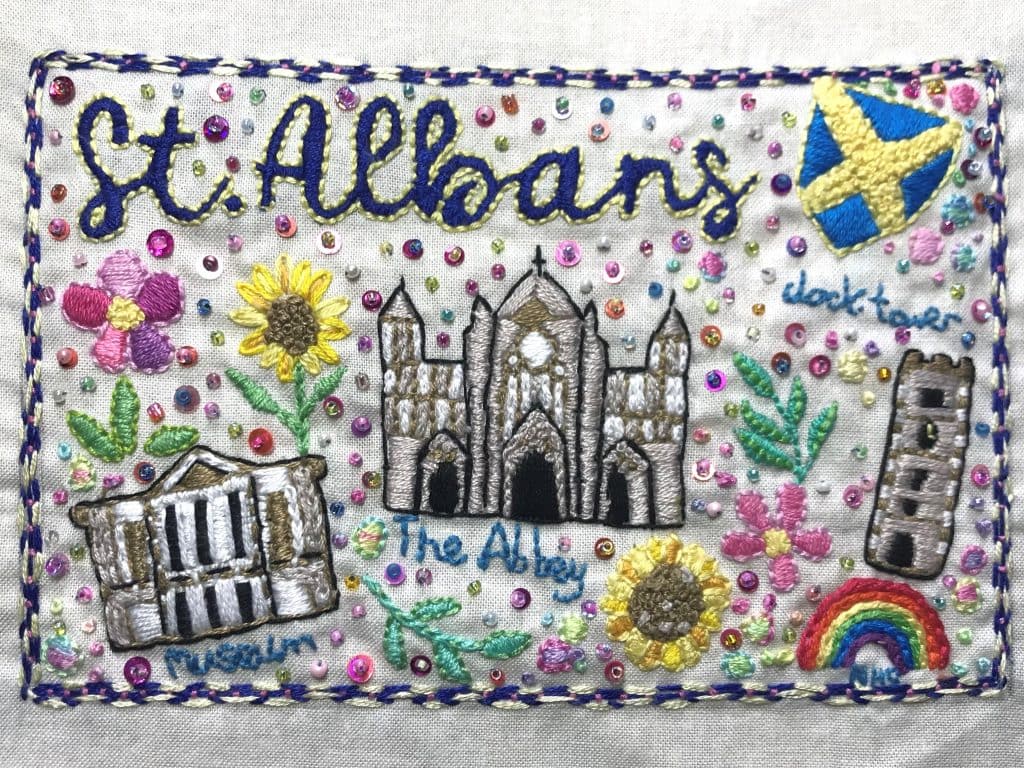
We’ve been shouting the benefits of needlecraft as a way to keep both hands and mind busy (and crucially away from screens) for a long time so we won’t try to convince you yet again – just trust us, it works. Instead here are two ideas for how to craft this summer. First is the RSN postcard from home challenge which encourages us to create a beautiful representation of our surroundings in stitches, as we can’t go away. Second is the weekly ‘stitch-up’ hosted by Badass Cross Stitch in which people from all across the world can come together to create and share about their creations!
#4 Pen and paper games
One of the most accessible analogue activities has have to be pen and paper games. These are the kinds of games we often play at holidays and family gatherings but you don’t need 15 people to play! One of our particular favourites at Time To Log Off is the ‘hat game’. This involves all players putting 10 (or as many as you like) names into a ‘hat’. Those names can be of celebrities, fictional characters, family or friends as long as all players could reasonably recognise them. The players are split into two teams and under time pressure (usually 1 min per round) one player from each team will pick names out of the ‘hat’ and describe them to their teammates without using any of the words on the paper. Each name correctly guessed is a point and this continues alternating between the teams and players until no names are left. After that you can continue to rounds in which you use the same names and players can only use one word or even mime the name – endless fun!
#5 Puzzling
Another analogue activity we have praised many times is completing a puzzle. Over lockdown, we admit we have become slightly obsessed. In particular with the unique whimsy pieces which characterise Wentworth Puzzles. They make doing a jigsaw even more enjoyable and introduce a level of challenge even the most experienced puzzler may not have faced. If funds won’t stretch to a wooden puzzle though, there are plenty of pre-loved options which can be found online. Puzzling has become incredibly popular over these past few months. It’s an absorbing way for you to keep both your hands and mind busy. We highly recommend.
Whatever analogue activity you choose to keep yourself offline and busy this summer, keep us in the loop through our #SummerUnplugged challenge – we look forward to seeing what you get up to!
We all laugh and tease others about being ‘addicted to the internet’, and to social media and messaging in particular. But in lockdown we know that all our time online has absolutely soared. In a world when we need the internet more than ever for education, work and social connection, how can we see through our own excuses and recognise when we might have a real case of internet addiction?
Here are some red flags to watch out for in monitoring yourself, or others, for signs of addiction to the internet:
You’re neglecting the rest of your life
One of the hallmarks of addiction to any substance or process is the way in which it creeps slowly to take over the whole of your life. Time spent in your addiction causes you to neglect areas that are important. Sleep, food, exercise, time with friends and family – these are all areas to take a look at. Are you spending the time you need to, in each area to live a healthy, happy and well-rounded life? Or is your internet addiction eating up hours of your day, leaving you no time to focus on one, or all, of those things?
You’re scrolling mindlessly
Think about how mindful, or how unconscious your internet use is. Do you have a plan for your time online? Does time on the internet help you to achieve your goals in your professional or personal life? Do you know exactly what you’re getting out of your time on various apps and websites, and how much time you plan each day to spend there?
Or is your internet use more on automatic pilot? Do you pick up your device without thinking and scroll mindlessly and compulsively, without a plan for what you’re trying to achieve? Do you go online for one distinct purpose, then 30 minutes latter find yourself fallen down an internet rabbit hole, doing something completely different?
You get anxious at the thought of not being connected
You might be familiar with the phenomenon of Nomophobia; where someone is so worried about being without their phone they keep anxiously patting their pockets for it. But what about wifi anxiety? if you can’t leave the house, go into a restaurant or book a trip away until you’ve checked the wifi facilities, you might want to rethink whether you have internet addiction. It’s healthy to take a break sometimes from the digital world. Planning your life completely around internet, not so much.
You wake in the night to go online
We’ve mentioned sleep, but don’t just check if your sleep is impacted by the hours you spend online. Are you actively breaking your own sleep to check the internet? Is your FOMO so bad that you find yourself regularly waking up to check for email or message replies, or for the performance of your social media posts? This is a big red flag for internet addiction. Sleep is important, so many mental and physical health processes rely on it.
What can you do?
If you’ve felt a flash of recognition at any of the above, we recommend trying the first steps of weaning yourself away from your unhealthy internet use with a digital detox.
#1 Be mindful with your use of the internet. Don’t use it as the default to fill in every gap in your day. Make a conscious effort to connect with others and to rediscover analogue activities and real-world pleasures.
#2 Make a deliberate plan for your internet use. Ask yourself how logging-on is helping your achieve your life goals.
#3 Check-in with yourself to make sure you’re not using mindless scrolling to numb-out uncomfortable feelings.
The internet is an important tool for connection, especially now, but don’t let it become a substitute for the rest of your life. No-one is going to say on their death-bed “I wish I had spent more time online”. Step away from your devices from time to time.
For more about internet addiction and living healthily and happily with tech, check out our podcast ‘It’s Complicated‘ on Apple podcasts and Spotify.
With 75% of American families and nearly half of British families planning to take a digital detox this summer, digital wellbeing is an issue spanning the Atlantic. From a full digital detox to instituting simple rules, there are plenty of ways to go about revamping your digital wellbeing for the summer. We’ve spent too long glued to our screens inside. During a pandemic we should excuse ourselves for letting unhealthy behaviour slide. But now we at Time To Log Off say it’s time to overhaul our bad habits and re-boot our screen habits for a healthier way of living.
#1 Set boundaries
Our first, and most oft-repeated, piece of advice is to set boundaries around your tech use. The boundaries that are easiest to put in place are those around space or time. So maybe you can leave your phone outside the bedroom this summer, or institute a bed-time for your phone, ideally a mix of both! Maybe, as you head back to work, you could choose to not use your phone on your commute? Instead how about you read a book or just look out the window? As you spend less and less time mindlessly doomscrolling you’ll find yourself better able to appreciate the world around you and have some time with your thoughts. You won’t just gain back time, you will gain back peace of mind – we guarantee it.
#2 Adopt analogue activities
As you continue your journey towards digital wellbeing you may struggle with what to do with all your newfound free time. The average adult (in 2017) spent 8 hours consuming media everyday. So, even if you only cut 1/8 of your time on devices, you’ll have a whole free hour daily! We suggest that you fill this hour with a productive analogue activity that you look forward to and which will keep those idle hands busy. Perhaps you could get into cooking? Or sewing? Or even puzzling? These kinds of activities will keep not only your hands, but also your mind busy – and away from tech. Choosing analogue activities from time to time will improve your digital wellbeing.
#3 Put friends before phones
Connection is a vital part of the human condition. We need support from our family, friends and colleagues to get through the day. So why is it that when we are meeting our loved ones or spending time with them, we’re often distracted by our screens? 47% of families admit to using phones at the dinner table and 36% of children say that their parents are often too distracted by scrolling to pay attention to them. Don’t phub (phone-snub) your loved ones. Choose to turn your phone off, or at least put it away, when you are with those who matter.
#4 Go green
A great way to stay offline is to spend time outside. Most devices don’t work quite as well in the fresh air, due to poor wifi and hard-to-read screens. It should help if you’re encouraging other family members to join you on the path to digital wellbeing. Being outside for just 2 hours a week can give a huge boost to your physical and mental health. Why not replace your unhealthy time online in the evening with a quick 15 min walk, or a quick stretch in the garden (if you have one)? It will do you the world of good.
#5 Stop counting
Finally, we really want to encourage you this summer to stop counting everything. Stop tracking your sleep, stop counting your steps, stop monitoring your heartbeat. Just be. Go with your circadian rhythms. Technology has taken over every part of our life from food to sleep to each and every kind of movement. Instead of tracking everything in an app; listen to your body. If you feel lethargic, eat differently, or move more. The unhealthy obsession with quantifying every part of our lives is keeping us from the mindful and intuitive lifestyles that will make us happy. Stop counting!
Focus on improving your digital wellbeing moving forward but remember there are no hard or fast rules. Pick whichever tip suits you best and have a go at incorporating it into your life. We wish you the best of success in your summer liberated from screens.
For more strategies on how to deal with phone addiction, and interviews with people from all walks of life talking about their relationship with tech, check out our podcast “It’s Complicated”
Digital detox with embroidery on National Embroidery Day
Post-lockdown we at Time To Log Off are encouraging you to put your screens down and engage in some real-world activities. Through our #SummerUnplugged challenge we want to get you out of your doom-scroll-hole and back in the physical world via some digital detox. One of the best ways to stick to your new lifestyle is through finding analogue alternatives to screentime such as – embroidery! So, on National Embroidery Day, 30th July, we’re celebrating all the ways that needlework can help you on the journey to digital wellbeing.
The Royal School of Needlework
We’ve been big fans of the home of beautiful embroidery, The Royal School of Needlework, at Time To Log off since we first recommended one of their courses in a Christmas gift list. The RSN has been promoting the unique benefits of embroidery since 1872 – well before digital devices created a need for embroidery to help a digital detox! They are based at the historic Hampton Court Palace in the UK, and host a myriad of different courses and programmes to teach everyone from beginners through to advanced embroiderers new skills. They even have a degree programme: a BA (Hons) Hand Embroidery Degree validated by the University for the Creative Arts (UCA) which enables many keen needleworkers to stretch their wings and work for big names such as Alexander McQueen. They famously worked on the Duchess of Cambridge’s wedding dress! 30th July is not only National Embroidery Day but also World Friendship Day, very fitting considering the many friendships made through the RSN embroidery studio this year as courses were taken online in the pandemic, and made available to people all across the globe.
A degree student embroidering under the watchful eye of a tutor
Idle hands?
The average adult spends 8 hours online every day. We pick up and touch our phone around 2,617 times a day. Since lockdown, we’re spending 70-80% more time on our phones according to Australia’s National Broadband Network. If we want to improve our digital wellbeing, we all need to set aside time for some digital detox. For many of us, the habit of reaching for our phone has become so instinctive we don’t even realise we’re doing it. One of the best ways to fight against this habit is to keep our hands busy. We’re fans of embroidery as a fantastic analogue activity for this. It’s not repetitive and, no matter how good at it you are, you always need to be using both hands – leaving no room for a quick Twitter scroll!
The work of a day class student
Busy brain?
Our brain processes are suffering with all the time we’re spending on screens. Our concentration is deteriorating, our creativity waning and our mental health declining. Embroidery is a perfect anecdote for all of this. After WW1, the Royal School of Needlework women actually visited soldiers in hospital and taught them needlepoint. It gave disabled vets a way to earn a living, and also helped relieve their post traumatic stress. Some of those soldiers went on to create an altarpiece for St Paul’s Cathedral in London, under the instruction of the RSN. If embroidery was powerful enough for WW1 vets to recuperate with, we’re thinking there must be a lot it can do for us today.
Day class students enjoying the community embroidery can create
Make something lasting
One aspect of embroidery we particularly like, is that in doing it you create something tangible. So often today our daily life is full of nebulous ideas and activities, that can’t be touched or displayed. But, with embroidery each stitch you make is visible, beautiful and physical. Your work can’t be lost or taken away from you, you must stay in the moment with it. On National Embroidery Day, why not investigate embroidery as an analogue activity to give you a break from your phone this summer? You may just find a new hobby you love.
Digital detox med broderi på National Embroidery Day
Efter nedstängningen uppmuntrar vi på Time To Log Off dig att lägga ner dina skärmar och delta i några verkliga aktiviteter. Genom vår #SummerUnplugged utmaning vill vi få dig ut ur ditt domedagshål och tillbaka i den fysiska världen via någon digital detox. Ett av de bästa sätten att hålla sig till din nya livsstil är genom att hitta analoga alternativ till skärmtid som – broderi! Så på National Embroidery Day, 30 juli, firar vi alla sätt som handarbete kan hjälpa dig på resan till digitalt välbefinnande.
Kungliga skolan för handarbete
Vi har varit stora fans av hemmet för vackra broderier, The Royal School of Needlework,på Time To Log off sedan vi först rekommenderade en av deras kurser i en julklappslista. RSN har främjat de unika fördelarna med broderi sedan 1872 – långt innan digitala enheter skapade ett behov av broderi för att hjälpa en digital detox! De är baserade på det historiska Hampton Court Palace i Storbritannien, och är värd för en myriad av olika kurser och program för att lära alla från nybörjare till avancerade broderier nya färdigheter. De har till och med ett utbildningsprogram: en BA (Hons) Hand Embroidery Degree validerad av University for the Creative Arts (UCA) som gör det möjligt för många ivriga handarbetare att sträcka sina vingar och arbeta för stora namn som Alexander McQueen. De arbetade berömdt på hertiginnan av Cambridges bröllopsklänning! 30 juli är inte bara National Embroidery Day utan också World Friendship Day, mycket passande med tanke på de många vänskap som gjorts genom RSN broderi studio i år som kurser togs online i pandemin, och göras tillgängliga för människor över hela världen.
En examensstudent broderar under en handledares vaksamma öga
Sysslolösa händer?
Den genomsnittliga vuxna spenderar 8 timmar online varje dag. Vi plockar upp och rör vår telefon cirka 2 617 gånger om dagen. Sedan nedstängningen spenderar vi 70-80% mer tid på våra telefoner enligt Australiens nationella bredbandsnätverk. Om vi vill förbättra vårt digitala välbefinnande måste vi alla avsätta tid för lite digital detox. För många av oss har vanan att sträcka sig efter vår telefon blivit så instinktiv att vi inte ens inser att vi gör det. Ett av de bästa sätten att bekämpa denna vana är att hålla händerna upptagna. Vi är fans av broderi som en fantastisk analog aktivitet för detta. Det är inte repetitivt och oavsett hur bra du är måste du alltid använda båda händerna – och lämna inget utrymme för en snabb Twitter-rullning!
En dagklassstudents arbete
Upptagen hjärna?
Våra hjärnprocesser lider av all tid vi spenderar på skärmar. Vår koncentration försämras,vår kreativitet avtar och vår mentala hälsa minskar. Broderi är en perfekt anekdot för allt detta. Efter första världskriget besökte Royal School of Needlework-kvinnor faktiskt soldater på sjukhus och lärde dem nålspets. Det gav funktionshindrade veterinärer ett sätt att tjäna sitt uppehälle, och hjälpte också till att lindra deras posttraumatisk stress. Några av dessa soldater fortsatte att skapa en altartavla för St Paul's Cathedral i London, under ledning av RSN. Om broderi var tillräckligt kraftfullt för WW1 veterinärer att återhämta sig med, vi tänker att det måste finnas mycket det kan göra för oss idag.
Dagklassstudenter som njuter av samhällsbroderi kan skapa
Gör något varaktigt
En aspekt av broderi vi särskilt gillar, är att genom att göra det skapar du något konkret. Så ofta idag är vårt dagliga liv fullt av oklara idéer och aktiviteter, som inte kan röras eller visas. Men med broderi varje stygn du gör är synlig, vacker och fysisk. Ditt arbete kan inte gå förlorat eller tas ifrån dig, du måste stanna i ögonblicket med det. På National Embroidery Day, varför inte undersöka broderi som en analog aktivitet för att ge dig en paus från din telefon i sommar? Du kanske bara hittar en ny hobby du älskar.
We’ve all had to use our phones more in lockdown but how do you know when your use is straying from helpful into harmful? Did you go into the pandemic struggling with phone addiction? Has it now got even worse?
A helpful way of deciding whether you’re addicted to any process or substance, is to look at the impact it’s having on the rest of your life. If there are aspects of your use of your smartphone which are stopping you from enjoying, and taking part in, things which you used to get a great deal of pleasure out of, you need to take a closer look.
Some warning signs of phone addiction that might have got worse in lockdown are:
You’re ignoring the people you’re with for your phone
Snubbing people who you’re with because of an uncontrollable urge to check your phone even has it’s own name – phubbing – and it’s a real problem. Relationships with others are a key element of our health and happiness and investing our time and attention in them pays dividends.
It’s likely you’re doing this in a completely unconscious way as you absent-mindedly pick up your phone mid-conversation. Try and employ some mindfulness techniques to be aware of when you’re scrolling without thinking. Better still, put your phone away completely when you’re 1-2-1 with anyone, or when you’re with a group of friends or family enjoying spending time together.
You check your phone in the middle of the night
Your phone addiction can interrupt your sleep, leaving you tired in the morning
Most people use their phones as alarm clocks, which means they sleep with them very close by to their beds in their bedroom. Checking your phone in the middle of the night when you’re in that semi-alert state between sleep and full wakefulness, is likely to wrench you abruptly awake and interrupt your sleep patterns. If night-time phone checking is getting out of hand, banish your phone from your bedroom, or leave it the other side of the room from your bed for a while.
You panic when you don’t know where your phone is
We’ve all had that slightly panicky feeling when we pat our coat and trouser pockets, trying to check where our phone is. But if you suddenly realise you don’t know where your phone is and you then feel a rising tide of panic, you’re definitely getting over-attached. Think back to how you felt about temporarily misplacing your phone a year ago. Now compare it to how you feel about it now. If your panic is getting greater, you need to take some steps to control that. Deep breathing and counting to ten will give you a chance to calm yourself before panic sets in.
You take it with you into the bathroom…
…and you send texts and messages, or scroll through social media while sitting on the loo! This is a habit we can all definitely stop. The bathroom is one place you can do without your phone for a few minutes. Get into the habit of leaving it outside. There’s also the issue of germs and bacteria to contend with which isn’t helpful in a pandemic – keep your phone away from that environment.
You simply can’t leave it in another room of the house from you
If carrying your smartphone from room to room, even when you’re in your own home, has got into a bad habit you need to untether yourself. Designate a few rooms in the home where you won’t take your smartphone and decide on a central location where you can leave your phone when you want to focus on other things. Treat your smartphone like a landline for a while, detach yourself from it as you go about your life. Turn the notification volume up loud if your panic about missing something feels overwhelming. Or turn it off completely if you really want to disconnect.
So what can you do about your phone addiction?
If you recognise yourself in any of these unhealthy habits then we recommend thinking about a full or partial digital detox and stepping away from your smartphone for a while.
Be more mindful with your use of your phone. Try and go out for short periods of time and leave it behind, even for small trips or shopping errands. Put it firmly away when you’re with other people. Anxiety may be driving your increased vigilance over your phone right now, so find other ways to self-soothe and seek reassurance. Any habit that stops you from being present with your own feelings isn’t serving you well, your smartphone addiction is no different.
For more strategies on how to deal with phone addiction, and interviews with people from all walks of life talking about their relationship with tech, check out our podcast ‘It’s Complicated”
People with OCD face uniquely difficult mental health battles, including trying to distinguish concerns brought on by their conditions from general fears shared by the public about COVID-19.
Before the COVID-19 pandemic took hold in the United States, Chris Trondsen felt his life was finally under control. As someone who has battled obsessive-compulsive disorder and other mental health issues since early childhood, it’s been a long journey.
“I’ve been doing really, really well,” Trondsen said. “I felt like most of it was pretty much — I wouldn’t say ‘cured’ ― but I definitely felt in remission or under control. But this pandemic has been really difficult for me.”
Trondsen, 38, a Costa Mesa, California, therapist who treats those with obsessive-compulsive and anxiety disorders, has found himself excessively washing his hands once again. He’s experiencing tightness in his chest from anxiety — something he hadn’t felt in so long that it frightened him into getting checked out at an urgent care center. And because he also has body dysmorphic disorder, he said, he’s finding it difficult to ignore his appearance when he’s looking at himself during his many Zoom appointments with clients each day.
From the early days of the coronavirus outbreak, experts and media have warned of a mounting mental health crisis as people contend with a pandemic that has upended their lives. A recent KFF poll found that about 4 in 10 adults say stress from the coronavirus negatively affected their mental health. (KHN is an editorially independent program of KFF, the Kaiser Family Foundation.)
But those with obsessive-compulsive disorder and other serious anxieties face uniquely difficult mental health battles, including trying to distinguish concerns brought on by their conditions from general fears shared by the public about COVID-19. People with OCD have discovered one advantage, though: Those who have undergone successful treatment often have increased abilities to accept the pandemic’s uncertainty.
Dr. Katharine Phillips, a psychiatrist at NewYork-Presbyterian and professor at Weill Cornell Medicine, said it’s possible that patients who have been in consistent, good treatment for their OCD are well protected against the stress of COVID-19.
“Whether it’s excessive fears about the virus, excessive fears about possible repercussions to the virus, whether that’s financial effects ― good treatment protects against relapse in these patients,” Phillips said.
Those with OCD feel compelled to repeatedly perform certain behaviors, such as compulsive cleaning, and they may fixate on routines. OCD can also cause nonstop intrusive thoughts.
Carli, who asked that her last name be withheld because she feared professional repercussions, can trace her OCD to age 6. The coronavirus pandemic has sent Carli, a 43-year-old from Jersey City, New Jersey, into a spiral. She’s afraid of the elevators in her building, so she doesn’t leave her apartment. And she’s having trouble distinguishing an OCD compulsion from an appropriate reaction to a dangerous pandemic, asking those without OCD how they’ve reacted.
“The compulsions in my head have definitely gotten worse, but in terms of wearing a mask and cleaning my groceries and going into stores, it’s really hard to gauge what is a normal reaction and what is my OCD,” Carli said. “I try to ask people, Are you doing this? Are you doing that?”
Elizabeth McIngvale, director of the McLean OCD Institute in Houston, said she has noticed patients struggling to differentiate reactions, as Carli described. Her response is that whereas guidelines such as hand-washing from the Centers for Disease Control and Prevention are generally easily accomplished, OCD compulsions are usually never satisfied.
McIngvale was diagnosed with OCD when she was 12, with behaviors like taking six- to eight-hour showers and washing her hands for so long they bled. McIngvale receives therapy weekly.
“It’s just a part of my life and how I maintain my progress,” McIngvale said.
Lately, she’s found herself consumed with fears of harming or infecting others with the COVID-19 virus — a symptom of her OCD. But, generally, with the tools she’s gained through treatment, she said she’s been handling the pandemic better than some people around her.
“The pandemic, in general, was a new experience for everybody, but for me, feeling anxiety and feeling uncomfortable wasn’t new,” McIngvale said.
“OCD patients are resilient,” she added. Treatment is based on “leaning into uncertainty and so we’ve also seen patients who are far along in their treatment during this time be able to manage really well and actually teach others how to live with uncertainty and with anxiety.”
Wendy Sparrow, 44, an author from Port Orchard, Washington, has OCD, agoraphobia (fear of places or situations that might cause panic) and post-traumatic stress disorder. Sparrow has been in therapy several times but now takes medication and practices mindfulness and meditation.
At the beginning of the pandemic, she wasn’t fazed because she’s used to sanitizing frequently and she doesn’t mind staying home. Instead, she has felt her symptoms worsening as her home no longer felt like a safe space and her fears of fatal contamination heightened.
“The world feels germier than normal and anyone who leaves this house is subjected to a barrage of questions when they return,” Sparrow wrote in an email.
Depending on how long the pandemic lasts, Sparrow said, she may revisit therapy so she can adopt more therapeutic practices. Trondsen, too, is considering therapy again, even though he knows the tools to combat OCD by heart and uses them to help his clients.
“I definitely am needing therapy,” Trondsen said. “I realized that even if it’s not specifically to relearn tools for the disorders … it’s more so for my mental well-being.”
Carli has struggled with finding the right treatment for her OCD.
But a recent change is helping. As the pandemic intensified this spring, many doctors and mental health providers moved to telehealth appointments — and insurers agreed to cover them ― to cut down on the risks of spreading the virus. In April, she started using an app that connects people with OCD to licensed therapists. While skeptical at first, she has appreciated the convenience of teletherapy.
“I never want to go back to actually being in a therapist’s office,” Carli said. “Therapy is something that’s really uncomfortable for a lot of people, including me. And to be able to be on my own turf makes me feel a little more powerful.”
Patrick McGrath, a psychologist and head of clinical services at NOCD, the telehealth platform Carli uses, said he’s found that teletherapy with his patients is also beneficial because it allows him to better understand “how their OCD is interfering in their day-to-day life.”
Trondsen hopes the pandemic will bring increased awareness of OCD and related disorders. Occasionally, he’s felt that his troubles during this pandemic have been dismissed or looped into the general stress everyone is feeling.
“I think that there needs to be a better understanding of how intense this is for people with OCD,” he said.