Category: Addiction News

  • Mel B To Enter Rehab For Alcohol, Sex Addiction

    Mel B To Enter Rehab For Alcohol, Sex Addiction

    Brown says she has been using alcohol to “numb my pain,” spurred by a difficult divorce and the death of her father.

    TV personality and performer Mel B is heading to rehab for alcohol and sex addiction, according to the Guardian.

    The former Spice Girl, who has been diagnosed with post-traumatic stress disorder (PTSD), said she’s had an “incredibly difficult” six months in which she’s had to relive past traumas while writing her upcoming memoir Brutally Honest

    “It has been unbelievably traumatic reliving an emotionally abusive relationship and confronting so many massive issues in my life,” she said.

    The America’s Got Talent judge (born Melanie Brown) confessed that she has been using alcohol to “numb my pain,” spurred by a difficult divorce and the death of her father.

    “Sometimes it is too hard to cope with all the emotions I feel. But the problem has never been about sex or alcohol—it is underneath all that,” she said, according to BBC. “No one knows myself better than I do. But I am dealing with it.”

    She further clarified her decision to enter rehab on a recent Ellen appearance. “No, I’m not an alcoholic; no, I’m not a sex addict,” she told guest host Lea Michele.

    This isn’t the first time Mel B has sought professional help. She told Michele that she has been receiving therapy since her father got diagnosed with cancer nearly a decade ago.

    The current treatment she has been receiving has been “really helping me,” she said, according to The Sun. “I am fully aware I am at a crisis point.”

    The singer and songwriter is getting help to become “a better version of myself for my kids, for my family and for all the people who have supported me in my life,” she said.

    And if she can be a voice for those who silently suffer, “if I can shine a light on the issue of pain, PTSD and the things men and women do to mask it, I will,” she added.

    Mel B is finalizing her divorce with Stephen Belafonte, which ended with restraining orders and a domestic violence trial that was settled out of court.

    The singer said she was emotionally and “financially battered” by the breakup.

    “You know, I was with the same person for 10 years, and that was quite a turmoil, very intense,” she said on Ellen. “That’s all I can say about it. I’d like to say a lot more, but on this show, let’s keep it PC. But… I did kind of have to ease my pain. I suffer a lot from PTSD.”

    View the original article at thefix.com

  • Noah Cyrus Talks Anxiety, Depression

    Noah Cyrus Talks Anxiety, Depression

    On her new EP, Miley Cyrus’s younger sister opens up about depression and “how it’s okay to feel those feelings.”

    Noah Cyrus is the other famous daughter of country star Billy Ray Cyrus and she also has showbiz in her blood. She made her acting debut on the show Doc at the age of three, and sang the theme song for the animated movie Ponyo at the age of eight.

    Now Noah is one of a number of young pop stars who is getting candid about her depression and anxiety struggles.

    Noah says that her experiences with anxiety and depression shaped her upcoming EP. She told L’Officiel her latest release is “mostly just about how my emotions have been, and about my anxiety, and how I’ve been struggling with depression, and how it’s okay to feel those feelings.”

    Noah has dealt with the struggle of becoming a celebrity in the day and age of social media, adding, “A lot of people like to judge you, and make fun of you on the internet, and people make you feel crazy whenever you’re in a depression or having anxiety or having a panic attack.”

    Noah’s new music also deals with “being sad and having your emotions and not being able to ignore the feelings you’re having.”

    Her new music has been an outlet for her emotions, and with her latest single, “Make Me (Cry),” a duet with Labrinth, she’s showing the world more of her self-proclaimed “emo side.”

    Noah says that releasing a single where she’s more in touch with her feelings may have been influenced by her brother, Trace Cyrus, the lead singer of Metro Station. “I think [it] probably stems from growing up with Trace in my house because he was the king of emo.”

    In addition to being more in touch with her mental health in her music, Cyrus has also been dating rapper Lil Xan, who has been outspoken against drug abuse in the hip-hop community. They’ve already recorded a song together, “Live or Die,” and Cyrus told People, “He’s a little teddy bear.”

    In the past, Noah’s sister Miley has also been open about her own struggles with anxiety, depression and substance abuse. She announced to the world that she quit marijuana last year, and she told ABC in 2014, “I went through a time where I was really depressed. I locked myself in my room and my dad had to break my door down. It was a lot to do with, like, I had really bad skin, and I felt really bullied because of that.”

    View the original article at thefix.com

  • Dopesick: An Interview with Beth Macy

    Dopesick: An Interview with Beth Macy

    It takes the average user eight years and five to six treatment attempts just to achieve one year of sobriety. And in an era of fentanyl and other even stronger synthetic opioids, many users don’t have eight years.

    As recently as a few years ago, the opioid crisis could be referred to as a “silent epidemic,” perhaps in part due to its degrading nature. Opioid addiction is frequently described using metaphors of slavery, or enslavement, and those within its clutches are liable to feel acutely ashamed. No longer, however, is it possible to argue that the scourge of opioid addiction is being overlooked.

    No doubt that is partly due to the growing enormity of the problem. For each of the past several years, more people have died from drug overdoses than American service members were killed during the entire Vietnam War.

    Meanwhile, energetic and compassionate journalists have been doing outstanding work, covering the crisis from various vantages. Chief among them is Beth Macy, a New York Times-bestselling author, who first began noticing the effects of opioid addiction as a reporter for the Roanoke Times, where she worked for 25 years until 2014. Now she is out with Dopesick: Dealers, Doctors, and the Drug Company That Addicted America. Gracefully written and deeply reported, Dopesick should act as a vade mecum — a handbook, a guide, an essential introduction — for anyone who may be seeking insight into the deadliest and most vexing drug epidemic in American history. 

    Beth spoke to The Fix over email:

    The Fix: The first chapters of your book, on the origins of the opioid crisis, cover some material that others have explored (most notably Barry Meier, in Pain Killer: An Empire of Deceit and the Origin of America’s Opioid Epidemic). Still, I don’t have the sense that many people are aware of the role that Purdue Pharma played in setting off current epidemic. Briefly, what is their culpability? And why do think their crimes aren’t crimes better known? 

    Beth Macy: I think Meier’s book, Pain Killer, was too early, initially published in 2003, and it was largely set in central Appalachia — a politically unimportant place. Also, let’s not overlook the role that Purdue took in stifling Meier. As I write in the book, company officials had him removed from the beat after his book came out, arguing that he now had a financial stake in making Purdue look bad.

    After the 2007 plea agreement, in which the company’s holding company, Purdue Frederick, pled guilty to criminal misbranding charges and its top three executives to misdemeanor versions of that crime, Purdue and other opioid makers and distributors spent 900 million dollars on political lobbying and campaigns. Purdue continued selling the original OxyContin formula until it was reformulated to be abuse-resistant in 2010, continued for years after that pushing the motion that untreated pain was really the epidemic that Americans should be concerned about. Their culpability in seeding this epidemic is huge.

    You weren’t able to talk directly with any of the Purdue executives who made fortunes from OxyContin, and who criminally misled the public about its addictive potential. But you spent an afternoon interviewing Ronnie Jones, who is currently serving a lengthy prison sentence for running a major heroin distribution operation in West Virginia. How were Jones’s crimes (and his rationalizations for his behavior) different from those of the Purdue executives you wrote about?

    Great question. Jones refused to see that he brought bulk heroin to a rural community in ways that overwhelmed families and first responders in the region with heroin addiction; he told me he believed he was providing a service — his heroin did not have fentanyl in it, he argued, and it was cheaper than when people ran up the heroin highway to get it in Baltimore (and safer because they could stay out of high-crime places).

    At the 2007 sentencing hearing, Purdue executives and their lawyers repeatedly claimed they had no knowledge of crimes that were happening several rungs down the ladder from them; that the government had not proved their culpability in the specific crimes. According to new Justice Department documents unearthed and recently published by The New York Times , that was simply not true. For two decades, Purdue leaders blamed the users for misusing their drug; they refused to accept responsibility for criminal misbranding that resulted in widespread addiction and waves of drug-fueled crime that will be felt in communities and families for generations to come.

    You quote a health care professional who said that previous drug epidemics began waning after enough people finally got the message: “Don’t mess with this shit, not even a little bit.” That provoked a thought: Shouldn’t we be long past this point with opioids? On the one hand, I’m enormously sympathetic to anyone who is struggling with addiction. But it’s frustrating to realize that the opioid crisis is still building. Why aren’t more people as risk-averse about heroin as they obviously should be?

    The crisis is still building because the government’s response to it has largely been impotent. And it’s been festering for two decades. Opioid addiction doesn’t just go away. It takes the average user eight years and five to six treatment attempts just to achieve one year of sobriety. And in an era of fentanyl and other even stronger synthetic opioids, many users don’t have eight years. I hope we will soon get to the point of public education where no young person “messes with this shit, not even once,” but right now we still have 2.6 million people with opioid use disorder. Even though physicians have begun prescribing less, we still have all these addicted people who should be seen as patients worthy of medical care, not simply criminals. Too often that doesn’t happen until we’re sitting in their funeral pews.

    One of the women you write about, Tess Henry, slid down a long road. You got to know her and her family quite well, over a number of years. And some of the other stories in this book are just as heartbreaking.

    It was a lot of pain to absorb and process, yes. And yet my heartache was nothing at all compared to what these families are going through.

    In a couple instances, Tess reached out to you directly, asking you for help. How did you calculate how to respond?

    I took it case by case; I just went with my gut, and I got input from my husband and trusted friends along the way. I decided it was okay to drive Tess around to [Narcotics Anonymous] meetings, recording our interviews as I drove, with her permission. But it wasn’t okay when she texted me late one night to come get her from a drug house. (I referred her plea to her mother and recovery coach instead.)

    I occasionally gave her mother unsolicited advice because I cared about her and I cared about Tess, and I felt I had access to objective information about medication-assisted treatment that Patricia didn’t have. When Tess was murdered on Christmas Eve, I put my notes away and for several days just focused on being a friend to her mom. But I did accompany the family to the funeral home when they made arrangements (taking occasional notes), and I was there in the room of the funeral parlor with her mom and her grandfather when they said goodbye to her. It took funeral technicians two days to prepare her body for that. It was the most heartbreaking scene I’ve ever witnessed. There was no need to take notes in that moment. I will never forget it as long as I live. I said a tearful goodbye to our poet, too.

    Was there ever a risk, over the course of your reporting, of becoming too involved in the lives and predicaments of the people you were writing about? 

    Always there’s a risk, but I’ve been doing this for more than 30 years now, and I know that my greatest skill — which is that I get close to people — can also be my Achilles. When I trust my gut and try to do the right thing — always also getting advice from editor and reporter friends along the way, including my husband, who is just so smart and so spot-on always — it usually works out.

    I’m grateful to have read Dopesick. But at various times it left me infuriated, appalled, and depressed. Can you leave us with anything to be hopeful about? 

    There are some pretty heartening grassroots efforts that I spotlight at the book’s end, mostly involving providing access to treatment and harm-reduction services. And Virginia just became the 33rd state to approve Medicaid under the Affordable Care Act, which will help 300,000 to 400,000 people in the commonwealth have access to substance use disorder services. Seventeen more states to go! There is so much more work to be done, especially in Appalachia, where overdose deaths are highest and resistance to harm reduction programs (easy-access MAT and syringe exchange and recovery) can be severe. My goal is that Dopesick not only educates people but also mobilizes them to care and create what Tess Henry called “urgent care for the addicted” services in their own hometowns.

    View the original article at thefix.com

  • Smoking Pot Can Disqualify You From Cannabis Jobs

    Smoking Pot Can Disqualify You From Cannabis Jobs

    “Sometimes you can get by with a low-level, misdemeanor possession charge, but not always,” said one medical marijuana job recruiter.

    Medical marijuana is creating about 25,000 new jobs in Florida, but smoking cannabis disqualifies many people from working in the industry, according to a report by The Orlando Sentinel

    “We get hundreds of applications for every job opening we have, and maybe only 10% of those are qualified and meet the legal requirements,” said Michelle Terrell, spokesman for Curaleaf, a Massachusetts-based company that opened a dispensary in south Orlando in August. 

    In Florida, state law requires that marijuana workers have a clean criminal background check with no felonies. Drug-related offenses, including smoking marijuana, can derail applicants, said James Yagielo, founder of HempStaff, a Miami-based medical marijuana recruiting firm.

    “Sometimes you can get by with a low-level, misdemeanor possession charge, but not always,” Yagielo said.

    Because of this, he advises people not to mention their illicit drug use in an interview, even if they feel that their experience with marijuana helps explain their qualifications. 

    “For a lot of people at the entry level, they say they want to get into this industry because of a passion for cannabis,” he said. “We usually tell them they should avoid bringing up any illegal activity regarding cannabis in an interview.”

    Because of the more intense screening process, the marijuana industry pays slightly more than other service industry jobs in Florida, with entry-level wages between $11 and $15 an hour. This makes the industry appealing to many people who aren’t intimidated by the requirements. The industry already created nearly 3,000 jobs during 2017 and is expected to grow to 25,000 jobs by 2022.

    “We need customer-experience specialists, we need drivers and we’ll be expanding our phone operations,” said Scott Klenet, a spokesperson for Knox Medical, a cannabis dispensary that is “aggressively hiring.” 

    “And what we find is that people come from all walks of life,” Klenet added. 

    Catie Callahan, 34, gave up a management job at a national grocery chain to open the new Orlando Curaleaf dispensary. She said that she sees cannabis as a business opportunity that she did not want to pass up.

    “I took a class on medical marijuana regulations last year, and I’ve been keeping my eyes open for an opportunity,” she said. 

    She considered the way that working in medical marijuana would impact her career and ultimately decided that the benefits outweighed the risks. 

    “There is a stigma, but I’m not worried about leaving this business and not being able to get a job because I worked in medical marijuana.”

    View the original article at thefix.com

  • Tunnel Beneath KFC Connects Drug Smugglers in Arizona, Mexico

    Tunnel Beneath KFC Connects Drug Smugglers in Arizona, Mexico

    The county sheriff’s department called the discovery a “heavy blow to that transnational criminal organization that built this tunnel.”

    A routine stop for an equipment violation led law enforcement in Arizona to an operation that numerous media outlets compared to the AMC series Breaking Bad, with a near-600-foot tunnel that connected a former fast food restaurant to a private home in Mexico for the purposes of trafficking narcotics.

    Police pulled over Jesus Ivan Lopez Garcia on August 13 after he was observed removing several containers from an abandoned Kentucky Fried Chicken (KFC) franchise located one mile from the U.S.-Mexico border; a search of the vehicle turned up more than 200 packages of various narcotics, including 6.8 pounds of fentanyl.

    This led to a search of the restaurant, where a tunnel traversed the border to a home in San Luis Rio Colorado, Mexico. The county sheriff’s department described the discovery as a “heavy blow to that transnational criminal organization that built this tunnel.”

    According to CNN, court documents showed that Lopez Garcia had purchased the former KFC location in San Luis, Arizona in April 2018. The structure was described as “vacant in recent years,” which raised the suspicion of police when Lopez Garcia was seen taking the containers, including a tool box from the former restaurant and loading them into a trailer attached to a pickup truck.

    Officers then pulled him over for what was described as an unspecified equipment violation, and during the traffic stop, a K-9 officer alerted authorities to suspected drugs in the two containers.

    A search of the containers yielded more than 261 pounds of methamphetamine, 14 pounds of cocaine, 30 pounds of white heroin, 13.7 pounds of brown heroin and 6.8 pounds of fentanyl.

    Homeland Security Investigations (HSI) Special Agent in Charge Scott Brown told a CNN affiliate station in Arizona that the fentanyl “translates to over three million dosage units.” Authorities gave the total price of the drugs at more than $1 million.

    After obtaining a warrant, HSI conducted a search of the KFC location on August 14 and found an eight-inch hole with a depth of 22 feet.

    This led to a walkway that was five feet tall and three feet wide that ran 590 feet across the border to San Luis Rio Colorado in Mexico. Mexican authorities reported that a search of a residential property on August 15 found an entrance to the tunnel under a bed. 

    “There was no mechanism to physically come up to the small opening” in the KFC location, said Brown in a press conference. “The narcotics we believe were raised up by a rope [and] then loaded into the tool box and taken out of the abandoned restaurant.”

    Yuma Sector Chief Patrol Agent Anthony Porvaznik said that the tunnel will be filled with cement to keep others from using it.

    View the original article at thefix.com

  • No Amount Of Alcohol Is Safe To Drink, Game-Changing Study Reveals

    No Amount Of Alcohol Is Safe To Drink, Game-Changing Study Reveals

    Alcohol accounted for 20% of deaths in 2016, according to a new report.

    Even one drink occasionally may be one too many, researchers are now saying.

    This information came from the Global Burden of Diseases study, which is carried out at the University of Washington in Seattle, and was recently published in the Lancet medical journal

    According to the Guardian, the Global Burden of Diseases study is the “largest and most detailed research carried out on the effects of alcohol.”

    The researchers found that in 2016, alcohol led to 2.8 million deaths and was the leading risk factor when it came to premature mortality and disability in those ages 15 to 49, in which it accounted for 20% of deaths. 

    According to the study, current habits when it comes to alcohol “pose dire ramifications for future population health in the absence of policy action today. Alcohol use contributes to health loss from many causes and exacts its toll across the lifespan, particularly among men.”

    Researchers at the Institute of Health Metrics and Evaluation studied the alcohol intake from people in 195 countries using data from 694 different sources ranging from 1990 to 2016 to determine “how common drinking was.” 

    They then examined 592 worldwide studies involving 28 million people to determine the potential health risks associated with alcohol. 

    Specifically, the study found that alcohol consumption was a cause of cancer in those over age 50, especially women. According to previous research, one in 13 breast cancer diagnoses in the UK were related to alcohol.

    The study determined that across the world, 27.1% of cancer deaths in females and 18.9% in men over age 50 were connected to alcohol consumption. 

    Among those in younger age groups, causes of death linked to alcohol were tuberculosis (1.4% of deaths), road injuries (1.2%) and self-harm (1.1%).

    Additionally, about 2.4 billion people around the world drink alcohol. One-quarter of women drink, while 39% of men do.

    Senior author Emmanuela Gakidou of the University of Washington says that the results indicate that new policies on alcohol may be necessary in the future.

    “Our results indicate that alcohol use and its harmful effects on health could become a growing challenge as countries become more developed, and enacting or maintaining strong alcohol control policies will be vital,” she told the Guardian.

    Dr. Robyn Burton, of King’s College London, stated in a commentary in the Lancet that the study results were clear.

    “Alcohol is a colossal global health issue and small reductions in health-related harms at low levels of alcohol intake are outweighed by the increased risk of other health-related harms, including cancer,” she wrote. 

    Burton stated that when it comes to public policy, methods to reduce alcohol intake could include price increases, taxation and setting prices depending on the strength of the drink. She also stated that limiting alcohol marketing could help.

    Dr. Max Griswold, lead author of the study, said, “Previous studies have found a protective effect of alcohol on some conditions, but we found that the combined health risks associated with alcohol increases with any amount of alcohol.

    “The strong association between alcohol consumption and the risk of cancer, injuries, and infectious diseases offset the protective effects for heart disease in our study. Although the health risks associated with alcohol start off being small with one drink a day, they then rise rapidly as people drink more.”

    View the original article at thefix.com
  • Mom Accused Of Letting Teen Daughter Run Pot Shop From Bedroom

    Mom Accused Of Letting Teen Daughter Run Pot Shop From Bedroom

    Police reportedly uncovered 80 pounds of cannabis in the closet of the master bedroom.

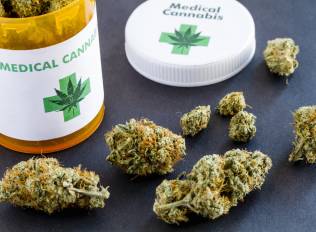
    A 15-year-old girl is in state custody after sheriff’s deputies alleged that she made cannabis deals out of her bedroom, supported by her mother.

    On August 17, the Merced County Sheriff’s Office served a search warrant at the family’s Delhi, California home. The search uncovered 80 pounds of cannabis in the master bedroom closet and 12 “large marijuana plants” in the backyard growing in a “makeshift greenhouse,” according to sheriff’s deputies. A loaded AK-47 was also found.

    According to a statement posted on Facebook, during the investigation officers allegedly learned that “the 15-year-old daughter was given marijuana from her mother to use and sell from her bedroom.”

    In addition, officers found “packaged marijuana, edibles and other items associated with the sales and use of marijuana” that they say belonged to the 15-year-old girl.

    The girl and another minor have since been removed from the home by Child Protective Services. Two adults in the home have been arrested—Jose Reyes Martinez, 44, on suspicion of marijuana crimes, possessing an assault weapon and assault on a child; and Norma Angelica Alvarez, 44, on suspicion of marijuana crimes and child endangerment.

    Parents all across the United States have lost custody of their children for providing them marijuana, but unlike this particular case—as far as we know—it is often to treat debilitating disorders like epilepsy.

    One recent example happened in Macon, Georgia, where Suzeanna and Matthew Brill are fighting for custody of their son David, who suffers from seizures. The couple had illegally purchased cannabis to try and ease David’s seizures, after prescription medication had failed to make a difference.

    The family was on the waiting list for Georgia’s Low THC Oil Program, but couldn’t wait any longer.

    The parents say the cannabis was “a miracle” for David. “I was tired of seeing my kid half-dead all the time,” said Suzeanna. “[Marijuana] helped my son where all other options had failed.”

    Cannabis is illegal in the state of Georgia. Only possession of up to 20 fluid ounces of low THC oil by qualified residents is allowed. Seizure disorder, Crohn’s disease, multiple sclerosis and Parkinson’s disease are among the qualifying conditions for Georgia’s limited medical cannabis program.

    View the original article at thefix.com

  • Demi Lovato’s Alleged Dealer Claims She Knew Pills Were Risky

    Demi Lovato’s Alleged Dealer Claims She Knew Pills Were Risky

    Friends of Lovato’s said they became concerned when they learned that the singer had begun spending time with Brandon Johnson in April.

    The man who allegedly provided singer Demi Lovato with the pills that she overdosed on in July said that he warned the singer that the pills were “aftermarket” and that she knew the risks with taking them. 

    Brandon Johnson told TMZ that Lovato texted him at 4 a.m. on the day that she overdosed, asking him to come over. Johnson said that he brought pills over and warned Lovato that they were not pharmaceuticals, so they were likely to be stronger.

    TMZ has previously reported that Lovato’s overdose was likely caused by OxyContin pills laced with fentanyl and that Johnson got the pills from Mexico. 

    Johnson insinuated to TMZ that they had done drugs together in the past and that they had a sexual relationship.

    After freebasing the pills together, Johnson told TMZ that he and Lovato watched true crime TV. When he left around 7 or 8 a.m. Lovato was asleep but not in distress, he said. 

    However, when Lovato’s assistant arrived around 11:30 a.m. the singer was in respiratory distress. Paramedics responded and administered Narcan to the pop star who went on to spend two weeks in the hospital before going to rehab. 

    Johnson said that Lovato’s overdose had made him realize how dangerous the pills can be. He added that the incident was “a wake up call for [Lovato].”

    Friends of Lovato’s have told TMZ that Johnson is “bad news” and that they were worried when they learned that the singer had begun hanging around with him in April.

    Just a month before the two connected, Johnson was reportedly arrested with $10,000, a loaded semi-automatic handgun and drugs. However, it seems to have been common knowledge with the singer’s circle that Johnson was dealing Lovato pills. 

    After her overdose, Lovato took to Instagram to discuss her overdose. 

    “I have always been transparent about my journey with addiction,” she wrote. “What I’ve learned is that this illness is not something that disappears or fades with time. It is something I must continue to overcome and have not done yet.”  

    She thanked the hospital that cared for her, and her friends and family

    “I now need time to heal and focus on my sobriety and road to recovery. The love you have all shown me will never be forgotten and I look forward to the day where I can say I came out on the other side. I will keep fighting.”

    View the original article at thefix.com
  • Prince’s Family Sues Doctor Who Reportedly Prescribed Him Pain Pills

    Prince’s Family Sues Doctor Who Reportedly Prescribed Him Pain Pills

    The lawsuit alleges that the doctor had to treat Prince’s opioid addiction prior to do his death but “failed to do so.”

    The family of Prince (born Prince Rogers Nelson) is suing a doctor accused of playing a “substantial part” in the music icon’s death.

    According to the Midwest Medical Examiner’s Office, the official cause of Prince’s April 15, 2016 death was an accidental overdose of fentanyl.

    The family is suing Dr. Michael Schulenberg in Hennepin County District Court in Minnesota, to replace the lawsuit filed in April in Illinois, according to the family’s attorney.

    The lawsuit alleges that Schulenberg and others—including the hospital where Schulenberg was working at the time)—had “an opportunity and duty during the weeks before Prince’s death to diagnose and treat Prince’s opioid addiction, and to prevent his death.” However, the family states, “They failed to do so.”

    The lawsuit seeks unspecified damages in excess of $50,000, ABC News reports.

    Authorities say the doctor admitted to prescribing oxycodone a week before his death, under his bodyguard’s name to protect his privacy.

    However, Schulenberg’s lawyer, Amy S. Conners, said in a statement that the doctor “never directly prescribed opioids to Prince, nor did he ever prescribe opioids to any other person with the intent that they would be given to Prince,” the New York Times reported in April 2017.

    Investigators later stated that it was possible that Prince was not aware that the medication he was taking contained fentanyl.

    “In all likelihood, Prince had no idea he was taking a counterfeit pill that could kill him,” said Carver County Attorney Mark Metz this past April, while announcing that no criminal charges would be filed in the musician’s death. “Others around Prince also likely did not know that the pills were counterfeit containing fentanyl.”

    Many of the medications found in the musician’s home were not in the original container provided by the pharmacy. “The evidence demonstrates that Prince thought he was taking Vicodin and not fentanyl,” Metz stated. “The evidence suggest that Prince had long suffered significant pain, became addicted to pain medications but took efforts to protect his privacy.”

    Walgreens Co., where some of the prescriptions were filled, is also named in the family’s lawsuit.

    Schulenberg’s attorney Paul Peterson maintained that the doctor did everything he could for the musician. “We understand this situation has been difficult on everyone close to Mr. Nelson and his fans across the globe,” said Peterson. “Be that as it may, Dr. Schulenberg stands behind the care that Mr. Nelson received. We intend to defend this case.”

    View the original article at thefix.com

  • Real Housewives of Recovery: Reality TV and Addiction

    Real Housewives of Recovery: Reality TV and Addiction

    It is no secret that alcohol is readily available on set while filming these shows to grease the wheels of conflict, and not everyone who drinks alcohol misuses it.

    When I got sober, I started watching reality television like it was my job. The mindless escapism helped me fill the stretch of evening hours that I would have otherwise spent at a bar or at home with bottles of wine. I had my go-tos: Real Housewives, Southern Charm, Teen Mom. I was content to enjoy the alcohol-fueled drama, the table-flipping, and the manufactured cat fights from the sober safety of my couch.

    But as drunken fights frequently become the central conflict between cast members—like the cake throwing incident on last season’s Real Housewives of New Jersey—I noticed a new storyline making its way into the shows: recovery. And lately, I’ve been able to find the whole life cycle of addiction and recovery on reality TV.

    But are these accurate and helpful portrayals of addiction and recovery?

    Dorinda Medley from Real Housewives of New York City slurs her way through dinners and ends the night in ashamed and guilty tears. Luann de Lesseps returned to the show this season fresh from rehab after a drunken arrest, but still keeps wine in her fridge. Kathryn Dennis of Southern Charm is most evolved: back from rehab, she lovingly mothers her young children, keeps her cool when faced with typical reality show-style attacks, and, most inspiringly, speaks honestly about her struggles with anxiety and depression.

    The appearance of these storylines in this kind of reality show is a new phenomenon. When Sonja Morgan of the Real Housewives of New York City quietly cut back on drinking, she casually mentioned that she was “trying something new,” in a blink-and-you-missed-it moment during a confessional. The drama factor in her storyline went down to nothing. She was calm, reasonable, collected; it all went mostly uncommented on by her castmates. As a recovering alcoholic, I was disappointed this wasn’t a point of discussion on the show, especially because taking a step back from alcohol was having such a positive effect on Morgan. Here was an opportunity to talk about the very real and negative effects of alcohol use disorder and emphasize the positives Morgan was experiencing as a result of abstaining, even if not entirely. 

    Jenelle Evans’ drug use in Teen Mom 2 was impossible to ignore because it was documented on camera for the show in 2013. But any recovery or treatment Evans may have had never made its way to the small screen. In recent seasons, her past drug use is never even acknowledged. Susanna, who asked that we only use her first name, is a 32-year-old public health and substance abuse professional in Denver, Colorado. Based on her knowledge of people in recovery from opioid addiction, she thinks it is “highly unlikely” Evans’ use disorder could go untreated. By not acknowledging her possible treatment, MTV paints an unrealistic picture of addiction and recovery. Susanna says that “as the viewer, we have no insight into [whether or not Evans is in recovery] since it is excluded from the story line. We therefore assume she is not addressing her substance use disorder.”

    Susanna also finds fault with how the ancillary characters dealing with addiction are represented on the franchise. Adam Lind, the father to former teen mom Chelsea DeBoer’s daughter Aubree, is never filmed. But the negative talk from on-air cast members surrounding his drug disorder, Susanna says, “only further stigmatizes addiction…and does little to raise awareness about substance use disorders.”

    Are shows like Celebrity Rehab and Intervention, where addiction and recovery is the focus, doing any better? Not according to Molly Smith, 24, in long-term recovery for alcohol use disorder. Smith used to watch the show Intervention but says that it had little impact on her getting help because she feels it presented a “narrow view of what addiction looks like.” It was so narrow, she said, that “Years later, when I began struggling with substance use, I had a hard time recognizing that I had a problem because I didn’t fit the narrative I witnessed on that show.”

    The homogeneous representation of addiction Smith saw is likely due to the selection process of shows like Intervention. People familiar with the casting (who have asked to remain anonymous) speak of a thorough vetting process to ensure that the treatment the show is offering is the right fit for the individual, and that being filmed (and other show-related variables) won’t interfere with their ability to successfully participate in that treatment. The storylines appear to have a lot in common because the people involved all meet the same specific criteria. Other viewers have reported seeking help after recognizing themselves in the people featured in these shows. And, unlike a lot of other reality television vehicles, the behind-the-scenes goal of these shows is successful treatment, not drunk drama. 

    When Kathryn Dennis of Southern Charm met the much older Thomas Ravenel, there was plenty of drunken drama between the two of them as well as between Dennis and her other castmates. She is now the mother of two and has completed multiple stints in rehab. In the recently-completed fifth season of the show, Dennis is sober and drama-free. In fact, Dennis was doing so well that she felt like she didn’t need her depression-treating medication anymore. But when she stopped taking her meds for a week, she ended up missing in action, to her castmates’ great concern. After resurfacing, she opened up to them about her struggles with depression. 

    Dianna Jaynes, a licensed marriage and family therapist in Eagle Rock, California, whose patients include people in recovery from drug and alcohol use disorder says that there is “evidence of [Dennis’s] recovery through her behavior.” This is unlike Luann de Lesseps, where real recovery “is not being portrayed at all.” 

    The arrest and widely-viewed police video last year of a combative and intoxicated de Lesseps forced the conversation about sobriety into her storyline as she returned to the show from rehab. As she told People magazine last month: “This was a warning….I’m grateful to the universe for making me change my life.”

    But her recent return to rehab suggests that Jaynes may have been right: perhaps de Lesseps wasn’t fully committed to recovery. Unlike with Kathryn Dennis, “we haven’t had the gift of time with Luann.”

    This season of Real Housewives of New York City ended with a very poignant argument between Medley and de Lesseps that perfectly encapsulates the bizarreness of this pseudo-reality world, where a sober de Lesseps suggests to a drunk Medley that she is “turning,” as in, having too much to drink and going to the dark side. Medley explodes and the rift between them continues for the remaining four episodes. Medley continues to dig in her heels to the point of ridiculousness. She has even claimed on the recently aired reunion episode of the show, which de Lesseps could not attend because had re-entered rehab, that she wasn’t drunk on the night of the fight with de Lesseps. The other castmates float in and out, at times willing to call Medley on her problem but in the next breath saying that no one on the show has an issue and they all drink a little too much sometimes.

    It is no secret that alcohol is readily available on set while filming these shows to grease the wheels of conflict, and not everyone who drinks alcohol misuses it. But in cases like Medley’s, where there clearly is a problem that she’s unwilling to face, these programs have as much opportunity to direct the narrative towards reducing the stigma as they do to incite drama. As one viewer in Denver, Colorado points out, the cast members on these shows have huge social media followings with “influential platforms that could be used for good to promote recovery.”

    Dorri Olds, 56, is a writer who began using at age 11 and whose idols included Jimi Hendrix and Janis Joplin, both stars who died of drug overdoses. She has been in recovery for 30 years, and thinks that recovery in reality television is a good thing. A former viewer of Celebrity Rehab, Olds has wondered, “what if somebody back then that I looked up to…had gone into recovery?” Olds also points out that “when you’re really that low, and you want to get high, I don’t think anybody’s going to stop you.”

    I agree with Molly Smith, who thinks “it is crucial to see more people in recovery on television, but their stories need to be shared in a multidimensional way to break stigma.” The more the stories are shown, in all of their various stages and forms of recovery, the more recognizable they will become to those who need it the most.

    View the original article at thefix.com