Category: Addiction News

  • Opioid Makers Cut Back On Marketing Payouts To Doctors

    Opioid Makers Cut Back On Marketing Payouts To Doctors

    In 2016, Big Pharma shelled out more than $15 million to doctors for opioid-related marketing—33% less than the year prior.

    Drugmakers are cutting back on opioid-related marketing payouts to doctors, according to a data analysis by ProPublica

    The newly released figures come as the latest update to the nonprofit news site’s Dollars for Docs online tool that tracks payments to physicians from drug companies and other medical companies. 

    In 2016, the latest numbers show, Big Pharma shelled out more than $15 million to doctors in exchange for opioid-related speaking and consulting work. That was 33% less than the 2015 figure and 21% less than the 2014 figure. Repeatedly, research has drawn a link between marketing and prescribing practices. 

    “Given the deluge of media attention with the opioid epidemic, I think we’ve seen the pendulum swing in the opposite direction,” Michael Barnett, an assistant professor of health policy and management at Harvard, told ProPublica. “If this is actually a result of manufacturers actually saying, ‘Holy crap, people actually care about opioids being used responsibly’ and they’re aware that their advocacy and payments to physicians could be seen as pushing these medications in a way that is ethically dubious, then that’s a beneficial development and something I’d like to see more of.”

    The shift comes amid a growing number of lawsuits against drug companies accused of downplaying the risks of painkillers in aggressive marketing campaigns over a yearslong uptick in opioid use. 

    It’s not clear exactly what’s driving the changing numbers, though, experts said. 

    “It’s possible that the pharmaceutical companies voluntarily reduced their marketing, realizing that they may have been contributing to overprescribing,” Dr. Scott Hadland of Boston University School of Medicine told ProPublica.

    At the same time the marketing dollars decreased, the number of opioid prescriptions started on the downswing as well. But, so far, the fall in marketing funds has outpaced the reduction in prescriptions.

    OxyContin maker Purdue Pharma cut off its speaker program for the drug in 2016, and this year the company halted all physician-targeted promotional efforts of its addictive painkillers and laid off sales reps. 

    “While the development of important new medicines will be the company’s priority going forward,” the company said last month, “we will continue to support our opioid analgesic product portfolio while continuing our commitment to take meaningful steps to reduce opioid abuse and addiction.”

    The FDA greenlit OxyContin in 1995 and since then it’s been Purdue’s biggest financial success, even amid the rise of generic alternatives and the growing popularity of other opioid painkillers. 

    View the original article at thefix.com

  • Kratom Draws Support And Controversy As Opioid Addiction Treatment

    Kratom Draws Support And Controversy As Opioid Addiction Treatment

    “It’s like a cruel joke that I finally found something that works and the FDA and DEA want it banned,” said one kratom user. 

    A controversial supplement, kratom, could have benefits when it comes to treating opioid use disorder, according to a new study. However, there is still much controversy around it due to safety concerns.

    Kratom is a psychoactive drug that comes from the leaves of Mitragyna speciosa, which is an Asian plant in the coffee family

    Some believe it is effective for treating substance use disorders, but organizations such as the Food and Drug Administration (FDA) and the Drug Enforcement Administration are wary of that. In fact, the DEA even attempted to ban the substance.

    In February, FDA commissioner Scott Gottlieb spoke against kratom, saying “there is no evidence to indicate that kratom is safe or effective for any medical use.”

    Scott Hemby, a professor of pharmaceutical science at High Point University in North Carolina, led a new study recently published in Addiction Biology, which found that kratom may in fact have some benefits.

    Kratom has two main ingredients: mitragynine (MG) and 7‐hydroxymitragynine (7‐HMG). MG accounts for 60% of the compound in the plant while HMG is about 2%. Using rats, Hemby’s study examined how both these ingredients affect the brain. 

    Hemby and other researchers allowed rats to self-administer both components of kratom. They found that the rats quickly began self-administering HMG, but did not have interest in MG.

    “In other words, while one of kratom’s main compounds appeared to be addictive, the other wasn’t at all—in fact, it appeared to have the opposite effect,” Business Insider reported

    Because kratom affects some of the same receptors in the brain as opioids, the FDA announced in February that it would be called an “opioid.” But others believe kratom could be beneficial and treat cravings while reducing symptoms of withdrawal and the likelihood of relapse.

    The results of the study suggest that it could be beneficial to breed the plant to have higher concentrations of one compound versus the other. However, the results are preliminary because the study was not done on humans.

    Some people, such as 26-year-old Bryce Avey, began using kratom because they could not get access to other opioid treatments like buprenorphine and naltrexone. “It’s like a cruel joke that I finally found something that works and the FDA and DEA want it banned,” Avey told Business Insider

    David Juurlink, professor of medicine at the University of Toronto, told Business Insider that the use of kratom makes sense, as it affects the same brain receptors as opioids. “It makes sense that this product would mitigate the symptoms of opioid withdrawal or allow someone to transition from a higher dose to lower dose, or help get them off of opioids altogether,” he said.

    Business Insider notes that concern about the supplement arises because there is no “quality oversight of kratom,” meaning people don’t know what the pills actually contain.

    “Personally, I would never take this stuff,” Juurlink told Business Insider. “When you go to a pharmacy, you know there’s quality control, you know precisely how much you’re getting, and you know exactly what you’re getting. With this, it’s impossible to know.”

    View the original article at thefix.com

  • Can Ayahuasca Help Those With Severe Depression?

    Can Ayahuasca Help Those With Severe Depression?

    Those suffering from severe, untreatable depression may find relief from the psychedelic drug ayahuasca.

    A new study suggests that ayahuasca might be able to help people suffering from treatment-resistant depression.

    The study is among the first of its kind investigating ayahuasca as a treatment for depression, testing 30 subjects in a randomized and placebo-controlled environment.

    Such results could be significant, as some forms of depression do not respond to known drug treatments, including selective serotonin reuptake inhibitors (SSRIs).

    Ayahuasca is a psychedelic brew derived from Amazonian plants. It’s been used for therapeutic and medicinal purposes for centuries by people living in the Amazonian regions in Brazil, Peru, Colombia, and Ecuador. By boiling the vine banisteriopsis caapi and the shrub psychotria viridis together, the psychoactive compound DMT is extracted.

    According to CNN, researchers at the Federal University of Rio Grande do Norte found 218 depression patients and selected 29 of those with treatment-resistant depression.

    Some of the subjects were given the real thing while others were given a convincing placebo, a concoction made of water, yeast, citric acid, and caramel coloring to look brown and taste as sour and bitter as the real thing. As an extra touch, zinc sulphate was added to simulate the nausea and vomiting that often comes with ayahuasca.

    Participants took their respective drinks in a hospital room made to look like a living room. In anticipation of the psychedelic effects that can last up to four hours, researchers prepared two playlists for participants, one instrumental and the other in the Portuguese language.

    The day after the experiment, 50% of all the patients reported better moods and a reduction in anxiety. After a week, 64% of patients who took the real ayahuasca reported they still felt a reduction in their depression. In comparison, only 27% of the participants who took the placebo still felt better.

    Using ayahuasca as a treatment for depression has been explored before, but without proper controls, such as a placebo group. This is a problem because placebos can result in a reduction in depression in 45% of patients, which researchers believe can muddy results and make it hard to find out what’s actually helping.

    In the case of this study, participants who experienced more intense hallucinations from the ayahuasca seemed to have a greater reduction in depression, but the researchers warn against calling it a cure, as no single treatment works for everyone.

    View the original article at thefix.com

  • New York Federal Judge Admits He’s Been Too Tough on Marijuana

    New York Federal Judge Admits He’s Been Too Tough on Marijuana

    The judge says he wants to make things right, in both his current and future judgments.

    Judge Jack Weinstein of Brooklyn, New York admits he’s probably been too harsh on marijuana offenders throughout his career. To make amends, he has vowed to be more lenient in future cases and to fix the cases he can now.

    To that end, he plans to dig back through his cases and do away with supervised releases for marijuana offenders. Assigning probation officers to offenders who are simply trying to get their lives together after time in jail is a waste of time for all parties involved, Weinstein reasoned.

    He’s already begun by prematurely terminating the three-year supervised release of 22-year-old Tyran Trotter, despite the fact that Trotter had smoked marijuana to stay “calm and on the right path.” While Trotter was in the system after pleading guilty to conspiracy to distribute heroin, Weinstein believes that booking him just for marijuana would be a mistake.

    “If his supervision continues, he will probably end up in the almost endless cycle of supervised release and prison,” wrote Weinstein of the case in a 42-page ruling.

    Besides Trotter’s case, Weinstein also wrote more broadly about marijuana’s legal status in general, mentioning that it’s “becoming increasingly accepted by society.” Law enforcement and the court systems are beginning to reflect this change in perception as well. Weinstein notes that even New York prosecutors aren’t aggressively pursuing lower-level marijuana cases.

    Additionally, the New York Police Department has taken to issuing summonses to people caught smoking marijuana instead of arresting them.

    However, Weinstein notes, the use of marijuana is still illegal at the federal level and federal probation officers will act accordingly. If marijuana offenders don’t stay mindful of this distinction, it could lead to getting booked for violating probation or even getting thrown in a cell.

    Potentially, that’s a lot of offenders considering 13% of supervised releases in Brooklyn and Long Island area courts are drug-related. Weinstein isn’t the only judge who feels that way; a 2014 survey revealed that more than 85% of 650 federal court judges felt that offenders should not be automatically locked up when charged with illegal drug possession.

    View the original article at thefix.com

  • Kelly Osbourne Gets Candid About Sobriety, Relapse & Mental Health

    Kelly Osbourne Gets Candid About Sobriety, Relapse & Mental Health

    “What I’ve learnt is that no amount of therapy or medication is going to work unless you want it to.”

    Fighting off stigma and advocating for self-care, Kelly Osbourne opened up to a British tabloid about her ongoing reliance on weekly therapy to help her battle with addiction. 

    “I believe everybody should have therapy,” the 33-year-old told The Sun. “Your mind, body and soul are the full package. I try and go once a week.”

    The former reality star also spoke of her seven trips to rehab and two mental hospital stays, and what was different the last time, the thing that finally got her sober. “What I’ve learnt is that no amount of therapy or medication is going to work unless you want it to,” she said. “Until you want to be a good person, you will never be one.”

    Osbourne—whose father, rock legend Ozzy Osbourne, has also had very public struggles with addiction—also touched on public perceptions around mental health care. “There’s still a huge stigma, especially in this country,” she said. “You work out to keep your body good so you go to therapy to keep your mind good.”

    This isn’t the first time the perpetually purple-haired celeb has dished on her history of treatment and institutionalization; last year, she laid it all out in a book.

    The TV star first got into drugs as a teen, when she started taking Vicodin after having her tonsils removed. “I found, when I take this, people like me,” she later told People. “I’m having fun, I’m not getting picked on. It became a confidence thing.”

    Over the years, her drug use ballooned into a broader problem. “The only way I could even face my life was by opening that pill bottle, shaking out a few pills—or a handful—into my palm, and throwing them down my throat,” she wrote in her 2017 memoir, There is No F*cking Secret: Letters from a Badass Bitch.

    After multiple trips to rehab, she sobered up once—then relapsed while living in Los Angeles. “Every day, I was taking more and more pills, hoping that I wouldn’t wake up,” she wrote.

    But she pulled through it and got off drugs again, eventually going on to pen her book about it all.

    “Now, I manage pain through creativity, friendship and self-care,” she wrote in a final chapter titled, “Dear Rehab.” “The crazier my life gets, the more focused I become on the things that make me feel good.”

    View the original article at thefix.com

  • How to do a digital detox

    How to do a digital detox

    How to do a digital detox

    Do you know how to do a digital detox? With so many of us admitting that we have tried, or would like to try, to get a bit of respite from our 24:7 screen habits, what’s the best method?

    We’ve distilled our wisdom from the past four years into the top five tips we know will work for everyone. These are tried and tested strategies from our retreats and workshops, and the ones users consistently report make the most difference. But before you start there’s a bit of groundwork you need to lay:

    Tell everyone you’re experimenting with how to do a digital detox

    You can’t decide to disappear offscreen unilaterally without causing some consternation amongst friends and family – and possibly some annoyance from work colleagues too. Give everyone plenty of warning that you’ll be trying how to do a digital detox and set the ‘when’ way up front. It’s also a good idea to set up some auto-responders to texts and messages on your phone, if your OS allows that, as well as setting OOO messages on your email. Remind everyone that you’re experimenting with time off screen, the dates that you’ll be unavailable, and tell them what your emergency contact method is.

    Set your emergency instructions

    The chances are nothing will happen when you’re off screens that will need your immediate attention. But you will worry about what might be going on if you don’t spell out a clear way of getting in touch with you. Give out landline numbers and explain when you’re planning to be at each location. You might also consider getting a dumb phone that you can swap your smartphone SIM into. It’s a digital detox, not a communication detox, so if you have a very basic phone on you people can still call you – just not email or message.

    How to do a digital detox #1 Ban the banners

    In the war between self-control and notifications, notifications always win. If you’re trying to do a digital detox while still keeping your smartphone on you (the hardest digital detox of all),  then the first thing you need to do is switch off all of your app and phone banners and notifications. There are thousands of UX experts and behavioural scientists working in Silicon Valley whose job it is to make those banners, badges and buzzers hard to ignore. They do a very good job.

    Think of the analogy of trying to eat healthily but having to carry a round a bar of chocolate that periodically chirped from your pocket and reminded you it was still there. That’ll give you an idea of how hard ignoring your phone is going to be. Go to the ‘notifications’ menu in your phone settings and toggle ‘off’ all notifications for each app individually. It might be a long process to get through them all, but it’ll be well worth while.

    How to do a digital detox #2 Reclaim sleep

    Everyone uses their smartphone as their alarm clock. And we all know now how screens and sleep don’t mix. Even with the advent of tools like NightShift there’s no doubt that no screens at all at night help us get a more restful sleep. Eliminate your excuse for not banning phones from your bedroom overnight by investing in an analogue alarm clock (yes, you can get ones that don’t tick) and put your smartphone firmly outside your door when you turn in. If you can’t bring yourself to buy an alarm clock, then try put your smartphone outside your bedroom door with the volume turned up high – that way you’ll hear the alarm through the door. Just remember to set it to airplane mode first so you don’t get disturbed by calls.

    On the retreats we run, everyone says the incredible quality of their sleep without screens was the benefit they felt the most. We know this one works, so give it a go.

    How to do a digital detox #3 Untether yourself

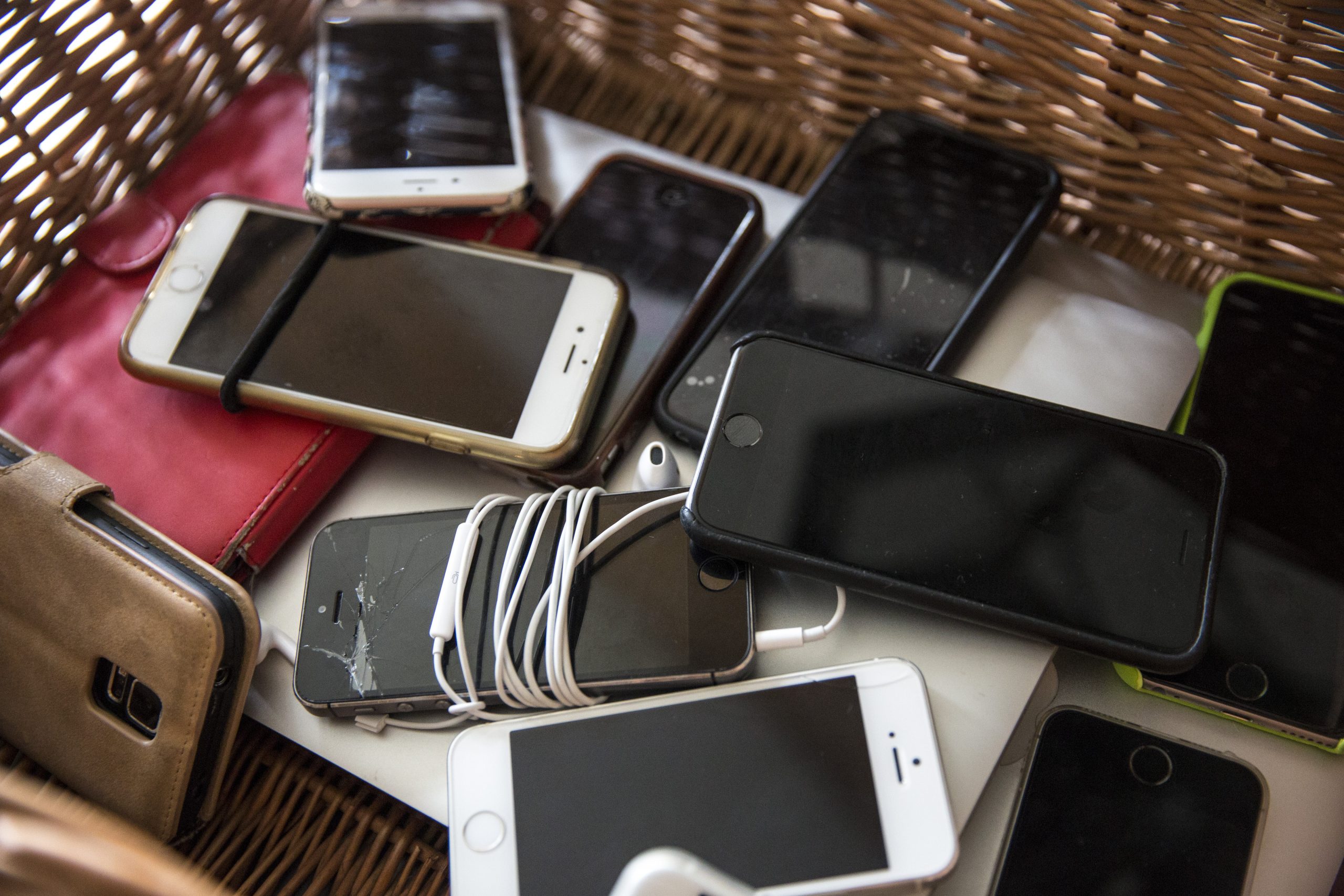
    When did we all start carrying our smartphones everywhere? And we mean everywhere…62% of us say we send and receive messages in the toilet! That’s surely a habit we can all get out of? To start building in small periods of digital detox in your day find a ‘phone home’  – a basket, box or drawer – both at work and at home where you can place your smartphone when you’re going to be staying at that place for a while. Make a point of going to your smartphone to check it rather than tethering yourself to it constantly. Carrying it around all the time is what encourages that nervous reflexive checking we all do when we pat our pockets to make sure it’s still there.

    Put your smartphone back in its place of being a tool that you use, rather than a master that dictates your day. Designating a place for it to belong that’s not on your body is a great way to start.

    How to do a digital detox #4 Declutter your screen

    The average smartphone user is using around nine apps a day, 30 per month. But with hundreds of apps installed on our smartphone that we mostly never use, it’s no wonder we find our smartphones difficult to ignore and hard put down. Get into the habit of decluttering your phone screen once a month and deinstall apps that you don’t use, file rarely-used apps into folders named by app type, and banish time-wasting apps to the furthest screen of your device. Consider completely deleting  from your phone apps  that are the biggest time wasters without offering much benefit – these might be social media for example – and only check these from a laptop or desktop computer.

    Decluttering works at home and in the office – and it can work on your smartphone too. Tidy smartphone screen, tidy mind.

    How to do a digital detox #5 Set no-phone zones

    Draw some boundaries for yourself and designate places where your phone really doesn’t belong. This will help to build in periodic screen-free spaces in your daily life. We’ve already suggested bathrooms, how about making meeting rooms at work screen free and maybe the bus or train on your daily commute? Draw mental lines in the sand so that when you step into these spaces you know that your phone shouldn’t be in your hand. Digital detox should be an ongoing, daily, process – just like healthy eating – so you don’t ever reach a crisis point and find yourself suffering from digital burnout. Your productivity and creativity will benefit too when you give yourself the headspace that comes from turning off that 24:7 noise from screens for a few minutes each day.

    That’s it, our top five tips on how to do a digital detox. There are loads more tips in the ‘Take Control‘ section in our magazine and also in our book ‘OFF’, so have a look at both of those too.

    View the original article at itstimetologoff.com

  • Eddie Pepitone: From Falling Down Drunk to Sober Stand Up

    Eddie Pepitone: From Falling Down Drunk to Sober Stand Up

    Comedy is totally addictive! It hits the part of the brain that drugs do. The love me love me I’m home I’m home part (that is when it goes well). You feel exhilarated because you are the center of attention.

    I was a few months out of my second rehab facility when a friend and fellow stand up comic handed me a DVD, a documentary about comedian Eddie Pepitone called The Bitter Buddha. I was riveted by the documentary – not only was this man talking about real things that matter on stage (while I was mostly doing sex humor) but he was sober! And had been for a very long time.

    I declared him my favorite comic and waited anxiously for his first Netflix special to come out, In Ruins. I actually planned to go to the taping in Brooklyn, but then I relapsed. And I came back. And I relapsed. And I came back.

    My first article for The Fix was about giving up marijuana. I left out the role Eddie played in that, but here we are. 

    Last February I planned to go to LA, where Eddie lived, for some shows. I also planned to get a medical marijuana card. I emailed Eddie that I was his self-appointed very biggest fan, and he agreed to meet. We made plans. This was it! I was going to meet my comedy idol! And he was sober! But surely, I thought, he probably smoked weed. Living in California and all, and how could anyone even do comedy without imbibing in something at least–at the very least–after the show. (As if I could ever wait that long.)

    I planned to meet Eddie at a vegan restaurant and then go to a play. But first, that day I took a girl I met at a meeting to Harry Potter world. And then when I dropped her off, I had to get super super stoned to make up for the few hours I couldn’t. And then I was on the phone with the sponsor I had at the time yelling about how I was going to be late. And then I just had to stop at a dispensary.

    I was late to dinner. So late, in fact, that the first thing Eddie ever said to me was, “I ordered you dinner. And I ate it all.”

    So we go to the venue and my car just stinks like weed, which Eddie noticed. He brought it up, and when I heard him say the word I got super excited. I knew it! He does smoke weed! This is all the validation I have ever needed!

    However, I was wrong. He was bringing up weed to tell me it was the last thing he quit; that after that was when his career really started; that marijuana dampens the dreaming mechanism. The hole in my gut raged, as I knew he was right. After that I kept in touch with him more. He has helped me so much, and I know he can also help you.

    I have relapsed since then, most often the same old story other chronically relapsing comics tell me: hanging out too late, too good a set, too bad a set. There are a ton of us out here, and I’m sure there are more in other industries, building it all up in the periods of sobriety, then – at best – coasting on those wins during periods of relapse, and starting all over again when we get scared enough. 

    Yet there are a number of comedians I know with sustained, continuous, joyous sobriety. Those are the ones I wanted to talk to, the ones whose secrets I desperately wanted to know, the ones who seem to hold all the horcruxes that I can’t find. 

    So I asked Eddie.

    The Fix: What is the hardest thing about being sober in the comedy industry?

    Eddie Pepitone: Feeling like you’re missing out on an exceptional post-show high. Comedy is all about the adrenaline rush, and booze and weed intensify it and make you feel like a god. Also, comedy is such an intense brain-centric art. I miss turning it off with pot. The brain relaxes with pot.

    What is the best thing about being sober in comedy?

    Feels so great to do it sober and kick ass. I actually remember everything and I did it without drugs! Also [I’m] much sharper when I’m not high. I create more sober and am surprisingly much [more] fearless. I see stoner comedians flounder sloppily a lot.

    How did you deal in the early days of sobriety?

    Early days I did (as I tend to do now) split right away after I perform and stay out of trouble. I can hang now if I want and not feel as needy but I usually get bored after a while.

    What do you think it is about comedy that attracts so many addicts? Or addicts that are attracted to comedy?

    Comedy is totally addictive! It hits the part of the brain that drugs do. The love me love me I’m home I’m home part (that is when it goes well). You feel exhilarated because you are the center of attention (what addict isn’t about me me me???). The pace of jokes, the racing mind, the intoxication of the good looking crowd. THE VALIDATION.

    What advice would you give to comedians who struggle with chronic relapse?

    Chronic relapse and being a comic is super hard, so preventative measures need to be taken. TAKE CARE OF THE MIND/BODY. Meditation practice (tough because comics thrive on chaos and have little discipline) but you have to try to slow down and get a good foundation during the day. Try to stabilize endless desires for sex and excitement by letting go of intense fantasy life. Yoga, 12-step meetings, a couple of sober or even-keeled friends (but I find all this hard as my habits are so ingrained). Gym and exercise helped me. 

    Any other advice you think is helpful?

    Build up sobriety slowly. Feel the good feelings of not being fucked up and achieving stuff. It’s so nice not to be hungover. When depressed, talk to a deep friend who gets you.

    That deep friend, for me, is the one and only Eddie Pepitone. Sometimes when I’m lonely and don’t want to bother him, I listen to his podcast, Pep Talks, in which he is exactly how he always is: brilliant and authentic and brazenly self-aware. 

    Thank you Eddie, for being a light that shines the way out of the dark. And to all my fellow chronic relapsers out there: all we have to do is stay sober ONE MORE TIME than we got drunk.

    View the original article at thefix.com

  • Too Often, Insurers Cover Opioids But Not Addiction Treatment Meds

    Too Often, Insurers Cover Opioids But Not Addiction Treatment Meds

    “Buprenorphine and methadone are incredibly effective medications… So I really do think it’s a stigma issue.”

    As is the case for many people battling opioid addiction, Mandy’s dependency started at home. She was prescribed an opioid for back pain, and her insurance company gladly covered the cost of the pills.

    However, after Mandy became dependent on opioids and was prescribed buprenorphine to help with her rehabilitation program, her insurer stepped back, unwilling to pay.

    “It makes me want to go out and use [drugs],” Mandy said when she spoke to Vox. The 29-year-old who lives in the Chicago area asked that only her first name be used. “It’s way easier to get opiates or heroin… It’s so much easier than dealing with this bullshit.” 

    Many Americans who had no problem getting their insurance companies to pay for addictive opioid pain pills have found that getting insurers to cover treatment—particularly medication-assisted treatment (MAT) that relies on pharmaceuticals like buprenorphine—is an uphill battle despite the fact that the drugs have been proven effective. 

    “Buprenorphine and methadone are incredibly effective medications,” said Tami Mark, a health economist at RTI International, a non-profit that conducts policy research. “If you had any other drug with their kind of effect size, it would be immediately covered… So I really do think it’s a stigma issue.”

    For people in early recovery, like Mandy, refusals to cover medications or delays in getting prescriptions approved can be deadly.

    “The risk of relapse is incredibly high,” said Sara Ballare-Jones, a social work case manager at the University of Kansas Health System. She often has patients wait three days to get their medications approved because they require prior authorization from the insurance companies.

    In Mandy’s case her claim was denied, leaving her to pay out of pocket for buprenorphine, which costs nearly $3,000 each year. The 29-year-old said that is a huge amount to have to pay while also handling daily expenses like student loans and rent.

    “I’m feeling all these old issues and all this shit, and then it’s just more bullshit,” she said. “I’m just trying to reenter society… It’s really hard.”

    It’s also incredibly frustrating for Mandy, who knows firsthand how easy it is to get insurers to cover opioids. “I never paid a dime for my opioids. Those were always covered,” she said. “But I’m paying all this money for the treatment.”

    Mandy’s doctor, Dennis Brightwell, said that he usually sees issues with private insurance companies. While Medicaid is required to cover most medication-assisted treatments, most private insurers balk at covering them, putting vulnerable patients in an awkward position.

    “If you send a commercial patient to the pharmacy, you don’t know until they get there how it’s going to go,” Brightwell said. “Sometimes it’s not such a problem. Sometimes it’s a prior authorization that is pretty straightforward. Sometimes it’s very difficult to get them to approve it. And there’s not an easy way to find out upfront what medications they approve.” 

    View the original article at thefix.com

  • Drug Shortages Affect Hospitals Across US

    Drug Shortages Affect Hospitals Across US

    The national drug shortage has been severe enough for the FDA to allow Pfizer to sell products that normally would have been recalled.

    Emergency departments across the United States are feeling the strain of drug shortages that are affecting physicians’ ability to treat pain and other ailments.

    According to the New York Times, some hospitals, like Norwegian American Hospital in Chicago, have been “struggling for months” lacking crucial drugs like morphine, epinephrine (adrenaline) and diltiazem, a heart medication. Norwegian has not had morphine since March of this year, the Times reported.

    According to a May 2018 survey of 247 emergency doctors, conducted by the American College of Emergency Physicians, 9 in 10 said they did not have access to important medicines, which they said negatively affected nearly 4 in 10 patients.

    While the Times notes that while the reason behind the drug shortage is complex—including the fact that drug companies have little incentive to manufacture drugs that are difficult to make but “cheaply priced”—much of it has to do with manufacturing issues at Pfizer, which produces the majority of generic injectable drugs in the U.S.

    “Most of the time, the problem is some type of quality issue related to machine or raw materials,” said Erin Fox, senior director of the University of Utah’s drug information and support services, according to CBS News. “It could be contaminated particles, bacteria, metal shavings, glass particles—all kinds of things. There’s a real quality control problem.”

    Pfizer has received multiple warning letters from the Food and Drug Administration regarding issues of quality control, forcing it to slow down production while it addresses these issues. The company estimated that many of its drugs, like morphine, will not be available until 2019, according to the Times.

    Incredibly, the drug shortage has been severe enough for the FDA to allow “Pfizer to sell products that normally would have been recalled: In May, Pfizer released morphine and other drugs in cracked syringes, with instructions to health care providers to filter the drugs before injecting them,” the Times reported.

    Being the largest pharmaceutical company in the nation, Pfizer’s shortage issues have carried over to competitors who have struggled to fill the void.

    The lack of pain medications has been a “huge issue,” according to one emergency room doctor at Norwegian American Hospital. “[Patients] are often disappointed and frustrated that the system is not functioning at the level it should be.”

    Fox, who studies drug shortages, explained that the shortage of pain medications not only has to do with manufacturing issues, but opioid restrictions put in place by the government in response to the drug abuse epidemic.

    View the original article at thefix.com

  • Parents Reunited With Son After Losing Custody For Treating Epilepsy With Marijuana

    Parents Reunited With Son After Losing Custody For Treating Epilepsy With Marijuana

    The teenager must undergo monthly drug tests and is not allowed to use the smokeable marijuana that helped his ailments. 

    After treating their chronically ill son’s debilitating seizures with smokeable marijuana, Matthew and Suzeanna Brill lost custody of 15-year-old David for more than a month and faced criminal charges as well as a possible prison sentence.

    But as High Times reported, the Georgia couple has been reunited with their son with help from the American Civil Liberties Union (ACLU). The organization appealed to the Twiggs County Juvenile Court in support of the family and their son’s health issues; in response, the court issued a 12-month protective order, which allows the family to stay together, and may ultimately lead to dismissal of the criminal charges against the Brills.

    David Brill suffers from constant and severe epileptic seizures that, according to the Brills, did not respond to the marijuana extract cannabidiol (CBD) oil, which has been suggested by some clinical trials as an effective treatment for such a condition.

    Concerned for their son’s health, the Brills gave him smokeable marijuana—possession of which is considered a misdemeanor in the state of Georgia—which, they claimed, allowed him to live without seizures for nearly three months.

    The Brills said that they never forced David to smoke marijuana, and informed their doctors, a therapist and the police about their decision. 

    A visit from the police led to David’s removal from his family’s home by Georgia’s Division of Family and Children’s Services (DFCS) for more than 30 days, during which his seizures returned, while the Brills spent six days in jail on reckless conduct charges. Upon their release, the Brills launched a GoFundMe campaign to offset the cost of a lawyer to advocate for David’s return and their pending charges.

    But in late June 2018, the Georgia branch of the ACLU stepped in to file an amicus brief to reunite David with his parents, which argued that the Brills’ use of marijuana was done only to provide relief for their son and in a manner supported, albeit indirectly, by the Georgia Legislature, which allows the possession and use of 20 fluid ounces of low THC oil for specific medical conditions, including seizure disorders.

    In response to the ACLU’s efforts, the Twiggs County Juvenile Court issued a 12-month protective order, which reunited David with his parents on condition that the family checks in twice a month with the DFCS and provides them with his medical records.

    David must also undergo monthly drug tests, but will be allowed to continue to take cannabidiol along with other epilepsy medication to treat his seizures.

    If David does not test positive for THC and his parents cooperate with the DFCS, the juvenile court can terminate the protective order and dismiss the charges against Matthew and Suzeanna Brill. A review is scheduled for December 13, 2018.

    View the original article at thefix.com