The intervention was featured on a recent episode of “Mama June: From Not To Hot.”
Just days before reality TV star June Shannon (aka Mama June) was arrested for drug possession back in March, she came face-to-face with a family intervention.
On the season finale of her spin-off reality show, Mama June: From Not to Hot, June’s children Lauryn “Pumpkin” Shannon, Alana “Honey Boo Boo” Thompson, Jessica and her niece Amber gathered at June’s sister Doe Doe’s home to share with June how her behavior has affected the family.
“I would love to come home and stay with you, tell you about my day, but I can’t do that because I’m scared. I’m scared to stay at your house,” said Alana, who is now living under the care of her sister and legal guardian Pumpkin, who is 19.
June left during the intervention. She admitted she was having a hard time. “Just ask Geno (boyfriend Eugene Edward Doak) how many times I sit there and cry to him and be like, ‘I hate my f—ing self. I want to f—ing kill the person that I am now.’ Because I don’t know who I am. I don’t know if I want to ‘kill myself’ or I want to kill the person that has took over my body,” she said.
She was finally persuaded to enter a treatment facility the same night. But after only 12 hours, June checked herself out and her boyfriend Geno picked her up.
Two days later, on March 13, the couple was arrested at a gas station in Alabama on drug possession charges. June allegedly had crack cocaine and a crack pipe on her. She and Geno now face felony charges for drug possession. The court ordered Geno to stay away from June.
June is currently in Alabama awaiting trial. According to her, she is not allowed to leave the state until after her hearing. She is facing several years of jail time.
Mama June became a household name on the reality show Here Comes Honey Boo Boo, a spin-off of Toddlers & Tiaras which documented the family’s life in rural Georgia.
Alana, who is now 13, reminisced about her pageant days with her mom by her side. “I just want mama back. Like at the pageant,” she said during the episode. “She helped me and we both did it together… And when we were at Dancing with the Stars, she was so fun and me and her spent time together. And she would take me to rehearsals and she would take me here and there.”
According to Pumpkin, the family is hoping June will leave Geno and get back to her old self.
Alana hopes things will change after the arrest. “So I really hope this is rock bottom for mama because once you hit rock bottom, there’s no more going deeper—you can only go up,” she said. “I really hope mama’s just thinking, I just got arrested. I need to get it together. I need to get my s— together. If this isn’t her wake-up call, I could possibly lose her forever.”
The infamous former drug kingpin died of natural causes.
New York drug kingpin Frank Lucas, who oversaw a sprawling international network of heroin smuggling in the 1970s, died on May 30, 2019 at the age of 88.
Lucas, whose life and crimes served as the inspiration for Ridley Scott’s Oscar-nominated 2007 drama American Gangster, claimed to be the chief architect of the “Golden Triangle” operation, in which heroin was smuggled from Southeast Asia in the coffins of U.S. servicemen killed in Vietnam.
Though the veracity of the scheme was questioned on numerous occasions, Lucas enjoyed a lavish lifestyle in the mid-1970s before federal agents and New York police shut down his empire in 1975. Lucas spent seven years in federal prison before earning his release by turning state’s witness for another drug sting.
He would remain in the public eye as a quasi-mythical figure, thanks in part to a 2000 article for New York Magazine that detailed his colorful outlaw past. The article would serve as the basis for Scott’s film, though its depiction of Lucas’ life was criticized by the agents who pursued him in the 1970s and even resulted in a defamation lawsuit.
Born in La Grange, North Carolina in 1930, Lucas made his way to Harlem, where a string of crimes, including the alleged murder of a dealer—which he claimed and then later denied—reportedly brought him to the attention of gangster Ellsworth “Bumpy” Johnson.
Under Johnson’s tutelage, Lucas said that he assembled his own drug operation, which broke the Mafia’s grip on heroin distribution by buying opium directly from growers at the borders of Thailand, Burma and Laos and bribing Army soldiers to ship the processed heroin to the United States.
As New York Magazine noted, the heroin—a potent brand known as “Blue Magic”—was sold in New York City and Newark, New Jersey, and claimed numerous lives. Richard M. Roberts, the New York City detective and attorney played by Russell Crowe in Gangster, said that “Frank Lucas has probably destroyed more black lives than the KKK could ever dream of.”
Lucas lived extravagantly from the proceeds of his drug empire, which reportedly netted him $1 million a day, and was seen in the company of such public figures as Muhammad Ali, James Brown and Diana Ross. His taste for opulence drew the attention of the Drug Enforcement Administration (DEA) and New York Police Department, which convicted him on federal and state drug charges in 1975.
Sentenced to 70 years in prison, Lucas would only serve seven after informing on fellow dealers and officials on his payroll.
He returned to prison on new drug charges in 1984, and after his release in 1991, worked tirelessly on promoting his “Original Gangster” image through the NewYork article, the Scott movie—for which he was a paid consultant—and a 2010 autobiography. Jay-Z also recorded a 2007 album, American Gangster, which was inspired by Lucas’ exploits.
He tangled with the law one final time in 2012 for reportedly lying about federal disability payments.
“All you got to know is that I am sitting here talking to you right now. Walking and talking, when I could have, should have, been dead and buried a hundred times,” Lucas said in the New York article. “And you know why that is? Because people like me.”
It’s easier to just sweep what’s uncomfortable under the rug. Better not seen, not heard, not felt. Total oblivion, that’s the name of the game.
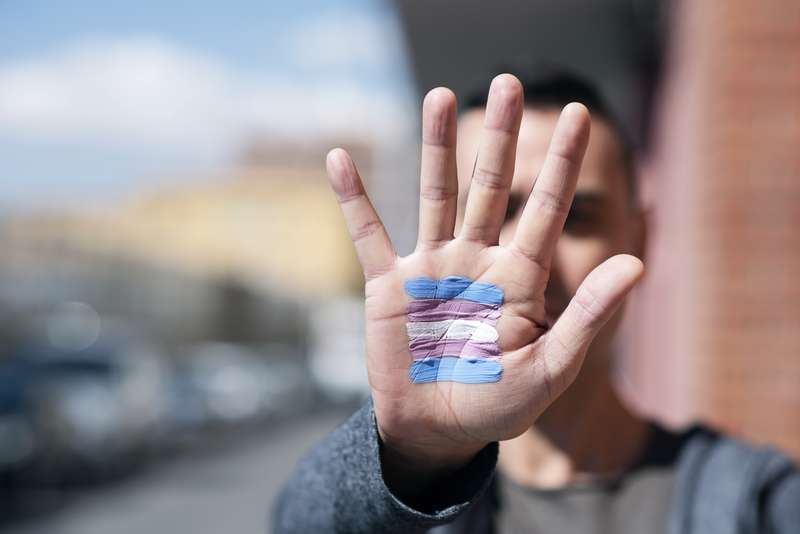
I am a trans woman.
You might be sitting here, reading this, and thinking to yourself: Okay. Congratulations! Good for you! I’m glad you had the courage to be yourself!
If you’re like many people I’ve told, you’re probably thinking something along these lines. But you’re probably also thinking, what relevance does this have? Does this belong on a site revolving around drug and alcohol addiction, harm reduction, and other related issues?
You’d be justified in asking these questions. The quick answer is yes.
I, like many trans people, began using drugs and alcohol to cope with gender dysphoria. For those who don’t know, gender dysphoria is what occurs when your body and brain are misaligned; when internally you just know that what your parents, teachers, and other kids are telling you is wrong. You want to grow your hair long, play with dolls, and wear dresses, damn it!
The rate of substance misuse in gay, lesbian, and bisexual people is twice that of heterosexual (straight) people. While reported rates of substance use disorder vary — the National Institute on Drug Abuse places the number for LGB substance abusers at 39.1 percent (versus 17.1 percent for the heterosexual population) — the disparity is higher when transgender folks are factored in, especially youth. The data is sparse, as transgender people are usually excluded from studies or grouped with other sexual minorities, but one study, for example, found that the “prevalence of substance use was 2.5-4 times higher for transgender youth compared with their nontransgender peers (depending on the substance).”
Why this disparity?
For one thing, even in folks like me (who report a higher overall satisfaction with life due to various sorts of privilege), there is still the issue of depression, body dysphoria, and societal pressure. All of these pressures combine together to form a boiling pot at times, for which the temporary relief of drugs and alcohol can seem like a godsend more than a vicious cycle from hell.
You use, you feel better for a short time. Then you return to reality, and all your issues are still there. Only now they’re worse, because you haven’t slept — or if you did sleep, you slept like shit. I’m sure many of you can relate.
My drug of choice was prescription pills, specifically uppers. But as with most pill fiends, it’s almost never limited to just one class of chemicals: I loved them all.
I was one of those “up three or four days, sleep another” types. I would take heavy amounts of amphetamines for several days and then eat a heroic dose of whatever benzodiazepines I could find. Xanax was ol’ reliable, but — as all benzodiazepines are practically the same effect-wise — any would do in a pinch. I had a prescription for both Adderall and Xanax at one point in my career as an addict, and I still found myself buying other benzodiazepines and extra Adderall, as well as other prescription stimulants and opioids.
Nothing was ever enough, and drugs were my security blanket. Speed gave me the confidence to go out in public — to not spend all my time isolated and fixating on the things I didn’t like about my body — and downers were perfect for numbing myself to anything the speed didn’t take care of.
My experience of using drugs to cope is why I’m a strong believer in the need for tolerance, especially when it comes to trans kids. We have such a high rate of self-hatred, and I know personally that one guaranteed way many members of the LGBT community deal with this is by getting numb. It’s easier to just sweep what’s uncomfortable under the rug. Better not seen, not heard, not felt. Total oblivion, that’s the name of the game.
Practicing tolerance means we accept people and let them do what needs to be done — and will eventually happen anyway, except for those in the community for whom it all gets to be unbearable: a study from the American Academy of Pediatrics found that more than half of transgender male teens and 29.9 percent of transgender female teens have attempted suicide.
This simply does not need to happen. When trans children are accepted as their stated gender, the suicide rate decreases dramatically. If you could save someone’s life, wouldn’t you want to do whatever it takes to keep them from even considering ending it all? Suicide never has to be an option.
Since 2017, I’ve had three friends die, two by suicide and one under circumstances I still haven’t cleared up. I don’t know that I want to have the mystery solved.
She was a trans woman named Margot, and in the months leading up to her death, she had been in and out of hospitals, both for physical and mental issues. I can’t say, with any confidence, whether her heart exploded or if she took herself out to avoid the extreme mistreatment she received from her family. And, judging by the area we both lived in and how bad it really can be, I’m not convinced it wasn’t something more nefarious that resulted in her death.
As for my other two friends (neither of whom made any reference or gave any hint that they may or may not be trans), I can’t tell you whether or not they were. Many of us are fantastic actors and so extraordinarily skilled at concealing such a crucial part of our identities, that even fellow trans people say, “I never would have guessed.” As far as I know, gender identity — that innate sense of who you are, which pervades every living being on this planet (whether or not you realize it) — may have been among the reasons they chose to take the quick exit out of here.
And all three of my friends struggled, to varying degrees, with addiction. It’s no secret that substance use often worsens depression and other mental health conditions.
By accepting trans people and working together to end bigotry, we will not only tackle an underreported cause of substance misuse and addiction, but also fight depression, trauma, and other underlying conditions associated with deciding to use drugs and alcohol in the first place.
In many ways, when it comes to addiction, transitioning (the process of changing one’s gender presentation and/or sex characteristics to accord with one’s internal sense of gender identity) can almost be viewed as a form of harm reduction for people who need to go for it. I have many friends who, upon living as their true selves, realize even further that their substance abuse was closely tied to depression and self-hatred.
No one’s path is ever going to be identical. I haven’t used any substances for over a month — the longest I’ve been clean in years, and I had to find my own way to do it. Transitioning isn’t a cure-all, but it can help. The best hope we have is working together to reduce the trauma experienced by transgender people in their daily lives, even (especially) as children. Until society figures out how to recognize and accept this community — my community — we won’t make a dent in the rates of addiction or suicide.
Trust me on that.
If you or someone you know needs help, call the National Suicide Prevention Lifeline at 1-800-273-TALK (8255) or Text HOME to 741741. For LGBTQ youth in crisis, call or visit The Trevor Project at 1-866-488-7386 or text START to 678678. If you think someone is in immediate danger, do not leave them alone, stay with them and call 911. Read about warning signs for suicide and more at mentalhealth.gov.
The 2017 National Survey on Drug Use and Health reports that 18.7 million people age 18 or older had a substance use disorder in the United States. Furthermore, people who identify as gay or lesbian are more than twice as likely than those who identify as heterosexual to have a sever alcohol or tobacco use disorder (Healthline.com). These alarming numbers stress a need for more substance use resources readily available to the community. Drugrehab.com have an educational guide on this subject:
A new study examined whether the messaging that addiction is a disease made people more or less likely to get help.
New research compared how differing approaches to substance use disorder affect how a person manages their addiction.
For the study, 214 participants with substance use disorder were placed into one of two groups—a group that was exposed to a “growth mindset” and a group that was exposed to messaging that emphasized addiction as a disease.
“The growth mindset message stresses that human attributes are malleable, and we know from previous work that it encourages better self-regulatory strategies such as seeking help from others,” said Jeni Burnette, associate professor of psychology at North Carolina State University and first author of the paper published in the Journal of Social and Clinical Psychology.
The growth mindset group read an article that explained the various roots of substance abuse and emphasized that there are multiple pathways to recovery, while the disease mindset group read an article that explained the effects of addiction on the brain.
After reading the articles, members of each group completed a survey asking them about their approach to dealing with their addiction.
The findings suggest that the disease messaging limited the participants’ approach to managing their addiction, while the growth mindset made participants feel more empowered to handle their substance use problem.
The growth mindset group reported feeling more confident in dealing with their problem, and reported “stronger intentions” to seek counseling or cognitive-behavioral therapy.
“When we began talking about addiction as a disease, the goal was to decrease stigma and encourage treatment,” said Sarah Desmarais, associate professor of psychology at NC State and co-author of the paper. “That worked, to an extent, but an unforeseen byproduct was that some people experiencing addiction felt like they had less agency; people with diseases have no control over them.”
The study found no difference between the groups when it came to how much they blamed themselves or whether they would seek medication-assisted treatment (MAT).
“It’s promising to see the growth mindset group express a greater willingness to seek treatment via counseling or cognitive-behavioral therapy,” said Desmarais. “And the lack of difference between groups on medication treatment is also good news, because it reflects the fact that both groups equally appreciate the medical aspects of addiction.”
The authors conclude that their findings support “moving away from messaging about addiction solely as a disease.”
“It’s more complicated than that,” said Desmarais. “Instead, the finding suggests that it would be more helpful to talk about the many different reasons people become addicted.”
The storyline for the video was inspired in part by frontman Wesley Schultz’s own experience with a loved one living with alcoholism.
The newest music video from The Lumineers shows the heartbreak and destruction brought about by alcoholism, as it follows the path of fictional Gloria Sparks, a woman whose alcoholism destroys her family.
“Gloria” is the first song released from The Lumineers’ upcoming album III, which follows three generations of the fictional Sparks family. In the music video, Gloria is seen drinking around her infant, fighting with her spouse, and ultimately leaving the scene of a car accident that she caused.
The storyline that plays out in the “Gloria” video was inspired in part by frontman Wesley Schultz’s own experience with a loved one living with alcoholism.
“Gloria is an addict,” Schultz told Variety. “No amount of love or resources could save her. She’s now been homeless for over a year. Loving an addict is like standing among the crashing waves, trying to bend the will of the sea.”
Schultz didn’t specify what his relationships was with the addict in his family, but he did mention that he had intimate experience with addiction.
“So many people are touched by addiction, way more than is talked about,” he said. “It’s a lot like cancer in that it is this way too common thing in our culture.”
Through dealing with his family member, he realized how powerful addiction is, he said.
“Trying to love an addict out of drinking, or put them in rehab, or using any resource you have to get them through it, everything we tried failed miserably,” he said. “We tried to put her in rehab almost a half dozen times overall, and nothing worked. We tried all of these spots for her to succeed in and ‘beat this addiction,’ but it’s become a really humbling experience. That whole willpower thing was thrown out the window really quickly.”
When Schultz opened up about his experience loving someone with alcoholism, he connected with other people with similar stories, which helped him create the storyline for “Gloria.”
“I get a lot of common ground with people that I never knew were dealing with anything like that, so that part has been eye opening,” he said. “It does feel like there’s this force beyond you and beyond the person you care about that is at work and at play, and no matter what you do, it seems like the disease is going to do what it wants to do and takes over this person you really care about. You’re with them through the ups and downs.”
Moulton, who served in Iraq, has been open about his own mental health struggles.
Presidential candidate Seth Moulton wants to make annual mental health screenings part of routine care, both for active duty military members and American high schoolers as part of his plan to prioritize mental health care.
Moulton, who served in Iraq with the United States Marine Corps, has been open about his own mental health struggles.
“There is still this stigma against mental health care,” he said in March. “Post-traumatic stress is very real. I have had post-traumatic stress and I have a lot of friends who have had it. And I have lost two Marines in my platoon since we have been back.”
Because of his personal experience, he knows how important proper treatment of mental health is.
“Post traumatic stress is a great example of a mental issue that is curable,” said Moulton, who currently represents Massachusetts in the House of Representatives. “I know a lot of vets who have gotten through post-traumatic stress, including myself. So we can fix this, but we need to be investing in it and we are not.”
This week, Moulton formally released his mental health plan. It calls for making annual mental health screenings standard for military service members and high school students. It would also introduce mindfulness training for both of these groups.
“Mindfulness training is preventative medicine as pioneered today by the special operations community and other elite units,” Moulton wrote.
In addition, Moulton would establish 511, national mental health hotline.
“Mental health is a core component of overall health: it strengthens our economy and country,” Moulton wrote. “Serious mental illness costs America up to $193 billion in lost earnings per year, and touches everyone in America directly or indirectly. We must do everything we can to protect mental health coverage in this country, and that means protecting this coverage from the current administration’s efforts to undermine these essential health benefits.”
Although his plan focuses heavily on service members and veterans, Moulton said that it’s important to remember that mental health affects all members of society.
“We must recognize that mental health matters to everyone. We all have personally dealt with mental health challenges, or have a family member, friend, or co-worker who has dealt with them, whether we know it or not,” he wrote. “High schoolers today are particularly at risk; in addition to the traditional anxieties of being a teenager, they face scrutiny on social media and live in a time of school shootings—all of them should get the support and care they need.”
That starts with talking openly about mental wellbeing.
“We need to make sure that we all can discuss our mental health and get whatever help we may need,” Moulton said. “That is why I am telling my own story, encouraging others to tell theirs.”
Quinto recently went on Instagram to celebrate his sober milestone.
Actor Zachary Quinto, known for playing Spock in the Star Trek reebot, opened up about his sobriety on Instagram and says he hopes that his honesty will encourage others to stay the course as well.
Quinto announced on Instagram on May 24 that he has hit his three-year sober landmark. “I guess I wrote the right jumper for the occasion, when I think about how far I’ve come and how much I’ve grown and how much more I love myself…I’m really blown away.”
Quinto, who is currently starring in the horror series NOS4A2, continued that he’s “very far from perfect – but perfectly flawed. And Working every day to honor and realize my full potential. Three years ago I had lost a connection to gratitude almost entirely. Today I am brimming with it. For this touchstone. For life’s abundance. For true friends. For support. For the sweet freedom of this journey. May it continue with compassion – curiosity – honesty and above all…LOVE.”
As Quinto said on The Today Show, “I felt like there was… I was very proud of that accomplishment for myself. To share my experience and to encourage other people who are interested in that journey for themselves is something that I have a real privilege to be able to do. I felt like it was a moment where I wanted to take that opportunity, and just acknowledge that my experience in life is entirely different now than it was three years ago, and I couldn’t be more grateful and happier for that.”
This year Quinto also appeared at a Q&A for the Rubin Museum with Dr. Judith Grisel called “The Power of Addiction.” Quinto lost his father when he was seven, but he had a fairly stable upbringing all things considered.
“I didn’t have my first drink until I was 17 or 18,” he said. “And I didn’t smoke pot until I was around the same age… It wasn’t until I achieved a certain level of success that I began to drink problematically. Into my thirties, the things I had been fighting for, I got. I was at events with open bars all the time, drinking became a socially accepted way to navigate those rooms.”
Quinto said, “I was just so miserable. I looked around at my life and said, ‘There’s no reason for me to be this unhappy.’ The most glaring component that was missing from my life was gratitude. I couldn’t be grateful, and I had so much for which to be grateful. I didn’t lose everything, I didn’t ruin relationships, I had what I think people refer to as a high bottom. There was one day when I was like, I can’t do this anymore.”
The test allows users to compare their results with others to see how their gaming habits line up to the greater population.
Now that video game addiction is a recognized mental disorder, a new test aims to help people determine if they suffer from it.
Last month, the World Health Organization (WHO) officially recognized video game addiction as a mental disorder. Now, academic researchers from the UK, Germany, China and Australia have banded together to create a test to help people determine if they have it.
Like many types of addiction, simply engaging in gaming is not in itself a mental disorder. However, gaming addiction does become a mental disorder of a person plays so excessively that they begin to experience detrimental effects on other aspects of their life for a time span of more than a year.
The researchers have publicly released the test online in the form of a five to 10 minute quiz. In its current form the quiz rates its takers on a scale with a maximum score of 20, with a higher score indicating a greater tendency towards gaming addiction.
However, there is no definitive score that defines addiction, with the test instead comparing your results with everyone else’s to allow you to see how your gaming habits line up to the greater population. The test also determines your personal motivations for gaming, be it to kill time, compete with others, or to cope with negative emotions.
Of 550 gamers tested in the UK and China, 36 of them meet the WHO’s criteria for video gaming addiction, defined as “impaired control over gaming” as well as gaming taking “precedence over other interests and daily activities” with a continued pattern of such behavior even after repeated negative consequences.
At the end of May, the WHO announced that gaming addiction would be officially recognized in their newest revision of the International Statistical Classification of Diseases and Related Health Problems (ICD-11), which is due at the beginning of the year 2022. The move gained a lot of attention from critics, including video gaming media outlets.
The Entertainment Software Association blasted the move, stating that it “recklessly trivializes real mental health issues like depression and social anxiety disorder.”
The announcement also drew ire from heath experts.
“It’s really a junk diagnosis,” said Christopher J. Ferguson, PhD, a mental health provider who co-wrote a journal article saying that the WHO’s diagnosis provided “little clarity… regarding diagnostic criteria and appropriate symptoms.”
We wanted to do something that gave addicts a feeling that they weren’t alone, that they were in the company of people who had been through what they had been through, and also have a few laughs.
Dopey podcast has been around since early 2016, and it has a steadily growing audience of people from all across the spectrum of addiction. In addition to appealing to people in recovery, it draws in people who need help, and those who have family members suffering from addiction.
As Dr. Drew told The Fixlast year, “If you’re an addict and you listen to Dopey, you will find your people and your story here. Listen to it, and you’ll see what I mean.”
Dopey attracts fascinating guests: recent episodes have featured Artie Lange, Dr. Drew, Marc Maron, Jamie Lee Curtis, gossip columnist AJ Benza, Justin Kreutzmann from the Grateful Dead, Amy Dresner, and others discussing a wide variety of topics such as Game of Thrones, seizures, booze, pills, cocaine, heroin, and more.
These days, it seems that practically everybody has a podcast. But when Dave and Chris created Dopey, they didn’t have a master plan to be the dominant podcast on addiction and recovery. Initially they were big fans of the Howard Stern Show and wanted to create something similar, but with two people who had experienced addiction and recovery at the helm.
Dave met Chris at Connecticut’s Mountainside Treatment Center in 2011. They kept in touch after getting out, eventually launching the podcast. At Dopey’s inception, Chris had a year and a half of sobriety under his belt, and Dave had three months.
Dave and Chris didn’t know where Dopey belonged in the podcast landscape because as Dave explains, “I didn’t even know what a podcast was back then. A friend of mine told me I should do a podcast. I didn’t know anything about them, I just knew I liked radio, I loved the Howard Stern show, and I thought this was an opportunity to do a show like it. I still barely know anything about podcasts!”
People who have struggled with addiction often have hilarious, insane, and unbelievable stories of the misadventures they get into when they’re high, and Dave and Chris wanted to share those stories on their podcast.
“Originally the show wasn’t going to be about recovery at all,” Dave explains. “At first I thought it would be funny to do a podcast about the dumbest stuff that we had done in our addiction. That was the idea, and we stuck with that until we recorded an episode where we talked about some of the dumb things we had done, and I realized that we had to say we were in recovery, otherwise we’d be championing drug use. It was never supposed to be a recovery podcast; it became one and the recovery had to be part of the show to keep our conscience clear.”
Dave adds that with the Dopey podcast, “We wanted to do something that gave addicts a feeling that they weren’t alone, that they were in the company of people who had been through what they had been through, and also have a few laughs. That was the idea…The show was mostly about the ridiculous stuff we had done, all the money it cost us, the life it cost us, and it was our pain and ridiculous decisions that were helping other people from making (the same) decisions.”
It turns out that humor was a powerful draw, bringing listeners to the show. “Chris had a great phrase for that called the ‘rope-a-dope,’ where you’d rope-a-dope people into recovery through the debauchery. We wound up helping people as a byproduct of the show.”
Dave is happy that Dopey is giving the world a realistic portrait of people suffering from addiction. “When you watch TV and see addiction commercials, it doesn’t really portray it in a real way. I’m very proud that Dopey did that. If you listen to the show, you hear about real people, and you really get to know what addicts are like. And when I say that, [I mean] they’re like everybody, they’re just unfortunately dependent on drugs and make terrible decisions. I do feel very, very good in playing a part in de-stigmatizing addiction and showing the world what addicts are really like.”
You don’t usually hear about humor as a treatment for addiction, but Dave realized it was an important tool in his recovery arsenal.
“For me, humor is just a tremendous part of my life, and I like to see the dark, funny side of things. I don’t think a sense of humor is required to get sober, but I think it’s an amazingly helpful tool if humor makes you feel good. There’s a lot of weirdos out there who don’t have a sense of humor. They can still get sober, but I think if you have a sense of humor, it’s a great tool in recovery. Chris and I discovered that to take away the stigma, there’s nothing better than to laugh at yourself. If you can laugh at yourself, chances are you can get better.”
The Dopey audience grew larger in response to a recent episode of This American Life that featured the podcast in-depth. But as this new and larger group of listeners began to tune in, Dopey suffered a tremendous blow. Chris relapsed and died on July 24, 2018 at the age of 33. (Chris had nearly five years of sobriety and was working on becoming a clinical psychologist at the time of his death.) Then Dave took another hit when he lost Todd, a close friend.
“I think the show really started to change when Todd died,” Dave says. “Todd was somebody I had known since I was 19, and I used more drugs with him than anyone else. He died six or seven weeks before Chris died, and it was in those six or seven weeks that I started to change the way I wanted the show to be. I just couldn’t laugh with a clear conscience in the same way because my friend had just died.”
The show revolved around Chris’ death “for a good five or six weeks. It was a very sober, very sad, freaked-out time to try and get some sort of vibe back. In a way, it was like, the show must go on. We had an audience, and we had an audience of people who benefitted from the show. I did not want the show to fall apart because Chris had died.”
Dave didn’t realize it at the time, but by pushing forward with the show after the deaths of Chris and Todd, he unintentionally showed his audience how to keep moving forward after a tragedy without using drugs or drinking.
“When Chris died, I was torn apart. I’m still incredibly upset about it. [But] I think in the end, his death carried a message of recovery. It didn’t occur to me at the time, but I heard a lot of feedback over this, and continuing the show after Chris died made people understand that they can stay sober through adversity, heartache and loss.”
When Chris was alive, he and Dave often talked about their ambitions for the show, and Dave still feels Dopey could be “a monster. I still think it can be bigger because there are so many people that are affected by addiction. That’s just one piece of it. The other piece of it is stories around drug addiction are so entertaining, and if you put those two things together, the audience could just be gigantic.”
As Dopey continues to grow, reaching an ever-widening and changing listenership, Dave’s hopes for the podcast’s future don’t seem so outlandish:
“I want it to be the biggest thing in the world, I want it to cross over in a major way where Robert Downey Jr.’s on it, where Eric Clapton’s playing “Layla” on the show, I want it to be as big as it can be.”
No business owner or manager wants to believe that their employees have a drug problem. Small businesses, in particular, tend to think that they are not susceptible to these types of issues. Unfortunately, the truth is that small companies tend to have more significant drug problems than big businesses because they do not do random drug testing. Do small businesses need random drug testing?
Do Small Businesses Need Random Drug Testing?
There are many compelling reasons that small businesses should initiate a drug testing program for the health of their business and their employees. Here are a few examples of how drug use in the workplace can affect your operation.
Drug Use Is Dangerous For Everyone
Drugs such as amphetamines can cause wild mood swings, paranoia, and symptoms mimicking the effects of schizophrenia. Amphetamines include dangerous drugs such as meth and bath salts. Even when an employee is not actively using the drug, they can still be under the drug’s effects. This situation can cause them to act irrationally or even be violent towards fellow employees, company property, or themselves.
It Can Encourage Theft
Addictive drugs like cocaine and heroin are usually costly, and employees that are on these substances may quickly exhaust their resources. Once a person on drugs gets desperate enough, they will start to seek other methods of getting money. These methods could include everything from stealing a few dollars from the till to embezzling vast amounts of funds directly from a client. Many small businesses may also see inventory shrinkage due to employees that are desperate for funds.
Adversely Affects Productivity
Drugs like marijuana, heroin, and ecstasy can cloud the mind and keep an employee from being able to think clearly or remember essential things. This means that an employee that is on drugs is not a productive employee, and this lack of productivity can cost the company hundreds of dollars in lost wages.
Leads to Sick Days
Even simple party drugs such as ecstasy can eventually lead to employees having to call out sick. Ecstasy causes deep depression when abused, and this depression can manifest itself as an illness. Those who are addicted to more severe drugs may need to call out any time they take too much of it, or they are suffering withdrawals because they can’t get it.
How Random Drug Testing Can Help
Most drug use among employees is in the form of recreational party drugs. These drugs have a significant effect on how well the employee works but the employee may not be able to see this. Because this drug use is mostly recreational rather than addictive, employees are very likely to stop using these drugs entirely if they feel that their job is on the line. This makes drug testing a very effective way to discourage drug use.
Drug testing is necessary for a completely safe business environment. It is a straightforward process, and it protects a business’s employees, clients, and revenue. Most employees will have no objection to random drug testing, and it will also secure their safety.
Small businesses need random drug testing to ensure a safe and prosperous workplace.