The Food and Drug Administration is expected to approve the new medication some time in March.
After giving birth to her son in 2017, Marie McCausland began experiencing feelings of exhaustion and guilt, and started suffering from panic attacks.
At the urging of her husband, McCausland sought help for postpartum depression—something that 1 in 9 women in the United States are diagnosed with, according to the Centers for Disease Control and Prevention (CDC).
McCausland was encouraged to seek help from a psychiatrist and antidepressants, which are the typical treatments for postpartum depression. However, the issue with these treatments is that they can take time to become effective.
But soon, a faster form of treatment may be an option.Market Watch reports that the Food and Drug Administration (FDA) is expected to approve a new medication called brexanolone sometime in March. Brexanolone was created by Sage Therapeutics and would be marketed as Zulresso.
If approved, it would become the first “drug therapy approved to specifically treat postpartum depression,” Market Watch reported.
Brexanolone is administered via intravenous infusion over a 60-hour period, according to Market Watch, and typically takes effect within days instead of weeks. The medication works by increasing allopregnanolone, a progesterone metabolite that affects mood regulation and increases in the body when a woman is pregnant, but decreases quickly after birth.
Market Watch reports that studies involving the medication have been promising. In one, researchers examined 246 women with varying degrees of postpartum depression and administered brexanolone or a placebo. To determine effectiveness, they used the Hamilton Rating Scale for Depression.
Researchers found that after 60 hours, scores fell more in the group that had taken brexanolone, indicating that it had worked for some women.
“This is unlike anything we currently have available,” Samantha Meltzer-Brody, the lead author of the study, told Market Watch. “We now [have] an opportunity to treat women quickly, within days.”
Brexanolone may not be an obvious choice for everyone. Some women experienced side effects like dizziness, fatigue and headaches.
Then, there’s the price. According to Sage Chief Business Officer Michael Cloonan, one treatment of brexanolone could run $20,000 to $35,000. Cloonan says the company is currently navigating coverage options.
There’s also the time commitment, as women opting for the treatment can expect to spend two to three days in the hospital.
“We think this is a novel mechanism that’s not been explored before,” Sage Chief Executive Jeff Jonas tells Market Watch. “Zulresso is, in many ways, just the tip of the spear.”
There is overwhelming evidence that harm reduction keeps people alive and can bring them into recovery, yet it’s still met with opposition. We ask four harm reduction workers what inspires them and what we can do to help.
Harm reduction has been a contentious topic for a while: staunch 12-step proponents who insist that abstinence is the only way to achieve recovery are met with resistance from a growing number of harm reduction activists who consider the reality of drug use more holistically while advocating for individual choice and safety. Many of us have deep-seated beliefs and strong feelings about recovery, but now more than ever we need to analyze and hopefully remove our biases, accept the overwhelming data in favor of harm reduction, and face the failed policies that have led to a national crisis. Every day 130 people die from opioid overdose in the U.S., and misuse of prescription opioids costs us an estimated 78.5 billion dollars each year.
Abstinence alone isn’t working. If it were, we wouldn’t have an epidemic on our hands. Perhaps this realization is why we are seeing an increase in harm reduction measures—increased naloxone access, fentanyl testing strips, Good Samaritan laws, and needle exchange programs. And they work: many individuals enter recovery through various harm reduction programs. But regardless of whether people get treatment or not, harm reduction measures prevent disease and save lives.
What Is Harm Reduction?
Harm reduction is frequently misunderstood. Often people think it means the use of medication-assisted treatments (pharmacology), or moderating drug use instead of eliminating it entirely. But these are narrow definitions. Harm reduction is not a particular pathway of recovery; it is a means of reducing the harm associated with drug use.
According to the Harm Reduction Coalition, “Harm reduction is a set of practical strategies and ideas aimed at reducing negative consequences associated with drug use. Harm reduction is also a movement for social justice built on a belief in, and respect for, the rights of people who use drugs.”
The philosophy of harm reduction accepts that drug use is complex and multifaceted, and that it involves a range of behaviors from frequent use to total abstinence. It acknowledges that some ways of using drugs are clearly safer than others. Harm reduction includes strategies such as safer use, managed use, needle exchanges, supervised injection sites, treatment instead of jail, and abstinence. It advocates for meeting the individual where they are and addressing their reasons for using and the conditions surrounding their drug use. Successful implementation of harm reduction should lead to well-being for individuals and communities, but not necessarily cessation of all drug use.
Tracey Helton Mitchell, Devin Reaves, Brooke Feldman, and Chad Sabora advocate for the acceptance and practice of harm reduction. We asked what motivated them to pursue their activism and how we can all be more mindful of harm reduction principles.
Tracey Helton Mitchell
Tracey Helton Mitchell came into the public eye when she was featured in HBO’s documentary Black Tar Heroin, which documented her life on the streets on San Francisco. After she found recovery, she rebuilt her life and went back to school for a bachelor’s degree in business administration and a master’s in public administration. She has dedicated her life to advocating for the individual needs of people with addiction. She documents her journey in her book The Big Fix: Hope After Heroin.
In 2016 Tracey told NPR that “We need to have a variety of different kinds of treatment interventions that address people’s needs.” In response to the argument that harm reduction measures such as needle exchange enable drug use, she said: “We’re not encouraging people to do anything, we’re taking a look at their public health behaviors and then addressing what the particular needs are, so look at the cost of one syringe versus the cost of someone getting hepatitis C and having to take care of them for a lifetime.”
What motivated you to work in harm reduction?
I started in harm reduction in response to the overdose crisis that was happening in San Francisco and the Pacific Northwest in the late 90s. I knew many people who had died, including Jennifer H., a person I loved very much.
How can we include more of the principles of harm reduction when dealing with people in recovery, and those actively taking drugs?
Harm reduction is seen by many in the recovery community as a crutch when it should be seen as a lifeline. Harm reduction should be included as part of a continuum of care with a wide variety of options based around what is best for the person. Too much focus has been made on “abstinence only” as the standard for recovery. We need to broaden our scope.
Devin Reaves, MSW, is a community organizer and grassroots advocacy leader who is in long-term recovery. He is also the co-founder and executive director of the Pennsylvania Harm Reduction Coalition (PAHRC), serves on the Camden County Addiction Awareness Task Force, and sits on the board of directors for the Association of Recovery High Schools. He has worked on the expansion of access to naloxone, the implementation of Good Samaritan policies, and the development of youth-oriented systems, and he is leading conversations to bring about public health policy changes in the area of substance use disorders.
PAHRC’s mission is to promote the health, dignity, and human rights of individuals who use drugs and the communities affected by drug use.
What motivated you to work in harm reduction?
As someone in recovery who lost a lot of friends to substance use disorder, when I learned about Narcan, I wanted it to be more available because I was sick of my friends dying. Seeing that harm reduction wasn’t utilized made me want to fight to see more of it: syringe services programs or more innovative programs.
How can we include more of the principles of harm reduction when dealing with people in recovery, and those actively taking drugs?
We can provide Fentanyl testing strips, Narcan, and sterile needles to use. For those seeking recovery, we should also provide Narcan because they are still at risk. What people don’t know about harm reduction is that individuals in programs of harm reduction are five times more likely to enter treatment—it is a pathway of recovery.
Brooke Feldman
Brooke Feldman, MSW, is a social justice activist who identifies as a member of the LGBTQ+ community and a person in long-term recovery from substance use disorder. She has spent the past decade advocating for wellness and long-term recovery being accessible to all.
What motivated you to work in harm reduction?
Well, I think I was pretty primed to embrace harm reduction principles over 10 years ago when I was taught what are called “recovery-oriented” care principles. Back in 2008, and only a few years into my own recovery journey, I was working for an organization called PRO-ACT at Philly’s first Recovery Community Center. We had a sign on the wall that greeted people with, “How can I help you with YOUR recovery?” and we were educated and trained in practices such as meeting people where they’re at, supporting people in working toward their own goals rather than our goals for them, recognizing that abstinence is not the goal for everybody, and embracing diversity in recovery experiences and mosaics of pathways. My experience with what we call recovery-oriented practice over the past decade set the stage for harm reduction principles and practices to fit perfectly. Unfortunately, while I have found my own professional experience, education, and training in recovery-oriented care to fit neatly with harm reduction, I still see many gaps between the harm reduction and recovery movements. A large motivator for me currently is the strong desire to bridge those gaps, to highlight shared goals and values, and to be part of unifying the two movements wherever possible. I believe people die in the cracks of the divide, and I hope to serve as part of the glue that seals the cracks.
How can we include more of the principles of harm reduction when dealing with people in recovery, and those actively taking drugs?
I think that if we center the human rights of choice, self-determination and autonomy when it comes to directing the course of one’s own life, we become more inclusive of harm reduction principles across the board. One concrete area for centering these principles is that of the use—or declined use—of medications to treat opioid use disorders. People have a right to utilize evidence-based medications to aid in their recovery, and people also have a right to decline the use of medication as part of their recovery. Nobody should face discrimination or refusal of resources, supports, and services based on this choice of what to put in their bodies. Also, one of the things I love about the harm reduction movement is the social justice focus. In my experience, the harm reduction movement centers the roles that oppression and marginalization play when it comes to how our systems, and society at large, respond differently to drug use depending on the skin color or socioeconomic status of the drug user. I think that centering social justice would put us all in the right position when it comes to both people currently using drugs and people in recovery, however that recovery is self-defined.
Chad Sabora
Chad Sabora is the co-founder and executive director of the Missouri Network for Opiate Reform and Recovery (Mo Network), an organization that offers services to those struggling with substance use disorder and their loved ones. He has been the focus of several episodes of the show Drug Wars on Fusion and was part of an Emmy award-winning episode of NBC News with Brian Williams. Sabora has been an expert correspondent on CNN and MSNBC. He is also president and co-founder of the nonprofit Rebel Recovery Florida, and he is on the board of directors of the Discovery Institute for Addictive Disorders in Marlboro, New Jersey. Sabora is also known for filming himself while touching fentanyl, thus debunking the myth that you can overdose through skin contact with the illicit substance.
Uniquely experienced as a former prosecutor and a person in long-term recovery, Sabora left legal practice in favor of pursuing drug policy reform and advocacy. He founded Mo Network in 2013, where he heads their work on legislative policy reform. Sabora and Mo Network focus on expanding services based on evidence-based solutions, and they lobby for more effective drug policy locally in Missouri and also at the federal level.
He has helped write, advocate for, and pass several pieces of legislation in Missouri, namely first responder access to Narcan, third-party and over-the-counter access to Narcan, 911 Good Samaritan immunity, and access to medication-assisted treatment in various environments such as addiction treatment, mental health facilities, family court, and for certain frequently-overlooked populations such as veterans.
What motivated you to work in harm reduction?
The overwhelming data, basic common sense, failed policies of the past, and unconditional love was the motivation.
How can we include more of the principles of harm reduction when dealing with people in recovery, and those actively taking drugs?
Inclusion will come in time, as long as we stay vigilant. Changing moral compasses and inherent biases could take a generation before we see the full impact.
The evidence is clear: If we provide the education and resources for people to use drugs safely, we reduce disease and save lives. Frequently we open the door to recovery. Isn’t it time for us all to start advocating for (or at least accepting) harm reduction wherever and whenever we can?
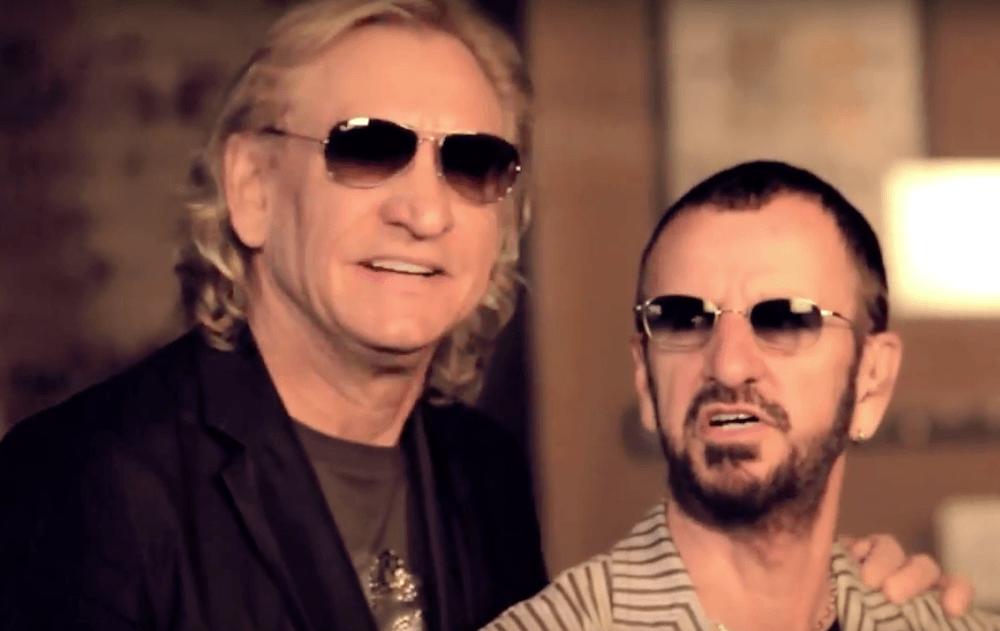
The rock star brothers-in-law got candid about addiction, recovery, and Tom Petty in a recent Rolling Stone interview.
Ringo Starr and Joe Walsh are not only rock legends, but they have also both been in recovery for many years. Now they are both speaking about their journeys to sobriety, and how they helped each other get there.
Eagles guitarist Walsh received a humanitarian award for his work in the recovery community at the 74th annual gala for Facing Addiction with NCADD last October. His friend and former Beatles drummer, Starr, presented him with the award.
When Walsh went to rehab in 1995, he wasn’t sure if he’d ever play guitar again. Eventually, Starr brought him back to music and became a sober buddy. (Starr is also Walsh’s brother-in-law.)
“I got sober because of a fellowship of men and women who were sober alcoholics,” Walsh told Rolling Stone. “After a couple years, I talked about [my sobriety] with other alcoholics and tried to help them. The only person who can get somebody else sober is somebody who’s been there and done that. I realized that I do more good showing people that there’s life after addiction.”
When Starr got sober, he put together Ringo Starr & His All-Starr Band, which included Walsh on guitar. Starr, too, was afraid that he wouldn’t be able to play once he got sober.
“I thought I don’t know how you do anything if you’re not drunk,” he said. “I couldn’t play sober, but I also couldn’t play as a drunk. So when I did end up in this rehab, it was like a light went on and said you’re a musician, you play good.”
Rolling Stone asked Walsh about the opioid crisis, given that a lot of musicians his age have been taking painkillers to deal with the rigors of performing.
“I don’t think America’s aware of how bad it is out there,” Walsh replied. “I’m talking about addiction across the board. Opiate addiction, it’s killing young kids by the hundreds—by the thousands.
“The problem is if you hurt physically, you can get prescription pills for that,” Walsh continued. “The problem is that after that pain is gone, whatever substance you used very subtly convinces you that you can’t do anything without it and then you have to deal with that. And people don’t know that.”
Starr then reflected on a fellow musician who succumbed to opioid abuse, Tom Petty, who died in 2017 at the age of 66.
“The discussion is very difficult, because we did as much as anybody did and we’re still here and we’re sober… I don’t know why Tom’s gone and I’m here. It’s unanswerable.”
The policy change will increase access to the medication and reduce delays in treatment.
Prior authorization will no longer be required for Virginia physicians to prescribe a form of the opioid addiction medication, Suboxone, to patients.
The state’s Department of Medical Assistance Services (DMAS), which oversees the Virginia Medicaid program, has removed the authorization requirement for Suboxone film (a film applied to the tongue). Suboxone is a brand of buprenorphine that assists individuals in reducing or quitting their dependencies on heroin or prescription opioids.
Acting chief medical officer of the DMAS, Dr. Chethan Bachireddy, said in a press release that his agency has “a responsibility to understand and to meet the needs of our members and the providers who treat them.”
Before the policy change, Virginia physicians were required to obtain prior authorization from DMAS or one of its contracted health plans to prescribe Suboxone film.
According to the Virginia Mercury, the change will increase access to the medication and reduce delays in treatment.
The VirginiaMercury also cited a recent study by Virginia Commonwealth University that found that the expansion of Medicaid—approved by voters in 2018—will provide as many as 60,000 uninsured Virginians with access to treatment services for dependency issues, including 18,000 with opioid dependency.
In all, 400,000 Virginia residents are expected to gain access to coverage in 2019.
Data culled from the office of the state’s chief medical examiner in January 2019 found that 1,229 Old Dominion residents died as a result of opioid-related overdose in 2018—the same number of fatalities that occurred in 2017. However, the total number of 2018 fatalities will not be available until this spring.
The revision of the authorization requirement applies only to Suboxone film, but not to other forms of buprenorphine that are not on the Medicaid preferred drugs list.
But buprenorphine, often in conjunction with counseling, has proven to be effective in lowering death rates among those who have suffered a previous overdose. The DMAS press release cited a study that suggested that among overdose survivors, there was a 40% decrease in the death rate of those who used Suboxone, compared to those who did not.
Bachireddy described the revision as one of several “effective, proactive strategies that are putting Virginia at the forefront in the fight against the opioid crisis.”
A recent op-ed explored how the opioid epidemic may be driving down the number of employees in the US workforce.
The opioid crisis is affecting the workforce—especially when it comes to men, according to an opinion piece in Bloomberg.
The op-ed, written by columnist Noah Smith, states that the number of men in the workforce has been decreasing for years—especially since the 2000s. Since 2009, women’s participation has also been decreasing.
“Much of the decline is due to educated people taking early retirement, or to people staying in school longer as education becomes more important,” Smith writes. “But a sizable chunk may be due to drug problems, especially among men.”
In 2017, Smith notes, a Princeton University economist named Alan Krueger looked into the relationship between the use of pain medication and not being in the workforce.
Krueger’s findings showed that in early 2010, 43.5% of males aged 25 to 54 who were not in the labor force admitted to using a pain medication the day before. In contrast, Krueger found that for those who were currently working or searching for work, that percentage fell to about 20%.
Krueger also noted that in countries with a higher opioid prescription rate, the number of those in the workforce fell accordingly.
However, Smith points out, it can be difficult to determine the cause in situations like this. “It might be that people started using drugs because they were disabled or had no chance of finding a job, rather than the reverse,” he writes.
Smith also cites a recent study from economists Dionissi Aliprantis, Kyle Fee and Mark Schweitzer at the Federal Reserve Bank of Cleveland which examined the cause more deeply.
The economists argue that if those without a job turn to opioids, then areas affected most by the Great Recession would likely have seen a larger jump in use. But they state that this was not the case, suggesting that drug use is actually the cause of decreasing workforce numbers.
However, Smith points out that the results of their study are by no means conclusive.
“First of all, the authors’ measure of temporary changes in labor demand could have statistical problems that make it unreliable for this sort of measurement,” he writes. “Second, the effect of weak labor markets on drug use might be longer term—people who think they’ll be unemployed only briefly might not turn to drugs, while people who see no prospects might start using heroin or fentanyl.”
In conclusion, Smith notes that evidence points strongly to the idea that the opioid epidemic is negatively affecting the U.S. economy and workforce, and that more action is needed to address it.
“It will be a generation before the impact of the horrendous opioid epidemic fades from the national statistics,” Smith concludes. “But with the right steps now, the U.S. might at least be able to end it more quickly.”
The sober reality star took to Instagram to reveal that she is battling alcoholism and is “now a friend of Bill W.”
Vanderpump Rules star Lala Kent has a problem, and for the first time she is admitting it publicly. Kent, 29, shared on Instagram that she is seeking help for alcoholism by joining a 12-step fellowship.
“Five months ago, I came to the realization that I am an alcoholic, and I am now a friend of Bill W., which you will never know how much this program means to me [and] has given me new life,” Kent said in a temporary Instagram post, according to People.
The reality TV star went on, “I always say if you don’t have to be sober, I wouldn’t recommend it, but me—as someone who does need to be sober—being in my right frame of mind every single day is truly incredible. When I’m having the roughest day that I could possibly have, I—for once in a very, very long time—see the light at the end of the tunnel. I know that tomorrow I’m gonna be okay.”
Three months ago, Kent announced that she was 50 days sober.
“We’re just kind of taking a different turn with our life,” she told People in December. At the time, she explained that she and her fiancé, Randall Emmett, had made a pact to help each other stay sober. In just 50 days, Kent had already seen the positive effects of sobriety on her life.
“I have been open about suffering from anxiety, and [I’m] not saying that I don’t anymore, but it has gone down tremendously since I gave up drinking,” she said at the time. “I don’t smoke weed anymore. I’m a clean baby, and I feel like I glow a little bit… I’m ready to be a healthy person.”
Kent said that her drinking was beginning to feel out of control after her father, Kent Burningham, passed away last April.
“I’m thinking a lot about my dad today—not different from any other day—and I just feel very, very blessed that I think back on my time that I had with him and there’s no regrets,” Kent said in her recent post.
“I’m so grateful that I have this program and that I can mourn him. The program has allowed me to sit down and remember my dad in a clear frame of mind, and remember what he brought to my life, what he meant to me, what he taught me.”
The former U.S. Representative is urging state officials to end “deceptive and discriminatory practices by health insurance plans.”
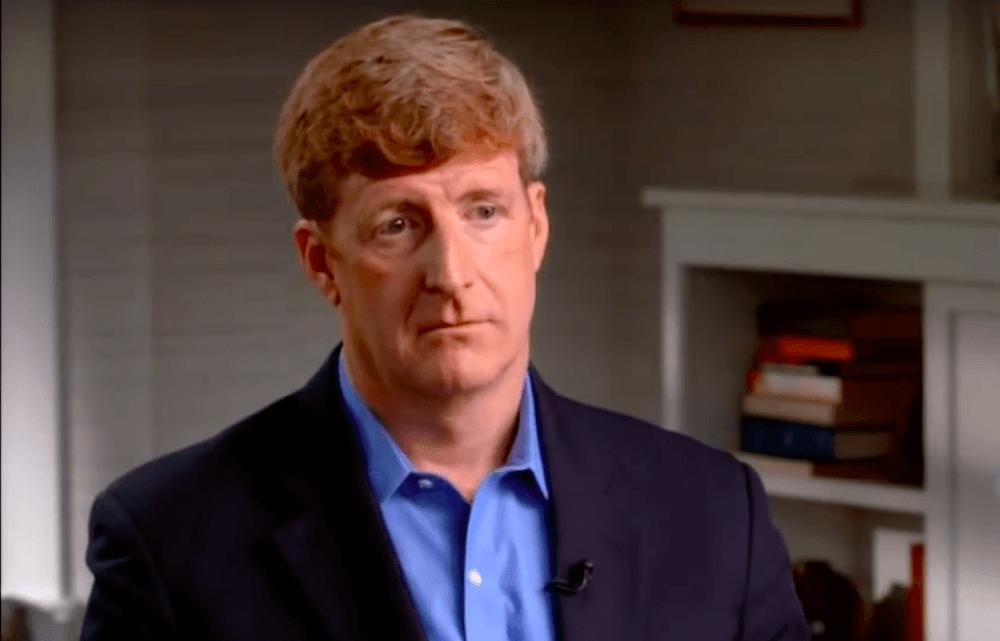
Former U.S. Representative Patrick Kennedy joined a group of mental health advocates to fight for the rights of individuals to receive legally mandated coverage of mental health and addiction services without being subjected to what he called “deceptive and discriminatory health insurance plans.”
Kennedy was a co-signer on letters sent to U.S. House Speaker Nancy Pelosi and Senate Majority Leader Mitch McConnell, as well as state attorneys general and insurance commissioners, that cited a recent class-action lawsuit against a major behavioral health care company, United Behavioral Health, which was deemed to have used “flawed and overly restrictive internal guidelines” to deny coverage to tens of thousands of mental health and substance use disorder patients, including many children.
“In short, the nation’s largest managed behavioral health care company was found liable for protecting its bottom line at the expense of its vulnerable members,” read the letter.
The other signers were former U.S. Rep. James Ramstad; Mary Giliberti, CEO of the National Alliance on Mental Illness (NAMI); and Mental Health America president and CEO Paul Gionfriddo.
As the Providence Journal noted, Kennedy has been a longtime advocate for mental health and addiction services. He co-sponsored the Mental Health Parity and Addition Equity Act of 2008, which mandates health insurers to provide coverage for treatment for mental health and addiction disorders on par with coverage for physical health care.
After leaving the House of Representatives in 2011, Kennedy has advocated for mental health and addiction issues, most recently at the Connecticut State Capitol, where on March 5, he advocated for the passage of House Bill 7125, which would require health insurance companies to provide the state General Assembly an annual report on parity efforts for mental health and dependency benefits.
The letter submitted by Kennedy and his co-signers noted that the lawsuit involving United Behavioral Health was not an isolated incident. “Other health plans, such as Aetna, Kaiser, and Anthem Blue Cross Blue Shield have also been subject to recent court decisions and regulatory fines,” they stated in the letter.
“As rates of overdoses and suicides continue to decrease U.S. life expectancy, our nation must ensure that people have access to treatment for mental health and substance use disorders,” the letter concluded. “Illegal insurance denials should not stand in their way.”
While the nation focuses on fighting opioids, more people are turning to methamphetamine. Seizures of the drug are rising, according to a report by the Wall Street Journal.
According to Drug Enforcement Administration (DEA) officials, seizures of methamphetamine rose 118% between 2010 and 2017, according to the Cato Institute. In 2017, law enforcement conducted 347,807 seizures of meth.
At the same time, overdose deaths from the illicit stimulant are rising, reaching more than 10,000 in 2017.
While meth has been more common in southern and western states, it is now showing up regularly in areas where it wasn’t prevalent before, including New England. There, DEA officer Jon DeLena said that the alarming trajectory of meth use reminded him of another drug that has rocked the region.
“Everybody’s biggest fear is what it’s going to look like if meth hits us like fentanyl did,” DeLena told The Wall Street Journal.
The influx in meth is said to be driven in part by increased production of cheaper and more potent product by Mexican cartels. While in the past, meth production happened on a small scale, cartels have the means and motivation to push larger quantities into more regions.
That is why Dr. Jeffrey A. Singer, a senior fellow at the Cato Institute, argues that the U.S. should stop focusing on “fighting” the war on drugs, and instead focus on treating the underlying conditions that leave people vulnerable to substance abuse.
“Meth’s comeback shows why waging a war on drugs is like playing a game of ‘Whack-a-Mole,’” Singer wrote for the Washington Examiner last year. “The government cracked down on Sudafed (affecting millions of cold and allergy sufferers) while SWAT teams descended on domestic meth labs, and Mexican cartels popped up with a cheaper and better manufacturing system.
“In the case of opioids, authorities reduced opioid prescription and production, and nonmedical users migrated over to more dangerous heroin and fentanyl, driving up the overdose rate.”
In response to the most recent numbers, Singer wrote, “In 2005 Congress acted to address the ‘Meth Crisis.’ Shortly thereafter it turned its attention to the ‘Opioid Crisis.’ Now it is dealing with a fentanyl crisis and a replay of the meth crisis. How many more will die or suffer needlessly before lawmakers wise up?”
As meth overdoses become more common, it has highlighted the limits of addiction medications. While opioid overdoses can often be reversed with Narcan (naloxone) and opioid use disorder can be treated with medication, there are few medical options to help people who abuse meth.
“We’re realizing that we don’t have everything we might wish we had to address these different kinds of drugs,” psychiatrist Margaret Jarvis, a distinguished fellow for the American Society of Addiction Medicine, said earlier this year.
Even medical people are treating you like a second-class citizen. Is this really about ringworm or is this reminding you of what it’s like to be a person with addiction?
So one day I see this pink round patch on my forearm. It itches. I immediately start Googling eczema and psoriasis. Nope, looks nothing like that. But it does have that distinctive red ring so I look up pictures of ringworm and voila, there it is, my new friend.
When I was smoking meth and shooting cocaine, I never got sick. I never got staph or scabies despite lying around with a bunch of gutter punks. But at six years sober, out of nowhere, I get ringworm. I don’t deal with children. Colonel Puff Puff, my cat, doesn’t have it. What the fuck is going on?
Despite its grotesque and misleading name, it has nothing to do with worms. Ringworm is a type of skin fungus akin to athlete’s foot and jock itch. Trying to make light of the situation, I tweeted: “I was super depressed and smoking again but suddenly I got ringworm and that cheered me right up.” I was hit with a bunch of questions like “Is that the one that makes you skinny?”
No dear, that’s a tapeworm, but thanks for the concern.
I’d heard ringworm was very contagious so I went straight to urgent care where they confirmed it was indeed ringworm. I was prescribed a cream that burned like the fires of damnation and told to “keep it covered” at night to protect the Colonel. (When the Colonel last got ringworm, it cost $2,500 for multiple lyme dips, shavings, and numerous vet visits to get rid of it. It’s a persistent motherfucker.)
I went to the pharmacy, pulled up my sleeve, and told the pharmacist I had ringworm.
“I don’t know how I got it,” I said, annoyed.
The pharmacist pulled up the leg of her capri pants and said, “I got it working here! I was really stressed out because I was getting married and my mom had a stroke and boom.”
We both laughed and then I took my supplies home, hopeful things would soon return to normal.
Once I informed my friends of my condition, nobody would touch me. Friends and neighbors wouldn’t come into my apartment nor let me into theirs.
“We love you and your ringworm,” they’d chant from the other side of the door. I was beginning to feel very leper-like even though it was one fucking red ring. My sponsor told me I could still go to meetings but I didn’t want to take the chance of giving it to anybody…(except maybe a few specific people).
Two nights after following the urgent care doc’s protocol, the ringworm seemed to be getting worse. I saw a new circle sprouting up and there was a clear red rectangular demarcation from the band-aid. Kill me.
Panicked that I would soon be a walking petri dish of ringworm, I went to my primary care clinic as a walk-in patient. This clinic treats a lot of homeless people and has quite a few tents parked permanently outside with adjacent grocery carts packed with stuffed animals and recyclables and blankets. People are allowed to shower in the downstairs bathroom and it often gets crowded in the waiting area. But once I told the receptionist of my “condition,” I was quickly escorted to an empty room and quarantined.
Four long hours I sat in that room, my phone dying, sneaking out to smoke and feeling more and more depleted and well, just gross. A triage nurse came in briefly and told me that the urgent care doctor had made a huge error by telling me to cover the ringworm. It had created a tiny greenhouse, capturing the moisture and providing the perfect breeding ground for the ringworm to reproduce. Perfect.
Finally, I was taken to another area to see a doctor. As I waited, I looked at the white cabinets. Two were locked. Where were the syringes, I wondered.
Wait, what? An enormous urge to use had come over me. I wanted to get high, call my ex, die…. It’s just ringworm, I tried to tell myself. Calm down. Why the sudden impulse to use?
“You’re disgusting and poor and getting old and nobody loves you,” my head said.
Thankfully interrupting my horrible inner dialogue, the doctor, a big ruddy guy in his mid-30’s who looked like an ex-linebacker, came in and shook my hand. I cringed inside.
“I hear you have a rash,” he said.
“I have ringworm,” I corrected him, hanging my head in shame.
“Okay, let’s take a look.” He put on gloves initially but then took them off.
“You have one ringworm,” he said. “The rest of the redness and that other circle is contact dermatitis from the bandage. You’re allergic to something in that bandage.” He touched the irritated area with an ungloved hand.
“Oh.” I was near tears.
“I’m going to give you another cream and just wear long sleeves if your cat sleeps with you. Better yet, take him to the vet to get him checked out. This stuff is everywhere. It’s really a reaction to your own flora. Do you do yoga?”
“No.”
“It’s very common among wrestlers because of the mats and sweat and body contact.”
“No wrestling and unfortunately no body contact.”
“You could have gotten it anywhere. If your immune system is compromised from stress or HIV or chemotherapy…”
“Stress is my hobby these days,” I said. “Everything feels itchy, doc, like especially my head.”
“Do you want me to check your scalp?”
“Please.”
I took down my bun and into my dirty hair he plunged with bare hands. I felt ashamed but grateful that somebody was touching me.
“You’re good,” he said.
“Thank you for making me feel like a human being. Really…”
He smiled.
But as I drove to the pharmacy, I still felt depressed and still felt like using. Why?
The answer, as usual, came in a phone call from my friend, addictionologist and psychiatrist Dr. Howard Wetsman.
“I understand people being scared about the ringworm because of its name and reputation. But what you’re experiencing is being shunned and isolated. People are treating you like your presence can hurt them. Even medical people are treating you like a second-class citizen. Is this really about a skin fungus or is this reminding you of what it’s like to be a person with addiction?” he asked.
Whoa.
“When we’re isolated or feel ‘less than,’ the dopamine receptors in the reward center actually stop being available. You can’t feel your own dopamine as well as before. We need those receptors to keep up dopamine tone, and without that we’re back to feeling restless, irritable, and discontented. And that only goes to one place, right?”
“Yeah I really wanted to use and it freaked me out.”
“When you’re an addict and your dopamine tone is lowered, your brain goes ‘we gotta fix this fast.’ It doesn’t care if it’s an éclair or heroin or death…”
“That’s why I’ve been smoking…”
“Nicotine will give you dopamine for sure. But let’s talk bigger picture. When we go to treatment and we’re told to sit down and shut up, when we’re treated like stupid people who abused a substance that everyone else was smart enough to stay away from, when we’re told to wait three hours sitting on broken plastic chairs for someone who doesn’t give a shit, the deck is stacked against the treatment working. No healthcare system that systematically lowers people’s dopamine, much less one that treats addiction, will succeed,” he told me.
“It’s the same in the rooms,” he continued. “The reason the 12 steps work is because you don’t have to feel ‘better than’ to not be ‘less than.’ The two messages you should get from an AA meeting are that you are never alone again and you aren’t less than anyone. But when people don’t sponsor with love, when some old-timer wants to be the boss, when it’s all about some guy with more time being right instead of helping, you lose those messages. That’s not a problem with the message; that’s a problem with the messenger. Don’t let the messenger fuck up the message. You aren’t less than anyone!”
I sign every copy of My Fair Junkie with “fuck shame” and I don’t think I really knew why until just now.
For more on dopamine and feeling “less than,” check out Dr. Wetsman’s youtube talk.
“You’ve got to acknowledge you are an addict every day, first thing, right when you wake up,” the actor said on a recent episode of his podcast.
For 12 years, actor Dax Shepard started his day by taking time to acknowledge that he is an addict.
“You’ve got to acknowledge you are an addict every day, first thing, right when you wake up, you write a page,” Shepard told Gwyneth Paltrow on his Armchair Expert podcast. “It doesn’t even have to be about being an addict. It’s just this physical activity there to remind myself, ‘I have a thing that I’ll never not have.’”
“I wrote a page in my journal every single morning because I had this thought that if I can’t commit 20 minutes to remember I’m an addict each morning, I’m going to end up blowing nine hours a day as an addict. I have to be able to say, minimally this is your commitment.”
Shepard, who is going on his 15th year of sobriety, said he has only recently relaxed the ritual.
“In general, I’m embarrassed to admit this. For the very first 12 years of sobriety, I didn’t miss a single day, not one. I get crazy superstitious about it.”
Even though he has achieved long-term sobriety, Shepard said that he continues to grow in his confidence and self-love.
“At a certain point, you’re like, ‘F**k it.’ I’m going to be who I am, I’m not going to look in the mirror and be so critical of everything, and I’m not going to rehash every mistake I’ve ever made in my life and flagellate myself for it. I really did feel when I turned 40 I could feel a real shift,” said the actor, who is 44. “I was like, ‘I’m not going to do that anymore.’ Because I was ruled by my insecurities, and like by the idea that I was unlovable, and I kept just trying to prove that out.”
Instead of fixating on his insecurities, Shepard now focuses on building his relationship with his wife, actress Kristen Bell, who has been supportive of his sobriety. Bell went on Instagram last year to celebrate the work that her husband puts into his recovery—both morning and night.
“I know how much you loved using. I know how much it got in your way. And I know, because I saw, how hard you worked to live without it,” she wrote when Shepard celebrated 14 years sober.
“I will forever be in awe of your dedication, and the level of fierce moral inventory you perform on yourself, like an emotional surgery, every single night.”