Category: Addiction News

  • Square Co-Founder Tristan O'Tierney Dies at 35

    Square Co-Founder Tristan O'Tierney Dies at 35

    O’Tierney was open about his ongoing struggles with addiction. 

    Tristan O’Tierney, who co-founded the payment company Square, died on February 23 in a hospital in Florida.

    No official cause of death was released at the time of the announcement, though his mother, Pamela Tierney, told the San Francisco Chronicle that it “was in relation to his addiction.” Tierney, a software engineer who developed Square’s original mobile payment app in 2009, had been in a three-month rehabilitation program in Ocala, Florida, and had previously discussed his struggles with unspecified dependency issues on social media.

    A graduate of the Rochester Institute of Technology, O’Tierney began working in Bay Area software companies like Apple and VMWare in 2005 before joining forces with Twitter co-founder Jack Dorsey and Jim McKelvey in 2009 to co-found Square, which allows individuals to accept credit card payments on their smartphone or tablet computer. O’Tierney, who created the company’s original mobile payment app from Dorsey’s napkin sketches, remained with Square until 2013.  

    The company issued a statement in regard to O’Tierney’s passing that read, “Tristan was a part of Square’s founding story and we are deeply saddened by his passing. Our thoughts are with his family and friends.”

    After leaving Square, O’Tierney turned to photography, which he described as his “singular creative outlet.” His website showcased examples of his landscape images and portraits, taken at locations throughout the world. 

    O’Tierney addressed his struggles with dependency via social media. In 2018, he wrote, “As some of you know, I’ve been battling with addiction for these past few years. With some success. A lot of failure too though (sic).” 

    Tierney’s mother said that she had recently visited her son at the Ocala rehab facility, and reported that he was doing well. “We had a great time,” she said. “We just kept hoping and hoping.”

    Pamela Tierney said to the Chronicle that at the time of his death, a doctor informed her that O’Tierney had experienced kidney failure and was in cardiac arrest. “I know he got to the hospital, he couldn’t breathe, and they couldn’t revive him,” she said.

    Friends and former Square colleagues posted tributes to O’Tierney on their own social media accounts. Dom Sagolla, a former associate and roommate of O’Tierney, told the Chronicle that he wanted “his memory and legacy to last.”

    In addition to his parents, O’Tierney is survived by his parents, daughter, Rumi Ari O’Tierney, his half-sister, Terri, and girlfriend Anjela Ramos. A memorial is scheduled for March 2 at Brookside Funeral Home in Houston, Texas.

    View the original article at thefix.com

  • Woman Celebrates 364 Days Of Sobriety After 33 Years Of Addiction

    Woman Celebrates 364 Days Of Sobriety After 33 Years Of Addiction

    “The longer I’m clean the more I like myself the way I am and I don’t need all those things,” said the Washington-based woman.

    A year ago, if residents of Port Angeles, Washington, saw Jenni Tiderman standing on a street corner, it was likely that she was panhandling or trying to score her next fix. This week, however, Tiderman was out for an entirely different reason, holding a sign on the street corner celebrating 364 days of sobriety. 

    “I’ve received so much support from this community, it’s amazing,” Tiderman told The Peninsula Daily News. “At first people thought I was out there panhandling… but this is just to spread awareness and hope that this can be done. If you knew me when I was out there in my active addiction, where I’m at right now is absolutely amazing.”

    Tiderman was addicted to meth, marijuana, alcohol for 33 years, she said.

    However, she has now been sober for a year. “The longer I’m clean the more I like myself the way I am and I don’t need all those things.”

    She couldn’t celebrate publicly on her one-year anniversary because her sister was getting married that day. It’s clear that family is important to Tiderman, who has been able to reconnect with her six children over the course of the year.

    Her sister, Tami Maupin, has been sober from meth and heroin for two years and was on hand to celebrate Tiderman’s milestone. 

    “I get to give her the one year coin,” said Maupin. “I didn’t know she could make it here… but I feel more confidence in her daily. She’s doing the stuff she’s supposed to be doing and I’m so proud of her.”

    Maupin said that she keeps a close eye on her sister, helping her navigate recovery. 

    “She’s come so far in a year and she has a long ways to go. She’s far from cured, but I trust her and I couldn’t say that a year ago. I trust her today, and that’s pretty huge.”

    Tiderman’s father, Dale Tiderman, said that his family is all healing now that Tiderman is sober. 

    “We’re all just really proud of her and how she’s been doing,” he said. “You can’t force someone to get better; they have to want it themselves. She finally found and seized the opportunity and she’s doing it.”

    The Rev. Jason Himmelberger, who is Tiderman’s pastor, said that she is an example of what can happen when the community supports people in recovery. 

    “The community support has helped her quite a bit and that’s where I think it’s so important for us as a community to remember that people struggling with addiction are sons and daughters too. If we are to apply that same support to all of them, what would that do in their lives?”

    View the original article at thefix.com

  • Does Restricting Prescription Opioids Save Lives In The Long Term?

    Does Restricting Prescription Opioids Save Lives In The Long Term?

    A new study found that over a five- to 10-year period, policies limiting the prescription of opioids would initially increase deaths as many individuals turn to heroin or fentanyl.

    Combating the opioid epidemic is complicated for a number of reasons—one of which, according to new research, is that cutting back on prescriptions may cause more deaths in the short-term, despite saving them in the long-term.

    This information comes from a simulation study recently published in the American Journal of Public Health. The study determined that over a five- to 10-year period, policies limiting the prescription of opioids would initially increase deaths as individuals may turn to heroin or fentanyl.

    The simulation study was led by Stanford University researchers Allison Pitt, Keith Humphreys and Margaret Brandeau.

    “This doesn’t mean these policies should not be considered,” said Humphreys, who was a former senior policy adviser at the White House Office of National Drug Control Policy (ONDCP) during the Obama administration. “Over longer periods, they will reduce deaths by reducing the number of people who initiate prescription opioids.”

    Austin Frakt, director of the Partnered Evidence-Based Policy Resource Center at the VA Boston Healthcare System, wrote in a New York Times opinion piece that restrictions on prescribing opioids seem to be a logical response to curbing the crisis. As many as 80% of heroin users in the U.S. are estimated to have previously used prescription opioids.

    However, the idea of limiting prescriptions becomes more complicated when individuals who are truly in need of the medications for pain management are taken into account. 

    It’s a situation in which there has to be a trade-off of some sort, according to Frakt.

    “This is the fundamental trade-off opioids present, with which we have been battling for decades,” Frakt writes. “As the pendulum swung further toward treating pain, opioid-related deaths ballooned. Now to stem the deaths, it is swinging back, challenging us to treat pain in other ways.”

    According to the researchers of the simulation study, there is no one policy that would solve the crisis or even make a significant difference. The policy that could be most effective, according to the researchers, is increasing access to naloxone, an opioid overdose antidote. Even so, this would likely only bring the deaths down about 4% over the next decade. 

    “Expanding access to naloxone is inexpensive and saves lives,” Pitt said. “That’s an attractive combination, but we should be realistic that it will only save a small percentage of opioid deaths.” 

    As such, researchers note that combining policies such as increasing naloxone access, expanding treatment and more needle exchanges could help to save twice that number of lives. 

    “Policy interventions can prevent many deaths, as well as the other destruction that opioids bring to individuals, families and communities,” Frakt concludes. “But prescription opioids are neither all bad nor all good. Policies that sound sensible—potentially helping many people—could also cause a lot of damage, particularly in the short run.”

    View the original article at thefix.com

  • Richard Pryor's Son Talks Addiction, Growing Up With The Comic Icon

    Richard Pryor's Son Talks Addiction, Growing Up With The Comic Icon

    “I would just do drugs over and over. It consumed me. Finally one night, I called my dad and told him I needed help,” Richard Pryor Jr recalled in a recent interview.

    Richard Pryor Jr, son of the iconic comedic legend, recently spoke out about his past addiction, and how he thankfully didn’t follow in his late father’s tragic footsteps.

    Pryor Jr spoke with Fox News on the eve of the release of his memoir, In a Pryor Life.

    “I’ve always been around drugs. Especially with my dad’s side of the family. There was always marijuana around,” he explained to Fox News. “I don’t remember when my dad was doing coke, but there were times when I would see bags, not really knowing what it was. And I’m not talking about little bags. I’m talking about sugar bags. In Hollywood, especially in comedy clubs, it was always present. It was always in your face.”

    By the time he was in his twenties, Pryor Jr had developed his own drug habit.

    “The very first time, I called him up with a needle in my arm,” he recalled. “I was shooting cocaine in my arms. I didn’t know what I was doing. But he was really calm about it. He was probably high himself during the same time…He was just like, ‘Son, it’ll be OK. It’ll be alright. Just trust me, it’s gonna be OK.’”

    By the late 80s, Pryor Jr was deep in the throes of addiction with his drug use becoming more dire during the filming of the movie Critical Condition in 1987. 

     “I was so far gone I was doing cocaine every single day and then Valium on top of it. I used cocaine to be productive, and Valium to bring me down. We filmed in this abandoned hospital and I remembered I had drugs hidden on every floor. I would just do drugs over and over. It consumed me. Finally one night, I called my dad and told him I needed help.”

    Pryor told Authority Magazine he struggled with drugs until he was in his late twenties. He says having a son inspired him to get clean. “I also decided I wanted more for myself. I knew I had the potential to do more and I knew I had it in myself to be something. I wanted to get out of the dark place I was living in and find strength and encouragement.”

    Pryor felt that if his father were alive today, “he’d be happy to see me in a good place where I can help others.”

    View the original article at thefix.com

  • John Mayer Talks Sobriety On "Ellen"

    John Mayer Talks Sobriety On "Ellen"

     “I completed my course in drinking. Thankfully, for me – I’m very lucky – I didn’t go all that deep. I just went, ‘You know, I think I’m done,’” Mayer said.

    Grammy-award winning singer/songwriter John Mayer recently marked two years alcohol-free and he opened up about it to Ellen on The Ellen Degeneres Show

    “I just finished,” Mayer explained to DeGeneres. “I completed my course in drinking. Thankfully, for me – I’m very lucky – I didn’t go all that deep. I just went, ‘You know, I think I’m done.’ It’s like Forest Gump running and he just stops running at some point. ‘I think I’m out.’ So I punched out.”

    Mayer also added that he stopped drinking after he had “a good, long talk” with himself.

    Mayer told Complex that the turning point was when he attended Drake’s 30th birthday, “and I made a fool of myself…I was in my sixth day of the hangover…I went, ‘Okay John, what percentage of your potential would you like to have. The voice in my head said, ‘OK. Do you know what that means?’ I went, ‘We don’t have to talk anymore. I get it.’”

    Once Mayer stopped drinking, his productivity went through the roof. “The next year, I did four tours, I was in two bands, I was happy on airplanes.” In 2017, Mayer publicly announced on social media, “I want people to know that ‘that’s enough for now’ is on the menu, so to speak.”

    Last year in Rolling Stone, Mayer revealed that he entered the “cannabis life,” and has also been pushing for the legalization of marijuana on Jimmy Kimmel Live! “I put [weed] where drinking used to go, and the quality of life has gone up considerably. Drinking is a f*****g con.”

     Mayer is also launching a foundation that will help vets dealing with PTSD. The Heart and Armor Foundation has been in the works since 2012.

    “We’re going to the public with things like published research papers and having raised enough money to really build some pilot programs,” Mayor said. “We have some really great data and we want it to be working first so that a lot of the questions were answered before we brought things to people by way of awareness.”

    View the original article at thefix.com

  • Gaslighting and Mental Health: How the Medical System Failed Me

    Gaslighting and Mental Health: How the Medical System Failed Me

    Medical gaslighting — when a health care provider tells you that your symptoms are all in your head or it’s just stress — can take an enormous toll on your mental health.

    Trigger Warning: The following story mentions a suicide attempt. Proceed with caution. If you feel you are at risk and need help, skip the story and get help now. Options include: Calling the U.S. National Suicide Prevention Hotline at 800-273-TALK (8255), calling 911, and calling a friend or family member to stay with you until emergency medical personnel arrive to help you. 

    It’s the night before my first appointment with a new allergist. I don’t even bother trying to sleep. I’m too nervous. Instead of sleep, I refresh my twitter and Facebook feeds. I take care of the laundry, reveling in one of the few perks that comes with insomnia, like free rein of the apartment laundry room at 3:30 a.m. 

    My husband wakes up for work at 6 a.m. He doesn’t even bother asking if I got any sleep. He knows I’m already afraid, even before I set foot outside our apartment: am I going to come home crying and broken? I don’t expect to be believed anymore by the very doctors I seek out for medical treatment, and I’m never surprised when my complaints of chronic (and still undiagnosed) symptoms are reduced to nothing more than orders to “eat less” and “move more,” or worse yet: “it’s all in your head.”

    I used to blame myself. Maybe the doctors were right. Maybe I was crazy. They are the experts, after all. 

    Journalist and author Maya Dusenbery knows this struggle. The author of Doing Harm: The Truth About Bad Medicine and Lazy Science Leave Women Dismissed, Misdiagnosed, and SickDusenbery interviewed over 200 women with similar experiences to what she refers to as medical gaslighting.

    “I was diagnosed with rheumatoid arthritis several years ago. While I got a diagnosis fairly quickly and easily, it prompted me to learn more about autoimmune diseases in general. I quickly realized how many other autoimmune patients — the majority of whom are women — weren’t nearly so lucky as I was,” she said. “I started paying more attention to how many women I knew seemed to have a story of health care providers who didn’t take their symptoms seriously — who dismissed them as ‘normal’ or ‘just stress’ or even disbelieved them entirely.”

    The result of being dismissed by the medical community for legitimate complaints is that women are labeled “complainers” during their early searches for answers.

    This all sounds so familiar to me that it is both comforting to know I am not alone and utterly depressing that there are so many of us being ignored by the doctors we entrust with our care.

    My own experiences with gender-based medical gaslighting stretches back decades, starting with the pediatrician who dismissed my hesitant admission that I thought I might have an eating disorder. And just a few weeks ago, a dermatologist flat-out told me that the painful, chronic, and recurrent skin lesions I have been experiencing since my daughter was born almost 12 years ago — and that I am quite certain are the result of an undiagnosed autoimmune condition — are nothing more than a reflection of my dermatillomania (skin picking disorder). 

    When I tried to explain yet again that I only dig at the swollen spots to relive the buildup of pressure, he prescribed me Gabapentin, smiled, and told me to make an appointment for a follow-up in six months.

    This Girl Thinks She Has an Eating Disorder

    When I was 15, I sat in my pediatrician’s office in shock, listening to her tell the dietitian in the hallway that I just needed a talk-though on healthy eating and to send me home with some pamphlets on diet and exercise. The doctor had closed the door behind her, of course. But she hadn’t accounted for the paper-thin walls. 

    “This girl thinks she has an eating disorder because she can’t stick to a diet,” I heard my doctor say. I wanted the floor to open up beneath me. Instead, I nodded and smiled when the door opened, forcing my smile bigger as the dietitian gave me my pamphlets. When I got home, I promptly binged and purged, and continued to do so for six more years because I wasn’t taken seriously when I stammered my way through the phrase: “I think I have an eating disorder.”

    A Burden in the Emergency Room

    When I was 21, I attempted suicide before realizing that dead was permanent and scared myself into action. I called my boyfriend at the time for help, but soon I was feeling smaller and more of a burden in the emergency room than I had felt before the suicide attempt. 

    When the nurse asked if I felt like hurting myself again, I lied and said I was fine because I knew that if I said I still felt suicidal, they wouldn’t let me leave. I couldn’t figure out how to explain that “feeling suicidal” didn’t mean I wanted to attempt to harm myself again, but it didn’t matter. The nurse didn’t give a damn, anyway. When I said I was fine, she sighed in obvious relief, but it wasn’t relief that I was actually fine (I wasn’t), it was relief that she wouldn’t have to deal with me anymore. She didn’t say it, but I felt like I was just another messed up college kid to deal with. I was checked off her list of things that mattered, and went home to cry myself to sleep. 

    People Like You Can’t Be Helped

    When I was in my mid-30’s, I sat before a dermatologist who was examining me for that recurring rash and inflammation cycle that results in painful sores and welts coving my entire body. He asked me if I pick at my skin, looking at my arms and face. I nodded, honest, and told him I knew I needed to see a therapist or psychiatrist about anti-anxiety meds to control the compulsions to pick at myself, and asked him how he could help me with my skin.

    “People like you can’t be helped,” was the reply that his nurse later apologized for as I sat on the exam table weeping and broken, once again dismissed by the medical professional I had sought out. 

    Misdiagnosed

    I thought that maybe I’d have better luck with a nurse practitioner.

    My appointment coincided with a flare-up of my symptoms. Sitting before her with my daughter at my side, I watched her watch me, taking stock of the bright pink, weepy rash that went from chin to chest and the scabs and new lesions on my arms and legs. There was something very obviously wrong, and I remember thinking how lucky I was that my skin was on fire, my entire body inflamed inside and out for her to see. The fact that children on the street saw it and stopped, stared, and pointed at me before their mothers hurried them away actually had me looking forward to the appointment. I wasn’t crazy: there was (and still is) really something wrong with me. The proof was in the mirror. 

    Instead, she ignored my description of my symptoms, disregarded the pattern in which they appeared, and asked me how often I exercised and what my diet consisted of. She told me I was likely diabetic (I wasn’t), and that all of my health problems would resolve if I ate less and exercised more. 


    The author on the day of her appointment.

    It took two years before I was brave enough to see another doctor -any doctor – after that one. I’m still searching for answers and a doctor who will listen. All I have to show for it are severe anxiety and soaring blood pressure readings at the end of every appointment.

    Medical Gaslighting and Mental Health 

    To Dusenbery, my experience makes sense and fits with the research and stories she shares in her book.

    “I think medical gaslighting can take an enormous toll on your mental health. Even for very privileged women, it can be very difficult to trust yourself and what your body is telling you and push back when an expert with a white coat and an MD is insisting that ‘nothing is wrong,’” she said. “I have to believe that many health care providers simply don’t realize the harm they’re capable of causing by dismissing or disbelieving women’s reports of their symptoms.”

    There are the good ones, of course. The doctors who have believed something is wrong but couldn’t find the answer. These are the doctors who treat their patients with respect and dignity and listen. And then there are the ones like the dermatologist who told me people like me could not be fixed. 

    But I know better now. I am not the one who is broken.

    If you or someone you know may be at risk for suicide, immediately seek help. You are not alone.

    Options include:

    • Calling the U.S. National Suicide Prevention Hotline at 800-273-TALK (8255)
    • Calling 911
    • Calling a friend or family member to stay with you until emergency medical personnel arrive to help you.

    View the original article at thefix.com

  • The Recovery Ranch

    The Recovery Ranch

    This highly structured men’s program in California puts no deadline on recovery, allowing residents to stay for as long as they need. The focus is on building character, finding purpose, and taking responsibility.

    The Recovery Ranch bills itself as “much more than a sober living or addiction treatment center,” and its current and former residents agree. This men-only program puts no deadline on recovery, allowing people to stay for as long as they need. The Ranch uses a 12-step program and promotes the philosophy of John Wooden, the famous former University of California basketball coach who went on to write an autobiography that included his “principles for living.”

    These principles inform Recovery Ranch’s basic rules, which include never lying, cheating, stealing, complaining, or making excuses. The center also promotes the idea of “living as gentlemen,” which means that “we do not curse, use slang, or talk about things that could hurt our recovery.” They also require residents to “dress appropriately and use proper etiquette.”

    For men looking to focus solely on recovery from addiction, possibly for years at a time, this approach works well. Residents and alumni gave Recovery Ranch high praise for their highly structured, long-term, “tough love” approach to addiction recovery.

    The Ranch’s main property is in Santa Ynez, California, which is 45 miles northeast of Santa Barbara. There are four houses in total, plus a barn and a number of recreational options, including their very own movie theater. They also have three sober living locations, with two in Santa Ynez and one in Santa Barbara. Residents live together as roommates and while most alumni we surveyed were happy with their living situations, one felt there were “too many roommates” while another “only disliked them when they snored.”

    Other than being men only, alumni described the residents as being a diverse group, mainly from the ages of 18 to 40, with 55 being the highest age reported. Survey responses paint a picture of a place where differences don’t matter much. What’s important is what brought them together. “We have men of all ages and varying income and occupation,” wrote one former client. “What we have in common is that we’re all drug addicts who are setting a new standard for our lives.”

    Life at the Ranch is described as being very structured with daily chores and ample opportunities for more work. This appears to be a key aspect of the program’s focus on giving residents a sense of purpose and responsibility. “We are active and have constant purpose,” wrote a respondent. “This is our home and we take pride in caring for it. We value cleanliness and organization, something that most of us never cared about before getting sober.”

    Daily groups and 12-step meetings are also part of the schedule. In addition to chores, those who have been in the program long enough become eligible to get a paying job through one of the “ranch businesses.”

    When they’re not working, residents can look forward to a long list of recreation options: “Gym, fitness classes, beach days, fishing, camping trips, Lake Tahoe trips, backpacking trips, free days with movies and sauna, open gym, etc.”

    Alumni also reported that fitness is “a staple of the program,” with a personal trainer visiting the Ranch a few times each week to teach classes. Baseball, basketball, golf, surfing, and snowboarding were all listed as available sports to participate in. There is also a focus on outdoor activities, including fishing, hiking, camping, and summer and winter trips to the nearby Lake Tahoe with the goal of showing clients “how beautiful a life in recovery can be.”

    With all the work and active play, there is little room left for TV or internet use. A few alumni told us that TV, internet, and smartphones are not allowed during the first 30 days of the program, but movies were. “While in the program we don’t have access to phones or internet; they serve as huge distractions that are detrimental especially in early recovery,” wrote one individual. Also, access to these devices depended on “how the house was doing as a whole.” Other alums mentioned that phone use was allowed with permission, and that they would watch TV at night after all chores were completed.

    When it comes to food, meals are prepared in house by the guys themselves, providing the “opportunity for guys to learn how to cook and be responsible.” Food is served buffet style, with coffee available at every meal and a general store on the property where snacks can be purchased. Some described the food as being healthy while others complained that it was not healthy enough and contained “not really any vegetables or fruit.” There has been great variation in the menu over time, according to one resident: “Throughout the years we have transitioned rapidly between gourmet, basic, and experimental, depending on who is cooking and how grateful we are.”

    Treatment at The Recovery Ranch is described as being based on a 12-step program but not 100 percent loyal to the traditional format, and religion is not emphasized. Though there are regular group sessions, the program at the Ranch emphasizes applying the principles of the steps as opposed to “programs where you sit around and talk about your problems and struggles.”

    “[In] this program, you are asked to be proactive and live the things that you want to instill in your everyday life,” wrote one resident. Another lauded the “aftercare” program, calling it “bar none the biggest step into getting back into life and dealing with issues outside of the program but still getting help from the house.”

    Doctors are not available onsite and the Recovery Ranch is not a medical facility. Of course, those who need medical attention can request a trip to a nearby hospital, including detox if necessary.

    Treatment is definitely described as being “tough love,” but with compassion. Residents are expected to embrace “brutal honesty” and are always held accountable for their actions.

    “We’re not afraid to tell each other how it is and there were many times I was told things I definitely didn’t want to hear,” wrote an alumnus, “and by learning to stay open to hearing those things and working on changing them my life changed and I was able to become a man with integrity and character.”

    However, this does not mean that caretakers are cruel or harsh, even when mistakes are made. When there is a rule infraction, residents come together to talk about what happened and work things out, all while utilizing that brutal honesty. One alumnus reported that earlier wake-up and extra chores were punishments for rule breaking, with the idea that “we live by a standard. If someone is not living by the standard we talk to them and remind them that it is impossible to stay sober without holding a standard for yourself.” When it comes to broken rules, there are consequences but the atmosphere is described as “very forgiving.”

    “We don’t get in trouble or have infractions,” said one respondent. “We’re in recovery and learning to live a different way. We all make mistakes. It’s about owning your part and growing from the situations.”

    No one program can be right for everybody. However, it’s a good sign when every single survey respondent has remained sober since graduating. One alum states: “I have been sober for almost three years. Prior to coming to the ranch I wasn’t able to string together more than two days.”

    In addition to maintaining sobriety, many of the alumni we surveyed say that their lives and attitudes have changed in a positive manner from their time spent at the Recovery Ranch, something that they were unable to accomplish at other treatment centers:

    “I have learned how to hold myself accountable and surround myself with other people who are living the same standard as me,” one resident told us. Another reflects: “Learning to not cut and run when things get hard and form commitments that I follow through was something I was never capable of doing and today I can.”

    To learn more about how we create Rehab Reviews, click here

    Read more Rehab Reviews

  • How Horse Riding Helps Addiction Treatment & Recovery

    How Horse Riding Helps Addiction Treatment & Recovery

    ARTICLE SUMMARY: Horses can help us develop emotional congruence, good boundaries, responses rather than reaction, perspective, and instinct. More on how to apply this to recovery here.

    TABLE OF CONTENTS

    By Susan E Conley

    Getting Started

    When I started riding horses, I was 41, going on 42 years old and had never been near an equine in my life. The closest I came was standing near to the carriage horses that congregated on Central Park South, daring a pat now and then until their drivers chivvied me off as it was clear I was not a potential client.

    I took up the sport due to my burgeoning codependency recovery: having left my marriage to a substance abuser, I decided to do something for myself. Never mind that it seemed as precarious an undertaking as trying to ‘make’ someone clean and sober; I took a notion to do it and unexpectedly found a hobby that helped me get healthy in mind, body and spirit.

    [banner variant=”article-1″]

    A World of Healing

    I soon found that many of the behaviors that I employed on a daily basis were going to get me into serious trouble with the animals; the equestrian lifestyle, in many ways, is antithetical to the codependent lifestyle, or indeed any addiction lifestyle.

    For example, in The Tao of Equus, Linda Kohanov speaks of ‘emotional congruence’, of being in alignment with your mount, a state which can only come into being when the rider is in line with herself. In my case, being congruent meant:

    • Not lying.
    • Not fudging.
    • Not making up stories about the way things should have been, could have been, or ought to have been if only someone in my life hadn’t abused substances.

    5 Ways Horses Help With Addiction

    The more time I spent around horses, the more I realized that I was not only learning how to ride, I was also learning how to be the sort of person I wanted to be: clear, calm, a person who was becoming emotionally stronger as well as physically.

    I guessed my improvement had to be down to the horses, because that was the only new thing in my life, but surely that was impossible?

    [banner variant=”article-2″]

    It is completely possible, and there’s a whole world of healing that employs horses as therapeutic partners, covering client bases from children struggling with autism and ADD, to people of all ages with learning and physical challenges. It’s a fascinating field that’s growing by leaps and bounds, but how does being around a horse help us with our issues?

    Here are five ways that horses can become a healing touchstone for addicts in recovery. And don’t worry: you don’t have to ride the horse to reap the rewards.

    [banner variant=”sidebar-1″]

    #1 Body Language

    To refer to Kohanov’s example of congruence, you can’t fake anything around a horse.

    You may think you’re covering up your feelings, but a horse can spot your true mood a mile away.

    [banner variant=”sidebar-3″]

    As herd animals, their safety is inextricably linked with being in harmony with their herd mates. Should a predator approach, it is vital the herd be able to move as one in order to protect the group. They achieve homeostasis as a form of protection, and extends to the humans who would interact with them.

    Philippe D’Helft, a practitioner with EAGALA, Equine Assisted Growth and Learning Association, explains. “Horses are hyper vigilant and have constant awareness of each other and their place in the herd, and they apply the same to us,” he says. “They are constantly watching our body language, our breathing, the way we move and then they mirror that. And then depending on the way we behave, they react a certain way.”

    A 2017 study via the University of Sussex involved 30 horses and examined the animals’ reactions to human body language. Humans who approached in a non-threatening, submissive manner, with arms and legs held close to the body and in a slight slouch drew the horse towards them; those who rocked up with chests puffed out and arms in an aggressive posture such as hands on hips or elbows out were avoided by the animals.

    Horses are well able to pick up much subtler clues, and will mirror back to you what’s going on inside, even if you think you’ve got your outside sorted. You’re either a potential herd member, or you’re threat.

    #2 Good Boundaries

    Failure to set good boundaries when working with horses is dangerous, to both human and animal. They are much bigger and stronger than we are and it is paramount to ensure the horse respects you and your space. Get your foot stepped on one time by a 1200 pound creature, and you learn fast.

    However, there’s a difference between being aggressive and assertive.

    [banner variant=”article-5″]

    As shown above, aggressiveness sets you up in the horse’s mind as a predator and they will do everything in their power to remove themselves from your presence. If you are assertive, you set yourself up as a leader and this also dovetails nicely with the herd mentality. In the interests of self-preservation, a horse is always happy enough to defer to a stronger creature.

    If you can be that strong for a horse, you can be that strong for yourself.

    #3 Response, Not Reaction

    Quite a lot of horseback riding and working with horses on the ground is repetitive. You do the same things over and over, and yet due to variable conditions — weather, your health, the horse’s health, the instructors mood, your mood, the horse’s mood — little things can have great impact.

    In the past, changes outside of my control used to send me into a tailspin. I’d react in the snap of a finger, and start fixing things before I knew whether they were actually broken or not, or most importantly, whether it was my business to do so.

    Horses are sentient beings and they are always reacting to their environment. In order to stay safe around them, we must learn to respond to their reactions; that is, we begin to learn to read a situation and make conscious decisions how to behave.

    Because many of our tasks around the horse, from grooming to show jumping, require a set process, it allows us to become more aware of ourselves in the situation and gives us the opportunity to build our own lexicon of responses.

    We become able to assess, with clarity and calm, what the best solution in a given situation is and to put it into gentle action.

    This was a real watershed for me in my own recovery: I began to see that I had choices, that I was able to be clearheaded and to make decisions based on evidence, and not old coping mechanisms or distorted feelings.

    #4 Perspective

    EAGALA specializes in training psychology and horse professionals to work as teams, in order to apply techniques to help all sorts of populations, including people in addiction recovery.

    Sometimes when we’re deep in our challenges, we can’t see the wood for the trees – or the feed buckets for the traffic cones.

    D’Helf cites an example in which a client was asked to use simple props – that feed bucket, those traffic cones, along with rings, lightweight poles and mounting blocks – and build areas in a riding arena that symbolize certain aspects of their lives. The horse is then set at liberty in the arena, and the instructor and the client pay attention to where the horse goes… or doesn’t.

    “We’d say that we noticed that the horses went with them in other areas that they’ve built, and were happy to share those spaces with them, except for one, and the client will say, ‘Well, it’s generally not a great place to be, nobody wants to go there with me,’” he explains. “We’d ask what the space represented and the answer was ‘The bookies’. The fact that they see it for themselves is very powerful.”

    #5 Trusting Your Instincts

    As a codependent, I never trusted myself, even the evidence of my own eyes and experience.

    Horses have helped me recover and build upon my ability to believe that I can trust myself to know what’s correct, what I have still to learn and work on.

    I began to know, even as my butt hit the saddle, how I was going to get on with a horse. I began to learn how to be as gentle with myself as I was with a horse. I learned when to say ‘no’ (to a horse that was too frisky for me), and when to say ‘yes’ (even though I was a tiny bit nervous.) I learned that I would always be learning, which resulted in humility, a cornerstone of 12-step recovery. Humbled before the horse, I paradoxically became stronger in myself, and continue to grow and heal every day I am around them.

    Your Questions

    Do you have any questions for Susan? Perhaps you’d like to share an experience about your work with horses? Please leave your questions in the comments section at the end. We try to respond to all real life comments with a personal and prompt reply.

    About the Author: Susan E Conley is the author of Many Brave Fools: A Story of Addiction, Dysfunction, Codependency… and Horses, available now from www.horseandriderbooks.com. Follow Susan on Twitter and Instagram @manybravefools.
    [banner variant=”article-6″]

    View the original article at addictionblog.org

  • FDA Admits Past Mistakes In Handling Opioid Crisis

    FDA Admits Past Mistakes In Handling Opioid Crisis

    The Food and Drug Administration addressed its missteps in handling the crisis and outlined its future plans in a new statement.

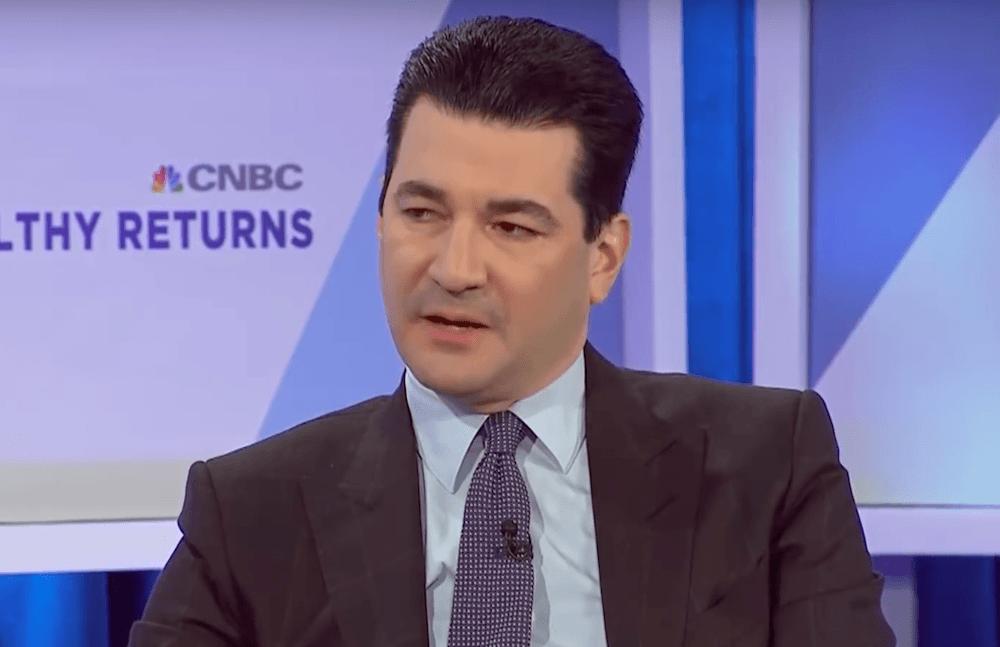
    FDA Commissioner Scott Gottlieb issued a far-ranging statement about his agency’s most recent and upcoming actions, while also addressing past missteps, in regard to the national opioid epidemic.

    Noting that the FDA’s previous wait-and-see policy in regard to evidence and intervention left it “a step behind a crisis that was evolving quickly,” Gottlieb said in the statement that his agency will implement more effective measures to reduce exposure to opioids, including prescription and labeling changes, promotion of treatment therapies, and approval of non-dependency-forming pain treatment.

    Calling the opioid crisis “a top priority” of both Secretary of Health and Human Services Alex Azar and the Trump Administration as a whole, Gottlieb wrote that faster and more decisive action will define the FDA’s policy in 2019.

    The rise in synthetic opioids like fentanyl and the “continued prevalence” of opioid prescriptions with overly long durations has prompted the agency to “step up its intervention,” according to Gottlieb.

    The commissioner also noted that the FDA’s previous approach—”waiting for the accumulation of definitive evidence of harm” put them in a position of catching up to the crisis as it ravaged “vulnerable communities.”

    “We don’t want to look back five years from now, at an even bigger crisis, with regret that there were more aggressive steps that we could have taken sooner,” wrote Gottlieb. “All options are on the table.”

    As Gottlieb outlined in his statement, these options have included expanded information on drug labeling. Passage of the Substance Use-Disorder Prevention that Promotes Opioid Recovery and Treatment (SUPPORT) for Patients and Communities Act in October 2018 has also given the agency new authority to assess and reduce dependency and misuse of opioids, including requirements for packaging on opioids and other drugs that carry a high risk of abuse or overdose.

    According to the statement, FDA will issue a report on their recommendations for prescription guidelines at the end of 2019.

    The FDA is also considering an option to require certain immediate-release formulations of opioids be made available in blister packages containing one- and two-day dosages, which would “comport with evidence demonstrating that a day or two of medication is sufficient” and could “reduce the overall amount of dispensed drugs available for misuse, abuse and diversion.”

    Gottlieb also wrote that the agency will consider a formal evaluation of prospective opioid drugs to determine its application for specific patients, and whether or not the newer application is safer or more effective for treatment than existing, non-addictive medication. The Risk Evaluation and Mitigation Strategies (REMS) program, which measures the benefits of a particular drug over its potential risks, will also be subject to review to determine if it is properly addressing such concerns.

    The FDA will also prioritize the development of new and effective forms of medication-assisted treatment (MAT) to treat opioid dependency and non-addictive pain medication, and expand access to the overdose reversal drug naloxone.

    The agency will also continue to partner with U.S. Customs and Border Protection to reduce the marketing and distribution of illegal opioids through national borders and through international shipping.

    View the original article at thefix.com

  • Do Studies Touting Benefits Of Alcohol Consumption Tell The Whole Story?

    Do Studies Touting Benefits Of Alcohol Consumption Tell The Whole Story?

    For young and middle-age adults, alcohol consumption may actually be more harmful than previously thought.  

    Studies that point to alcohol consumption as beneficial may only be telling part of the story, as they tend to focus on those aged 50 and older, and disregard alcohol-related deaths before that age, according to new research.

    For young and middle-age adults, alcohol consumption may actually be more harmful than previously thought.  

    Researchers in a recent study, according to Live Science, looked at information from a database which estimates the U.S.’s approximate number of deaths and years of life lost due to alcohol intake.

    Included in the database were 54 medical conditions related both directly and indirectly to alcohol use, like car crashes involving alcohol and liver-related diseases. Some of the conditions, such as cardiovascular disease, linked alcohol with a reduced risk of the condition. 

    In studying the data, researchers led by Timothy Naimi of Boston Medical Center’s Clinical Addiction Research and Education Unit determined that in the four years from 2006 to 2010, around 36% of alcohol-related deaths were in those ages 20 to 49, and 35% were in those older than 65.

    Additionally, Live Science reports, researchers noted that about 60% of the years of life lost were in those ages 20 to 49, and only 15% were in those ages 65 and older. 

    The authors note that “deceased persons cannot be enrolled in cohort studies,” and add that, “Those who are established drinkers at age 50 are ‘survivors’ of their alcohol consumption who [initially] might have been healthier or have had safer drinking patterns” when compared to others who drank. 

    In order to determine any benefits of alcohol consumption, researchers took note of fatalities “estimated to be ‘prevented’ by alcohol consumption, as well as years of life ‘saved by alcohol,” according to Live Science.

    They found that those ages 20 to 49 accounted for about 4.5% of deaths supposedly prevented by alcohol, in comparison to 80% in those ages 65 and above.

    In conclusion, the authors note that those in the younger age ranges “are more likely to die from alcohol consumption than they are to die from a lack of drinking.” They add that those in older age brackets are more likely to reap benefits from drinking, and are likely the ones highlighted in studies that point to benefits of alcohol consumption. 

    “This study adds to the literature questioning protective effects for alcohol on all-cause mortality,” the authors add. 

    View the original article at thefix.com