Tag: depression

  • Man's Emotional Support Alligator Raises Eyebrows

    Man's Emotional Support Alligator Raises Eyebrows

    The man said that staying close with the alligator has helped him stay off of prescriptions for his depression. 

    For most people, being in close company with a five-foot-long alligator would be the opposite of comforting. But when Joie Henney feels symptoms of depression coming on, he snuggles up with Wally, his emotional support alligator.

    “I had Wally, and when I came home and was around him, it was all OK,” Henney told Philly.com. “My doctor knew about Wally and figured it works, so why not?”

    The doctor certified Wally as an emotional support alligator, likely the first of his kind. 

    Henney, who hosted a wildlife show on ESPN from 1989 to 2000, says he is familiar with dealing with wild animals and is aware that the alligator could hurt him. He rescued Wally when the alligator was 14 months old, and the alligator now spends time in an indoor pool, snacking on chicken wings and comforting Henney when he’s feeling down.

    Henney said that staying close with Wally has helped him stay off of prescriptions for his depression. “He comforted me,” Henney said. “I got over my depression.”

    Henney first realized that Wally could help him feel better when he went through a series of sudden losses of friends and family. “I lost three in a week, two in less than 24 hours. I was laying down one day, he literally crawled up on the cot with me and laid his head on top of my face.”

    At just four years old, Wally is still growing. He’s could be 16-feet long one day, but Henney insists their relationship will endure. 

    “He likes to give hugs,” by resting his snout on Henney’s face, the owner explained. 

    Wally makes public appearances with Henney, and Henney insists that he’s not that unusual from more traditional pets. “He’s just like a dog,” Henney said at one event. “He wants to be loved and petted.”

    Henney said he isn’t the only one who has benefitted from Wally’s attention. “He is registered as my emotional support animal, but he has done a lot for others.”

    Henney has even used Wally to help raise money for a child with autism.

    But despite the feel-good aspects of Henney and Wally’s connection, many people question whether the use of emotional support animals has gone overboard.

    Getting an animal certified as an emotional support animals can allow the animal to come into public places, but some people say that the proliferation of emotional support animals is undermining the role of guide dogs and others trained to help people with medical conditions.  

    View the original article at thefix.com

  • How The Mediterranean Diet Affects Mental Health

    How The Mediterranean Diet Affects Mental Health

    A new study found that certain foods correlated with better moods.

    The old saying “you are what you eat” could ring true for people with depression, according to a recent scientific review, which found that eating a Mediterranean diet can reduce the risk of depression by as much as a third. 

    According to ABC 30, researchers analyzed 41 studies that looked at how food affected people’s moods. The researchers found that people who ate Mediterranean diets were 33% less likely to be depressed. 

    Mediterranean diets place an emphasis on eating fruits, vegetables, legumes and other plants, according to Healthline. The diet encourages eating fish over red meat and—perhaps most importantly for mental health—incorporates plenty of healthy fats, like those found in olive oil and nuts. 

    “Especially the omega three fatty acids—those are known to have pretty clear effects with depression,” said Charles Conway, a researcher at Washington University in St. Louis. Conway has researched more modern approaches to treating depression, including vagus nerve stimulation, but found that one’s diet is still important for mental health. 

    The researchers found that certain foods correlated with better moods, including avocados, berries, tomatoes, leafy greens, walnuts, seeds, and beans. Many of these are part of a Mediterranean diet. 

    However, foods that are associated with a modern Western diet could make depression symptoms worse or increase the risk of depression. These include processed foods, sugar and artificial sweeteners, and saturated fats. 

    Omega-3 fatty acids have long been associated with brain health and boosting one’s mood. A 2014 review found that people who consume these “good fats” are less likely to be depressed.  

    “Among the biological properties of omega-3 PUFA, their anti-inflammatory effects and their important role on the structural changing of the brain should be taken into account to better understand the possible pathway through which they can be effective both in preventing or treating depression,” study authors wrote.  

    The authors concluded that there needs to be a better understanding of how to integrate these healthy fats into a Western diet. 

    “The problem of how to correct the inadequate supply of omega-3 PUFA in the Westernized countries’ diet is a priority in order to set food and health policies and also dietary recommendations for individuals and population groups,” they wrote. 

    In addition to eating a healthy diet, Conway said that exercising is also an effective way to reduce your risk of depression and control symptoms. 

    “Pushing yourself to exercise regularly probably helps with some degree of mood improvement,” he said. 

    View the original article at thefix.com

  • Can Treating Insomnia Ease Depression Symptoms For Menopausal Women?

    Can Treating Insomnia Ease Depression Symptoms For Menopausal Women?

    Researchers explored possible treatment options for depression and insomnia in menopausal women.

    Depression symptoms in women going through menopause may decrease when insomnia is treated, new research has found.

    According to Reuters, researchers enlisted 117 women going through menopause who also had insomnia. Most women, according to Reuters, experience menopause anywhere between age 45 and 55. Menopause occurs when the hormones estrogen and progesterone stop being produced by the ovaries. One of the main symptoms for women is insomnia.

    The women were split into three groups randomly. One group received cognitive behavioral therapy, the second group received a type of CBT called sleep restriction therapy, and the third was given information about habits to make sleeping and falling asleep easier (also referred to as sleep hygiene education).

    Of the women in the study, 4.3% had been diagnosed with moderately severe depression. Researchers found that both types of therapy helped to alleviate depression symptoms, while the sleep hygiene education did not have the same results.

    “We can add targeted cognitive behavioral treatment of insomnia to the current arsenal of treatments available to alleviate menopausal associated insomnia and with this treatment we have the added benefit of reductions in depressive symptoms which frequently co-occur with sleep disturbance associated with menopause,” senior study author Christopher Drake of the Henry Ford Health System in Detroit, Michigan, told Reuters via email. “We hope to one day show that targeting insomnia symptoms early when depression is mild or yet to develop can prevent depression from ever developing in the first place.”

    When it comes to insomnia, CBT helps people learn techniques that address the mental aspects of insomnia, like overcoming negative emotions, anxiety and a racing mind.

    Previous research has found that CBT can help those with insomnia to create better bedtime routines and improve their sleep patterns.

    When it comes to sleep restriction therapy, it can be done solo or in addition to CBT. The goal of this type of therapy is to limit how many times a person wakes during the night and to decrease the total amount of time they spend in bed but not the total amount of time they spend asleep.

    In this particular study, women receiving CBT went through six face-to-face therapy sessions with a medical professional in the behavioral sleep medicine field. Those undergoing sleep restriction therapy had two face-to-face sessions and three phone sessions. The remaining group undergoing sleep hygiene education received six emails per week, each with tips for better sleep routines and information on sleep and its connection to health and lifestyle. 

    Researchers do note that this study has some limitations, such as the fact that women with major depression were not included in the study. The study also did not take into account hot flashes, which are a common symptom of menopause that could interfere with sleep.

    View the original article at thefix.com

  • The Link Between Hearing Loss And Depression In The Elderly

    The Link Between Hearing Loss And Depression In The Elderly

    A new study examines the link between depressive symptoms and hearing loss in older Hispanic adults.

    Having to ask people to repeat themselves or nodding along politely to a conversation they cannot hear is common for the thousands of elderly Americans who live with hearing loss. Now a new study shows that hearing loss isn’t just an inconvenience: It can be a real health threat linked to depression. 

    The study, published in the journal Otolaryngology-Head and Neck Surgery, examined 5,328 Hispanic adults, testing their hearing and screening them for depression.

    Adjusting for other contributing factors to depression like educational level and cardiac health, the researchers found that moderate hearing loss made people nearly twice as likely to suffer from depression. People with severe hearing loss were about four times more likely to be depressed. 

    “People with hearing loss have trouble communicating and tend to become more socially isolated, and social isolation can lead to depression,” Justin S. Golub, assistant professor of otolaryngology-head & neck surgery at Columbia University Vagelos College of Physicians and Surgeons and lead study author told Columbia University Irving Medical Center

    Golub pointed out that the study only found a link, and researchers couldn’t definitively say that hearing loss causes depression. 

    “That would have to be demonstrated in a prospective, randomized trial,” he said. “But it’s understandable how hearing loss could contribute to depressive symptoms.”

    However, the study did find that the likelihood of depression increased with the severity of hearing loss in the individuals who were screened. 

    “The odds of having clinically significant depressive symptoms increased approximately 45% for every 20-dB increase in hearing loss,” the study authors wrote. “Objective hearing loss appears to be associated with clinically significant depressive symptoms in older Hispanic people, with greater hearing loss seemingly associated with greater odds of having depressive symptoms. Given the high prevalence of untreated hearing loss in older adults, hearing loss may be a potentially modifiable risk factor for late-life depression.”

    Hearing loss is the third most common chronic condition for the elderly and has been linked with dementia and cognitive decline. Researchers looked at Hispanics because this group may be under-diagnosed with depression because of language and cultural barriers. The results show the need for more research into hearing loss and depression in the elderly population at large. It also suggests that screening for and treating hearing loss may be an important part of health care for older patients. 

    “Most people over age 70 have at least mild hearing loss, yet relatively few are diagnosed, much less treated, for this condition,” Golub said. “Hearing loss is easy to diagnose and treat, and treatment may be even more important if it can help ease or prevent depression.”

    View the original article at thefix.com

  • New Type of Antidepressant Could Be Game Changer

    New Type of Antidepressant Could Be Game Changer

    The new medication will reportedly deliver fast-acting relief for patients, who often need to wait four to six weeks to feel the effects of current anti-depressants. 

    A fast-acting and innovative depression medication that works differently from drugs currently on the market received a positive result in clinical trials this week, clearing the way for the drug to be approved by the Food and Drug Administration as soon as March. 

    Sage Therapeutics announced in a news release that its drug, SAGE-217, led to statistically-significant improvements for women with postpartum depression in just two weeks, while being well tolerated by the women overall. 

    “These are strong and consistent data demonstrating a rapid, stable, and clinically meaningful improvement in PPD depressive symptoms in the SAGE-217 treatment group compared to placebo,” Dr. Jeff Jonas, M.D., CEO of Sage, said in the release.

    Despite the fact that depression is one of the most common health conditions in the world, there are currently limited means for treating the condition. Current medications that act on the brain’s serotonin system don’t work for as many as a third of patients. SAGE-217 offers an entirely different model for treatment, acting on the brain’s GABA receptors in order to alleviate depression symptoms. 

    Jonas said last year that the new approach will deliver fast-acting relief for patients, who often need to wait four to six weeks to feel the effects of current anti-depressants. 

    “In this development program, we are exploring the potential for patients with [major depression] to feel well within days, with just a 2-week course of treatment – similar to how antibiotics are used today – instead of enduring long-term chronic treatment,” Jonas wrote in a news release. “We believe a medicine with rapid onset and robust response could be truly paradigm shifting. SAGE-217, if successfully developed and approved, may rewrite the textbook on how the tens of millions of people suffering from [major depression] are treated, ultimately turning depression into a disorder, not an identity.”

    In June, the FDA announced that it would allow an accelerated approval plan for Sage, allowing the drug to come to market faster by using shorter clinical trials to prove its effectiveness.

    In addition to providing fast-acting relief, Jonas has said that SAGE-217 could be taken intermittently so that patients don’t need to take a monthly pill. 

    Despite the lofty promises, many medical professionals are cautiously optimistic about the new drug and how life-changing it may be for patients.

    Psychiatrist Cristina Cusin, who specializes in depression at Massachusetts General Hospital and Harvard University told Business Insider that the company’s predictions might be a little rosy, saying it seems “a little excessive to say a chronic disease would disappear after two weeks, that’s something you can’t say about diabetes or any other chronic disease.”

    View the original article at thefix.com

  • Paul Manafort Is Depressed in Jail, Lawyers Say

    Paul Manafort Is Depressed in Jail, Lawyers Say

    Manafort has been in jail for more than six months, after a judge revoked his bail in June.

    Paul Manafort, the former Trump campaign chairman, is not faring well in jail, where he is being held while he awaits his sentencing in February on charges of financial fraud and conspiracy, according to his lawyers. 

    “He . . . suffers from depression and anxiety and, due to the facility’s visitation regulations, has had very little contact with his family,” Manafort’s lawyers wrote in court filings that were reported by The New York Post. Because he is so high profile, Manafort is being held in solitary confinement, which has “taken a toll on his physical and mental health,” his lawyers said. 

    In addition to depression and anxiety, Manafort is also battling gout, an arthritic inflammation of the joints that is usually associated with a heavy diet that includes red meats, seafood and alcohol. 

    “For several months Mr. Manafort has suffered from severe gout, at times confining him to a wheelchair,” the lawyers wrote. In October, Manafort appeared at a court date in a wheelchair, with his foot bandaged.

    His lawyer, Kevin Downing, asked the judge to sentence Manafort quickly, so he could be moved from a detention center to a federal prison. Downing told the judge that Manafort has “significant” health issues that were made worse by the “terms of his confinement.”

    Manafort has been in jail for more than six months, after a judge revoked his bail in June. He could face years in federal prison from his convictions. 

    In July, a judge ordered that Manafort be moved from one facility that was reportedly giving him special treatment to a city jail in Alexandria, Virginia. 

    “On the monitored prison phone calls, Manafort has mentioned that he is being treated like a ‘VIP,’” a court filing by special counsel Robert Mueller’s team alleged. “Among the unique privileges Manafort enjoys at the jail are a private, self-contained living unit, which is larger than other inmates’ units, his own bathroom and shower facility, his own personal telephone and his own workspace to prepare for trial. Manafort is also not required to wear a prison uniform.”

    Manafort was even able to send emails from the facility. 

    “In order to exchange emails, he reads and composes emails on a second laptop that is shuttled in and out of the facility by his team. When the team takes the laptop from the jail, it re-connects to the internet and Manafort’s emails are transmitted,” court documents showed. 

    Manafort was in the news again this week after his lawyers accidentally released paperwork that appears to show he met with a Russian spy when he was working on the Trump campaign. 

    View the original article at thefix.com

  • Parents Give Up Custody Of Adopted Kids To Get Them Mental Health Help

    Parents Give Up Custody Of Adopted Kids To Get Them Mental Health Help

    “To this day, it is the most gut-wrenching thing I’ve ever had to do in my life,” said one parent who gave up custody of his child.

    Every year, adoptive parents find themselves with no choice other than to give up custody of their mentally ill children to the state. This issue is outlined in a recent profile done by NPR about a family that was torn apart because the state of Illinois failed to provide the care they were supposed to give to an adopted child. 

    Daniel Hoy endured severe neglect as an infant before he was adopted by Toni and Jim Hoy when he was still a baby. In spite of a happy childhood, Daniel began to exhibit signs of severe mental illness after he entered the public school system at age 10. He began to experience bouts of violent behavior, attacking classmates and his siblings due to his severe anxiety and PTSD.

    When intensive inpatient care was recommended, the Hoys’ health insurance company denied coverage for the $100,000 per year treatment plan. Although states are supposed to cover mental health treatment for any children adopted through the government, Illinois also denied the family coverage for the desperately needed program.

    Eventually, after Daniel threw his brother down the stairs, state authorities gave Toni and Jim an ultimatum. They could either take Daniel home and be charged with child endangerment the next time he harmed one of his siblings or leave him in the hospital, lose custody and be charged with neglect.

    If Daniel was in the custody of the state of Illinois, the government would be forced to give him the recommended $100,000 treatment. Desperate and out of options, Toni and Jim abandoned their little boy. 

    “To this day, it is the most gut-wrenching thing I’ve ever had to do in my life,” Jim told NPR. “. . . I was crying terribly. . . . But it was the only way we figured we could keep the family safe.”

    The Hoys had to sue the state of Illinois in order to force them to cover the treatment, but by the time he was back in the family, he was 15 years old. 

    This has been a problem for thousands of other families across the US who find that the child they adopted has mental health issues. A study by the Government Accountability Office published in 2003 found that there are around 12,000 cases like this each year. More recent figures are not available as only one third of US states keep track of how many kids are given up in order to ensure they get proper mental health care.

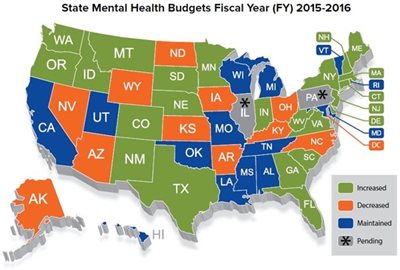
    According to mental health experts, the care these kids do get is often too little, too late. Unfortunately, state mental health services are often woefully underfunded by the federal government, and even less goes into preventative care and early intervention.

    Source: NAMI

    Early intervention is important. Children with severe mental illnesses who receive prompt intensive care tend to fare much better than those who have to wait due to money issues or a simple lack of programs in the area.

    “The research has shown that the earlier we can intervene, particularly with evidence-based interventions, the better outcomes we see later on,” said New York psychologist Danielle Rannazzisi, PhD. “The early years of childhood lay a foundation for future academic, social, emotional, and behavioral success.”

    Many states were forced to make severe cuts to mental health services during the recession of 2007 to 2009. That funding never recovered, and funding for mental health has been cut further under the Trump administration. Without that funding, states can’t afford to provide the care needed by kids like Daniel.

    View the original article at thefix.com

  • Depression Changes How We Use Language

    Depression Changes How We Use Language

    Researchers studied an online forum for mental health issues to examine how people with symptoms of depression used language.

    Depression can change both the content and style of the language that people use, according to a study published in the journal of Clinical Psychological Science

    The study compared the use of language in online forums dedicated to addressing depression, anxiety and suicidal ideation. It found that absolutist words — like never, always, completely and nothing — were 50% more frequent in forums dealing with depression than in control forums. In groups for people with suicidal ideation, absolutist language was 80% higher than in control groups, according to JSTOR Daily

    “Absolutist thinking is considered a cognitive distortion by most cognitive therapies for anxiety and depression,” study authors wrote. 

    However, the increased use of absolutist language wasn’t limited to people who are currently clinically depressed. 

    “We found elevated levels of absolutist words in depression recovery forums. This suggests that absolutist thinking may be a vulnerability factor,” study authors wrote

    The use of absolutist words was more closely connected to depression than the use of negative words like “sad,” “frustrated” or “upset.” However, people in the depression forums did use these negative words more frequently than people in the control forums, according to JSTOR

    Another interesting finding, which had been previously identified, is that people with depression were more likely to use first-person singular pronouns and less likely to use third-person pronouns. This could suggest that people with depression are isolated or focused on themselves. Which pronouns someone uses can predict the presence of depression more reliably than negative words, according to one study

    “We know that rumination (dwelling on personal problems) and social isolation are common features of depression,” Mohammed Al-Mosaiwi wrote for JSTOR. “However, we don’t know whether these findings reflect differences in attention or thinking style. Does depression cause people to focus on themselves, or do people who focus on themselves get symptoms of depression?”

    Last year, researchers developed an algorithm that could predict depression by evaluating a person’s speech or texts. 

    Tuka Alhanai, first author of the paper outlining the technology, told MIT News that in the future it could be an important diagnostic tool.

    “We call it ‘context-free’ because you’re not putting any constraints into the types of questions you’re looking for and the type of responses to those questions,” Alhanai said. “If you want to deploy [depression-detection] models in a scalable way … you want to minimize the amount of constraints you have on the data you’re using. You want to deploy it in any regular conversation and have the model pick up, from the natural interaction, the state of the individual.”

    View the original article at thefix.com

  • Zac Brown Band's New Video Tackles Depression, Using Alcohol To Cope

    Zac Brown Band's New Video Tackles Depression, Using Alcohol To Cope

    The video chronicles the various stages of a man’s life as he struggles to cope with trauma and depression.

    The holidays can be a hard time for many people struggling with depression, and now the Zac Brown Band has released a new video, “Someone I Used to Know,” to help people deal with the “Christmas blues.”

    Alexander Ludwig, who played Cato in The Hunger Games, stars in the video which first shows his character in his college football glory days. The character then goes on to join the army where he suffers the traumas of the battlefield. After coming home, he works as a coal miner, drinking to cope with his troubles. While the main character often appears isolated from others during the various stages of his life, toward’s the video’s end, he comes to the realization that there are people all around him who can offer him support. 

    While Brown told People he doesn’t suffer from holiday depression, he’s well aware that “the holidays are a time when people feel a lot of pressure, and I think it’s good to remind everybody that it’s okay to be human.”

    Brown has seen depression take down people close to him.

    “I’ve lost dear friends to suicide,” he explained. “Whatever was gnawing at them, whatever was eating at them that we didn’t know and couldn’t see, it obviously felt bigger to them than asking for help and having someone else go through it with them. It made me realize, too, that I don’t want to be that person that can’t face themselves and get to the other side so that I can be well for myself and for everybody else around me.”

    Brown also touched on the dissolution of his 12-year marriage.

    “I’m definitely in a spot in my life where I’m trying to face things that are hard so that I can be as well and healthy as possible,” he said.”It’s not the struggles that define you; it’s the fact that you can overcome those struggles that define you. It’s what makes you who you are.”

    At the end of the video, Brown tells the audience, “’Someone I Used to Know’ is a touchpoint to remind people that they don’t have to be alone in what they feel. . . . Pain and depression doesn’t discriminate. This song is me facing that part of myself of where I want to go and not where I’ve been. I would encourage people that when they feel like they have a need or they have a voice that’s telling them to face something, it’s a sign of strength to ask for help and to face the things that are really hard.”

    View the original article at thefix.com

  • Have Depression Or Anxiety? There May Be Health Risks Down The Line

    Have Depression Or Anxiety? There May Be Health Risks Down The Line

    A new study examined whether people with depression/anxiety could be at higher risks of future health problems.

    Could struggling with depression and anxiety put you at risk for more health issues down the road? According to Forbes, new research points to yes.  

    A recent study determined that those with depression/anxiety could be at the same or higher risk level for future health problems as smokers or those who are overweight.

    The study examined data from the Health and Retirement Study, which included the health data of 15,000 older US adults over four years. Of those, 16% reported high levels of depression and anxiety, 31% were considered obese and 14% were smokers. 

    In comparing individuals with anxiety and depression to those without, researchers found that those with depression and/or anxiety had a 65% higher risk of heart conditions, a 64% higher risk for stroke and a 50% higher risk of high blood pressure. Especially high was the increased risk of arthritis, at 87%. 

    Lead study author Aoife O’Donovan of the UCSF Department of Psychiatry says these odds are in line with individuals who smoke or are overweight.

    “These increased odds are similar to those of participants who are smokers or are obese,” he said, according to Forbes. “However, for arthritis, high anxiety and depression seem to confer higher risks than smoking and obesity.”


    Researchers also discovered connections between depression/anxiety and more mild health issues like back pain, stomach pain and shortness of breath. Headaches were 161% higher in those with depression and/or anxiety in comparison to those who were smokers or obese.

    However, the study did not find any links between depression and anxiety and cancer. 

    “Our findings are in line with a lot of other studies showing that psychological distress is not a strong predictor of many types of cancer,” O’Donovan tells Forbes. “On top of highlighting that mental health matters for a whole host of medical illnesses, it is important that we promote these null findings. We need to stop attributing cancer diagnoses to histories of stress, depression and anxiety.”

    A possible limitation of this study, according to Forbes, is that the data used came from self-assessments of individuals versus clinical assessments. 

    “The methodology in this case relied on in-depth interviews and other survey methods, but the results are still observational, not clinical,” Forbes states.

    As these findings are in line with other past studies, researchers are reiterating the importance of mental health care. 

    “Anxiety and depression symptoms are strongly linked to poor physical health,” the study’s first author, Andrea Niles said, according to Forbes. “Yet these conditions continue to receive limited attention in primary care settings, compared to smoking and obesity.”

    View the original article at thefix.com