Tag: heavy drinking

  • April is Alcohol Awareness Month

    April is Alcohol Awareness Month

    This year’s theme “Help for Today, Hope for Tomorrow” focuses on educating young people about the dangers of alcohol abuse.

    April is Alcohol Awareness Month. In 2019, the focus is on underage drinking.

    Alcohol abuse/addiction have taken a backseat to the epidemic of opioid abuse that has swept the country. However, alcohol abuse continues to increase in America.

    Alcohol Awareness Month, established in 1987, was created in part to reduce the stigma of alcoholism and to support local communities in addressing alcohol-related issues.

    A 2015 NSDUH study of young people between the ages of 12 to 17 estimated that 623,000 adolescents ages had alcohol use disorder, or AUD. (This study looked at 298,000 male and 325,000 female subjects.)

    According to the National Institute on Alcohol Abuse and Alcoholism (NIAAA), alcohol use disorder is defined as “a chronic relapsing brain disease characterized by compulsive alcohol use, loss of control over alcohol intake, and a negative emotional state when not using.”

    Signs of teen problematic drinking are similar to the signs of drug addiction, according to Project Know—including shirking of regular responsibilities (such as ditching school or suddenly getting bad grades), lack of interest in relationships, irresponsible behavior or a change in appearance such as exhaustion, weight loss or gain, or sudden lack of concern for appearance.

    Teens who have a family or personal history of addiction or mental health issues are more at risk of alcohol abuse, as are teens who are under greater stress due to socioeconomic or personal circumstance.

    The theme of Alcohol Awareness Month with its focus on youth drinking is “Changing Attitudes—It’s not a rite of passage.” This slogan seeks to change the cultural idea that heavy drinking is an important or expected part of teenage social life.

    The first weekend of April, the National Council on Alcohol and Drug Dependence (NCADD) is encouraging the public participate in Alcohol-Free Weekend. NCADD offers this weekend as a gesture of solidarity in our communities in support of alcohol-free youths, in remaining completely alcohol-free for three days.

    The Office of Disease Prevention offered these ideas as April’s action tool kit for communities:

    1. Share about April’s Alcohol Awareness month and focus on underage drinking on social media.

    2. Host a community event where families can learn about the issues around underage alcohol use and abuse.

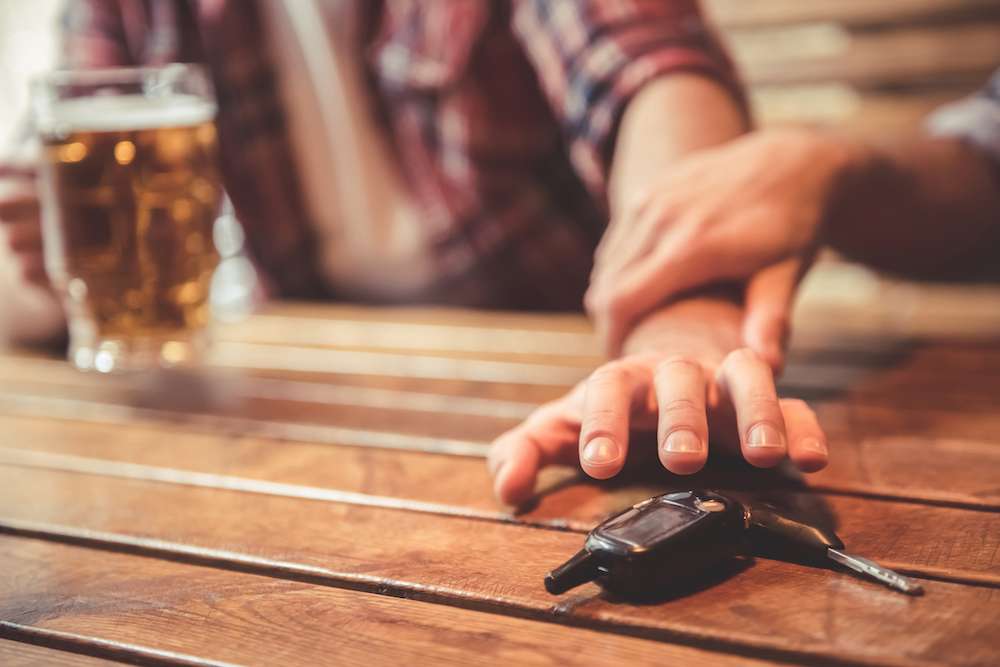
    View the original article at thefix.com

  • How Teen Drinking May Affect Brain Growth

    How Teen Drinking May Affect Brain Growth

    Researchers investigated whether drinking alcohol during the teen years stunted brain growth.

    Drinking alcohol could stunt brain growth in teenagers and increase their risk for problematic drinking in the long term, according to a recent study

    The findings were published in the journal eNeuro. To examine the effects of alcohol on brain development, scientists allowed rhesus macaque monkeys to drink as much as they wanted. They tracked how much the monkeys ate and drank, and used MRIs to measure their brain growth. 

    “Heavy alcohol reduced the rate of brain growth” by 0.25 milliliters per year for every gram of alcohol consumed per kilogram of body weight, the researchers found. Smaller brain volume can be associated with less cognitive abilities, because there are fewer connections in the brain. 

    During the teen years, the brain is rapidly growing and developing, which may explain why teens are particularly vulnerable to the brain-stunting effects of alcohol. 

    “The transition from adolescence to adulthood is associated with brain remodeling in the final stages of developmental growth. It is also a period when a large proportion of this age group engages to binge and heavy alcohol drinking,” study authors wrote.

    The stunted growth could lead to long-term cognitive effects, although further studies would be needed to examine that theory. 

    “This is the age range when the brain is being fine-tuned to fit adult responsibilities. The question is, does alcohol exposure during this age range alter the lifetime learning ability of individuals?” lead author Dr. Tatiana Shnitko said to The Journal. 

    In addition to affecting brain volume, drinking during the teen years also seemed to be associated with heavier drinking later in life in the monkeys that were studied. 

    “Thus, developmental brain volume changes in the span of late adolescence to young adulthood in macaques is altered by excessive alcohol, an insult (the cause of some kind of physical or mental injury) that may be linked to the continuation of heavy drinking throughout later adult life,” they wrote. 

    This indicates that early drinking could lead to lifelong problems in humans’ drinking patterns as well. 

    While not all the effects from monkeys can be extrapolated to humans, studying the effects of alcohol on primates’ brains is a powerful tool for researchers. Study author Christopher Kroenke said that using monkeys allowed researchers to control for factors and focus on the specific effects of alcohol use. 

    “Human studies are based on self-reporting of underage drinkers,” he said. “Our measures pinpoint alcohol drinking with the impaired brain growth.”

    The amount of alcohol that affected brain health would be equivalent to about four beers a day. 

    View the original article at thefix.com

  • How Alcohol Can Harm People Who Don't Drink

    How Alcohol Can Harm People Who Don't Drink

    A new study examined the ways that alcohol can cause third-party harm.

    People who don’t drink a drop can still be harmed by alcohol, according to a new study. 

    The study, published in BMC Medicine, looked at the health consequences of alcohol, even for people who don’t drink. The researchers found that through car accidents, physical assaults, and the effects of alcohol on pregnancy, thousands of people who do not drink are hurt or killed by alcohol each year in Germany.

    Although researchers looked at only one country, they say the study proves that alcohol can cause third-party harm or loss of life. 

    “These study’s estimates indicate there is a substantial degree of health harm to third parties caused by alcohol in Germany. While more research on harms to others caused by alcohol is needed to provide comprehensive estimates, the results indicate a need for effective prevention,” the study authors wrote.

    The authors took a fairly conservative approach to estimating the number of car accidents, violence and birth defects where alcohol was a contributing factor. They found that alcohol was involved in 45.1% of third-party traffic fatalities (this did not include drunk drivers who killed themselves).

    In addition, alcohol was estimated to be a factor in 14.9% of deaths caused by interpersonal violence. It also contributed to birth defects in nearly 3,000 babies born in 2014 alone. 

    “The harmful effects of alcohol on others need to be recognized as a public health problem in the same way as are the harmful effects on the drinker or the costs to society,” the study authors wrote. “The present findings of harms to others related to alcohol use during pregnancy, drunk driving, and interpersonal violence using the best available data reveal that alcohol may not only cause harm to the drinker but may also harm a substantial number of third parties.”

    The study authors pointed out that most research has focused on alcohol’s harms to drinkers, while other studies have focused on the financial cost to society. However, interpersonal harm from alcohol hasn’t been studied in depth because it can be hard to measure. 

    Although the authors focused on harms from three conditions that are relatively easy to measure, they pointed out that alcohol can also cause social harms that are more difficult to study. 

    “Sober people walking home at night may be harassed and injured by drunken pedestrians or may be attacked while attempting to separate intoxicated young people who are fighting,” they write. “Children may suffer problems caused by a drinking father or mother, and continued heavy drinking during pregnancy may severely harm the health of the newborn.” 

    View the original article at thefix.com

  • Are Social Pressures Making Women Drink More?

    Are Social Pressures Making Women Drink More?

    A recent op-ed examined some of the reasons why women are drinking more alcohol than ever before.

    Drinking used to be thought of as a boys’ club, and men have traditionally used alcohol had higher rates than women. However, in recent decades women’s drinking has expanded dramatically, and social factors may be to blame. 

    According to the CDC, the percentage of American women who drink more than once a week has increased dramatically, from 45% in 2002 to 67%. 

    Writing for The Bold Italic, Ginny Hogan examined the social pressures that may be affecting the rate in which women are drinking. 

    “The reality is that women often drink for different reasons than men do, and it’s not a stretch to think that those reasons often stem from social pressures that women face but men don’t,” Hogan writes. 

    Many women feel pressured to relax, even as they deal with higher levels of anxiety than men. Rather than showing that stress to people in their lives, many women opt to drink to mask it. 

    “When we put social pressure on women to not ever appear stressed or anxious, I worry that we instead make alcohol a more appealing option,” Hogan writes. 

    In addition, alcohol has become a marker of many female social groups, whether it is symbolizing high-powered career women or moms who gather together and bond over wine. 

    “Society tends to admire women who can play hard and work hard — to be cheerful and warm even in the face of negative surroundings or working conditions,” Hogan writes. 

    In popular culture, successful women are often shown sipping a drink. 

    “Tumblers of brandy, whiskey sours and fishbowls of merlot are synonymous with female glass-ceiling-smashing in TV shows like The Good Fight, The Good Wife, Scandal, Killing Eve, The Killing; I honestly can’t think of a successful female protagonist on TV who isn’t a hard drinker,” said Catherine Gray, author of The Unexpected Joy of Being Sober.

    Finally, dating while sober can put even more pressure on women. 

    “I definitely feel like not drinking ups the stakes for going on a date with me — if getting a drink is the most casual meet-up, it’s like, ‘I’m sorry, you need to commit to coffee and a day date, and I’m now occupying your weekend,’” comedian Molly Brown told Hogan. 

    Ultimately, pushing back on some of these social pressures could be a way to help women reduce their drinking, if that’s something they desire, Hogan writes. 

    “I want women to feel OK being in bad moods, to speak up if someone is mistreating them, to be comfortable with boring their date and to turn down happy-hour invitations. If women are able to do this more often, I wonder if we could use alcohol as a way to enhance our lives instead of often suppressing them,” she wrote. 

    View the original article at thefix.com

  • Will Drinking Liquor Before Beer Actually Prevent A Hangover?

    Will Drinking Liquor Before Beer Actually Prevent A Hangover?

    A new study examined whether drinking alcohol in a certain order or by a certain color could prevent a hangover.

    There are many old tales about how to cure hangovers or prevent them altogether. 

    Perhaps one of best-known “rules” to drinking is that the order in which you down your drinks—whether it is hard liquor, wine, and beer—can affect the severity of a hangover. There are even little rhymes to accompany this, such as “Liquor before beer, you’re in the clear,” or “Beer before wine, you’ll be fine.”

    But a new study has discredited this idea, claiming that no matter what type of alcohol a person consumes first, their hangover will be the same. 

    To determine this, senior clinical pediatrics fellow Dr. Kai Hensel of the University of Cambridge in the UK and his colleagues conducted a two-year study. 

    For the study, they gathered 90 German students in the medical and psychology fields, ages 19 to 40. Each individual in the study, according to Time, was matched with two others of about the same age, body mass, sex, and drinking habits. 

    After eating a filling meal, the researchers instructed one member from each group of three to drink around 2.5 pints of lager beer, or to drink until their breath alcohol concentration was .05%. Following that, they drank around four glasses of white wine, until reaching .11%. 

    At the same time, a second member of the group drank the same amount but in the opposite order, while the third drank only wine or only beer. Then, each member was given cold water and instructed to go to bed.

    The following week the participants did the same thing again, but opposite what they had drank in the prior week. 

    Each week, according to Time, the participants tracked and rated the severity of their hangovers. Common hangover symptoms like headaches, nausea and dizziness were reported, and 21 of the participants said they vomited at some point. 

    Despite the groups drinking alcohol in various orders, the researchers did not find any glaring difference from group to group. 

    The researchers did determine that women seemed to feel worse than men when it came to hangovers. They also found that a person’s breath alcohol concentration did not correlate with the strength of their hangover, but vomiting and how intoxicated someone felt did. 

    In conclusion, the researchers determined that using common sense and following moderate drinking guidelines is the best way to avoid feeling hungover. 

    “Just asking the participant, ‘How drunk are you?,’ if they are really drunk, is the best predictor,” Hensel said, according to Time. “You don’t have to do all that research. Just ask yourself.”

    View the original article at thefix.com

  • Alcohol-Related Liver Disease Is Affecting New Demographics

    Alcohol-Related Liver Disease Is Affecting New Demographics

    Alcohol-related liver damage used to be associated with older men but new statistics suggest that the disease is now increasingly affecting younger people.

    A new troubling trend is on the rise with regard to alcoholic liver disease, or ALD.

    Over the years, as young people began to drink more and more, related problems began to arise. College-aged-kids going into alcoholic comas, becoming injured or dying during drunken frat-house parties have become a pressing concern, and now doctors are seeing ALD in more younger Americans.

    ALD used to be considered “an old man’s disease,” Michigan Medicine liver specialist Jessica Mellinger, MD, told Michigan Health. Onset symptoms of alcoholic liver disease include chronic fatigue, poor appetite, itchy skin and abdominal pain and swelling. 

    A national study led by Mellinger and colleagues looked at seven years of data from over 100 million U.S. residents with insurance. “One of the scariest statistics out there that my colleagues unveiled in a study is that cirrhosis mortality related to alcohol use increased the most in people 25 to 34 years old,” Mellinger said. 

    Between 1999 and 2016, there was an average increase around 10% every year of young people who died from alcohol-related liver damage.

    “This is really dramatic and mirrors what we are seeing in the clinic,” Mellinger notes. “It signals that more alcohol abuse is occurring.”

    The research found that more women than men had alcohol-related cirrhosis of the liver over the seven-year study, with women at a 50% increase and men at 30%. Over one-third of cirrhosis cases in the study were related to alcohol.

    Men and women absorb and metabolize alcohol differently, leaving women more vulnerable to liver damage. And women also have less body water, so women and men with the same amount of alcohol consumption will have different blood alcohol concentrations.

    Mellinger also believes that American culture plays a part in women’s drinking. “There is this ‘mommy juice’ culture, this ‘mommy juice’ humor involving wine that’s normalizing drinking in a bad way,” she told Michigan Health. “There is nothing funny about alcoholic liver disease.”

    In addition, Dr. Vijay Shah, head of the Division of Gastroenterology and Hepatology at the Mayo Clinic, told NPR that the study’s emphasis on American youth is new.

    Alcohol-related liver cirrhosis used to be considered a disease that would happen after 30 years of heavy alcohol consumption,” Shah said. “But this study is showing that these problems are actually occurring in individuals in their 20s and 30s.”

    View the original article at thefix.com

  • Being "Sober Curious" Helps Some Explore Relationship With Alcohol

    Being "Sober Curious" Helps Some Explore Relationship With Alcohol

    “Being sober curious is about ­questioning every impulse or expectation to drink and using the answers to inform whether or not you actually drink,” says the author who coined the term.

    Make room, Dry January—there’s another sobriety exploration method in town. 

    In recent months, the term “sober curious” has become more prominent. Rather than abstaining completely from alcohol, those who are sober curious may choose to take a break from drinking and give some thought to their relationship with alcohol. 

    The concept, according to Time, was coined by Ruby Warrington and is the title of her new book as well. 

    In the book, Warrington explores the idea of reexamining one’s relationship with alcohol. Time reports that while Warrington never struggled with substance use disorder, she did use alcohol to be more at ease in social situations and to cope with or cover her feelings. 

    “Being sober curious is about ­questioning every impulse or expectation to drink and using the answers to inform whether or not you actually drink,” Warrington tells Cosmopolitan

    While Warrington doesn’t necessarily press the idea that alcohol should be cut out of one’s life forever, she does think there are benefits to stepping back from it. She says, according to Time, that rather than squeeze out confidence from alcohol, it can come from healthier methods, like positive affirmations and power poses. 

    In addition to helping her mentally, Warrington tells Cosmopolitan that cutting down alcohol helped her feel better physically. “My anxiety levels were lower. I woke up fresh. I had so much more energy,” she said.

    In the book, Warrington also addresses the idea of FOMA, or “fear of missing alcohol.” She provides some advice to get around this fear, such as taking part in new hobbies or ditching dinner plans and going out for brunch instead. 

    Psychotherapist Alison Stone tells Bustle that being “sober curious” isn’t restrictive and allows people to make decisions based on their feelings. 

    “Identifying as sober curious prevents us from falling into a black and white way of thinking, feeling, and behaving,” she said. “It can help us better understand our relationship with alcohol, too—when do we drink more than we intended to? Are we drinking because we want to, or because we feel we need to? Having curiosity opens up the possibilities to better understand ourselves and our motives for doing things.”

    Stone adds that when something in one’s life is restricted or completely off limits, it may just make that person want it more. In that way, being sober curious is beneficial. “That is partially due to the psychological impact of making an extreme decision—there are often parts of us that want to do the exact opposite of that decision,” Stone stated. 

    But while being sober curious may work for some, others may need to stick to complete abstinence from alcohol. 

    View the original article at thefix.com

  • Josh Brolin Shares Drunk Photo To Celebrate Sobriety

    Josh Brolin Shares Drunk Photo To Celebrate Sobriety

    The Avengers actor described a harrowing, alcohol-fueled night on Instagram to celebrate a major sober milestone.

    Actor Josh Brolin, who has starred in movies ranging from The Goonies to No Country for Old Men to Deadpool 2, took to Instagram this week to celebrate five years of sobriety in an unusual way: sharing a photo from a drunk night out. 

    Brolin posted the photo, along with a lengthy caption. 

    “Drunk: when you think you’re having a rip roaring time and the next morning you wake up and your brain has broken into a frenzied beehive and your body is shattered shards of sharp glass desperately searching for what fits where and your spirit is being eaten by worms with great white bloodied teeth and your heart has shriveled into a black prune churning your intestines to the point where dysentery feels attractive,” he wrote.

    Brolin continued, “And you can’t remember anything you did so you roll out of bed over last night’s urine and you dial your best friend’s phone number because you recall him lifting you over his head, your whole self, before you hit and broke through the drywall and, you think, a large aquarium and the phone on the other end rings and he picks it up, that clambering for a phone, the clumsiness of a hardline, and you say: ‘What did I do last night?!’ and he answers, after a great pause: ‘…Dude…’. #5years.” 

    Brolin quit drinking and smoking five years ago. He had just had enough, he told The New York Times last summer

    “There’s something that happens to me when I drink that all moral code disappears,” he said. “So it’s like if I were to take that drink . . . after about halfway through, I would start thinking about jumping out that window . . . not to kill myself, but just because there must be somebody down there to catch me, and I wonder if I can pull it off or if I could land on that van. It just seemed like fun.”

    Despite the fact that he is more in control now that he is sober, he still tries to channel some of the spontaneity and levity that drinking brought to him, he said. 

    “I want to live more drunk. I want to live drunkenly. I just don’t want to take the drink.”

    Brolin told the Times that in recovery he’s also trying to overcome the codependent patterns in his love life. His past relationships, he said, had an unhealthy focus, which he described: “I’m going to find out all your needs and all your insecurities, and all that, and then I’m going to play on that. Like, you need a daddy? I’ll be your daddy. I’ll be your hero.”

    His dynamic with his current wife, Kathryn, is much healthier, he said. 

    “She doesn’t need me. She never needed me.”

    View the original article at thefix.com

  • 15 Million Americans Are Battling Alcohol Use Disorder

    15 Million Americans Are Battling Alcohol Use Disorder

    Over an eight-year period, alcohol-related emergency room visits increased 47%.

    As a new year kicks off, some may be rethinking their relationship with alcohol. 

    In fact, according to the National Institutes of Health, greater than 15 million people in the US are living with alcohol use disorder.  

    The most recent numbers come from a study that examined data from 2006 to 2014 and found that alcohol-related emergency room visits increased to 5 million, up 47%. Of those, the biggest increase was in women ages 45 to 64. 

    One such woman is Teena Richardson of Seattle, who nearly lost her husband and two adult children due to her drinking habits. 

    “I wasn’t drinking wine anymore,” she told Fox 17. “It had escalated to hard alcohol. I wanted to get the buzz as fast as I could get it, and I wanted to hide it so that nobody knew.”


    Dr. Eric Shipley, medical director of Overlake Medical Center in Seattle, told Fox that despite these increasing numbers, people aren’t willing to cut out alcohol. 


    “If I went to somebody and said, ‘You could eliminate 15% of emergency room visits; would you do it?’ And they’d be, like, ‘Absolutely.’ Well, that means cutting out alcohol. ‘No, no, we’re not going there,” he said. 

    According to Fox 17, 88,000 people die each year of alcohol-related causes. This makes it the third leading preventable cause of death, with smoking and obesity coming in ahead.  

    “It’s one of the most dangerous drugs there is,” Dr. Harris Stratyner, a New York psychologist, told Fox 17. “It’s a little slower to kill you. It might take 10 years before it causes cirrhosis, but it’s gonna kill you.”

    For those who choose to seek treatment, there are a number of options for help. For Richardson, it took a few tries to find what worked. She tried outpatient therapy and 12-step programs before going to a 10-day aversion therapy program at Schick Shadel Hospital in Seattle. 


    Erick Davis, the medical director at Schick Shadel, said the goal is to take away the craving for alcohol. 

    “What we do is we pair the experience of nausea with the thought, smell, taste and sight of alcohol,” he told Fox.

    For Richardson, it worked, and she has been in recovery for seven years. 

    “Now I’m present, and I’m mindful of where I came from,” she told Fox. “And the test of alcoholism gave me a testimony. I’m on the other side of it.”

    View the original article at thefix.com

  • Could Higher Taxes Affect Binge Drinking?

    Could Higher Taxes Affect Binge Drinking?

    A new op-ed makes the case that higher taxation could reduce excess drinking. 

    Decreasing the amount of binge drinking in the country could be as simple as increasing taxes, according to a recent piece by The Washington Post editorial board.

    The board notes that 60 years ago, about 40% of American adults smoked cigarettes, whereas fewer than 20% do today. According to the board, this decrease has to do with the increase in cigarette taxes — and binge drinking should be treated in a similar manner. 

    The board cites a Johns Hopkins study from this year, which examined two tax increases in the state of Maryland. One was a 50% increase in alcohol sales tax in 2011 (bringing it to 9%), and the other was doubling the excise tax on a pack of cigarettes, bringing it to $2. In both cases, the board writes, consumption of the products went down quickly.

    “Opponents of such increases are often quick to denounce nanny-state politics, but government has a responsibility to promote public health,” the Post board wrote. “Cigarette and alcohol consumption exact a terrible toll, and not just on users; witness the impact of binge drinking on families and children, not to mention the carnage on the nation’s highways attributable to drunken driving.”

    More specifically, the study determined that in Maryland in 2015, retailers sold about 30% fewer packs of cigarettes than in 2007, which was the year before the excise tax was put into effect. Researchers determined that much of that decrease came quickly after the price increase. The change also affected minors, as researchers state teens who said they had smoked at least one time in the past 30 days decreased in that same span of eight years. 

    When it came to the increase in alcohol tax, the results were similar. According to the editorial board, researchers in another study examining police crash reports in Maryland found that the number of teenagers in alcohol-related crashes decreased by 12% annually in 11 years from the tax increase. Among drivers as a whole, the decrease was 6% annually. 

    The Johns Hopkins study also determined that alcohol intake decreased, as researchers said adult binge drinking in the state dropped by 17%, five years after the alcohol tax was enacted. 

    According to the board, those who oppose such increases may not be thinking about the whole picture. 

    “Among the arguments from opponents of such taxes is that they fall disproportionately on low- and middle-income people,” the board writes. “That’s true. It is also true that by reducing consumption (which weighs on wallets), they relieve the burden of long-term health care costs on those same people. That’s part of the compelling argument for public-health taxes, and why lawmakers are justified in imposing them.”

    View the original article at thefix.com