Tag: News

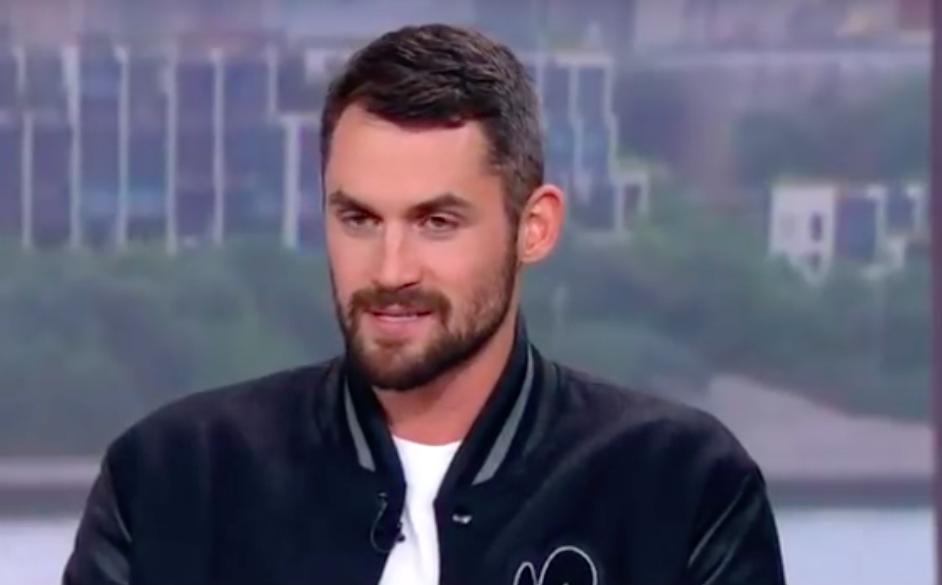
  • NBA Star Kevin Love Talks Anxiety, His First Panic Attack

    NBA Star Kevin Love Talks Anxiety, His First Panic Attack

    Love described having his first panic attack to Men’s Health.

    Kevin Love is the five-time All-Star forward of the Cleveland Cavaliers who helped lead the team in winning a 2016 NBA championship. Since suffering a panic attack during a game, Love has also been an outspoken advocate for mental health awareness.

    Love can remember the exact date he had his panic attack, November 5, 2017, right after halftime during a game against the Atlanta Hawks. He told Men’s Health, “I couldn’t catch my breath. I was sticking my hand down my throat, trying to clear my air passage. I thought I was having a heart attack and ended up unconscious on the floor of our head trainer’s office.”

    At one point, Love thought “this could be it,” that he was actually dying, but then he also became terrified that his teammates would think he was “not reliable,” and he kept his anxiety attack a secret.

    As Love recalled to The Player’s Tribune, his panic attack “came out of nowhere. I’d never had one before. I didn’t even know if they were real. But it was real—as real as a broken hand or a sprained ankle. Since that day, almost everything about the way I think about my mental health has changed.”

    Love said that when he was younger, “You figure out really quickly how a boy is supposed to act… It’s like a playbook: Be strong. Don’t talk about your feelings. Get through it on your own. So for 29 years of my life, I followed that playbook. These values about men and toughness are so ordinary that they’re everywhere… and invisible at the same time, surrounding us like air or water. They’re a lot like depression or anxiety in that way.”

    Love has since learned to face his anxiety through therapy, spending time with his dog, taking medication and practicing meditation. He has also launched The Kevin Love Fund, a charity that works in tandem with the Movember Foundation and Just Keep Livin.

    “These superheroes that we look at, whether it be somebody in the entertainment industry or an athlete, we also have these layers that we deal with on a daily basis. Know that you’re not alone. You’re not different. You’re not weird. And we can do this stuff together,” said Love.


    View the original article at thefix.com

  • Famous San Francisco Neighborhood Grapples With Drug Dealing

    Famous San Francisco Neighborhood Grapples With Drug Dealing

    Tackling drug dealing in the Tenderloin district cost the city more than $12.5 million from 2017-2018.

    San Francisco is home to the priciest apartment rental market in the country—but it is also home to “widespread and endemic” drug dealing relegated to the city’s poorer neighborhoods.

    A report by the SF budget and legislative analyst revealed details of drug dealing activity in the Bay Area, particularly in San Francisco’s Tenderloin district where more than half of drug arrests were made from 2017-2018.

    Of 883 people who were arrested or cited in San Francisco for selling drugs during that time period, 56% were from Tenderloin, according to the report.

    “There are dozens of people selling drugs at any given hour, including around our parks and schools and in the neighborhood,” said district supervisor Matt Haney, who represents Tenderloin.

    Haney held a Board of Supervisors hearing in April to discuss the drug problem in Tenderloin, Mid-Market and South of Market—which are all within Haney’s District 6. Haney acknowledged that “what we’re doing right now is not working,” hoping to develop a “comprehensive citywide strategy” that is currently lacking.

    “I’m not saying that people need to get a long-term prison sentence,” Haney said. “But each arrest costs us something like $10,000, so when we do arrest someone we should be smarter about what happens next.”

    According to the report, tackling drug dealing in Tenderloin, South of Market and Mid-Market cost the city more than $12.5 million from 2017-2018.

    Prosecutors say that “current sentencing practices do not deter” drug sellers from returning to their posts—which has resulted in what SF Chronicle has called a “revolving door of drug dealers.”

    As The Chronicle reported, “Prosecutors… say it takes an average of 244 days—about eight months—for a felony like selling drugs to make its way through the courts. Often as not, the suspected dealers are released by a judge pending the outcome of their cases. And just as often, the dealers head back to the Tenderloin and start selling drugs again.”

    Of 173 convictions cited in the report, 80.3% (or 139) of them received probation with some time served while just 18.5% (or 32) received longer sentencing.

    “Most of the people arrested or convicted get probation, which begs the question, How can we make probation effective and not have these guys go right back on the street?” said Haney.

    View the original article at thefix.com

  • Pin Project Helps Servers Tell People They’re Abstaining From Alcohol

    Pin Project Helps Servers Tell People They’re Abstaining From Alcohol

    The pin initiative allows servers to nonverbally communicate to coworkers and patrons that they won’t be drinking during a shift.

    For people working behind a bar, drinking during a shift can be a way to socialize with colleagues, keep patrons happy and keep work fun. However, one sober bartender wants to make it easier for servers to let people know that they’re not drinking that shift, with no messy explanations. 

    Mark Goodwin, who has been sober for 10 months, founded The Pin Project as a way for servers to send a signal to their communities. The small pins that he will soon be selling for $15 tell coworkers and patrons that a server won’t be drinking during that shift.

    “Bartenders are surrounded by alcohol, but we rarely talk about that as putting ourselves in a risky situation,” Goodwin told Vinepair. “For some of us, it really is.”

    However, the pin isn’t just for people in recovery—it’s for anyone who wants to pass up drinking for their shift for any reason. This aspect is very important, Goodwin said. 

    “It’s not a sobriety token,” he said. Rather, the pins “let the people around you know that you’re making a choice not to imbibe that shift… You could be on antibiotics, or you might have to pick someone up from the airport, or maybe you have a substance problem.”

    Everyone can use the pin to steer their own relationship with alcohol at work, without intrusive questions. “You could put the pin on and wear it forever,” Goodwin said. “But what’s really important is that it’s now.”

    The Pin Project received a grant in 2018 from Tales of the Cocktail Foundation, which supports service industry workers. 

    “Whether it’s just a night off, or many nights off, we hope The Pin Project helps bartenders (and patrons alike) remove the stigmas around not drinking,” said the organization’s Executive Director Caroline Rosen. 

    The Bay Area is the first region where Goodwin will promote the pins, but he hopes to have the initiative take off in other major cities as well. Half of the proceeds will go toward funding the Pin Foundation, which will support counseling and mental health services for hospitality workers. 

    Goodwin knows that making the pins mainstream will take a lot of effort. “There’s a lot of work left to do,” he said. 

    However, he is hopeful that the Pin Project will make it easier to talk about not drinking in the heart of the nightlife scene, and he is happy to see the positive response that the initiative has received thus far. 

    “I’m really honored and humbled to see people taking interest in this little idea that started over a couple of hungover breakfasts,” he said.

    View the original article at thefix.com

  • Elizabeth Warren Outlines Opioid Response Plan

    Elizabeth Warren Outlines Opioid Response Plan

    Warren says an aggressive response is needed to turn the tide on the opioid epidemic. 

    If she is elected President of the United States, Senator Elizabeth Warren (D-MA) will spend $100 billion on responding to the opioids crisis, she said in a post on Medium

    Warren’s plan is an updated version of the CARE Act, which she introduced along with Rep. Elijah Cummings (D-MD). The legislation never gained much traction, but Warren said that an aggressive response is needed to turn the tide on the opioid epidemic. 

    Warren compared her opioid response plan to the Ryan White CARE Act, which funded a national response to the HIV/AIDS epidemic and ultimately helped to bring down the death rate.  

    “This is not the first time our country has faced a national public health crisis of great magnitude. When deaths from HIV/AIDS grew rapidly in the 1980s, our country’s medical system was ill-equipped to respond,” Warren wrote. “In 1990, Congress passed the Ryan White CARE Act, which finally provided significant new, guaranteed funding to help state and local governments combat the growing epidemic and provided a safety net for those living with the disease. A similar national mobilization is needed to confront the opioid epidemic today.”

    Warren said that her plan would provide “resources directly to first responders, public health departments, and communities on the front lines of this crisis — so that they have the resources to provide prevention, treatment, and recovery services for those who need it most.”

    The funds would be distributed over 10 years to governments and nonprofits that are working to respond to the opioid epidemic. However, organizations would be given leeway to use the funding in the way that they believe would be most effective. 

    “Resources would be used to support the whole continuum of care, from early intervention for those at risk for addiction, to harm reduction for those struggling with addiction, to long-term support services for those in recovery,” Warren wrote. “Along with addiction treatment, the CARE Act would ensure access to mental health services and help provide critical wraparound services like housing support and medical transportation for those who need them.”

    In addition to crafting a proactive response, Warren said that she would like to see the executives of companies that have contributed to the opioid epidemic held criminally responsible. 

    “The opioid epidemic teaches us that too often in America today, if you have money and power, you can take advantage of everyone else without consequence. I think it’s time to change that,” she wrote. 

    She continued, “Rather than blaming the victims, we need to make sure a crisis like this never happens again.”

    View the original article at thefix.com

  • Screening Job Applicants For Marijuana Use Is Now Against The Law In NYC

    Screening Job Applicants For Marijuana Use Is Now Against The Law In NYC

    NYC is the first jurisdiction in the U.S. to explicitly prohibit this practice.

    Most New York City employers can no longer require a marijuana test from job applicants as a condition of employment. The new law, which the City Council “overwhelmingly” passed in April with a 40-4 vote, will take effect in May 2020.

    “If we want to be a progressive city, we have to really put these things into action,” bill sponsor and NYC public advocate Jumaane D. Williams said at the time.

    NYC is the first jurisdiction in the U.S. to explicitly prohibit this practice.

    While Mayor Bill de Blasio had said that he would sign the legislation—calling it a “healthy step” and “part of how we change our culture to be less punitive and exclusionary”—he ultimately did not sign.

    Marijuana Moment reports that it is “unclear what changed” between then and now. Regardless, the law will take effect in one year.

    The bill’s text reads: “[E]xcept as otherwise provided by law, it shall be an unlawful discriminatory practice for an employer, labor organization, employment agency, or agent thereof to require a prospective employee to submit to testing for the presence of tetrahydrocannabinols or marijuana in such prospective employee’s system as a condition of employment.”

    Certain occupations—“safety and security sensitive jobs”—are exempt from the rule including construction, law enforcement, child care, medical care, truck driving and aviation.

    Federal or state employees and government contractors are also exempt as they do not fall under the city’s jurisdiction. Employers may also test workers if they appear to be under the influence of marijuana at work.

    Williams, who authored the legislation, says the city will not wait for the state government to legalize marijuana for it to start reforming marijuana policies. “NYC must lead the way on this issue,” he stated.

    New York’s efforts to legalize marijuana for recreational use have lost momentum ahead of the time remaining in New York’s legislative session.

    The New York Times notes that while it is still possible for the state to “legalize it” by late June, it’s unclear whether NY lawmakers have finally come to agree on the details of the marijuana legalization initiative.

    “It’s clear that we cannot wait until legalization on the state level before moving to reduce the impact that marijuana prohibition has had on individuals and communities,” said Williams. “Testing isn’t a deterrent to using marijuana, it’s an impediment to opportunity that dates back to the Reagan era—a war on drugs measure that’s now a war on workers. We need to be creating more access points for employment, not less—and if prospective employers aren’t testing for past alcohol usage, marijuana should be no different.”

    If legalization does not happen this year, the state is planning to expand its medical marijuana program, NYT reported.

    View the original article at thefix.com

  • Pot-Smuggling Arrests at LAX Up 166% Since Legalization

    Pot-Smuggling Arrests at LAX Up 166% Since Legalization

    Arrests at California’s busiest airport rose to 101 in 2018, up from 38 in 2017. 

    The Los Angeles Times has reported that drug trafficking arrests at Los Angeles International Airport (LAX) have surged 166% since the state legalized recreational marijuana in 2018.

    Arrests at LAX, which is the busiest airport in the state of California, saw 101 trafficking arrests in 2018, up from 38 in 2017. Other California airports, including Oakland and Sacramento, are reporting similar increases.

    But while it’s legal to carry up to 28.5 grams of marijuana at LAX, travelers may run afoul of Transportation Security Administration (TSA) agents, who as federal employees must uphold the federal government’s prohibitive stance towards marijuana.

    The Sacramento Bee outlined the issue in its coverage of the Times‘ reporting. Per LAX policy, travelers are allowed to carry 28.5 grams of marijuana and 8 grams of concentrated marijuana for personal consumption.

    The Bee quoted Los Angeles Airport Police spokesperson Alicia Hernandez who said, “We’re not going to arrest you or confiscate marijuana.”

    However, since commercial planes fly through federal airspace, travelers must still check in with TSA agents at LAX and other California airports, and the rules that apply to airport police regarding marijuana are not the same for federal agents. “TSA can deny you coming through the checkpoint,” said Hernandez. “The checkpoint is their jurisdiction.”

    TSA spokesperson Lorie Dankers outlined the administration’s policy regarding marijuana in an email to the Bee. “TSA’s screening procedures, which are governed by federal law, are focused on security and are designed to detect potential threats to aviation and passengers.”

    So if TSA agents find marijuana on a traveler or in their luggage, they must refer the issue to local law enforcement, even if the state or country where the airport is located—or where the traveler is heading—allows legalized marijuana. From there, law enforcement will determine “whether or not the passenger is allowed to travel with marijuana.”

    Hernandez again asserted that travelers stopped by TSA at LAX will face no arrests. But as the Bee noted, missing a flight due to law enforcement intervention remains a possibility.

    To that end, LA City Councilman Mitch Englander has suggested the implementation of “amnesty boxes,” where travelers can deposit marijuana before entering a TSA checkpoint. McCarran International Airport in Las Vegas, Nevada has 20 such boxes available for travelers. 

    View the original article at thefix.com

  • “Rock Doc” Continues To Prescribe Addictive Drugs Despite Indictment

    “Rock Doc” Continues To Prescribe Addictive Drugs Despite Indictment

    Prosecutors say his bail should be revoked.

    The man who fancies himself as the “Rock Doc” is seemingly unfazed by the recent federal indictment against him. Since his release in April pending trial, prosecutors say that Jeff Young, a nurse practitioner based in Jackson, Tennessee, is still open for business. Now, they are trying to have his bond revoked.

    In April, Young was one of 60 medical professionals—doctors, nurse practitioners, pharmacists and more—charged with illegal prescribing of controlled substances.

    According to the indictment filed by the U.S. District Court for the Western District of Tennessee, “Young issued prescriptions for controlled substances, including the Schedule II controlled substances Oxycodone, Hydrocodone, and others, and the Schedule IV controlled substances Alprazolam, Diazepam, Clonazepam, and others… outside the course of professional practice and without a legitimate medical purpose. Young’s motives in prescribing controlled substances to his patients were often to obtain money, notoriety, and sexual favors.”

    The Rock Doc—“a brash, tattooed 45-year-old” as the Daily Beast described him—abused his position to promote himself and prey on women, the indictment alleges. “Young used his power to prescribe controlled substances to promote his television pilot and his podcast, and to have sex with women, including women who were his patients.”

    He has pleaded not guilty to all charges.

    A 10-minute pilot of a reality show about his practice from 2016 is still available to watch on YouTube. Apparently it never took off.

    Following the indictment, all 60 defendants were released on bond. But Young has continued to write prescriptions haphazardly. Federal authorities say he should be detained.

    While Young is no longer permitted to prescribe opioid drugs, he can still prescribe benzodiazepines like Xanax or Valium, per a 2018 settlement with the Tennessee Board of Nursing. Young has allegedly continued to prescribe these to patients who have been “doctor shopping.”

    Andrew Pennebaker, the Department of Justice trial attorney prosecuting Young, says the Rock Doc’s continued prescribing activity requires special attention. “The Court should do what the Board did not: stop Young from further harming the community by prescribing dangerous substances and exploiting his patients in the process. The only way to ensure this is to detain Young pending trial.”

    Pennebaker cites a history of violence that makes Young a special case. “Even among other defendants presumed to be dangerous, Young stands out: he has demonstrated a history of violence against women, intimidation and threats, and disregard of judicial and administrative orders.”

    View the original article at thefix.com

  • Prince William Helps Promote UK’s Crisis Text Line "Shout"

    Prince William Helps Promote UK’s Crisis Text Line "Shout"

    Crisis Text Line has already been hugely successful in the US and Canada.

    Crisis Text Line, the non-profit service that allows people in the midst of mental health crises or who just need to talk to text rather than have to speak on the phone, is taking its first step abroad by expanding to the UK as “Shout.”

    This move was made possible with a generous grant from the Duke and Duchess of Cambridge and the Duke and Duchess of Sussex. The Duke of Cambridge, also known as Prince William, made a three-minute video promoting the service and encouraged UK residents to sign up as volunteers.

    “As texting is private and silent, it opens up a whole new way to find help. It provides instant support. You can have a conversation anywhere, at any time ― at school, at home, on the bus, anywhere,” he says in the video. “I am incredibly excited to be launching this service knowing it has the potential to reach thousands of vulnerable people every day.”

    According to a statement made by Crisis Text Line CEO Nancy Lublin, all four members of the royal family visited the Shout offices multiple times, “meeting with staff and volunteers to see firsthand how the service and platform function.”

    The service came to Canada in 2018 and has been a success there as well as in the U.S., where they recently reached their 100 millionth text milestone.

    To celebrate, Crisis Text Line created Crisis Trends―a data visualization tool that allows anyone to explore the mass amounts of data they collected from their many conversations. Users can see which subjects are most common in which U.S. state (plus Puerto Rico), what time of day and day of the week people text in for which issue, and how trends have changed over time.

    After the UK, Crisis Text Line plans to expand to Ireland, Australia and South Africa this year, followed by Latin America in 2020. Lublin’s goal for the service, grown out of her own habit of giving support and advice to people who need it, is to expand across the globe and improve mental health for all people.

    “We are proud of the work Crisis Text Line and our crisis counselors have done in the United States to ease the pain of Americans,” she said in a statement. “If other world leaders will follow the lead of Prince William, together, we can end this epidemic of emotional crisis.”

    View the original article at thefix.com

  • Golfer Chris Kirk Announces Leave Due To Depression, Alcohol Abuse

    Golfer Chris Kirk Announces Leave Due To Depression, Alcohol Abuse

    The celebrated golfer took to Twitter to share the news with his fans. 

    Golfer Chris Kirk announced that he is on indefinite leave from the PGA Tour so that he may address depression and alcohol abuse issues.

    Like many celebrities, Kirk used social media to share the news personally with his followers. On his Twitter account, Kirk shared a brightly colored announcement with the preface, “I have already begun a new and better chapter in my life. Thank you to my friends and family for being there for me.”

    The announcement itself said, “I have dealt with alcohol abuse and depression for some time now. I thought I could control it, but after multiple relapses, I have come to realize that I can’t fix this on my own. I will be taking an indefinite leave from the PGA Tour to deal with these issues. I don’t know when I will be back, but for now I need my full focus on being the man my family deserves. Thank you for your support.”

    Kirk debuted in the PGA Tour in 2011, after playing golf at the University of Georgia.

    His career has been full of success, including four PGA Tour wins, with the most recent in May 2015 at Colonial. He won twice on the Nationwide Tour.

    After Kirk’s straightforward Twitter announcement, he was flooded with well wishes from fans and fellow golfers. Kirk’s own father replied, “Son, of all the things that you have done and achieved that made me proud of you, the courage that it took for you to take this battle public is on a different scale of proud for me. I love you, your family loves you, and we will support you forever. You got this!”

    Fellow PGA Tour golfer Brendon Todd tweeted in reply, “The hard times make the good times great. The next 34 will be better than the last 34. I’m here for you. You got this!”

    CBS golf analyst Peter Kostis tweeted his support, “Everyone you meet is fighting a battle about which you know absolutely nothing…. so be kind. Best of luck and get yourself well…. you’re a good person.”

    Chris Kirk tweeted the next day in response to the positive words, “The outpouring of love and support I have received today has been more than I could have ever imagined. Thank you to everyone for taking the time out of your day to share your personal stories and words of encouragement.”

    View the original article at thefix.com

  • Prescription Opioid Theft Spikes Among Medical Staff

    Prescription Opioid Theft Spikes Among Medical Staff

    The new report found that 67% of prescription opioid thefts are by doctors and nurses.

    A new report found a 126% increase in the theft of opioid prescriptions by doctors and other medical professionals from 2017 to 2018, according to CBS News.

    This problem has directly harmed patients who were prescribed opioid painkillers following surgery or injury, and the report’s authors are warning that their findings are merely the “tip of the iceberg.”

    Lauren Lollini told CBS News about contracting hepatitis C from syringes contaminated by a hospital technician who used them to take the opioids prescribed to Lollini. The tech then refilled the syringes with saline and left them for the patient to use.

    As a result, Lollini went home from her kidney surgery with a liver infection and 10 years later is unable to work due to chronic fatigue.

    “I really was angry at the broken system,” she said. “The hospital that hired her—unbeknownst to them that she had been let go from other jobs.”

    The technician is currently serving a 30-year prison sentence for her crimes.

    The report also found that 67% of these thefts are by doctors and nurses. Dr. Stephen Loyd of Tennessee described how he got hooked on the opioid pills that were incredibly easy for him to steal.

    “There was no requirements on what happened to those pills. They could go down the toilet or they could go in my pocket,” he said. This went on for three-and-a-half years.

    When diverted drugs could be identified, it was found that the most commonly stolen drug was oxycodone, followed by hydrocodone (Vicodin) and fentanyl. Overall, 47 million opioid doses were stolen in 2018 alone. 

    A report published in Drug Diversion Digest in September 2018 by the same analytics company found that healthcare employee theft of prescription medications in general cost healthcare organizations $162 million in the space of six months, with nearly 95% of cases involving at least one type of opioid.

    This report also expressed that their findings were only the tip of the iceberg due to the fact that they were only able to research cases where the thefts were discovered.

    Dr. Loyd, who now runs a rehab center, believes that the high rate of opioid diversion is largely due to the high stress of medical professions. That plus easy access to the drugs create a recipe for drug misuse and addiction.

    “They’ve got high stress jobs. A lot of them, like myself, have workaholism. And not only that, you have access,” Loyd explained.

    View the original article at thefix.com