Tag: News

  • Does Marijuana Use Motivate People To Exercise?

    Does Marijuana Use Motivate People To Exercise?

    A new study debunks the popular lazy stoner myth. 

    Despite the “lazy stoner” stereotype, many people who use cannabis (in states where it is legal) use it before or right after they exercise. According to a recent study, people with this habit tend to be more physically active than the average American. 

    “We found that the majority of our sample did endorse using cannabis concurrently with exercise,” study authors wrote. “We found that the majority of participants who endorsed using cannabis concurrently with exercise reported that doing so at least somewhat enhances recovery from and enjoyment of exercise, while approximately half reported that it at least somewhat increases motivation, and a minority reported that it enhances performance. These findings supported our hypothesis that co-users may be co-using because they believe it contributes to recovery after exercise.”

    In short, people who are using pot right before or right after exercise say that doing so makes them more motivated and helps them enjoy their workouts more. 

    “Given that these are recognized barriers to exercise, it is possible that cannabis might actually serve as a benefit to exercise engagement,” study authors wrote. 

    Lead study author Angela Bryan, a professor at the University of Colorado Boulder, said she was “pretty shocked” at the study results, according to Time

    “One of the barriers to physical activity is that people say, ‘I don’t like it. It’s boring. It feels bad. I don’t want to do it,’” she said. “If, for some people, cannabis is helping them to enjoy the activity more,” then that relationship needs to be studied more. 

    Bryan, who studies psychology and neuroscience, had been concerned that more prevalent marijuana use could have a negative impact on overall health by decreasing exercise. 

    “The stereotype is the kid on the couch eating Doritos, not being physically active,” she said. “If that was the impact of cannabis on physical activity, that [would be] a big problem.”

    The study found that people who used marijuana before or after exercise got, on average, 2.5 hours of exercise per week, compared with less than 2 hours for people who didn’t smoke around when they exercised. 

    Still, Bryan said that people should be careful about mixing marijuana and exercise, since there can be unintended consequences, like an elevated heart rate. 

    “I certainly am not going to tell anybody to start smoking cannabis so they’ll start exercising,” she said. However, the research challenges the common picture of cannabis users. 

    “It doesn’t seem like the lazy stoner stereotype is really entirely correct,” Bryan said. “You actually can be quite physically active and use cannabis.”
    View the original article at thefix.com

  • Worldwide Alcohol Consumption Continues To Rise

    Worldwide Alcohol Consumption Continues To Rise

    A new study predicts that 50% of all adults will consume alcohol by the year 2030.

    Consumption of alcohol across the world is still rising each year—and it’s not expected to stop any time soon, a new study reports

    The study, published in the journal The Lancet, looked at the trends in alcohol consumption from 1990 to 2017.

    Researchers found that over those 27 years, there was a 70% increase in the volume of alcohol consumed across the world, increasing from 5.5 billion gallons in 1990 to 9.4 billion gallons in 2017. 

    On average, researchers state, these numbers come out to an increase of about 1.7 gallons of alcohol each year. 

    While this seems like an enormous increase, researchers note that the growth could have to do with a growing population. 

    Among the study’s discoveries was the fact that alcohol consumption is increasing mainly in low- and middle-income countries, while high-income countries haven’t changed drastically. 

    “Our study provides a comprehensive overview of the changing landscape in global alcohol exposure,” study author Jakob Manthey of the Technical University of Dresden, Germany tells USA Today. “Before 1990, most alcohol was consumed in high-income countries, with the highest use levels recorded in Europe. However, this pattern has changed substantially, with large reductions across Eastern Europe and vast increases in several middle-income countries such as China, India, and Vietnam.”

    Overall, the study found that people in North Africa and the Middle East drink the least, while individuals in Central and Eastern Europe consume the most alcohol. 

    The study predicts that by the year 2030, 50% of all adults will consume alcohol, with 23% binge drinking at least once monthly. The study examined data from 189 countries, and Manthey says that by then, Europe will likely no longer be at the top of the list consumption-wise.

    If this prediction holds true, Manthey says that reduction efforts from the World Health Organization will not be reached. 

    “Based on our data, the WHO’s aim of reducing the harmful use of alcohol by 10% by 2025 will not be reached globally,” Manthey said, according to USA Today. “Instead, alcohol use will remain one of the leading risk factors for the burden of disease for the foreseeable future, and its impact will probably increase relative to other risk factors.” 

    However, not everyone agrees that this will be the case. The Distilled Spirits Council tells USA Today that the study’s findings may not be accurate. 

    “This forecast is based on a questionable model that does not accurately reflect the long-term global reductions in alcohol abuse,” the council told USA Today via email. “In fact, the study’s findings contradict the latest data from the World Health Organization’s Global Status Report on Alcohol and Health 2018, which showed important reductions in key global alcohol abuse indicators including alcohol related deaths and heavy episodic drinking from 2010 to 2016.”

    View the original article at thefix.com

  • "Chrisley Knows Best" Star Todd Chrisley's Son Arrested on Drug Charges

    "Chrisley Knows Best" Star Todd Chrisley's Son Arrested on Drug Charges

    Kyle Chrisley was reportedly booked into Okmulgee County Jail for felony possession of methamphetamine.

    Kyle Chrisley, the eldest son of real estate businessman and reality television star Todd Chrisley, was arrested on drug possession charges in Oklahoma, where police also found that he had an open warrant for his arrest in Georgia for alleged death threats against his estranged wife, Alexus.

    Chrisley struggled with drug dependency during his appearances on the first season of his father’s series, the USA Network’s Chrisley Knows Best, in 2014, but TMZ noted that the death threat allegations stem from texts sent to Alexus in which he reportedly wrote that he would “end [her].” 

    Following the news of Kyle’s arrest, Todd Chrisley wrote on social media that he “had no room for regret.”

    According to TMZ, Kyle Chrisley was booked into Okmulgee County Jail for felony possession of methamphetamine, and was held on an open warrant for the alleged threats in Dekalb County, Georgia. TMZ was not able to confirm whether Chrisley was still in lockup in Oklahoma as of May 11, 2019.

    In regard to the threats, TMZ obtained documents that included allegations that Kyle had penned several threatening texts to Alexus. One reportedly read, “[N]ot before I end you…. I will get my s**t and take care if this problem with you because if I’m not with you nobody will be [sic].” According to a police affidavit, Alexus received texts that also showed Kyle with a weapon pointed at his head and using drugs.

    When told by Alexus via text that such statements constituted a “threat to my life,” Kyle reported responded by writing, “yes: it was. Goodbye.” A warrant issued by a judge in Georgia in January was still open as of the time of his arrest in May.

    Todd Chrisley, who required Kyle to undergo weekly drug testing during his appearance on Chrisley Knows Best, tweeted on May 11 – the same day that TMZ revealed that Kyle had been arrested – that he “had no room for regret, I won’t dim my light so someone else can shine brighter, I am a child of God and he did not build me to break, therefore I stand head held high to serve his purpose.” 

    Previous public exchanges between Chrisley and his father have been less carefully worded. When Kyle blasted Todd in a 2014 interview for the Daily Mail, in which he alleged that his father had “ruined [him] and he’s ruined the three other kids he’s had, who are spoiled,” Todd responded by tweeting that “my son Kyle is bipolar, he suffers from mental illness, he will struggle for life, Yes, the Daily mail prayed [sic] on this to sell a story…” 

    View the original article at thefix.com

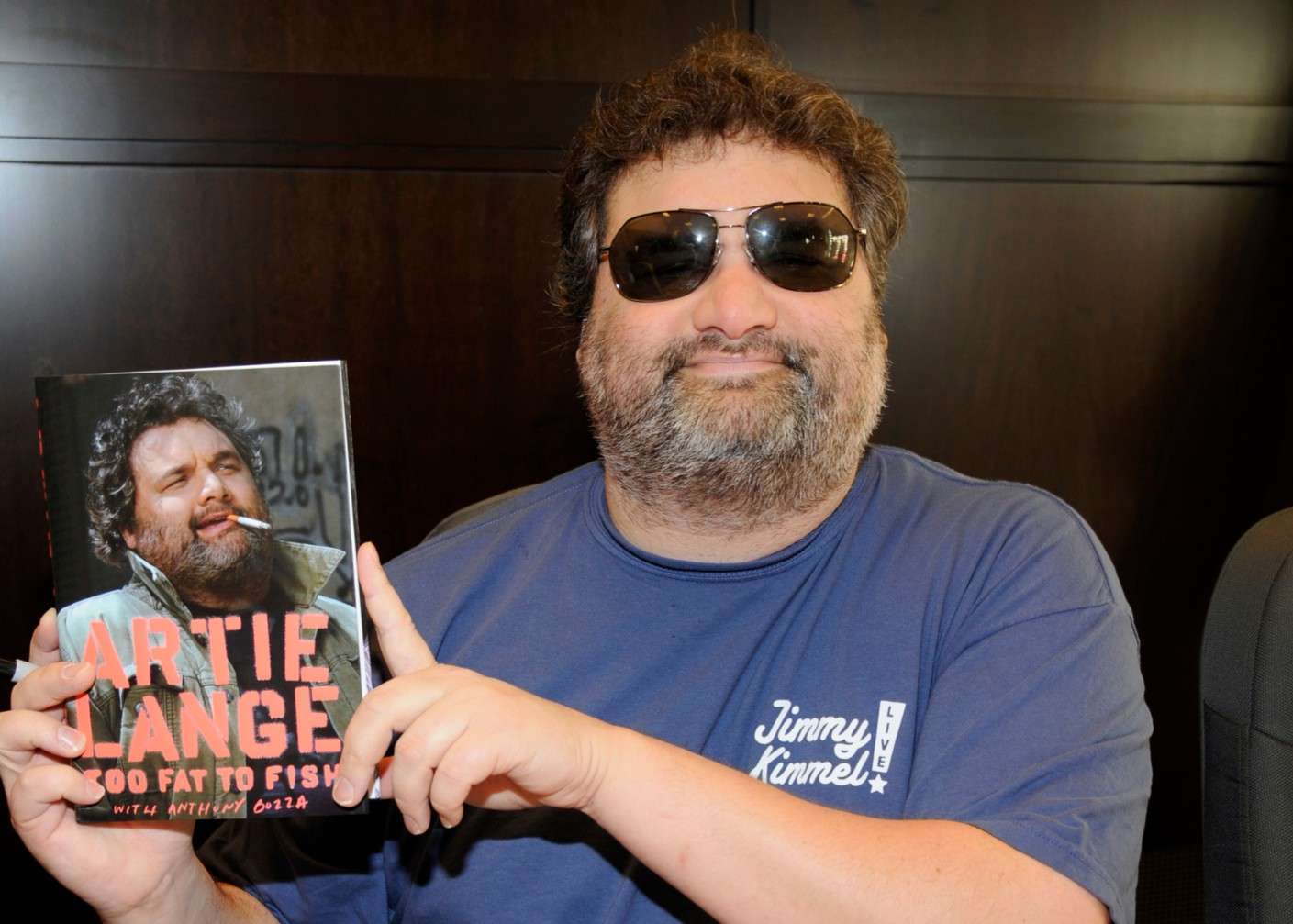
  • Howard Stern "Very Sad" About Former Sidekick Artie Lange

    Howard Stern "Very Sad" About Former Sidekick Artie Lange

    The shock jock wishes the best for Lange, who is doing community service following a 2018 drug conviction.

    Radio host Howard Stern is sad about what’s happening with Artie Lange, according to the New York Times Magazine. On what has been a rocky journey between drug abuse and recovery, Lange is doing community service for a 2018 heroin possession charge.

    “I choose my words about Artie carefully, because I love him,” said Stern. “What’s happening with Artie makes me very sad.”

    Lange has long struggled with substance abuse, evident in his deviated septum that was a result of years of cocaine and heroin abuse.

    In 2009, Lange was asked to leave The Howard Stern Show over his excessive drug use. The next year, Lange attempted to commit suicide by drinking bleach and repeatedly stabbing himself in the stomach.

    “We’ve lost touch, and that’s my doing. I got my fingers crossed for the guy. And it wasn’t a clean break. It was many years of wanting Artie to get help.”

    Eventually, the split between Lange and the show was made permanent.

    “I know that a lot of fans want me to talk about Artie and feel it’s a cop-out for me not to,” commented Stern. “I’ll take that. I don’t want to do anything that would rock his boat. I get sad talking about Artie. He was a tremendous contributor. But we had to move on.”

    Lange’s fellow comedians urged him to get help as he struggled.

    “Artie, this is my 1000th request over decades to beg you to surrender to your addictions,” tweeted Richard Lewis. “We had the most laughs sober. I love you. You’re beloved and a magnificent comedian cursed with self loathing and fear. Give it up and live.”

    Comedian Jackie Martling also said his piece.

    “coming up to 18 years [sober] in May. in early 2001 I’d have laughed at the idea of not drinking for 18 *days.* Art, I know you know the laughs are just as hearty on this side. I love you and am of course 100% in your very crowded corner,” he tweeted.

    As for Lange, he passed a message to his fans through his Twitter team.

    “It’s true i’m working to satisfy my drug court program. I work with great people. Nothing wrong with a little hard work. Love you all and can’t wait to be back on stage,” Lange said, according to the tweet.

    A representative for Lange confirmed that “this is work Artie is doing as part of his [New Jersey] drug court case. He is working with a refuse company daily as he continues treatment.”

    View the original article at thefix.com

  • Rob Lowe Reflects On 29 Years Of Sobriety

    Rob Lowe Reflects On 29 Years Of Sobriety

    The actor shared a message of positivity on Instagram as he celebrated the milestone.

    Actor Rob Lowe celebrated 29 years sober from drugs and alcohol in an Instagram post. In the caption of a photo of his younger self, he left some encouraging words to anyone who finds themselves on a similar path to his.

    “Today I celebrate 29 years of sobriety. Thank you to all those who have inspired me on this wonderful, challenging and life-changing journey,” he captioned the post. “If you, or someone you know, are struggling with alcohol or addiction, there CAN be a future of hope, health and happiness. And it comes one day at a time. #recovery #ItWorks.”

    His post was well-received by fans with over 82,000 likes, including support from big names like actress Demi Moore and supermodel Naomi Campbell. Lowe’s own brother, Chad, also pitched in: “Congratulations!!! Thanks for saving me a seat!!”

    Lowe’s son, Johnny, posted in support of his father. “So proud of you. Love you,” wrote Johnny.

    Lowe’s alcohol use led him to some dark places, including a 1988 sex tape of himself with a 16-year-old girl in Atlanta, where he was supposed to appear in support of Michael Dukakis at the 1988 Democratic National Convention. He says the incident helped him realize how far he had fallen.

    “It ends up being the greatest thing that ever happened to me,” he said in a 2011 interview with Oprah. “Because what it ends up doing is accelerating my alcohol [addiction] to where I finally get sober. I have been able to have the rest of my life that I’m so blessed with, which is now 20 years of sobriety.”

    The Parks and Recreation star has been open about his struggles, including how he problematically replaced his substance addictions with exercise.

    “It became an outlet for all of the tension, stresses, compulsivity,” said Lowe. “I funneled the addiction, frankly, into that.”

    Eventually Lowe was able to approach exercise with a healthier mentality, integrating it as a way to understand himself.

    “I don’t want to have the smoothie stand. I don’t want to look at beautiful women when I work out. I like the forced mental solitude of it,” said Lowe. “Inevitably, it will force you to start working through things you’re not going to if you’re listening to Jay-Z.”

    Most importantly, he was able to admit to himself that he exercised for the wrong reason—to look good.

    “Men deny having vanity—that’s the greatest vanity. Not me. I’m vain as fuck,” confessed Lowe.

    View the original article at thefix.com

  • Demi Moore To Address Addiction In New Memoir

    Demi Moore To Address Addiction In New Memoir

    Moore’s upcoming memoir will examine the “real crisis point” that led her to enter rehab.

    Actress Demi Moore will tackle a host of issues, from her career and famous husbands and offspring to her struggle with addiction and body image issues in a new memoir, Inside Out.

    The book, which will be released by HarperCollins on September 24, 2019, promises to detail what Moore described in a 2018 speech as a “real crisis point” that sent her to rehabilitation.

    As Harper executive editor Jennifer Barth noted in a press release for Inside Out, the book is “first and foremost a woman’s story; that the woman in question happens to be one of the most celebrated actresses of our time only makes her journey of vulnerability, strength and self-acceptance all that more resonant.”

    Though Moore has yet to speak publicly about the contents of her book, People quoted a speech she gave in 2018 at an annual awards luncheon given by Peggy Albrecht Friendly House, a sober living facility in Los Angeles.

    Moore, who had been named woman of year by Friendly House, spoke about her return to sanity and sobriety from what she described as a “path of real self-destruction.”

    “No matter what successes I had, I just never felt good enough,” she said at the event. “This self-destructive path, it very quickly brought me to a real crisis point. And it wasn’t clear at the time the reason—maybe it was divine intervention—but two people who I barely knew stepped up and took a stand for me, and they presented me with an opportunity.”

    As Moore described it, the opportunity was more like an ultimatum. “Unless I was dead, I better show up,” she explained. “They gave me a chance to redirect the course of my life before I destroyed everything. And I’m so grateful because without that opportunity, without their belief in me, I wouldn’t be standing here today.”

    In 2012, Moore was hospitalized after collapsing and experiencing a seizure-like reaction. Though the incident was initially written off as exhaustion, a recording of the 911 call from Moore’s home suggested that the actress had smoked something before going into convulsions. After her hospital stay, Moore entered rehabilitation at Cirque Lodge in Utah.

    Moore, who has resumed her acting career with appearances in Rough Night, Fox’s Empire series and the upcoming Corporate Animals, said that confronting her substance issues gave her the strength to address other, more deep-rooted problems.

    “In a moment of great struggle for me, I reached out to a wise teacher and expressed my fear that I wasn’t good enough,” she said at the 2018 event. “And she said, ‘You will never be good enough but you can know the value of your worth. Put down the measuring stick.’ So today, I put down the measuring stick.”

    View the original article at thefix.com

  • Louisiana Prisoners To Be Guinea Pigs For Unapproved Naltrexone Implant

    Louisiana Prisoners To Be Guinea Pigs For Unapproved Naltrexone Implant

    Participation in the program is strictly voluntary but advocates of prisoners’ rights say it sets a “dangerous precedent.”

    A pilot program is drawing controversy over the use of Louisiana prisoners to test a surgical implant for the treatment of alcohol or opioid use disorder.

    While some laud the idea of expanding access to medication-assisted treatment (MAT) for substance use disorder, others are critical of the pilot program since the device, which delivers naltrexone in the body, is not approved by the Food and Drug Administration (FDA).

    “There’s extra precaution to be taken when there’s a vulnerable population,” said Bruce Reilly, deputy director of the Voice of the Experienced, a New Orleans-based organization which advocates for prisoners’ rights. “It’s commendable that we’re pursuing treatments. We’re moving in a positive direction. [But] to sidestep or overstep the FDA approval process, that’s a little troublesome when it comes to an incarcerated environment.”

    Naltrexone, which blocks the effects and cravings of opioids and alcohol, is only approved in pill or injection form—the implant is not.

    Treating prisoners with the FDA-approved naltrexone has yielded success before in the Louisiana prison system. As The Advocate notes, of the 100 prisoners who were given naltrexone over a two-year period in conjunction with education and therapy prior to their release, only 4 have since landed back in prison.

    Encouraged by this success, corrections officials seem to want to take it a step further by approving the surgical implant pilot program.

    This time, the Louisiana Department of Public Safety and Corrections partnered up with BioCorRx, the maker of the implant. The California-based health care company has donated 10 of the devices to the state of Louisiana to implant in 10 inmates. Corrections officials stress that it is completely voluntary to participate in the pilot program.

    At $700 each, the naltrexone implant is cheaper than the monthly injection (about $1,000 each). The implant is said to metabolize in the body over 3-4 months, while the injection must be administered monthly and the pill is taken daily.

    It’s not hard to see why the implant may be more cost-effective than the pill or injection, but without FDA approval none of that matters, say advocates of prisoners’ rights.

    “If you’re really concerned about the population, why don’t you start with what’s approved? Consent is always problematic (in prison),” said Dr. Josiah “Jody” Rich, co-director of The Center for Prisoner Health and Human Rights.

    BioCorRx CEO Brady Granier said the implants have yielded positive results in more than 1,000 people. But Rich is not convinced.

    “We have a pretty bad history with experimentation in American prisons, I think the least we can do is use drugs that have been declared safe by our regulatory board,” said Rich.

    “Just because it’s free… I think it’s a really dangerous precedent,” he added. “We can’t afford to be stupid about this.”

    View the original article at thefix.com

  • Officer’s Fatal Overdose Prompts Question About Drug Screenings For Cops

    Officer’s Fatal Overdose Prompts Question About Drug Screenings For Cops

    The fatal overdose of an officer in Maine have many wondering how his drug use went undetected by the department.

    The fentanyl overdose death of a police officer in Maine has sparked inquiry into the drug testing policies of police departments across the state. How could Nicholas Meserve’s drug problem have gone undetected?

    The 34-year-old Lewiston police officer died of acute fentanyl intoxication on February 8, according to the state medical examiner.

    “I was kind of shocked,” said John Rogers, director of the Maine Criminal Justice Academy. “I’d never seen that in my time here as a director, where you have an officer who dies of an overdose because he has a drug problem.”

    A report by the Portland Press Herald revealed that universal drug-testing policies are not the standard, but an exception in Maine.

    Only one town, Baileyville, does pre-employment drug testing, testing with probable cause and random testing. Only two others, Houlton Police and the Penobscot County Sheriff’s Office also conduct pre-employment drug screenings.

    In Portland, prospective police officers must complete a questionnaire on past drug use as part of the department’s rigorous hiring process. They must also undergo psychological testing and a polygraph exam. Any red flags raised in the process are investigated further, said acting Portland Police Chief Vern Malloch.

    Malloch gives a detailed overview of the Portland Police Department’s policy regarding officers’ behavior. Once they are hired, they are subject to performance reviews. Their patterns of behavior are monitored with data to detect any irregularities.

    And if there is a problem, officers have the option to seek help with an employee assistance program or a peer support system. Malloch says the department has helped officers get help for their depression and alcoholism.

    “The last thing we want to do is discourage employees from coming forward because (they think) it will cost them their job,” said Malloch. “We want employees to come forward so we can address it adequately and get the person well so they can return to being a productive officer.”

    Typically, alcohol abuse is the “more common” issue among police, says John Rogers. Between 2008-2016, the Maine Criminal Justice Academy board saw 25 cases of drug-involved criminal conduct or past actions by police or corrections officers, the Press Herald reported. In that same period, the board saw 69 alcohol cases, many of them for operating under the influence.

    As a result of Meserve’s untimely death, Lewiston Police Chief Brian T. O’Malley said the city is working with the police unions to establish a drug-testing policy so that another officer with a drug problem may not go undetected.

    As the Press Herald reports, Lewiston does offer an employee assistance program and peer support team for officers in need. They also track each officer’s use of force, how much sick time is used, job performance evaluations and complaints from the public.

    Meserve’s record made no indication that he was struggling with drug use, O’Malley said.

    View the original article at thefix.com

  • Can Artificial Intelligence Accurately Diagnose Childhood Depression?

    Can Artificial Intelligence Accurately Diagnose Childhood Depression?

    A new artificial intelligence algorithm could present an easier way to identify children who may be depressed or anxious.

    Although one in five children suffer from depression or anxiety, the conditions can be difficult to diagnose in kids, which is why researchers are excited about a new artificial intelligence algorithm that successfully detected depression and anxiety from children’s speech.

    “We need quick, objective tests to catch kids when they are suffering,” lead study author Ellen McGinnis, a clinical psychologist at the Vermont Center for Children, Youth and Families, said in a news release. “The majority of kids under eight are undiagnosed.”

    The research, published in the Journal of Biomedical and Health Informatics, used a 90-minute interview to analyze children’s speech patterns. They found that certain patterns, including low-pitched voices, repeatable speech inflections and content, and a higher-pitched response to an unexpected noise, could be used to accurately identify depression and anxiety.

    “The algorithm was able to identify children with a diagnosis of an internalizing disorder with 80% accuracy, and in most cases that compared really well to the accuracy of the parent checklist,” said study author Ryan McGinnis.

    McGinnis said that the research could present a faster and easier way to identify children who may be depressed or anxious, when compared with the current means of screening for depression in kids.

    “This would be more feasible to deploy,” he said.

    This is especially important since early intervention can help treat children and avoid future complications, including substance use disorder.

    “Thanks to greater neuroplasticity, interventions can be very effective in this population if disorders are identified early in development,” study authors wrote. “However, the current healthcare referral process usually involves parents reporting problem behaviors to their pediatrician and, if functionally impairing, the child is then referred to a child psychologist or psychiatrist for a diagnostic assessment.”

    This slow process results in many children being undiagnosed and not accessing the help they need.

    “Even if referred, current diagnostic assessments have been shown to capture only the most severely impaired preschoolers, but miss a large number of children who may go on to develop additional clinical impairments,” study authors added.

    Using artificial intelligence, coupled with information gathered from a sensor worn for a brief time, could be the future of diagnosing depression and anxiety in children, the study authors said.

    “These results point toward the future use of this approach for screening children for internalizing disorders so that interventions can be deployed when they have the highest chance for long-term success,” they wrote.

    View the original article at thefix.com

  • Family Sues Juul For Allegedly Marketing E-Cigs To Underage Teens

    Family Sues Juul For Allegedly Marketing E-Cigs To Underage Teens

    The lawsuit is centered around a teen who reportedly didn’t know that the fruity Juul vape she was using contained nicotine.

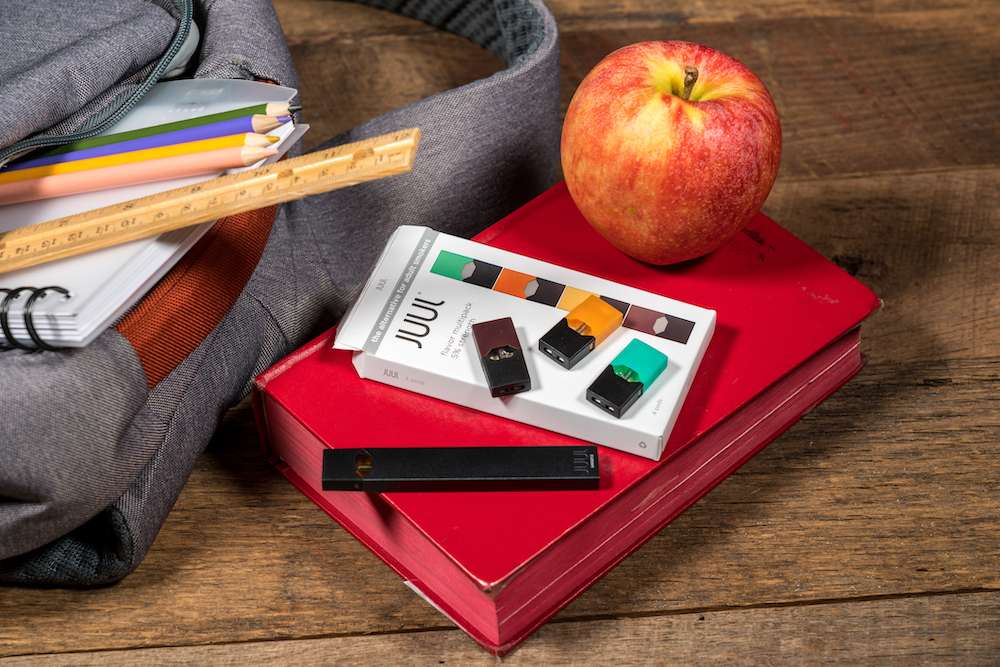
    A 15-year-old girl and her family have filed a class action lawsuit against the popular vape company Juul over allegations that it used deceptive marketing tactics to purposely attract underage kids to their products.

    Juul has been accused of this repeatedly due to the fact that its products often come in brightly colored packaging and fruity flavors that some believe are naturally appealing to kids.

    Juul has consistently responded to similar allegations by insisting that its products were only ever intended for people who already smoke standard “combustible” cigarettes in order to help them transition away from traditional smoking.

    “Our product is intended to be a viable alternative for current adult smokers only,” a Juul spokesperson said to Rolling Stone. “We do not want non-nicotine users, especially youth, to ever try our product. To this end, we have launched an aggressive action plan to combat underage use as it is antithetical to our mission.”

    However, this class action lawsuit out of Sarasota, Florida claims that Juul knew that “e-cigarettes were not safe for nonsmokers, and posed a risk of aggravating addiction in those already addicted to cigarettes.”

    The lawsuit is centered on a 15-year-old girl called “A.N.” who alleges that she started using Juul vape products at age 14 because of the fruity flavors without knowing that they contained nicotine.

    Today, she is both addicted to nicotine and suffering from seizures allegedly caused by this addiction. The complaint accuses Juul of “mimicking Big Tobacco’s past marketing practices” and contributing to the rising rates of teen e-cigarette use.

    As the biggest e-cigarette company in the nation, holding nearly 75% of the market, Juul has already weathered accusations of worsening the rates of nicotine addiction in the U.S., particularly among young people.

    A 2018 Monitoring the Future survey found that the number of teens who vape either nicotine or cannabis products doubled in the space of a single year.

    Twenty percent of surveyed high school seniors reported using vape products that contained nicotine, and another 25% claimed that they just vaped the flavoring. However, as was the case for A.N., health experts fear that many teenagers who think they’re only using the fruity flavoring are actually consuming nicotine.

    “Teens are clearly attracted to the marketable technology and flavorings seen in vaping devices,” said National Institute on Drug Abuse (NIDA) Director Dr. Nora D. Volkow. “However, it is urgent that teens understand the possible effects of vaping on overall health; the development of the teen brain; and the potential for addiction.”

    The FDA is already cracking down on what is being called a teen vaping “epidemic” and has sent over 60 warning letters to Juul distributors about selling to underage kids. Juul has responded by removing most of its flavored vape products from stores.

    View the original article at thefix.com