Tag: News

  • Why Aren’t Doctors Prescribing Suboxone To More Black Patients?

    Why Aren’t Doctors Prescribing Suboxone To More Black Patients?

    The total number of buprenorphine-related visits has surged but the number of black Americans receiving the medication has not increased.

    The racial disparity in the prescribing of opioid treatment drugs like Suboxone is highlighted in a new study out of the University of Michigan.

    The study, published in JAMA, looked at two national surveys of prescriptions as reported by physicians between the years 2012 and 2015.

    While the total number of buprenorphine-related medical visits drastically increased to 13.4 million during this time span, researchers noted that the number of buprenorphine prescriptions did not increase among African-Americans, or any other minorities.

    Buprenorphine, most commonly known by the brand name Suboxone, is a medication that dramatically reduces opioid cravings and blocks the effects of opioids.

    “White Americans have 35 times as many buprenorphine-related visits than black Americans,” Dr. Pooja Lagisetty, an assistant professor of medicine at the University of Michigan Medical School and the study’s corresponding author, told NPR.

    Although white Americans have been the face of the opioid epidemic, the number of overdose deaths among black Americans is now rising faster than their white counterparts.

    In addition, there is a shortage of clinicians and clinics prescribing buprenorphine, Dr. Andrew Kolodny, co-director of Opioid Policy Research at Brandeis University, told NPR.

    Currently, physicians must take on eight hours of training to become certified to prescribe buprenorphine. And even if they do receive authorization to prescribe it, they are then faced with a cap that only allows them to prescribe it to 30 patients in the first year and up to 100 patients afterwards.

    A bill in New York that would end the extra training required for physicians and nurses to dispense Suboxone, and the caps, has gained tremendous support. The special training for both doctors and nurses has meant that there are not enough providers who offer the life-saving drug.

    According to STAT News, only 5% of doctors have completed the training required to prescribe buprenorphine.

    In France, where additional restrictions on prescribing opioid addiction treatment drugs were removed in 1995, there was an 80% decrease in opioid overdoses in the subsequent years.

    Michael Botticelli, director of the Grayken Center for Addiction at Boston Medical Center and the former director of the Office of National Drug Control Policy, has questions about specific points of interest in the disparity between white and black patients receiving Suboxone.

    He questions if Medicaid reimbursement rates are too low to attract doctors to work with low-income patients, or if there is a scarcity of inner-city doctors prescribing buprenorphine, or if African Americans are not seeking the treatment for an unknown reason.

    White patients typically  paid cash (40%) or used private insurance (35%) to fund their buprenorphine treatment. A mere 25% used Medicaid and Medicare to pay for their visits.

    View the original article at thefix.com

  • Columbine Survivor & Addiction Advocate Austin Eubanks Dies At 37

    Columbine Survivor & Addiction Advocate Austin Eubanks Dies At 37

    A statement from his family said Eubanks “lost the battle with the very disease he fought so hard to help others face.”

    Austin Eubanks, who survived the 1999 Columbine school shooting, has died at the age of 37. Eubanks, who battled an addiction to painkillers used to recover from injuries received during the attack, was found dead in his home in Steamboat Springs, Colorado on May 18, 2019.

    The cause of death was yet to be determined, and while the Routt County coroner told the Associated Press that no signs of foul play were found at the scene.

    His family issued a statement which said that Eubanks “lost the battle with the very disease he fought so hard to help others face.”

    Eubanks was 17 when he gunmen entered the Columbine High School library and fatally shot 10 of his fellow students, including his best friend, Corey DePooter.

    In a 2016 interview with The Fix, Eubanks said that he received a 30-day supply of painkillers for injuries he received to his hand and knee, despite the fact that the wounds “were not to the point of needing opiate pain medication.” Within three months, Eubanks said that he was dependent on the drugs. “I used substances every day, day in and day out,” he recalled.

    The Columbine incident became a means of obtaining more opioids without questions from medical professionals. “I could literally get whatever I wanted,” Eubanks told The Fix. “Telling them I’d been shot at Columbine and lost my best friend was like getting an open prescription book from any doctor.”

    Eubanks eventually completed his high school degree, got married and had a son, and worked in advertising. But his substance abuse issues went unchecked, despite stints in rehab in 2006 and 2008. Eventually, his marriage fell apart, and a series of offenses, including car theft, culminated in a 2011 arrest for probation violation.

    “That was the absolute lowest moment of my life. I had ruined the marriage. I had two children I was estranged from. I told myself, ‘If I don’t stop right now, I’m going to die,’” he recalled.

    Treatment in a 14-month program helped him overcome the emotional pain he had kept inside after the Columbine shooting and gain recovery. Eubanks became an administrator at treatment center, and a speaker on the national circuit on addiction and health care reform. ”

    “I think that it’s really important that – not as survivors of trauma but survivors of addiction – speak out and they share their story,” he said. “Just because you never know when your story is going to change the life of someone else.”

    In their statement to the press, Eubanks’s family thanked the recovery community “for its support.”

    View the original article at thefix.com

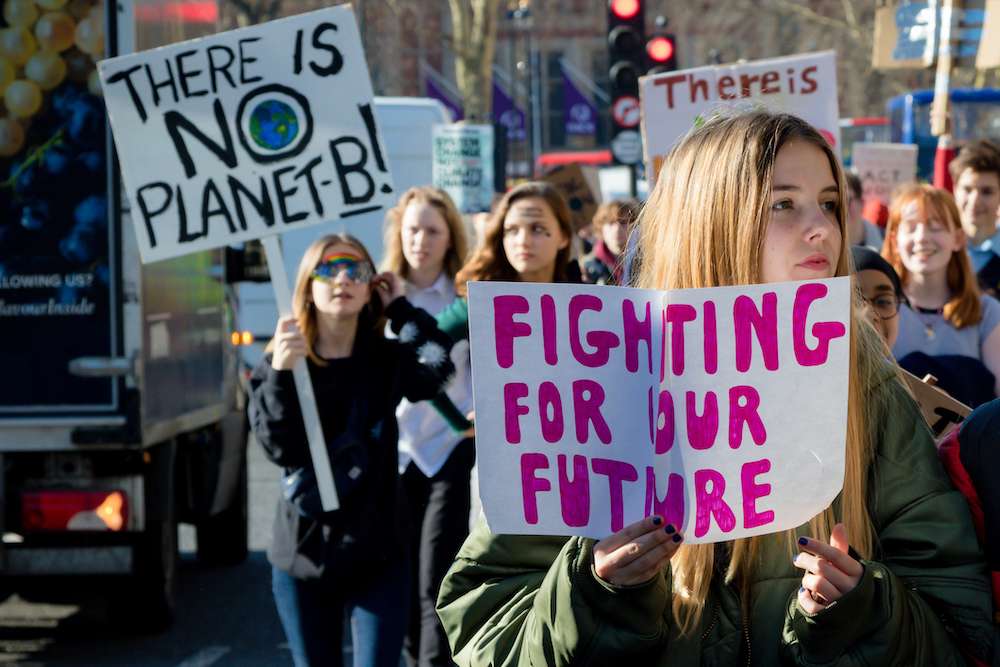
  • How Climate Change Can Affect Mental Health

    How Climate Change Can Affect Mental Health

    Experts discuss how “climate anxiety” affects those worried about the future as well as those who’ve experienced trauma through natural disasters.

    As the global temperature rises due to climate change, there is increasing concern about how the impact of this will affect mental health. 

    The 2018 National Climate Assessment says that extreme weather and rising sea levels can result in “mental health consequences and stress.” 

    “The last two years, the conversation has shifted toward climate change,” said Reggie Ferreira, editor of the journal Traumatology and director of Tulane University’s Disaster Resilience Leadership Academy, according to Rolling Stone. “We see disaster causing trauma, but climate change is intensifying the disaster. We need to focus on what’s intensifying these disasters and get people prepared.”

    In fact, at the 2019 meeting of the American Psychiatric Association, various sessions on climate change are planned. Experts say the impact on mental health comes about in two ways: growing anxiety when thinking about the future, as well as a growing number of traumatized natural disaster survivors. 

    Most commonly coined “climate anxiety,” the concern about the future is also referred to as “climate grief” and “climate depression,” according to David Wallace-Wells, author of The Uninhabitable Earth

    “While it may seem intuitive that those contemplating the end of the world find themselves despairing, especially when their calls of alarm have gone almost entirely unheeded, it is also a harrowing forecast of what is in store for the rest of the world, as the devastation of climate change slowly reveals itself,” Wallace-Wells writes.

    Last year, a survey conducted by Yale found that almost 70% of Americans worry about climate change and 29% qualify themselves as “very worried,” which is an 8% increase from earlier that same year. 

    Janet Lewis of the Climate Psychiatry Alliance says that climate anxiety differs from treating other forms of anxiety. 

    “Most of the time when we’re treating anxiety, we’re treating people who have unrealistic levels of anxiety,” Lewis said, according to Rolling Stone. “We’re all in the same boat with this.” 

    Lewis adds that when treating people with climate anxiety, it’s important to encourage them to grieve the loss of things such as ecosystems, as well as acknowledge that everyone is in the situation together. 

    When it comes to trauma as a result of natural disaster, such as 2017’s Hurricane Maria in Puerto Rico, experts say more programs need to be implemented in the future to aid in such situations. 

    One reason is that in the wake of such disasters, there is often an increase in PTSD, anxiety, depression, substance abuse and violence. 

    “The mental health system in the U.S. is broken and in times of disaster it’s even more on the back burner,” trauma psychologist Charles Figley tells Rolling Stone. “We’re much more concerned about bringing back infrastructure than looking at mental health aid. The human element is often forgotten.”

    View the original article at thefix.com

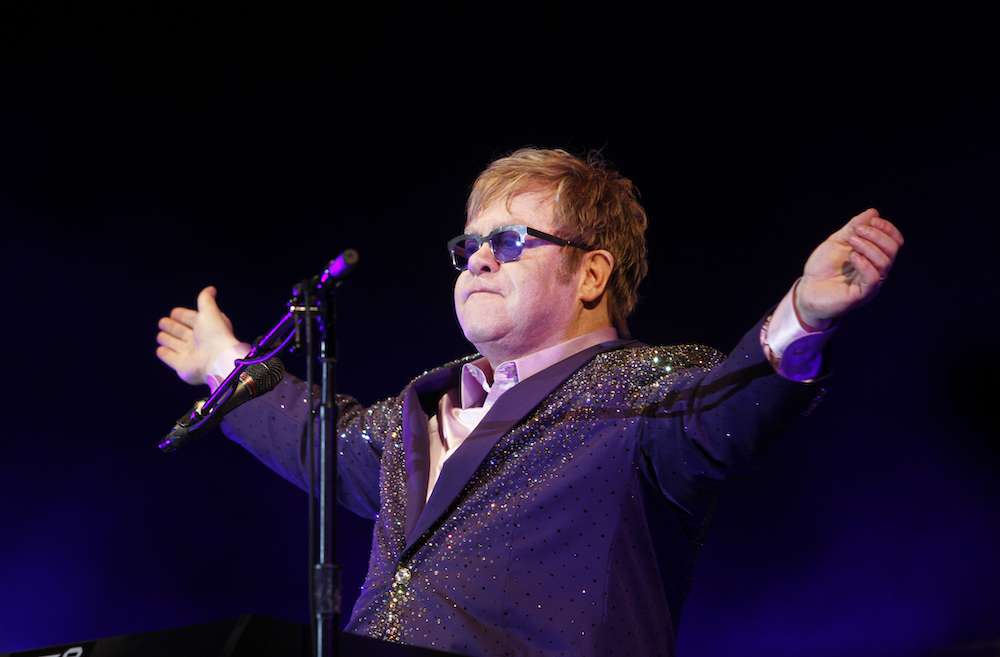
  • Elton John Reflects On Sobriety As “Rocketman” Movie Makes Its Debut

    Elton John Reflects On Sobriety As “Rocketman” Movie Makes Its Debut

    “Life is full of pitfalls, even when you’re sober. I can deal with them now because I don’t have to run away and hide,” John said.

    The new film Rocketman details singer Elton John’s life, including his drug, sex, and shopping addictions that hounded him earlier in his career. Despite his stature as an artist and musician, John says he still finds himself in the throes of self doubt.

    “I think every artist does [have self-doubt],” John said in an interview with Variety. “Every creative artist does have doubt and has moments of, ‘Am I doing the right thing? Am I good enough?’ And that’s what turns us into monsters as well because I think you become unreasonable and of course the chemical substances and the alcohol doesn’t help anything, and you lose touch with reality.”

    John admitted that his life spiraled out of control as he began to settle into a lifestyle of fame and fortune.

    “The life I was leading, flying on the Starship [his legendary private plane], living in beautiful houses, buying things left, right and center — it was not a normal life, not the sort of life I came from anyway,” said John. “I lost complete touch with that. I vowed when I did change my life that that would never happen again.”

    The “Tiny Dancer” singer also revealed that some days, he wasn’t sure whether he’d make it to tomorrow.

    “There were times I was having chest pains or staying up for three days at a time,” said John. “I used to have spasms and be found on the floor and they’d put me back to bed and half an hour later I’d be doing the same. It’s crazy.”

    These days, the musician is married to David Furnish, with whom he is raising two sons. He’s only made it this far because he fought to live.

    “I am a survivor,” he said. “I’ve survived a lot of things. Life is full of pitfalls, even when you’re sober. I can deal with them now because I don’t have to run away and hide.”

    John says that the most valuable ability he’s learned from sobriety is communication.

    “What I couldn’t do when I was an addict was communicate, except when I was on cocaine I thought I could but I talked rubbish,” John recounted. “I have a confrontation problem which I don’t have any more because I learned if you don’t communicate and you don’t talk about things then you’re never going to find a solution.”

    The origin of his troubles may be traced back to his complicated relationship with his parents, who split when he was a child.

    “I’ve come to understand — as you get older you understand — the circumstances they went through,” said John. “I’m not angry or bitter about that whatsoever, but it did leave a scar and that scar took a long time to heal — and maybe it will never heal totally.” 

    View the original article at thefix.com

  • Marijuana Legalization Flounders in New York, New Jersey

    Marijuana Legalization Flounders in New York, New Jersey

    “People are talking about [legalization] less. There is no sense of urgency,” says one drug policy expert.  

    In the beginning of 2019 it seemed almost certain that New York and New Jersey would soon legalize cannabis, allowing people in and around America’s largest city to use the the drug recreationally.

    But just five months into the year legalization efforts in both states are floundering. 

    “People are talking about it less,” Kassandra Frederique, director of the Drug Policy Alliance in New York, told The New York Times. “There is no sense of urgency.” 

    New York and New Jersey are among the first states to try to legislate a recreational marijuana marketplace. Vermont is the only state thus far to legalize cannabis through legislative action, but it does not have a marketplace, instead allowing cannabis to be grown for personal use. 

    In New York, Gov. Andrew Cuomo wanted marijuana legalization included in the state’s budget that was passed in April, but that effort broke down. The proposal faced opposition from minority legislators who were not satisfied with the bill’s social justice components. 

    However, the New York Times reported this week that the governor was the one who ultimately backed away from pushing legalization through the budget because he feared the political consequences. 

    “The governor walked away from it in the budget,” Senator Liz Krueger said. 

    Yet Cuomo insisted that the legislature was to blame. 

    “The facts as reported are the leaders said they don’t want to pass marijuana in the budget,” he said. 

    Krueger said that the state lawmakers are still divided about how funds from cannabis should be spent, and specifically how much of those funds should be earmarked for communities that have been disproportionately affected by marijuana prohibition. 

    She said, “Day 1, when we started to draft this bill, I told everyone the ultimate fight would be over the money and who gets it. And the last day that we come to closure and sign a bill, I will tell people the fight was over where the money went.”

    In New Jersey, Gov. Phil Murphy cancelled a vote on legalization in March when it became clear that the measure would not pass. He later issued an ultimatum to lawmakers giving them until the end of May to pass legalization, or he would expand the state’s medical marijuana program by executive order.

    Last week, he said that New Jersey may end up allowing voters to decide directly about legalizing recreational marijuana

    “The referendum has always been out there as an option,” he said at a press conference on Thursday (May 9). “Only one state has done this legislatively and that’s Vermont. We have felt that this is a better way to go. It takes more courage, it’s a tough vote for many, and we understand that.”

    View the original article at thefix.com

  • US Prosecutors Flock To Europe To Observe Harm Reduction Policies In Action

    US Prosecutors Flock To Europe To Observe Harm Reduction Policies In Action

    The large group of prosecutors are seeking inspiration for how to “shrink the footprint of the justice system” in the US.

    This month, prosecutors from around the United States are touring Europe to observe the impact of policies toward drug use that focus on harm reduction rather than a punitive approach, Marijuana Moment reports.

    Last week, the group—comprised of 20 prosecutors including Philadelphia District Attorney Larry Krasner and Baltimore State’s Attorney Marilyn Mosby—was in Germany. This week, they are in Portugal.

    The two countries have implemented policies on a national level that have not been tried in the U.S. Given the U.S.’s high incarceration rate and evidence of its failure, the prosecutors are seeking inspiration for policies that are working elsewhere. “Germany and Portugal offer powerful lessons on changing these paradigms,” said the organization funding the trip, Fair and Just Prosecution (FJP).

    “Elected prosecutors around the country are grappling with how to redefine justice and shrink the footprint of the justice system, while making communities safer and healthier,” said FJP executive director Miriam Krinsky in a statement. “They are shifting away from punitive criminal justice responses to substance use and mental illness and embracing smart and proven public health solutions.”

    Germany set out to reduce incarceration by diverting “almost all” people away from prison and focusing on rehabilitation and human dignity. According to the FJP press release, once there the group observed its approach to charging, plea bargaining and incarceration and its approach to youths in the criminal justice system.

    “The evidence is clear that our country’s decades-long approach to incarceration is not working,” said DA Rachael Rollins of Suffolk County, Massachusetts, who is part of the group. “We need to look for innovative solutions to deliver more sensible approaches—and a paradigm shift away from punitive responses—that our communities are demanding.”

    In Portugal, the focus is on drug policy. In 2001, the country decriminalized all drugs in response to its own addiction crisis. People caught with less than a 10-day supply of illicit drugs are seen before a “dissuasion commission”—a panel of lawyers or judges, social workers and psychologists—and if deemed to have a drug use problem, they are referred to treatment. If not, they are given a fine or a warning.

    Research on Portugal’s policy has illustrated a positive impact on public health—including significant reductions in drug-related deaths, drug use among 15-24-year-olds, the spread of HIV and hepatitis C, and the homeless population. Meanwhile, the number of people who receive treatment for a substance use disorder are up.

    This week while in Portugal, the prosecutors are exploring firsthand the long-term effects of the 18-year-old decriminalization policy. They are meeting with public health officials and “drug policy leaders” including the people who developed the decriminalization policy—as well as police, prosecutors and the members of the dissuasion commission.

    They are also visiting supervised injection facilities in each country, according to WHYY.

    “Among all criminal justice system actors, prosecutors are uniquely positioned to be able to take lessons learned from other countries’ approaches to incarceration and criminalization back to their communities,” said District of Columbia Attorney General Karl Racine, who is on the trip. “The enormous power of prosecutors to exercise their discretion in ways that ensure outcomes that enhance public safety and reduce recidivism is unparalleled in the criminal justice system.”

    View the original article at thefix.com

  • Independent Musicians Are Struggling With Mental Health At A Shocking Rate

    Independent Musicians Are Struggling With Mental Health At A Shocking Rate

    A new survey revealed that 73% of independent musicians have dealt with mental health issues. 

    Mental health is a concern across the population as a whole, but a recent survey found it is especially prevalent in musicians. 

    A new study determined that 73% of independent musicians have reportedly struggled with mental health at some point in the past, stating they have dealt with “stress, anxiety and/or depression” connected to their work. This was particularly true in those ages 18-25, where more than 80% reported struggles with mental health.    

    The statistics come from Record Union, which is a digital distribution platform based in Sweden. The web survey was given to about 1,500 indie musicians from March 21 to April 2. 

    “Our study is telling us that something needs to change,” Record Union CEO Johan Svanberg said in a statement published on Billboard.com. “It’s time to put the state of our artists’ mental health on the agenda, before streams and commercial success. We as an industry must wake up and ask ourselves: What’s our responsibility in this and what can we do to create a healthier music climate?”

    Additionally, the survey determined that of those surveyed, 33% dealt with panic attacks, 57% reported worrying about their mental health and 41% said they worried numerous times daily. Musicians reported that the ‘pressure to deliver” played a role in their experience, as well as fearing failure and struggling financially.

    Despite the large amount of musicians that reported struggling, only 39% said they had reached out for help. However, 51% reported mainly using alcohol and drugs to self-mediate. 

    The survey also found that only 19% of independent musicians stated feeling that their industry is trying to generate a “sustainable music climate with healthy artists.”

    As a result of the study, Record Union will be donating $30,000 to various projects focused on prevention and treatment of mental health struggles in musicians. 

    People are invited to submit projects to be considered for financial assistance, and the projects will then be voted on in June, and three winners will be chosen to split the $30,000.

    “The music industry has traditionally been defining success on commercial terms,” Svanberg told Billboard. “To be seen as successful you need to reach high sales and tour goals. It’s always money first. To create a more sustainable music climate with healthier artists, we believe that this needs to change and that artists need to start thinking about their mental health as part of the success.”

    View the original article at thefix.com

  • Boxing Helped Him Stay Sober, Now He Wants To Go Pro

    Boxing Helped Him Stay Sober, Now He Wants To Go Pro

    “I can’t wait to give the sport back what it has given me,” said amateur boxer Chad Leoncello.

    When Chad Leoncello started boxing two and a half years go he was just fighting to stay sober, but next week the Massachusetts resident will appear before the state athletic commission as he seeks to become a professional boxer.

    “I’ve had a late jump on the sport,” Leoncello, 35, told Enterprise News. “But my will and my heart is what is pushing me through. I’m not saying I’m going to be a world champ. But I do have some time to fight and really just make a statement of who I am as a fighter.”

    Leoncello also started the “Sober Warriors” movement, which aims to introduce people struggling with substance use disorder to the sport. 

    “When I talk to guys in my testimonies, I say, ‘You get frustrated with your girlfriend, a family member or a life situation, and you want to drink, or you want to punch something. So punch something,’” Leoncello told Enterprise News last year. “And it does work. It’s more of a healthy outlet for us. It’s really a healthy way to cope.”

    To bring the new coping skill to people in recovery, Leoncello delivered punching bags and other equipment to sober homes around Boston. 

    Other people in recovery began training with Leoncello and eventually going to competitions with him. 

    “I feel amazing in my recovery – boxing and growing – but it’s also watching my guys, and seeing them in the ring,” Leoncello said. “The majority won, but it was more about their families being at the show. Guys go from on their deathbed and overdosing, and now they have their families cheering them on, showing them love and crying at the end of the match. That’s the reward by itself.”

    Leoncello, who is an alcoholic and former opioid addict, said that he happened into boxing by chance, but quickly realized that it could be a great tool for people in recovery. 

    “The judge gave me a device I had to blew on three times a day. If I blew a positive I couldn’t see my son,” he explained. “I had three days to kill before seeing my son. I didn’t know what to do. … I went to doctor who gave me a drug for withdrawals. And I decided to walk into a boxing gym, and take my frustrations out that way. I made it down to Florida, and it was the first time I felt something real in my heart. From that point on, I never picked up a drug or alcohol again.”

    Now, Leoncello is hopeful that he’ll have the chance to fight professionally and show again what the sport has done for him. 

    “It’s something I want to do in life. … I think the big lights are calling my name. … I have a lot of respect for the sport because of what it has done for me and my life,” he said. “I can’t wait to give the sport back what it has given me.”

    View the original article at thefix.com

  • Former NFL Stars Turn To Cannabis Businesses

    Former NFL Stars Turn To Cannabis Businesses

    One NFL player said that cannabis use is already widespread in the league despite the fact that it is banned.

    When former Detroit Lions stars Calvin Johnson and Rob Sims retired from the NFL they started a real estate business together, but once Michigan legalized recreational marijuana they decided to get into the legal pot game, especially after seeing the benefits of cannabis firsthand.

    “When I was on [Dancing With The Stars], I was using a CBD (cannabidiol, a non-psychoactive cannabinoid) topical that my buddy gave me because my ankles were swelling up so much that I didn’t think I would be able to finish the show,” Johnson told Detroit Free Press during a conversation at the Toronto Cannabis Conference. “The relief happened almost overnight. I was already open-minded to marijuana, but after that, I became a true believer just because of the experience.”

    Sims also found relief in cannabis when he stopped playing football, and believes that it can help other athletes who want to avoid taking prescription medication.

    He said, “When I was finished playing, the prescriptions from the docs stopped. It’s a slippery slope when you come out of the league and you’ve got all the Oxy and Vicodins or whatever you have to manage the pain. There has to be a substitution and cannabis ended up being that for me.”

    Current and former NFL players have been critical of the league’s zero-tolerance policy on marijuana, especially as it hands out scores of pain pills to keep players on the field.

    Retirees are speaking up about the risk of addiction. Former players like Baltimore Ravens lineman Eugene Monroe have become advocates for cannabis reform.

    Monroe wrote on his website, “It’s time for the NFL to change its archaic standards to better protect its players. For too long, I’ve watched my teammates and good friends battle with opioid addiction and leave the game with a long road still ahead; it’s time to make a change.”

    Willis Marshall, who played professional football in the Canadian and U.S. Arena leagues, said professional sports rely too much on dangerous pills.

    He said, “Even in the Canadian Football League, where they don’t test for marijuana, prescription drugs are a dime a dozen in the locker rooms. They hand them out like candy corn and that’s an unfortunate thing.”

    Marshall estimated that up to 80% of NFL suspensions are from players using cannabis.

    “If it’s steroids, they’ll say it’s steroids or performance enhancing drugs,” he said. “And it’s probably not alcohol or cocaine because that leaves your system a lot quicker than marijuana. And I can’t see any players using heroin or meth and being able to play or even practice on those. So it kind of narrows it down to marijuana.”

    Last year on the Bleacher Report podcast, former New England Patriots tight end Martellus Bennet said that cannabis use is already widespread in the league despite the fact that it is banned.

    “There are times of the year where your body just hurts so bad,” he said, estimating that 89% of players use pot. “You don’t want to be popping pills all the time. There are anti-inflammatory drugs you take so long that they start to eat at your liver, kidneys and things like that. A human made that. God made weed.”

    View the original article at thefix.com

  • Chuck Schumer, Hakeem Jeffries Unveil Marijuana Decriminalization Bill

    Chuck Schumer, Hakeem Jeffries Unveil Marijuana Decriminalization Bill

    Schumer and Jeffries announced the bill in a video where they discussed its provisions and intended impact.

    A pair of Democratic lawmakers have partnered on a new bill that seeks to decriminalize marijuana at the federal level.

    Senate Minority Leader Chuck Schumer and Representative Hakeem Jeffries joined forces for the Marijuana Freedom and Opportunity Act, which would remove marijuana from the federal Controlled Substances Act, while also offering support to small business owners involved in cannabis-related industries and funding toward the Department of Justice (DOJ) to support expungement programs for marijuana convictions at the state and local level.

    The bill is the second such effort in two years for Schumer, who, in describing the bill, said, “What we’re saying is very simple. Let each state do what it wants.”

    Schumer and Jeffries announced the bill in a video where the two discussed the bill’s provisions and intended impact. Decriminalization, as Schumer noted, will allow the states to create their own legislation regarding marijuana and remove concerns for sellers, distributors and users about federal prosecution.

    The bill also includes the aforementioned expungement program funds for the DOJ, which Jeffries said would “[create] opportunity and economic space [that] will be tremendous.”

    He also noted that removing criminal marijuana charges would change the course of “lives and communities that have been ruined in large measure by the overcriminalization.”

    Small cannabis business owners, especially women or people of color, will also benefit through support from the Small Business Administration, which is included in the bill. “Let’s not have some big fancy corporation, some big tobacco company make all the money,” said Schumer in the video. Additionally, the Huffington Post reported that the bill will provide millions of dollars for research into the effects of marijuana on brain function and driving impairment.

    “The Marijuana Freedom and Opportunity Act is a phenomenal step forward in terms of social, racial and economic justice in the context of what many people view as the failed War on Drugs that has been with us for decades,” said Jeffries.

    As High Times noted, the bill will most likely face opposition from Senate Republicans, but it’s not clear how Donald Trump will respond. The president previously voiced support for a legalization bill introduced by Senator Cory Gardner (R-Colorado) in 2018.

    View the original article at thefix.com