Tag: News

  • John Lehr, The Original Geico Caveman, Is 23 Years Sober

    John Lehr, The Original Geico Caveman, Is 23 Years Sober

    “I was looking at serious time in jail. My lawyer told me to get in a program, and I have been sober ever since.”

    While it’s been 15 years since the first GEICO caveman commercial aired in 2004—offending cavemen with the slogan “so easy a caveman could do it”—comedian John Lehr, who played the original GEICO caveman, is still performing, writing and producing comedy. And he’s using his personal recovery to inspire and entertain as well.

    While Lehr, 52, has stayed busy working on a multitude of projects including the comedy western Quickdraw on Hulu and 10 Items or Less on TBS, his comedy has a personal side, too. For his performances, Lehr gets his material from real life. Sobriety is a recurring theme.

    As a young comedian from Chicago, Lehr arrived in Los Angeles to pursue bigger dreams. He admitted to Forbes that he was “really unhappy” early on and was later diagnosed with depression.

    His moment of clarity came from behind the wheel, and then a jail cell, on LSD. “I was driving on acid and I got pulled over in Ventura County. I spent the night in jail on acid. I was looking at serious time in jail. My lawyer told me to get in a program, and I have been sober ever since.”

    That was 23 years ago. Now on the other side, he’s in a position to use his personal history to entertain and inspire audiences. Lehr created his brand Cold Sober Comedy to do just that. He performs and MCs at events under Cold Sober Comedy, including the Annual Sober St. Paddy’s Day Comedy Night for the Atlanta Caron Treatment Center in March.

    “Quitting drugs and alcohol—as hard as it is—is the easy part,” he said to Forbes. “What’s really hard is living without the drugs and the alcohol. I didn’t know how to be sober. What people don’t realize about addicts and alcoholics, it makes it easier to live with them. Take it away and then the real dragon comes out.”

    He also made a live show about making it in Hollywood and getting sober. “It’s a live show about all of it. I call it Three Harsh Tokes,” he said. “Number one: I’m not God. I may not know who or what God is, but I know it’s not me. Number two: I’m never going to fully recover, but as long as I’m seeking God or a higher power in others’ views, I’m okay. I don’t have to find it. I just have to seek it. And number three: I can’t fix myself.”

    Lehr’s upcoming projects include a marijuana comedy featuring Tommy Chong (of the iconic stoner duo Cheech & Chong) and a July 1st appearance at the Association of Recovery in Higher Education (ARHE) 10th National Collegiate Recovery Conference at Boston University.

    “I will be speaking to the people who run the program at colleges all over the country,” Lehr said. “What I talk about is how to stay sober. [Addicts] just don’t know how to live life on life’s terms. I tell them, ‘If you’re not having fun, you’re not going to stay sober. If you can’t find the sweetness and light to life, you’re screwed.’”

    View the original article at thefix.com

  • Artie Lange Arrested For Violating Drug Court Terms

    Artie Lange Arrested For Violating Drug Court Terms

    A sheriff’s office spokesman said that Lange “appeared to be sober” when he was arrested.

    Artie Lange, comedian and former co-host of The Howard Stern Show, has been arrested for violating the terms of his probation laid out by a New Jersey drug court. 

    According to the New Jersey Patch, Lange was arrested at about 7:30 on Tuesday morning (May 21) at Freedom House, and is being held in Essex County jail.

    A spokesperson for the Essex County Sheriff’s Office said that Lange appeared sober and “coherent” when he was arrested. It’s not clear how he violated the terms of his release. 

    Kevin Lynch, a spokesman for the Essex County Sheriff’s Office, denied reports that Lange had been found with heroin last week, though he would not expand on this.

    Officials reportedly told Radar Online, “Lange is non-compliant. Consequently, he will be taken into custody by officers from the Essex County Sheriff’s Office. He will be returned to the Essex County Correctional Facility in Newark.”

    They added, “All the stories gave the impression he was doing great, but that is not the case.”

    The day before his arrest, Lange posted a picture of himself at a gas station where he is working, with Howard Stern’s new book, Howard Stern Comes Again

    “Pumping gas and reading Howard Sterns new book, which is great by the way,” Lange posted on his Twitter account using a third party. “I read in 2004 Trump interview with me there. I’m reading about the POTUS when a guy yells at me ‘yo fill it with regular’ lol, my crazy life!”

    Lange is on four years’ probation stemming from heroin charges. He violated the probation twice already and was jailed earlier this year. His work release required him to get a local job, which is why he was pumping gas at a New Jersey Exxon. 

    “I gotta pump gas for 10 more days and then I’m satisfying the program I think. If this gets back to Howard, tell him I love him. I love him to death and I miss him,” Lange said in a video posted last week. “I gotta pump gas! I’ll be back onstage soon, though. I promise.”

    In a YouTube video posted by a fan Lange said that his eight years on The Howard Stern Show (until 2009) were a great experience. Although the two have lost touch, Lange said Stern supported him as much as anyone could. 

    “There’s a million times Howard said to me, ‘Go to rehab, take as long as you want, and when you come back, you got a job.’ What else can you expect, and I shit all over that because I was a drug addict. Howard did me right. I love him.”

    View the original article at thefix.com

  • Patrick Kennedy Says Dad’s Reaction To His Addiction Left Him In "Fog Of Shame"

    Patrick Kennedy Says Dad’s Reaction To His Addiction Left Him In "Fog Of Shame"

    Kennedy got candid about the ups and downs of his journey to sobriety in a recent commencement speech.

    Former U.S. Representative Patrick Kennedy had to learn about the stigma surrounding substance use disorder the hard way.

    His father and former U.S. Senator, the late Ted Kennedy, was compassionate “when it came to my asthma or my brother’s bone cancer,” Kennedy said at the University of Rhode Island commencement last Sunday (May 19). But “when it came to my addictions,” his father said, “Patrick just needs a swift kick in the ass.”

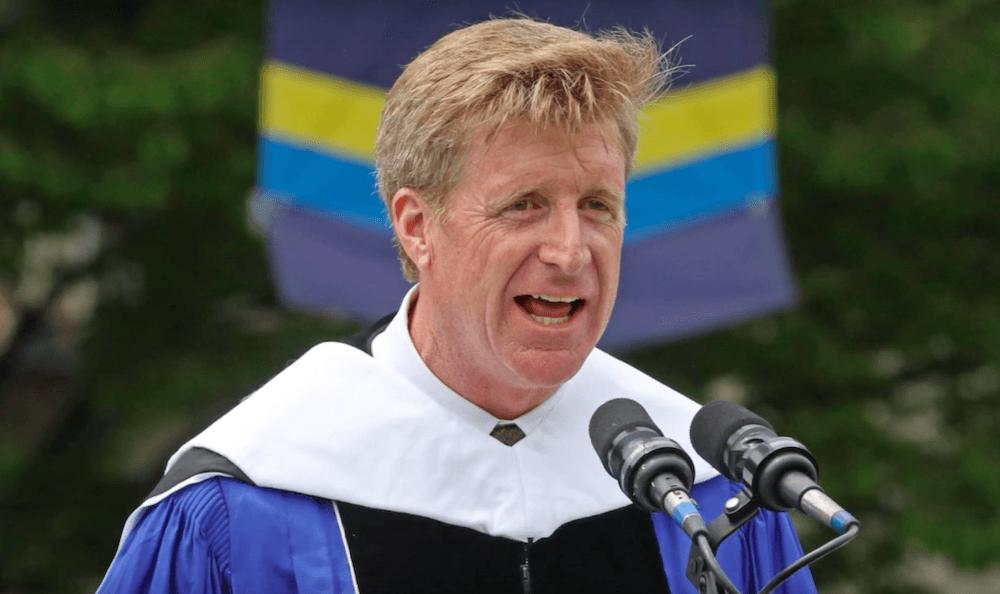
    Kennedy gave his commencement speech to a crowd of 15,000 on Sunday. The congressman-turned-mental health advocate said that drug overdose and suicide in the U.S. is “a public health crisis.”

    As a U.S. representative, Kennedy was the lead sponsor of the Mental Health Parity and Addiction Equity Act of 2008, which required insurance to cover treatment for “illnesses of the brain, like depression and addiction, the same as diseases of the body, like cancer and heart disease,” as he explained to The Fix in a 2016 interview.

    “Mental health conditions are chronic diseases, for the most part,” said Kennedy in the same interview. “You wouldn’t feel shame in seeking treatment for diabetes or cancer. So you shouldn’t feel ashamed for seeking treatment for depression, anxiety or anything else.”

    Kennedy added, “And just like those other diseases, people living with a mental health condition or substance use disorder can manage their disease and live full, happy, meaningful lives—I’m living proof of that.”

    After leaving Congress, Kennedy furthered his mental health advocacy by founding The Kennedy Forum in 2013, an organization with the goal of revolutionizing mental health care in the U.S., and One Mind, an organization to improve and accelerate brain research.

    When he was younger, Kennedy was haunted by his father’s perception of addiction. “I spent many years lost in a fog of shame,” he said at URI. “Addiction was unimpressed that I came from a famous family.”

    On May 6, 2006, Kennedy woke up at three o’clock in the morning “thinking I was late for a vote.” That’s when he famously crashed his car into a barricade on Capitol Hill. He admitted that he had been “disoriented” from medication he was taking.

    “That’s when I found my highest calling,” he said. We’d later find out that Kennedy was abusing OxyContin, which he was prescribed for back pain.

    Since he revealed his truth, he said other senators and representatives, both Democrat and Republican, would confide in him about their own struggles.

    Kennedy found help through medication-assisted treatment. And through his work, and through speaking up about his own journey, he’s hoping to encourage more people to speak up as well.

    “The more people learn that someone at their church is in recovery for opioid addiction or another mom at day care takes medication to control her OCD, the more we will realize that ‘everyone has something.’ We have to break down the ‘othering’ that has gone on too long with brain diseases,” he told The Fix.

    View the original article at thefix.com

  • Can Hypnosis Help Chronic Pain Patients Find Relief?

    Can Hypnosis Help Chronic Pain Patients Find Relief?

    A new review examined whether hypnotic intervention could provide “meaningful” pain relief.

    Undergoing hypnosis could significantly reduce pain that people experience, but it’s too early to tell whether this could be used to treat chronic or acute pain, experts say. 

    A review recently published in the journal Neuroscience and Biobehavioral Reviews found that study participants who were exposed to painful stimuli like heat or cold were able to reduce the amount of pain they experienced by 29-42% by using methods of hypnosis. 

    “These findings suggest that hypnotic intervention can deliver meaningful pain relief for most people and therefore may be an effective and safe alternative to pharmaceutical intervention,” study authors wrote. Yet, they warned, “High quality clinical data is, however, needed to establish generalisability in chronic pain populations.”

    Lead study author Trevor Thompson, a psychologist based at the University of Greenwich, England, noted that “experimental pain”—that created by heat, cold or other stimuli in a lab—is not a direct comparison to real-life pain from injury or chronic pain, or “clinical pain.” 

    “It is important, of course, to acknowledge that clinical pain isn’t quite the same thing as experimentally induced pain,” he told Medical Express. That’s because injuries and ongoing pain “involve more negative emotional states, less sense of control over pain, and adverse effects on quality of life,” he said. 

    Still, the fact that hypnosis provided such significant relief to people who were being hurt was significant. 

    “If hypnosis is effective at reducing experimental pain, there’s reason to be optimistic it would have the same effect on clinical pain,” he said.

    Mark Jensen, professor at the University of Washington in Seattle and editor of the Journal of Pain, said that previous research has indicated that hypnosis techniques can reduce the amount of pain that patients experience. How effective it is depends on the root cause of the pain, he said. He added that it’s important that people be informed consumers, and use hypnosis as one of many strategies for managing their pain. 

    “Anyone can hang out a shingle and call themselves a ‘hypnotist,’” he said.

    Jensen said that hypnosis uses a combination of relaxation and imagery to tap into the body’s natural pain-relief systems. Other research has indicated that hypnotherapy techniques change the body’s perception of pain. It’s often much more subtle than many people think, he added, and it’s certainly not a way to immediately remove all pain. 

    “It’s not all-powerful magic that will eliminate pain,” he said. “It’s not the hocus-pocus you see on TV.”

    View the original article at thefix.com

  • How One County Reduced Opioid Deaths By 50%

    How One County Reduced Opioid Deaths By 50%

    The statewide effort to provide more access to medication-assisted treatment and harm reduction programs has saved lives. 

    One county in rural Vermont reduced opioid overdose deaths by 50% last year, using a combination of strategies meant to stop opioid abuse and reduce harm to people who choose to continue using. 

    In Chittenden County, which includes the state capital of Burlington, opioid overdose deaths dropped from 35 in 2017 to just 17 last year. Bob Bick, CEO of the region’s largest treatment provider, said that a number of interventions paid off significantly. 

    “You’ve had this coming together of a whole bunch of strategies that were directly targeting active users and high-risk users,” Bick told VT Digger

    One of the most effective means of intervention was offering people the chance to start medication-assisted treatment (MAT) as soon as they expressed interest.

    Rather than having to wait to get into a MAT program, people in Chittenden County could receive MAT at any time through two area emergency rooms, at University of Vermont Medical Center and Central Vermont Medical Center. The program has since been expanded to all emergency rooms in the area. 

    Dr. Stephen Leffler, MD, chief population health and quality officer for the health network that includes the two hospitals, said that the program makes a big difference for people who have a moment of wanting help. 

    “They are already showing positive results,” he said. “This is a statewide, team effort.”

    In addition to connecting people with treatment quickly, the county also focused on reducing deaths among people who chose to continue using drugs. They did this by distributing fentanyl test kits to active users.

    “We know that relapse is part of the recovery process,” Bick said. “So we wanted to make these widely available.”

    He noted that people reported not using drugs that tested positive for fentanyl. A program called Safe Recovery in the state also provides naloxone and clean needles to people to request them. While this is harm reduction in and of itself, people who came in for needles were also offered the chance to begin MAT immediately. 

    “We are seeing the people who need us the most, and we need to be able to see them when they ask for help,” Program Director Grace Keller said at a panel recently. 

    Vermont has been praised for its hub-and-spoke model to curb opioid addiction, which has since been replicated in other states around the nation.

    Under the model, primary care providers serve as the “spoke” who provide ongoing treatment and channel people toward “hubs,” like Safe Recovery, that provide medication-assisted treatment. 

    “The parallel universe would be cardiology or infectious disease, where if you get sick and your primary care doc can’t take care of you, you’d get referred to a cardiologist,” John Brooklyn, a family doctor and addiction specialist in Vermont who helped design the system, said in 2017. “The nexus of this was really to try to integrate substance use treatment in primary care.”

    View the original article at thefix.com

  • Former Pharmacist In Recovery Teaching Ohio’s Future Pharmacists

    Former Pharmacist In Recovery Teaching Ohio’s Future Pharmacists

    The pharmacist’s 15 years of recovery are a key component in his chemical dependency course. 

    A former pharmacist in recovery found his calling through teaching the future pharmacists of Ohio about substance use disorder.

    Chris Hart developed his chemical dependency course in 2005 after losing his license to work as a pharmacist. Using Hart’s experience as a pharmacist who abused painkillers, lost everything, and re-built his life in recovery, the class explores the impact of chemical dependency on healthcare professionals—as well as “concepts of addiction, individuals at risk, intervention, withdrawal, emotions, recovery networks, regulatory actions and returning to practice,” according to the course description provided by the Ohio State University College of Pharmacy.

    Hart’s 15 years of recovery is a key component of his course. He begins every class with “Hi, my name is Chris Hart, and I am a long-time recovering addict.” And students must attend a 12-step meeting.

    Hart had been a pharmacist for 10 years before he became dependent on painkillers. Six years later, he was reported to the Ohio Board of Pharmacy and lost his license. He attended a treatment facility, where he was taught a different perspective of addiction.

    “The biggest thing I learned from treatment is that I had a disease,” he told The Lantern. “When I got caught the first time, I thought I was that stupid, weak-willed, immoral, terrible person who did such a bad thing. And then I realized this disease is a lot more complicated than what we think and by having a disease and treating my disease by going to meetings and talking to my sponsor, things they told me to do, I could get better.”

    Hart eventually re-obtained his license after a period of probation and went back to work. However, six years in, he relapsed. This time, he lost his license permanently. Hart spent some time in jail and attempted suicide.

    It was after this point that Hart decided he would try teaching. In 2005, working with a former professor at his alma mater Ohio Northern University, Hart developed his chemical dependency course.

    “He just set to work immediately to develop a course because he knew he had to get the word out and warn everyone,” his wife Susie Hart said. “I was so proud of him.”

    Hart teaches the course at six of Ohio’s seven pharmacy schools, including the College of Pharmacy at Ohio State University.

    “He is happier than ever. He is stronger than ever. He loves teaching,” said Mrs. Hart.

    “It’s a disease,” said Chris Hart. “[What] it is not is a moral condition. Someone who is addicted to drugs is very sick. They’re a sick person who needs to get well. They are not a bad person that needs to get good.”

    View the original article at thefix.com

  • Siblings of People With Addiction Need Support Too

    Siblings of People With Addiction Need Support Too

    An expert discusses the impact that dealing with a sibling’s addiction can have on their loved ones.

    As it has become more socially acceptable to talk openly about addiction, groups have popped up to support family members who have had their lives interrupted by a loved one’s substance abuse.

    While groups for parents and spouses are common, siblings of people with substance use disorder are often overlooked, despite the fact that they need support too.

    “Kids aren’t prepared for the kinds of emotions that they’re experiencing watching a sibling go through these kinds of crisis,” Tim Portinga, a psychologist at the Hazelden Betty Ford Foundation told WHYY. “I hear this just consistently over and over again from siblings: that nobody understands how painful it was to have their brother or sister not show up at their basketball games, or to see their brother or sister intoxicated and passed out on the floor, or to try to understand why their brother and sister are in trouble with the legal system again.”

    Oftentimes these siblings are going through their own tumultuous teen years. Sixteen-year-old Natalie of New Jersey told WHYY in another report that she started lashing out at friends after her sister went to rehab. Ultimately she found support through Alateen, a 12-step program that is a spinoff of AA and supports teens who have a family member struggling with addiction.

    “My first meeting, I wasn’t expecting to open up, but as soon as everyone was seated, I was like, this is a safe space, like I can trust all of these people and I know nothing bad will come of it,” she said.

    Natalie said Alateen helped her learn healthy coping and boundaries, like not to try to parent her sister.

    Today, Alex L. coordinates Alateen in Pennsylvania, but he has been utilizing the program since he was 12. He said that the groups can be an important resource for siblings and other teens touched by addiction.

    “These meetings, these gathering points, are vital to our development and our growth and our mental health and our sanity.”

    Portinga said that dealing with a sibling’s addiction can have lifelong consequences, so it’s often appropriate for siblings to get therapy too.

    “The basic thing keeps coming back to the trust that’s broken, and often in ways that are deeply painful,” he said. “So siblings build up these defenses against building relationships. They get really fearful around trust. They have really complicated ideas about what a brother or sister should be or could be.”

    Living with a person with addiction can also increase the risk that teens engage in risky behavior themselves, he said.

    “It’s a particularly painful thing because siblings will sometimes, under the umbrella of trying to be kind brothers and sisters, will often share substances,” Portinga said. “I often hear stories amongst my own clients about how their first using experiences happened with a brother or sister.”

    That’s why it’s important for siblings like Natalie to know that they need to focus on their own health.

    “I need to work on myself and healing,” she said.

    View the original article at thefix.com

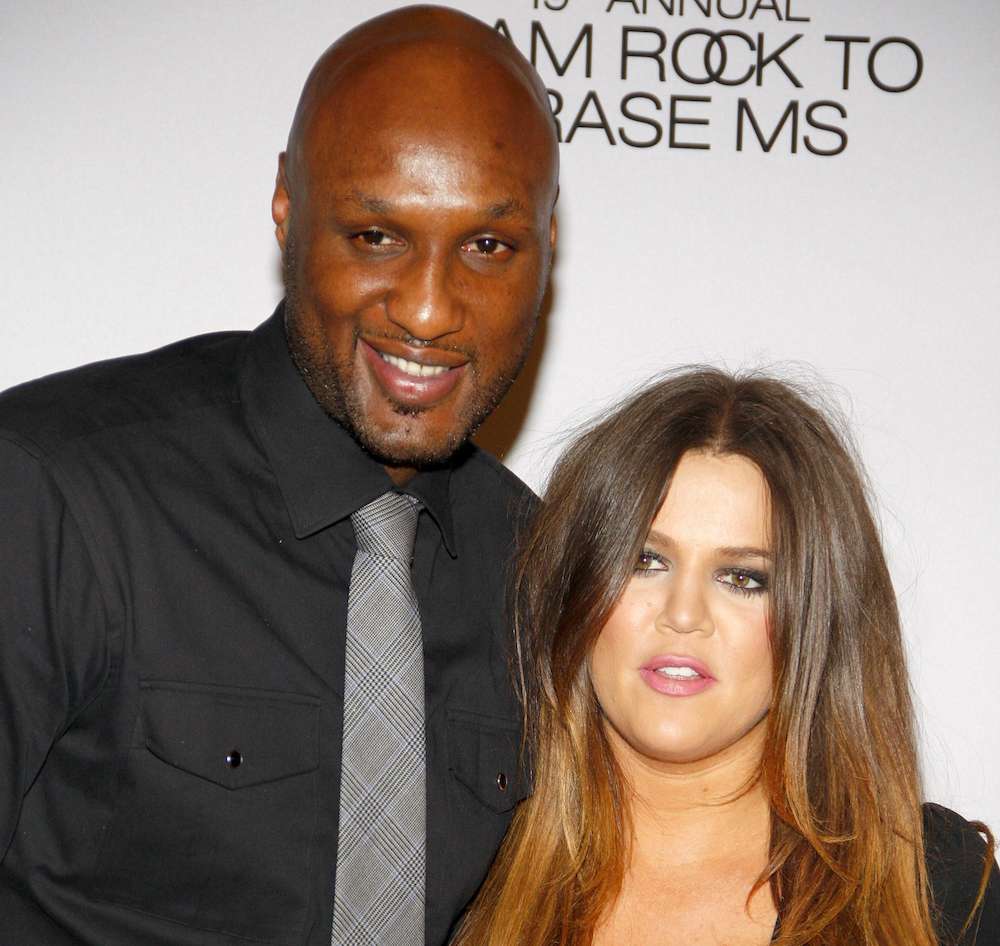
  • Khloe Kardashian Reflects On Lamar Odom’s Overdose

    Khloe Kardashian Reflects On Lamar Odom’s Overdose

    Kardashian detailed why she “paused” their divorce proceedings and Odom’s first words when he woke up from his coma.

    Khloe Kardashian recently appeared on divorce lawyer Laura Wasser’s podcast to discuss her relationship with ex-husband, NBA All-Star Lamar Odom, and her feelings about almost losing him to a near-fatal overdose in 2015.

    Odom and Kardashian were in the process of getting a divorce when Lamar overdosed at a Las Vegas brothel in October 2015. Kardashian was by his side at the hospital until he finally came back from the brink of death.

    Kardashian said on the podcast, Divorce Sucks With Laura Wasser, “He OD’s during the divorce and I was his next of kin, even though it was still—the divorce was still—it was on the judge’s desk. It was like two years, or like a year or two, of us trying to get the divorce going and then this happened.”

    Once Odom wound up in the hospital, Kardashian says, “We paused the divorce, not for any romantic reasons but I wanted to be able to take care of him and make sure that he would be okay again.”

    Odom was in a coma for four days, and when he finally awoke, he saw Khloe and said, “Hey babe.”

    “I was like, ‘Oh God. What year does he think this is?’” Khloe recalls today. “I remember I was like, ‘Oh no. What did I do?!’ Because I was like, ‘Does he know?’ And then he went right back to sleep because he was in a coma, woke up, saw me and I might’ve put him back into a coma, I don’t know, he probably was terrified.”

    As People reports, Odom has written a new memoir, Darkness to Light, where he candidly looked back on his marriage to Kardashian and his addiction to cocaine. Odom confessed, “I wish I could have been more of a man. It still bothers me to this day.”

    In his book, Odom confessed, “I could not handle the lethal cocktail of the spotlight, addiction, a diminishing career and infidelity. Oh, did I mention the anxiety, depression… I couldn’t keep my dick in my pants or the cocaine in my nose. Drug addicts are incredibly skilled at hiding their habit.”

    View the original article at thefix.com

  • The Who’s Roger Daltrey Calls Out Fans For Smoking Pot During Concert

    The Who’s Roger Daltrey Calls Out Fans For Smoking Pot During Concert

    In a colorful tirade, the legendary singer told the audience he was allergic to marijuana.

    When you go to a rock concert, the air would be filled with pot smoke. But Roger Daltrey of The Who has made it patently clear that he is not a fan of audience members smoking pot while he is performing.

    As High Times reports, The Who was playing Madison Square Garden on their Moving On! Tour, when Daltrey spotted fans smoking pot in the audience. He called them out from the stage.

    “I’ve got to tell you, all the ones smoking grass down in the front there, I’m totally allergic to it.”

    At first, the audience thought he was joking, but Daltrey emphatically stated, “I’m not kidding. Whoever it is down there, you fucked my night.”

    Daltrey explained that he’s “allergic to that shit,” and he made a bizarre slurping noise to explain what marijuana does to his voice. “It sucks up. So fuck you.”

    At a Who concert in 2015, Daltrey threatened to leave the stage because there was too much pot smoke in the audience. He told the crowd, “My voice is shutting down,” and one critic who reviewed the show noticed the difference the pot allergies made on his voice.

    As it turns out, Daltrey isn’t the first lead singer to call out members of the audience for smoking weed. As Metal Underground reports, in 2008, Bruce Dickinson from Iron Maiden singled out an audience member who was smoking pot and told him, “Would you please put that fucking thing out. I really hate the stink of that. My lungs are trying to work up here, dude.”

    Professional singers of course have to be protective of their voices, and many of them have strict rules written into their contracts against dry ice and other chemicals being used on stage.

    Allergies to cannabis are reportedly not common, but there are people like Daltrey who are indeed allergic to it. This allergy can include symptoms similar to hay fever, and can also cause sinus congestion and nausea.

    In some extreme cases, people can have an allergic reaction just from touching cannabis plants, and as High Times explains, this allergy is similar to dermatitis, where you can develop red, dry, itchy skin and hives.

    In the most severe cases, people with cannabis allergies can develop anaphylactic shock, which can lead to your airways closing and potential suffocation.

    View the original article at thefix.com

  • Graduating College Seniors Often Experience Transitional Anxiety

    Graduating College Seniors Often Experience Transitional Anxiety

    Some colleges have recognized the extent of transitional anxiety for students and have implemented services to address it.

    College graduation is often viewed as a time of celebration. But for some, the anxiety of not knowing what lies ahead takes over instead.

    The Star Tribune reports that such anxiety is a fairly common sentiment for graduating seniors.

    “I would say at least three-quarters of the graduates that I work with are struggling with similar issues, fears about employment or family issues or moving or things like that,” Haran Kingstan, Acacia Counseling and Wellness interim clinical director, tells the Tribune.

    Many graduating seniors have been in school since a very young age, and the idea of establishing a life without the routine of education can be intimidating, according to Yasmine Moideen, a clinical psychologist. Kingstan adds that the loss of such structure can lead to what’s known as “transitional anxiety.”

    “Transitional anxiety is not a diagnosis, we know that, but it’s almost human nature because human beings are built to feel comfortable with routine and habit and form patterns that take up less cognitive capacities so we’re able to attend to survival,” Kingstan says.

    University of Minnesota senior Addie Agboola says her anxiety was brought on by a change in postgraduate plans. She initially planned to attend pharmacy school but has instead chosen to take a year off.

    “I had this plan in my mind of how everything was going to go, and I think that it’s stressful because you’re doing all these things you want to enjoy and soak up all the moments of [being an] undergrad, but also planning for the future,” she said.

    According to experts like Moideen, sticking to a routine is important when experiencing transitional anxiety. She also recommends making sure to seek out connections with people with similar interests.

    “It’s really important for people—especially, I think, young people—to have a sense of purpose and connection,” Moideen tells the Tribune.

    Some college campuses have recognized the extent of transitional anxiety for students and have implemented services as a result.

    University of St. Thomas in St. Paul, Minnesota, for example, offers an online therapy program called Learn To Live for its graduates, as well as career services.

    “Like other moments of significant transition, graduating from college can produce a complex set of feelings and behaviors,” Madonna McDermott, executive director of St. Thomas’ Health Services and Wellness Center, says.

    In Ithaca, New York, Cornell University has a senior support group that meets over the spring before graduation.

    “The idea for this group was driven by the large number of undergraduate students who would contact [Counseling and Psychological Services] in mid-spring semester due to their anxiety about graduating in May,” group leader Jamie Sorrentino told the Tribune. “Many of these fears and uncertainties are universal, and they are best addressed in a support group format.”

    In treating students who are struggling with the idea of postgraduate life, Kingstan says she just reminds them to practice self-compassion and to take pride in their accomplishments while also acknowledging the validity of their feelings.

    “There’s almost a grieving period that needs to happen because you are kind of saying goodbye to who you were as a college student and now you are launching into an emerging adult,” she tells the Tribune.

    View the original article at thefix.com