Tag: News

  • Former 3 Doors Down Bassist Arrested On Drug, Gun Charges

    Former 3 Doors Down Bassist Arrested On Drug, Gun Charges

    Deputies received a call from Todd Harrell’s wife after an argument allegedly took a physical turn.

    The former bassist for the Grammy-nominated rock band 3 Doors Down has been jailed on drug, firearms and domestic violence charges after police in Mississippi responded to a call from his wife about an argument.

    The Sheriff’s Department in Jackson County issued a statement on June 15 that stated that Robert “Todd” Harrell, 46, was in an adult detention center after being arrested at his home in St. Martin; deputies who responded to the call found guns and drugs at the home, which prompted a warrant to search the residence.

    Harrell, a founding member of 3 Doors Down, served two years in prison and a six-year probation term for a charge of vehicular homicide in 2013.

    In the press release, Jackson County Sheriff Mike Ezell wrote that deputies came to the Harrells’ home after the wife called them to report that the couple’s argument had taken a physical turn.

    Upon arrival, the deputies saw both drugs and guns in the home, and contacted narcotics unit officers with the South Mississippi Metro Enforcement Team to obtain a search warrant for the residence. 

    Harrell was subsequently arrested and charged for possession of a firearm by a convicted felon, which carries felony charges, as well as the misdemeanor charges of possession of a controlled substance and domestic violence/simple assault. He is also wanted in Tennessee for a probation violation.

    As of June 15, Harrell was jailed with no bond and awaiting an initial court hearing. It is unknown if Harrell has legal representation.

    Harrell helped to found the Mississippi-based 3 Doors Down in 1996, but drug and alcohol use led to an arrest for public intoxication in 1999 and charges of driving under the influence in 2012 before the accident in 2013 that claimed the life of Paul Shoulders Jr. in Nashville, Tennessee.

    He was subsequently dismissed from the band and went on to incur another DUI charge in 2014 before his sentencing in 2015. He was sentenced to five years in prison, but served two, and received six years’ probation upon his release.

    In 2017, Harrell told a group of students and participants from a faith-based community service program that the accident had changed his life. “Having everything at your fingertips. Fame. We had it all,” he said. “[The accident] took who I was and just turned me upside down.”

    View the original article at thefix.com

  • Opioid Regulations Pushing Those In Need To The Dark Web

    Opioid Regulations Pushing Those In Need To The Dark Web

    Researchers found that since the prescription opioid crackdown began, dark web sales for the targeted medications have steadily increased.

    Rules meant to crack down on the use of opioids have instead turned some individuals to the black market, a new study has found.

    UPI reports that in 2014, the U.S. Drug Enforcement Administration (DEA) put new regulations on hydrocodone (e.g. Vicodin), making it more difficult to prescribe and taking away automatic refill options.

    From mid-2013 to mid-2015, the number of prescriptions decreased greatly. 

    However, some individuals had found another way to access the medications: the internet. Research published in the journal BMJ revealed that since the new regulations were put in place, more people are buying opioids online without a prescription, using “software-encrypted online portals that permit illegal sales and elude regulators.”

    Researchers found that in the four years since 2014, opioid sales on the dark web have increased by about 4% annually. 

    “This [DEA] action did have the hoped-for effect of reducing the number of prescriptions issued for these products,” study author Judith Aldridge, a professor of criminology at the University of Manchester in England, told UPI. “[But] our team found that sales on the so-called ‘dark net’ of opioid prescription medications increased following the DEA’s initiative.”

    Aldridge also says it was beyond the one type of medication. 

    “And this increase was not just observed for medications containing hydrocodone,” she said. “We also saw increased dark-net sales for products containing much stronger opioids, like oxycodone (OxyContin) and fentanyl.”

    A team of investigators used “web crawler” software to look in-depth at 31 “cryptomarkets” that operated before and after the new regulations. In doing so, they found minimal changes to the sales of sedatives, steroids, stimulants or illegal opioids (ones that are not prescribed by medical professionals).

    On the other hand, investigators found that dark web sales of prescription opioids had increased in overall sales in 2016, making up about 14% of the sales. They also found that of those, more purchases were made for fentanyl than hydrocodone. In 2014, fentanyl had been the least popular dark web prescription opioid, but in 2016 it was the second most popular.

    According to researchers, one difficulty with dark web sales is that they are more complicated to monitor. 

    “Solutions here are not simple,” Aldridge said. “However, we know very well that our results were entirely predictable. Solutions must combine cutting supply and tackling demand at the same time. This requires making prevention and treatment grounded in good science available for all.”

    View the original article at thefix.com

  • Simon Pegg On Past Drinking Struggles: "I Was Profoundly Unhappy"

    Simon Pegg On Past Drinking Struggles: "I Was Profoundly Unhappy"

    The actor recently revealed that a past battle with depression led him to self-medicate with alcohol.

    English actor and comedian Simon Pegg has had a busy year, appearing in Steven Spielberg’s sci-fi adventure Ready Player One, among others, and gearing up for the release of Mission: Impossible—Fallout.

    The prolific actor, screenwriter and producer is generally private about his personal life, but shared in a recent interview that he, like many others, struggled with depression and a drinking problem.

    “I was depressed. I had always been susceptible to it. But at the same time as I started to ascend into what would conventionally be regarded as a success, I was going down,” he told Empire magazine.

    The success of his TV and film career did not translate to happiness. “The more material success presented itself to me, the less I could understand why it wasn’t fulfilling me in any way. It wasn’t that it wasn’t [fulfilling] me, it was because I was depressed. It’s not a mood. It’s a condition,” he said.

    Drinking became a crutch, but that didn’t last. “I just drank more heavily… Eventually I crashed out. At Comic-Con in 2010—I’ve never told anyone this—we were promoting (the 2011 sci-fi film) Paul and I sort of went missing for about four days. I got back to the UK and just checked myself in somewhere.”

    That eventually led to the decision to put the bottle down. “I got well in 2010. I stopped drinking,” said the Shaun of the Dead actor. “I got a little bit of help. If you look at (the 2010 comedy) Burke and Hare, I’m bloated and fucking dead-eyed… I look at it now and think, ‘Fuck me, I was in a dark place then.’ I was drunk a lot of the time and I was profoundly unhappy.”

    Pegg credits the crew working on the Mission Impossible series, in which he has played the recurring role of Benji Dunn since 2006, with helping pull him out of his depression. “They took care of me and it helped me to get out of this dark place and realize that life was enjoyable,” he said. “By the time I finished Ghost Protocol (the 2011 Mission: Impossible film), I was better.”

    The next Mission: Impossible—Fallout is due for release on July 28.

    Pegg discussed the meaning of happiness in 2014 with the Los Angeles Times, while promoting his latest film at the time Hector and the Search for Happiness.

    “It’s taken a while for me to get there; it’s taken me a while to understand what it is, how to be it. My own route to it has been an interesting one, and I think the one thing the movie says very clearly is that you can’t be happy unless you’ve experienced every facet of emotion that there is,” he said. “To know what happiness is you have to be able to pick it out from the forest of emotions. So you have to be scared and upset and miserable. You have to get all that stuff in order to truly be happy. And at 44, I think I’m there.”

    View the original article at thefix.com

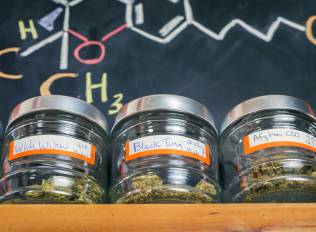
  • Marijuana's Unknown Health Impact Leaves Experts Concerned

    Marijuana's Unknown Health Impact Leaves Experts Concerned

    The drug’s Schedule I designation has limited research on the effects of cannabis and one expert says this is cause for major concern.

    Sixty-one percent of Americans now believe that marijuana should be legalized, but one expert says that among growing acceptance of the drug, people need to remain aware that cannabis can cause real health concerns. 

    “It’s a giant experiment,” Christian Hopfer, a professor of psychiatry at University of Colorado School of Medicine, told The New York Post

    Hopfer, who voted against recreational cannabis legalization in Colorado, is co-leading a $5.5 million study of 5,000 sets of twins funded by the National Institute on Drug Abuse (NIDA). The study will examine the impact that legalization of cannabis has on mental health and substance use, as well as giving information on how using marijuana affects health. 

    Despite the fact that research on the effects of cannabis has been limited by the drug’s Schedule I designation, Hopfer says that some health consequences have been well-established.

    “Smoke a couple times a day and marijuana will knock off your memory. That is pretty certain,” he said. 

    He rebuked the claim that people will use marijuana whether it is legal or not. 

    “There is no question that legalization has a normalizing effect on something that used to be against the law,” he said. “By age 21, 98% of the population has had a drink. But only 10% of the population has tried cocaine, and 50% [have] tried marijuana.” 

    Hopfer is particularly concerned about the fact that teens could become exposed to marijuana more frequently, despite the fact that other research has shown no increase in teen marijuana use when the drug is legalized. Though a recent study found that while teens are abstaining from drug use, when they do decide to use, they are choosing marijuana as their first drug.

    However, teens who do use the drug face severe consequences, said Hopfer.  

    “If you start smoking pot as a teenager, you have a four times higher likelihood of getting addicted,” he said. “The brain of a teenager is more sensitive to the effects than the brain of an adult would be. [Marijuana] is likely to have a more detrimental effect on kids.”

    Despite claims that marijuana is not addictive, an estimated three million Americans have marijuana use disorder, he added.

    “You can’t stop and you give up other things to keep using,” Hopfer says. “People go to work stoned and are stoned with their loved ones. Performance in life and on the job both get negatively impacted.”

    Another public health risk associated with marijuana occurs on the road. In Colorado, marijuana-involved traffic fatalities have doubled since the drug was legalized, according to the Denver Post. In general, states with legal marijuana have about 3% more traffic accidents reported to insurance companies than states where cannabis is prohibited. 

    View the original article at thefix.com

  • Serious Bacterial Infection Linked To Injection Drug Use

    Serious Bacterial Infection Linked To Injection Drug Use

    According to a new study, the number of MRSA cases in those who use injection drugs more than doubled from 2011 to 2016.

    Those who use inject illicit drugs may be at risk of more than an overdose, as new government data claims that such individuals are more susceptible to a potentially fatal infection.

    Individuals who use heroin or other injection drugs are 16 times more susceptible to develop infections or illnesses from MRSA, a dangerous bacteria. 

    MRSA, or methicillin-resistant Staphylococcus aureus, is an infection caused by a type of staph bacteria, the Mayo Clinic reports. However, unlike other forms of staph, it does not respond well to antibiotics, making it more dangerous.

    “Drug use has crept up and now accounts for a substantial proportion of these very serious infections,” said Dr. William Schaffner of Vanderbilt University, according to CBS News

    While other studies have shown that HIV and hepatitis C have spread among injection drug users, this is the first study to focus on this type of bacteria, referred to as a “superbug,” according to CBS.

    Although MRSA can be found on people’s skin, it does not tend to become dangerous until it enters the bloodstream, CBS notes. Health officials estimate that about 11,000 deaths per year in the U.S. are due to MRSA and that while the rate of infection in hospitals and nursing homes has decreased, the rate in those using illicit drugs continues to rise.

    Dr. Isaac See of the Centers for Disease Control and Prevention (CDC), also a study author, states that MRSA “is on the skin, and as the needle goes into the skin it brings the bacteria with it,” according to CBS.

    According to the study’s findings, the number of MRSA cases that involved those who use injection drugs more than doubled from 2011 to 2016, from 4% to 9%. 

    According to the news outlet, this study took into account MRSA infections at hospitals in Connecticut and in parts of California, Georgia, Minnesota, New York and Tennessee. Of the approximately 39,000 cases, about 2,100 were from individuals who had used injection drugs. 

    Study authors note that if the amount of people using injection drugs continues to rise as will the number of MRSA cases, this could be detrimental to efforts being made to curb the crisis.

    “Increases in nonsterile injection drug use are likely to result in increases in the occurrence of invasive MRSA infections among persons who inject drugs, underscoring the importance of public health measures to curb the opioid epidemic,” study authors wrote.

    View the original article at thefix.com

  • Man Reportedly Asked Cops To Test Meth After Bad Reaction To Drug

    Man Reportedly Asked Cops To Test Meth After Bad Reaction To Drug

    “If you believe you were sold bad drugs, we are offering a free service to test them for you,” Florida police wrote on Facebook after the arrest.

    A Florida man was arrested last week after asking cops to test his meth for him so he could “press charges” against the dealer who supposedly ripped him off. 

    Douglas Peter Kelly called detectives on Tuesday to report a “violent reaction” to some drugs he’d bought a week earlier. He was afraid he’d been given some sub-par speed, but the detectives on the other end of the phone offered to help.

    “In an effort to ensure the quality of the drug the suspect purchased, detectives told Kelly if he came to the sheriff’s office they could test the narcotic he purchased,” the sheriff’s office later wrote on Facebook.

    So the 49-year-old man drove to the Putnam County Sheriff’s Office to fork over the foil-wrapped crystals for testing. 

    Though he’d feared the substance was actually the synthetic drug Flakka, a field test showed it was indeed the meth his dealer promised. 

    Unfortunately, instead of congratulating him on his solid purchase, police arrested the Hawthorne man and charged him with felony drug possession. He was booked into the county jail and later released on $2,500 bond, according to The Smoking Gun.

    Afterward, the sheriff’s office posted on Facebook a tongue-in-cheek reminder of their services. 

    “If you believe you were sold bad drugs, we are offering a free service to test them for you,” they wrote. “Our detectives are always ready to assist anyone who believes they were misled in their illegal drug purchase.”

    Last year, another Florida man found himself behind bars after a similar blunder. David Blackmon of Fort Walton Beach called police in July 2017 to report that someone had swiped a bag of blow from his car, according to the Miami Herald

    After Okaloosa County Sheriff’s Office deputies arrived on scene to investigate, Blackmon explained that he was a drug dealer and some ne’er-do-well had busted into his parked car and stolen a quarter-ounce of cocaine along with some cash.

    Deputies found a crack rock still in the car along with a pipe, and ultimately Blackmon was arrested for resisting, paraphernalia and cocaine possession. He was booked into the county jail and released on $4,000 bond.

    View the original article at thefix.com

  • Congresswoman On Mission To Increase Diversity In Marijuana Industry

    Congresswoman On Mission To Increase Diversity In Marijuana Industry

    Congresswoman Barbara Lee has introduced first-of-its-kind legislation to directly address diversity in the marijuana industry.

    California Rep. Barbara Lee wants to add some diversity to the overwhelmingly white marijuana industry, a fact that was apparent after a Maryland dispensary named a strain “Strange Fruit.”

    The name is a reference to a Billie Holiday song in which “strange fruit” referred to the bodies of black Americans who had been lynched and left to hang on the branches of trees.

    The controversy came to light after a black woman visiting the dispensary was appalled that someone thought “Strange Fruit” was an appropriate name for a pot strain and called Shanita Penny, the president of the board of directors of the Minority Cannabis Business Association.

    “Do you think if a black person were in charge of marketing or at the table that ‘Strange Fruit’ would’ve gotten on the shelves?” asked Penny.

    America’s pot industry is, indeed, largely white. A BuzzFeed analysis of storefront marijuana businesses across the country revealed that less than 1% of dispensaries are owned by black Americans. A different report found that only 19% of marijuana businesses have minority investors.

    Lee told Rolling Stone that she is introducing the RESPECT Resolution, first-of-its-kind legislation to directly address diversity in the marijuana industry. It will likely not become a bill, but instead remain a resolution because the federal government will probably allow state and local governments to decide and enforce their own policies surrounding marijuana.

    With RESPECT, Lee hopes to have states expunge the records of all those incarcerated for non-violent marijuana-related offenses. These people would also be allowed to participate in the new marijuana industry, a distinction that is important for states like Illinois where you can’t get a medical marijuana card if you have a felony—even if that felony was for having medical marijuana.

    Lee also wants to do away with fees to get marijuana licenses, which can be as high as $10,000 in the state of New York.

    Increasing support for the legalization of marijuana is bringing America’s decades-long war on pot to a close, but Lee believes there’s a long way to go to heal the damage caused by the racial disparity in the enforcement of such laws.

    “[Marijuana] has really been a driving force for mass incarceration,” Lee explained. “So we’re looking at ways to begin to unravel this and bring some justice to these people who deserve justice. They’ve been unfairly incarcerated.”

    View the original article at thefix.com

  • David Spade Donates To Mental Health Organization In Kate Spade's Honor

    David Spade Donates To Mental Health Organization In Kate Spade's Honor

    In light of his sister-in-law’s suicide, the comedian has donated $100,000 to the National Alliance on Mental Illness.

    The tragic suicide of fashion designer Kate Spade has led her brother-in-law, comedian David Spade, to donate $100,000 to the National Alliance on Mental Illness (NAMI) in hopes that it will help others who may be dealing with similar problems Kate did.

    “More people suffer from mental health issues than we may realize but no one should ever feel ashamed to reach out for support,” Spade said in a statement to People. “If you or anyone you know is in need of help or guidance please contact the national suicide prevention hotline at 800-273-8255 or go to nami.org to learn more and help those who may be in need.”

    Kate was found unresponsive by a housekeeper in her Manhattan apartment on June 5. Her death was officially declared a suicide by the New York City medical examiner’s office.

    According to her husband, Andy Spade, Kate had been undergoing treatment for depression and anxiety. Additionally, he revealed that the couple had separated and had been living apart since 10 months prior. Their 13-year-old daughter had been splitting her time between both parents.

    “Kate suffered from depression and anxiety for many years. She was actively seeking help and working closely with her doctors to treat her disease, one that takes far too many lives. We were in touch with her the night before and she sounded happy,” said Andy in a statement. “There was no indication and no warning that she would do this. It was a complete shock. And it clearly wasn’t her. There were personal demons she was battling.”

    David Spade also felt the fallout, mentioning his feelings at the start of his stand-up comedy set at the Brea Improv Comedy Club the same week Kate died.

    “Thank you for coming. It was a rough week, but I didn’t want to cancel and I appreciate you all coming out here… And if my jokes don’t work then I get sort of a free pass,” he joked with the crowd. “Thank you for coming out, I appreciate it.”

    He also posted tributes to Kate with photographs on social media.

    “Fuzzy picture but I love it. Kate and I during Christmas family photos. We had so much fun that day. She was so sharp and quick on her feet. She could make me laugh so hard,” he wrote about one photo. “I still can’t believe it. It’s a rough world out there people, try to hang on.”

    View the original article at thefix.com

  • Generic Suboxone Strips Get The Green Light

    Generic Suboxone Strips Get The Green Light

    The FDA’s move could mean wider availability and more competitive pricing for the popular addiction-fighting drug. 

    The FDA last week sparked a flurry of legal wrangling when it gave the go-ahead for two drugmakers to sell generic versions of Suboxone strips.

    Part of an agency push to expand access to medication-assisted treatment, the move could open up the door to more competitive pricing for the popular addiction-fighting drug—but it also turns up the heat in an ongoing battle between drug companies intent on protecting profits. 

    “The FDA is taking new steps to advance the development of improved treatments for opioid use disorder, and to make sure these medicines are accessible to the patients who need them,” Commissioner Scott Gottlieb said in a statement. “That includes promoting the development of better drugs, and also facilitating market entry of generic versions of approved drugs to help ensure broader access.”

    Currently, the brand-name under-the-tongue strips are sold by Indivior and cost around $200 per month without insurance. The British company is already embroiled in litigation over claims that it strategically worked to block competition from generic Suboxone in order to maintain soaring profits. At one point, the drug brought in $2 billion in sales a year, according to FiercePharma.

    But now, the Pennsylvania-based drug maker Mylan and the India-based company Dr. Reddy’s both have the green light to bring out generic versions of the drug. Mylan did not immediately comment on the approval or its plans moving ahead, but the Hyderabad competitor issued a statement Friday praising the move and detailing its 2 mg, 4 mg, 8 mg and 12 mg formulations.

    “With opioid addiction becoming increasingly prevalent in America, the full approval and launch of our generic equivalent of Suboxone could not have come at a more critical time to help patients,” said Dr. Reddy’s CEO Alok Sonig. 

    But Indivior took the matter straight to the courthouse and on Friday—just a day after the FDA announcement—the company won a temporary restraining order blocking Dr. Reddy’s from moving forward with its product release in light of ongoing patent litigation. A judge will decide on the path ahead at a June 28 federal court hearing in New Jersey. 

    Indivior CEO Shaun Thaxter put out a statement expressing surprise at his competitor’s decision to launch the generic drug—and promised to keep up the courtroom fight.

    “We will continue to pursue all legal avenues, including an immediate injunction until the legal status of our intellectual property is confirmed by the courts,” he said.

    And Mylan won’t necessarily have an easier time pushing out its generic formulation of the medication-assisted treatment, as the company had previously agreed to delay its generic launch until 2023.

    Suboxone, which combines naloxone and buprenorphine to ease withdrawal and fight cravings, initially hit the U.S. market in 2002 as a pill. Five years later, Indivior announced plans to launch a sublingual film, a formulation that wouldn’t immediately have a generic alternative. 

    But in 2016, 35 states joined together to sue the company for anticompetitive practices. The states claimed that Indivior raised unfounded safety concerns to delay the FDA’s approval of the generic Suboxone tablet. Then, the company allegedly used those concerns to push strips over pills, a move that the states alleged was intended to prevent patients from taking generic versions of the pill. 

    The Federal Trade Commission (FTC) has since been investigating the company over antitrust claims, according to reports. 

    Whatever the legal drama surrounding the drug approvals, the FDA framed its announcement as an important step toward increasing access to lifesaving treatments and reducing stigma around medication-assisted treatments.

    “The FDA is also taking new steps to address the unfortunate stigma that’s sometimes associated with the use of opioid replacement therapy as a means to successfully treat addiction,” Gottlieb said. “When coupled with other social, medical and psychological services, medication-assisted treatments are often the most effective approach for opioid dependence.”

    View the original article at thefix.com

  • Wearable Device to Treat Opioid Withdrawal Symptoms Approved By FDA

    Wearable Device to Treat Opioid Withdrawal Symptoms Approved By FDA

    The device can curb anxiety, irritability, depression and opiate cravings without narcotics, according to its manufacturer.

    The U.S. Food and Drug Administration (FDA) has cleared a wearable device (simply named “Drug Relief”) that reduces common opioid withdrawal symptoms, according to Markets Insider.

    DyAnsys, the device’s manufacturer, claims the device will curb anxiety, irritability, depression and opiate cravings (among other such symptoms) without narcotics.

    Available with a prescription, Drug Relief is an “auricular neurostimulation device,” which sends electrical pulses through ear-fitted needles to help ease detoxification. The device is intended to stabilize people during the earliest stages of withdrawal, according to the company’s 501(k) application.

    Drug Relief can be used continuously for up to five days, the manufacturer said in its press release, with relief reportedly starting 30 to 60 minutes after someone starts using the device.

    DyAnsys added that the device was specifically designed to bring patients both mobility and comfort during detox.

    In terms of opioid detoxification, Drug Relief is something of a game-changer since it’s a uniquely non-addictive treatment method.

    “This device offers hope to those who are suffering from opioid addiction,” DyAnsys CEO Srini Nageshwar noted. “We are in a full-blown crisis and we need non-narcotic options and alternatives like this that can make a significant difference for individual patients and their families.”

    Just last month, the FDA also approved the first non-opioid medication to help manage opioid symptoms. And while Lofexidine (marketed under the brand name Lucemyra) alleviates the same things that Drug Relief does, it’s not intended to be a primary solution for opioid use disorder. Instead, the drug is intended to be part of a broader, more comprehensive treatment plan.

    The successive FDA approvals of Drug Relief and Lucemyra, though, indicate that drug companies and the federal government alike are aggressively seeking creative solutions to the nation’s opioid epidemic.

    “We’re dedicated to encouraging innovative approaches to help mitigate the physiological challenges presented when patients discontinue opioids,” FDA Commissioner Scott Gottlieb said. “We’re developing new guidance to help accelerate the development of better treatments, including those that help manage opioid withdrawal symptoms. We know that the physical symptoms of opioid withdrawal can be one of the biggest barriers for patients seeking help and ultimately overcoming addiction.” 

    And while Drug Relief is the first wearable device to manage opioid withdrawals, it’s not the first piece of wearable tech to help combat addiction.

    SmartStop is a device that aims to help smokers kick their habit, delivering specific doses of nicotine before a craving kicks in, not to mention offering real-time support through an app.

    Biochemical sensors that can detect alcohol in human sweat have also been developed, with some of them able to wirelessly alert people like probation officers if someone has been drinking.

    Empatica’s E4 wristband can reportedly help predict a wearer’s risk of relapse, too, detecting symptoms like drops in skin temperature, increased motion, and heartbeat. 

    View the original article at thefix.com