Tag: News

  • Macklemore To Receive MusiCares Award For Addiction Recovery Work

    Macklemore To Receive MusiCares Award For Addiction Recovery Work

    The rapper has been vocal about his personal experience with addiction and recovery.

    Rapper and songwriter Macklemore will be the next musician to receive the annual Stevie Ray Vaughan Award from the MusiCares Foundation for his ongoing advocacy for those with substance use disorders.

    Macklemore himself is in recovery from drug and alcohol addiction and has been quite vocal about his own struggles with the disease.

    Macklemore became widely known for his activism in 2012 with the release of his single “Same Love” with Ryan Lewis. The song voiced strong support for LGBTQ rights and same-sex marriage, which was legalized in his home state of Washington that same year.

    In 2012, the rapper also spoke out about his addiction issues in a short documentary by Jabari Johnsonand released the song “Starting Over,” about a relapse he suffered in 2011.

    “Those three-plus years, I was so proud of,” Macklemore says in the song, “Then I threw them all away for two Styrofoam cups. The irony, everyone will think that ‘He lied to me.’ Made my sobriety so public, there’s no f—ing privacy.”

    Macklemore checked himself into rehab in 2008 and has been open about his experiences ever since he first topped the charts with “Thrift Shop.”

    In 2016, he produced an MTV documentary on the opioid epidemic titled Prescription for Change that included conversations with then-President Obama. In the same year, he appeared at one of Obama’s weekly addresses to speak out about addiction stigma.

    “When you’re going through it, it’s hard to imagine anything being worse than addiction,” he said. “But the shame and stigma associated with the disease keeps too many people from seeking the help they actually need. Addiction isn’t a personal choice or a personal failure.”

    On May 16 of this year, he will perform at the MusiCares Concert for Recovery in Los Angeles, where he will be given the award. According to CEO of the Recording Academy and MusiCares, Neil Portnow, the award is well deserved.

    “Macklemore’s artistic gifts are clearly recognized, as evidenced by the celebration of his music by fans all around the world,” said Portnow. “In addition to his musical contributions, we’re honoring him for what he has done since the beginning of his career—shine a light on his own struggles with addiction as a beacon of hope for those who suffer. It is a powerful testament to his talent and his generosity of spirit.”

    Other Washingtonian musical artists to receive the Stevie Ray Vaughan Award include Jerry Cantrell of Alice in Chains, Mike McCready of Pearl Jam, and Chris Cornell of Soundgarden and Audioslave. Cornell died by suicide in 2017, a tragedy that his wife attributes to his use of prescription drugs.


    View the original article at thefix.com

  • Activists Want Legalization For Psychedelics

    Activists Want Legalization For Psychedelics

    Oakland activists are holding a rally to push for the legalization of psychedelic drugs. 

    As legalized marijuana creeps into the mainstream, advocates for drug policy reform are setting their sights on a new goal—legalizing psychedelics. 

    Organizers in Oakland, California are the latest to push for legalizing psychedelic drugs including mushrooms, according to Marijuana Moment

    A Meetup post advertising efforts to “decriminalize nature” invites people to participate in a rally on March 22 in the city. 

    “With your help we can make this happen, but we need everybody’s support. Join the movement to restore our relationship to nature and advocate for our inalienable right to cognitive liberty and the freedom to explore our own consciousness,” the post reads.

    It continues, “Wouldn’t it be nice to have the freedom to work with these ancient sacred medicines that offer direct knowledge without the fear of persecution? Wouldn’t it be nice to address the set and setting elephant in the room—to reduce the immediate fear of persecution involved while engaging our right to access natural healing and insight—by decriminalizing entheogenic plants and fungi?”

    A representative of the meetup told Marijuana Moment that more details would be shared at the rally. 

    The event in Oakland isn’t entirely unusual. In Denver, an area that helped lead the movement to legalize marijuana, voters will consider a ballot measure to decriminalize psilocybin mushrooms in May. The effort is lead by Decriminalize Denver, and director Kevin Matthews said that just getting the measure on the ballot is significant. 

    “This has never been done before in the history of the U.S., so the fact that we were able to turn out the signatures and make the ballot is a strong statement that there are a lot of people who support this,” Matthews told Marijuana Moment. “We’ve created a platform where we can spread the right information about psilocybin as opposed to the misinformation and, really just downright propaganda from the government, and the war on drugs for the last almost 50 years now.”

    Matthews said that if decriminalization passes in Denver, the group may focus on more widespread change to laws regulating psychedelics. 

    He said, “We are confident that when this passes in May that it’ll open some doors to further conversation. Our big mission here is to work on reintegrating psilocybin back into society.”

    In Iowa, a new Republican lawmaker, Rep. Jeff Shipley, submitted legislation that would allow psilocybin, MDMA and ibogaine to be used in medical treatments by removing a ban on them. 

    “Exploring these issues are paramount to solving the healthcare crisis,” Shipley said in an email to Marijuana Moment. “There’s so much potential for research and clinical applications. I hope we can empower and trust patients to make their own best decisions.”

    View the original article at thefix.com

  • Whoopi Goldberg Talks Cannabis

    Whoopi Goldberg Talks Cannabis

    Goldberg discussed the benefits of marijuana and her company’s mission to offer women relief from cramps with her products. 

    Whoopi Goldberg has never been shy about speaking her mind. As a budding entrepreneur, she’s focusing her line of cannabis-based products on women’s health.

    Goldberg had been a big believer in cannabis for a long time. She says it’s helped her with menstrual cramps since she was young.

    “I realized it helped my cramps [then], and I’ve had a good relationship with it since,” she tells Forbes. “It continues to help me feel better as I get older. I’m a big fan of our products and my vape pen… they provide me relief as I get older.”

    Like many celebrities, Goldberg has gotten into the cannabis business herself, forming the company Whoopi & Maya with her partner Maya Elisabeth. As Goldberg explains, “I asked a friend in the cannabis industry if anyone was doing marijuana for menstrual cramps; and when he said no, I knew someone had to—and that it may as well be us.”

    Elisabeth founded the company Om Edibles in 2008, and she’s also the winner of seven High Times Cannabis Cup awards. “When we started looking for someone to help us make products, we saw that Maya won the most Cannabis Cups and was involved in a women-run collective,” Goldberg continues. “We met and we hit off immediately.”

    As Goldberg says her business isn’t about getting high—it’s about providing relief for women during their menstrual cycles.

    “Our goal is to make you feel better, not get you high. There are plenty of products out there that will get you high, but we want to make sure you are feeling OK. We want to help women who have bad cramps be able to work a full work day without excruciating pain.”

    Goldberg enjoys having control of where her company is going. “This is a long-term plan and we’re still a relatively small company. Entertainment projects come and go and there are so many things outside your control. I like that we can own this and have control over the direction of our business.”

    Now that Whoopi & Maya are providing the world with a cannabis wellness product for women, Goldberg says, “The response has been incredible and it’s very rewarding to offer a product that helps so many. Jump in and try it, you never know what can happen until you do.”

    View the original article at thefix.com

  • Are Women Less Likely To Seek Help For Alcohol Abuse?

    Are Women Less Likely To Seek Help For Alcohol Abuse?

    A new study found that women were significantly more likely than men to believe their alcohol abuse would resolve on its own.

    A recent study found that drinking affects women’s bodies differently than men—and now a new study shows that women approach getting help for drinking differently as well.

    Iowa Now reported that a new study from the University of Iowa reveals blatant gender differences, and confirmed the need for gender-disparate studies on health issues. Women were significantly more likely than men to believe their alcohol abuse would resolve on its own, with 47% of women responding affirmatively versus 23% of men.

    Paul Gilbert, assistant professor of community and behavioral health in the UI College of Public Health and the study’s lead author, told Iowa Now that his study was the first survey-data analysis to examine differences in why adult men and women do not seek help.

    “Men and women think differently about how they overcome alcoholism,” Gilbert said. “Women are more independent-minded and self-reliant, thinking it can be done independently. Men are more pessimistic based on failed past experiences, or they don’t know where to go to get help.”

    Gilbert’s worked with George Pro and Grant Brown of the UI College of Public Health, and Sarah Zemore and Nina Mulia of the Public Health Institute in Oakland, California, to compile the research for the study, which was published in the April 2019 edition of the journal Alcoholism: Clinical and Experimental Research.

    The study analyzed random survey data from the National Institutes of Health (NIH). The survey asked general health questions and was conducted both in 2000-2001 and 2004-2005. Professor Gilbert’s study focused on 2,600 respondents who met criteria for both alcohol abuse and participated in both surveys.

    Both men and women cited embarrassment as their primary reason for not seeking treatment, but men were significantly more likely than women to report having failed in previous attempts to get help.

    Research has already shown that alcohol abuse manifests itself differently in female and male bodies. Women generally have less water in their bodies pound for pound than men—and alcohol resides primarily in body water, according to the Women’s Health Research Institute at Northwestern University. In addition, even one drink a day puts women at a higher risk for breast cancer.

    Professor Gilbert told Iowa Now that women might seek help more often if women-based programs for drinking problems were developed specifically for them.

    View the original article at thefix.com

  • New Meds May Provide Quick Relief From Postpartum Depression

    New Meds May Provide Quick Relief From Postpartum Depression

    The Food and Drug Administration is expected to approve the new medication some time in March.

    After giving birth to her son in 2017, Marie McCausland began experiencing feelings of exhaustion and guilt, and started suffering from panic attacks. 

    At the urging of her husband, McCausland sought help for postpartum depression—something that 1 in 9 women in the United States are diagnosed with, according to the Centers for Disease Control and Prevention (CDC). 

    McCausland was encouraged to seek help from a psychiatrist and antidepressants, which are the typical treatments for postpartum depression. However, the issue with these treatments is that they can take time to become effective. 

    But soon, a faster form of treatment may be an option. Market Watch reports that the Food and Drug Administration (FDA) is expected to approve a new medication called brexanolone sometime in March. Brexanolone was created by Sage Therapeutics and would be marketed as Zulresso.

    If approved, it would become the first “drug therapy approved to specifically treat postpartum depression,” Market Watch reported. 

    Brexanolone is administered via intravenous infusion over a 60-hour period, according to Market Watch, and typically takes effect within days instead of weeks. The medication works by increasing allopregnanolone, a progesterone metabolite that affects mood regulation and increases in the body when a woman is pregnant, but decreases quickly after birth. 

    Market Watch reports that studies involving the medication have been promising. In one, researchers examined 246 women with varying degrees of postpartum depression and administered brexanolone or a placebo. To determine effectiveness, they used the Hamilton Rating Scale for Depression. 

    Researchers found that after 60 hours, scores fell more in the group that had taken brexanolone, indicating that it had worked for some women.

    “This is unlike anything we currently have available,” Samantha Meltzer-Brody, the lead author of the study, told Market Watch. “We now [have] an opportunity to treat women quickly, within days.”

    Brexanolone may not be an obvious choice for everyone. Some women experienced side effects like dizziness, fatigue and headaches. 

    Then, there’s the price. According to Sage Chief Business Officer Michael Cloonan, one treatment of brexanolone could run $20,000 to $35,000. Cloonan says the company is currently navigating coverage options. 

    There’s also the time commitment, as women opting for the treatment can expect to spend two to three days in the hospital. 

    “We think this is a novel mechanism that’s not been explored before,” Sage Chief Executive Jeff Jonas tells Market Watch. “Zulresso is, in many ways, just the tip of the spear.”

    View the original article at thefix.com

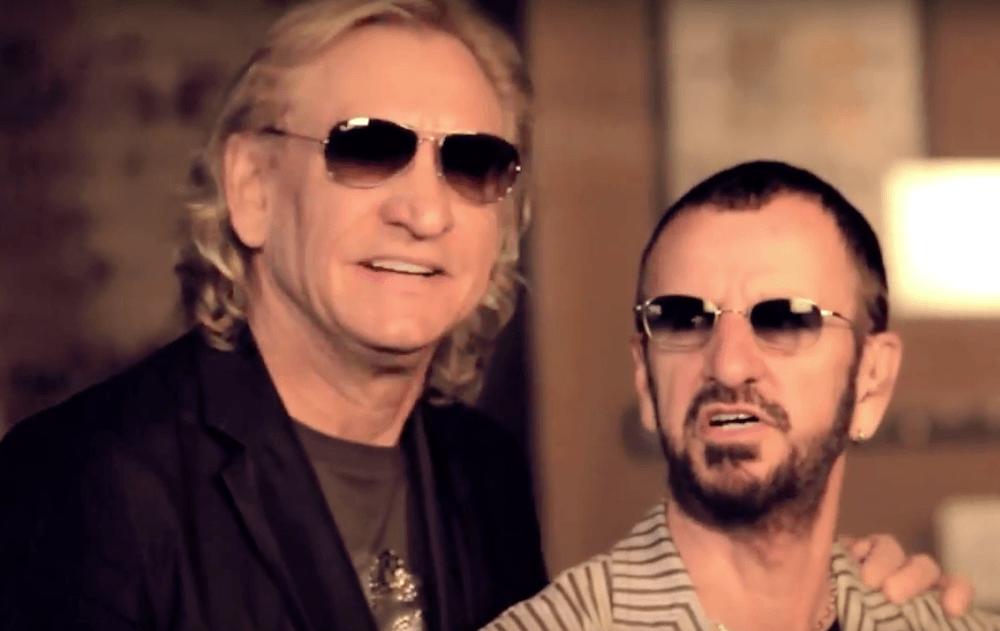
  • Ringo Starr And Joe Walsh Discuss Long-Term Recovery, Becoming Sober

    Ringo Starr And Joe Walsh Discuss Long-Term Recovery, Becoming Sober

    The rock star brothers-in-law got candid about addiction, recovery, and Tom Petty in a recent Rolling Stone interview.

    Ringo Starr and Joe Walsh are not only rock legends, but they have also both been in recovery for many years. Now they are both speaking about their journeys to sobriety, and how they helped each other get there.

    Eagles guitarist Walsh received a humanitarian award for his work in the recovery community at the 74th annual gala for Facing Addiction with NCADD last October. His friend and former Beatles drummer, Starr, presented him with the award.

    When Walsh went to rehab in 1995, he wasn’t sure if he’d ever play guitar again. Eventually, Starr brought him back to music and became a sober buddy. (Starr is also Walsh’s brother-in-law.)

    “I got sober because of a fellowship of men and women who were sober alcoholics,” Walsh told Rolling Stone. “After a couple years, I talked about [my sobriety] with other alcoholics and tried to help them. The only person who can get somebody else sober is somebody who’s been there and done that. I realized that I do more good showing people that there’s life after addiction.”

    When Starr got sober, he put together Ringo Starr & His All-Starr Band, which included Walsh on guitar. Starr, too, was afraid that he wouldn’t be able to play once he got sober.

    “I thought I don’t know how you do anything if you’re not drunk,” he said. “I couldn’t play sober, but I also couldn’t play as a drunk. So when I did end up in this rehab, it was like a light went on and said you’re a musician, you play good.”

    Rolling Stone asked Walsh about the opioid crisis, given that a lot of musicians his age have been taking painkillers to deal with the rigors of performing.

    “I don’t think America’s aware of how bad it is out there,” Walsh replied. “I’m talking about addiction across the board. Opiate addiction, it’s killing young kids by the hundreds—by the thousands.

    “The problem is if you hurt physically, you can get prescription pills for that,” Walsh continued. “The problem is that after that pain is gone, whatever substance you used very subtly convinces you that you can’t do anything without it and then you have to deal with that. And people don’t know that.”

    Starr then reflected on a fellow musician who succumbed to opioid abuse, Tom Petty, who died in 2017 at the age of 66.

    “The discussion is very difficult, because we did as much as anybody did and we’re still here and we’re sober… I don’t know why Tom’s gone and I’m here. It’s unanswerable.”

    View the original article at thefix.com

  • Virginia Eases Suboxone-Prescribing Restrictions

    Virginia Eases Suboxone-Prescribing Restrictions

    The policy change will increase access to the medication and reduce delays in treatment.

    Prior authorization will no longer be required for Virginia physicians to prescribe a form of the opioid addiction medication, Suboxone, to patients.

    The state’s Department of Medical Assistance Services (DMAS), which oversees the Virginia Medicaid program, has removed the authorization requirement for  Suboxone film (a film applied to the tongue). Suboxone is a brand of buprenorphine that assists individuals in reducing or quitting their dependencies on heroin or prescription opioids.

    Acting chief medical officer of the DMAS, Dr. Chethan Bachireddy, said in a press release that his agency has “a responsibility to understand and to meet the needs of our members and the providers who treat them.”

    Before the policy change, Virginia physicians were required to obtain prior authorization from DMAS or one of its contracted health plans to prescribe Suboxone film.

    According to the Virginia Mercury, the change will increase access to the medication and reduce delays in treatment.

    The Virginia Mercury also cited a recent study by Virginia Commonwealth University that found that the expansion of Medicaid—approved by voters in 2018—will provide as many as 60,000 uninsured Virginians with access to treatment services for dependency issues, including 18,000 with opioid dependency.

    In all, 400,000 Virginia residents are expected to gain access to coverage in 2019.

    Data culled from the office of the state’s chief medical examiner in January 2019 found that 1,229 Old Dominion residents died as a result of opioid-related overdose in 2018—the same number of fatalities that occurred in 2017. However, the total number of 2018 fatalities will not be available until this spring.

    The revision of the authorization requirement applies only to Suboxone film, but not to other forms of buprenorphine that are not on the Medicaid preferred drugs list.

    But buprenorphine, often in conjunction with counseling, has proven to be effective in lowering death rates among those who have suffered a previous overdose. The DMAS press release cited a study that suggested that among overdose survivors, there was a 40% decrease in the death rate of those who used Suboxone, compared to those who did not.

    Bachireddy described the revision as one of several “effective, proactive strategies that are putting Virginia at the forefront in the fight against the opioid crisis.”

    View the original article at thefix.com

  • How The Opioid Crisis May Negatively Affect The US Workforce

    How The Opioid Crisis May Negatively Affect The US Workforce

    A recent op-ed explored how the opioid epidemic may be driving down the number of employees in the US workforce.

    The opioid crisis is affecting the workforce—especially when it comes to men, according to an opinion piece in Bloomberg

    The op-ed, written by columnist Noah Smith, states that the number of men in the workforce has been decreasing for years—especially since the 2000s. Since 2009, women’s participation has also been decreasing. 

    “Much of the decline is due to educated people taking early retirement, or to people staying in school longer as education becomes more important,” Smith writes. “But a sizable chunk may be due to drug problems, especially among men.”

    In 2017, Smith notes, a Princeton University economist named Alan Krueger looked into the relationship between the use of pain medication and not being in the workforce.

    Krueger’s findings showed that in early 2010, 43.5% of males aged 25 to 54 who were not in the labor force admitted to using a pain medication the day before. In contrast, Krueger found that for those who were currently working or searching for work, that percentage fell to about 20%. 

    Krueger also noted that in countries with a higher opioid prescription rate, the number of those in the workforce fell accordingly. 

    However, Smith points out, it can be difficult to determine the cause in situations like this. “It might be that people started using drugs because they were disabled or had no chance of finding a job, rather than the reverse,” he writes.  

    Smith also cites a recent study from economists Dionissi Aliprantis, Kyle Fee and Mark Schweitzer at the Federal Reserve Bank of Cleveland which examined the cause more deeply.

    The economists argue that if those without a job turn to opioids, then areas affected most by the Great Recession would likely have seen a larger jump in use. But they state that this was not the case, suggesting that drug use is actually the cause of decreasing workforce numbers. 

    However, Smith points out that the results of their study are by no means conclusive.

    “First of all, the authors’ measure of temporary changes in labor demand could have statistical problems that make it unreliable for this sort of measurement,” he writes. “Second, the effect of weak labor markets on drug use might be longer term—people who think they’ll be unemployed only briefly might not turn to drugs, while people who see no prospects might start using heroin or fentanyl.”

    In conclusion, Smith notes that evidence points strongly to the idea that the opioid epidemic is negatively affecting the U.S. economy and workforce, and that more action is needed to address it.

    “It will be a generation before the impact of the horrendous opioid epidemic fades from the national statistics,” Smith concludes. “But with the right steps now, the U.S. might at least be able to end it more quickly.”

    View the original article at thefix.com

  • Vanderpump Rules' Lala Kent Reveals Alcoholism Battle

    Vanderpump Rules' Lala Kent Reveals Alcoholism Battle

    The sober reality star took to Instagram to reveal that she is battling alcoholism and is “now a friend of Bill W.”

    Vanderpump Rules star Lala Kent has a problem, and for the first time she is admitting it publicly. Kent, 29, shared on Instagram that she is seeking help for alcoholism by joining a 12-step fellowship. 

    “Five months ago, I came to the realization that I am an alcoholic, and I am now a friend of Bill W., which you will never know how much this program means to me [and] has given me new life,” Kent said in a temporary Instagram post, according to People

    The reality TV star went on, “I always say if you don’t have to be sober, I wouldn’t recommend it, but me—as someone who does need to be sober—being in my right frame of mind every single day is truly incredible. When I’m having the roughest day that I could possibly have, I—for once in a very, very long time—see the light at the end of the tunnel. I know that tomorrow I’m gonna be okay.”

    Three months ago, Kent announced that she was 50 days sober. 

    “We’re just kind of taking a different turn with our life,” she told People in December. At the time, she explained that she and her fiancé, Randall Emmett, had made a pact to help each other stay sober. In just 50 days, Kent had already seen the positive effects of sobriety on her life. 

    “I have been open about suffering from anxiety, and [I’m] not saying that I don’t anymore, but it has gone down tremendously since I gave up drinking,” she said at the time. “I don’t smoke weed anymore. I’m a clean baby, and I feel like I glow a little bit… I’m ready to be a healthy person.”

    Kent said that her drinking was beginning to feel out of control after her father, Kent Burningham, passed away last April. 

    “I’m thinking a lot about my dad today—not different from any other day—and I just feel very, very blessed that I think back on my time that I had with him and there’s no regrets,” Kent said in her recent post.

    “I’m so grateful that I have this program and that I can mourn him. The program has allowed me to sit down and remember my dad in a clear frame of mind, and remember what he brought to my life, what he meant to me, what he taught me.”

    View the original article at thefix.com

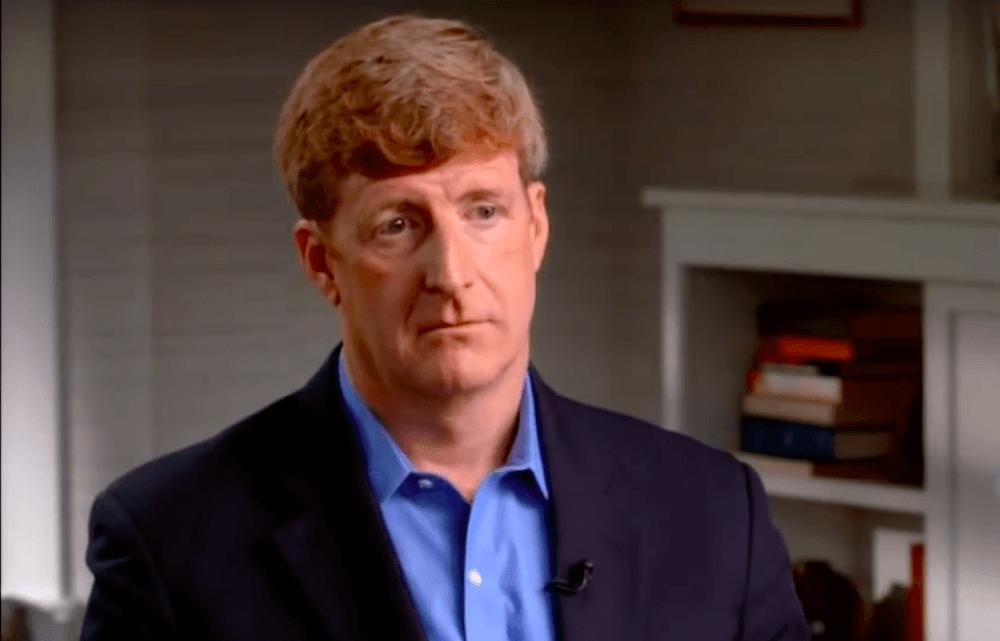
  • Patrick Kennedy Urges Congress To Fight "Illegal" Denial Of Addiction Services

    Patrick Kennedy Urges Congress To Fight "Illegal" Denial Of Addiction Services

    The former U.S. Representative is urging state officials to end “deceptive and discriminatory practices by health insurance plans.”

    Former U.S. Representative Patrick Kennedy joined a group of mental health advocates to fight for the rights of individuals to receive legally mandated coverage of mental health and addiction services without being subjected to what he called “deceptive and discriminatory health insurance plans.” 

    Kennedy was a co-signer on letters sent to U.S. House Speaker Nancy Pelosi and Senate Majority Leader Mitch McConnell, as well as state attorneys general and insurance commissioners, that cited a recent class-action lawsuit against a major behavioral health care company, United Behavioral Health, which was deemed to have used “flawed and overly restrictive internal guidelines” to deny coverage to tens of thousands of mental health and substance use disorder patients, including many children.

    “In short, the nation’s largest managed behavioral health care company was found liable for protecting its bottom line at the expense of its vulnerable members,” read the letter.

    The other signers were former U.S. Rep. James Ramstad; Mary Giliberti, CEO of the National Alliance on Mental Illness (NAMI); and Mental Health America president and CEO Paul Gionfriddo.

    As the Providence Journal noted, Kennedy has been a longtime advocate for mental health and addiction services. He co-sponsored the Mental Health Parity and Addition Equity Act of 2008, which mandates health insurers to provide coverage for treatment for mental health and addiction disorders on par with coverage for physical health care. 

    After leaving the House of Representatives in 2011, Kennedy has advocated for mental health and addiction issues, most recently at the Connecticut State Capitol, where on March 5, he advocated for the passage of House Bill 7125, which would require health insurance companies to provide the state General Assembly an annual report on parity efforts for mental health and dependency benefits.

    The letter submitted by Kennedy and his co-signers noted that the lawsuit involving United Behavioral Health was not an isolated incident. “Other health plans, such as Aetna, Kaiser, and Anthem Blue Cross Blue Shield have also been subject to recent court decisions and regulatory fines,” they stated in the letter.

    “As rates of overdoses and suicides continue to decrease U.S. life expectancy, our nation must ensure that people have access to treatment for mental health and substance use disorders,” the letter concluded. “Illegal insurance denials should not stand in their way.”

    View the original article at thefix.com