Tag: News

  • Opioid Prescriptions Drop Drastically In Ohio

    Opioid Prescriptions Drop Drastically In Ohio

    Ohio’s prescription drug monitoring program played a major role in the state’s success. 

    In Ohio, a state that has been ravaged by opioid addiction, the number of opioid prescriptions has decreased by 41% since 2012, according to new data. 

    “We all have a role to play in battling this public health crisis, and this continued downward trend in opioid prescriptions demonstrates that Ohio’s prescribers are making significant progress in their efforts to prevent addiction,” Governor Mike DeWine said in a statement reported by 13 ABC News.

    “When this crisis first emerged, prescribers were led to believe that opioids were not addictive, but we know today that is not the case. It is encouraging to see such substantial progress to limit opioid prescriptions to stop painkiller abuse and diversion.”

    The data was drawn from the State of Ohio Board of Pharmacy’s Ohio Automated Rx Reporting System, which monitors prescriptions being written and filled. The reporting system also showed that “doctor shopping” had decreased dramatically in the state—down 89% last year alone. 

    Steven Schierholt, executive director of the Ohio Board of Pharmacy, told the Sandusky Register last year that the prescription reporting system is an important part of monitoring the drug crisis. 

    “In order to fight our way out of this issue, we have to do so with the help of the prescribers,” he said. “There’s too much of a correlation between prescription drugs and illegal drug use to be ignored. Our goal is to provide physicians with the tools to be a part of the solution.”

    The monitoring system was established in 2006, but in 2015 it became mandatory for prescribers to use it. 

    “If you’re a prescriber you can check this system and see what controlled substance prescriptions a patient has been prescribed. That information makes for a better interact[ion] between pharmacy, doctor and patients,” Schierholt said. 

    He added that part of the reason the Ohio prescription drug monitoring program has been so successful is because it is easy to use. 

    “Now if you’re sitting with your physician she [can] see your [prescription] history with a click of button,” he said. “We know a doctor’s time is valuable and want to make it easy to check.”

    However, some data suggests that prescription drug monitoring is no longer an effective way to reduce overdose deaths, since many people have turned to illicit opioids as prescription pills become harder to access. 

    One study found that the opioid epidemic will continue to get worse if policy continues to focus only on prescription drug abuse. 

    “This study demonstrates that initiatives focused on the prescription opioid supply are insufficient to bend the curve of opioid overdose deaths in the short and medium term,” said Dr. Marc Larochelle of the Grayken Center for Addiction at Boston Medical Center in a press release. “We need policy, public health and health care delivery efforts to amplify harm reduction efforts and access to evidence-based treatment.”


    View the original article at thefix.com

  • Mama June Arrested On Drug Possession Charges

    Mama June Arrested On Drug Possession Charges

    The “Here Comes Honey Boo Boo” star is accused of being in possession of a controlled substance and drug paraphernalia.

    Reality television star June Shannon was arrested and charged with felony drug possession charges after an altercation with her boyfriend.

    TMZ reported that Shannon—also known as “Mama June” from the TLC series Here Comes Honey Boo Boo—was arrested last Wednesday (March 13) at a gas station in Alabama after an alleged confrontation with her boyfriend, Geno Doak.

    Shannon was arrested for felony possession of a controlled substance and drug paraphernalia, while Doak—who reportedly has a history of previous criminal charges—was arrested on charges of domestic violence/harassment, felony possession of a controlled substance and drug paraphernalia. According to TMZ, the drug in question was reportedly crack cocaine.

    According to the police report obtained by TMZ, police arrived at the gas station after receiving a call about a domestic incident involving Shannon and Doak. Upon arrival, law enforcement detained the couple, who were parked at the gas station, and while attempting to search Doak’s person, was warned to be careful. “I don’t want you to get sticked or nothing,” he reportedly told police, who reportedly found a hypodermic needle in his pocket.

    Shannon told police that she was the owner of the vehicle and, as TMZ noted, “claimed ownership of everything inside.” A search of the vehicle yielded another needle and a green pill bottle containing a white controlled substance. Shannon was found to have a glass pipe containing white residue on her person, and reportedly told police that the substance was crack cocaine.

    At some point after the arrest, Shannon reportedly called a towing company to retrieve her vehicle from police impound. TMZ posted an audio recording of the conversation, in which Shannon told the driver that she and Doak had been arrested for driving under the influence, and that police had found “nothing” in the car. The driver can be heard telling Shannon that the vehicle was “trashed.”

    According to the Daily Mail, Doak, 42, whose legal name is Edward Eugene Doak, has several criminal charges on his record. Court documents note a charge for felony burglary in 1996, for which Doak was sentenced to three years in prison, but only served three months.

    He was arrested again on felony theft charges in 2009, and was sentenced to 10 years of probation. While out on bail for the latter charge, Doak was involuntarily admitted to a behavioral health facility for “distress” and attempted suicide.

    In 2013, his probation was revoked after he pled guilty to felony criminal damage to property, and Doak received a four-year prison sentence.

    View the original article at thefix.com

  • Sega Pulls "Judgment" Video Game After Voice Actor's Cocaine Arrest

    Sega Pulls "Judgment" Video Game After Voice Actor's Cocaine Arrest

    Sega deleted tweets promoting the game, possibly preparing to remove the voice actor from the game entirely.

    Japanese actor Pierre Taki could be erased from his role in the video game Judgment after he tested positive for cocaine use. Somewhat ironically, his voice and likeness were used for the role of a yakuza crime boss.

    Sega is taking steps to distance itself from Taki, deleting all tweets promoting Judgment (titled Judge Eyes in Japan) and indefinitely halting further sales of the game, released in Japan in December 2018.

    The hold will continue until they decide what they should ultimately do about the big budget game that is already slated for international release later this year.

    “We believe that the arrest of Mr. Pierre, who is a performer of our product JUDGE EYES: The Testament of the Grim Reaper, is highly regrettable,” read a statement from Sega. “We have received arrest reports and are currently confirming the facts, but for the time being we have decided to refrain from shipping and DL sales of the product and posting of product HP etc. We apologize for any inconvenience caused to our customers and related parties.”

    Taki admitted to using a small amount of cocaine, which carries a penalty of seven years in prison in Japan. It is also likely to be a death sentence for his career.

    Disney Japan is replacing the actor as the voice of the snowman Olaf in the Japanese release of both the upcoming movie Frozen 2 and the already-released game Kingdom Hearts 3. His voice will be replaced in the latter with a pending software update.

    Seeing an actor or performer’s career come to an end from a single allegation of drug use is unheard of in the West, but it’s commonplace in Japanese media.

    In 2014, Aska, a member of the pop duo Chage & Aska, was arrested for possession of MDMA. Universal Japan stopped all sales of his (and his bandmate’s) music, and Disney Japan removed the group’s song and animated music video from all subsequent releases of a Studio Ghibli animated collection.

    All this has some speculating that Sega is gearing up to recast and replace Taki in Judgment as well. If so, it wouldn’t be the first time Sega replaced an actor in its games, having previously swapped out the voice and likeness of another actor in the re-release of the game Yakuza 4 following his own cocaine allegations.

    As of yet, there has been no official announcement of what they plan to do with Taki and Judgment.

    Fans of the game outside of Japan, who have anticipated Judgment’s international release later this year, await news of a probable delay.

    View the original article at thefix.com

  • Bam Margera's Family Reportedly Admits Star Into Treatment Facility

    Bam Margera's Family Reportedly Admits Star Into Treatment Facility

    After a series of irate videos hit the internet, family members are reportedly helping the Jackass star receive mental health treatment. 

    After a 10-day stint in treatment earlier this year, family and friends have now reportedly committed former Jackass star Bam Margera into a behavioral health facility. 

    Concerns about Margera stemmed from recent Instagram videos in which he ranted about his wife, Nicole Boyd, Philly Voice reports. The videos have now been removed from his account.

    Then, according to the Philly Voice, another video came to light of Margera threatening his manager and refusing to attend his appearance at a comedy club in New York.  

    TMZ reports that while entering treatment has to do with alcohol use, family and friends also believe Margera may have a personality disorder as well. 

    Earlier this week, Margera’s sister-in-law Kelly Margera posted on Instagram asking for prayers and support during this time. Margera’s wife also shared the post. 

    “Addiction is a scary and complicated disease. A family disease,” Kelly’s post reads. “Giving and receiving help is a process that is not always easy to navigate. What our family needs right now are not your words, opinions, IG comments and Facebook shares. We need your prayers, prayer is a powerful thing, and until you’ve walked in our shoes on this journey with us, you have no idea.”

    Margera has been to treatment three times previously, according to Pop Culture. In the past, he has talked about the death of his co-star Ryan Dunn and how that has played a role in his drinking.

    “I have spent enough time grieving over Ryan Dunn through alcohol,” Margera previously stated. “I’m 39 years old, the party is over. I don’t plan on drinking anymore. I have wasted too much time at the bad and all my friends who needed decades of help are now all sober. I would like to join the sober parade.”

    Margera has reportedly been sober on and off, and even shared a video of himself ending seven months of sobriety at one point, Pop Culture reports.  

    As Margera enters treatment, two of his previous co-stars on Jackass, Brandon Novak and Steve-O, are celebrating milestones in their own recovery. Both have struggled with substance use disorder. 

    Novak took part in in-patient treatment 13 times before getting sober, Philly Voice reports, and he spoke at a drug court graduation recently. 

    Steve-O celebrated 11 years of sobriety on Monday, March 11 and commemorated the occasion on Instagram.

    “Eleven years clean and sober today, and I couldn’t be more grateful… Thanks to everyone who wished me a “happy birthday”!” his post read. 

    View the original article at thefix.com

  • Prison Consultants Accused Of Helping Convicts "Scam" Their Way Into Rehab Programs

    Prison Consultants Accused Of Helping Convicts "Scam" Their Way Into Rehab Programs

    Residential drug abuse program (RDAP) fraud is causing an already-crowded program to become even more difficult to enter as waiting lists grow.

    An entire industry of “prison consultants” have been reportedly helping individuals entering the prison system to fake their way into prison drug rehabilitation programs for many years, according to a report from The San Francisco Chronicle.

    This problem was brought to light recently when a Connecticut grand jury indicted three of these consultants, who are accused of coaching convicts who should have been ineligible for the Residential Drug Abuse Program (RDAP) on how to get in.

    Programs like RDAP are designed to help inmates with substance use disorders to detox and begin their recovery journey, rewarding them with a reduced sentence if the program is completed.

    The prison consultants in the Connecticut case are accused of telling individuals without substance abuse problems to arrive at prison while intoxicated and then fake withdrawal symptoms. This type of fraud has been an open secret for years, according to current and former prison consultants.

    However, this is the first time that anyone has been charged for facilitating RDAP fraud. 

    Prison consultants, often former inmates or prison employees, charge thousands of dollars for “insider knowledge” about how to best survive a stint behind bars. My Federal Prison Consultant president and retired federal Bureau of Prisons employee Jack Donson compared the industry to the “Wild West.”

    According to the website for National Prison and Sentencing Consultants, Inc., much of what they do is helping defendants and their lawyers keep sentences short.

    “Our singular goal is to reduce the amount of time our clients spend in federal prison,” the website reads. “NPSC works with federal defendants and their attorneys with federal plea agreement review, federal sentencing guideline calculations, pre-sentence investigation report review and analysis, sentence mitigation, prison designation and RDAP assistance and analysis.”

    Though much of the advice given by these consultants is perfectly legal, it appears that there is an increasing problem with instruction on how to cheat the system.

    RDAP fraud is causing an already-crowded program to become even more difficult to enter as waiting lists grow.

    Close to 10% of the prison population participated in RDAP in 2018 while thousands more waited their turn in the hopes of getting up to a year knocked off of their sentence. Plus, graduates can spend the last six months of their remaining sentence in a halfway house.

    According to former federal prosecutor Christopher Mattei, RDAPs are being used more and more by individuals convicted of white-collar crimes—a trend that could damage the credibility of the program and the justice system as a whole.

    “It undermines the public’s confidence that all people when they go before a court for sentencing will be treated fairly,” Mattei said on the issue. “People who know how to game the system know how to get the benefits, whereas people who are struggling with addiction don’t know all the angles to play.”

    View the original article at thefix.com

  • Doctors Are Cutting Back On Prescribing Opioids

    Doctors Are Cutting Back On Prescribing Opioids

    The number of doctors starting patients on opioid prescriptions also significantly declined.

    While overdose-related deaths from prescription opioids have more than quintupled over the past two decades, some encouraging news regarding the number of new opioid prescriptions written during a portion of that period has surfaced in a new study.

    Time cited research that examined national claims data culled from Blue Cross Blue Shield, which showed that the number of new opioid prescriptions issued per month dropped by 54% between 2012 and 2017—while the number of doctors issuing opioid prescriptions to patients for the first time also declined by a significant number.

    But as the study authors noted, these lower numbers were tempered by the number of physicians who continued to prescribe opioids during this time period, which was often at higher doses and for longer periods of time than the recommended limits suggested for first-time patients by the Centers for Disease Control and Prevention (CDC) in 2016.

    Those guidelines served as the focal point for the study, which was conducted by researchers from Harvard Medical School’s Department of Health Care Policy and Brigham and Women’s Hospital’s Department of Medicine, and published in the New England Journal of Medicine.

    Issued as the opioid epidemic began to reach critical numbers across the country, the CDC urged physicians to either abstain from using opioids as the first course of pain treatment, or to issue three-day supplies of opioid prescriptions at the lowest dose to first-time patients. 

    From there, researchers focused on the monthly incidence of new opioid prescriptions, which they determined was the percentage of Blue Cross Blue Shield members who were receiving an opioid prescription for either the first time ever, or for the first time in the previous six months.

    Their review of the data found that the number of new prescriptions dropped by more than half between 2012 and 2017, while the number of doctors prescribing opioids—either for the first time or to those who hadn’t received a prescription in the previous six months—declined from 114,043 to 80,462.

    “On one hand, we are very much encouraged,” said Nicole Maestas, an associate professor at Harvard Medical School and co-author of the study, to Time. “The study does suggest that every month, fewer people are being started on opioids, which means that the risk of developing opioid addictions and other adverse outcomes is lower because of that. Our enthusiasm is a bit tempered, however. One group of providers didn’t seem to get the message.”

    Maestas was referring to doctors who continued to prescribe opioids after the CDC issued the guidelines. Among that group, they found that 57% were prescribing them to first-time patients for longer than the three-day recommended period, and at higher doses. Of that group, 80% were primary care doctors in private practice.

    The study also raised another area of concern for Maestas and her team—it highlighted the possibility that doctors were not prescribing opioids for patients whose level of pain required such drugs. About 30% of the doctors whose prescriptions were included in the study time period did not prescribe opioids at all to people who had not used them.

    As Time noted, the authors were not able to determine if those patients were given other options for pain management, and suggested that in some cases, pain was under-managed rather than over-prescribed.

    Ultimately, the researchers hope that their findings will help hone future prescription guidelines.

    “It’s good news that some providers are changing their behavior, but not all providers are,” said Maestas. “The data suggests that some could use additional education around this issue.”

    View the original article at thefix.com

  • Judge: Insurer Discriminated Against People With Mental Illness, Addiction

    Judge: Insurer Discriminated Against People With Mental Illness, Addiction

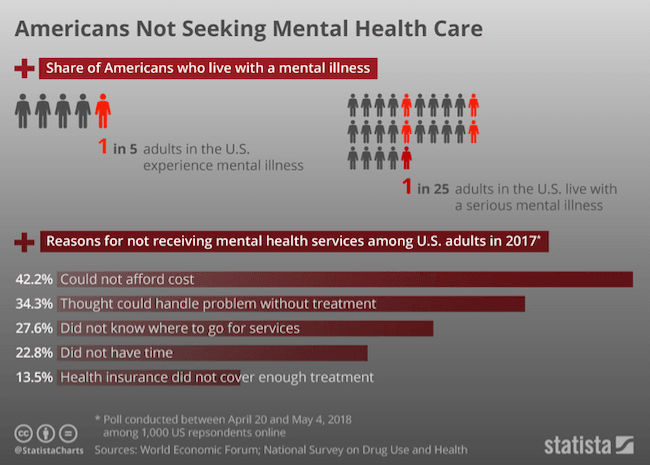
    People attempting to access mental health treatment are still being denied coverage at twice the rate of those seeking physical healthcare.

    A federal court has ruled that one of the largest health insurance companies in the U.S. has been discriminating against people with mental illness and addiction disorders by failing to apply coverage standards equally across physical and mental ailments. U.S. Chief Magistrate Judge Joseph C. Spero issued a “blistering” 106-page ruling stating that United Behavioral Health, a subsidiary of UnitedHealth Group, effectively discriminated against thousands of people seeking treatment for these issues from 2011 to 2017, according to The Los Angeles Times.

    The Mental Health Parity and Addiction Equity Act in 2008 made it illegal for insurers to apply different criteria to patients experiencing mental health issues than those experiencing physical health issues when determining what to cover. Unfortunately, people attempting to access mental health treatment are still being denied coverage at twice the rate of those seeking physical healthcare.

    According to the report by Anita Raghavan, the blame for this rests on a lack of enforcement of the 2008 law by the overstretched Employee Benefits Security Administration (EBSA).

    Labor Secretary R. Alexander Acosta wrote in a 2018 report that this small division of the Department of Labor has only 400 investigators and 100 benefit advisors working to keep track of about 5 million health benefit plans across the country.

    In the space of two years, the EBSA was only able to issue 136 citations to health insurance companies for violating the Mental Health Parity and Addiction Equity Act. To make matters worse, the agency can’t assess civil monetary penalties to deter future violators.

    The inability to get coverage for mental health issues have left many without desperately needed treatment. This is such a common problem that the National Alliance on Mental Illness (NAMI) has a guide for what individuals can do if they’ve been denied such coverage.

    This includes a list of “commonly denied types of care,” which appears to include all levels of care from diagnosis and common psychotherapy, “intermediate” care like outpatient or partial inpatient treatment, and full residential hospitalization.

    Source: Statista/National Survey on Drug Use and Health

    Meanwhile, reports of families struggling to get the appropriate care for mentally ill family members proliferate. In September 2018, WFYI did a story on Matthew Timion and his fight to get coverage for treatment that his adopted son desperately needed.

    “He was cutting himself and he’s hearing voices and he is threatening to run away and kill me,” Timion said. “The insurance company says, ‘Well, he hasn’t done that in three or four days now, he’s good to go home.’ And the hospital said, ‘No, he has to stay.’”

    The problem has become so severe that parents are increasingly resorting to giving up custody of their children because once they do, the state will be forced to pay for the necessary mental health treatment. Adoptive parents call this decision “gut-wrenching,” but without health insurance coverage for expensive treatment plans, they often have little choice.

    View the original article at thefix.com

  • Black Lawmakers Push Back On Legalization In New York

    Black Lawmakers Push Back On Legalization In New York

    Lawmakers want to ensure that Black Americans will benefit from legalization after years of being disproportionately affected by marijuana legislation.

    In New York, efforts to legalize recreational marijuana are facing an unexpected hurdle, as black lawmakers vow to withhold support if the legislation does not do enough to ensure that minorities will benefit from the legal cannabis industry. 

    Assembly majority leader, Crystal Peoples-Stokes, the first black woman to serve in that role, told The New York Times that none of the 10 states that have legalized cannabis have done enough to make up for decades of marijuana arrests and incarceration that have disproportionately affected African Americans. 

    “I haven’t seen anyone do it correctly,” she said.

    Although Gov. Andrew Cuomo’s proposal has promised a “social and economic equity plan,” Peoples-Stokes said it is lacking in specifics. 

    “They thought we were going to trust that at the end of the day, these communities would be invested in. But that’s not something I want to trust,” she said. “If it’s not required in the statute, then it won’t happen.”

    The governor’s counsel, Alphonso David, noted that including too much detail in the legislation may not stand the test of time. 

    “Some people are looking for a level of detail that may not be appropriate for legislation, and we have to be careful how we implement the legislation so we don’t have to change it every few years,” said David.

    Gov. Cuomo wanted marijuana legalization to happen quickly enough to be included in the state’s budget, which will be passed in April. Initially, this seemed likely, but given the opposition, Cuomo said he is “no longer confident” about meeting that deadline. 

    Peoples-Stokes agreed. “It’s not going to go the way it looks now,” she said. 

    The assemblywoman has introduced an alternative to Cuomo’s legalization bill. Peoples-Stokes’ plan would prioritize licenses for marijuana businesses in communities that have been disproportionately affected by marijuana prohibition, including communities of color.

    In addition, her bill calls for half of marijuana revenue to be directed toward community supports, including job training. 

    Although no state has written social justice plans into marijuana legalization, efforts to prioritize minority business owners are springing up around the country

    “We actually do have to overcorrect. People from our communities, black and brown communities, were the one first ones to be criminalized. Why shouldn’t we be the first ones to benefit?” Kassandra Frederique, the New York state director of the Drug Policy Alliance, told USA Today.

    View the original article at thefix.com

  • Students "Take Back" Billboards To Reduce Alcohol Advertising

    Students "Take Back" Billboards To Reduce Alcohol Advertising

    Students at the school said that alcohol use among teens is universally accepted so their anti-drinking campaign is necessary. 

    A school in California is trying to reduce the number of alcohol advertisements that its students see by purchasing billboard ad space and replacing alcohol ads with messages that encourage kids to avoid drinking. 

    A nonprofit associated with Roosevelt High in Fresno purchased the ad space and replaced it with an ad showing teens who chose education over alcohol. There are plans for at least one more billboard in Fresno. 

    Fresno Unified Superintendent Bob Nelson told ABC30, “For folks that are making good choices and prioritizing education over drugs and alcohol that you have some like-minded colleagues. So kids finding each other and willing to say hey I’m not willing to let anything get in my way of college is a really strong message.”

    The billboard that is up now shows eight students from Roosevelt High with the caption “I choose my education over alcohol.” 

    Students at the school said that alcohol use among teens is universally accepted, so taking a dramatic stance with something as visible as billboard is important. 

    Sophomore Nicole Lee said, “When we go to parties, my uncles would give my cousins drinks when they’re 18, so you’re basically breaking the law. I came to a point where I’m taking a stand so I’m going to do something to change that.” 

    Christina Garcia, another sophomore, agreed that talking about the dangers of alcohol for teens is important. 

    “Coming from me as a youth I have friends that say drinking is this and drinking is my life and OK it’s your life but what about your life. You’re just going to throw away your life for alcohol,” she said.

    Despite the experiences of teens at Roosevelt High, researchers have found that teen drinking rates are actually decreasing. According to researchers who conducted the Monitoring The Future survey, which looks at substance use among middle and high school students, teen drinking peaked in 1997 and has decreased 60% since then. 

    Last year, binge drinking among seniors in high school decreased by 2.8%. Fourteen percent of high school seniors reported that they had engaged in binge drinking in the prior two weeks. 

    At the same time, vaping of nicotine and marijuana has increased dramatically among teens, worrying health providers. More than 7% of teens reported that they had vaped marijuana in the past 30 days, while the percent of teens who had vaped nicotine doubled to 21%.  

    View the original article at thefix.com

  • Whole Foods CEO Would Like to See Marijuana Sold in Supermarkets

    Whole Foods CEO Would Like to See Marijuana Sold in Supermarkets

    Whole Foods already sells some cannabis-based products like organic hemp seeds and cannabinoid supplements.

    John Mackey, the co-founder and current CEO of Whole Foods Market, told an audience in Texas that if the state legalized cannabis, he would support efforts to sell it in supermarkets.

    Mackey, who was speaking at a staged conversation with the Texas Tribune, said that “chances are good” for cannabis sales in grocery stores like his natural and organic food chain, which has more than 450 locations in North America and the United Kingdom.

    When asked for an estimated time frame on when cannabis might be available on his shelves, Mackey noted that the decision lay with “the market and the government regulations.”

    As High Times noted, Mackey’s comments about cannabis in grocery stores were actually prompted by a question from an audience member about whether insects would ever be offered as an alternative protein source at Whole Foods. Mackey said that his stores would consider that option before adding his comments about legalization efforts in the Lone Star State.

    “If cannabis is ever passed in Texas, chances are good that grocery stores will be selling that, too,” he said. “You just never know what happens over time with markets. They change and evolve.”

    Mackey did not voice an opinion as to what cannabis-related products would be sold at his stores – Whole Foods already sells some cannabis-based products like organic hemp seeds and cannabinoid supplements – and concluded his thoughts on the possibility by stating, “Let’s see what happens with the market and government regulations over time.”

    Legal sale of marijuana is currently restricted in Texas, though low-THC cannabis is available to patients who have been diagnosed with “intractable” epilepsy as part of the Texas Compassionate Use Act of 2015. Three organizations were licensed to dispense cannabis in 2017, per the act’s requirements.

    House Bill 1365, which was introduced by Texas state representative Eddie Lucio III (D-Brownsville) in February 2019, would expand the Compassionate Use Act to allow treatment for cancer, autism, PTSD and other forms of epilepsy, and would expand the kinds of cannabis available to patients to include vaporizations, tinctures and lotions, but not smokeable cannabis.

    High Times also noted that Whole Foods is not the only food retailer to consider stocking cannabis. The United Bodegas of America has expressed its desire for New York Governor Andrew Cuomo to allow bodegas – the small, independent grocery/convenience and wine stores that are located throughout New York City and other major metropolises – to sell cannabis. 

    View the original article at thefix.com