Tag: opioids

  • Opioid Epidemic Will Get Worse, Researchers Say

    Opioid Epidemic Will Get Worse, Researchers Say

    Using computer modeling, researchers predicted that overdose deaths will kill 81 ,700 people in 2025 unless drastic changes are made.

    Researchers from Massachusetts General Hospital have grim news about the opioid epidemic: It’s likely to continue worsening in the coming years, unless widespread, drastic policy changes are taken to address illicit drug use. 

    The study, published in the journal JAMA Network Open, showed that even with efforts to more tightly control access to prescription opioids, overdose deaths will continue to rise.

    Using computer modeling, researchers predicted that overdose deaths will kill 81 ,700 people in 2025, most of whom will die from illicit opioids. Further restricting access to prescription opioids will only reduce that number by 3%-5.3%, researchers found. 

    “This study demonstrates that initiatives focused on the prescription opioid supply are insufficient to bend the curve of opioid overdose deaths in the short and medium term,” Dr. Marc Larochelle of the Grayken Center for Addiction at Boston Medical Center said in a press release. “We need policy, public health and health care delivery efforts to amplify harm reduction efforts and access to evidence-based treatment.”

    Jagpreet Chhatwal, who co-authored the paper with Larochelle and others, said that more drastic measures are needed to target the use of illicit opioids. 

    “If we rely solely on controlling the supply of prescription opioids, we will fail miserably at stemming the opioid overdose crisis. Illicit opioids now cause the majority of overdose deaths, and such deaths are predicted to increase by 260%—from 19,000 to 68,000—between 2015 and 2025,” said Chhatwal. “A multi-pronged approach—including strategies to identify those with opioid use disorder, improved access to medications like methadone and buprenorphine, and expansion of harm reduction services such as the overdose-reversal drug naloxone—will be required to reduce the rate of opioid overdose deaths.” 

    Chhatwal said that while easy access to prescription opioids may have contributed to the crisis, today the epidemic is more about illicit opioids including fentanyl and its analogues. Because of this, efforts to reduce overdose deaths need to focus on addressing the population of people who are using illegal drugs. 

    “The opioid epidemic started with a sharp increase in opioid prescriptions for pain in the 1990s; but since 2010 the crisis has shifted, with a leveling off of deaths due to prescription opioid overdoses and an increase in overdose deaths due to heroin,” he said.

    “In the past five years, deaths have accelerated with the introduction of the powerful synthetic opioid fentanyl into the opioid supply, leading to a continuing increase in overdose deaths at time when the supply of prescription opioids is decreasing.”

    View the original article at thefix.com

  • How Addiction Stigma Prevents People from Getting Help

    How Addiction Stigma Prevents People from Getting Help

    The doctor believed that people with addictions are sneaky and dishonest, and maybe this is why. My treatment has repeatedly been delayed or denied because I’ve been honest. Do other people have to lie to get medical care?

    My name is Sara and I am 28 years old. I grew up in a two-parent household with a loving family, had excellent grades in high school, and graduated from college. I currently work full time. I love children, nature, animals, family, and my many friends.

    Self-Medicating with Opioids

    I have also struggled with depression, anxiety, and OCD since I was in my early teens. At age 18, my life was changed forever when I was prescribed an opiate painkiller after the removal of my wisdom teeth. I discovered, with that one prescription, that opioids made me feel normal. And yet, opioids are what put me through a roller coaster of hell for the next eight years. They also introduced me to my good friend “Heroin.”

    From early on in my addiction, I wanted help but was too ashamed to ask for it. I also figured I could beat this thing myself, but I couldn’t. I needed help. My parents encouraged me to contact a rehab facility, which I did immediately. The nurse who did the intake was very kind and said I could come the next day to be admitted for detox, but she first needed to get approval from the insurance company.

    I, and my family, were so relieved that I would begin a journey of recovery. This is when I experienced the stigma of addiction for the first time. The nurse from the rehab center called me back and said that my insurance company would not approve me to go to detox and rehab because I had not yet been incarcerated.

    Several months later, I was finally approved for rehab, but only after I possessed a misdemeanor charge.

    “Sneaky Drug Addicts”: Doctors Perpetuate Stigma

    After detox, rehab, and a six-month stay at a sober living facility, I came home and began looking for work. I found a job quickly, but I needed paperwork completed for a physical. Although the job did not require a drug test and there was nothing on the form requesting drug testing, my primary care provider refused to give me a physical or sign the form unless I agreed to a drug test. It didn’t matter that I was in recovery and was also attending outpatient rehab which routinely drug-tested me.

    Even now, with two years in recovery from addiction, I still experience prejudice and stigma in health care settings. Recently a bout of severe food poisoning and dehydration sent me to the emergency room. There, I was accused of going through withdrawal. I provided the nurse with the list of my medications, which included Vivitrol—an opioid blocker. I was also honest and told her that I used marijuana occasionally to help with anxiety. After I was sent for testing in Radiology, the doctor told my mother that he was quite sure that I was going through withdrawal and that he wanted a urine screen. My mother told him that she was sure I wasn’t going through withdrawal because I had always been upfront and honest with her when I relapsed in the past.

    “Well, you know how sneaky drug addicts can be,” the doctor said.

    When I returned and the doctor told me his suspicions, I agreed to the urine test but told him that I expected an apology after he got the results and I only tested positive for marijuana. I watched as two nurses outside the room laughed and looked toward my room. I knew they were laughing at me—the drug addict.

    Half an hour later, the doctor walked in and said, “Well, I guess you were right, you aren’t going through withdrawal. We only found a small trace of marijuana in your system. But, you understand why I had to test you, don’t you?”

    He never did apologize to me.

    In Recovery and Denied Therapy

    Part of my recovery is getting a monthly injection of Vivitrol which is an opioid blocker that also helps reduce my cravings. The provider that gives me the Vivitrol requires that I also go to a counselor, which I was more than willing to do. But at my intake interview at the local mental health agency, I was honest about my occasional marijuana use for anxiety and as a result I was denied counseling services. I even appealed it to the medical director, but that didn’t help. It didn’t matter to them that the anxiety, depression, and OCD—which is relieved by the marijuana—may have been partly responsible for my addiction to opioids in the first place.

    That ER doctor held the belief that people with addictions are sneaky and dishonest, and maybe this is why. My treatment has repeatedly been delayed or denied because I’ve been honest. Do other people have to lie to get medical care? If someone is sent to a counselor for emotional eating, are they refused counseling if they have given up everything but potato chips? And even if the providers believe smoking marijuana is a condition of addiction, wouldn’t that be all the more reason to offer me care and a provider? To this day, I have been unable to find a counselor who will take me.

    My wish is that every person who has substance use disorder is treated with respect and compassion. When you are addicted, you already beat yourself up every day. Every time you look in the mirror, you see an addict. We certainly don’t need to be reminded by the people that chose a sacred profession and took an oath to help people that we aren’t worth it. That only puts us deeper in the depths of destruction rather than building us up for a path to recovery.

    Healing: Compassionate Health Care Providers

    My experience isn’t unusual, but I have also encountered many health care workers who were compassionate. Those were the people who gave me a reason to keep fighting for my life. There was a nurse in the emergency department (the one time I was there to get help for withdrawal after I had relapsed) who gave me a big hug when I was leaving and said, “Don’t give up. Keep trying. You are worth it.” And then I watched as she hugged my mother as she sobbed on her shoulder.

    “I know it’s scary, Mom, but she will get through this. The good thing is, she wants to get help,” she said.

    Another nurse told me how proud she was at how far I’ve come and not to take other people’s biases to heart. And then there was my Health Home Nurse — she just works her magic and does whatever’s needed to help you stay in recovery. She is nothing short of amazing and I owe my life to her. Those are the people who make me want to continue my recovery and the ones I will be thankful to for the rest of my life.

    I am Sara. I am a survivor who is recovering from substance use disorder. I could be your daughter, your niece, your granddaughter, your next door neighbor, or your co-workers daughter. I am worthy of being treated with respect and compassion just as much as every human being struggling with this disease is worth it. With the right kind of support, people can and do recover.

    Note: My mother, who has worked in the healthcare industry for over 30 years, has been frustrated witnessing firsthand the stigma I’ve faced when trying to obtain care and services. She’s often had to advocate on my behalf. She currently volunteers with an organization called Truth Pharm, which works with local providers to reduce stigma in healthcare settings. She asked if I would be willing to share my story, and that’s why I wrote this.

    View the original article at thefix.com

  • In Massachusetts, Opioid Deaths Decline For Second Year

    In Massachusetts, Opioid Deaths Decline For Second Year

    Officials applaud the state’s progress but acknowledge that there’s still a long way to go in the fight against the opioid crisis.

    Officials in Massachusetts are celebrating after state figures showed that opioid overdose deaths declined for the second year in a row, which officials say is due to interventions throughout the state that limit access to opioid prescriptions, increase access to opioid-overdose reversal drugs, and help connect people with treatment for opioid use disorder. 

    The data, which includes confirmed and estimated deaths from opioid overdoses, showed that 1,974 Bay Staters died from opioids in 2018, down about 4% from 2017. Between 2016 and 2017 there was a 2% decline in overdose deaths. 

    Monica Bharel, Department of Public Health Commissioner, told WGBH she was pleased with the progress and hopes that opioid overdose deaths continue to decline. 

    “When you look from 2016 to now, we are making progress. We are making progress and fighting this devastating opioid epidemic. We’ve seen a 6% decrease, we know the efforts we have in place are beginning to work, and importantly, to me, from a public health point of view, we have to continue our sustained work to bring those deaths down further.”

    Since Massachusetts improved its Prescription Monitoring System in 2015, there has been a 35% decline in Schedule II prescriptions, which include opioids. Gov. Charlie Baker praised this in a statement, while acknowledging that there is a long way to go. 

    “While we are encouraged to see fewer opioid-related overdose deaths for a second consecutive year and a 35% decrease in reported opioid prescriptions since 2015, the opioid epidemic continues to present a very serious challenge that is made more difficult due to the presence of fentanyl,” the governor said. 

    Although the progress is positive, there were some dire statistics released. Fentanyl is now present in 89% of opioid deaths in the state, up from less than 30% in 2014.

    Among people aged 25-34 opioids account for a staggering 40% of all deaths. In that demographic, opioid overdoses are still increasing. In addition, overdose deaths are increasing among black men. 

    Bharel said that the state needs to focus on these groups. 

    “For us at the state level and also at the community level, that gives us the opportunity to say, ‘Let’s make sure we’re engaging and investing in every community,’” she said. “There are some of us who are at highest risk. We want to make sure our work focuses on them.”

    That includes education, she added, particularly about synthetic opioids. 

    “One of the most important public health interventions is awareness and education. When people are using illicit drugs, they have to be aware of fentanyl, that fentanyl is deadly, that fentanyl is present in almost all of the opioid deaths right now.”

    View the original article at thefix.com

  • Who Should Be Held Responsible For The Opioid Epidemic?

    Who Should Be Held Responsible For The Opioid Epidemic?

    A new op-ed suggests that to receive “true justice” for the opioid epidemic, “we need to root out all the villains regardless of whether they have famous names.”

    When it comes to the opioid epidemic, no name brings frustration and anger like Purdue Pharma. It is commonly accepted that the maker of OxyContin contributed to the growth of the opioid epidemic by using aggressive and misleading sales tactics meant to get more powerful opioids into the hands of more Americans. 

    The Sackler family, members of which founded the company that would become Purdue Pharma, have also come under fire for their perceived role in the epidemic. Not only did the family profit vastly from the sale of OxyContin, but new court documents assert that they were directly involved with pushing for more sales.

    When it became clear that OxyContin was addictive they even considered making medications to assist in the treatment of addiction, which would have allowed them to double dip, profiting from both ends of the crisis. 

    The actions of Purdue Pharma were reprehensible, Robert Gebelhoff writes in an opinion piece for The Washington Post. However, he argues that in addition to punishing them, the country needs to seek punishment and retribution for others who contributed to the crisis.

    “The opioid epidemic is one of the worst systematic failures of health care in our country. For true justice, we need to root out all the villains, regardless of whether they have famous names,” he writes. 

    Gebelhoff calls for holding the medical community and other accountable. 

    He writes, “Even if states are able to turn these latest charges into some form of punishment for the Sacklers themselves, what about all those who promoted their cause? What about the researchers who accepted funding from drug manufacturers and carried out campaigns to destigmatize opioid painkillers? What about the officials at the Food and Drug Administration who not only approved OxyContin without any clinical studies on how addictive the drug might be, but also approved a package insert declaring the drug safer than its rival painkillers?”

    He also points to government officials who failed to intervene in the crisis, and even made it more difficult for the Drug Enforcement Administration to pursue concerning opioid sales.

    At the same time, government policy made it difficult for people to access medication-assisted treatment, which is widely accepted as the best treatment for opioid use disorder. This pattern continues today, according to recent VA research that shows too few people are getting access to medication-assisted treatment. 

    “Who holds such practitioners accountable?” Gebelhoff asks. 

    Gebelhoff points out that the Sacklers and Purdue are a good target, because they have enough money to help fund access to treatment and other interventions into the epidemic. However, he says it’s important that other entities be held responsible even if they don’t have deep pockets. 

    “The opioid saga — stemming from prescription painkillers — has irreparably damaged the lives of countless Americans over the past few decades,” he writes. “Don’t they deserve better?”

    View the original article at thefix.com

  • Opioid Epidemic Will Get Worse, Researchers Says

    Opioid Epidemic Will Get Worse, Researchers Says

    Using computer modeling, researchers predicted that overdose deaths will kill 81 ,700 people in 2025 unless drastic changes are made.

    Researchers from Massachusetts General Hospital have grim news about the opioid epidemic: It’s likely to continue worsening in the coming years, unless widespread, drastic policy changes are taken to address illicit drug use. 

    The study, published in the journal JAMA Network Open, showed that even with efforts to more tightly control access to prescription opioids, overdose deaths will continue to rise.

    Using computer modeling, researchers predicted that overdose deaths will kill 81 ,700 people in 2025, most of whom will die from illicit opioids. Further restricting access to prescription opioids will only reduce that number by 3%-5.3%, researchers found. 

    “This study demonstrates that initiatives focused on the prescription opioid supply are insufficient to bend the curve of opioid overdose deaths in the short and medium term,” Dr. Marc Larochelle of the Grayken Center for Addiction at Boston Medical Center said in a press release. “We need policy, public health and health care delivery efforts to amplify harm reduction efforts and access to evidence-based treatment.”

    Jagpreet Chhatwal, who co-authored the paper with Larochelle and others, said that more drastic measures are needed to target the use of illicit opioids. 

    “If we rely solely on controlling the supply of prescription opioids, we will fail miserably at stemming the opioid overdose crisis. Illicit opioids now cause the majority of overdose deaths, and such deaths are predicted to increase by 260%—from 19,000 to 68,000—between 2015 and 2025,” said Chhatwal. “A multi-pronged approach—including strategies to identify those with opioid use disorder, improved access to medications like methadone and buprenorphine, and expansion of harm reduction services such as the overdose-reversal drug naloxone—will be required to reduce the rate of opioid overdose deaths.” 

    Chhatwal said that while easy access to prescription opioids may have contributed to the crisis, today the epidemic is more about illicit opioids including fentanyl and its analogues. Because of this, efforts to reduce overdose deaths need to focus on addressing the population of people who are using illegal drugs. 

    “The opioid epidemic started with a sharp increase in opioid prescriptions for pain in the 1990s; but since 2010 the crisis has shifted, with a leveling off of deaths due to prescription opioid overdoses and an increase in overdose deaths due to heroin,” he said.

    “In the past five years, deaths have accelerated with the introduction of the powerful synthetic opioid fentanyl into the opioid supply, leading to a continuing increase in overdose deaths at time when the supply of prescription opioids is decreasing.”

    View the original article at thefix.com

  • Opioid Crisis Activists "Die In" At Guggenheim Over Sackler Family Ties

    Opioid Crisis Activists "Die In" At Guggenheim Over Sackler Family Ties

    After the Guggenheim, protesters walked two blocks to the Metropolitan Museum, which has a wing named after the Sackler family

    Protesters dropped fake prescriptions from balconies, handed out empty pill bottles and laid down as if they were dead at the Guggenheim Museum in New York City to call attention to the opioid epidemic and call for the museum and others like it to stop acknowledging the billionaire philanthropists of the Sackler family, members of which founded the company that would become Purdue Pharma, the manufacturers of OxyContin

    “I want the Guggenheim and others publicly to disavow themselves from the Sacklers and refuse future funding from them, and I want them to take down the Sackler name from the museums,” Nan Goldin, who organized the protest, told The Guardian.

    Goldin, a photographer who art displayed in the Guggenheim, has been an outspoken critic of the Sackler family after she nearly died of an opioid overdose, following an addiction that she says started when she was prescribed OxyContin, a pill produced by Purdue Pharma. 

    The Sackler family has its name on the Guggenheim and other museums and institutes for the arts. Since the opioid epidemic — and Purdue’s misleading advertising claims — have been in the spotlight more, some have called on these institutions to distance themselves from the family.

    “We’re here to call out the Sackler family. By failing to disavow them now, by refusing to take down their names, the museums are complicit in the opioids crisis.”

    Distributing fake prescriptions from the balconies was meant to call attention to comments made by one member of the Sackler family, claiming that the launch of OxyContin would “followed by a blizzard of prescriptions that will bury the competition,” said Goldin. 

    According to The New Yorker, the fake scripts were for 80 milligrams of OxyContin to be taken 24 times a day. They also contained a quote: “If OxyContin is uncontrolled, it is highly likely that it will eventually be abused. . . . How substantially would it improve our sales?” The words were pulled from court filling in Massachusetts, where Purdue is being sued for its prescribing practices. 

    After the Guggenheim, protesters walked two blocks to the Metropolitan Museum, which has a wing named after the Sackler family

    Visitors to the Guggenheim were initially confused, but a few who spoke to The Guardian said that the protest resonated with them. 

    “It reminded me of stories of protesters laying down in Wall Street during the Aids epidemic. These institutions all have dirty hands,” said Alex Viteri.

    Another man was visiting from New Hampshire, one of the states hardest hit by the opioid epidemic. The man said that his brother-in-law became hooked on opioids after being prescribed OxyContin. Like many people, the brother-in-law progressed to illicit opioids and died of a drug overdose. 

    View the original article at thefix.com

  • Anti-Diarrhea Medication Abuse Continues To Skyrocket

    Anti-Diarrhea Medication Abuse Continues To Skyrocket

    Cases of loperamide exposure are up 90% over a five-year period.

    People who are trying to avoid opioid withdrawals or get a high are more frequently turning to an over-the-counter diarrhea medication, leading to an increase in overdoses from the drug. 

    Researchers from Rutgers University found that overdoses from loperamide—known as “the poor man’s methadone” and sold under the brand name Imodium AD—increased steeply between 2011 and 2016, although they remained very rare, with only 26 cases reported, according to the study published in the journal Clinical Toxicology. At the same time, calls to poison control about the drug rose more than 90%.

    Despite the relatively low numbers, the trend caused alarm for people who see loperamide as an opioid that is easy to access and hard to detect in drug tests.

    Diane Calello, executive and medical director of the New Jersey Poison Control Center at Rutgers New Jersey Medical School and lead study author, said in a news release that loperamide is safe when taken as instructed.

    However, some opioid users take up to 50 times the recommended dosage, at which point the drug becomes very dangerous.  

    “When used appropriately, loperamide is a safe and effective treatment for diarrhea—but when misused in large doses, it is more toxic to the heart than other opioids which are classified under federal policy as controlled dangerous substances,” she said. “Overdose deaths occur not because patients stop breathing, as with other opioids, but due to irregular heartbeat and cardiac arrest.”

    Calello said that over the past years there have been multiple deaths related to loperamide in New Jersey. Because of this, Calello and others recommend that there be changes to the way that loperamide is sold, as well as more public awareness about the risks of the drug. 

    She said, “Possible ways of restricting loperamide misuse include limiting the daily or monthly amount an individual could purchase, requiring retailers to keep personal information about customers, requiring photo identification for purchase and placing medication behind the counter. Most importantly, consumers need to understand the very real danger of taking this medication in excessive doses.”

    In May 2018, the Food and Drug Administration announced changes to the way that loperamide is packaged and sold. FDA head Scott Gottlieb requested that online retailers stop selling large quantities of the drug, and that it be packaged in blister packs, which require users to individually open each pill. These requirements could curb misuse, while also keeping the drug available to people with digestive issues who need it regularly. 

    “We’re very mindful of balancing benefit and risk and the needs of patients in our mission to promote and protect public health,” Gottlieb wrote.

    “The FDA’s actions to address drug misuse and abuse must be informed by an understanding of the complex social environment in which changing patterns of drug consumption occur. The agency is committed to addressing emerging issues of abuse and misuse while taking steps to safeguard the needs of patients who depend on these medicines.”

    View the original article at thefix.com

  • Parents Should Ask Questions About Opioids For Kids, Teens

    Parents Should Ask Questions About Opioids For Kids, Teens

    Doctors warn that while being mindful of addictive properties of opioids is important, it’s also critical that pain be controlled for young patients. 

    Despite concern about the risks for addiction, there remains a legitimate medical need for opioid painkillers to manage pain for children and teens in some cases, and doctors say that parents can encourage responsible use of opioids by talking with their child’s provider about how best to manage pain. 

    “Opioids are very potent relievers of pain, very effective,” Dr. Linda J. Mason, a professor of anesthesia and pediatrics at Loma Linda University and president of the American Society of Anesthesiologists told The New York Times. “But they have addictive properties, and also side effects, like respiratory depression.” 

    Mason suggests that parents ask their provider how the doctor plans to manage a child’s pain. This can even begin at a pre-operative meeting, so that everyone has the same expectations about pain management. Although opioids may be needed in the short-term following surgery or a broken bone, patients can usually transition away from them quickly. In other cases, like those involving burns or serious illness, opioids may need to be used for a longer period of time. 

    Doctors warn that while being mindful of addictive properties of opioids is important, it’s also critical that pain be controlled for young patients. 

    “Treating pain adequately helps recovery, reduces the downstream psychiatric and psychological effects,” said Dr. Elliot J. Krane, chief of pain management at the Packard Children’s Hospital at Stanford and professor of anesthesiology and pediatrics at Stanford University. “In the absence of risk factors or concerns about the child’s home environment, I am more concerned about deleterious effects of untreated pain than I am about creating somebody with substance abuse disorder.” 

    Krane said that if patients are prescribed opioids “rationally and appropriately” there is little cause for concern about substance misuse. Krane has very few patients who are prescribed opioids for chronic pain, but some do need the strong medications, he said.

    He described himself as “neither pro-opioid nor anti-opioid, but pro-patient.”

    In addition to discussing pain management ahead of time, Mason recommends that parents ensure that any unused opioids are properly disposed of. 

    “You should not keep them for use for a future time,” Mason said. “These are for a specific surgery.”

    Many doctors and pharmacies are conscious of prescribing opioids in a very controlled manner for children and teens, but parents still have an important role to play in helping prevent opioid abuse in patients. 

    “Parents who are well-informed can give the best care to their children,” Mason said. 

    View the original article at thefix.com

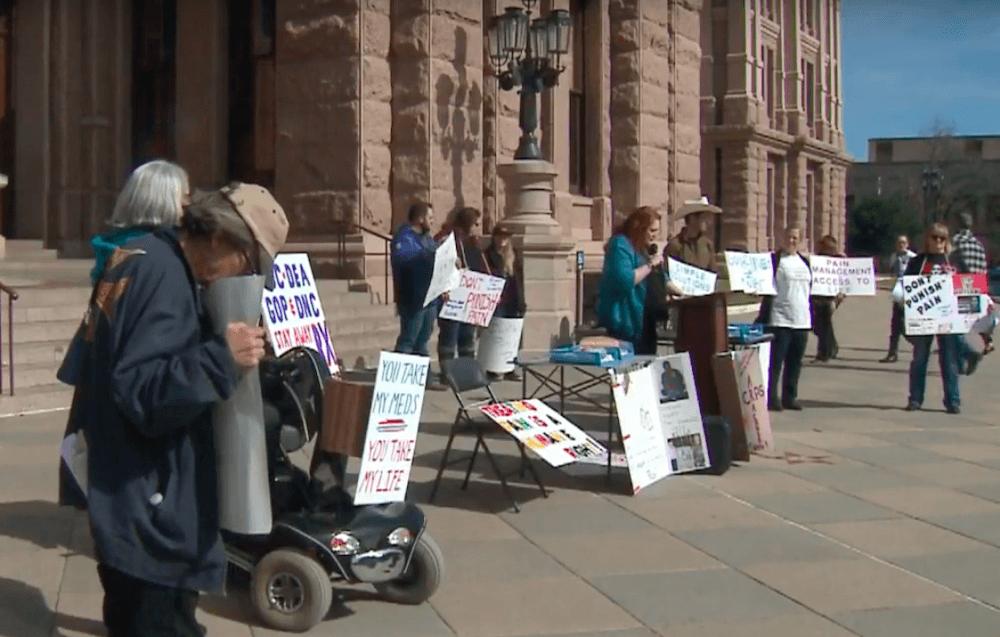
  • "Don’t Punish Pain" Rallies Held Across The Nation

    "Don’t Punish Pain" Rallies Held Across The Nation

    Pain patients gathered around the US to bring attention to the damage caused by restrictive opioid prescribing guidelines.

    While the opioid epidemic has claimed thousands of lives, the regulations meant to stem the death toll are having unintended consequences for people who live with chronic pain, according to people who rallied across the country Tuesday Jan. 29 as part of the “Don’t Punish Pain” event. 

    In Concord, New Hampshire, Lauren Benson was one of the younger people at the rally. Nine years ago, when she was just 23, Benson injured her back working as an EMT, and has been disabled since.

    She told The Union Leader that she and many other people who need opioids to control their pain have a harder time accessing the drugs because of tightening prescription regulations. This is especially frustrating for pain patients who have used opioids responsibly for decades, she said. 

    “They’ve been on pain medication longer than I’ve been alive and all of a sudden it’s: ‘No, stop, no more for you.’ What are they supposed to do? They’ve been taking their meds properly.”

    Many pain patients are afraid that they won’t be able to access the pills that make their lives bearable. Many have already had doctors taper their dosage or have had to go through humiliating questioning and drug tests to get their opioids. 

    “For over 10 years, I took the same dose and because of the Oklahoma opioid task force, my doctor had to cut my prescription by 75%,” Patrick Burdette, who attended a rally in Oklahoma City, told Fox 25 News. “It caused me to sit at home in bed most days.”

    There’s a misconception that pain patients can choose alternatives to opioids, according to many patients, who say that this isn’t an option for everyone. 

    “My physical therapist would come to my house and I just basically sat there and cried because the pain was so bad,” said Patty Loveless, who was also at the Oklahoma rally. 

    In Tucson, Arizona, one patient carried a sign proclaiming that pain patients are “afflicted, not addicted,” according to The Tucson Sentinel

    “You know that horrific pain that takes about a minute or so to go away?” said Debra Hickey, whose doctor recently reduced her pain medications. “Can you imagine if you were in that kind of pain 24/7 with no opioids? That’s the pain I’m in.”

    In 2016, the Centers for Disease Control and Prevention issued guidelines about the amount of opioids that most patients should be on. This year, Medicare has plans to further restrict access to opioids. However, pain patients say that their lives are being negatively-affected by these well-intentioned measures. 

    “It is borderline genocide,” Lauren DeLuca, founder of the Chronic Illness Advocacy and Awareness Group, told The Fix last year. 

    View the original article at thefix.com

  • Some San Francisco IV Drug Users Choose Fentanyl Over Heroin, Report Says

    Some San Francisco IV Drug Users Choose Fentanyl Over Heroin, Report Says

    Harm reduction advocates in the city urge IV drug users who choose to use fentanyl to run additional drug tests to “see what else might be in the mix.”

    The synthetic opioid, fentanyl, currently tops the list of drugs with the greatest likelihood of causing a fatal overdose; more than 18,000 people died from fentanyl-related overdoses in 2017, according to a report from the National Center for Health Statistics. Fentanyl’s lethal potential has been the subject of countless media stories.

    But a recent article on Stateline, the Pew Charitable Trust’s research and analysis blog, reported that some IV drug users in San Francisco’s Tenderloin district are actively choosing fentanyl over heroin.

    City health officials state that a number of factors have contributed to the drug’s popularity, including a low death rate, a degree of transparency among dealers and a sizable supply of the overdose reversal drug Narcan from local health and harm reduction groups.

    While much of the country saw fentanyl enter the illicit drug market in the mid-2010s, it wasn’t widely available in California until 2015. But as the Stateline article noted, the toll taken on California’s drug community—and in particular, on San Francisco IV drug users—wasn’t as severe as the wave of deaths that swept through New England and the Appalachian region.

    Figures from 2016 show that the California death rate that year hovered at 4.9 deaths per 100,000 persons, while the national death rate was 13.3 deaths per 100,000.

    Part of the reason for the lower numbers can be attributed to treatment and prevention efforts. The Stateline blog noted that California expanded Medicaid to low-income adults in 2010 and established a strong baseline of treatment options in subsequent years. San Francisco, in particular, has open lines of dialogue between drug users that help to guide the city’s health policy.

    “San Francisco’s harm reduction community systematically talks to drug users about their preferences and experiences,” said Daniel Raymond, policy director of the national Harm Reduction Coalition. “[They] continuously feed that information to the San Francisco Department of Health, which uses that intelligence to inform its message and overdose prevention strategies.”

    When the drug arrived in San Francisco in 2015, public health and harm reduction groups banded together to increase treatment options, availability to Narcan and drug testing strips, and outreach programs. The drug is also clearly labeled by dealers, so there is less of a chance of accidental ingestion, and its street cost is lower than heroin. As a result, fentanyl is the drug of choice for about half of Tenderloin users, as well as those in some neighboring communities.

    “For drug users, it’s just like you or I making decisions about the products we choose when we grocery shop,” said drug test administrator Kristen Marshall in the Stateline article. “Fentanyl is stronger, you need less of it, and it’s cheaper. So why wouldn’t I, as somebody with limited funds, want to spend my money on something that’s a better value and therefore a better product?”

    To be clear, fentanyl remains a dangerous drug, even more so than heroin. And many Tenderloin drug users avoid it, especially those who overdosed on other drugs laced with fentanyl. But for those that deliberately choose it, Marshall said that a policy of less-is-more appears to work.

    “Use less of it, use it slower, use it with other people, and keep Narcan with you,” she said. “It’s also important to test your drugs. Even if you know you’re getting fentanyl, you need to run additional tests to see what else might be in the mix.”

    View the original article at thefix.com