Tag: Purdue Pharma

  • Purdue Pharma Considers Bankruptcy Over OxyContin Lawsuits

    Purdue Pharma Considers Bankruptcy Over OxyContin Lawsuits

    If Purdue were to file for bankruptcy, it could “halt” the lawsuits that have been brought against the company by plaintiffs across the country.  

    Purdue Pharma, maker of the prescription opioid OxyContin, is reportedly exploring the option of bankruptcy to deal with the nearly 2,000 lawsuits brought against the company in the wake of the opioid epidemic.

    Purdue has been accused of engaging in aggressive and misleading marketing tactics to pressure doctors to prescribe far more OxyContin than was necessary, leading to a massive spike in addiction and overdose cases. The drug company has denied the allegations, but the lawsuits keep coming.

    If Purdue were to file for bankruptcy, it would “halt the lawsuits and allow Purdue to negotiate legal claims with plaintiffs under the supervision of a U.S. bankruptcy judge,” according to sources who spoke with Reuters.

    In a statement from Purdue, the company declined to comment on the likelihood of turning to bankruptcy over fighting the many lawsuits at their doorstep.

    “As a privately-held company, it has been Purdue Pharma’s longstanding policy not to comment on our financial or legal strategy,” the statement reads. “We are, however, committed to ensuring that our business remains strong and sustainable. We have ample liquidity and remain committed to meeting our obligations to the patients who benefit from our medicines, our suppliers and other business partners.”

    In response to the news, Connecticut Attorney General William Tong has vowed to continue pursuing the state’s suit against Purdue Pharma and its owners.

    “We will oppose any attempt to avoid our claims, and will continue to vigorously and aggressively pursue our claims against Purdue and the Sackler family,” he said.

    Filing for bankruptcy to help handle their legal troubles does not necessarily mean that the drug company is in financial trouble. Many other companies have chosen the same route when faced with lawsuits in the past, according to Fast Company.

    This includes the asbestos manufacturer Johns Manville and Dalkon Shield, the company that created a faulty IUD birth control implant and faced 6,000 lawsuits after thousands of women suffered infertility, ectopic pregnancies, and/or death.

    These two companies created a precedent that is now regularly used by companies faced with high profile controversies, including USA Gymnastics, Pacific Gas and Electric Co., and even the Catholic church.

    Companies that use bankruptcy in this manner can continue on with their business once everything is settled. Unfortunately, victims often receive less compensation than they would if the lawsuits had been settled by a standard civil court with a jury.

    “Corporations don’t want to risk a jury giving, say, $700 million to a cancer victim who used talcum powder every day,” writes Melissa Locker. “Settlements like that could quickly drive them into Chapter 7 bankruptcy, which is the kind where they have to liquidate their assets and potentially cease to exist. That’s why corporations cut victims off at the pass, so to speak, and file for Chapter 11, where the court will take a stoic, logical approach to paying out claims based on dollars and cents, not emotional pleas for the damage done to them.”

    View the original article at thefix.com

  • Who Should Be Held Responsible For The Opioid Epidemic?

    Who Should Be Held Responsible For The Opioid Epidemic?

    A new op-ed suggests that to receive “true justice” for the opioid epidemic, “we need to root out all the villains regardless of whether they have famous names.”

    When it comes to the opioid epidemic, no name brings frustration and anger like Purdue Pharma. It is commonly accepted that the maker of OxyContin contributed to the growth of the opioid epidemic by using aggressive and misleading sales tactics meant to get more powerful opioids into the hands of more Americans. 

    The Sackler family, members of which founded the company that would become Purdue Pharma, have also come under fire for their perceived role in the epidemic. Not only did the family profit vastly from the sale of OxyContin, but new court documents assert that they were directly involved with pushing for more sales.

    When it became clear that OxyContin was addictive they even considered making medications to assist in the treatment of addiction, which would have allowed them to double dip, profiting from both ends of the crisis. 

    The actions of Purdue Pharma were reprehensible, Robert Gebelhoff writes in an opinion piece for The Washington Post. However, he argues that in addition to punishing them, the country needs to seek punishment and retribution for others who contributed to the crisis.

    “The opioid epidemic is one of the worst systematic failures of health care in our country. For true justice, we need to root out all the villains, regardless of whether they have famous names,” he writes. 

    Gebelhoff calls for holding the medical community and other accountable. 

    He writes, “Even if states are able to turn these latest charges into some form of punishment for the Sacklers themselves, what about all those who promoted their cause? What about the researchers who accepted funding from drug manufacturers and carried out campaigns to destigmatize opioid painkillers? What about the officials at the Food and Drug Administration who not only approved OxyContin without any clinical studies on how addictive the drug might be, but also approved a package insert declaring the drug safer than its rival painkillers?”

    He also points to government officials who failed to intervene in the crisis, and even made it more difficult for the Drug Enforcement Administration to pursue concerning opioid sales.

    At the same time, government policy made it difficult for people to access medication-assisted treatment, which is widely accepted as the best treatment for opioid use disorder. This pattern continues today, according to recent VA research that shows too few people are getting access to medication-assisted treatment. 

    “Who holds such practitioners accountable?” Gebelhoff asks. 

    Gebelhoff points out that the Sacklers and Purdue are a good target, because they have enough money to help fund access to treatment and other interventions into the epidemic. However, he says it’s important that other entities be held responsible even if they don’t have deep pockets. 

    “The opioid saga — stemming from prescription painkillers — has irreparably damaged the lives of countless Americans over the past few decades,” he writes. “Don’t they deserve better?”

    View the original article at thefix.com

  • Opioid Crisis Activists "Die In" At Guggenheim Over Sackler Family Ties

    Opioid Crisis Activists "Die In" At Guggenheim Over Sackler Family Ties

    After the Guggenheim, protesters walked two blocks to the Metropolitan Museum, which has a wing named after the Sackler family

    Protesters dropped fake prescriptions from balconies, handed out empty pill bottles and laid down as if they were dead at the Guggenheim Museum in New York City to call attention to the opioid epidemic and call for the museum and others like it to stop acknowledging the billionaire philanthropists of the Sackler family, members of which founded the company that would become Purdue Pharma, the manufacturers of OxyContin

    “I want the Guggenheim and others publicly to disavow themselves from the Sacklers and refuse future funding from them, and I want them to take down the Sackler name from the museums,” Nan Goldin, who organized the protest, told The Guardian.

    Goldin, a photographer who art displayed in the Guggenheim, has been an outspoken critic of the Sackler family after she nearly died of an opioid overdose, following an addiction that she says started when she was prescribed OxyContin, a pill produced by Purdue Pharma. 

    The Sackler family has its name on the Guggenheim and other museums and institutes for the arts. Since the opioid epidemic — and Purdue’s misleading advertising claims — have been in the spotlight more, some have called on these institutions to distance themselves from the family.

    “We’re here to call out the Sackler family. By failing to disavow them now, by refusing to take down their names, the museums are complicit in the opioids crisis.”

    Distributing fake prescriptions from the balconies was meant to call attention to comments made by one member of the Sackler family, claiming that the launch of OxyContin would “followed by a blizzard of prescriptions that will bury the competition,” said Goldin. 

    According to The New Yorker, the fake scripts were for 80 milligrams of OxyContin to be taken 24 times a day. They also contained a quote: “If OxyContin is uncontrolled, it is highly likely that it will eventually be abused. . . . How substantially would it improve our sales?” The words were pulled from court filling in Massachusetts, where Purdue is being sued for its prescribing practices. 

    After the Guggenheim, protesters walked two blocks to the Metropolitan Museum, which has a wing named after the Sackler family

    Visitors to the Guggenheim were initially confused, but a few who spoke to The Guardian said that the protest resonated with them. 

    “It reminded me of stories of protesters laying down in Wall Street during the Aids epidemic. These institutions all have dirty hands,” said Alex Viteri.

    Another man was visiting from New Hampshire, one of the states hardest hit by the opioid epidemic. The man said that his brother-in-law became hooked on opioids after being prescribed OxyContin. Like many people, the brother-in-law progressed to illicit opioids and died of a drug overdose. 

    View the original article at thefix.com

  • Connecticut Judge Dismisses Opioid Lawsuits Against Purdue Pharma, Others

    Connecticut Judge Dismisses Opioid Lawsuits Against Purdue Pharma, Others

    The Connecticut lawsuits are part of a nationwide effort to make pharmaceutical companies pay for a portion of the damage caused by this crisis.

    Judge Thomas Moukawsher in Connecticut ruled against 37 cities and towns within the state that brought lawsuits against pharmaceutical companies accused of fueling the opioid crisis in the U.S.

    According to the Associated Press, the judge ruled that the lawsuits were “not allowed because they were not filed as government enforcement actions authorized by state public interest laws.”

    “Their lawsuits can’t survive without proof that the people they are suing directly caused them the financial losses they seek to recoup,” Moukawsher wrote. “This puts the cities in the same position in claiming money as the brothers, sisters, friends, neighbors, and co-workers of addicts who say they have also indirectly suffered losses by the opioid crisis. That is to say—under long-established law—they have no claims at all.”

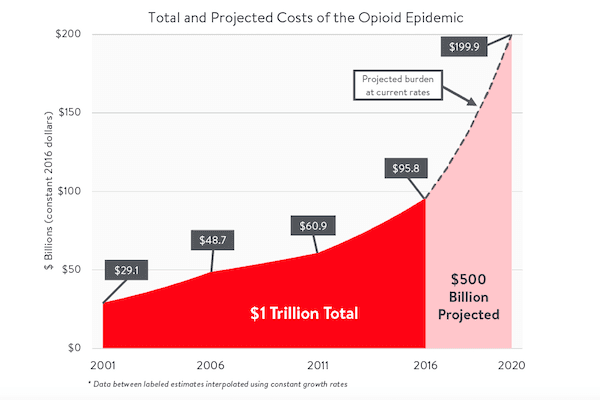
    Though this is a setback in the efforts of the plaintiffs to recoup the many billions of dollars spent to mitigate and combat the opioid crisis, appeals are already being considered.


    Source: ALTARUM

    The lawsuits in Connecticut are only a part of a nationwide effort to make pharmaceutical companies pay for a portion of the damage caused by this crisis. States, cities, counties and Native American tribal councils across the country are filing civil suits against some of the biggest drug manufacturers, claiming that misleading advertising and the alleged encouragement of physicians to over-prescribe opioids have fueled the epidemic of addiction and overdoses.

    According to Forbes, the collective action could become “the largest civil litigation settlement agreement in U.S. history.”

    The record is currently held by the settlement between 46 states and the tobacco industry—a case that some are pointing to as a precedent for the present-day opioid lawsuits. However, experts have pointed out that there are marked differences between these two cases.

    Addiction to prescription opioids is often caused by misuse, whereas there is a clear link between using tobacco products as directed and illness. This makes it easier to blame addiction, overdose and other health concerns on the opioid users themselves.

    “Individual plaintiffs who have sued pharmaceutical companies over how opioids have been marketed have rarely been successful, according to Richard Ausness, a professor at the University of Kentucky College of Law,” wrote Alana Semuels for The Atlantic in 2017. “Courts have made clear that they believe that individual victims are largely responsible for their addiction.”

    However, drug makers have been successfully sued in the past, though many of the lawsuits were settled out of court for a small portion of company profits. Purdue and others have continued to deny any allegations of deceptive marketing or other roles in the opioid crisis.

    Purdue Pharma released a statement about Judge Moukawsher’s ruling, praising him for “applying the law” and vowing to “help address this public health challenge.”

    View the original article at thefix.com

  • "Heroin Spoon" Art Exhibit Re-Emerges In Boston

    "Heroin Spoon" Art Exhibit Re-Emerges In Boston

    The artwork was placed as a “gift” to Massachusetts Attorney General Maura Healey outside of the State House.

    The massive, 800-pound “heroin spoon” sculpture has re-emerged.

    This past June, the guerrilla art exhibit sat in front of Purdue Pharma headquarters in Stamford, Connecticut, for about two hours before it was hauled away by city workers.

    The spoon appears burnt and bent at the handle. The artist, Domenic Esposito, said the purpose of the massive symbol is to “protest and hold accountable the people who in our minds have created this epidemic that has killed close to 300,000 people.” Purdue Pharma is the maker of OxyContin.

    Gallery owner Fernando Louis Alvarez was arrested and charged with obstruction of free passage, a criminal misdemeanor. But a judge has since agreed to erase the charge from his record upon completion of one year’s probation.

    Last Friday (Oct. 26), the 10.5-foot-long sculpture re-appeared in front of the Massachusetts State House in Boston. But this time, the artwork was placed as a “gift” to Massachusetts Attorney General Maura Healey for her efforts in holding Big Pharma accountable for its part in fueling the opioid crisis.

    In June, the state of Massachusetts filed a lawsuit against Purdue Pharma, accusing the company of recklessly promoting its opioid painkillers “without regard to the very real risks of addiction, overdose and death.”

    The lawsuit is the first in the U.S. to name company executives. Many other states, cities and counties have sued Purdue Pharma as well.

    “Purdue peddled falsehoods to keep patients away from safer alternatives,” Healey stated in her complaint. “Even when Purdue knew people were addicted and dying, Purdue treated the patients and their doctors as ‘targets’ to sell more drugs.”

    A group of mothers who have lost children to drug overdose peacefully rallied beside the spoon sculpture on Friday.

    The artist Esposito has personally been affected by the opioid crisis. He described the toll that his brother Danny’s nearly 14-year addiction to heroin, which began with OxyContin and Percocet, had on his family.

    “My mom would call me in a panic… screaming she found another burnt spoon. This is a story thousands of families go through. He’s lucky to be alive,” he said according to the Hartford Courant.

    “The spoon has always been an albatross for my family,” he added. “It’s kind of an emotional symbol, a dark symbol for me.”

    View the original article at thefix.com

  • Purdue Pharma Accused Of Targeting Seniors For Oxy Sales

    Purdue Pharma Accused Of Targeting Seniors For Oxy Sales

    The lawsuit claims Purdue had salespeople downplay the harmful risks and side effects of OxyContin.

    Oregon’s Department of Justice claims that pharmacy giant, Purdue Pharma, lied to the state and misled customers to drive sales.

    Oregon Attorney General Ellen Rosenblum filed a lawsuit against Purdue Pharma on Thursday, accusing the company of lying to the Oregon State Board of Pharmacy to obtain permission to sell in Oregon, as well as targeting senior citizens with its products.

    The violations against a settlement with Oregon goes back 10 years, according to a June 27 filing. Rosenblum’s office is demanding Purdue submit to the terms of a 2007 settlement or risk legal consequences.

    In the Thursday filing, Rosenblum’s office is demanding Purdue Pharma pay $1 million and abide by a prohibition against marketing to Oregon’s senior citizens.

    According to the lawsuit, Purdue released misleading publications and had its salespeople downplay the harmful risks and side effects of OxyContin, and specifically targeted disabled and senior citizens.

    Purdue also stands accused of lying in its application to renew its license to sell OxyContin in Oregon, erroneously claiming that the company had not faced state or federal punishment. In the past, they’ve been made to pay fines, and some of its top executives faced charges related to the company’s OxyContin marketing practices.

    “Ten years later, it is clear Purdue has flouted the judgment and ignored the severe federal penalties,” reads the lawsuit.

    Advocates for substance abuse prevention lauded the move, praising it as holding pharma companies accountable, to push them to cooperate in combating the opioid epidemic.

    “My hope is that this action will help establish some accountability and bring them to the table to help solve this,” said Dwight Holton, CEO of Lines for Life. “They ought to be helping us and they haven’t been.”

    Representatives of Purdue, however, disagree with this assessment of the situation.

    “We vigorously deny the state’s allegations,” said Purdue spokesperson Robert Josephson, according to the Oregonian. “The state claims Purdue acted improperly by communicating with prescribers about scientific and medical information that FDA has expressly considered and continues to approve. We believe it is inappropriate for the state to substitute its judgment for the judgment of the regulatory, scientific and medical experts at FDA. We look forward to presenting our substantial defenses regarding this lawsuit.”

    Working to improve its image in the shadow of the opioid crisis, Purdue has eliminated 350 sales positions, closed its “speakers” program that paid doctors and other professionals to sing OxyContin’s praises, and reshuffled its efforts towards researching cancer-fighting drugs.

    However, the opioid crisis has already damaged the state. Oregon saw a spike in opioid-related deaths in this past year, with Oregon’s Jackson County seeing a 70% increase in such deaths in just the first quarter of this year.

    View the original article at thefix.com

  • OxyContin No Longer Covered By Some Insurers

    OxyContin No Longer Covered By Some Insurers

    “This is a whack-a-mole solution… I don’t believe we should be isolating one category of opioid versus another,” said one expert.

    Some insurers are taking a rather bold stand against the opioid crisis by refusing coverage of OxyContin, a popular brand-name opioid painkiller. 

    The decision, according to the Houston Chronicle, has drawn controversy as some people question whether refusing to cover one specific medication will really make a difference. 

    “This is a whack-a-mole solution,” James Langabeer, professor of emergency medicine at McGovern Medical School at UTHealth, told the Chronicle. “On the one hand, it’s good that the insurance industry is weighing in, but I don’t believe we should be isolating one category of opioid versus another.”

    OxyContin, a brand name for oxycodone, is manufactured by Purdue Pharma, a company that has faced a slew of federal lawsuits for its alleged role in fueling the current opioid crisis.

    One concern, Langabeer says, is that denying access to OxyContin won’t necessarily force individuals to stop abusing opioids. In fact, he says, some may even begin using heroin instead, as it’s cheaper and more accessible.

    The Chronicle reports that last week, Blue Cross and Blue Shield of Tennessee announced that it will discontinue coverage at the start of 2019, stating it was “drawing a line that we will not continue to pay for this.”

    Previously, Cigna and UnitedHealthcare also announced the same

    A Cigna spokeswoman told the Chronicle via email that Cigna will consider covering the medication in some situations if a doctor feels it is “medically necessary.” She added that those using the medication for hospice care or cancer treatment will be allowed to continue use.

    UnitedHealthcare ceased to cover OxyContin in employer-sponsored plans beginning January 2017, according to the Chronicle.

    “There are therapeutically equivalent, covered alternatives that can be used for pain indications,” a spokesman for UnitedHealthcare told the Chronicle via email.

    Cigna, as well as insurer Florida Blue, will be replacing OxyContin with Xtampza, which they claim is more difficult to abuse. 

    Purdue Pharma has not been silent as insurance companies have rolled out these decisions. The company, according to the Chronicle, argues that it has been working to make the medication harder to abuse. It has also accused insurers of supporting its competitors for “financial gain.”

    “These recent decisions by insurance companies limit prescribers’ options to help address the opioid crisis,” a company spokesman told the Chronicle via email. “Unfortunately, these decisions appear to be more about pharmaceutical rebates.”

    Katharine Neill Harris, a fellow in Drug Policy at Rice University’s Baker Institute of Public Policy, tells the Chronicle that she has mixed feelings about the involvement of insurers. 

    “They do have a role and I don’t think they have done enough yet,” she said. “The easiest way to say we’re doing something is by stopping covering a drug.”

    For Harris, a better alternative is for insurers and doctors to look into long-term solutions for chronic pain, such as physical therapy.

    View the original article at thefix.com

  • Former Purdue Pharma Exec May Profit From Opioid Addiction Drug

    Former Purdue Pharma Exec May Profit From Opioid Addiction Drug

    Richard Sackler’s involvement with a new formulation of buprenorphine has drawn a wave of criticism. 

    A new formulation of buprenorphine, a medication used to treat opioid addiction, is due to hit the market—but some have taken issue with one of the inventors’ ties to Purdue Pharma, the maker of OxyContin.

    Richard Sackler is listed as one of six inventors on a patent for a new formulation of buprenorphine issued in January, the Financial Times reported. Sackler is also the former chairman and president of Purdue Pharma, according to the Washington Post, and the son of Raymond Sackler, one of the company’s founders.

    Purdue Pharma is the target of more than 1,000 lawsuits from cities, states, counties and tribes across the United States. The pharmaceutical giant and maker of OxyContin is accused of exaggerating the benefits and downplaying the risk of the opioid painkiller, and fueling the national opioid addiction epidemic.

    “It’s reprehensible what Purdue Pharma has done to our public health,” says Luke Nasta, director of Camelot, a New York-based treatment center. The Sacklers “shouldn’t be allowed to peddle any more synthetic opiates—and that includes opioid substitutes.”

    According to the patent, unlike the tablet or film formulation that’s currently available, the new drug will come in a fast-dissolving wafer that is placed under the tongue.

    According to the inventors, the fast-dissolving formula will make it less likely for the drug to be abused and sold on the black market.

    Colorado recently added to the mounting lawsuits against Purdue Pharma—accusing the company of playing a “significant role in causing the opioid epidemic.”

    “Purdue’s habit-forming medications coupled with their reckless marketing have robbed children of their parents, families of their sons and daughters, and destroyed the lives of our friends, neighbors, and co-workers,” said state Attorney General Cynthia Coffman in a statement. “While no amount of money can bring back our loved ones, it can compensate for the enormous costs brought about by Purdue’s intentional misconduct.”

    Members of the otherwise little known Sackler family have come to light for their ties to Purdue Pharma.

    This past March, a group of about 50 people came together at the Metropolitan Museum of Art in New York City to protest members of the Sackler family’s alleged involvement in perpetuating opioid abuse. Led by artist Nan Goldin, the protestors threw pill bottles marked “OxyContin” into the reflecting pool in the Sackler Wing of the museum, named for the family’s contributions to the museum.

    The family has donated millions of dollars to arts institutions like the Met over the years.

    View the original article at thefix.com

  • New York Sues Purdue Pharma Over Opioid Marketing

    New York Sues Purdue Pharma Over Opioid Marketing

    New York plans to work with other states that are investigating opioid manufacturers and distributors in the US.

    This week, New York became the 27th state to sue Purdue Pharma, a producer of OxyContin, for alleged fraud and deception in its marketing of opioids.

    The Wall Street Journal reported that Purdue is the only defendant listed in the lawsuit, driven by the administration under Governor Andrew Cuomo and New York Attorney General Barbara Underwood.

    The complaint was filed in Suffolk County Supreme Court and charged that a community flooded with opioids has been devastated while Purdue has increased profits and prescriptions.

    The suit charges that as of 2016, over 75% of New York’s opioid overdose deaths were caused by painkillers which include Purdue’s product, OxyContin.

    Governor Cuomo was quoted in Insurance Journal as saying, “The opioid epidemic was manufactured by unscrupulous distributors who developed a $400 billion industry pumping human misery into our communities. This lawsuit sends a clear message (to those) who mislead the public to increase their profit margins that we will hold you accountable.”

    Purdue released a response which called New York’s allegations false, while citing that the company also shares the state’s concerns about the opioid crisis.  

    Purdue noted that the U.S. Food and Drug Administration (FDA) “continues to approve” of scientific and medical information it provides to physicians.

    In the suit, New York is seeking civil fines to be levied against Purdue. The state asks to recoup profits the drug company has made and pay fines for what they allege in the Insurance Journal is “criminal nuisance.”

    In 2007, Purdue and three executives pleaded guilty to misbranding OxyContin. The company was charged with $634.5 million after a U.S. Department of Justice investigation.

    The New York lawsuit against Purdue is part of a trend; a number of U.S. states are suing opioid makers and distributors over opioid marketing.

    New York joined 26 other states, and Puerto Rico, in suing Purdue over their allegedly deceptive opioid marketing practices and the resulting health crisis.

    Cuomo released a statement published in the Wall Street Journal that the country is fed up with the practice of pharmaceutical companies purposefully creating addiction for the purpose of profit.

    Barbara Underwood in the Wall Street Journal said that the complaint is only New York’s first step toward holding pharmaceutical companies responsible. “Our work won’t stop with this lawsuit,” she said.

    New York plans to work with other states to investigate United States opioid manufacturers and distributors.

    View the original article at thefix.com

  • New Book "Dopesick" Explores The Opioid Crisis From All Angles

    New Book "Dopesick" Explores The Opioid Crisis From All Angles

    “My goal with this book was not to just show you how we got here and what it’s going to take to get out of it but also to inspire people to care,” says author Beth Macy.

    Journalist Beth Macy set out with a mission: to address the opioid epidemic from every possible angle. 

    In her new book, Dopesick: Dealers, Doctors and the Drug Company that Addicted America, she does that through examining the opioid epidemic from the very beginning to its current state. 

    According to NPR, Macy begins the book by detailing the story of Jesse, a 19-year-old whose struggles began with pills and ended with heroin. Jesse is one of the many lives taken at the hands of the opioid crisis.

    “He was one of these rambunctious kids who rarely napped,” Macy told NPR. “As a little boy, he would fall asleep with toys still in his hands. And early on, they put him on ADHD medication. He also had some football and snowboarding injuries when he was 15 and 16 and was prescribed opioid painkillers then.

    “His mother isn’t exactly sure at what point he became hooked, at what point he realized he was dope sick. But he knew he could trade his ADHD medicine for the opioid pills. And one thing led to another. When the pills got harder to get because of doctors cracking down on prescribing, that’s when the heroin started coming in.”

    Initially, Macy tells CBS, Jesse’s mother was unaware of the depths her son’s use had gone to.

    “She said something else that I heard a lot, which is ‘I thought it was just pills,’ and it had progressed to heroin unbeknownst to her, and he never missed a day at work,” Macy told CBS.

    As journalists do, Macy comes at the opioid epidemic from all angles. Her book also details her conversations with a drug dealer named Ronnie Jones, who “ran one of the largest heroin rings in the mid-Atlantic region,” according to NPR.

    Jones had tried a few times to recreate his life after spending time in jail, but with little luck.

    “Ronnie’s story illustrates how little we do for felons trying to re-enter our society. You know, we don’t make it easy for them to get jobs,” Macy told NPR. “They often come out, and they owe lots of fines. And he tries to go legit. And he ends up—you know, he starts out selling weed again, which he had been selling before. But meanwhile, since he’s been in prison, this opioid thing has exploded. And somebody tells him in the break room of George’s Chicken, hey, man, if you want to make the real money, you need to be bringing heroin in.”

    Also in her book, Macy examines the role that Purdue Pharma (the manufacturer of OxyContin) has played in the epidemic. She states that when Purdue introduced OxyContin, it was marketed as being more safe than other painkillers because of its 12-hour time release mechanism.

    For the past three years, Macy says, she has been following Google alerts for articles pertaining to the opioid crisis. However, she says, none of them addressed every angle of the crisis as she hoped to.

    “Each of them only deal with a little piece of something going on right now,” she tells NPR. “And my goal with this book was not to just show you how we got here and what it’s going to take to get out of it, but also to inspire people to care. And I really hope that that’s what I’ve done.”

    View the original article at thefix.com