Author: The Fix

  • 1,000-Year-Old Psychedelic Drug Kit Discovered By Archaeologists

    1,000-Year-Old Psychedelic Drug Kit Discovered By Archaeologists

    The “ritual bundle” contained ayahuasca ingredients and traces of cocaine.

    An ancient ritual bundle recovered in Bolivia shows that people having been using psychoactive drugs for millennia. 

    The bundle contained harmine and dimethyltryptamine (DMT), the two primary ingredients of ayahuasca, according to research published in the Proceedings of the National Academy of Sciences. Ayahuasca, which causes people to hallucinate and vomit, has become a popular drug with spiritual adventurers who extol its supposed health benefits. 

    “Our findings support the idea that people have been using these powerful plants for at least 1,000 years, combining them to go on a psychedelic journey, and that ayahuasca use may have roots in antiquity,” said archaeologist Melanie Miller, of the University of California, Berkeley, who led the team of researchers who analyzed the bundle. 

    “This is the first evidence of ancient South Americans potentially combining different medicinal plants to produce a powerful substance like ayahuasca,” Miller said. 

    In addition to the ingredients in ayahuasca, the bundle also contained traces of cocaine. The bundle, which was made from three fox snouts sewn together, contained spatulas and spoons for snorting drugs. Miller said that it was likely used by a shaman or someone who worked with medicinal plants. The team believes the pouch is from the Tiwanaku, a pre-Inca civilization that “dominated the southern Andean highlands from about 550 to 950 A.D.”

    Miller said the pouch was “the most amazing artifact I’ve had the privilege to work with.”

    She said, “A lot of these plants, if consumed in the wrong dosage, could be very poisonous, so, whoever owned this bundle would need to have had great knowledge and skills about how to use these plants, and how and where to procure them.”

    Miller said that the properties that make ayahuasca popular today likely made it important to the ancients. 

    “The tryptamine DMT produces strong, vivid hallucinations that can last from minutes to an hour, but combined with harmine, you can have prolonged out-of-body altered states of consciousness with altered perceptions of time and of the self,” she said.

    The bundle was initially found in a cave site by archeologists from Bolivia and Pennsylvania State University. Those archeologists contacted Miller to help identify the contents of the bundle and to assist with the final excavation. Because of the altitude where the bundle was found it was in good condition. 

    “We were amazed to see the incredible preservation of these compounds in this ritual bundle,” said Miller. “I feel very lucky to have been a part of this research.”

    View the original article at thefix.com

  • Experimental Brain Implant To Curb Addiction Being Tested In China

    Experimental Brain Implant To Curb Addiction Being Tested In China

    Doctors in China have already completed multiple case studies on this treatment with varied results. 

    Researchers in China have been testing deep brain stimulation (DBS) on human subjects as a possible way to treat addiction, including to opioids, according to a report by the Associated Press.

    The process includes drilling holes into the skull in order to place electrodes in the brain that electrically stimulate the nucleus accumbens, which scientists believe are involved in addiction, in a fashion similar to a pacemaker.

    DBS has been used successfully to treat movement disorders like Parkinson’s disease, but results in the treatment of addiction have been mixed. Due to the complex nature of addiction disorders and ethical restrictions on such a radical therapy, as well as the high costs, human trials on DBS for addiction have been slow to come to the U.S.

    Two large-scale trials conducted five years ago in the U.S. for the treatment of depression failed, causing researchers to essentially start over in regards to their understanding of DBS for mental illness.

    “We’ve had a reset in the field,” said UCLA neurosurgeon Dr. Nader Pouratian. Despite the urgency around finding effective treatments for opioid addiction as overdose death rates have skyrocketed in recent years, Pouratian believes testing DBS treatment for the disorder should only be green-lit “if we can move forward in ethical, well-informed, well-designed studies.”

    In China, where ethical standards for medical testing are not as strict as they are in the U.S., doctors have already completed multiple case studies on this treatment with varied results. One patient fatally overdosed on heroin three months after receiving the brain implant. Others have remained sober for years.

    The AP report focuses on “Yan,” a young Chinese man who has been struggling with meth addiction for years and has relapsed multiple times after stints in rehab. When given the option, he jumped at the chance to receive the DBS surgery. He had already lost his job and his family to his addiction and feels that he has weak willpower.

    After getting the brain implant, doctors inserted a battery into Yan’s chest to power the device. With the press of a button, his doctor has been able to change his mood from happy to agitated and back. 

    “This machine is pretty magical,” Yan says. “He adjusts it to make you happy and you’re happy, to make you nervous and you’re nervous. It controls your happiness, anger, grief and joy.”

    Yan has been sober for six months after the surgery and reported being able to refuse drugs when offered. 

    Back in the U.S., the FDA has green-lit a single small human trial testing the use of DBS for opioid addiction, which is tentatively scheduled to begin in June at the West Virginia University Rockefeller Neuroscience Institute.

    “People are dying,” said the leader of the study Dr. Ali Rezai. “Their lives are devastated. It’s a brain issue. We need to explore all options.”

    View the original article at thefix.com

  • Inside Mexico’s Plan To Decriminalize Drugs

    Inside Mexico’s Plan To Decriminalize Drugs

    President Andrés Manuel López Obrador’s wants the country to treat drug use as a health issue rather than a crime. 

    Mexico’s president has given his firm endorsement of decriminalizing drugs, Forbes reported.

    President Andrés Manuel López Obrador recently unveiled his National Development Plan for 2019-2024, which includes a plan for decriminalizing all drugs including heroin and cocaine.

    The president unequivocally acknowledged the failure of the “war on drugs,” and the need for a wholly different approach. By decriminalizing drugs, it would be treated as a health issue rather than a crime.

    “The only real possibility of reducing the levels of drug consumption is to lift the ban on those that are currently illegal, and redirect the resources currently destined to combat their transfer and apply them in programs—massive, but personalized—of reinsertion and detoxification,” Obrador said in his policy statement.

    Arrests would be replaced by “enforced medical treatments,” Forbes reported.

    When the drug war was escalated under former President Felipe Calderón, violence escalated as well. In 2006, Calderón deployed 6,500 soldiers to fight drug traffickers. This resulted in an estimated 150,000 deaths attributed to organized gang killings, according to a 2018 report by the Congressional Research Service.

    Neither drug trafficking nor drug use have declined over the past decade but instead have risen to record levels, according to a report by the International Drug Policy Consortium.

    “Public safety strategies applied by previous administrations have been catastrophic: far from resolving or mitigating the catastrophe has sharpened it,” said Obrador.

    The war on drugs approach is “unsustainable” for many reasons, said the president. It is bad for public safety and for public health. “Worse still, the prohibitionist model inevitably criminalizes consumers and reduces their odds of social reintegration and rehabilitation.”

    It is “conceivable” that legislation will be drafted to make Obrador’s proposal a reality in the coming year, according to Marijuana Moment.

    While Obrador’s plan may seem “radical,” Mexico would not be the first country to decriminalize drugs. Nor would it be the first time the country attempted to reform its drug policy in this manner.

    In 2009, under Calderón, Mexico decriminalized small amounts of drugs including marijuana, cocaine, heroin, LSD and methamphetamine.

    However, the policy “achieved little in practice,” according to a 2014 report from the Research Consortium on Drugs and the Law. Why? The maximum limits for personal use set by the law were too small to make a real difference—5 grams was the legal limit for marijuana, half a gram for cocaine, 50 milligrams for heroin, 40 mg for meth and 0.015 mg for LSD. The policy resulted in “little more than quasi-decriminalization,” Talking Drugs reported at the time.

    Mexico, one gateway for illegal drugs destined for the U.S., has seen firsthand the brutal violence associated with the lucrative drug market that the U.S. offers. As a result, the country is finally acknowledging the need to break the status quo. 

    The past several Mexican presidents—Enrique Peña Nieto, Vicente Fox and even Calderón—have acknowledged the failure of the war on drugs. 

    View the original article at thefix.com

  • NBA Star Kevin Love Talks Anxiety, His First Panic Attack

    NBA Star Kevin Love Talks Anxiety, His First Panic Attack

    Love described having his first panic attack to Men’s Health.

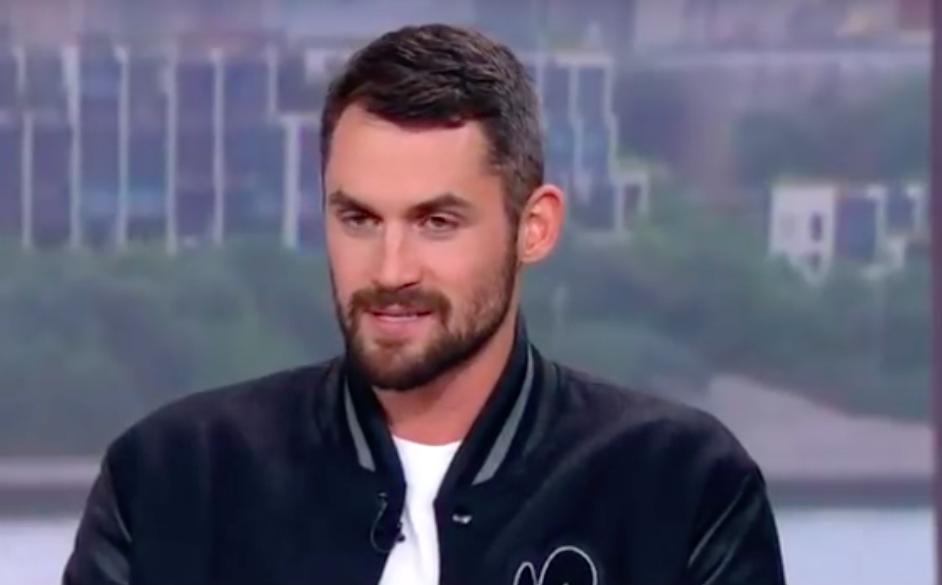
    Kevin Love is the five-time All-Star forward of the Cleveland Cavaliers who helped lead the team in winning a 2016 NBA championship. Since suffering a panic attack during a game, Love has also been an outspoken advocate for mental health awareness.

    Love can remember the exact date he had his panic attack, November 5, 2017, right after halftime during a game against the Atlanta Hawks. He told Men’s Health, “I couldn’t catch my breath. I was sticking my hand down my throat, trying to clear my air passage. I thought I was having a heart attack and ended up unconscious on the floor of our head trainer’s office.”

    At one point, Love thought “this could be it,” that he was actually dying, but then he also became terrified that his teammates would think he was “not reliable,” and he kept his anxiety attack a secret.

    As Love recalled to The Player’s Tribune, his panic attack “came out of nowhere. I’d never had one before. I didn’t even know if they were real. But it was real—as real as a broken hand or a sprained ankle. Since that day, almost everything about the way I think about my mental health has changed.”

    Love said that when he was younger, “You figure out really quickly how a boy is supposed to act… It’s like a playbook: Be strong. Don’t talk about your feelings. Get through it on your own. So for 29 years of my life, I followed that playbook. These values about men and toughness are so ordinary that they’re everywhere… and invisible at the same time, surrounding us like air or water. They’re a lot like depression or anxiety in that way.”

    Love has since learned to face his anxiety through therapy, spending time with his dog, taking medication and practicing meditation. He has also launched The Kevin Love Fund, a charity that works in tandem with the Movember Foundation and Just Keep Livin.

    “These superheroes that we look at, whether it be somebody in the entertainment industry or an athlete, we also have these layers that we deal with on a daily basis. Know that you’re not alone. You’re not different. You’re not weird. And we can do this stuff together,” said Love.

    View the original article at thefix.com

  • Famous San Francisco Neighborhood Grapples With Drug Dealing

    Famous San Francisco Neighborhood Grapples With Drug Dealing

    Tackling drug dealing in the Tenderloin district cost the city more than $12.5 million from 2017-2018.

    San Francisco is home to the priciest apartment rental market in the country—but it is also home to “widespread and endemic” drug dealing relegated to the city’s poorer neighborhoods.

    A report by the SF budget and legislative analyst revealed details of drug dealing activity in the Bay Area, particularly in San Francisco’s Tenderloin district where more than half of drug arrests were made from 2017-2018.

    Of 883 people who were arrested or cited in San Francisco for selling drugs during that time period, 56% were from Tenderloin, according to the report.

    “There are dozens of people selling drugs at any given hour, including around our parks and schools and in the neighborhood,” said district supervisor Matt Haney, who represents Tenderloin.

    Haney held a Board of Supervisors hearing in April to discuss the drug problem in Tenderloin, Mid-Market and South of Market—which are all within Haney’s District 6. Haney acknowledged that “what we’re doing right now is not working,” hoping to develop a “comprehensive citywide strategy” that is currently lacking.

    “I’m not saying that people need to get a long-term prison sentence,” Haney said. “But each arrest costs us something like $10,000, so when we do arrest someone we should be smarter about what happens next.”

    According to the report, tackling drug dealing in Tenderloin, South of Market and Mid-Market cost the city more than $12.5 million from 2017-2018.

    Prosecutors say that “current sentencing practices do not deter” drug sellers from returning to their posts—which has resulted in what SF Chronicle has called a “revolving door of drug dealers.”

    As The Chronicle reported, “Prosecutors… say it takes an average of 244 days—about eight months—for a felony like selling drugs to make its way through the courts. Often as not, the suspected dealers are released by a judge pending the outcome of their cases. And just as often, the dealers head back to the Tenderloin and start selling drugs again.”

    Of 173 convictions cited in the report, 80.3% (or 139) of them received probation with some time served while just 18.5% (or 32) received longer sentencing.

    “Most of the people arrested or convicted get probation, which begs the question, How can we make probation effective and not have these guys go right back on the street?” said Haney.

    View the original article at thefix.com

  • Pin Project Helps Servers Tell People They’re Abstaining From Alcohol

    Pin Project Helps Servers Tell People They’re Abstaining From Alcohol

    The pin initiative allows servers to nonverbally communicate to coworkers and patrons that they won’t be drinking during a shift.

    For people working behind a bar, drinking during a shift can be a way to socialize with colleagues, keep patrons happy and keep work fun. However, one sober bartender wants to make it easier for servers to let people know that they’re not drinking that shift, with no messy explanations. 

    Mark Goodwin, who has been sober for 10 months, founded The Pin Project as a way for servers to send a signal to their communities. The small pins that he will soon be selling for $15 tell coworkers and patrons that a server won’t be drinking during that shift.

    “Bartenders are surrounded by alcohol, but we rarely talk about that as putting ourselves in a risky situation,” Goodwin told Vinepair. “For some of us, it really is.”

    However, the pin isn’t just for people in recovery—it’s for anyone who wants to pass up drinking for their shift for any reason. This aspect is very important, Goodwin said. 

    “It’s not a sobriety token,” he said. Rather, the pins “let the people around you know that you’re making a choice not to imbibe that shift… You could be on antibiotics, or you might have to pick someone up from the airport, or maybe you have a substance problem.”

    Everyone can use the pin to steer their own relationship with alcohol at work, without intrusive questions. “You could put the pin on and wear it forever,” Goodwin said. “But what’s really important is that it’s now.”

    The Pin Project received a grant in 2018 from Tales of the Cocktail Foundation, which supports service industry workers. 

    “Whether it’s just a night off, or many nights off, we hope The Pin Project helps bartenders (and patrons alike) remove the stigmas around not drinking,” said the organization’s Executive Director Caroline Rosen. 

    The Bay Area is the first region where Goodwin will promote the pins, but he hopes to have the initiative take off in other major cities as well. Half of the proceeds will go toward funding the Pin Foundation, which will support counseling and mental health services for hospitality workers. 

    Goodwin knows that making the pins mainstream will take a lot of effort. “There’s a lot of work left to do,” he said. 

    However, he is hopeful that the Pin Project will make it easier to talk about not drinking in the heart of the nightlife scene, and he is happy to see the positive response that the initiative has received thus far. 

    “I’m really honored and humbled to see people taking interest in this little idea that started over a couple of hungover breakfasts,” he said.

    View the original article at thefix.com

  • How I Stopped Hurting Myself in the Name of Love: Tales of a Recovering Enabler

    How I Stopped Hurting Myself in the Name of Love: Tales of a Recovering Enabler

    The emotional and physical abuse had cost me every last ounce of self-respect I had. But I refused to see myself as weak, a victim.

    John is escorted into the courthouse wearing a dirty ochre jumpsuit, cuffed at both the wrists and ankles. He looks straight at me in the wing and then quickly lowers his eyes, while I follow him boldly with my gaze, as if this is a staring contest I intend to win.

    I notice the public defender right away, a small bald man who pulls his briefcase behind him like a suitcase. He is wiry and can’t sit still, either hopped up on coffee or cocaine. The district attorney has instructed me not to get emotional. “This is just a hearing,” she says, “there’s no jury yet, and judges don’t like it when you seem like an unreliable narrator.”

    I roll my eyes. “I’m not going to get emotional,” I say, “It’s not my thing.” She tells me she has seen public defenders get hostile, make accusations, try strategies to get a victim discombobulated, to contradict herself, to look mentally unstable.

    Not me.

    When I received the subpoena to testify, I was also given a victim’s packet, a small handful of pamphlets informing me of shelters, therapists, and resources available to petition for restitution. I threw them away. I refuse to be a victim.

    They call me Jane Doe and I am satisfied with this identity. I would rather be anyone than who I am: a survivor of his raging chaos, the predictable woman who positions herself as collateral damage in a psychodrama in which she envisions herself the savior. I internally restructure my story to cast myself as a resilient hero, an arbiter of the complicated events of my life that have somehow made me stronger, clearer, more potent in my circuitous journey.

    I tell myself John was an opponent, not my perpetrator. A perpetrator is an illusion, a false dichotomy of black and white hats. He didn’t beat me up, I beat myself up. He was my sparring partner, and I wanted to know my weaknesses and where to grow stronger. Like Clouseau with Cato, I gave him access to my home, my body, my mindset, my skill-set. I gave him my weapons and the keys to my personal kingdom. I asked him not to use them against me, but God knew we would eat of the fruit and gave us access to it anyway.

    I run through the ways I never trusted John, as this is proof that I couldn’t have been betrayed. Either I don’t believe I deserve happiness, or I generated my own ultramarathon training session. I suspect it’s the former, but I try to convince myself it’s the latter. I may lose a battle, but I won’t lose the war. I repeat this to myself as I sit in the DA’s office, waiting to be called to the stand.

    “Did anything the defendant do frighten you?” she asks.

    Very little the defendant has done the past four years has not frightened me. To be more precise, the emotional and physical abuse have cost me every last ounce of self-respect I had. But I refuse to see myself as weak, a victim.

    “No.”

    She doesn’t shake her head in disgust, but rather acquiesces, as if she has seen this over and over.

    ***

    The first time John broke into my home, I was at work. When I got home, he was on the balcony with a kitchen knife he’d used to cut his hair. When he saw me, he pressed the knife to his throat, just slightly, to make an indentation without blood. He stared at me until my fear softened to compassion. I hadn’t seen him in months, but I didn’t call the police. I just calmly talked him down the stairs, as if he were a negligent child, and reminded him that he could have seriously hurt someone. I politely asked him to please not break in again.

    “Okay,” he said.

    When his mom hadn’t heard from him in over ten days, she called me to ask for help. I researched addiction symptoms online, and searched local arrest records until I found him. Since his arrest had nothing to do with me, I convinced myself I could be of service and made an appointment to visit him in West Valley Detention Center. The weeks that followed were a jumble of court proceedings and miscommunications.

    He was released in less than a month with a misdemeanor and a punch card for Narcotics Anonymous meetings.

    I saw him as the victim of a system that didn’t understand his illness and I was defensive and proactively defiant. I spent his first night out of custody in a motel room with him, nurturing his wounded spirit.

    Then I helped him get his car out of impound, let him borrow money, helped him get medications and appointments, helped him get back into school and into a part-time job, and genuinely believed we would fight the madness with surefooted logic and love.

    No matter how deep into the rabbit hole of illness he descended, through the drinking, cocaine and hallucinogens, and even when his numerous arrests would sometimes lead to jail and eventually prison, nothing shook my loyalty.

    “I love you,” I reassured him, “As long as you exist in any form, anywhere, I will find you. I will always come to you. Wherever you are, I will be there. There is nowhere I won’t look. In life or in death, I will come for you.”

    And I meant it. I loved John irrationally, with an intensity I didn’t have for myself or my well-being. I loved him in all the ways no one loved me, and I nurtured his brokenness like I wish someone had nurtured mine. I couldn’t go back and hold myself as a little girl, so I clung to him, and to the idea of rescuing him.

    I didn’t ask him to change, I didn’t even know what change would look like. I loved him without regard to what he did. I loved every muscle and hair on his body, every nuance of his mouth: the way it silently shook instead of making noise when he laughed, the wide sardonic grin, and even pursed with displeasure. I loved his deep voice and his dramatic anger, louder and more direct than anything I am or could ever display.

    I loved him for his ability to fall apart.

    When he broke into my home again, the consequences were more dire.

    ***

    After John was convicted, I broke all communication with him and got myself into therapy. After the hearing, the judge insisted on a protective order for me and my children. Shaking, I took the papers into the bathroom and looked at myself in the mirror, a skeleton of a woman, 25 pounds thinner than I was when I was first subpoenaed. I didn’t recognize the frail woman looking back at me. All I knew is that I needed to change.

    I was raised to turn the other cheek. If someone takes your cloak, give him your shirt. If he imposes on you for one mile, go with him two.

    My mother taught me if a man tries to abduct you, pretend you adore him, and you won’t get hurt. I never fought back. I was raised to respond to aggression with a smile.

    I was drawn to people with addictions the way I am drawn to sugar, metabolizing them quickly and easily, with a counterintuitive calm. I was drawn to the way they let me play a supporting role in their life drama, so I didn’t have to recognize my own drama. With someone chaotic and wild and suffering, I didn’t have to think about myself. There was always somewhere to hide.

    I thought turning the other cheek made me a good person. I didn’t care how many slaps that got me or how much it hurt. I just kept turning the other cheek.

    My therapist recommended a daily yoga practice, so I began the journey of learning to listen to and trust my body. Through yoga, I learned to pay attention to my body. I began to recognize I could feel, and that I did feel, and I learned to be more honest with myself about the trauma lodged in my body.

    Before yoga, I didn’t even recognize trauma.

    It took sitting in my pain, rather than working to fix everyone else’s, to teach me to pay attention to my own needs. The process started with breathing mindfully, and then moving mindfully. Eventually I learned to feel my body, then recognize its pain, and eventually, recognize desire.

    I am a recovering enabler. I had to unlearn self-abnegation to understand that you can’t really be empathetic until you know where you end and someone else begins.

    Meeting my own needs serves as an example for others to meet theirs. When we show compassion and care for ourselves, we give others in our lives implicit permission to find wholeness in themselves, without needing or relying on us.

    Now I begin every morning with sitting in stillness, listening to my body, and paying attention to what comes up, even if it’s painful. Especially if it’s painful. Since I’ve committed to this daily spiritual practice of ruthless self-honesty, I haven’t had time to rescue anyone else. I have enough to rescue right here.

    Listening to the wisdom of my body has healed the cognitive dissonance once lodged in my psyche. I can now talk lovingly to the demons inside, rather than projecting them onto other people, trying to heal in others what I didn’t know was wrong in myself.

    Letting someone hurt you in the name of love hurts them too.

    Before we can be in a healthy relationship with another, we need to be self-aware enough to know who we are, and to identify what we want and don’t want. And we can’t do that when we spend all our time running around trying to fix other people.

    I no longer want to be anyone’s light or hope or savior. Now, I’m committed to being my own best friend.

    View the original article at thefix.com

  • Elizabeth Warren Outlines Opioid Response Plan

    Elizabeth Warren Outlines Opioid Response Plan

    Warren says an aggressive response is needed to turn the tide on the opioid epidemic. 

    If she is elected President of the United States, Senator Elizabeth Warren (D-MA) will spend $100 billion on responding to the opioids crisis, she said in a post on Medium

    Warren’s plan is an updated version of the CARE Act, which she introduced along with Rep. Elijah Cummings (D-MD). The legislation never gained much traction, but Warren said that an aggressive response is needed to turn the tide on the opioid epidemic. 

    Warren compared her opioid response plan to the Ryan White CARE Act, which funded a national response to the HIV/AIDS epidemic and ultimately helped to bring down the death rate.  

    “This is not the first time our country has faced a national public health crisis of great magnitude. When deaths from HIV/AIDS grew rapidly in the 1980s, our country’s medical system was ill-equipped to respond,” Warren wrote. “In 1990, Congress passed the Ryan White CARE Act, which finally provided significant new, guaranteed funding to help state and local governments combat the growing epidemic and provided a safety net for those living with the disease. A similar national mobilization is needed to confront the opioid epidemic today.”

    Warren said that her plan would provide “resources directly to first responders, public health departments, and communities on the front lines of this crisis — so that they have the resources to provide prevention, treatment, and recovery services for those who need it most.”

    The funds would be distributed over 10 years to governments and nonprofits that are working to respond to the opioid epidemic. However, organizations would be given leeway to use the funding in the way that they believe would be most effective. 

    “Resources would be used to support the whole continuum of care, from early intervention for those at risk for addiction, to harm reduction for those struggling with addiction, to long-term support services for those in recovery,” Warren wrote. “Along with addiction treatment, the CARE Act would ensure access to mental health services and help provide critical wraparound services like housing support and medical transportation for those who need them.”

    In addition to crafting a proactive response, Warren said that she would like to see the executives of companies that have contributed to the opioid epidemic held criminally responsible. 

    “The opioid epidemic teaches us that too often in America today, if you have money and power, you can take advantage of everyone else without consequence. I think it’s time to change that,” she wrote. 

    She continued, “Rather than blaming the victims, we need to make sure a crisis like this never happens again.”

    View the original article at thefix.com

  • Screening Job Applicants For Marijuana Use Is Now Against The Law In NYC

    Screening Job Applicants For Marijuana Use Is Now Against The Law In NYC

    NYC is the first jurisdiction in the U.S. to explicitly prohibit this practice.

    Most New York City employers can no longer require a marijuana test from job applicants as a condition of employment. The new law, which the City Council “overwhelmingly” passed in April with a 40-4 vote, will take effect in May 2020.

    “If we want to be a progressive city, we have to really put these things into action,” bill sponsor and NYC public advocate Jumaane D. Williams said at the time.

    NYC is the first jurisdiction in the U.S. to explicitly prohibit this practice.

    While Mayor Bill de Blasio had said that he would sign the legislation—calling it a “healthy step” and “part of how we change our culture to be less punitive and exclusionary”—he ultimately did not sign.

    Marijuana Moment reports that it is “unclear what changed” between then and now. Regardless, the law will take effect in one year.

    The bill’s text reads: “[E]xcept as otherwise provided by law, it shall be an unlawful discriminatory practice for an employer, labor organization, employment agency, or agent thereof to require a prospective employee to submit to testing for the presence of tetrahydrocannabinols or marijuana in such prospective employee’s system as a condition of employment.”

    Certain occupations—“safety and security sensitive jobs”—are exempt from the rule including construction, law enforcement, child care, medical care, truck driving and aviation.

    Federal or state employees and government contractors are also exempt as they do not fall under the city’s jurisdiction. Employers may also test workers if they appear to be under the influence of marijuana at work.

    Williams, who authored the legislation, says the city will not wait for the state government to legalize marijuana for it to start reforming marijuana policies. “NYC must lead the way on this issue,” he stated.

    New York’s efforts to legalize marijuana for recreational use have lost momentum ahead of the time remaining in New York’s legislative session.

    The New York Times notes that while it is still possible for the state to “legalize it” by late June, it’s unclear whether NY lawmakers have finally come to agree on the details of the marijuana legalization initiative.

    “It’s clear that we cannot wait until legalization on the state level before moving to reduce the impact that marijuana prohibition has had on individuals and communities,” said Williams. “Testing isn’t a deterrent to using marijuana, it’s an impediment to opportunity that dates back to the Reagan era—a war on drugs measure that’s now a war on workers. We need to be creating more access points for employment, not less—and if prospective employers aren’t testing for past alcohol usage, marijuana should be no different.”

    If legalization does not happen this year, the state is planning to expand its medical marijuana program, NYT reported.

    View the original article at thefix.com

  • Pot-Smuggling Arrests at LAX Up 166% Since Legalization

    Pot-Smuggling Arrests at LAX Up 166% Since Legalization

    Arrests at California’s busiest airport rose to 101 in 2018, up from 38 in 2017. 

    The Los Angeles Times has reported that drug trafficking arrests at Los Angeles International Airport (LAX) have surged 166% since the state legalized recreational marijuana in 2018.

    Arrests at LAX, which is the busiest airport in the state of California, saw 101 trafficking arrests in 2018, up from 38 in 2017. Other California airports, including Oakland and Sacramento, are reporting similar increases.

    But while it’s legal to carry up to 28.5 grams of marijuana at LAX, travelers may run afoul of Transportation Security Administration (TSA) agents, who as federal employees must uphold the federal government’s prohibitive stance towards marijuana.

    The Sacramento Bee outlined the issue in its coverage of the Times‘ reporting. Per LAX policy, travelers are allowed to carry 28.5 grams of marijuana and 8 grams of concentrated marijuana for personal consumption.

    The Bee quoted Los Angeles Airport Police spokesperson Alicia Hernandez who said, “We’re not going to arrest you or confiscate marijuana.”

    However, since commercial planes fly through federal airspace, travelers must still check in with TSA agents at LAX and other California airports, and the rules that apply to airport police regarding marijuana are not the same for federal agents. “TSA can deny you coming through the checkpoint,” said Hernandez. “The checkpoint is their jurisdiction.”

    TSA spokesperson Lorie Dankers outlined the administration’s policy regarding marijuana in an email to the Bee. “TSA’s screening procedures, which are governed by federal law, are focused on security and are designed to detect potential threats to aviation and passengers.”

    So if TSA agents find marijuana on a traveler or in their luggage, they must refer the issue to local law enforcement, even if the state or country where the airport is located—or where the traveler is heading—allows legalized marijuana. From there, law enforcement will determine “whether or not the passenger is allowed to travel with marijuana.”

    Hernandez again asserted that travelers stopped by TSA at LAX will face no arrests. But as the Bee noted, missing a flight due to law enforcement intervention remains a possibility.

    To that end, LA City Councilman Mitch Englander has suggested the implementation of “amnesty boxes,” where travelers can deposit marijuana before entering a TSA checkpoint. McCarran International Airport in Las Vegas, Nevada has 20 such boxes available for travelers. 

    View the original article at thefix.com