Author: The Fix

  • "That's So Raven" Star Orlando Brown Enters Rehab

    "That's So Raven" Star Orlando Brown Enters Rehab

    Since his Disney days, Brown has battled substance use disorders and has had multiple run-ins with the law.

    Orlando Brown, former star of the Disney Channel’s That’s So Raven, has entered treatment for substance use disorders and mental health, after his Hollywood friends got together to stage an intervention on his behalf. 

    According to TMZ, Brown’s childhood friend, former Death Row artist Danny Boy, organized the intervention, which took place earlier this week. Danny Boy reportedly contacted producers Wendy Wheaton and Tommy Red, who helped connect Brown with a rehab. 

    Brown has a long history of trouble with the law, which seems to be connected to his substance use. In September, Brown was arrested for breaking into Danny Boy’s Las Vegas restaurant, Legends Restaurant & Venue.

    At the time, Danny Boy told TMZ that Brown had recently been released from the hospital and needed somewhere to stay, so Danny Boy said he could stay in the restaurant.

    However, Brown triggered security alarms by wandering around the kitchen and attempting to change the locks in the restaurant. Danny Boy notified the police, saying he believed that was the best way to get Brown the help he needed. 

    At the time, TMZ reported that Brown’s bail was set at $13,000 and he remained in jail. However, he made bail at some point, because on Sunday police were called to a hotel where Brown had been in an argument. That call didn’t result in an arrest, but it did prompt Danny Boy to organize the intervention that reportedly led to Brown getting treatment. 

    Since his Disney days, Brown has battled substance use disorder and has had multiple run-ins with the law. In 2014, a woman called police saying that Brown had showed up at her home and threatened her. 

    In the tape of the 911 call, a man is reportedly heard saying, ”Tell him Orlando Brown is crazy… I’ll kill you, your mama, your daughter, everybody… Come outside!”

    The woman told the dispatcher, ”I know him, we’re acquaintances… The other day, he made some passes at me — the boy is 28, I’m 40 — he made some sexual passes at me and I declined them, and now he’s upset. Bottom line. He’s a known actor and he’s a known alcoholic, and he sounds very intoxicated.”

    In 2016, Brown was arrested for being in possession of methamphetamine and assaulting his girlfriend. He was charged with possession of a drug with intent to sell, having contraband in jail (felonies) and misdemeanor domestic battery and obstruction of justice.

    View the original article at thefix.com

  • Beach Boys Singer: Trump Tried To Help Whitney Houston Get Sober

    Beach Boys Singer: Trump Tried To Help Whitney Houston Get Sober

    “You tried your best to help Whitney. And she’s not the only one you benefited and tried [to help],” said Beach Boys’ Mike Love at a White House event.

    When the late Whitney Houston was in the depths of her addiction, a few of her famous friends reached out and tried to help, like Clive Davis, the legendary label executive who signed her, and Kevin Costner, her Bodyguard co-star.

    And according to Beach Boys lead singer Mike Love, even Donald Trump offered to help during her time of need.

    As AOL reports, Love made this claim at a White House event celebrating the passing of the Music Modernization Act, which will revamp music licensing and royalties.

    At the podium, Love addressed the President: “People can say what they want, but you’ve always been a big supporter of some of the best music America ever made. I remember you tried your best to get Whitney Houston in some kind of shape.”

    Love then said that Trump and billionaire Revlon executive Ron Perelman tried to get Houston to see the light at an apparent intervention at Mar-a-Lago. “You tried your best to help Whitney. And she’s not the only one you benefited and tried [to help].”

    Trump and Houston were friendly in the past. Trump revealed on The Wendy Williams Show that he was a guest at Houston’s wedding to Bobby Brown and claimed the singer was a frequent guest at Mar-a-Lago.

    Trump said Houston sang for him “many times,” and he was heartbroken when her vocal abilities went downhill from drugs and alcohol.

    “It was very said,” Trump said. “It was certainly a different person in terms of that incredible voice, which was the best I’d heard.”

    Trump felt Brown enabled her, adding, “It was just not a marriage made in heaven. It was bad for her –very bad for her. She was trying desperately to make a comeback,” yet her efforts were a “tough go.”

    Years ago, in an interview with Billy Bush ironically enough, he also blamed the media for enabling the singer. “When you’re a celebrity and a super-celebrity, people sort of do whatever you want to do. They don’t tell you what’s right and what’s wrong. You see with Michael [Jackson] with the drugs – so many people – probably Whitney. You can show up in terrible shape, and they’ll tell you how great you look.”

    Right after Houston’s passing, Trump told Headline News that Houston “had demons like anyone had demons…the drugs were a problem. Something was missing. She needed help. She was crying out for help. And the end result was what happened the other day in L.A.” 

    View the original article at thefix.com

  • Sobriety Court Offers DUI Offenders A Second Chance

    Sobriety Court Offers DUI Offenders A Second Chance

    Since it was established in 2011, 438 people have completed the Denver County Sobriety Court program.

    In Denver County, Colorado, DUI offenders have a second option other than jail.

    Participants in Denver County Sobriety Court, like Lei-Linne Radlein, recognize that they have a problem and want to get help. The mom-of-three had two DUIs in less than 30 days. Radlein spent three months in jail, and agreed to participate in the local Sobriety Court.

    Her program involved random alcohol testing, therapy (“trying to identify the root cause of the problem”), classes and community service. She graduated in 18 months. (The program generally runs from 14-24 months.)

    Radlein was one of 15 participants who graduated from the Sobriety Court program on Monday (Oct. 15). “I now have hope,” she told CBS Denver.

    Since it was established in 2011, the Denver County Sobriety Court has seen 438 people complete the program. Graduates are said to be 19 times less likely to reoffend than nonparticipants, according to CBS Denver.

    The program was designed to reduce repeat DUI offenses in Denver County. It is a voluntary program for misdemeanor offenders who agree to follow the program of treatment, supervision and staying sober.

    “The program allows participants the opportunity to learn about addiction, themselves, and how to live a sober life. This results in better, more productive lives for the participant and those around them,” the program’s description reads.

    Rules of the program are as follows:

    – Be honest with yourself and the Sobriety Court team

    – Complete all phases of the Sobriety Court program

    – Remain alcohol and substance free throughout the program

    – Submit to random alcohol and/or drug screening

    – Participate in treatment as determined by treatment assessment

    – Report for all scheduled court reviews

    – Meet with probation officer as scheduled.

    To graduate, participants must have 90 days of sobriety. Other requirements include having an aftercare plan, applying for jobs or schools and completing community service.

    Judge Brian T. Campbell, who in 2011 was tasked with implementing the new Sobriety Court, said he was “suspicious” of the program at first.

    But his opinion changed as he witnessed graduates come and go.

    “Now, four years later, I am a disciple. With the exception of the first four years of my judicial career, I have learned more in the last four years, changed more, grown more and become a better judge than at any other time in my 35-year career,” Campbell wrote in a 2015 op-ed in the Denver Post.

    View the original article at thefix.com

  • MyPillow CEO's Past Addiction Battle Inspires Him to Help Employees

    MyPillow CEO's Past Addiction Battle Inspires Him to Help Employees

    “Addicts are hard workers. Addiction’s a lot of work… I’m all about second chances. When people come to me, that’s their past.”

    Mike Lindell, CEO of the popular MyPillow line of bedding, understands how substance use disorder can derail a person’s ability to pursue their dreams or even maintain basic quality of life.

    He struggled with years of addiction to cocaine and crack cocaine while attempting to launch MyPillow before gaining sobriety in 2009, two years before his company became an as-seen-on-TV sensation and a multimillion-dollar business.

    Lindell now uses his success to provide employees and prospective workers who may be struggling with similar dependencies with the support they need to gain recovery, including direct connection with him for guidance and assistance.

    Lindell estimated that 10 to 20% of his employees have “had struggles,” as he told the Daily Caller, and said that he makes a point to hire people who have made recovery a priority. “Addicts are hard workers,” he explained. “Addiction’s a lot of work… I’m all about second chances. When people come to me, that’s their past.”

    Of his 1,600 employees, Lindell estimates that 500 have his direct phone number, which with he said “they can tell me what’s going on. We get them help. We’re all about helping people.”

    The Daily Caller cited an example of Lindell’s efforts in Patrick, a MyPillow employee whom the site chose to identify by first name only. The thirty-something had been drinking what he described as a bottle a night, which eventually impacted his work performance. Eventually, Patrick found himself on the phone with Lindell.

    “I called him up and basically put myself where I was at 28 or 29 so I could connect with him,” said the CEO. “I said, ‘Here’s your best help.’”

    Though reluctant to enter rehab, Lindell’s promise that a job at MyPillow would be waiting for him when he completed treatment convinced him to seek help.

    “I’ve worked multiple other jobs with the same problem, and I’ve never had this,” said Patrick. 

    Lindell subscribes to the notion that addiction is less of a disease than learned behavior as a coping mechanism. “It’s a mask for pain that usually comes from childhood and fatherlessness,” he opined, noting that he believed that the root of his addiction came from his parents’ divorce when he was 7 years of age.

    But he also understands that recovery requires support and understanding, which is what he hopes to give to employees, both current and prospective.

    “I’m giving people hope because I just put it all out there,” he said.

    View the original article at thefix.com

  • National Prison Strikers Demand More Drug and Mental Health Treatment

    National Prison Strikers Demand More Drug and Mental Health Treatment

    Effective drug and mental health therapy requires sincerity and trust. But prison is not a trustworthy environment for inmates. For example, all “therapeutic” prison spaces are recorded.

    Improved drug and mental health services were demands of the 2018 National Prison Strike in the U.S. and Nova Scotia. Just ask Isa, age 50, who is held in the federal prison system in Georgia. Why was better rehabilitative programming among the prisoner demands? Because confinement mixed with authoritarian corrections culture and dollar-driven bureaucratic mandates present almost insurmountable conditions for people seeking recovery from substance use disorder or mental health conditions.

    Isa explains:

    “Rehabilitation is used as behavior modification program where they (prison authorities) want to mold the inmate into being a better inmate against the greater good,” Isa told The Fix. “It’s a control mechanism in every facility.”

    Prisoners’ rehabilitative programming looks good on paper, he said, but is less so in practice. Why? Effective drug and mental health treatment requires sincerity and trust, according to Isa. Prisoners can and do see the lack of both. “They are not stupid,” he said. 

    While the notion of rehab in prison appears noble, below the surface we find that there’s a fundamental structural “conflict of interest” between prison administration and prisoner rehabilitation. According to Isa, prison is not a trustworthy environment for inmates. The simple fact of inmates divulging information to staff about their lives can be as problematic as the fact that all “therapeutic” prison spaces are recorded. For example: you would probably not talk in a support group about the fact that your whole family does opioids because you don’t want to risk putting them on law enforcement’s radar.

    Another example of the structural silencing of prisoners is that Isa participated “morally” (meaning in a less proactive fashion) in the 19-day 2018 prisoner strike due in part to fear of retribution. It’s no exaggeration to note that authorities in the federal prison system have a history of retribution against organized resistance.

    Speaking of relevant U.S. prison history, September 9, 1971 was the day the Attica prison riots began in upstate New York to honor fallen prison activist George Jackson, who perished in San Quentin after a battle with prison officials. On that day, Attica prisoners took control, leading to a four-day stand-off with authorities that saw 42 staff taken hostage. In the end, 33 prisoners and 10 officers and prison employees died as a result of the Attica authorities’ armed assault.

    In 2018, 47 years later, this infamous prisoner rights anniversary is recognized as the official end of the National Prison Strike that involved at least 10 states in work and pay stoppages as well as hunger and medical strikes at facilities in U.S. detention centers and locations in Nova Scotia. The inclusion of Nova Scotia speaks to the far-reaching appeal of striking for North American prisoners: inmates shared similar demands across national boundaries.

    Prisoner strike demand numbers 7 and 8 on the list of ten are crucial: “No imprisoned human shall be denied access to rehabilitation programs at their place of detention because of their label as a violent offender” and “State prisons must be funded specifically to offer more rehabilitation services.”

    The demand to provide prisoners with mental health services, including drug rehabilitation, is pervasive throughout the prison system and prison reform movements globally. In fact, the word “rehabilitation” has become such a prison industry buzzword as to have all but lost its legitimacy; unfortunately, we lack a better way to describe the improved facilities that prisoners and their supporters are fighting for.

    Anyone familiar with current prison conditions will laugh at the notion that today’s prisons are aspiring progressive rehab centers. In Live from Death Row and other works, author and political prisoner Mumia Abu-Jamal describes these current penal conditions as variations on a theme of death sentences, including the physically and sexually abusive climate, austere conditions and filth of the facilities, the low quality of food, water, and medical services, and the lack of cultural and educational opportunities for the incarcerated.

    Now for the fight. 

    Rehabilitation automatically leads to discussions of drug use and abuse. Some drug use is recreational, but some people use drugs in order to self-medicate, to treat mental or other conditions. Therefore, we end up with a lot of prisoners who directly or indirectly require drug rehabilitation. If charges are drug-related, generally, incarcerated individuals have a better chance of qualifying for in-house or court-ordered outpatient rehab programs.

    But unfortunately, budget cuts and a lack of commitment to prisoners’ well-being have led to understaffed or nonexistent programs. Sometimes, you’re lucky if you’re able to attend a weekly Narcotics Anonymous (NA) or Alcoholic Anonymous (AA) meeting.

    It seems like there are at least three levels of needs here.

    The first is the need for specific programs targeting immediate and more emergency-based drug abuse issues. These kinds of programs would mean that a person entering with a drug addiction or mental health issue would immediately receive relevant services. Columbia University’s National Center on Addiction and Substance Abuse estimates that 90 percent of addicted inmates do not receive substance abuse treatment.

    The second level would be something like general wraparound services to incorporate mental health into a larger healthcare paradigm. Inmates who do not use drugs would have an opportunity to get support at this level. These rehabilitation services, like counseling, educational events and support groups, may be voluntary, but they would be well-funded enough to attract inmates and encourage sustained involvement.

    The third level would restructure the entire prison facility so that it becomes a rehabilitative atmosphere instead of a simple list of programs tacked onto a bulletin board with a signup sheet. Much easier said than done. This is the most utopian category because it requires a fundamental restructuring of mental health and wellness concepts. Prison abolitionism argues for the eradication of modern prisons because they are inherently unhealthy. It is virtually impossible to rehabilitate an atmosphere that is predicated on the social engineering, racism, sexism and the maximization of profit in a punitive climate marked by what some equate to slave labor conditions. Where the profit motive begins, quality rehabilitative programming in the federal prison system tends to end, according to Isa.

    Demands 7 and 8 relate to the first two levels described above.

    According to the Center for Prisoner Health and Human Rights, “Approximately half of prison and jail inmates meet DSM-IV criteria for substance abuse or dependence, and significant percentages of state and federal prisoners committed the act they are incarcerated for while under the influence of drugs.”

    At arrest, almost three quarters of arrestees have drugs in their system — especially marijuana and cocaine. In 2000- 2013, we saw the increase of opioids and methamphetamines. Considering that currently only 11 percent of inmates receive any form of drug rehab, any improvements in this area are welcome. At present, many inmates don’t even get the prescribed medication needed to overcome addictions or treat mental illnesses; increasing the availability of prescribed drugs would be an automatic improvement in any facility.

    Let’s take a look at the recidivism rates for jailed inmates: “… in the two weeks after release, inmates are 12 times more likely to die — and 129 times more likely to die of an overdose — than the general population.” If drug use rates are that high, then crimes associated with drug use are also more likely to occur just after release.

    Providing methadone or Suboxone to opioid-addicted inmates before release, and then “connecting them with providers in the community who can continue to prescribe the medication when they leave” considerably increases the inmates’ survival chances and also decreases the likelihood of crimes related to drug use on the street.

    A good sense of the rehab climate can be found in our state and federal facilities. The Federal Bureau of Prisons offers Drug Abuse Education classes to inmates. It also offers nonresidential, residential, and community-based treatment programs. While this list seems comprehensive, as it allows for variation inside as well as community-based treatment, we must consider that overcrowding, staff shortages, and limited funding impair inmates’ access to existing services.

    It’s these obstacles and others that led prisoners to strike this month.

    In all, such obstacles function as contradictions that render “prison rehabilitation” an oxymoron. The prison structure provides such a specific type of authoritarian environment; these conditions of confinement cannot structurally provide necessary skills and training. Sure, inmates can be taught life or job skills, or learn about themselves and their own addictions so they can function better. However, confinement itself is viewed by prison abolitionists as inhumane and therefore a non-rehabilitative climate. We are expecting inmates to learn and retain information about their own health in a place where their main focus is frequently just on daily survival. Inmates are expected to “recover” in structures designed to maximize their status as incarcerated people who are subject to the whim of prison authorities.

    As an example, Isa explained that the prison warden had effectively dismantled the mental health services for prisoners. How? He moved prisoners receiving mental health services to new locations throughout the detention facility. As a result, their mental health issues worsened as their housing changed. They suffered more. “A lot of these prisoners cycled back in and out of segregation, including solitary confinement,” Isa said.

    When we compare prison reformers’ vision of rehabilitation with the prison abolitionist credo that if prisons reformed people they wouldn’t be prisons, we see that they meet in the middle when it comes to drug and mental health issues. Rehabilitation is a marketing concept that redirects fundamentally critical views on prison conditions towards new programs and therapeutic services. That these services are delivered in a hostile environment, where inmates cannot be expected to trust therapy and health staff, is one problem. Another problem is that outside staff unfamiliar with the overall facility operations do not have an obligation to their patient/prisoners once the prisoners complete a program.

    Working with what is available in conditions of aggression and scarcity, one would expect all available avenues to be on the table. Two that loom large are to ensure continuity of care and the safekeeping of inmates. However, given the fundamental conflicts of interests involved, prisoners’ health and safety get short shrift time and time again.

    So much for rehabilitation?

    View the original article at thefix.com

  • Nurse Prescribed Patient 51 Pills Per Day, Kept License

    Nurse Prescribed Patient 51 Pills Per Day, Kept License

    The nurse practitioner was the ninth most heavy-handed opioid prescriber in Tennessee.

    Forty opioid pills, four muscle relaxers, six Xanax and an Ambien in a day would likely do more harm than good for even the sickest of patients, but that’s the amount that a Tennessee nurse prescribed a patient eight years ago, exceeding today’s opioid recommendations by more than 31 times.

    And yet, the nurse is still licensed to prescribe today. 

    Christina Collins, a nurse practitioner near Knoxville, was the ninth most heavy-handed opioid prescriber in Tennessee, and officials now say that she must have known that her patients were not taking the pills as she prescribed them. 

    “In short, Mrs. Collins was a machine that dispensed prescriptions without regard for any professional responsibility,” Mary Katherine Bratton, a Tennessee Health Department attorney, wrote in state documents analyzed by The Tennessean. “Her own lawyers argued that Mrs. Collins engaged in patient-led prescribing, simply giving patients whatever dangerous drugs they requested.”

    Last year, officials attempted to have Collins’ license revoked, but the state nursing board opted to instead put her on professional probation, which means she can still write prescriptions. She still works as a nurse in the Knoxville area.

    However, the state’s health department and attorney general are now appealing that decision in a move that a spokesperson called “rare but not unprecedented.” 

    Collins and her lawyer claim that despite doing things like telling one patient to wear three fentanyl patches at once in addition to taking other medications, Collins thought she was giving good medical advice at the time the prescriptions were written. 

    “She became a victim of her environment and the medical community and the ideas that were floating around out there at that time period,” said Eric Vinsant, her lawyer. “This case stretches from 2011 and 2012, which was a time before Tennessee really began looking at the prescribing of opioids and other controlled substances for pain, and there was really a very limited amount of guidance for practitioners on what was expected and what were best practices.”

    Vinsant added that there was “no real evidence” that Collins’ pills were resold on the black market. 

    During a hearing with the nursing board last year, Collins said that she left the clinic she was with at the time when she became suspicious that Dr. Frank McNiel, who ran the clinic, was overprescribing. McNiel surrendered his medical license. 

    “When I initially started there … obviously I did not think that there was anything below the standard of care or anything wrong with the patients or the prescriptions they were taking,” Collins said, according to a transcript of the hearing. “If I were looking at doses like that in today’s time after the guidelines and everything that I’ve learned, yeah, I would think that was very high amounts.”

    View the original article at thefix.com

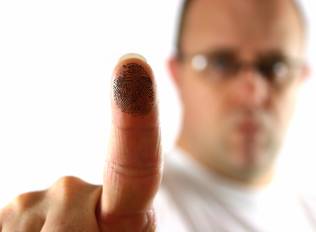
  • Fingerprint Test Can Identify Drug Use With Striking Accuracy

    Fingerprint Test Can Identify Drug Use With Striking Accuracy

    The testing device is already being used in some morgues and at treatment centers in the UK to detect drug use.

    Drug testing is important, whether to determine how someone died or to show that someone was under the influence of drugs while behind the wheel.

    However, current drug-testing methods that use samples of blood, saliva or hair are slow, invasive and expensive. Now, a fingerprint drug-testing system has been proven to detect the presence of drugs in sweat with up to 99% accuracy. 

    A study, published in the Journal of Analytical Toxicology, found that the Reader 1000, manufactured by U.K. firm Intelligent Fingerprinting, can detect cannabis, amphetamines, opiates, and cocaine, the substance that make up the majority of illicit drug use.

    The device works by analyzing sweat from the fingerprints of people who are alive or dead. The sweat contains metabolites that show that the body was clearing certain illicit substances. Using the device speeds up the process of drug testing. 

    “This new research highlights how our [device] can screen rapidly for drug use in individuals using a fingerprint sample with a sample collection time of only five seconds, and a total analysis time of ten minutes,” David Russell, an Emeritus Professor at the University of East Anglia, who is co-author of the research and founder of the manufacturer, told The Daily Mail.

    For the study, researchers used the Reader 1000 on 75 dead bodies, as well as testing those individuals with traditional blood and urine drug screenings.

    Comparing the readings, researchers found that the Reader 1000 was up to 99% effective at detecting cannabis, 95% for cocaine, 96% for opiates and 93% for amphetamines.

    “We matched the coroners’ drug test results obtained using our fingerprint drug screen with a second sample tested in laboratory conditions, achieving excellent correlation in terms of accuracy,” Russell explained.

    The research proved the concept of analyzing sweat collected through fingerprints, Intelligent Fingerprinting argued.

    “This important research demonstrates how there is sufficient sweat present in a subject’s fingerprint, regardless of whether the person is alive or dead, to enable our fingertip-based drug screening system to detect the presence of four major drugs of abuse at the same time,” Intelligent Fingerprinting’s Dr Paul Yates said in a news release.

    The device is already being used in some morgues and at treatment centers in the UK to detect drug use. Testing is underway to make it available at prisons and in other law enforcement settings. Although the device was able to detect the presence of opioids and other drugs, its ability to measure the amount of the substances was not studied.

    View the original article at thefix.com

  • Recovery Program Uses "People Power" To Help Those With Addiction

    Recovery Program Uses "People Power" To Help Those With Addiction

    “My biggest motivator is to pass that gift of hope and possibility on to others,” says one Minnesota Recovery Corps volunteer.

    Minnesota is piloting a new program that’s harnessing the “people power” of AmeriCorps to support local addiction-recovery efforts.

    Minnesota Recovery Corps (MRC), an offshoot of AmeriCorps, was launched in 2018. MRC volunteers (or “recovery navigators”) are deployed throughout the Twin Cities to help people who are new to addiction-recovery.

    Some of the MRC volunteers are in recovery themselves. “My biggest motivator is to pass that gift of hope and possibility on to others,” Valerie Gustafson, who is nine years sober, told MinnPost. “I wanted to be more open in my recovery and I want to help others in their recovery.”

    “I’m an AA guy, but I don’t force that on anyone,” said Peter Solberg, another volunteer. “I try to find what works for them and help them to be successful with that pathway.”

    The program started with 15 “navigators” and is still growing, says Audrey Suker, CEO of ServeMinnesota, the organization tasked with administering and funding AmeriCorps programs in Minnesota.

    A survey of AmeriCorps members revealed the meaningful impact that the service work had on volunteers in recovery themselves. “We heard powerful stories from individual AmeriCorps volunteers,” said Suker. “They told us that their work with our organization gave them a sense of purpose and helps them get back on a career trajectory.”

    The pilot program’s potential for growth is limitless. “The deeper we get into it the more I can see the potential that exists of aligning the program with people who want to give a year of their life to serving others in need,” Suker told MinnPost.

    One example of harnessing AmeriCorps’s “people power in action” is recruiting the 1,000-plus volunteers already working in schools to teach a curriculum of addiction-awareness to K-12 students in Minnesota.

    Volunteer Peter Solberg started volunteering with MRC two-and-a-half years into his recovery. He has since been assigned to the Minnesota Department of Corrections, working with men who are “ready to re-enter society but still have chemical dependency issues.”

    This is one example of a population in need of MRC’s services. As Solberg explains, “About 94% of the people who are re-entering have chemical dependency issues. The guys I work with are all high-risk recidivists.”

    It’s all about helping the men find hope within themselves. “What these guys are missing in their lives and the reason they keep coming back to the system is that they don’t have hope, period,” said Solberg. “I go back to their childhood and we talk about their dreams and the things that got them excited. Suddenly you have an individual who has cracked open the door and can see the light on the other side.”

    View the original article at thefix.com

  • Angels of Addiction Exhibit Tells Story Of Lives Lost To Opioid Crisis

    Angels of Addiction Exhibit Tells Story Of Lives Lost To Opioid Crisis

    “When you see these faces you will cry because we’ve lost all of these people,” says artist Anne Marie Zanfagna.

    Last week, about 130 faces of lives lost to drugs graced the rotunda of of the Russell Senate Office Building in Washington, D.C. The brightly-colored paintings are part of a series called Angels of Addiction by Anne Marie Zanfagna, a New Hampshire mother who lost her daughter Jacqueline to heroin in 2014.

    After finding comfort in painting Jacqueline, Zanfagna has since made it her calling to create portraits for others grieving like her. Her paintings are free of charge, funded through her nonprofit Angels of Addiction that collects donations for art supplies.

    “It is a work of love. I know how people feel when they receive these, and that warms my heart,” said Zanfagna, according to the Concord Monitor. “If I can do something to help someone else, I’ll do it. It’s my way of giving back.”

    In 2017, there were 483 confirmed drug overdose deaths in New Hampshire, according to the state Medical Examiner’s Office. Fentanyl was involved in more than 350 of these deaths.

    “You hear the numbers and you know it is a lot, but when you try to translate that into lives, it’s different,” said Zanfagna. “When you see these faces you will cry because we’ve lost all of these people.”

    Zanfagna first showed her paintings in the New Hampshire State Library in August 2017. “When I saw all 90 together it was very powerful,” she said at the time. “It struck me that every one of those beautiful people are dead.”

    Since then, she’s painted more than 150 portraits, and her exhibit has graced the walls of town halls, libraries and recovery centers.

    Last week, her paintings went up in the Russell Senate Office Building in Washington, D.C., after the artist was invited to show her work there by Sen. Jeanne Shaheen of New Hampshire.

    “To see them, it reminds you that the opioid epidemic that we’re facing isn’t about numbers and statistics. It’s about real people. This is something that can happen to anybody,” said Shaheen.

    “Each of these portraits tells a story, and the Angels of Addictions exhibit reminds us who we are fighting for as Congress takes steps to address this crisis.”

    Ultimately the series is about putting faces to lives lost, and capturing the joy that each individual brought to their loved ones. “I think the people in my exhibit need this recognition because they were all good people,” said Zanfagna.

    View the original article at thefix.com

  • Rod Stewart's Daughter Says Singer Helped Her With Addiction

    Rod Stewart's Daughter Says Singer Helped Her With Addiction

    The music icon’s eldest daughter has been sober for two years. 

    Sarah Streeter, the eldest daughter of British rock legend Rod Stewart, told the UK press that the singer has helped her to overcome the toll taken by addiction to drugs and alcohol.

    Streeter, who was born to Stewart when the singer was 17 years old and given up for adoption, remained estranged from the singer until 2007. Stewart, whose son Sean has also struggled with substance use disorder, offered both emotional and financial support to Streeter and introduced her to his family.

    The 55-year-old Streeter said that she has not only been sober for two years, but also enjoys a closer relationship with her father, noting, “Now he’s just dad to me.”

    Streeter was born in 1963 to Stewart, who was at the time struggling to make a name in music, and art student Susannah Boffey. “I was too young to know what being a father was all about when Sarah came along,” said Stewart in a 2010 interview with the Mirror. “Adoption seemed like the best option.”

    After spending five years in foster care, Streeter was adopted by Gerald and Evelyn Thubron, and remained unaware of her father’s identity until she turned 18.

    They met—reluctantly, according to Streeter. Streeter was hesitant to forge a relationship with Stewart. She was also battling addictions to crack, cocaine and alcohol, with frequent bouts of sobriety and relapse.

    “Why I’m still here, I don’t know,” she said. “I carry a huge amount of guilt about what I put people through. The way it affected my family and loved ones was terrible. But I’ve chosen to talk about it because I think it’s important to be honest and to show that even if you hit rock bottom, you can get over it.”

    When Streeter’s adoptive mother passed away in 2007, she reached out again to Stewart, and found that he was receptive and understanding of her situation.

    “It’s not all new to him, of course,” said Streeter, referring to her half-brother Sean’s drug issues. “There’s no judgment from him at all. I don’t talk about it a lot now, but he always asks me if I’m all right.”

    Streeter revealed that she receives a monetary sum from Stewart each year—an amount that she insists was not requested. “It just happened,” she said. “It helps and it came at just the right time. It got us out of debt, which I’d run up because of the drugs.”

    More significantly, she now enjoys a genuine familial relationship with Stewart, who has introduced her to her eight half-siblings. Streeter said that she understands why he maintained distance from her as a child: “I can see he was in a difficult position while both my parents were still here. I think he didn’t want to upset them by encroaching on their territory after all these years.”

    The closeness they experience now had to be built over time. “He’s not just my dad, is he? He’s a big star, so of course, that makes it difficult,” said Streeter.

    But time has brought them together, and Streeter said that she now feels like a true part of Stewart’s family. For the singer, their relationship, though complex in its past, is simple in explanation: “She calls me dad and I call her my daughter,” he said. “We’re doing our best.”

    View the original article at thefix.com