Author: The Fix

  • Celebrity Names Used By Ecstasy Ring To Order Drugs

    Celebrity Names Used By Ecstasy Ring To Order Drugs

    The use of the celebrity names drew the attention of customs agents and led to the eventual takedown of a drug ring.

    A Michigan father and son convicted for their alleged roles in a large-scale ecstasy distribution and manufacturing ring took what may have seemed—at least, to them—a unique approach to disguising their identities in order to reportedly purchase drugs and related paraphernalia for their alleged operation. Federal officials claim that they used the names of celebrities like Tim Allen and Tracy Morgan as aliases.

    Sylvester Boston Sr., and Sylvester Boston Jr., were sentenced to eight and nine years, respectively, in federal prison for their alleged participation in the drug ring, which they are accused of operating from a computer store on Detroit’s west side.

    The Bostons reportedly used the comedians’ names to order a pill press from China, but claimed that the aliases and burner phones used to place the orders were used for privacy reasons. Sylvester Boston, Jr., has denied the charges, claiming that he and his father sold energy-boosting pills, not illegal narcotics.

    The investigation, which was led by agents from U.S. Immigration and Customs Enforcement’s Homeland Security Investigations (HSI), began in 2013 when Customs and Border Protection officers seized an industrial pill press from China with fraudulent labels for shipment—specifically, Tracy Morgan’s name was written on the receipt.

    But the Bostons’ alleged use of celebrity names only drew the attention of customs agents, who opened a package addressed to Tim Allen and found BZP, a Schedule I drug and component in some ecstasy tablets which reportedly produces similar stimulation or hallucinogenic effects as MDMA.

    HSI agents, with the assistance of the Bureau of Alcohol, Tobacco, Firearms and Explosives (ATF), Michigan State Police and the Detroit Police Department began observing the Bostons’ business, S&B Computer Repairs, and used wiretaps to record the father and son reportedly placing orders for drugs and related paraphernalia on disposable cell phones.

    According to the investigation, the Bostons reportedly manufactured the pills using the press and hid them in potato chip bags, which were intercepted by federal agents.

    A raid was conducted on the Bostons’ store in 2014, and agents confiscated drugs, the pill press, multiple weapons and a bulletproof vest. In addition to the Bostons, seven other individuals were convicted for their role in the pill operation, and six received sentences ranging from two to seven-and-a-quarter years, with one individual sentenced as time served.

    In an interview with Detroit’s WDIV Local 4 station, Boston Jr., denied the charges levied against him, claiming that the pills he sold were legal, “caffeine-based” supplements, and blamed his conviction on several factors, including another individual whom he claimed was “part of the Iraq mafia,” an informant who confused his father whom Boston said suffered from schizophrenia; and his own attorney, whom he said forced him to agree to the plea deal that resulted in his nine-year sentence.

    “They pretty much ignore facts,” said Boston Jr.

    View the original article at thefix.com

  • Underoath's Spencer Chamberlain On Sobriety: "I'm A Million Times Happier"

    Underoath's Spencer Chamberlain On Sobriety: "I'm A Million Times Happier"

    “People find different ways to fill those voids, and for a lot of artists, it’s drugs or alcohol. I just had to reprogram my life and find things that were productive.”

    In a series of videos for Revolver magazine’s Lyric Dissector series, Underoath singer Spencer Chamberlain discussed not only the inspiration for the band’s current single, “Rapture,” but also his long struggle with drugs and alcohol, from which he has been sober for more than a year.

    The 2015 reunion of Underoath, which broke up two years early, and the release of their latest album, Erase Me, in 2018, bookended Chamberlain’s recovery. “Being back together definitely helped,” he said. “It’s the first step in pulling yourself out of those places.”

    Chamberlain said that he began his journey of “not using any more” during the writing process of Erase Me, and found that tackling the problem in the band’s music could be cathartic.

    “My thought is writing lyrics that are very honest and brutal and sometimes suck to talk about, hopefully that can help,” he explained.

    In “Rapture,” which is credited to the band and Nashville songwriter Johnny Andrews, Chamberlain likened the pull of dependency to “a mistress—like that person you’ve always been warned about. That, for me, was the other woman. I tried to portray it like sex.”

    But just as toxic relationships become detrimental to both parties, drugs and alcohol shed their numbing properties and bloom into wholly new problems for dependants like Chamberlain.

    “When drugs stop being fun, they start to suck,” he said. “You have that self-loathing all the time—you just beat yourself up, or at least, I did. Which was a huge step in not wanting to have that as part of my life anymore.”

    Chamberlain said that the decision to stop using was anchored to a simple thought—”I’m going to see how far I can go,” he explained—but the process of achieving that goal required a concentrated effort in his part. That included a physical move from his home in Florida to New York City, which he said helped him to “learn a lot about myself.”

    “[New York] is the busiest place in the world, but you’re always alone,” he said. “You have to go out to try and meet people. So you’re always reflecting on yourself.”

    Chamberlain used his time there as a lesson in “learning how to love myself again” before returning to Florida, where he began to refashion his life in sobriety. He deleted contact information for anyone he associated with “partying or anything like that,” including close friends that “probably hate me right now.” 

    Chamberlain also began a regime of exercise and healthy eating with the help of his girlfriend, a personal trainer. He found that these new pursuits provided an outlet for him that delivered the same results as being on stage.

    “When I was on tour, it was way easier to control myself because I got that release all the time,” he noted. “People find different ways to fill those voids, and for a lot of artists, it’s drugs or alcohol. I just had to reprogram my life and find things that were productive—I like to be up early and exercise, do outdoor things and stay motivated.”

    These efforts have allowed Chamberlain to remain sober for over a year and a half. He admits that he’s not perfect, and that sobriety requires constant vigilance, but he also said that he feels a “million times healthier and happier than [he] was even two or three years ago.”

    He’s also hoping that his struggles can help others, whether they’re in another band (“there’s at least one guy, or nine times out of ten, [where] it’s probably gone too far”) or among Underoath’s listeners. In helping to write songs like “Rapture,” Chamberlain hopes there will be “other people who will say, ‘Yeah, me too.’”

    View the original article at thefix.com

  • New Pot Regulations Force California Retailers To Unload Millions In Stock

    New Pot Regulations Force California Retailers To Unload Millions In Stock

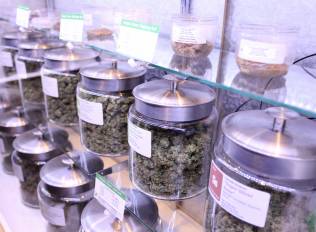
    After July 1st, cannabis retailers in the state are no longer allowed to sell untested cannabis goods.  

    New regulations for California’s legal cannabis industry went into effect on Sunday, July 1. The new rules require that all cannabis products sold in California be tested for chemicals, pesticides and foreign materials.

    In addition, all cannabis products must be in child-proof packaging. Edibles may not exceed 10 mg of THC per serving or 100 mg per package. And non-edibles may not exceed 1,000 mg of THC per package for the adult-use market, or 2,000 mg per package for the medical-use market.

    “These regulations are very necessary for consumer protections, environmental protection and public safety protections, so they are good and we support them,” said Kimberly Cargile, executive director of A Therapeutic Alternative medical cannabis dispensary in Sacramento.

    “However,” she added, “it’s more difficult to operate within a regulated market and more difficult than we anticipated.”

    The July 1st deadline meant that all “untested cannabis goods [can no longer] be sold by a retailer and must be destroyed,” according to the state Bureau of Cannabis Control—leaving some retailers left to wonder if their businesses could survive the “weed apocalypse.”

    Some business owners estimated huge losses for California’s legal cannabis industry—about $90 million of product lost, according to a survey by the United Cannabis Business Association.

    The association organized 128 cannabis businesses and advocacy groups to petition Governor Jerry Brown on Friday to “indefinitely extend” the period for selling untested cannabis products.

    The group argued for the extension saying that without it, the new regulations will “financially cripple the majority of retailers,” by forcing them to “destroy everything in their inventory and repurchase new products.”

    They also argue that there are not enough testing facilities approved by the state to handle the demand and volume of cannabis products that need to be tested.

    However, the state maintains that retailers were given enough time to comply with the regulations.

    “We issued our emergency regulations back in November, and at that time, we were pretty clear about the fact that there would be a six-month transition period for retailers to use up their existing supply,” said a spokesperson for the Bureau of Cannabis Control. “We felt that was a sufficient amount of time to deplete stock on hand and adapt to California’s new rules.”

    View the original article at thefix.com

  • The Walk

    The Walk

    I can effectively express two emotions, anger and rage, and if someone fucked with my little girl, they would be getting a double load of both.

    I hadn’t been back in the free world a month, but I was rolling. This time I was flat, no parole, no PO to fuck with, no fines, nothing. Things were back on track and it happened quickly. I had established an entirely new set of contacts on the inside who were in need of a man with my skill set. They helped me get up and running so I made sure I made good on their initial investment. After that, I carved out a deal to set myself up. My supply was steady and demand was… Well, demand in the drug game is something you never have to worry about.

    I got a text on my phone, not the prepaid burner phone that goes off non-stop, but my actual, personal phone. Only three people have this number and two of them are my children, so of course, I opened it immediately. It was my daughter, the one person who can melt my heart with a single word, touch, or look. She is 19 and a thing of pure beauty. She is the best of her mother and very little of me (I pray).

    “Daddy, I need you.”

    I can’t describe what went through me when I saw these words on the backlit screen of my phone. I’ve spent literally thousands of sleepless nights wishing I could do something, anything, to make up for the pain I’ve caused this sweet girl. This might be my chance.

    “what wrong” “u ok” my archaic thumbs desperately trying to type the letters and press send.

    “I’m fine Daddy just need to talk to you.”

    “where are you now”

    “at home.”

    “I’ll brite there”

    “??????”

    God damned mother fucking phone. “I’ll be right there”

    “Okay Daddy cu soon”

    I look around the house and think about what I would need. I dusted off a thousand dollars and stuffed it into an envelope. That’s not enough, I thought, and got fifteen hundred more. My phone… my keys… my gun… No, not the gun. Not around my baby, at least not until I know more. I lit a cigarette and got in my car.

    The drive was over too soon. I was consumed by anticipation. I was so happy to be going to see my girl, at her request, and to be wanted by her, or at least needed if not exactly wanted. That’s almost just as good. For a moment, I came close to letting myself be happy, but before the happiness set in, the worry of why she might be needing me kicked in. Happiness is something I have never quite been able to handle. I don’t think it’s meant for me. Of all the people she could have called, she called me. Her mother always handles the emotional stuff. Her stepdad is a good man, he makes decent money, but she called me. I am not a good man. I can effectively express two emotions, anger and rage, and if someone fucked with my little girl, they would be getting a double load of both.

    When I saw her standing there in her driveway, I forgot all about that.

    I got out of my car and walked up to her. She welcomed me in with a hug. Not the sideways kind either, but with her head turned, cheek against my chest, full embrace. The sweet smell of her hair filled my nostrils and transported me back to a time almost forgotten. My God this feels good, I thought to myself.

    “When did you grow up, baby girl?”

    “It happens fast, Daddy”

    Before I could ask her what was happening, she took me by the hand and started walking. It was a late spring day that was made for being outside. Her neighborhood wasn’t fancy, a bit run down, older, filled with young couples just starting out and old couples just finishing up. It was quiet today though, or perhaps I just wasn’t hearing anything around me. I was so intently focused on her, I realized, we were long past sight of my car or even her driveway.

    Just walking.

    She talked and I listened. She gave me the short hand version of the last 13 years of her life, the years I had wasted in prison. This remarkably strong, independent, young woman was five when she watched me get beaten until I was unrecognizable, handcuffed, and dragged out of our living room. She then watched as her home was completely torn to pieces for every dollar I had tucked away.

    But here we were today, walking.

    Stories of relationships, achievements, disappointments, highs, lows and everything in between went into my ears and swirled through my brain like an F5 tornado. I had no fucking clue whatsoever to say about any of it.

    So we walked, and she talked, and I listened.

    I listened to the struggles of a young woman, desperate to make her way in a hard, unforgiving world. I could hear the desperation and determination in her voice. Still, I had nothing to offer, no advice, no words at all.

    Before I knew it, we were back at my car hugging again. We were about to part ways and I had done nothing for her. Not one damn thing!

    “Wait! I brought you something!”

    I handed her the envelope that I brought and had forgotten until just then. She opened it a little, peeked inside, closed it, and pressed it against my chest.

    “That’s not why I called, Daddy. I just needed to talk to you. Thank you so much for walking with me, I hope we can do this more. I love you.”

    I was barely able to mumble “I love you too, baby girl,” before I got into the car. I drove on autopilot for a few minutes.

    “What the fuck just happened?” I felt the guilt of my life pile on so heavily I could hardly breathe. It was like a guy I heard about who had been hit by an avalanche. He said it was like the snow was all around him, squeezing him from every possible angle, and he had to make room around his body to get any air.

    This was a feeling I could not deal with. I did not possess any knowledge or skill that would allow me to work through this. The only thing I knew for sure was that I could make it go away. It would only be a temporary fix, but gone for right now was good enough for me. I knew what I had to do and getting home to do it as quickly as possible was my only objective. I had to get high.

    When I arrived, I went straight inside. I bypassed my personal stash and took out what I needed from my supply. I prepared a larger amount than usual and loaded it into a syringe. I considered that it may be too much and that I may overdose, but the way I felt, that wouldn’t necessarily be a bad thing. I pressed the plunger of the rig until I saw a tiny drop hanging on the bevel of the needle. I tightened the belt around my bicep and with a familiar prick of the skin, the anticipation building, breath holding, a ribbon of red flashed in the barrel and .. .. .. .. gone.

    View the original article at thefix.com

  • Touching What (I Thought) Was Gone

    Touching What (I Thought) Was Gone

    In the last 36 hours I’ve been to five meetings, sat three times in meditation and sobbed on a friend’s couch. But I’m OK.

    Love, in my experience, has meant seismic emotional shifts and condemnation, turning even “what do you want for dinner” into a combat zone.

    I was in a rage-fueled, co-dependent relationship with my ex-husband from ages 31 to 45. I didn’t know it then, I just thought he was controlling. This is a progressive disease.

    I left him at 45, three years ago, and six months later got sober. I heeded AA’s suggestions super seriously, not dating for 2.5 years, partly due to not wanting to inflict my instability & blues onto another person, but largely due to self-protection.  

    Because I was terrified. I couldn’t imagine opening up to another man, fooling around sober – vulnerability was a liability. I thought my hunger to connect, to feel, was gone. And that was OK. So I waited. And waited.

    And then I met Gabe. Online dating. Who knew? Suddenly, it seemed possible to separate falling in like from feeling beholden.

    He was 11 years older than me, a warm widower who still held tight to his wife, even after six years. Their union, apparently, was the stuff dreams were made of, a complete 180 from my own. She had passed suddenly, and aside from one brief liaison, which he deemed “untenable,” he led a monk-like existence until me. Until me.

    He didn’t kiss me until our sixth date, but when he did I awoke. My hands mysteriously floated to his face and we giggled together. He introduced me to his friends on date four, we sang Joni Mitchell while eating ravioli and watermelon in bed, and slept with our noses touching.

    When we hugged, we’d hold on and sway.

    I was freed.

    As we ended our four-month relationship yesterday, he thanked me for “touching something he thought was gone” – We did that for each other this spring and summer, but, still, he drank from his wife’s coffee mug, her travel diary on the bedside table.

    Because he had spent decades and raised a child with her, and just a few months with me, I understood our relationship was in its infancy, and was willing to view it as a sort of “practice” – A chance to relearn intimacy and communication, one day at a time, as opposed to labeling and binding each other. And it was lovely, for a time.  

    And then, as things often go, I wanted more. I no longer could wait in line behind his departed wife, daughter, mother, patients, and friends, and I told him so.  

    He conceded I deserved more than he could offer “at this point,” and thanked me for “touching something inside him he thought was gone” – We agreed we did that for each other, as I crumbled.

    I believe that loss is cumulative, so I’m not only crying over my four sweet months with Gabe, I am grieving my marriage, and all the other wreckage I’ve created over four-plus decades of life.

    In the last 36 hours I’ve been to five meetings, sat three times in meditation, sweat through three hours of yoga, and sobbed on a friend’s couch.  

    But here’s the thing – I’m OK.  I’m better than OK. Because I know now that I CAN open myself and be vulnerable, I CAN value a man who treats me well, and with the support of our beautiful program, I can gracefully end a relationship with dignity. I can grieve and grow, and then I can get back up again.

    “Thank you for your generosity, kindness, and for touching something inside me I thought was gone. I think we were both able to do that for each other. I wish you all good things.”

    Following a two-decade career in marketing and event production, Cassie Magzamen has pivoted and become a Kid’s Yoga & Mindfulness Educator. She enjoys using yoga and mindfulness to empower children mentally, physically, and spiritually, simultaneous to pursuing a career in writing — a life-long dream. 

    Cassie holds a BA in Journalism & Mass Media from Rutgers University, and a 95-hour Little Flower Yoga & Mindfulness Teacher Training Certificate. She resides in Brooklyn, New York with her precious dog-daughter, Princess Sookie-Love.  

    View the original article at thefix.com

  • Clean, Sober And Using Suboxone

    Clean, Sober And Using Suboxone

    Suboxone users deserve a safe space, in and out of the rooms. And we deserve to proudly call ourselves clean and sober.   

    It was pretty apparent when I began taking Vicodin for migraines that I was going to have a problem, but I was too ashamed and afraid to ask for help.

    On the outside, I was a working professional, undergrad student and hands-on mom.

    Beneath the surface I was deteriorating. 

    It wasn’t until my career was in jeopardy and many relationships broken that I finally admitted I was out of control and needed treatment. I learned the hard way: Secrets keep you sick. Addiction grows in the dark. 

    Today, as a nurse in long-term recovery from opiate and alcohol addiction, I’ve made an intentional choice to forgo anonymity and live “Sober Out Loud.” I advocate for everyone in recovery, especially healthcare professionals, using blogging, public speaking, and coaching to do my part to end the stigma.

    My hope is that talking openly will give others the courage to speak up early. That they’ll notice their decline and get help long before their careers and lives are in danger. Choosing to be open about my addiction also supports my healing. I find accountability, connection, and purpose in sharing my experience.

    It wasn’t easy in the beginning – I was terrified of being judged. The opposite has been true – even in the hospital I worked for. Even with colleagues who may have reason to look down on me. I’ve been met with abundant compassion and acceptance. 

    Except I still have one secret. There’s one disquieting fact I haven’t told many people. I’m flooded with fear that I’ll be exiled from the recovery community and excluded from meetings. Petrified that my integrity as a coach and writer will be questioned. And if that’s the case, then what’s my value as a sober advocate?

    There are others who have the same fears, and my silence validates the stigma. Recently, I heard on the radio about a young man who committed suicide. He was tortured by internal conflict; he questioned his sobriety. We share the same secret.

    For that struggling human being, and for everyone else struggling – It’s time for me to be completely open.

    “Hello, my name is Tiffany; I’m an addict and an alcoholic. AND I use Suboxone.”

    This isn’t my opening line when I introduce myself at meetings – nobody has to divulge their prescribed medications to the group, right? The answer’s not so clear if you use Medication Assisted Treatment (MAT).

    On one hand, I feel I shouldn’t have to add a qualifier to the already awkward label I use when attending certain groups. (In the program I regularly go to, we don’t use labels at all, but that’s a subject for another time). On the other hand, it feels like I must add the qualifier, otherwise I’m a fraud. I start spiraling: “Am I allowed to share? What’s my ‘real’ clean date? Can I pick up a chip on my birthday month?”

    In my first month of sobriety, newly on Suboxone, I readily shared at meetings and with a few sober friends. Completely unaware of my disgrace, and totally unprepared for the reactions, I wanted to swallow my words as I was assaulted by:

    “Do you think you’ll be on it long?”

    “You’re going to get off of it soon right?”

    ‘You’re still on an opiate.”

    “You’re still getting high though.”

    “You’re not actually clean yet.”

    “Well you’re definitely not sober. Don’t call yourself sober.”

    “Do what you’re gonna do but don’t talk about it here.”

    “You can’t have a sponsor until you’re done with that.”

    “We all did it without. We didn’t need medication to get clean. You’re obviously not serious – not strong – not determined enough. You haven’t done enough steps. You haven’t gone to enough Meetings.”

    “You’re not sober. Come back when you are.”

    I thought I was sharing success and hope. They asserted I was “cheating the system” and “staying in the game.”

    This inhospitable reception is the reason I’ve stayed silent, the reason I haven’t written about it in my own blog. I found myself avoiding meetings altogether, second-guessing my sobriety; debasing my worth and value in the recovery community. 

    Despite the booming increase in patients using Suboxone, popular opinion – especially in traditional 12-step programs – is that Suboxone treatment and “clean and sober” are mutually exclusive. Regardless of research showing decreased morbidity and mortality of medication-supported patients, and the success addicts are seeing as they put their lives back together, the underlying criticism persists:

    “You’re not CLEAN.” 

    If I’m not “clean” I’m still dirty. If I’m dirty, I must be worthless. And if that’s the case, what’s the point of trying to recover?

    It’s abhorrent that leaders in the recovery community perpetuate the degradation. At a local level, meeting facilitators model this disparaging behavior, despite literature clearly stating that a person’s medication is no one else’s business. (Read The A.A. Member – Medications & Other Drugs).

    Even trusted chemical dependency physicians tout their opinions, adding to the universal disapproval. Dr. Drew Pinsky stated on the podcast “Dopey” episode #124  “I’d rather have them on cannabis.” And though he concedes he’d be open to discussing short-term use with patients to “get them in the door”, he says that Suboxone patients  “replace” other opiates and are merely surviving; that they are “not fully recovered” and “still chronically ill.”

    Still chronically ill? Not fully recovered? In the 3 years since I initiated a Suboxone regimen, I’ve worked tirelessly at making amends. I’ve regained my job as an acute care nurse and clinical instructor in a nursing program. I facilitate Recovery Meetings, and I’ve transformed into a certified Life and Recovery Coach. I’ve repaired relationships with family and friends.  I’m traveling, writing, and above all – finding JOY in living. I’m not an outlier. There’s thousands of us. We’re just not  allowed the safe space to share. 

    MAT is NOT perfect. I’m aware of it’s flaws and have experienced some of them myself. Anyone considering it should carefully review all potential side effects with their physician and trusted, non-biased recovery support. Suboxone causes physical dependence, and there’s severe withdrawal if one quits cold turkey. It is, chemically speaking, an “opiate.”

    Some prescriptions are diverted; I’ve personally cared for patients who admit getting the drug on the street. And with full transparency, I sometimes feel conflicted about using pharmaceuticals to overcome an addiction to pharmaceuticals. I’m not oblivious to the irony. And I strongly assert that any MAT is only truly successful if taken while simultaneously working on recovery of the mind and spirit. 

    But people are dying. We don’t have time to argue over which is the most righteous recovery path.

    After weighing all the pros and cons, searching my soul, and utilizing critical thinking skills I’ve honed in 17 years of working in healthcare, here’s what I’m absolutely sure of:

    Suboxone is right for ME.  I am Clean and Sober. 

    Four years ago I was resigned to being found dead in a bathroom with a needle in my arm. Today, I prove that recovery is possible. I am on a journey toward physical, emotional and mental wellness, and have a quality of life I couldn’t have dreamed up. Suboxone, for now, is a part of my story. As it is for many, in increasing numbers every day.

    Whether I wean off in a month or stay on it forever has no bearing on my credibility.

    It’s likely that someone sitting next to you today in a meeting is on Suboxone. It’s also likely they’re petrified to talk about it, like I was, and might leave the meeting fighting the humiliation of being “unclean.”  

    They might decide that it’s better to go back out and use, since they don’t belong in recovery; or to wean off without a doctor’s supervision, undergoing agonizing withdrawal and back at risk of using street drugs- which is part of my story as well. They might even decide that they don’t belong here – at all. That the only choice is to end their life. 

    What is your role in this? Are you hurting or helping? Consider the language you’re using. Is it pejorative and shame-inducing? Or do you cultivate love and belonging? 

    Those of us in recovery have a responsibility to welcome everyone who is making positive progress towards a sober lifestyle. It’s not our business to take the inventory of someone else’s medication list – it IS our business to eradicate stigma. Offer compassionate acceptance. Keep an open mind. Suboxone users deserve a safe space, in and out of the rooms. And we deserve to proudly call ourselves clean and sober.   

    Next time someone shares with you that they choose to use Suboxone – or any MAT – as part of their journey, don’t criticize. Don’t interrogate or give them a timeline to stop it. Ask how it’s working, and If they’re happy. Ask if they’ve been successful staying off street drugs; if they’ve made strides towards repairing the damage of their past. And when they share with you their clean date, congratulate them on being SOBER. 

    Tiffany Swedeen, RN, BSN, CPC/CPRC is a certified life and recovery coach, She Recovers Designated Coach, and a registered nurse in recovery herself from opioids and alcohol. Tiffany lives “sober out loud”, proudly sharing her story through advocacy and blogging and is passionate about helping others do the same. Her goal is to eradicate shame and empower all to live a life of radical self-love. You can reach Tiffany through her blog www.scrubbedcleanrn.com and follow her @scrubbedcleanrn. 

    View the original article at thefix.com

  • Overdoses Increasingly Lead To Criminal Charges

    Overdoses Increasingly Lead To Criminal Charges

    Family members and the public aren’t convinced that prosecuting friends—who are often on drugs themselves—is the best use of resources. 

    When someone dies from an overdose it is undeniably a tragedy, but is there someone to blame? Increasingly, the answer—legally speaking—is yes.

    It’s becoming more common for authorities to charge family members, friends and dealers with homicide for their role in securing drugs, or even their presence when the drugs were taken, according to a report by The New York Times

    “I look at it in a real micro way,” Pete Orput, the chief prosecutor in Washington County outside Minneapolis, told the paper. “You owe me for that dead kid.”

    Mark S. Rubin, a county attorney in Minnesota who has brought charges related to overdoses, said that the situation is complicated, but ultimately there is criminal responsibility. 

    “People agree, you know, there’s nobody forcing someone to take the controlled substance. But somebody might agree to take it from their friend or their boyfriend or girlfriend and they end up dying because of it,” Rubin said. “We feel that constitutes a crime of possibly murder in the third degree, but at least manslaughter in the second degree.”

    The Times found that in 15 states that keep records, there have been more than 1,000 charges of homicides related to overdose deaths since 2015. Between 2015 and 2017, prosecutions of this nature nearly doubled.

    While law enforcement officials say that this tough approach is justified and will stem the use of drugs, family members and the public aren’t convinced that prosecuting friends—who are often on drugs themselves—is the best use of resources. 

    “It’s kind of like blaming the leaves on the tree, you know?” said Michael Malcolm, of Breckenridge, Colorado, whose younger son was charged with the death of his brother, who overdosed on drugs that the boys had bought together online. “What about the roots?”

    The Times investigation found that charges are brought under a variety of laws. Twenty states have specifically made delivering drugs that result in death a crime. Others use standard homicide and manslaughter charges. In some cases, friends and family have been charged with dealing or distributing drugs, even if they did not exchange drugs for money with the person who died. 

    “State laws vary, but drug ‘distribution’ or ‘delivery’ is generally not limited to selling,” the Times reporters wrote in an accompanying question and answer piece. “It can include sharing drugs, giving them away, or having a friend pay you back for drugs you bought.”

    Many states have Good Samaritan laws, which are meant to protect the person who calls 911 when someone is overdosing. Often, these laws protect someone who may also be using, but if that person was involved in securing the drugs that caused the overdose they can still be charged, according to the report. Vermont and Delaware are the only states that explicitly protect callers from prosecution.

    View the original article at thefix.com

  • Wynonna Judd's Daughter Sentenced For Meth Charges

    Wynonna Judd's Daughter Sentenced For Meth Charges

    Grace Pauline Kelley has been sentenced to eight years in prison.

    Grace Pauline Kelley, daughter of singer Wynonna Judd, was sentenced to eight years in prison for violating probation for a 2017 drug charge.

    Kelley, 22, left a 180-day in-house rehab program on November 19, 2017 before she was scheduled to be released, which violated the terms of probation she received for charges of manufacturing, delivery and possession of methamphetamine with intent to distribute in May 2017.  

    Robert Reburn, the Public Information Officer East Tennessee for the Tennessee Department of Correction, confirmed an inquiry by Us Weekly that Kelley had received the eight-year sentence, which does not expire until August 2025.

    Kelley is the younger of two children by Wynonna Judd, who was one-half of the popular ’80s country duo the Judds with her mother, Naomi; her father is Judd’s first husband, Arch Kelley, whom Judd divorced in 1998, two years after Grace Kelley’s birth.

    She made headlines for the first time in 2014, when Judd’s half-sister, actress Ashley Judd, sought temporary custody of the 17-year-old after she alleged that her mother abused drugs and alcohol and was verbally abusive. Wynonna Judd denied those charges.

    A year later, Kelley was arrested at a Walgreens in Nashville and charged with promotion of methamphetamine manufacture after police found a bag of items used for making meth in a plastic bag that Kelley reportedly threw from her car.

    She pled guilty to possession and received probation, which was revoked in 2016 after Kelley was arrested in Alabama on charges of being a fugitive from justice.

    In 2017, Kelley pled guilty to the aforementioned methamphetamine charges in Williamson County Court in Tennessee, and received a suspended sentence of 11 months and 29 days in jail, as well as a fine of $3,092.50, and a second suspended sentence of four years after pleading guilty to evading arrest in nearby Maury County.

    She was required to complete the 180-day rehab program and then 30 days in jail in March 2017, which would have then allowed her to complete the balance of her sentence on probation.

    According to Taste of Country, Kelley served her 30 days in June 2017 and moved on to rehab, but left the program on November 19, 2017. “[Kelley] was terminated from the recovery court program on November 21, 2017,” said a spokeperson for Williamson County. “A warrant for probation violation was issued on November 22, 2017 and served on December 16, 2017.”

    Probation was officially revoked on February 8, 2018, and Kelley was given the eight-year sentence, as well as the four-year sentence for evading arrest.

    Kelley will be eligible for parole on February 4, 2019. The Judd family and her father, Arch Kelley, have not issued any statement on her sentence. 

    View the original article at thefix.com
  • Rapper Vic Mensa Deals With Addiction, Mental Health In New Song

    Rapper Vic Mensa Deals With Addiction, Mental Health In New Song

    The 25-year-old rapper gets candid about relapsing, recovery and mental health in his new song “10K Problems.”

    Chicago rapper Vic Mensa just dropped his second single in a month called “10K Problems.” The song tackles addiction, his struggles with his mental health and dealing with family tragedy.

    “10K Problems” immediately received strong reviews upon its release, and while the song is a little over two minutes, its impact hits hard from the beginning: “Niggas asking where I been at, I gotta recap it/Relapsing d-r-u-g habits/Tryin’ to move forward, depression been holding me backwards/Recovery ain’t a straight line.”

    Then as Mensa raps on, he deals with his father becoming paralyzed after surgery. “It’s a painful process watching your parents die/And niggas look at my life and think I’m in paradise.”

    Like the Fugees classic “Ready or Not,” Vic Mensa rapped “10K Problems” over the same Enya song, “Boadicea.” In the brief time the single has been out on SoundCloud, Rolling Stone has called it “cathartic,” and HotNewHipHop writes that “when Vic Mensa is his vulnerable self, he is able to weave a story with the best of ‘em.”

    Continuing in the same self-confessional vein, Mensa also promised Business Insider that his next album will be “powerful, aggressive, beautiful, sad, all those things… Whenever I get into making an album, it’s always like a really self-reflective, self-expressive journey. And I’m learning about myself in real time.”

    Mensa had previously tackled addiction in the single “Rollin’ Like a Stoner.” In the song, Mensa rapped, “I am a disaster, I don’t need a recipe/Tried to be sober, that didn’t work for me.”

    Mensa told High Times, “I really was writing that song about a point in time in my life, for the most part. I was fucking with a lot of drugs. I went sober and then I’d do hard drugs some time ago.

    But I still bounce back sometimes,” hence the lyrics in “10K Problems” where he raps, “Recovery ain’t a straight line.” (As a Mensa profile in Billboard reports, Mensa’s favorite drugs included mushrooms, acid, Molly, and Adderall.)

    Mensa added that artists should be open about drugs and alcohol, as well as their mental health struggles. “I do think that shedding some honest light on drug use is important… A lot of youngins growing up in the hood, they witness death and despair firsthand… and we’re trying to deal with trauma often through external substances.”

    Mensa admitted he sees a therapist, and practices meditation as well, and he “100%” feels that “the stigma is lessening” around mental health, “but it still needs to be introduced in a major way.”

    View the original article at thefix.com

  • Searching For The Next Naloxone

    Searching For The Next Naloxone

    Experts are concerned that naloxone may not be strong enough for synthetic opioids such as fentanyl and carfentanil.

    Naloxone is—at times—a seemingly miraculous drug. Within minutes of naloxone being administered, someone who was unresponsive because of an opioid overdose can start breathing on their own and regain consciousness.

    However, despite its strengths, there are issues with the drug that have left healthcare professionals and policy makers pushing for alternatives. 

    One of the biggest issues with naloxone today is that it is reportedly not as effective at reversing overdoses from powerful synthetic opioids like fentanyl and carfentanil.

    In these cases, a person might need multiple doses of the opioid reversal drug in order to see a benefit. This isn’t just expensive, but can also cost someone their life if there aren’t enough doses immediately available. 

    Another issue is that opioids remain active in the body for longer than naloxone does. Because of this, someone can be revived using the opioid reversal drug, but later slip back into an overdose when the effects of naloxone have worn off. 

    Both of these concerns have led to the search for alternatives to naloxone. 

    “The strategies we’ve done in the past for reversing overdoses may not be sufficient,” Nora Volkow, director of the National Institute on Drug Abuse (NIDA), recently said in a speech at the 2018 National Rx Drug Abuse and Heroin Summit, according to STAT News. “We need to develop alternative solutions to reversing overdoses.”

    Dr. Jay Kuchera, a Florida-based addiction medicine specialist for Resolute Pain Solutions, said that “naloxone is being outgunned” by synthetic opioids that have largely replaced heroin in many areas of the country. 

    “Naloxone seemed to be great for the older opioids,” Kuchera said. “But now that we’re encountering these nonmedical, ungodly [opioids] like carfentanil… we need to get with the times.”

    In 2016, one report found that the market for opioid reversal drugs was valued at nearly $1 billion, so there are good economic incentives for companies to find alternatives to naloxone.

    Opiant Pharmaceuticals, which developed Narcan (the nasal spray version of naloxone), has had early success with a drug that works the same way as naloxone but lasts longer, so that the victim would be less likely to slip into another overdose after administration. 

    “Compounds like fentanyl, carfentanil, and other synthetic opioids act for longer periods of time,” said Dr. Roger Crystal, CEO of Opiant. “The concern is that naloxone’s half-life doesn’t provide sufficient cover to prevailing amounts of fentanyl in the blood.”

    Because many overdose deaths occur when a person stops breathing, scientists are also examining whether they can use drugs to keep a person breathing even while not reversing the overdose itself. For this, researchers are looking at ampakines, a class of drugs that can counteract respiratory depression. 

    Some people argue that funds would be better used to address the causes of addiction or to further study naloxone to see if it is indeed less effective against synthetic opioids, but Volkow said that having new and potentially better options for saving people from overdose is critical.  

    “There are so many people dying that we have to recognize the urgency,” Volkow said. “We obviously value basic science, but at the same time we have to recognize because of the current situation, the development of medication the can help address the crisis has become our top priority.”

    View the original article at thefix.com