Author: The Fix

  • US To Spend $3 Million Researching Chemicals in Marijuana

    US To Spend $3 Million Researching Chemicals in Marijuana

    Current marijuana research lags behind the public’s marijuana usage.

    The United States government plans to spend $3 million studying whether marijuana has pain-relieving effects. 

    However, it will only be studying the parts of the plant that do not get users high. 

    Study Will Focus on Chronic Pain Relief

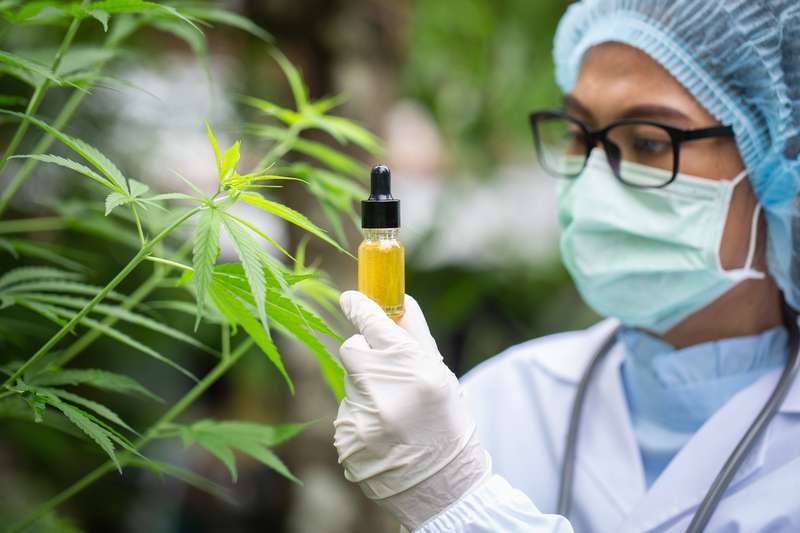
    According to NBC News, the money is coming from nine research grants that were announced on Thursday (Sept. 19). The grants will allow researchers to delve deeper into the pain-treating properties of CBD and other lesser-known chemicals in marijuana. The chemical THC, which is what users get high from, is not included in the research plans. 

    When it comes to pain management using the chemicals from marijuana, “The science is strongest for chronic pain, the most common reason people give when they enroll in state-approved medical marijuana programs,” NBC notes.

    Dr. David Shurtleff is the deputy director of the National Center for Complementary and Integrative Health, which is funding the projects. He says THC has been studied “extensively” already and that the dangers of the chemical don’t make it a good option for treating pain. He adds that the hope is to catch up to the current use of other chemicals in marijuana

    “The science is lagging behind the public use and interest. We’re doing our best to catch up here,” he said. 

    According to Shurtleff, the grants come as a response to the 2017 National Academies of Sciences, Engineering and Medicine report which stated that there was a lack of research surrounding marijuana, making it a “public health risk.” 

    Responding To The Opioid Crisis

    Another motivator for the research on the pain-easing properties of marijuana is the opioid epidemic, which is rooted in the use of prescription painkillers. 

    Dr. Judith Hellman, a grant recipient from University of California San Francisco, is researching the ability of the body to create signaling molecules that are similar to the ingredients in marijuana

    Hellman says it’s vital for scientists to more deeply explore pain and its treatment. “It’s very exciting to have the opportunity to do that,” she said.

    According to NBC, only one of the grant projects involves human test subjects. University of Utah researcher Deborah Yurgelun-Todd plans to run brain scans of volunteers suffering from lower back pain. Her plan is to determine how CBD mixed with chocolate pudding can affect the pain-signaling pathways in the brain. 

    Many of the new projects will use lab-made versions of the chemicals, instead of extracting them from the plant itself, according to NBC.

    View the original article at thefix.com

  • Jenna Jameson Celebrates Sober Milestone

    Jenna Jameson Celebrates Sober Milestone

    Jameson took to Instagram to celebrate her fourth year of sobriety. 

    Jenna Jameson celebrated four years sober on Sunday, marking the occasion with a heartfelt Instagram post.

    “4 years. We do recover. We do overcome. We do rebuild. But we never forget,” Jameson wrote in the caption.

    The 45-year-old former adult film star, born Jenna Massoli, hit her sober milestone on September 22. She shared it with her Instagram followers by posting a graphic announcing, “You are clean 4 years.”

    Fighting Stigma

    “I wish the stigmas around addiction would stop,” she continued in her post. “I wish people would stop saying things like ‘Are you high?’ I wish someday people in active addiction and new recovery weren’t shamed.”

    “So many people are suffering, not only the addicts, but their friends and family. I am public about my struggle and eventual healing to help others, but we can all be the light for someone.”

    “Leave judgment to God and reach out in service of others,” she wrote. “If you’re reading this, addicted and afraid, I pray you find the strength to seek help. This subject needs to be less taboo. I love you.”

    Last year Jameson marked three years sober by posting a side-by-side comparison showing her dramatic weight loss. “I can’t begin to explain what sobriety has brought to my life,” she wrote at the time. “I’m not the intensely self centered ‘the world owes me something’ woman anymore. I am now the ‘what can I do for the world’ woman.”

    Mental Health Reflections

    The mother of three and amateur conservative Twitter pundit has used her platform on IG to not only reflect on recovery, but depression and anxiety as well.

    She wrote in a Sept. 3 post, “When I was young, I listened to every single criticism about my looks, my talent, my personality, even my coping skills… and I adjusted to them to please people. It was tiresome. It depleted me. By the time I turned 40, I felt empty… The past few years I’ve took inventory, I’ve begun to live my life for me, and slowly the true Jenna has come back to life. I forgot who she was. I was scared to show her, to really show her, vulnerable and flawed.”

    View the original article at thefix.com

  • Walmart To Halt E-Cigarette Sales

    Walmart To Halt E-Cigarette Sales

    The American Vaping Association has criticized Walmart for punishing e-cigarette companies but continuing to sell regular cigarettes.

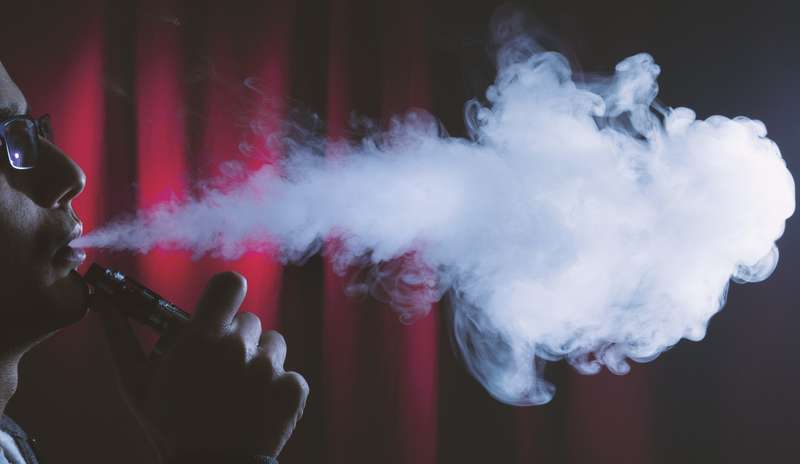
    With so much focus on the dangers of vaping in the news, one of the largest retailers in the world is announcing they’re going to phase out e-cigarettes.

    As Yahoo reports, Walmart has circulated an internal company memo which reads: “Given the growing federal, state and local regulatory complexity and uncertainty regarding e-cigarettes, we plan to discontinue the sale of electronic nicotine delivery products at all Walmart and Sam’s Club U.S. locations.” 

    Retailers React To Pressure

    The memo also stated that once the current inventory of e-cigarettes has sold, Walmart will “complete our exit” from selling them. 

    In the wake of nine deaths that have been linked to vaping, the FDA is launching a criminal investigation and lawmakers have implored the current administration to get rid of e-cigarettes altogether. 

    Back in May, Walmart voluntarily raised the minimum age to buy tobacco products to 21. 

    As CNBC reports, a number of companies don’t want to wait for an FDA crackdown on e-cigarettes, and have been instituting their own bans on them. (CBS, WarnerMedia and Viacom have all decided to stop airing e-cigarette ads as well.)

    At the same time, the American Vaping Association has criticized Walmart for punishing e-cigarette companies but continuing to sell regular cigarettes. In a statement, the association’s president, Gregory Conley, said, “You know you are in the middle of a moral panic when big corporations like Walmart find it is easier to sell deadly combustible tobacco products than to sell harm reduction alternatives.”

    Prior to Walmart’s big move, the Trump administration announced it was moving ahead on banning flavored e-cigarette products. So far, Michigan and New York have banned flavored e-cigarettes just this month. San Francisco became the first U.S. city to ban the sale of e-cigarettes this past June.

    As Health and Human Services Secretary Alex Azar said in a statement, “The Trump administration is making it clear that we intend to clear the market of flavored e-cigarettes to reverse the deeply concerning epidemic of youth e-cigarette use that is impacting children, families, schools and communities.” 

    View the original article at thefix.com

  • Jada Pinkett Smith Confronts Will Smith About His Alcohol Consumption

    Jada Pinkett Smith Confronts Will Smith About His Alcohol Consumption

    Pinkett Smith put a spotlight on the “Gemini” star’s vacation drinking on a recent episode of her Facebook talk show, “Red Table Talk.”

    Will Smith and his wife Jada Pinkett Smith discussed their alcohol use and letting loose on a recent episode of Red Table Talk.

    On the episode, which focused on nutrition and wellness, the Smiths were joined by their three kids, Trey, 26, Jaden, 21, and Willow, 18. The family talked about common health issues, including substance use. 

    Their Drinking Habits

    Jada reveals that she “doesn’t drink a lot of alcohol at all, any more” before asking her husband about his alcohol use. 

    “That’s my personal business,” he replied, seemingly joking. “I respect that it’s your show, but at the end of the day, this is a house that we share.” 

    Smith went on to reveal that he drinks once or twice a week. He also said that on vacation, it’s a bit more. “On vacation time… it was a lot,” Smith said. 

    The family also paused awkwardly when asked about marijuana use. 

    “Everyone knows we’re 420 friendly, let’s be real,” Willow said. 

    Jada has been open about her past alcohol abuse and her family’s history of addiction. On an earlier episode of Red Table Talk she said that she went cold turkey after realizing she was drinking too much. 

    “I remember reaching a rock bottom that time I was in the house by myself and I had those two bottles of wine and was going for the third bottle,” she said, according to Too Fab. ”And I was like, ‘Now hold up. You’re in this house by yourself going onto your third bottle of wine? You might have a problem.’”

    Unhealthy Coping Mechanisms

    It wasn’t the first time she had realized she was using unhealthy coping mechanisms. 

    “My sort of addictions jump, they jump around,” she said. “When I was younger, I definitely think I had a sex addiction of some kind. That everything could be fixed by sex. You know what I’m saying?”

    In the family that Jada grew up in, addiction was accepted as normal. Both parents lived with addiction and her father, Rob, eventually died from his addiction. All of that left Jada surprised to make it to adulthood. 

    “I grew up in a drug-infested neighborhood where you walk out each day and you just hope that you make it. I came from a war zone,” she said in 2012. “There was a possibility that I wouldn’t make it past 21—that was the reality. When I turned 40 (last year) it was a surreal moment because I had never imagined reaching 40.”

    View the original article at thefix.com

  • Senior Marijuana Use Increases, But Where Is The Research?

    Senior Marijuana Use Increases, But Where Is The Research?

    Marijuana’s Schedule I status makes it very difficult for scientists to uncover its potential benefits. 

    An op-ed in Forbes looked at the possible health benefits of marijuana and psilocybin for seniors while also noting that research on these subjects remains deadlocked by marijuana’s status as a Schedule I narcotic.

    Senior contributor Howard Gleckman cited studies that found that while marijuana use among seniors increased over the past decade, and some studies have begun to look at the potential therapeutic benefits of both marijuana and psychedelics, hard data on both the positive and negative impact of both drugs remains elusive.

    Marijuana’s Impact

    Gleckman cited two recent studies on the subject—one, a $17 million research initiative by John Hopkins Medicine—believed to be the first in the United States and the largest of its kind in the world—to explore if psilocybin, the active chemical in psychedelic mushrooms, can be an effective form of treatment for opioid and alcohol addiction, Alzheimer’s disease, post-traumatic stress disorder and anorexia.

    The second was an issue of the Public Policy and Aging Report, published by the Gerentological Society of America and devoted to marijuana use among adults 65 and older. The topics covered in the issue included regulatory and clinical issues regarding marijuana use, potential benefits and dangers of use among the elderly, and the current state of research into the topic.

    Pros & Cons Of Marijuana Use For The Elderly

    As Gleckman noted, the Gerentological Society reached two conclusions in the issue: the pros and cons of marijuana for any age group remain unclear, and physicians, patients and researchers alike have been stymied by federal guidelines regarding marijuana use and research.

    Specific problems with researching marijuana and seniors, according to Gleckman, included one of the recurring issues with drug research, which is a tendency to ignore older adults as subjects. Understanding how specific drugs impact older individuals, who often respond differently to medication and substances—and in the case of marijuana, to recreational and medical variables—than younger adults, would be a key component in developing research for seniors. 

    Providing seniors with closely regulated marijuana for testing, and understanding that some medications given to that demographic may have negative interactions with marijuana, or may alter test results, would also provide more substantive data than what is currently available, as Gleckman concluded.

    “We are, it seems, running a giant, poorly-controlled national experiment in the use of marijuana,” he wrote. “It has important implications for seniors who face real-world choices without really knowing the costs and benefits of marijuana on their health and well-being.”

    View the original article at thefix.com

  • "Send Me A Friend" Program Helps Musicians Stay Sober

    "Send Me A Friend" Program Helps Musicians Stay Sober

    The program offers individualized peer support to musicians in need of a sober companion.

    The world of rock and roll is full of vices, and it’s hard for many musicians to stay sober. Send Me A Friend is a network of 3,000 musicians in recovery that help each other. 

    Send Me A Friend was created by singer-songwriter Anders Osborne, a well-known musician in New Orleans who became sober after hitting a personal bottom in 2009. If he didn’t clean up his act, he risked losing his wife, his home and bank account as well.

    With the help of Ivan Neville and Dr. John, Osborne got sober, then founded Send Me A Friend to help other musicians.

    How It Works

    When you contact Send Me A Friend, a volunteer musician in recovery keeps an eye on you as a sober companion. They stay with you, make sure you don’t use, and they help musicians hold it together when performance anxiety starts to creep in.

    Osborne recalled once performing on New Year’s Eve, one of the most dangerous nights for a person in recovery, and he had “friends” from Send Me A Friend to watch over him. While they sat there and kept an eye on Osborne, he recalled, “It was such tremendous help… It just was accountability. I knew people that knew I was trying to be sober and work, [who] sat there.”

    As Osborne told the Deseret News, “There’s a ton of anxiety usually, worry about people’s opinion, if they will enjoy or enjoyed the show. And you certainly need to focus and center your own energy, making sure you’re strong and confident, otherwise you won’t be of much use up there. Then after the show you need a little time to come down and ground yourself.”

    Hazards Of Touring

    One musician who toured with Osborne, Marc Broussard, said, “Being exposed to his protocols definitely opened my eyes about certain things that were going on in our camp… it’s not necessarily a business that makes staying sober very easy.”

    While Broussard admitted he is not totally sober, he’s now learned how to temper his drinking on the road. “There’s the sense now that if I’m buzzed at all when taking the stage, that I’m not being professional.”

    View the original article at thefix.com

  • Vaping's Popularity Made Room For Dangerous Decisions

    Vaping's Popularity Made Room For Dangerous Decisions

    “The end result of what could happen is not worth any high in the world,” said one man who fell ill after vaping. 

    A few years ago, e-cigarettes were a novelty product, but today they’re incredibly common among everyone from high schoolers to middle aged adults.

    The explosive growth of the vaping market, combined with the legalization of cannabis in many states, created a regulatory vacuum and a thriving black market that has left hundreds of people sick and nine people dead from vape-related lung illness.  

    “The end result of what could happen is not worth any high in the world,” Ricky D’Ambrosio told USA Today. D’Ambrosio, 21, was hospitalized for 10 days earlier this month for a vape-related lung condition. 

    D’Ambrosio had vaped cannabis for years. He said that his illness started when he went to a dispensary that “felt legitimate, but wasn’t in the best part of town” to buy a vape cartridge. A week later he was in the hospital, violently vomiting and placed in a medically-induced coma for four days. 

    Vaping-Related Illnesses

    The vape-related illnesses and deaths that have grabbed headlines this summer were the product of a perfect storm, according to USA Today. Vapes were already super popular. They were increasingly being paired with cannabis cartridges, as marijuana became more widely legal.

    Then, the 2018 Farm Bill, signed in December, legalized hemp and made it easier and less risky to produce vape cartridges that contain THC. Teens aren’t legally allowed to buy vape products, so they often turn to the black market, which can increase their risk of exposure to contaminants. 

    “Young people are pretty nondiscriminatory in what they’re vaping,” said pulmonologist Sean Jorgensen Callahan. 

    Black Market Vape Cartridges

    David Kurzfeld, who owns a lab that tests THC products and removes contaminants, said that some people on the black market are looking to increase their profit at any cost. 

    “They’re spraying all kinds of crazy substances on their plants, it’s going downstream and we’re seeing all the effects all over the country,” he said. He regularly finds mercury, arsenic and lead in the vape products that he tests. 

    Foster Winans, a senior editor at Marijuana Times, explains that vaping heats chemicals so that “myclobutanil breaks down and emits hydrogen cyanide,” the “the same cyanide in the gas used by the Nazis to exterminate millions of Jews and other minorities.”

    While legit producers will pay to have their products tested and chemicals removed, black market growers are unlikely to make that investment, Kurzfeld said.

    “People are greedy. They can’t take the loss of an entire season’s crop. Every bit of the dirty product is sold illegally.”

    Taylor Fredette, who was hospitalized for a vape-related illness earlier this year, said that more people need to be aware of the risk of vaping, especially with black market products. 

    “This whole situation opened my eyes,” she said. “I was meant to be here and should not allow myself to put such toxins in my body.”

    View the original article at thefix.com

  • Missouri Couple Discover New Home Is Contaminated With Meth

    Missouri Couple Discover New Home Is Contaminated With Meth

    The couple made the discovery when the woman tested positive for amphetamines during standard prenatal care. 

    A Missouri couple was shocked to discover that the home they had just purchased had been used to produce methamphetamine. They are sharing their story to let others know that this can happen to anyone.

    Tyler and Elisha Hessel made the discovery when Elisha tested positive for amphetamines during standard prenatal care. The couple is expecting a baby girl in January.

    They figured out that the contamination was coming from the home they had recently purchased, since Elisha had not used amphetamines.

    The House’s Previous Occupants

    They told CBS News that their neighbors had hinted that something was amiss with the previous occupants. “Just through normal conversations as we got to know them a little better they said they were so happy to finally have ‘normal’ people move in next door,” said Elisha. “They had also mentioned that the police were there for a possible drug bust type situation.”

    All of this was confirmed with a home drug test and a search of a law enforcement database. The house was indeed contaminated with meth, and the property was listed as the site of a meth seizure on a Jefferson County database. In Missouri, it is required that home buyers be informed if a property has a history of meth production. But the Hessels were not provided this information.

    Decontaminating The House

    The couple has vacated the property for the remainder of the pregnancy, until the house is decontaminated. “We have moved out and really do not know exactly what to do at this point,” said Elisha.

    They plan to have the house stripped and rebuilt, but they were not prepared to take on this considerable construction project. They are now hoping to raise $100,000 to fund the project on GoFundMe. They were advised to seek coverage from their insurance company, but their claim was denied, they say.

    The couple has been through a “big roller coaster of emotions and stress.” The stress was so bad that Elisha left a job that she was training for, putting a further strain on their finances.

    All things considered, their baby girl is doing well. She “is right on track, growing healthy and her scans all look good at this time,” said Elisha.

    View the original article at thefix.com

  • Artie Lange: Out of Rehab & Looking For "Balance" As He Begins Touring

    Artie Lange: Out of Rehab & Looking For "Balance" As He Begins Touring

    “This is when the hard work begins. It’s not one day at a time; it’s really one moment at a time,” Lange said.

    After exiting a three-month stint in rehab on September 10 with seven months of sobriety under his belt, comedian Artie Lange announced his return to the stage with a string of live dates in the Northeastern United States.

    “I’m blessed to be alive,” he told the Times Union in a September 19 interview, where he was also quick to acknowledge that maintaining a sober life and a busy schedule would provide challenges. To counter that, Lange said that one of his priorities was to find what he described as “balance.”

    New Material

    Lange, who spent much of 2019 in rehab facilities and halfway houses, told the Times Union that he used that time to work on both his personal and professional lives. That eventually produced a follow-up to his best-selling 2008 memoir, tentatively titled Rippin’ and Runnin’: Life on Drug Court, as well as 14 hours of new stand-up material.

    “That’s what I do – mine my life for humor, for stories,” he said. Even the darkest moments provided the inspiration for comedy: “There’d be a crazy thing that was happening to me on the road, I would go in my head, ‘Wow, this is a scary situation I’ve got to get out of right now, but it’ll be great for the stage.’”

    Though Lange appeared to be ready to resume his comedy career, he admitted that the challenges are ever-present. “This is when the hard work begins,” he noted. “It’s not one day at a time; it’s really one moment at a time.”

    His Nose Serves As A Reminder

    But as he noted with rueful humor, he had a constant reminder of the dangers inherent to falling back into his old behavior patterns. Every time he looked in a mirror, he saw the wear and tear weathered by his nose from decades of drug use.

    “I will eventually fix it,” Lange told the Times Union. “But now it’s a reminder of what happened to me and the nutty life that I somehow lived through, and hopefully young people will see what can happen. I look like a boxer. I never got a fight in a ring in my life; I fought with drugs and addiction. I want to keep it now as a reminder, to keep me good.”

    For Lange, “good” meant maintaining sobriety and celebrating milestones that he thought impossible to achieve while actively pursuing his addiction. He noted that he will have eight months of sobriety on September 30 and mark his 52nd birthday soon after, on October 11. “I didn’t think I’d make it to 50, that’s for sure,” he said. “I didn’t think I was ever going to be an old person.”

    To assure that those and other milestones are within his grasp, Lange said that his focus for the immediate future was to strike the right balance between all the aspects of his life. “I’ve got to get that,” he said. “Absolutely.”

    View the original article at thefix.com

  • Queer Eye’s Jonathan Van Ness Details Past Sex & Drug Addiction

    Queer Eye’s Jonathan Van Ness Details Past Sex & Drug Addiction

    The Queer Eye star gets candid about his past addictions and trauma in his new memoir, Over the Top: A Raw Journey to Self-Love.

    Jonathan Van Ness has come a long way from his small town upbringing. The resident hair expert on Netflix’s reboot of Queer Eye is known for his bombastic personality and style, but as he revealed in his new memoir, Over the Top: A Raw Journey to Self-Love, life wasn’t always so fabulous.

    Midway through the book, he says, “Buckle up, buttercup, because I can go from comedy to tragedy in three seconds flat.”

    Growing Up

    Van Ness’s younger self was reckless, confused, and in pain—the result of the “compounded trauma” that followed him after being abused by a boy from his church. He realizes why people would be drawn to the sparkly persona he gives off on-screen, but said that he has a more serious side.

    “When you have this much personality, there’s a fear lurking just below the surface: If you knew all of me, you wouldn’t love me anymore. You would no longer want me as your new best friend,” he wrote.

    Van Ness grew up in the town of Quincy, Illinois, a “little baby queen” with a big personality. He was bullied in school. “I was too fat, too femme, too loud and too unlovable,” he told the New York Times.

    Cocaine & Meth Addiction

    Van Ness dropped out of the University of Arizona in Tucson and earned money as a sex worker to get by and buy cocaine and later methamphetamine, according to CNN. He entered treatment programs for both sex and drug use disorder, but was unsuccessful.

    At the age of 25, he found out he was HIV positive. It was “devastating” news, but he’s accepted his place as a “member of the beautiful HIV-positive community.”

    Van Ness is now thriving, living his best life and changing lives as the most spirited member of the Fab 5, the stars of Queer Eye. He is off hard drugs, though he still enjoys weed and a sip of alcohol now and then.

    Shining In His Purpose

    He was nervous to reveal so much about himself, he told the Times. “I’ve had nightmares every night for the past three months because I’m scared to be this vulnerable with people,” he said.

    But as he told the Guardian, if he could help move the conversation forward by sharing even his darkest moments, it would give purpose to everything he has been through.

    “It occurred to me: what if everything I’ve ever been through was preparing me for this moment—to be strong enough to share this, and to share it on my own terms,” he said. “Part of that for me is to process what’s happened, but the bigger part is that I wanted to do something to move the conversation forward in a meaningful way around HIV/AIDS, and what it is to live with HIV, and to humanize and normalize a lot of the things I talk about.”

    Today, Van Ness is even more unapologetic in being himself, having shed his animated persona for a moment to share his truth. USA Today’s David Olivier says that after reading Over the Top, “you’re going to appreciate and understand his gutsy glam even more.” Because of what he went through to get to where he is today.

    “I want people to realize that you’re never too broken to be fixed,” he told the Times.

    View the original article at thefix.com