Author: The Fix

  • Remembering Lives Lost On International Overdose Awareness Day

    Remembering Lives Lost On International Overdose Awareness Day

    International Overdose Awareness Day is on Saturday, August 31st.

    International Overdose Awareness Day is on August 31st, like every year since it began in Australia in 2001. This year, the National Safety Council (NSC) is encouraging people in the U.S. to recognize the awareness day and “remember loved ones and act toward preventing overdose,” according to Occupational Health & Safety.

    Overdose death rates in the U.S. have been on the rise for decades, increasing from 6.1 per 100,000 people in 1999 to 21.7 in 2017, according to the Centers for Disease Control and Prevention (CDC).

    The increases were particularly severe from 2012 to 2017, though early reports appear to show a slight decrease from 2017 to 2018, sparking hopes that national efforts to fight this epidemic are beginning to show results.

    Spreading the Word

    Still, tens of thousands of people in the U.S. alone are dying yearly, and the NSC is working to reduce the stigma of drug addiction and spread the word.

    “Opioid misuse touches one in every four Americans, and these deaths are completely preventable,” said NSC President and CEO Lorraine M. Martin. “It is also a time to reduce stigma and prevent future deaths by supporting education and advocacy efforts.”

    The NSC is recommending a number of actions that groups and individuals can take to commemorate International Overdose Awareness Day, including holding a candlelight vigil, hosting a fundraiser, wearing purple, and adding the name of someone who died of an opioid overdose to the Celebrating Lost Loved Ones map.

    How To Participate

    The International Overdose Awareness Day website has additional ideas and resources for ways to participate and has already registered a long list of events from all around the world, from Afghanistan to Waupaca, Wisconsin. You can also post or read tributes about lost loved ones on the website or download free social media graphics, t-shirt designs, and overdose fact sheets.

    In 2014, the campaign partnered with the Penington Institute in Australia, which is dedicated to building knowledge and increasing awareness around substance use disorders and equipping frontline workers to act on the problem.

    “Overdose does not discriminate, and the number of people affected by it are increasing around the world,” reads the 2018 International Awareness Day Partners Report. “Part of what makes overdose so deadly is the silence that surrounds it. At Penington Institute, we envisage a world where overdose is destigmatized and better understood; where policy makers make well-informed and evidence-based decisions that help those who are at risk of overdose.”

    View the original article at thefix.com

  • Improbable Players Use Theater To Teach Kids About Addiction, Recovery

    Improbable Players Use Theater To Teach Kids About Addiction, Recovery

    The Massachusetts-based group has brought their message to more than one million students.

    For the past three decades, a dedicated group of professional actors, all of whom are in recovery from dependency issues, have made it their goal to provide “prevention education” about all forms of addiction and recovery to the public through dramatic performances and theater workshops.

    In doing so, the Massachusetts-based Improbable Players – which is celebrating its 35th anniversary this year with a gala and fundraising event – has brought their message to more than one million students in New England, the Northeast United States and Ohio.

    Photo credit: Ally Rzesa

    They’ve also supported more than 200 individuals in recovery by giving them a unique forum to share their experiences.

    The Founder

    Founded in 1984 by actor and educator Lynn Bratley whose own experiences with alcoholism and sobriety formed the basis for the Players’ first show, the company soon became a “foundational program,” as executive director Andy Short tells The Fix. “It took actors in recovery and created plays from true stories,” he said. “Often, these were stories from the actors who were part of the playmaking process. We brought that to schools as a 45-minute show.”

    Photo credit: Ally Rzesa

    The Players perform for school audiences starting at the sixth grade level; of the 118 shows they put on in 2018, Short says that 105 were for schools, with the remainder at conferences, treatment centers and community events, all in the New England area, as well as New York, New Jersey and Cleveland, Ohio.

    Each show is followed by a Q&A session with the performers. The focus is, as Short says, “agnostic, to use a 12-step term. We show people in treatment and seeking help from peers, relatives and professionals, but we don’t get very specific [about forms of treatment] within the play itself.”

    For audiences, the Improbable Players offers an honest and unfiltered look at addiction and recovery that’s drawn from real-life experience. We have two things going for us,” says Short.

    “Right off the bat, we say that we have this problem, and that wakes them up a little bit. The other thing is that we don’t preach – we show addiction and recovery as it could happen – and just because someone doesn’t have an addiction, that doesn’t mean you couldn’t benefit from seeing it, because you could think, ‘Oh, this could help my friends.’ And at the end of every show, we say, “Who here knows someone who might have a problem?” We get 80% of hands going up in middle school.

    For the actors, the shows are a chance to share what they’ve learned, and in the process, gain support for their own recovery. For Short, who joined after three years in recovery, that feedback proved invaluable. “I was working at Starbucks and having a tough time – really depressed,” he recalls. 

    Shared Experiences

    “My first show, this girl came up to me and asked how she could talk to her brother – they weren’t talking and he had just dropped out of school because of addiction,” he says. “I had a conversation and hooked her up with counselors at the school. For me, I felt, ‘I can be really useful with my experience here.’ That was really important for my recovery, and other people have had the same experience.”

    On October 28, 2019, the Improbable Players will celebrate their 35th anniversary with a fundraising gala and performances at the Lyric Stage Company in Boston, Massachusetts. It’s a chance for the group to honor its work and to support its performers, as well as introduce audiences and potential supporters to their mission of prevention education. Space is limited, so for individuals and businesses who may want more information on the Improbable Players, they can find information on the company and its gala at improbableplayers.org.

    View the original article at thefix.com

  • Surgeon General: "This Ain't Your Mother's Marijuana"

    Surgeon General: "This Ain't Your Mother's Marijuana"

    “While the perceived harm of marijuana is decreasing, the scary truth is that the actual potential for harm is increasing,” Surgeon General Jerome Adams says.

    US Surgeon General Jerome Adams and Health Human Services Secretary Alex Azar issued a warning Thursday (Aug. 28) about the dangers of marijuana, particularly for young people and pregnant women.

    During the conference, Adams warned that new marijuana strains are more powerful, and thus more dangerous: “This ain’t your mother’s marijuana,” he said, according to ABC News

    The press conference was held to announce a new advisory and public outreach campaign to raise awareness about the risks of marijuana on brain health. Adams said that research shows that marijuana is particularly dangerous for developing brains. That includes the brains of fetuses, since cannabis use by a pregnant woman can affect her fetus, he said.

    Normalizing Marijuana

    At the event, Adams and Azar pushed back on the idea that marijuana is safe. Adams said that the “rapid normalization” of cannabis use is concerning, and that many users might be misinformed about the health risks of using pot.

    “While the perceived harm of marijuana is decreasing, the scary truth is that the actual potential for harm is increasing,” he said. “Not enough people known that today’s marijuana is far more potent than in days past. The higher the THC delivery, the higher the risk.”

    Azar pointed out that in addition to being harmful, marijuana is still fully illegal under federal law. 

    “State laws on marijuana has changed, but the science has not. And federal law has not,” he said.”

    It’s true that cannabis today is more potent than plants smoked in the past. According to the surgeon general, there was a three-fold increase in the potency of pot between 1995 and 2014. In addition, the proliferation of highly concentrated cannabis products, which are popular for vaping and in edibles, is concerning. 

    Concentrated Marijuana

    Using concentrated marijuana products — which about a quarter of teens admit doing — can increase risk for future drug use, a recent study found

    This is especially concerning because concentrated marijuana doesn’t share the same potent smell as other cannabis products, and it can be difficult for parents to identify. 

    Dr. Abigail Schlesinger, chief of the behavioral science division at UPMC’s Children’s Hospital of Pittsburgh, told NBC News that parents need to be aware of cannabis concentrates, and that they can have long-term effects for teens.

    “Parents need to know about the risks,” Schlesinger said. “This is not your grandparents’ cannabis. It’s more concentrated. And there’s a lot of reason to believe that in the adolescent years, it alters brain development.”

    View the original article at thefix.com

  • Parenting 101: Telling Your Kids About Your Drug History

    Parenting 101: Telling Your Kids About Your Drug History

    The Fix spoke to parents about how they handled talking to their kids about their histories with drugs and alcohol.

    As a parent, how would you approach talking about drugs and alcohol with your teenager? How would you navigate being honest with them about it without promoting drug use?

    Recently on Slate’s Care and Feeding parental advice column, a reader submitted this very question to columnist Nicole Cliffe.

    “Should we tell our son about our own past and not-so-past drug use? Particularly drug use as teens? Though it’s been years, we’ve both done it all and did quite a lot as teens.”

    Cliffe responded simply, “I think you can and should find a happy balance that works for you.”

    It’s good to be honest with your child, but there’s a right and a wrong way to do it. Keep it simple, Cliffe says, and make sure they know they can be honest with you too.

    We asked a couple of parents their thoughts on the matter. (They have asked to remain anonymous.)

    What Parents Say

    Julie, a mother from Bath, Maine, agrees that honesty is the best policy in raising her nine year old daughter. “I would tell her everything. Obviously when the time is right,” she said. Julie tried cocaine while working as a bartender in New York City and started smoking marijuana in college. “It really helps me with my anxiety and depression.”

    “As far as telling my child about my drug use, I feel I have an open enough relationship with her to discuss almost anything,” said William, a father to a seven-year-old in New York City. He gave up marijuana when his daughter was born. Before that, he’d tried acid and cocaine when he was younger.

    Both Julie and William say they will be open to having “the conversation” when the time is right. “I experimented and I would hope if she does, she would tell me,” said Julie. “Transparency and communication is very important especially during the teenage years.”

    “I’d feel quite open to telling her honestly about my own experiences with drug use and experimentation, but in no way would I glamorize it,” said William. “I think speaking objectively and leaving out my personal likes or dislikes about drugs would be the best way to approach things.”

    History of Substance Use Disorder

    Allison, a mom to a 13-year-old in Los Angeles, has “tried everything.” But having a history of dependence on alcohol and opioids like heroin and oxycodone (“my most serious and long-lasting addiction”) allowed Allison to approach the subject with her son from a place of experience. 

    “In my case, I learned I was using drugs to self-medicate underlying depression and trauma so when I started discussing addiction with my son, it was in that context,” she told The Fix. “We probably started talking about it when he was younger, maybe 9 or 10, but in terms that he could understand and contextualize.”

    Allison discussed substance use disorder with her son in the context of mental health, and made sure that from a young age, he understood not to judge people who use drugs. “He also understands the dangers of alcoholism because my father died from liver disease related to alcoholism before he was born and I never hid that,” she said. 

    By keeping the conversation open, her son probably has a better understanding than most kids about drugs, substance use disorder, and the role that mental health plays in all of that. Her son is “different” from her 13-year-old self, who had already smoked pot, cigarettes, and was ready to try alcohol by that age.

    But if, or when, that changes, Allison says, “I feel like he has the knowledge and tools to deal with it when it comes up, and hopefully he will feel like he can talk to me about it.”

    View the original article at thefix.com

  • Finding Meaning in Tragedy: Addiction, Trauma, and Activism

    Finding Meaning in Tragedy: Addiction, Trauma, and Activism

    Turning grief into activism is a powerful way to process and give meaning to the pain of traumas like the death of a loved one who struggled with addiction. It is on the heels of tragedy that we can make voices of change be heard.

    Grief is complicated, individually experienced, and universal. And humans are not the only creatures on this planet who mourn their dead. Scientists continue to debate how complex the grief of non-human animals is, but the evidence points to many species grieving the loss of their kin and mates.

    For millennia, scholars have been searching for a way to explain the depths of human grief. Plato and Socrates mused on what death and dying meant and philosophized about the grieving man. Sigmund Freud, often considered the father of modern psychology, began psychological research into mourning in his 1917 essay “Mourning and Melancholia.” In 1969, Elisabeth Kübler-Ross published her influential book, On Death and Dying. The popular five stages of grief were born from her work.

    Social Media Affects How We Grieve

    Loss can be traumatic. Whether expected or sudden, close or removed but symbolic, grief can take hold when we lose someone or something significant. We mourn and ritualize loss as a means to process it. There are culturally distinct rituals for mourning families; processing the emotions that come with grief can be guided by these rituals. These customs help us find meaning in our grief, even when we don’t consciously recognize it.

    As social media continues to become a more ingrained aspect of modern life, people are developing new rituals to mark tragic loss. The social norms of these rituals (such as posting photos, posting on the wall of the recently deceased, or sharing a status that talks about special memories) is always in flux. But one norm that is constant in the age of social media is our immediate collective knowledge of loss. There is an urgency to information and the negotiation of emotions in a shared space. This immediacy is changing the old social norms of letting some time pass before talking about causes of death.

    There is another related but distinct way people sometimes process grief, and that’s by turning tragedy into a call for activism. Smithsonian Magazine published a powerful piece titled “The March for Our Lives Activists Showed Us How to Find Meaning in Tragedy.” The author, Maggie Jones, describes the instant response students had because they knew “time was not on their side.” With on-demand information, the collective conscience quickly moves from one tragedy to the next as new headlines take over. These Parkland students were not being inconsiderate in their quick call to activism, they were creating meaning from tragedy and were bolstered by the collective grief that took shape immediately, in large part because of social media.

    The Trauma of Drug-Related Deaths

    Across the United States, drug overdose deaths have been on the rise, particularly those involving synthetic narcotics (primarily fentanyl). Overdoses caused by the most commonly used drugs are tracked by the Centers for Disease Control and Prevention (CDC). And deaths due to overdose are underreported and misclassified. The stigma that surrounds addiction and the prejudice against people with Substance Use Disorder (SUD) relegates many overdose deaths to the world of whispers and rumors.

    My life has been marked by traumatic losses due to the effects of SUD. People close to me have overdosed, some survived and some died. I’ve also lost people to complications due to a lifetime struggle with Alcohol Use Disorder. Only recently have I seen these losses become conversation starters, where people will openly talk about the battles once fought by the brave folks who lost their lives to disease. Maybe that means we’re turning a corner in addiction stigma. Maybe we’re opening the door for people to feel less shame in talking about their struggles while they still have a chance to change the course of their lives. We can pay homage to our lost loved ones by sharing their stories and removing the stigma that may have kept them from receiving the help they needed.

    Recently a person in recovery told me that their co-workers do not know about their history and they will never tell them because multiple times they have made comments like “drug addicts are scum and should be shot” and “addicts are worse than rabid dogs.” The negative perceptions of people with SUD grated on this person and fed their alcoholism in a detrimental way. They believe they are simply a bad person who does not deserve help because addiction cannot be cured. This is a falsehood perpetuated by ignorant and fearful people.

    When we lose people and we share the entirety of our memories about them, from childhood to work life, and we share the truth of their battles with addiction, we are combating these dangerous preconceptions and prejudice.

    Overdoses aren’t the only way addiction kills. According to drugabuse.gov, “drug-related deaths have more than doubled since 2000 [and] there are more deaths, illness, and disabilities from substance use than from any other preventable health condition.” SUD is a diagnosable and treatable condition that deserves as much recognition as any other health issue for which there are awareness campaigns and funds devoted to find treatments to save and improve lives. Substance use disorders have the highest mortality rate of any mental and behavioral disorder.

    Tragedy as a Call for Activism

    In a world where so many people process aspects of their grief online and where tragic events unfold live for millions of people around the world at the same time, finding meaning in tragedy is necessary for our mental health. When we experience trauma, we are at risk of developing post-traumatic stress. Trauma can manifest as a strong psychological or emotional response to a distressing or disturbing event or experience. We can be traumatized when we lose someone; we can even be traumatized when we hear that someone we care for went through a terrifying ordeal. If our ability to cope is overwhelmed, that is trauma. When someone develops post-traumatic stress disorder (PTSD), their sense of self in relation to the world around them has become damaged. Trauma has the potential to shatter our beliefs about our place in the world and our sense of safety.

    Finding meaning in tragedy can go a long way in preventing the development of post-traumatic stress and can be a marker in recovery from PTSD.

    In our changing experience of bereavement, tragedy is a call for activism. It is on the heels of tragedy that we can make voices of change be heard. Tragedy creates space in which people listen. Frequently, we want to connect with others when we experience loss; sharing grief reduces its intensity. Turning grief into activism is a powerful way to process and give meaning to the pain of traumas like the death of someone who struggled with addiction.

    View the original article at thefix.com

  • Concentrated Cannabis Is Potent, Hard To Detect And Popular Among Teens 

    Concentrated Cannabis Is Potent, Hard To Detect And Popular Among Teens 

    According to a new study, 72% percent of teens who had tried marijuana had used the concentrates. 

    Nearly a quarter of teens report using highly concentrated cannabis products, often vaped in e-cigarettes, which can increase their risk of mental health complications and future drug use. 

    According to a study published this week in the journal Pediatrics, 24% of 8th, 10th and 12th graders surveyed had tried a marijuana concentrate. One-third of youth surveyed had tried marijuana, the study found. Seventy-two percent of teens who had tried marijuana had used the concentrates. 

    Health experts say that the findings are concerning because they show that the use of concentrates is prevalent. However, since concentrates are used with e-cigarette devices, or as edibles, they can be hard for parents to detect. This is especially true because they don’t have the same distinct smell as traditional cannabis. 

    Dr. Abigail Schlesinger is chief of the behavioral science division at the University of Pittsburgh Medical Center’s Children’s Hospital of Pittsburgh. She told NBC News that parents need to be aware of cannabis concentrates, and that they can have long-term effects for teens. 

    Parents Get Informed

    “Parents need to know about the risks,” Schlesinger said. “This is not your grandparents’ cannabis. It’s more concentrated. And there’s a lot of reason to believe that in the adolescent years, it alters brain development.

    Parents and other adults need to make it clear to teens that vaping or using edibles is as dangerous as smoking pot. 

    She said, “Parents need to be clear that they don’t support cannabis use. Because if we don’t give a clear message, then teens can take it as a tacit statement that it’s OK. That doesn’t mean you say they will be expelled from the family if they try something. But we need to tell them that if they do these things, they may not reach their full potential.”

    The study found that teens who used concentrates were more likely to engage in other drug use as they got older. Youth who had used concentrates were more likely to have tried other drugs as well. 

    Study author Madeline Meier, who teaches psychology at the Arizona State University, said that parents need to know about how teens are using cannabis concentrates. 

    “I don’t know that parents know about this stuff,” Meier said. “If I weren’t a marijuana researcher, I don’t know if I saw [a vape with marijuana] that I would know what it was. Parents should educate themselves about what these forms of cannabis look like.”

    View the original article at thefix.com

  • Man Spends 82 Days In Jail After Honey Falsely Tests Positive For Meth

    Man Spends 82 Days In Jail After Honey Falsely Tests Positive For Meth

    A major drug field test error plus an ICE detainer turned one Maryland man’s life upside down. 

    Maryland resident Leon Haughton was detained for nearly three months after officers suspected some honey of being “liquid methamphetamine” and a field test went off as positive.

    Though all charges but one were dropped after a follow-up test found no trace of the illicit drug, Haughton couldn’t even get out on bail due to the fact that the charges triggered an Immigration and Customs Enforcement (ICE) detainer. So he stayed behind bars.

    Haughton has a green card and has lived in Maryland for nearly 10 years. Upon coming back from visiting family in Jamaica for the holidays, drug-sniffing dogs at the Baltimore-Washington International Airport alerted to his bag, which contained honey from a roadside stand in the island country. He was detained and interrogated by Customs and Border Protection for two hours before being arrested.

    Nearly three weeks later, lab results confirmed that the honey contained no trace of a controlled substance. The three felony charges were dropped, but a misdemeanor possession charge remained until the honey could be tested again in a facility in Georgia.

    While they waited, Haughton was repeatedly denied bail because of the ICE detainer triggered by the dropped felony charges. Unfortunately, this occurred during the record-breaking government shutdown, and nobody at ICE could be reached to have the detainer lifted.

    Even if Haughton was released, he could potentially be detained by ICE and deported as long as the detainer was in place. He ended up spending a total of 82 days in jail and lost both of his jobs until the final test proved him innocent.

    Racism

    Haughton suspects that racism was the primary motivator for the initial arrest that began this nightmare, saying that the agents at the airport questioned him about “a big Jamaican gang and drug dealing conspiracy.”

    “They messed up my life,” Haughton said, according to The Washington Post. “I want the world to know that the system is not right. If I didn’t have strong people around me, they would probably leave me in jail. You’re lost in the system.”

    Drug field tests have repeatedly come under fire for giving false positives, yet they are still commonly used by officers. Unfortunately, strict and murky immigration policy has created a situation like Haughton’s on multiple occasions.

    “It’s not unusual that people who are held in criminal custody with ICE detainers have their detentions prolonged and then the charges are dismissed,” said American Immigration Council attorney Emma Winger.

    Recovering From Trauma

    The damage to these innocent individuals from prolonged detention can be difficult to recover from. Not only was Haughton out of work, he said his kids’ performance at school suffered in his absence and that one of them cried when he came home, unable to recognize their own father.

    Visiting his family in Jamaica again could be an emotional ordeal for him.

    “I’m scared to even travel right now,” he said. “You’re innocent, and you can end up in jail.”

    View the original article at thefix.com

  • Parents Detail How They Told Their Children Abour Past Drug Use

    Parents Detail How They Told Their Children Abour Past Drug Use

    The Fix spoke to parents about how they handled talking to their kids about their histories with drugs and alcohol.

    As a parent, would you feel comfortable sharing with your child the extent of your past (and/or present) drug use? If you would, how would you navigate being honest with your teenager about it without promoting drug use?

    Recently on Slate’s Care and Feeding parental advice column, a reader submitted this very question to columnist Nicole Cliffe.

    “Should we tell our son about our own past and not-so-past drug use? Particularly drug use as teens? Though it’s been years, we’ve both done it all and did quite a lot as teens.”

    Cliffe responded simply, “I think you can and should find a happy balance that works for you.”

    Keep It Simple

    Basically, it’s good to be honest with your child, but there’s a right and a wrong way to do it. Keep it simple, Cliffe says, and make sure they know they can be honest with you too.

    We asked a couple of parents their thoughts on the matter. (They have asked to remain anonymous.)

    Julie, a mother from Bath, Maine, agrees that honesty is the best policy in raising her nine year old daughter. “I would tell her everything. Obviously when the time is right,” she said. Julie tried cocaine as a bartender in New York City and started smoking marijuana in college. “It really helps me with my anxiety and depression.”

    “As far as telling my child about my drug use, I feel I have an open enough relationship with her to discuss almost anything,” said William, a father to a seven-year-old in New York City. He gave up marijuana when his daughter was born. Before that, he’d tried acid and cocaine in his adolescence.

    Both Julie and William say they will be open to having “the conversation” when the time is right. “I experimented and I would hope if she does, she would tell me,” said Julie. “Transparency and communication is very important especially during the teenage years.”

    “I’d feel quite open to telling her honestly about my own experiences with drug use and experimentation, but in no way would I glamorize it,” said William. “I think speaking objectively and leaving out my personal likes or dislikes about drugs would be the best way to approach things.”

    Allison, a mom to a 13-year-old in Los Angeles, has tried it all. Having a history of dependence on alcohol and opioids like heroin and oxycodone (“my most serious and long-lasting addiction”), Allison was able to approach the subject with her son from a place of experience. 

    Mental Health & Substance Use Disorder

    “In my case, I learned I was using drugs to self-medicate underlying depression and trauma so when I started discussing addiction with my son, it was in that context,” she told The Fix. “We probably started talking about it when he was younger, maybe 9 or 10, but in terms that he could understand and contextualize.”

    Allison discussed substance use disorder in the context of mental health, and made sure that from a young age, her son understood not to judge people who use drugs. “He also understands the dangers of alcoholism because my father died from liver disease related to alcoholism before he was born and I never hid that,” she said. 

    By keeping the conversation open, her son probably has a better understanding than most kids about drugs, substance use disorder, and the role that mental health plays in all of that. Her son is “different” from her 13-year-old self, who had already smoked pot, cigarettes, and was ready to try alcohol by that age.

    But if, or when, that changes, Allison says, “I feel like he has the knowledge and tools to deal with it when it comes up, and hopefully he will feel like he can talk to me about it.”

    View the original article at thefix.com

  • Purdue Pharma Would Pay Billions In Proposed Opioid Settlement

    Purdue Pharma Would Pay Billions In Proposed Opioid Settlement

    The newly proposed deal would involve the Sackler family giving up control of Purdue, and paying at least $3 billion toward the settlement.

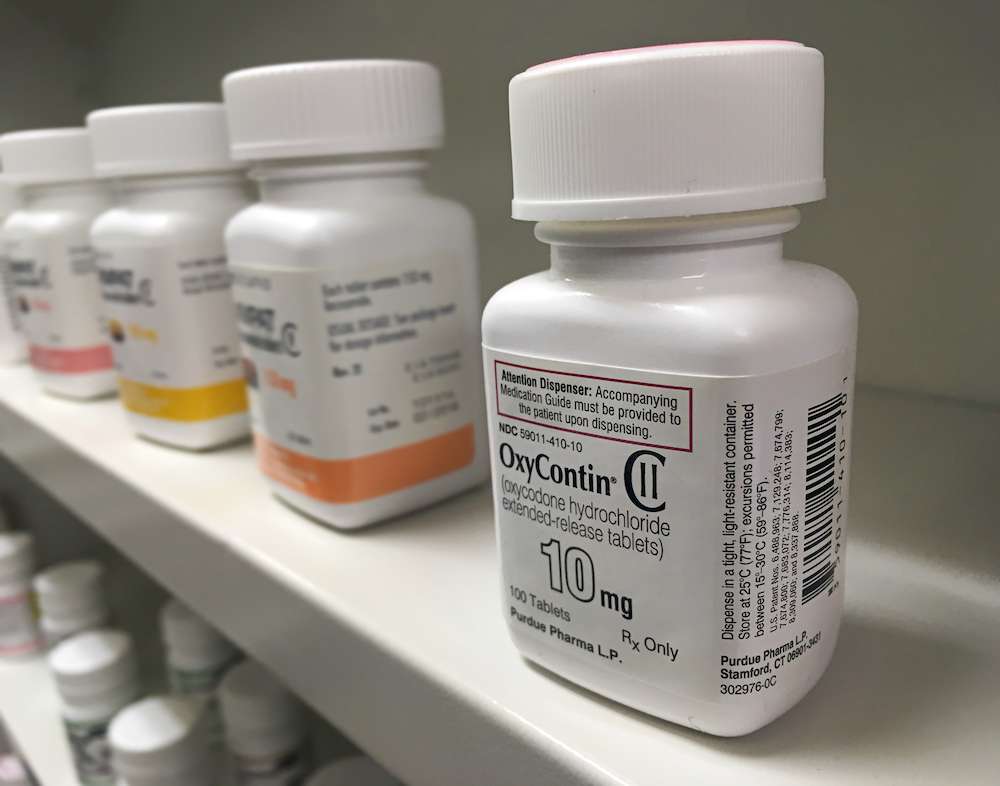
    Purdue Pharma may be close to reaching a settlement. The OxyContin maker—named in more than 2,000 lawsuits for fueling, and then aggravating, the opioid crisis—is seeking to resolve the lawsuits through a multibillion dollar settlement, NBC News reported.

    The company’s lawyers were in Cleveland last Tuesday (Aug. 20) to meet with the plaintiffs’ attorneys, including state attorneys general, to discuss the proposal, anonymous sources relayed to NBC.

    The company would settle for $10 billion to $12 billion, and declare bankruptcy. The deal would involve the Sackler family giving up control of Purdue, and paying at least $3 billion toward the settlement. The family has owned Purdue since 1952.

    Purdue Speaks

    “The people and communities affected by the opioid crisis need help now,” the company said in a statement to NBC. “Purdue believes a constructive global resolution is the best path forward, and the company is actively working with the state attorneys general and other plaintiffs to achieve this outcome.”

    The company is blamed for fueling the opioid crisis by “downplaying the risks of addiction to OxyContin while exaggerating its benefits.”

    The death toll of the opioid crisis has exceeded 400,000 between 1999-2017, the CDC says.

    The Sacklers

    The legacy of the wealthy Sackler family—a major donor to the arts—has been tarnished by their affiliation with OxyContin. The Sackler name has been removed from the Louvre, and major institutions including the Metropolitan Museum of Art and the Guggenheim have agreed to stop accepting gifts from the family, following anti-Sackler rallies organized by photographer Nan Goldin, who herself is in recovery from prescription opioid abuse.

    This wouldn’t be the first time Purdue had to pay for the “alleged” damage inflicted by OxyContin. In 2007, the company paid a fine of $635 million and top executives pleaded guilty in federal court to criminal charges that they duped regulators, medical providers and patients about the drug’s potential to be abused, as the New York Times reported.

    The company also agreed to pay Oklahoma $270 million in March, avoiding the trial that just concluded this month with only Johnson & Johnson as the remaining defendant. Johnson & Johnson was ordered to pay the state $572 million to offset the cost of the opioid crisis.

    View the original article at thefix.com

  • What To Expect After The Johnson & Johnson Verdict 

    What To Expect After The Johnson & Johnson Verdict 

    The Oklahoma ruling has changed expectations for how other opioid trials will be resolved. 

    When an Oklahoma judge ordered Johnson & Johnson to pay $572 million for its role in contributing to the state’s opioid epidemic, he made history by holding an opioid-related company accountable for damages in court for the first time. 

    With thousands of similar cases pending across the country—including 1,600 consolidated lawsuits slated to go before a federal judge in Ohio this October—the Oklahoma ruling has changed expectations for how other opioid trials will be resolved. 

    “It’s the first time that any of these claims have been trial tested,” Joe Khan, an attorney representing municipalities from Pennsylvania, New Jersey and Mississippi in opioid-related cases, told TIME

    The Aftermath

    Khan said that following the verdict in Oklahoma, more drug manufacturers and distributors may be apt to settle their cases. In the Oklahoma case, Purdue Pharma settled for $270 million, while Johnson & Johnson chose to proceed to trial. All other defendants in the case made smaller settlements. The fact that Johnson & Johnson had to pay so much more than Purdue could prompt other companies to err on the side of caution. 

    This “sends a very strong signal to defendants [that] rolling the dice (and going to trial) was not the winning strategy,” said Khan. 

    Professor emeritus of law at George Washington University, Peter Meyers, said that the Oklahoma case was a “game-changer” that strengthens the cases for other municipalities. Even if the judgment were overturned on appeal, that would not happen before the federal cases begin in October, so the impact of the Oklahoma case will be large, he said. 

    He compared the current litigation to lawsuits from the 1990s against Big Tobacco. Ultimately, all 50 states reached a massive settlement, that saw the top five tobacco companies paying $9 billion a year in perpetuity. 

    Meyers said, “The world changed when all states began bringing cases on behalf of their constituents.”

    Still, following the ruling, Johnson & Johnson’s stock price rose, indicating that the company’s investors were relieved by the result. The state was asking for billions in damages. 

    Analyst Joshua Jennings told The New York Times, “As silly as it sounds, a $600 million decision was, relative to expectations, a positive outcome. It was less onerous than many had expected.” 

    Setting a Precedent

    In addition, other legal precedents could compete with the Oklahoma ruling. The Oklahoma case was based on public nuisance laws: the state essentially argued that drug manufacturers and distributors had created a nuisance with their aggressive and misleading sales tactics.

    Although that line of reasoning worked in this case, University of Georgia law professor Elizabeth Burch pointed out that similar cases have failed against gun manufacturers, which could indicate trouble for future opioid lawsuits. 

    She said, “You can draw an analogy there, mainly because once you sell a gun, it is no longer in the control of the gun manufacturers.”

    View the original article at thefix.com