Category: Addiction News

  • Ariana Grande: Therapy Saved My Life So Many Times

    Ariana Grande: Therapy Saved My Life So Many Times

    “I’ve got a lot of work to do but it’s a start to even be aware that it’s possible.”

    Singer Ariana Grande has had quite a few painful moments over the last 18 months. From the Manchester Arena bombing at her May 2017 concert to losing her ex-boyfriend, rapper Mac Miller, to a drug overdose in September—life hasn’t been easy for the 25-year-old pop star.

    On Monday, Grande lent some words of encouragement for people who may benefit from counseling. Responding to a tweet, she said, “In all honesty, therapy has saved my life so many times. If you’re afraid to ask for help, don’t be. You don’t have to be in constant pain and you can process trauma. I’ve got a lot of work to do but it’s a start to even be aware that it’s possible.”

    Grande has not shied from talking about her own battles. In an emotional interview with Ebro Darden of Beats 1 radio in August, the singer emphasized the importance of helping one another through the good and the bad.

    She said that her song “Get Well Soon” is about “just being there for each other and helping each other through scary times and anxiety. We just have to be there for each other as much as we can because you never fucking know.”

    She added that the song, which appears on her latest album Sweetener, is “also about personal demons and anxiety, more intimate tragedies as well. Mental health is so important. People don’t pay enough mind to it… People don’t pay attention to what’s happening inside.”

    Not only did she lose her ex-boyfriend Mac Miller (born Malcolm McCormick)—who she called “my dearest friend”—this year, she was the target of shame and blame from some misguided individuals.

    Responding to Mac fans who blamed her for triggering his fatal overdose, she said, “I am not a babysitter or a mother and no woman should feel that they need to be. I have cared for him and tried to support his sobriety and prayed for his balance for years (and always will of course) but shaming/blaming women for a man’s inability to keep it together is a very major problem.”

    A medical examiner confirmed this week that the Pittsburgh rapper had died from mixed drug toxicity of fentanyl, cocaine and alcohol.

    McCormick was candid about his drug use, and seemed to struggle to find a balance. In a 2015 interview with Billboard, he said, “I’m not doing as many drugs. It just eats at your mind, doing drugs every single day, every second. It’s rough on your body.”

    View the original article at thefix.com

  • Demi Lovato Is Reportedly Out Of Rehab

    Demi Lovato Is Reportedly Out Of Rehab

    A source claims the pop star is spending time at a sober living facility in Los Angeles.

    Singer Demi Lovato is reportedly out of rehab, having achieved 90 days of sobriety following her near-fatal overdose in July. 

    “She just got back to LA a couple days ago,” a source told PEOPLE. “She seems to be doing well so far.”

    The singer was spotted over the weekend out and about in Los Angeles. On Saturday she was seen at Matsuhisa restaurant in Bev Hills with clothing designer Henry Levy.

    TMZ reports that the pair were smiling and happy, holding hands within the restaurant. 

    According to E! News, a source says that Lovato is “also spending time at a sober living facility, where she has a great support system.”

    The source adds that the singer is “taking it slowly and getting back to life one day at a time. She’s not rushing to figure out where she’s going to live permanently.”

    On July 24, Lovato was found unresponsive in her home, reportedly following a night with her dealer taking “aftermarket” pills. She spend two weeks in the hospital before heading to inpatient treatment at an undisclosed facility.

    Last week, the 26-year-old singer’s mother, Dianna De La Garza, said that Lovato had reached a recovery milestone.

    “She has 90 days,” De La Garza said. “I couldn’t be more thankful or more proud of her because addiction being a disease, it’s work. It’s very hard. It’s not easy, and there are no shortcuts.”

    During the same interview, De La Garza revealed that she knew her daughter’s sobriety was slipping even before she learned about the overdose. 

    “I knew that she wasn’t sober. I didn’t know what she was doing because she doesn’t live with me and she’s 26,” she said. On the day that Lovato was hospitalized, De La Garzo said she received an alarming text that said “I just saw on TMZ and I’m sorry.”

    “Before I could get to TMZ, I got the phone call from her assistant and she said, ‘We’re at the hospital.’ So then I knew, OK, she’s not gone. She’s here,” De La Garzo recalled. “And I said, ‘What’s going on?’ And the words that I heard are just a nightmare for any parent: ‘Demi overdosed.’” 

    Lovato has been open about her struggles with mental illness and substance abuse in the past. However, her social media accounts have been quiet since she posted in August, about her relapse. 

    “I have always been transparent about my journey with addiction,” she wrote. “What I’ve learned is that this illness is not something that disappears or fades with time. It is something I must continue to overcome and have not done yet.”  

    She continued, “I now need time to heal and focus on my sobriety and road to recovery. The love you have all shown me will never be forgotten and I look forward to the day where I can say I came out on the other side. I will keep fighting.”

    View the original article at thefix.com

  • Suspect In Deadly Rehab Shooting Taken Into Custody

    Suspect In Deadly Rehab Shooting Taken Into Custody

    The suspect denied responsibility for the shooting.

    A suspect in Monday’s shooting at a California recovery center is now in custody, according to authorities.

    Authorities believe Davance Lamar Reed was the person who opened fire at Helen Vine Detox Center in San Rafael early Monday morning (Nov. 5).

    Helen Vine, on Smith Ranch Road, is a licensed 26-bed co-ed residential detoxification program for people with alcohol and drug addiction as well as co-occurring psychiatric problems, according to the Sacramento Bee.

    Three people were shot—leaving one dead and two with life-threatening injuries.

    The deceased victim was identified as Nathan Lamont Hill, 52. The two injured are 32-year-old Anthony Dominguez Mansapit, an employee at the facility, and 30-year-old Brittney Kehaulani McCann. As of Monday, they remained in intensive care at Marin General Hospital.

    McCann is said to have a dating relationship with Reed, according to the Marin County Sheriff’s Office. The Marin resident, who friends say has a 7-year-old son with the suspect, was trying to drop Reed off at the recovery center, but instead he began shooting, according to her father and sister.

    The shooting victim is a “genuinely empathetic person” who wanted to help Reed, a friend told KTVU.

    Reed was arrested for an unrelated incident that occurred about an hour after the shooting. Police began pursuing Reed after spotting his Hyundai Elantra, which belonged to the mother of shooting victim Mansapit, weaving on the highway, according to KTVU.

    It was not until later that police learned that Reed was a suspect in the shooting at Helen Vine Detox Center.

    According to the sheriff’s office, Reed “made admissions that tied him to the crime scene” at Helen Vine.

    The suspect denied responsibility for the shooting. “I didn’t shoot nobody. I shouldn’t be here,” he told KTVU from jail. He said he is withdrawing from a dependence on Xanax. The anti-anxiety drug was discovered in the vehicle he was in during the police chase that ended in his arrest.

    Reed is being held at Sonoma County Jail. His next court appearance is scheduled for Nov. 15.

    Buckelew Programs, the non-profit organization that oversees the program at Helen Vine and other facilities in Marin, Napa and Sonoma counties, expressed its condolences in a social media post: “Our hearts are with the staff, clients and families affected at Helen Vine Recovery Center.”

    View the original article at thefix.com

  • Evolution of a Beard: My Growth as Reflected Through Facial Hair

    Evolution of a Beard: My Growth as Reflected Through Facial Hair

    My hatred and rage grew alongside my father’s beard. Beards represented mental illness. Beards represented embarrassment. Beards represented my failed family.

    The last time I saw my father without a beard was the night he accused me of being an alien sent to harvest his testicles. It was the summer before I entered eighth grade.

    My father’s mustached face was otherwise smooth. Always had been as far as I knew. I remember kissing his cheeks as a child. Avoiding the scratchy upper lip hair.

    Now, my father’s cheeks were blushed with anger and fear. I lost myself staring into his terrified eyes.

    That night was the culmination of months of odd behavior. Standing outside at my sister’s Girl Scout summer camp, my father screamed accusations at everyone. His family had been replaced by testicle harvesting aliens. The other parents were FBI agents who’d been stalking him at work and recording his thoughts for months.

    I’d always known my dad was a little odd. He had disappeared a few times for no reason. Usually my sister and I would end up staying a few nights at my grandparents’ house. My mom would buy us new toys. My dad would eventually reappear. Things returned to our version of normal. Unknown to me was his diagnosis of schizophrenia.

    This time I knew exactly why my dad disappeared, he was going to the mental hospital; the loony bin. My dad was certifiably crazy and teenage me knew it. Worse, other people knew it. Other teens! Complete strangers. This last image of my father without a beard is seared into my memory.

    My father came home from the hospital with a beard. Well, he came home with three days of unshaven stubble. Still, it was thick, dark, and covered his face. This bearded man no longer looked like my dad. This bearded man no longer acted like my dad.

    The bearded stranger talked to himself out loud in private and public. He cursed and gestured wildly at random times, crossing himself with vigor as he watched Catholic Mass on TV three times a day. We weren’t Catholic. The bearded man spent evenings and weekends shopping for pornographic movies that sat unwatched and unopened in haystack shaped piles in our basement.

    My hatred and rage grew alongside his beard. I hated my father. I hated his beard. By extension, I hated everyone with a beard. Beards represented mental illness. Beards represented embarrassment. Beards represented my failed family. Beards were something crazy people used to hide behind.

    I daydreamed of shaving my father’s beard. Peeling off the stubble to reveal the man he had been prior to having a beard: the father I no longer had.

    At the time I wasn’t able to grow my own beard. That didn’t stop me from making a pact with myself – I would never grow a beard, damn it.

    As you can see in the image accompanying this article, I did not keep my pact.

    As an adult, I didn’t have a beard or a relationship with my father. I became a father myself and vowed to never put my children through what I had gone through: a childhood filled with an empty father.

    I didn’t prevent my father from having a relationship with my children. My mother and father would visit sporadically throughout the year and at holidays. My children were fine interacting with my father. Hell, sometimes I’d catch a glimpse in my children’s eyes of what looked like love toward their grandfather.

    I wasn’t doing so well, though. I treated lingering depression and anxiety with antidepressants, sporadic counseling, and another illness: alcohol use disorder.

    I was failing at life and I frequently drank until I blacked out. I was divorced and only seeing my kids every other weekend. I tried to wash away my bitterness and guilt but instead I found myself on an alcohol-fueled ride to my rock bottom.

    The last time I remember not having a beard was the last time I remember drinking alcohol. I had an appointment with a new counselor. He told me that nothing could improve if I kept drinking and that he wouldn’t work with me if I didn’t stop. Somehow, I heard him. I also heard what he wasn’t saying: things could improve if I stopped drinking.

    I went home and got drunk for the last time that evening.

    It wasn’t easy to stop drinking. At first, every minute of every day was hard. I didn’t have the energy to do anything other than attend AA meetings and counseling. Then, without thinking, I stopped shaving and grew a short beard. At first it brought me comfort in a tangible way: I’d rub on it and scratch it and twist the hairs. After a few weeks it started filling in. And so did my sobriety. My beard grew thicker along with my willpower. I kept the beard and I’ve kept my sobriety.

    At some point I made the first proactive phone call to my father I’d ever made. It wasn’t a magical conversation– we talked about sports and the weather, the same topics we’ve always been able to safely cover during face-to-face conversations over the years. When it was over, I hung up the phone, feeling sick to my stomach. I knew I’d never have the dad I wish I had. I know it’s on me to deal with it. But I wanted to have whatever relationship I could with him.

    I’m four years sober. In these four years I’ve searched my soul to forgive my father. My children love their grandfather. They don’t know the bearded stranger I knew when I was growing up. They’ve never known him without a beard. They only know him as Grandpa!

    I can’t regain my childhood. And I can’t undo what I’ve done to my children. But I can make sure I don’t go back to the dark place of alcohol abuse.

    I kiss my children with a beard. I cuddle my youngest daughter and tickle her with my whiskers. She’s never known me without a beard. My kids see beards differently than I did.

    Today I still have a beard. I keep this beard as a reminder of the importance of staying sober; a reminder of the importance of my family; a reminder of the forgiveness I’ve given others and that I’ve asked for from my loved ones.

    View the original article at thefix.com

  • Corrections Officer Accused Of Attempting To Bring Drugs Into Prison

    Corrections Officer Accused Of Attempting To Bring Drugs Into Prison

    Officers believe the man intended to distribute drugs found in his car to inmates in the jail.

    A Camden, New Jersey corrections officer has been suspended and charged after allegedly attempting to bring drugs into a correctional facility with the intention of selling them to inmates. 

    According to NJ.com, Christopher Bowie, 47, was caught with 21 Suboxone strips, four pills suspected to be oxycodone and six pills suspected to be Xanax. The substances were found on him as well as in his vehicle, according to court documents and a press release from the Camden County Prosecutor’s Office. 

    Officers believe Bowie intended to distribute the drugs in the jail, though they did not provide a reason for their suspicion. 

    Bowie was immediately suspended, and the internal affairs unit and the prosecutor’s office are investigating. Bowie is facing charges of distributing a controlled dangerous substance, possession of a controlled dangerous substance and official misconduct, according to the prosecutor’s office. 

    New Jersey isn’t the only state confronting such actions from corrections officers. 

    On Monday (Nov. 5) an Arizona detention officer was arrested on suspicion of bringing heroin and other contraband into the Mohave County Adult Detention Facility, according to AZ Central

    A Facebook post from the Mohave County Sheriff’s Office states that Ashley Desiree Aquino, 24, was questioned after law enforcement officials received a tip about the smuggling. Though the heroin was disposed of before Aquino was searched, other contraband was found and she admitted to bringing it into the facility. 

    “I hold all of my personnel accountable to their Oath of Office and will ensure that every measure is taken to fully prosecute Aquino for her actions,” said Sheriff Doug Schuster.

    In October, a former Georgia Department of Corrections officer pleaded guilty after being paid by an inmate to bring meth and marijuana into a prison in North Georgia, according to the Atlanta Journal-Constitution

    Tiffany Cook, 34, was caught with more than 118 grams of methamphetamine and 150 grams of marijuana in July, after police received a tip that she had been smuggling such substances into the prison.

    In 2015, CNN reported in-depth on the issue, even speaking with one former guard who had fallen into smuggling for inmates. Gary Heyward worked at New York’s Rikers Island and was facing financial struggles when an inmate approached him about bringing cigarettes in. In speaking with CNN, Heyward reflected back on his prison guard training instructor.

    “He said, ‘Look to your left. Now look to your right. One of you is going to smuggle something in, some inmate is going to talk you into doing bad,’” Heyward told CNN. “I thought, ‘Oh, no, not me.’ But, you know, you never think it’s going to be you.”

    While in prison for two years, Heyward wrote a self-published memoir called Corruption Officer: From Jail Guard to Perpetrator Inside Rikers Island.

    “A lot of people will look at what’s going on in New York… and wonder why,” Heyward said. “People do what they do for different reasons. It’s just people being human, letting that thing that’s most weak in them get the better of them.”

    View the original article at thefix.com

  • Mixed Results For Marijuana Legalization At The Polls

    Mixed Results For Marijuana Legalization At The Polls

    Advocates received a major win in Michigan, which became the first midwest state to legalize recreational marijuana.

    Marijuana advocates hoping for a mandate on legalization instead got a mixed result at the polls on Tuesday, when Michigan became the 10th state to legalize recreational cannabis and voters in Missouri and Utah approved medical marijuana programs, but North Dakota residents rejected a legalization bid. 

    Michigan became the first midwest state to legalize recreational marijuana, with 56% of voters coming out in favor. 

    “Adults will no longer be punished for consuming a substance less harmful than alcohol, and rather than having to resort to the illegal market, they will be able to access it safely and legally from licensed businesses,” Marijuana Policy Project deputy director Matthew Schweich told The Washington Post

    Michigan residents who are 21 and older will be able to legally posses up to 2.5 ounces of weed in public and 10 ounces at home as soon as the election results are certified, which is likely to be in early September, according to the Detroit Free Press. Commercial sale of marijuana is likely to begin in 2020, although public consumption will remain banned in the state. 

    The change to the law in Michigan means that 25% of Americans now live in a state that has legalized recreational weed, despite the fact that cannabis remains a Schedule I substance under federal law. 

    In Utah, a hotly contested measure to begin a medical marijuana program in the state was slightly ahead with 53% of the vote in unofficial reporting, according to The Salt Lake Tribune. The deeply conservative state is heavily influenced by the Mormon church, which opposed approval of the medical marijuana program. Advocates for cannabis reform say that the victory shows a wide-spread change in the public perception of marijuana

    “When Utah flips, the whole country will be watching, and you all did that,” Christine Stenquist, a medical cannabis patient and founder of the advocacy group TRUCE Utah, told voters on Tuesday night. 

    In Missouri, 65% of voters approved a measure to legalize medical marijuana and tax it at 4%, with the funds directed toward healthcare for veterans. Voters rejected two similar measures that also legalized medical marijuana, but taxed it at either 2 or 15%. 

    However, the news was not rosy for marijuana advocates in North Dakota, where nearly 60% of voters rejected a ballot initiative that would have legalized recreational cannabis without establishing a marketplace or even regulations. 

    “Tonight, parents can sleep easy knowing their children won’t wake up to more marijuana use in their schools,” Luke Niforatos, senior policy adviser to Smart Approaches to Marijuana, a group that opposes legalization, wrote on Twitter. “The sensible, wonderful people of North Dakota have rejected marijuana commercialization in their state.”

    View the original article at thefix.com

  • State Of Mental Health In America "Still Quite Bleak," Report Says

    State Of Mental Health In America "Still Quite Bleak," Report Says

    New data shows “alarming increases in adult suicidal thoughts and major depression in youth.”

    Talking about mental health is becoming less taboo, but is this making a real difference? 

    According to a new report that offers a snapshot of mental health in the United States, overall the picture is “still quite bleak.”

    The annual State of Mental Health report, compiled by Mental Health America (MHA), saw encouraging trends since the release of the first report. These include slight decreases in the number of American adults who have mental health concerns (18.19% to 18.07%) or substance use problems (8.76% to 7.93%).

    However, according to president and CEO of MHA Paul Gionfriddo, the data shows “alarming increases in adult suicidal thoughts and major depression in youth.”

    An estimated 9.8 million adults experience suicidal thoughts—an increase of 200,000 people since 2017. And more than 2 million young people were diagnosed with severe major depression, according to the report.

    Overall, more than 24 million Americans living with mental health issues go untreated.

    “Despite mental health being something that more and more people are talking about—far too many people are still suffering. People are simply not receiving the treatment they need to live healthy and productive lives—and too many don’t see a way out,” said Gionfriddo in a press release.

    The MHA report ranked all 50 states and Washington, D.C. based on rates of mental health issues and access to treatment. Minnesota came out on top at #1, with Nevada ranked #51. States ranked higher were deemed to have lower prevalence of mental health issues and better access to treatment, while states ranked lower were deemed to have more mental health issues with less access to care.

    The report also studied the long-term impact of childhood trauma, and determined that youth affected by trauma are more likely to have problems at school such as missing school, being removed from classrooms, and struggling with schoolwork.

    Thus MHA “strongly supports” integrating mental health services in schools. Early intervention and education can prevent the development of more severe mental health problems and help kids deal with trauma.

    This year, New York became the first state to require mental health education across all grades. Virginia enacted a similar rule this year, requiring mental health education to be taught in the 9th and 10th grades.

    “When young people learn about mental health and that it is an important aspect of overall health and well-being, the likelihood increases they will be able to effectively recognize signs and symptoms in themselves and others will know where to turn for help—and it will decrease the stigma that attaches to help-seeking,” said NY’s Education Commissioner MaryEllen Elia.

    View the original article at thefix.com

  • Mike Tyson To Star In Sitcom Based On His Marijuana Business

    Mike Tyson To Star In Sitcom Based On His Marijuana Business

    Tyson stars in the series along with his real-life bodyguard and comedian Russell Peters who’ll play Tyson’s “useless best friend.” 

    Former heavyweight boxing champion Mike Tyson has begun production on a television sitcom based on his new career in the cannabis industry.

    Tyson will star as a retired boxer who grows marijuana in Rolling with the Punches, which is filming at Tyson Ranch in El Segundo, California.

    The series, which the boxer compared to Curb Your Enthusiasm, echoes Tyson’s own interest in cannabis cultivation and technology, which he plans to oversee from his 40-acre Tyson Ranch.

    Tyson’s business partner, film producer and entrepreneur Rob Hickman, said that a demo reel has been delivered to the major networks. The series is expected to air within five months.

    Tyson stars alongside his real-life bodyguard, Chuck Zito—himself an actor on Oz and Sons of Anarchy—and comedian Russell Peters as Tyson’s “useless best friend.” According to the New York Post, the series will also feature Tyson Ranch merchandise.

    “It’s simple. I’m playing a retired boxer who is growing marijuana,” said Tyson. “It’s basically me acting like me, so people can get a look at what my life could be like in different scenarios.”

    Tyson, who said that he is a both a proponent for medical cannabis and a frequent user—”I smoke it all day, every day,” he told the New York Post—has been making inroads into the cannabis industry in recent years.

    A groundbreaking ceremony for Tyson Ranch, which is located about 60 miles southwest of Death Valley National Park, took place in late 2017.

    The property—which is operated by Tyson Holistic, a company staffed largely by military veterans—would serve as both a resort and cultivation facility, with areas designated for growing cannabis and learning about the industry, as well as a hydroponic feed and supply store and edibles factory.

    Additionally, cabins, camping grounds and an amphitheater will accommodate tourists. Tyson and his partners envision the ranch as a means of giving back to the region through the creation of new jobs.

    Tyson Ranch will also serve as one part of a larger brand that will be devoted to cannabis culture and business; High Times reported that an entity called “Iron Mike Genetics” was trademarked for the ranch’s branding and marketing prospects.

    View the original article at thefix.com

  • Runners In Recovery Conquer The NYC Marathon

    Runners In Recovery Conquer The NYC Marathon

    “It’s a miracle story. This group, last year, some were in prison, now they are in the program running the New York City Marathon.”

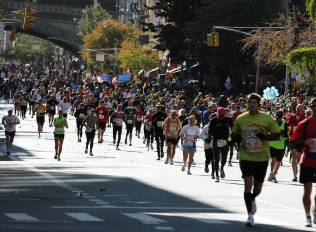
    More than 50,000 people ran in this year’s New York City Marathon on Sunday (Nov. 4). Among them was team Odyssey House, a small group of people in recovery.

    The team of 45 runners included 19 current clients, alumni and supporters, ranging in age from 25 to 72 years old.

    “It’s a miracle story. This group, last year, some were in prison, now they are in the program running the New York City Marathon,” said Odyssey House CEO John Tavolacci, who has run 22 marathons. “I always tell people, society gave up on this group, I tell them everyone has given up on you. This is your opportunity to prove them wrong. This is part of their recovery.”

    Since 2001, the program has seen 500 clients compete in 19 marathons.

    John Kane of Long Island, 47, is in recovery from painkillers and heroin. He has been sober for 1 year and 7 months. “Through hard work with counselors and joining the running team, I’ve overcome my addiction. Running has become my passion. I help train new clients as a volunteer and hopefully they have the same experience I did,” he said.

    Kane says the demand of running the 26.2-mile trek requires skills that are “transferable” to any part of life.

    “The hard work, the perseverance, the dedication it takes to run a marathon can cross over into your everyday life—as far as setting a goal, working toward that goal and achieving that goal,” he said to the New York Times.

    Running, and exercise in general, are popular among people in recovery. An exercise routine can provide structure in early recovery—not to mention the health benefits of improving one’s fitness and a natural feeling of euphoria that come with it.

    “I like the way I feel after a run. I may not want to start running. At the beginning I’m like, ‘I really don’t want to go for this run,’ to be honest. But then I know how I’m going to feel afterward. It replaces the adrenaline that I was looking for when I was using drugs,” says 36-year-old Ryan Stevens, an Odyssey House alumni. Stevens ran her fourth marathon this year.

    This was the 21st marathon for Andre Matthews of the Bronx, 58, who coaches the Odyssey House runners. “I find that when you stay connected in recovery, it’s one addict helping another. It’s a parallel process as you grow and mature in recovery and continue to be a part of people in their recovery, it also benefits you,” said Matthews, who has 20 years of sobriety.

    Matthews’ sister and assistant coach, Sylvia Hyman, has run for the last 10 years to support her brother. “It’s absolutely incredible,” she said. “I was on the sideline watching Andre for so many years… These guys are athletes. It’s like a blessing, they’re like family, it’s inspiring… if they can do it, anyone can do it.”

    View the original article at thefix.com

  • Mac Miller’s Official Cause Of Death Revealed

    Mac Miller’s Official Cause Of Death Revealed

    The 28-year-old rapper passed away in early August.

    A coroner has confirmed Mac Miller’s cause of death. The 26-year-old rapper and music producer (born Malcolm McCormick) died at home in Studio City, California on Sept. 7. Given his history of substance use, early reports pointed to drugs.

    On Monday (Nov. 7), the Los Angeles County Department of Medical Examiner-Coroner confirmed that McCormick had died from an accidental overdose of fentanyl, cocaine and alcohol due to mixed drug toxicity.

    The rapper, who had a tour planned for October following the Aug. 3rd release of his album Swimming, was discovered by his personal assistant in his bedroom. McCormick “struggles with sobriety and when he ‘slips’ he consumes them in excess,” his assistant said, adding that he’d had “several recent ‘slips’” including one three days prior to his death.

    In a 2015 interview with Billboard, the rapper said he was in a good place. “I’m not doing as many drugs. It just eats at your mind, doing drugs every single day, every second. It’s rough on your body,” he said.

    Fentanyl, the synthetic opioid painkiller said to be 50 times stronger than heroin, has also been cited in the deaths of Prince (April 2016) and Tom Petty (October 2017). According to the National Center on Health Statistics, fentanyl was involved in 60% of opioid-related deaths in 2017, an 11% increase from five years prior.

    While fentanyl was created for cancer pain, it is now fueling rising rates of drug overdose deaths. This has prompted the need for a stronger opioid overdose “antidote” to match the strength of increasingly potent fentanyl analogs.

    And this month, the Food and Drug Administration approved a new, more powerful opioid painkiller called Dsuvia. This new drug is said to be 10 times stronger than fentanyl and 1,000 times stronger than morphine.

    While Dsuvia is intended for restricted use only in health care settings—the FDA promised to place “very tight restrictions” on the drug—critics worry that it will only worsen the opioid crisis.

    “We have worked very diligently over the last three or four years to try to improve the public health, to reduce the number of potent opioids on the street,” said Dr. Raeford Brown, who chairs the FDA advisory committee that voted to approve Dsuvia, despite his opposition. “I don’t think this is going to help us in any way.”

    View the original article at thefix.com