Category: Addiction News

  • Top 8 Most Dangerous Drugs

    Top 8 Most Dangerous Drugs

    ARTICLE OVERVIEW: No psychoactive drug is 100% safe. Yes, under medical supervision, some drugs can be beneficial to people in certain situations. However, EVERY drug holds potential for abuse. This article seeks to explore which drugs are the most dangerous and the threats involved in taking them. At the end, we invite you to ask questions.

    ESTIMATED READING TIME: Less than 10 minutes.

    Table of Contents:

    How Do We Define the Most Dangerous Drug?

    There are two primary factors which allow us to better understand what makes a drug so dangerous:

    1. How much harm it causes to the body and mind.
    2. Its risk of addiction.

    We can further separate harms to the body and mind into short-term and long-term effects. Short-term effects of drug use are the immediate consequences that work against your health. These effects vary depending on the drug. For example, when someone takes heroin, a large amount of dopamine is released into the system. As the high begins to come down, the dopamine leaves your system and the brain needs time to refuel itself with natural dopamine. During this time, the user feels symptoms that are very similar to the flu (such as diarrhea, nausea, or vomiting).

    Long-term effects are the health consequences which appear overtime after continuous use of drugs. This is a prime concern for people who struggle with addiction. Again, the exact effects depend on the drug of choice and how often/much you use. Common long-term symptoms of drug use include, but aren’t limited to:

    • Anxiety
    • Depression
    • Hear complications
    • Kidney problems
    • Liver problems
    • Lung complications
    • Paranoia

    For the most part, health problems and addiction go hand-in-hand. People who experience addiction usually have one or more associated health complications. Four common health issues due to drug addiction include:

    • Cancer
    • Heart or lung disease
    • Mental health conditions
    • Stroke

    If you’re using any of the following drugs, you’re not only at great risk of forming an addiction quickly…you also risk adverse health complications. The following list is a compilation of the most dangerous drugs our current market has to offer.

    #8 – Heroin

    At one point in history, heroin was prescribed as a painkiller for chronic pain. But because so many people could not control their use, the drug became illegal. Since its discovery in 1874, it’s been one of the most destructively abused drugs people have gotten their hands on. This is namely due to its intense euphoric effects which are highly addictive.

    When heroin metabolizes in the body, the brain reacts by flooding the system with neurotransmitters. This triggers pain relief and a sense of euphoria, the basis of a person’s addiction. But when someone stops taking heroin, their body and brain reacts with almost opposite effects. Dysphoria and depression are common, accompanied by very uncomfortable withdrawal.

    #7 – Cocaine/Crack

    Since crack is cocaine with additives (such as baking soda), the additional chemicals make it a more dangerous drug than cocaine itself. Sometimes dealers cut crack with toxic ingredients. However, both have hazardous effects on the individual for both long and short term.

    The following are long-term effects of crack and cocaine use:

    • Angina, a pain in the chest due to tightening vessels.
    • Arrhythmia, an irregular heart rate.
    • Blood clots which could lead to a heart attack, deep vein thrombosis, pulmonary embolism, or a stroke.
    • Brain damage.
    • Damage to the nose and mouth due to cocaine being either snorted or smoked.
    • Gastrointestinal damage.
    • Infectious diseases.
    • Kidney damage.
    • Liver damage.
    • Myocardial infarction, due to a lack of oxygen from poor blood flow, a heart muscle can die.
    • Permanently increased blood pressure.
    • Respiratory problems and pulmonary damage.
    • Tachycardia.

    Furthermore, since cocaine is a stimulant, the heart pumps faster when someone is high on it. This can lead to a heart attack or other overdose complications which hold potential to be fatal. Crack and cocaine are very dangerous and people develop addictive habits to them quickly due to the intensity of the high and the immediate effects it has on the body. It’s important to seek help if you or a loved one is currently addicted to crack or cocaine.

    #6 – Crystal Meth

    Crystal meth is one of the most devastating drugs you can get your hands on. Short-term effects include being anxious and sleep deprived. Long-term effect include brain damage, damage of blood vessels, and sinking of the flesh.

    Since the high of the drug starts almost immediately, and fades after 10-12 hours, people tend to continuously dose in order to keep the high going. This kind of behavior is known as a “binge and crash” pattern and is very dangerous considering how consistently drugs are being put into the body.

    Furthermore, crystal meth affects your brain chemistry. Naturally, neurons recycle dopamine. But when you put crystal meth in the brain, it releases lots of dopamine itself, causing neurons to not have to work. When you stop taking dopamine, the neurons must learn to naturally recycle again and the body goes through crystal meth withdrawal.

    #5 – AH-7921

    Since AH-7921 isn’t very common, there’s a likely chance you won’t come across it. However, that doesn’t take away from the fact that it’s highly addictive and dangerous. AH-7921 is a synthetic opioid which has around 80% of the potency of morphine.

    The health complications are very similar to heroin, but since it’s also a synthetic, there’s risk of causing respiratory arrest and gangrene.

    #4 – Flakka

    This is a newer drug which recently hit Florida’s Fort Lauderdale area. Also known as alpha-PVP, Flakka is a stimulant which has similar chemical structuring to amphetamines found in bath salts. The effects it has on the user are similar to cocaine, but 10 times stronger. These include:
    • Extreme agitation and violent behavior
    • Hallucinations
    • Increased friendliness
    • Increased sex drive
    • Panic attacks
    • Paranoia

    Not only is Flakka extremely addictive, it also has serious risks to your harm. Unfortunately, since these drugs have only recently hit the market, there’s only so much known about how the amount of impairment it can do to the brain and body. However, researchers are aware that the consequences of Flakka are similar to the next drug on our list.

    #3 – Bath Salts

    This drug was originally sold online and used the term “bath salts” to disguise what it really is: cathiones. There isn’t enough research conducted for bath salts to fully understand the effects it has on the body for short-term and long-term use. However, clinicians at U.S. poison centers have discovered that some of the consequences to taking bath salts are:
    • Agitation
    • Chest pains
    • Delusions
    • Extreme paranoia
    • Increased blood pressure
    • Increased heart rate

    Furthermore, there’s been an alarming rate of ER visits due to bath salts. Though this drug is dangerous in itself, due to the fact that there’s so little known about it, people who take it are putting themselves at greater risks which may be unknown. If you or someone you know is taking bath salts, it’s important to seek treatment immediately.

    #2 – Whoonga

    Whoonga is one of a kind in the sense that it’s unlike most drugs in the illicit market. It’s a combination of antiretroviral drugs – which were created for the sake of treating HIV – and cut with other substances such as poisons and detergents. It’s not common in the United States, but has found prominent popularity in South Africa due to the high rate of HIV in South Africa.

    Whoonga is highly dangerous towards your health and can cause:

    • Death
    • Internal bleeding
    • Stomach ulcers

    Again, since this is a relatively new drug, little is known about the drug.

    #1 – Krokodil

    A recent drug which has been trending in Russia, Krokodil has affected over a million people. The problem with it is people have supplemented it for heroin due to its price – about a third of the price. The danger with Krokodil is it’s often homemade which can be very unsanitary and hosts a variety of ingredients including, but not limited to:
    • Gasoline
    • Industrial cleaning agents
    • Iodine
    • Lighter fluid
    • Painkillers
    • Paint thinners

    Most people who take these toxic chemicals usually do so through injection. In turn, this has caused some of the following reactions to happen very soon after getting hooked on the drug:

    • Gangrene
    • Phlebitis, injury to the veins
    • Severe tissue damage
    • Spread of HIV

    Krokodil hasn’t been seen widely in the United States yet, but is spreading through Europe rapidly.

    Am I Addicted?

    Health problems can be directly caused by an addiction. But what is an addiction? Addiction defined as:

    Compulsive behavior during which the user has the inability to stop taking drugs despite the negative consequences it has had on their life.

    It’s important to note that addiction isn’t a choice, but rather, a disease which is very hard to control. No one seeks to become addicted to drugs.

    You may wonder whether you or someone you know is addicted to drugs. In order to find out, you can ask the following questions:

    • Are you unable to keep up responsibilities due to your drug use?
    • Has use of drugs affected previous activities you used to enjoy?
    • Have you continued to use drugs despite it causing problems in your relationships?
    • Have you ever tried to quit drugs without having success?
    • Do you find yourself craving to use drugs?
    • Do you spend a large amount of time thinking about, obtaining, or using drugs?
    • Do you find yourself engaging in risky sex or high-risk situations because of drugs?

    If you or your loved one answered yes to any of the above questions, you’re most likely facing an addiction. It’s important consult a doctor as you don’t want to fall victim to certain health problems due to your addiction.

    Basics to Drug Addiction Treatment

    Though treatment works differently, depending on the drug you take, there are a variety of common patterns found in treating addiction. What usually differs is the amount of time a person undergoes treatment and the exact effects they’ll feel while being treated. Upon entering a treatment facility, you can expect the following:

    1. A medical assessment in which you’ll be tested for a variety of things and asked an assortment of questions. The purpose of all this is to collect information of your current condition as a means of pursuing the best treatment options.

    2. A medical detox in which your body will rid itself of the drug’s chemical structure and reform back to its homeostasis – withdrawals. It’s very important you’re under medical supervision during this time there are dangers when withdrawing from certain drugs.

    3. Psychotherapies which are meant for treating underlying issues that are brought upon by drug use. These therapies are designed to teach you how to handle everyday emotions and life stressors without drugs being a factor in your life. You’ll also be educated in how to reduce drug cravings. Psychotherapies include:

    Family therapy
    ◦ Group therapy
    ◦ Individual counseling

    4. Pharmacotherapy (medication) is meant for the sake of easing withdrawals and reducing cravings. The medication you receive all depends on the drug of addiction and how severe your addiction is.

    5. Education sessions which are designed to inform you of the dangers in drug use and how to prevent relapse.

    6. Aftercare services which provide additional support in order to maintain sobriety.

    Your Questions

    If you have any questions pertaining to the most dangerous drugs or how to treat drug addiction, we invite you to ask them below. If you have any advice to those struggling with addiction or wondering more about the most dangerous drugs, we’d also love to hear from you. We try to reply to each comment in a prompt and personal manner.

    View the original article at

  • Did You Know Carfentanil Is 5000 Times Stronger Than Heroin?

    Did You Know Carfentanil Is 5000 Times Stronger Than Heroin?

    ARTICLE OVERVIEW: Recently, drug dealers have been cutting heroin with carfentanil to increase profit. However, this medicine is not meant for human use. In fact, carfentanil was originally designed to tranquilize large mammals. This article reviews what you need to know about carfentanil, the dangers associated with it, and tips for finding treatment if you’re struggling with an addiction. At the end, we invite you to ask questions. We try to respond personally and promptly to all real-life questions.

    ESTIMATED READING TIME: Less than 10 minutes.

    Table of Contents:

    What is Carfentanil?

    Carfentanil is very similar to the synthetic opioid analgesic, fentanyl. To date, it’s not only one of the most potent opioids available, it’s the most potent opioid on the streets. In fact, it’s estimated to be 100 times stronger than fentanyl. And fentanyl is already 50 times stronger than heroin!

    Carfentanil is estimated to be 10,000 times stronger than morphine.

    However, carfentanil wasn’t created for people to use. Back in 1986, the chemical was labeled under the brand name “Wildnil”. It was used in tranquilizer darts designed for large mammals such as elephants. Carfentanil was the perfect drug for this task, as the overdose risk is similar to that of its cousin, fentanyl, but still contains much higher opioid activity.

    The risks involved with human consumption of carfentanil are HUGE. Overdose risk is extremely high. All it takes is 1 microgram to provoke psychoactive effects. With that in mind, it’s understandable why drug dealers are cutting it with heroin. Even the smallest amounts of the opioid cause dosing reaction, and in this way, a small supply of the drug can cause heroin profits to soar.

    But how does such a powerful drug affect the brain?

    How Does it Affect the Brain?

    Effects of carfentanil are similar to other opioids. The chemical components of these drugs attach themselves to opioid receptors within the brain which are responsible for:
    • Dopamine
    • Norepinephrine
    • Serotonin

    These receptors are attached to neurotransmitters which then carry chemical signals throughout the rest of the body. This can be highly effective if you’re experiencing severe pain in a particular area, as these neurotransmitters travel to where a pain is most intense and change the way that we perceive pain. Opioids can also case euphoric effect, the feeling of being high.

    The effects of opioids are strong and very addictive. Short-term effects from taking an opioid drug like carfentanil include:

    • Drowsiness
    • Feelings of euphoria
    • Pain relief
    • Sedation

    People develop an addiction to opioids through a chemical change in the brain and body. Over time, the body becomes drug-dependent; we chemically develop a necessity for the drug as a means of feeling normal. Without the drug, the body goes through withdrawal.

    Though this happens over a period of time, it should be noted that it doesn’t take long to develop dependence on opioids: usually, drug dependence can occur with about 3 weeks of regular use. When use persists, a person is unable to stop despite the negative effects the drug has on her/his life. In these cases, an addiction can begin.

    Why Overdose Happens

    Opioids are already dangerous in and of themselves. A synthetic opioid like carfentanil that is thousands of times stronger is even more dangerous. As mentioned above, it only takes 1 microgram of carfentanil to trigger activity within a human brain. However, at 20 micrograms, the dose becomes lethal.

    In fact, it’s been determined that of all the dangers of carfentanil, overdose is most likely. Cincinnati, Ohio experienced these consequences in just one weekend where 30 people overdosed because the drug was added to heroin. In the same area, the following weekend, another 78 overdosed.

    An overdose occurs when you take too much of a drug. It literally overwhelms the body. In particular, opioids affect the regulation of breathing and heart rate. When you take too much of an opioid drug, your respiratory and cardiovascular systems slow until they stop. How can you prevent an overdose?

    There are signs to be aware of when someone is experiencing an overdose:

    • Body goes limp.
    • Breathing or heartbeat slows or stops.
    • Face grows very pale and/or seems clammy upon touch.
    • Lips or fingernails turn a purple or blue color.
    • Seizure.
    • Unable to be awakened or cannot speak.
    • Vomiting or making gurgling sounds.

    Overdose Precautions

    So, what should you do if someone overdoses?

    IT’S VITAL YOU CALL 911 IMMEDIATELY!

    A fatal overdose can be prevented under the right medical attention. Calling emergency services needs to be your first priority. However, there are a few steps you can take in order to administer immediate action:

    • If naloxone is available, administrate it. Most likely, the medical professionals who arrive will use it as a means of stopping the overdose. Naloxone quickly blocks the effects of opioids within the body. You can either inject it into the muscle or spray it into the nose.
    • Attempt to keep the person awake by talking to him/her and try to keep them breathing, through CPR if necessary.
    • Make sure the person is placed on their side. This prevents them from choking on bodily fluids.
    • Stay by the person’s side until emergency services arrive. When it comes to an overdose, there’s no telling what can happen within just seconds.

    When it comes to opioid overdoses, most can be prevented through careful steps. When it comes to carfentanil, the story is a little different as it’s so powerful of a drug. Since so little can cause an overdose – and most don’t know whether or not or how much of their drugs are cut with carfentanil – there are GREAT risks involved.

    And these risks go beyond an overdose.

    Carfentanil Health Risks

    Synthetic opioids cause rapid depression within your central nervous system as well as immediate effects including:
    • Drowsiness
    • Increase in blood pressure (particularly, in the brain)
    • Lethargy
    • Muscle spasms
    • Nausea
    • Paranoia
    • Postponed or decreased respiratory function
    • Respiratory arrest
    • Tightening of chest muscles

    However, just as with other opioids, there are also long-term problems which can occur from a prolonged period of use. These include:

    • Abdominal distention and bloating
    • Addiction
    • Brain damage
    • Constipation
    • Development of mental health issues, such as depression or anxiety
    • Development of tolerance
    • Heart complications
    • Liver damage
    • Nausea and vomiting

    Furthermore, since carfentanil can be laced with heroin, there are health risks involved for people who inject as a means to get high including:

    • Gangrene
    • Hepatitis B (HBV)
    • Hepatitis C (HCV)
    • Human Immunodeficiency Virus (HIV)

    According to medical examiners and coroners, the number of deaths due to carfentanil increased by 94% from the second half of 2016 (421 deaths) to the first half of 2017 (815 deaths).

    Carfentanil Trends and Statistics

    The Center for Disease Control and Prevention analyzes opioid death through death certificates from 32 states and the District of Colombia. Of their analysis of fatal opioid doses between July 2016 and June 2017, it was discovered that – of 11,045 opioid overdose deaths – 1,236 (11.2%) had positive test results for carfentanil.

    Furthermore, the trends of overdose have been found to be area specific.

    • Within 2016 and 2017, Ohio had the largest number of carfentanil laced opioid deaths with September of 2016 being the peak month at 86 deaths.
    • Opioid overdose deaths where Carfentanil was present increased across the world in the second half of 2016, from 54 countries affected to 77.

    These trends are able to give us insight into how Carfentanil has only recently made its way into the illicit market. For the most current drug-related trends, including where synthetic opioids are making an appearance, you can follow the National Institute on Drug Abuse’s Emerging Trends and Alerts for all the latest information.

    Basic to Treatment

    If you or someone you love is currently struggling with an opioid addiction, it’s vital to seek help. The risks are too great. You are literally playing with your life. From experience, we promise you:

    You or your loved one has the ability to stop and start a new life!

    Addiction treatment typically works like this:

    1. First, a Medical Assessment

    Medical assessment forms the basis of any treatment plan. When you’re ready to get help, a team of doctors, nurses, and therapists will perform physical and mental exams. You can expect to go through a full medical exam, provide blood and/or urine samples, and go through interviews. This first assessment is crucial to your treatment plan. A good medical assessment should take from 1-2 hours to complete.

    2. Then, Medical Detox

    In order to get past physical dependence, your body must undergo withdrawal. This is the process of removing an opioid from your system and getting back to your natural body chemistry – a state known as “homeostasis”.

    Since opioid withdrawal has some risks such as dehydration and relapse, it’s important you find a detox facility. This will allow you to be in a controlled and safe environment while medical treatment to ease withdrawal symptoms. You can expect to be in detox for about a week, with symptoms peaking 72 hours after your last dose of opium. These symptoms include:

    ◦ Abdominal cramping
    ◦ Agitation
    ◦ Anxiety
    ◦ Diarrhea
    ◦ Dilated pupils
    ◦ Goosebumps
    ◦ Increased tearing
    ◦ Insomnia
    ◦ Muscle aches
    ◦ Nausea
    ◦ Runny nose
    ◦ Sweating
    ◦ Vomiting
    ◦ Yawning

    3. Psychotherapies

    Once an opioid is out of your system, you’re going to experience strong. This is due to the fact that your brain has been dependent on opiates and must readjust back into day-to-day life without it.

    Typically, psychotherapies are designed to teach you how to handle everyday emotions and life stressors. They are highly effective not only in showing you how to live a sober life but also in helping with any mental health conditions which may have arisen due to your opiate use. Furthermore, psychotherapies will reduce cravings. Typical therapies include:

    ◦ Behavioral Therapy
    Cognitive-Behavioral Therapy (CBT)
    ◦ Community Reinforcement and Family Training (CRAFT)
    ◦ Contingency Management
    ◦ Dialectical Behavior Therapy
    ◦ Group Therapy
    Family Therapy
    ◦ Individual Counseling
    ◦ Integrative Approach
    ◦ Motivational Interviewing
    ◦ Multidimensional Family Therapy
    ◦ Narcotics Anonymous (NAA)

    4. Pharmacotherapy (Medication)

    Medications can help to reduce withdrawal symptoms and cravings. When it comes to opioid withdrawal or longer term maintenance, typical medications prescribed are:

    Buprenorphine
    ◦ Loxifidine
    Methadone
    ◦ Naltrexone

    5. Education and Aftercare Services

    Once you begin to learn enough to get back into your day-to-day routine, you’ll have the option learn more. Addiction treatment programs should educate you about how drugs affect your brain … and how to cope without them. You may also be invited to go to meetings to connect with others who are going through the same thing. A support system helps maintain sobriety and stops you from isolating. Other aftercare services include ongoing counseling, sober living houses, and alumni programs.

    Where to Find Help

    When trying to find treatment, it can be difficult to know where to turn. Luckily, addiction treatment is more understood and accepted as a medical condition within the healthcare system. Medicare and Medicaid are being updated to include reiumbursements for addiction treatment. Likewise, state and federal grants aim to increase your access to needed medications and treatment.

    So, where do you go first? The first point of contact can be your general doctor or family physician. S/He can perform a brief assessment and then refer you to treatment centers within your area. From there, you can begin researching different types of treatment programs and their requirements. You can also find help through specialists like:

    Furthermore, keep an eye out for support groups either outside or within your treatment program.
    The people involved in these will help you along the recovery process. If you need to reach out to someone immediately, here are some hotline numbers to contact:

    • Drug Hotline: 877-736-9802
    • National Clearinghouse for Alcohol and Drug Information (NCADI): 800-729-6686
    • National Council on Alcoholism and Drug Dependence Hope Line: 800-475-HOPE (4673)
    • National Drug and Alcohol Treatment Referral Service 800-622-4357
    • National Suicide Prevention Helpline: 800-273-TALK (8255) or 800-SUICIDE (784-2433)
    • Substance Abuse Helpline (available 24/7): 800-923-4327
    • Relapse Prevention Hotline: 800-RELAPSE (735-2773)

    When you’re ready to look for treatment, we’re always glad to help! Feel free to give us a call. Or, you can leave us a personal question in the comment section below.

    Your Questions

    Still have a question about carfentanil? If you have any questions, we invite you to ask them below. If you’d like to share information about carfentanil or offer some advice about opioid addiction, we’d also love to hear from you.

    We try to reply to each comment in a prompt and personal manner.

    View the original article at

  • Help for Ecstasy Withdrawal

    Help for Ecstasy Withdrawal

    ARTICLE OVERVIEW: Regular ecstasy users mostly underestimate the potential of ecstasy for abuse and addiction. This drug does not cause a great physical dependence, yet the psychological addiction can be both destructive and dangerous. This article provides information on how difficult the withdrawal from ecstasy is, what symptoms to expect, and what kind of help you need during it.

    ESTIMATED READING TIME: Around 5 minutes.

    Table of Contents:

    How Ecstasy Affects Brain and Body

    Ecstasy (also known as MDMA/Molly) primarily causes a psychological dependence rather than physical dependence. This means the body doesn’t typically need the chemical in order to feel “normal”, like heroin users.

    However, the brain reacts to ecstasy in a very particular way. When ecstasy is ingested, it disrupts proper communication between neurons by altering the chemical response of neurotransmitters. This causes many users to experience enhanced sensations of stimulation, which is the reason for its popularity on the drug scene. This drug can even cause oxytocin release, the very hormone released during a sexual orgasm.

    And though the body is affected by these brain reactions, it is actually the brain that craves for more ‘ecstatic’ feelings, such as the following:

    • Calmness and relaxation
    • Empathy for others
    • Euphoria
    • Heightened senses
    • Long-lasting energy
    • Lowered inhibitions

    Furthermore, people can feel ecstasy withdrawal symptoms even after just taking it once. People become addicted to the above feelings for a variety of different reasons, showing that addiction is a very personal experience. And most often, the reasons lying behind it are revealed much later through the treatment.

    Is Ecstasy Withdrawal Hard?

     Well, basically the difficulty you’ll experience during ecstasy detox depends on a few different factors:
    • Age
    • Dosing amounts
    • Overall physical and mental health
    • Usage frequency

    For example, those who have been using ecstasy more often and taking higher doses are more likely to experience a harder withdrawal than those who have been using it occasionally and in smaller doses. Also, chances are that withdrawal can be harder for those already struggling with mental health.

    Is Ecstasy Withdrawal Dangerous?

    Ecstasy causes primarily a psychological dependence. Still, it is possible that some mental complications due to withdrawal lead to fatal acts, as in the cases of:

    Anxiety, which becomes a risk since many individuals find it helpful to self-medicate with other drugs.

    Decreased appetite, as it possibly leads to nutritional deficiencies and detrimental weight loss.

    Depression, sometimes even extreme, that may lead to suicidal ideation.

    Insomnia, pertaining to the risk of getting oneself in accidents which could lead to injury.

    As ecstasy releases a large amount of serotonin, when it is taken away it can make the brain feel depleted. This depletion may not only be the cause for above mentioned symptoms to occur, but also for a relapse as some individuals don’t entirely understand how to manage their behavior and emotions without ecstasy.

    The bottom line is, even though ecstasy withdrawal manifests little harm to the body, there are dangers involved when it comes to the mental state.

    A List of Withdrawal Symptoms

    Although primary withdrawal symptoms are psychological, some symptoms of ecstasy withdrawal can lead to mild uncomfortable physical feelings. The exact withdrawal symptoms you can expect to feel will vary. What you experience generally will depend on the severity of your addiction and your overall mental state.

    Ecstasy withdrawal symptoms may include:

    • Anxiety
    • Agitation
    • Changes in self-perception
    • Confusion
    • Cravings
    • Depression
    • Difficulty concentrating
    • Fatigue
    • Insomnia
    • Loss of appetite
    • Memory problems

    It should be noted that it’s common for users to quit ecstasy with other drugs, meaning not only ecstasy is in the system. In fact, people often take ecstasy along with other substances, such as LSD or alcohol. In these instances, withdrawal symptoms can become complicated.

    Some people can even experience an MDMA-induced psychotic disorder, which means they’ll be withdrawing and coping with symptoms for a long period of time. Though this doesn’t occur for everyone, it’s one reason you should ALWAYS SEEK MEDICAL SUPERVISION WHEN COMING OFF ECSTASY.

    The Basic Timeline

    Below is a more detailed analysis of the timeline following your last ecstasy dose:

    0-72 Hours. During this period, your mind is still very aware of the recent presence of MDMA. Even though you experience fatigue and/or physical exhaustion, you could also still hallucinate. Some people feel physical withdrawal symptoms at this time, such as the following:

    • Constipation
    • Dehydration
    • Diarrhea

    It is within these first 72 hours when you’re mostly at risk for relapse. Therefore, it’s critical that you’re under medical supervision at this time, especially if cravings are strong. A supportive medical environment can help prevent you from going back to using and provide you with medications and therapies, which ease withdrawal symptoms.

    4 -7 Days. The body has completely got rid of ecstasy’s toxins, but the mind is still aware of the euphoric effects it felt from using. Therefore, it craves and feels a strong sense of lowness. These low feelings can be any of the following:

    • Anxiety
    • Confusion
    • Depression
    • Irritability
    • Lack of motivation
    • Lethargy
    • Loss of appetite
    • Trouble concentrating

    Week 2. In general, it is much the same as week one, except for the cravings that may or may not be more apparent. With proper psychotherapy, your mind will begin to get better and you’ll find yourself in the beginning stages of easing off withdrawal symptoms.

    Week 3. Your mind starts really feeling better. It gains a sense of confidence again and you can begin to feel yourself coming back to reality. However, cravings may still be persistent. Under proper treatment, these cravings will be reduced during this time.

    Week 4. The mind has passed through and resolved acute ecstasy withdrawal effects. By this time your appetite is usually back and you feel optimistic about an ecstasy-free future.

    Medicines that Help

    Currently, there are no approved medications for ecstasy withdrawal treatment. Still, there are some pharmaceutical treatments that doctors can prescribe. Here are some examples of what can be helpful when addressing following withdrawal symptoms:

    Decreased Appetite. Being under medical supervision might be beneficial to help nutrients level out with supplements, vitamins, or minerals.

    Depression and anxiety. Antidepressants help replenishing serotonin and dopamine levels needed for managing the depression and anxiety.

    Insomnia. Those who suffer from insomnia due to the withdrawal might benefit from learning how to relax and set up health sleep routines. A good night rest can be essential for the body to resume its normal chemical functioning.

    Psychotherapies

    It’s been shown that people get much better with talk therapies, because there professionals teach you how to handle your emotions and behaviors without using drugs, how to set your goals and how to balance your brain’s chemical structure through natural means. Psychotherapies include, but aren’t limited to:
    • Family therapy
    • Group therapy (such as Narcotics Anonymous)
    • Individual counseling
    • Talk therapy

    Natural Remedies that Help

    As ecstasy is primarily a psychological dependence, there are a variety of things you can undertake to ease the mental distress during the withdrawal, including:
    • Acupuncture. Though this is still being researched, a more recent study found that acupuncture had positive effects on reducing withdrawal symptoms. In particular, those dealing with great discomfort from withdrawal can benefit from it.
    • Distractions. As you advance through your withdrawal, your brain longs for more ecstasy in order to feel good. Finding the right kind of distraction is primarily to avoid cravings. Some find help in the arts (such as playing music, drawing, or writing in a journal) while other find new habits to be beneficial (such as cooking or gardening). Don’t be afraid to experiment around while you’re in treatment. You might just learn something new about yourself.
    • Exercise. Most treatment facilities highly recommend exercise to those undergoing detox as exercise promotes natural dopamine and endorphins. Also, it has been shown that exercise promotes a better night sleep for those who experience insomnia.
    • Meditation and Yoga. Withdrawal can bring a lot of stress upon individuals. Meditation and yoga not only ease withdrawal symptoms, but also help reducing cravings. These types of alternative therapies are also beneficial for those dealing with mental illness alongside their addiction, such as anxiety and depression.

    Where to Go For Help

    In order to find help, you must first want it. By admitting you’re defeated, you’re allowing something new to happen. And you’re on your path to seeking medical help.

    But where do you look?

    First, speak with you family doctor. S/He can help refer you to local clinics or specialists. Then, call Substance Abuse and Mental Health Service Administration’s (SAMHSA) National Helpline – 1-800-622-HELP (4357). You’ll be connected with a government worker who will talk you through next steps for finding a detox clinic or treatment center.

    Search for local results for the following:

    You’ll also want to reach out to family and friends. As you go about your recovery, you’re going to be in need of a support system. The people you can always reach out to when things get difficult. Furthermore, even after treatment, when recovery is still ongoing, you’ll have people there when necessary. If you’re a family member or friend of someone who’s addicted to crack there are a variety of options for you to seek help for your loved one.

    Your Questions

    Still have questions?

    If you have any further questions pertaining to ecstasy withdrawal, we invite you to ask them in the comments section below. If you have any advice to give to people currently withdrawing, we’d also love to hear from you. We try to provide a personal response to each comment and get back to you promptly.

    REFERENCE SOURCES:
    NIDA: MDMA (Ecstasy) Abuse
    DRUG FACTS: MDMA (Ecstasy/Molly)
    NCBI: Is Ecstasy a Drug of Dependence?
    NIDA: Understanding Drug Use and Addiction
    THE DEA: MDMA Addiction and Other Mental Health Issues
    NIDA: Commonly Abused Drugs Charts
    Healthdirect: MDMA (Ecstasy) AND Mental Health
    NCBI: Persistent Psychosis After a Single Ingestion of “Ecstasy” (MDMA)
    NIH: MEET MOLLY: The Truth About MDMA
    NIDA: The Neurobiology of Ecstasy (MDMA)
    NCBI: Journal of Psychopharmacology (Oxford, England): The Safety and Efficacy Of ±3,4-Methylenedioxymethamphetamine-Assisted Psychotherapy in Subjects with Chronic, Treatment-Resistant Posttraumatic Stress Disorder: The First Randomized Controlled Pilot Study
    BMJ Journals: Acupuncture in Medicine: Trials of Acupuncture for Drug Dependence: A Recommendation for Hypotheses Based on the Literature
    NCBI: Exercise as a Potential Treatment for Drug Abuse: Evidence from Preclinical Studies
    NCBI: Exercise Effects on Sleep Physiology
    NIDA: Drugs, Brains, and Behavior: The Science of Addiction

    View the original article at

  • Alcoholism Causes and Risk Factors

    Alcoholism Causes and Risk Factors

    ARTICLE OVERVIEW: Many risk factors contribute to a drinking problem. We review the major ones, starting with psychological and then looking at genetic and cultural factors.

    ESTIMATED READING TIME: 5-10 minutes

    TABLE OF CONTENTS:

    Causes of Alcoholism

    Alcoholism is also known as “alcohol use disorder” (AUD). It is a chronic brain disease that can impact anyone no matter the gender, age, ethnicity, personality, nor body type. Everyone is at risk. But how does alcoholism begin?

    A drinking problem doesn’t usually happen over night. Most cases develop gradually over a period of time. While it can sometimes develop quickly and aggressively, an AUD usually takes a longer period to develop. According to SAMHSA’s national survey on drug use and health,over 15 million Americans aged 12 or older had an alcohol use disorder in 2016. What are the causes for this difficult disease?

    There is no fixed formula for the onset of an AUD. Many studies has shown that alcoholism is influenced by a variety of factors. These factors interact differently in each person causing alcohol disorder in some, and not in others. The risk factors can be divided into two categories:

    External factors:

    • Age
    • Cultural norms
    • Education
    • Employment status
    • Environment
    • Family
    • Social norms
    • Religion

    Internal factors:

    • Drinking history
    • Genetics
    • Personality
    • Personal choice
    • Psychological conditions

    The numerous risk factors make it impossible to predict whether any person will develop alcohol use disorder. They just increase the chance that a person will develop this disorder. Even if you have some of the risks factors it doesn’t mean that you will become an alcoholic.

    But, regardless of when the drinking problems start or what caused them, there are many options for treatment that can help you get back your life on track. Do not waste time, reach out for help as soon as possible.

    Psychological Factors

    People with certain psychological conditions are at higher risk of developing alcohol use disorder. Many people with psychological disorders turn to alcohol as a coping mechanism for their disorder. For instance, individuals with depression claim that alcohol elevates their mood, while those with schizophrenia claim that drinking quiets down the voice in their head. One study published in the journal BioMed Central estimated that:

    • More than 40% of people with bipolar disorder can develop a drinking problem.
    • More than 45% of people diagnosed with schizophrenia can develop a drinking problem.
    • More than 25% of people with major depression can develop a drinking problem.
    • More than 80% of people with anti-social personality disorder can develop a drinking problem.

    Personality Factors

    Person’s personality is clearly associated with drinking patterns. There are many theoretical models showing connection between effects of personality on alcohol use and its problems.

    Indeed, some personalities are more prone to developing alcohol use disorder than others. Numerous studies show links between specific personality traits and alcohol abuse. Some of the most common traits related to alcohol abuse include a person’s impulsiveness/ disinhibition and these five traits:

    • Agreeableness.
    • Conscientiousness.
    • Extraversion.
    • Neuroticism.
    • Openness to experience.

    Still, a recent meta-analysis suggests that among the five-factor traits only low conscientiousness, low agreeableness, and high neuroticism are significantly linked to alcohol use disorder.

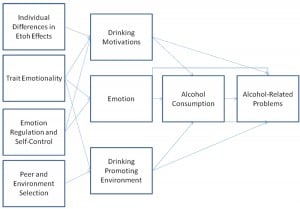
    In sum, there are numerous theoretical models with varying degrees of empirical support whose goal is to answer the question how and why certain personality develop drinking problems. Keep in mind that these models are neither all-inclusive nor mutually exclusive. Check out this illustration of multiple pathways related to personality that show alcohol use disorder might develop:

    Personal Choice Factors

    The personal choice to start drinking is a risk factor of developing alcohol dependence. For example, an individual who has decided that they will never have a drink, can obviously not develop an AUD. Also, people who choose to avoid social situations where drinking occurs heavily, are less likely to develop dependence.

    On the contrary, people who love to socialize with few drinks, are more prone to developing alcoholism.

    Whether you are at risk of developing alcohol use disorder or not, the choice to try alcohol is yours. You make the decision to try it or not.

    Drinking History Factors

    An individual’s drinking history plays an important part of developing alcohol use disorder. People who started drinking at early age, and continue into their adulthood are at high risk of becoming alcohol dependent.

    Also, the National Institute on Alcohol Abuse and Alcoholism lists few drinking patterns that show drinking problems:

    For women, problem drinking is:

    • Drinking more that 1 standard drink daily.
    • Drinking more than 7 drinks weekly.
    • Drinking more than 3 drinks on any single day.

    For men, problem drinking is:

    • Drinking more than 2 drinks daily.
    • Drinking more than 14 drinks weekly.
    • Drinking more than 4 drinks on any single day.

    Binge drinking, by definition is a drinking pattern that builds up the blood alcohol concentration (BAC) to 0.8 g/dL or more. This usually happens after 4 drinks for women, and 5 for men in one drinking session. Heavy drinking is a binge drinking on 5+ days in a period of one month.

    Even though a person may have a genetic predisposition to developing alcohol use disorder, it doesn’t mean that they will become alcoholic.

    Genetic Factors

    NIAAA’s genetic research shows that genetic factors account for 50 to 60 percent of the variance in risk for developing alcohol use disorder. Moreover, children of alcoholic parents have an approximately four times greater risk of becoming alcoholic themselves.

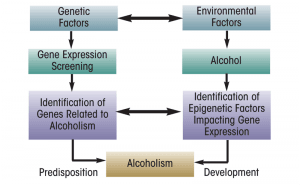
    Still, there is no empirical data that identifies what genes are responsible for increasing the risk of becoming alcohol dependent.  However, there are many genes in person’s DNA that can increase the risk of becoming alcohol dependent. A combination of these genes with personality traits, and various environmental factors may have the key of alcoholism. Check out this diagram to help you see the relationship between genes and environment of developing AUD:

    Familial Factors

    If alcoholism runs in your family, the risk of developing alcohol use disorder is higher that for someone who does not have a family history of AUD. Growing up around a parent who struggles with alcohol problems may change your perspective: you may see drinking as normal, and fall victim to bad habits, or learn the negative effects of alcohol, and never touch it.

    Even though genetics and familial (heredity) are closely linked, there is a difference when discussing genetic versus familial diseases:

    • A person with genetic disease has abnormality in their genome.
    • A person with a familial disease has received a genetic mutation from their parents’ DNA.

    Environmental Factors

    Environment has a huge impact on becoming alcohol dependent. How? For example, if a person cannot cope with stress, they might choose drinking as a way to deal with the stress. Moreover, if an individual has experienced a traumatic event, the chances to turn to drinking are enormous.

    Some of the many environmental factors related to alcoholism include:

    • Attitudes.
    • Bad parenting.
    • Beliefs.
    • Culture.
    • Financial power.
    • Lifestyle.
    • Physical abuse.
    • Peer pressure.
    • Sexual abuse.

    Religious Factors

    Every religion has a different view towards alcohol use. Islam promotes total abstinence, while Catholicism have integrated alcohol use into some religious ceremonies. One study published in the journal Drug and Alcohol Dependency showed that individuals who viewed their religion as promoting abstinence were less likely to develop alcohol dependence. Also, drinking was highly associated with person’s religious commitment: if the religion promoted abstinence the percentage of reduced drinking was higher.

    Moreover, the U.S. National Alcohol Survey showed diverse patterns of abstention and drinking that shows that religion is important for drinking behaviors.

    Social and Cultural Factors

    Alcohol use varies across gender and ethnicity. Worldwide, men drink more than women. According to the 2013 National Survey on Drug Use and Health, American men drink more than women:

    • Regular drinking: 56% vs. 47%
    • Binge drinking: 30% vs. 16%
    • Heavy drinking: 9% vs. 3%.

    Among ethnic and racial groups, Caucasians report the highest rate of alcohol use among people aged 12+, while American Indian/Alaska Natives report the highest rate of binge drinking. Moreover, this SAMHSA’s report shows the following rate on demographics and addiction rates:

    • American Indian/Alaska Native: 14.9%
    • Native Hawaiian and Other Pacific Islander: 11.3%
    • Hispanic: 8.6%
    • Caucasian: 8.4%
    • African American: 7.4%
    • Asian: 4.6%

    Additionally, this analysis show that there are many underlying social and cultural factors contributing to the numbers above. For instance, people with high socioeconomic status tend to drink more frequently than others, while people with low socioeconomic status tend to drink in larger quantities of alcohol.

    On the other hand, cultural norms play a huge role in developing AUD. African Americans and Latinos report more conservative claims towards alcohol use compared with Whites. However, some studies have found out that drinking problems differ across Latino subgroups, such as higher rates of alcohol use disorder among Mexican-American and Puerto Rican men compared with Cuban Americans and Central and South Americans. As a cultural norm, machismo, which is a cultural influence for many generations of Latino male identity, suggest that Latino men attempt to appear strong and masculine because of cultural values, and drinking huge amounts of alcohol is one of the ways to show masculinity. On the contrary, Asians are believed to have higher abstention rates.

    Also, alcohol consumption can be linked to a complex array of factors overlapping with each other, ranging from individual to cultural and societal factors. High social status suggest that social networks and connection influence overall health. For example, people who have higher levels of social support are thought to be healthier because they have better links and access to health services, and greater financial support.

    Finally, this NIAAA pamphlet shows that the Native American population have a 60 percent lifetime prevalence rate for the development of alcohol use disorders and alcohol dependence.

    Read this study Social and Cultural Contexts of Alcohol Use published in the journal Alcohol Research: Current Reviews to find more social and cultural risk factors including:

    • Discrimination factors.
    • Immigration factors.
    • Community factors.
    • Societal Influences (advertising, marketing, and social media).

    Age Factors

    One of the important risk factors for developing alcoholism is the age when you start drinking. The earlier a person starts to drink, the bigger the chances are they continue to drink in future. Also, regular drinking increases the risk of developing alcohol use disorder.

    Even though it is illegal to drink before 21, many teenagers consume alcohol around 13 to 15 years old. According to this survey:

    • 26% of 8th graders reported drinking in the past month.
    • 40% of 10th graders reported drinking in the past month.
    • 51% of the 12th graders reported drinking in the past month.

    Moreover, binge drinking is a popular pattern among youngsters.

    Drinking at an early age increase the risk of alcohol abuse, but alcoholism as a disease doesn’t spare anyone. It can affect anyone at any age.

    Educational Factors

    According to this study, education levels affect your risk of a drinking problem. Individuals who dropped out from high school were about 6 times more to develop alcohol problems, while college dropouts were 3 times more to become alcohol dependent.

    Career Factors

    Careers can be exhausting, and many individuals seek coping mechanism in drinking. High levels of stress, long working hours, and strenuous tasks are only few factors that may produce negative effect on the person.

    According to this CBHSQ Report, 8.7 % of full-time workers aged 18 to 64 drank heavily in the past month. The highest rate of drinking was noticed in mining (17.5%) and construction industry (16.5%).

    How Alcoholism Risk Factors Affect Treatment and Relapse

    All risk factors for developing alcohol dependence affect the treatment on many levels. For example,

    • This study published in the Journal of Ethnicity in Substance Abuse found that Spanish speaking individuals are less likely to perceive a need for treatment and seek treatment services than the general public. Also, women face more barriers to access substance abuse treatment, and are less likely to seek help.
    • According to NIAAA, women tend to seek help in mental health or primary care settings rather than in specialized programs.
    • People with stressful and high-end professions may consider addiction as shame and stigma, while people that are uninsured or have low income may have troubles finding treatment to their standard.
    • Moreover, depression is a major trigger for relapse. But, relapsing does not mean that you have failed. Relapse means that you need to reevaluate your treatment, and find the one that fits your needs. Also relapse makes you aware of the triggers around you.

    However, treatment works!

    Evidence-based treatment that is customized by the needs of the patient is overwlehmingly successful. NIAAA has found that about one-third of people who are treated for alcohol problems have no further symptoms a year later, while many others have reduced their drinking habits.

    So, don’t put life on hold. Gelp help! Or, seek help for a loved one.

    The time to act is now.

    Reference sources: NCBI: The Multiple, Distinct Ways that Personality Contributes to Alcohol Use Disorders
    NCBI: Genetic factors influencing alcohol dependence
    NCBI: Religion and alcohol in the U.S. National Alcohol Survey

    View the original article at

  • The Cost of Ecstasy Rehab

    The Cost of Ecstasy Rehab

    ARTICLE SUMMARY: Rehab does not need to break the bank. This article reviews average costs of rehab for ecstasy problems, and provide you with ideas for how to pay for it. Then, we invite your questions at the end.

    ESTIMATED READING TIME: 5 minutes or less.

    Your Health Is An Investment!

    One of the reasons why people hesitate to look for treatment and get help for an addiction is the inability to afford rehab. We understand this. But while some rehab programs can be expensive, and require a lot of resources, there are countless ways to pay for rehab. And your recovery journey does not always have to cost you a fortune.

    Make sure to keep in mind that treatment is an investment in your life. If you decide to stop using, the money you save by not taking ecstasy will be more than enough to cover the costs of a recovery program. And even if you don’t have the money right away you are still entitled to state funded rehab. Continue reading here for more.
    ____
    No more excuses!
    Your recovery is in your hands.
    Take control of your life.
    More here.
    ____

    What Is Ecstasy Rehab Like?

    Ecstasy rehab is like a cross between summer camp, adult education, and intense psychotherapy. After you have gone through the detox process if needed), you’ll participate in intensive individual and group counseling sessions that get to the root causes of their addiction. Program duration will also vary. Programs can be as short as 30 days or as long as 90 days, or more.

    Here’s what you can expect during ecstasy rehab.

    You will notice that once you read up on substance abuse treatment, the programs will generally consist of the same steps:

    1. Assessment
    2. Detox
    3. Counseling interventions and pharmaceutical medications (if needed)
    4. Support services
    5. Aftercare

    Rehab is about learning a new way to live without mind altering drugs. If you began using ecstasy to counteract depression or tired feelings or to be part of the crowd, rehab can give you a chance to fix these issues without addictive substances.

    Types of Rehab

    So, is inpatient or outpatient rehab better?

    Inpatient ecstasy rehab – Inpatient programs typically requires a person to reside in a rehab facility during the course of their treatment, which can last from a month to a year. During this time, you’ll attend daily behavior and group therapy sessions. Inpatient treatment can be best for people with more extreme cases of addiction, people without support at home, or those who were using drugs/alcohol for long periods of time.

    Outpatient ecstasy rehab – In this type of rehab, you can live at home and attend to daily responsibilities. However, you are required to travel to a rehab facility for treatment and therapy daily or weekly. Outpatient ecstasy rehab is often used as aftercare once an inpatient rehab program has been completed, but it can also be used as a standalone rehab for ecstasy.

    What’s The Cost Of Ecstasy Rehab?

    The cost of rehab varies. Not only does each rehab center charge differently, but you can receive different types of treatments for ecstasy addiction. But in general, the cost of rehab can ranges from almost free to $20,000 a month.

    Average Cost Of Ecstasy Rehab

    The price tag attached to ecstasy rehab changes from facility to facility. For inpatient services, the length of stay can greatly influence the cost. Here are the average costs of ecstasy rehab:

    Average Inpatient Costs – A residential program to address ecstasy addiction costs, on average, around $19,000 per month. This average includes high end and government subsidized treatment centers. If you prefer a luxury facility with massage treatments and spa amenities, you will be looking at $40,000 a month or more!

    Average Outpatient Costs – Outpatient programs cost, on average, about $7,000 for 10 weeks of treatment. This average accounts for both low end ($1,400), median cost ($4,000) and intensive outpatient programs ($9,000 or more).

    Ways to Finance Rehab

    If you have financial difficulties or the price of ecstasy rehab is too high for you, do not lose hope. There are ways you can manage the cost of rehab. Here are some ideas for how to make ecstasy rehab more cost friendly.

    1. Apply for a city, county, or state program.

    Government funded programs are low or very low cost and some are free. These programs have no bells or whistles but you will get the support you need. However, you need to live in the state where you receive treatment and show proof of residence before you can be considered. Sometimes, waiting lists can be days or weeks long.

    2. Claim a tax deduction.

    Medical care expenses such as insurance premiums, payments of fees to doctors, psychiatrists, psychologists, and non-traditional medical practitioners, payments for outpatient or inpatient treatment at a center for alcohol or drug addiction, medications, or admission and transportation to a medical conference related to addiction can be deducted from your taxes.

    3. Get good coverage.

    Good health insurance can make a big difference in the type of care you receive. Coverage for outpatient or inpatient ecstasy rehab services varies greatly from one provider to another and from one policy to another. Many insurance companies set limits on how many days of treatment will be paid for, or the level of treatment that is covered. Be sure that you choose health insurance that covers long term residential stay for addiction treatment to benefit from lowered cost of care.

    4. Ask about sliding scale fees.

    Many facilities offer sliding scale fees for clients who pay for addiction treatment out-of-pocket. Intake counselors who can work with you to arrange financing. And you may be able to qualify for a sliding scale fee based on your income.

    Can I Afford Rehab If I Don’t Have Money?

    Yes. If you don’t have insurance and have little or no money, there are still other way to pay for addiction treatment.

    #1. There are detox clinics which offer free treatment, or sliding-scale fees for healthcare to those who don’t have health insurance. Call your local health or social services department to inquire about the drug treatment programs they have available.

    #2. Another option to get into rehab when you have no insurance nor money is to use governmental financing. You can find various financing programs including the one for drug addiction treatment here: https://www.hhs.gov/programs/social-services/homelessness/grants/index.html

    #3. If you qualify for Medicaid or Medicare assistance and insurance program, you can receive detox and withdrawal treatment at no cost. Ask the facility staff to help you apply for insurance.

    #4. The membership in recovery support groups is free. You can find these groups in your local area. Common no-cost support groups include:

    • Narcotics Anonymous (NA)
    • SMART Recovery
    • Secular Organizations for Sobriety

    Your Questions

    If you have any questions, concerns or comments about ecstasy problems or how you can finance a stay, please contact us. We do our best to respond to all questions personally and promptly.

    Reference Sources: NIH: Is drug addiction treatment worth its cost?
    Drug Abuse: Cost effectiveness of drug treatment
    NIH: Spending on substance abuse treatment: how much is enough?
    SAMHSA: Behavioral Health Treatment Services Locator

    View the original article at

  • Get Rid Of Cigarettes Once And For All

    Get Rid Of Cigarettes Once And For All

    ARTICLE SUMMARY: You can quit smoking! This article aims to help educate you about the physical nature of nicotine addiction and provide you with ideas for quitting safely. Then, we invite your questions at the end.

    ESTIMATED READING TIME: Around 5 minutes.

    TABLE OF CONTENTS

    Basic Statistics

    Cigarettes remain a leading cause of preventable disease and premature deaths not just in the United States but in other countries as well. According to this study published in 2010 in the New England Journal of Medicine, on average, 435,000 people in the U.S die from smoking-related diseases each year. Overall, smoking causes 1 in 5 deaths. And a longitudinal study looking at British doctors smoking over 50 years found that the chance that a lifelong smoker will die from a complication of smoking is approximately 50%.

    All of this to say: YOU ARE NOT ALONE!

    So, if you’re struggling with this habit and looking for ways to get rid of cigarettes once and for all, we invite your to read this article for ideas on how to get rid of cigarettes for good. And then, we invite your questions and comments at the end.

    Is Nicotine Addiction “Normal”?

    Well, if not normal, nicotine addiction is predictable.

    In fact, did you know that most smokers use tobacco repeatedly because they are addicted to nicotine? Tobacco addiction is no different than any other addiction in the sense that it is also characterized by compulsive seeking and abuse, regardless of negative health consequences. How many tobacco addicts know the harmful consequences of their repeated smoking habits, yet they do not stop smoking cigarettes? 35 million tobacco addicts try to quit each year but unfortunately, more than 85% them who try quitting on their own relapse very quickly.

    Anyone can become a nicotine dependent, but, usually, at-risk smoking starts in adolescence. The need for experimentation and the strong influence of advertising led by the tobacco industry plays a significant part in the in regular smoking habits among young teenagers. The results of SAMHSA’s 2013 National Survey on Drug Use and Health showed that about 2,500 kids under 18 tried smoking for the first time every day. About half of new smokers in 2013 were younger than 18 when they first smoked cigarettes (50.5 percent)!

    Because self-help can lead to failed attempts to quit cigarettes, it’s best to try getting rid of this addiction with professional help. In fact, there is evidence that tobacco addiction treatment has helped people to quit smoking for good. What do the experts say?

    What Do The Experts Say About Quitting?

    Professor Robert West from the Cancer Research, UK Health Behaviour Research Centre at UCL explains what makes smokers crave cigarettes.

    “There are several things going on in a smoker’s brain that add up to a powerful urge to keep smoking. First, the nicotine hit in the brain forms a strong association between situations in which people smoke and the urge to smoke. This bond gets stronger and stronger with each cigarette. In a matter of months, smokers find that when they’re in certain situations where they normally smoke, or exposed to certain cues, that they experience a powerful urge to smoke.

    Often, smokers say: “Well, I don’t need to smoke when I’m on a plane or in the supermarket, therefore I can’t be addicted.” But actually they probably are – nicotine makes them crave a cigarette in situations when they would usually smoke. But there’s often more to cigarette addiction than these situational cravings. After smoking for a while, the pathways in a smoker’s brain change so that the nerve cells need nicotine to function normally. For heavy smokers, if their brain is not topped up with nicotine they experience what I call ‘nicotine hunger’. This adds to the situational cravings and can occur at any time”.

    What Are The Characteristics Of Nicotine Addiction?

    Tobacco or nicotine addiction can be identified as a set of behavioral changes. These are some of the most common signs that indicate a tobacco addiction:

    1.  Giving up social or recreational activities in order to smoke.
    2.  The presence of withdrawal symptoms when you try to stop.
    3. You experience the inability to stop smoking or have made several failed attempts.
    4.  You keep smoking despite health problems.

    How Can You Get Rid Of Cigarettes?

    Getting rid of nicotine is challenging, but it isn’t impossible. And although quitting smoking is difficult, alternatives exist in different forms of treatment.Here are some key point sto keep in mind when considering a plan to quit smoking for good.

    1. Be serious about your intention to quit smoking.

    When you want to change any habit, a strong will, determination, and devotion are required. Ask yourself: Do I really want to quit smoking? If the answer is YES, have a clear reason for quitting. This way, when cravings attack and abstinence gets challenged you can be clear about your important reason to quit. Take into consideration the effects of smoking on your health, appearance and lifestyle.

    2. Gather a list of reasons why quitting smoking is important to you and how would you benefit from it in the future. Consider looking your listed reasons as opportunities.

    For example:

    • Smoking affects a person’s health: If I quit smoking, I’ll be more healthy.
    • Smoking affects a person’s energy level: If I quit smoking, I’ll have more energy.
    • Smoking increases the chances to get lung cancer: If I quit smoking, I’ll reduce my chances of getting lung cancer.

    Also, know that it might take than one attempt to stop smoking because ,according to some statistics, 45 million Americans use some form of nicotine and only 5 percent of users are able to quit during their first attempt.

    3. Expect withdrawal symptoms.

    People who smoke cigarettes for a longer period of time have developed physical dependence to nicotine. When you stop smoking, you might experience increased cravings. This means that your body will try to make you go back to smoking in order to continue to receive nicotine to function normally. Here are some of the symptoms you might experience when trying to detox yourself from nicotine:

    • Anxiety
    • Concentration problems
    • Depression
    • Headaches
    • Increased appetite
    • Tension

    4. Create your own quit smoking plan.

    Choose a starting date and choose the most appropriate method. Usually a gradual reduction of smoking is required, instead of an abrupt nicotine discontinuation. You can get more ideas about cessation methods on the Smoke Free government website.

    5. Ask for professional help

    Behavioral and medication therapy can improve your chances of successfully quitting. If you have failed to succeed on your own and you had several unsuccessful attempts, consider getting professional help. But don’t beat yourself up! Asking for help is one of the best and strongest things that you can do for yourself. You can locate a counselor or psychotherapist by searching the American Psychological Association’s member directory.

    Your Questions

    So, ready to start?

    Or, do you have more questions? Please leave your questions or comments in the section at the end of the article. We do our best to respond to all real-life questions with a personal and prompt reply.

    Reference Sources:Drug Abuse: Is Nicotine Addictive?
    Tobacco Free Kids: THE PATH TO TOBACCO ADDICTION STARTS AT VERY YOUNG AGES
    Mayo Clinic: Nicotine dependence: Symptoms and causes
    Cancer Research UK: Expert opinion – Constant craving: how can science help smokers to quit?
    WikiHow: How to Quit Smoking

    View the original article at

  • The Secret Of Relating To Your Addicted Son Or Daughter

    The Secret Of Relating To Your Addicted Son Or Daughter

    ARTICLE OVERVIEW: To related to an addicted child, you need to show love and compassion without enabling. This article explores many issues that parents go through when a son or daughter experiences addiction. We outline where to go for help, what to avoid, and how to generally get through the difficult time.

    ESTIMATED READING TIME: 5-10 minutes.

    TABLE OF CONTENTS

    An Entire Range Of Emotions

    Parents of addicted children often feel a whole range of emotions. Finding out that your son or daughter has a problem with drugs or alcohol can be a shock! Common emotions such as:

    • Anger – or outrage!
    • Fear
    • Guilt
    • Shame

    …all of these can come tumbling out when you find out about your son’s or daughter’s addiction. But it’s important to be guided and directed by a higher level of emotion: empathy. For this reason, it is important that you learn how to deal addiction in the way that EXPERTS RECOMMEND.

    This article provides parents of drug or alcohol addicted children with information and resources about the who/what/when/where and how to solve the problem. So, continue reading to learn more on the topic of relating to your addicted son or daughter. Then, your questions and/or personal experiences are welcomed at the end.

    Relating To An Addict: What NOT To Do

    Becoming aware that your child has a problem with addiction is definitely not a pleasant thing to hear… for any parent. Some addictions come as a need to experience the unknown. Behind others is the need to avoid pain and/or dissatisfaction. Still other kids that cope with addiction have trauma at the source of their pain.

    Regardless of the reasons, the first mistake parents make is the practice of “chasing the blame”. This comes as the natural need for parents to assign some bottom line responsibility for the problem. It is a search for the cause. It is a reaching out for understanding.

    But the truth is this: When the problem of addiction has developed, attaching blame to an individual would only mean wasting time. Instead of looking for the person to blame, parents of drug addicts should accept the fact that their child has become an addict. Then, you can think about alternatives for help.

    The main difficulty for every parent? To face and accept the fact that a family member has addiction problems. Then, move forward. Denial can only set you back.

    Why Is Relating To An Addict So Difficult?

    Talking about the skeletons in the family closet can be extremely difficult! It’s difficult to communicate with adolescents in the best of times…let alone when your kid needs you the most. So, rest assured that most parents find it difficult to relate to their child’s addiction for many reasons. You’re not alone in struggling with what to do or say.

    Some common reasons that get in the way of a healthy relationship exist because:

    • Parents are in denial about the child’s addiction problem.
    • Parents are preoccupied with the shame, guilt and other stigma of addiction.
    • Parents lack education about the science of drug addiction.
    • Parents do not consult or ask for professional help.
    • Parents do not know how to communicate with their children who face addiction problems.
    • Parents do not know how to set boundaries and limits for themselves and their children.

    Ask yourself, “Do I meet any of these criteria?”

    Knowing where you stand in relation to these main barriers is a good beginning.

    The Secret Of Relating To Your Addicted Child

    Q: So, what is the secret of relating to your addicted son or daughter?
    A: The key is to learn how to show your love and compassion without enabling your child’s addiction.

    Usually, you learn do this with professional help.

    Naturally, most parents wonder what to do when they find out about their son or daughter’s addiction problem. We think that the first step you need to take as a parent is to ask for professional help. Of the utmost importance is to accept the presence of the problem and then DO NOT TRY TO FIX IT ON YOUR OWN.

    This is what mental health professionals are for.

    Where to Get Professional Help

    But, who can you ask for help?

    Specially trained, certified, and licensed professionals that diagnose and treat addiction are found all over the country. These a specialists can help determine the severity of your child’s addiction and the need for further treatment. They can serve as interventionists, counselors, and support. Some are medical doctors, some are licensed therapists. All can help your child.

    Addiction professionals include:

    1. Certified physicians who specialize in addiction.

    These are MDs who have received special continued education and certification in addiction medicine. You can use the American Society of Addiction Medicine (ASAM) website to find a physician near you.

    2. Psychiatrists.

    These are also MDs who specialize in treating mental illness. Psychiatrists can be very helpful in cases of dual diagnosis, or co-occuring mental health problems … such as depression or anxiety. Both are frequently present in teens. You can use the American Academy of Child & Adolescent (AACAP) website to find the most suitable child and adolescent psychiatrist in your area. Or, ask your family doctor or health clinic for a referral.

    3. Individual, family, and addiction counselors.

    Psychotherapy is at the core of addiction treatment. Find a licensed therapist near you by searching the directory at the American Psychological Association. Special filters exist for age.

    4. Addiction treatment centers.

    After a mental health professional screens your child and determines the need for further substance abuse treatment, check out local or national treatment centers. You can start your search by contacting the following referral hotlines:

    • Government’s Treatment Locator service at 1-800-662-HELP (4357)
    • SAMHSA online treatment locator on their website
    • Call our confidential hotline, listed on this page

    5. Support groups.

    12 step and self-help groups like Al-Anon, Nar-Anon, or SMART Recovery are an excellent free resources where you can how to cope as a parent. You can also attend peer-to-peer addiction support groups like A.A. or N.A. to learn about addictive thinking just by listening to other people in recovery telling their stories. These groups usually hope an “open” meeting at least once weekly for everyone, regardless of your personal experience with addiction. All that is required of you is to sit and listen.

    6. Education for addicted patients and families.

    In order to educate and better understand what is going on with your addicted son or daughter you can find useful information online. A few places to start?

    Top 5 Things To Avoid When Talking To An Addict

    Here are some behaviors you should avoid when relating to your addicted son or daughter:

    1. The worst choice is denial.

    Some parents simply close their eyes in front of their son’s or daughter’s addiction problem when, in fact, the worst choice is to do nothing and let your child dig deeper into their addiction. Therefore, learn the signs of drug addiction.

    2. Do not try to fix the situation on your own.

    Addiction is not something that can just go away or vanish with time, it is a disease which is complexed and has many aspects. In order to educate, plan and take further steps always ask for help from professionals that are trained in this field and can explain to you what to do about it.

    3. Blaming and criticizing your addicted son or daughter does not help.

    Learn to listen to your child. Try to hear what do they have to say. If you see or consult a family counselor or psychologist, try to carefully listen and apply their suggestions. Instead of just searching for answers about what to do … start really listening! Sometimes a solution-oriented way of thinking might get you stuck into one alternative, but the truth is that there is not a magic wand or a single answer or methodology that works for everyone.

    4. Let your addicted son or daughter know that you care about them, but avoid enabling.

    Enabling behavior is something which we all carry from birth, it comes from the natural instinct to love. However, enabling your addicted son or daughter is not in their interest, nor yours.

    Most enabler parents are not aware what they are doing because their motives come from the need to help their addicted son or daughter. When an addict is actively using drugs he/she needs to see that they are powerless to control their use and parents can help them realize this by setting boundaries. Boundary setting can be difficult…another reason why we recommend that you seek professional help.

    5. Do not forget about your own life.

    Parents want to do everything in their power to help their addicted son or daughter. Most of the time, they neglect their own lives and forget about daily tasks. As a parent you need to remember that every time you pause your life you are giving the addict control. So, make your self-care top priority!

    An Extra Tip

    There is a proverb that goes like this: “Plans fail for lack of counsel, but with many advisors they succeed.”

    The more you educate yourself and learn about the addiction problem your child is facing, you increase the chances of succeeding and going through this nightmare to the other side. Seek help from groups like Al-Anon or Nar-Anon, spiritual or religious affiliations, addiction recovery centers, or your own circle of friends. Talking about addiction is not shameful, it’s needed. And the more people who surround you with love, the better.

    Your Questions

    Did we answer all your questions?

    If you have any additional questions or want to share your experience you are welcomed to do that in the section below. Every personal experience about relating to your addicted son or daughter is valuable and might help others. Please let us know what you think!

    Feel free to ask your questions in the comments section below. We try to respond to all legitimate inquiries personally and promptly.

    Reference Sources: Drug Free: Detaching With Love: How I Learned to Separate My Son and His Addiction
    Drug Free: The Key to Dealing with My Son\92s Drug Addiction? Setting Boundaries for Myself
    Drug Free: 7 Truths About My Addict That Took 5 Years To Learn
    Drug Free: What I Wish I Had Done Differently with My Addicted Son
    Addiction Blog: My son is on drugs: What do I do?
    Why don’t they just quit? Joe Herzanek Part 2 49-59 page
    Drug Abuse: What to Do If Your Teen or Young Adult Has a Problem with Drugs
    Health Guidance: Finding a Balance Between Unconditional Love and Enabling
    Summit Behavioral Health: How To Love An Addict Without Enabling
    Buffalo Valley: How to love an addict without enabling
    SHAMSA: Family Therapy Can Help
    Turnbridge: 4 TIPS ON HOW TO COPE WITH A DRUG ADDICTED SON

    View the original article at

  • Alcohol and the Liver

    Alcohol and the Liver

    ARTICLE OVERVIEW: Heavy drinking can result in serious alcoholic liver diseases including cirrhosis, hepatitis, fatty liver, and even cancer. But, liver damage can be reversed. How? We review here.  If you have additional questions, feel free to post them in the comments section at the end.

    TABLE OF CONTENTS:

    What is Liver Damage?

    The meaty, reddish-brown organ known as the liver has a huge role in filtering the blood, and is active in digesttion, absorbtion, and the processing of food. Moreover, it detoxifies chemicals or toxins that make their way into our bodies, and metabolizes drugs. How does alcohol cause liver damage?

    Alcohol stays in the bloodstream until it is metabolized by the liver, during which it can do much harm to this organ.

    Let’s explain the process a little more clearly. The liver can metabolize a certain amount of alcohol at any given time, But if you drink excessively, chronically, or too quickly, your liver cells struggle to process it. This can result in developing serious alcoholic liver diseases such as:

    • Alcoholic hepatitis
    • Cirrhosis
    • Fatty liver

    Alcohol liver disease is the development of liver damage as a result of heavy drinking.

    Risk Factors

    According to the Centers for Disease Control and Prevention there are 4.9 million adults diagnosed with liver disease, while just over 21K people died from alcoholic liver disease. So, who is at risk of developing liver disease?

    Typically, most heavy drinkers develop serious alcoholic liver disease. This is why alcohol consumption accounts for approximately 3.8% of all global deaths and 4.6% of global disability-adjusted life-years. Further, people who drink excessively are at a higher risk of developing an alcoholic liver disease. Those who do not follow the guidelines on standard drinking are directly exposed to liver diseases, which may have a fatal outcome.

    MedlinePlus reports that liver trouble is common in people between 40 and 50 years old, and men are more likely than women to develop liver disease. Keep in mind that women are not immune to alcoholic liver disease. In fact, they can develop this condition after less exposure to alcohol than men.

    Metabolism

    The liver is a filter of the human body: it breaks down and gets rid of harmful substances in the body. The liver further transforms vitamins, nutrients, and medicines into substances needed by the body. So, just how is alcohol metabolized in the liver?

    90% of alcohol is metabolized in the liver by oxidation via action of the enzyme called “alcohol dehydrogenase (ADH)”, while less than 10% is eliminated in breath, sweat, and urine. Alcohol is absorbed into the system more rapidly than it is metabolized, and this is the reason why alcohol levels build up in the body. In fact, one unit of alcohol stays in the body up to 2 hours after being consumed. This time frame increases with each drink. The higher the blood alcohol concentration, the longer it takes to process alcohol.

    How Alcohol Affects the Liver

    But the liver can only process a certain amount of alcohol at a time. So, when someone drinks too much, the alcohol that is unprocessed circulates through the bloodstream.

    Q: How much alcohol does it take to damage the liver?
    A: The amount of damage that alcohol causes depends on the drinker and individual factors.

    Experts know that heavy drinking (as well as chronic drinking) destroys liver cells, causing serious damages such as cirrhosis, alcoholic hepatitis, and the cellular mutation that leads to liver cancer. So, the American College of Gastroenterology has set out guidelines that state: “Prolonged abstinence is the most effective strategy to prevent disease progression.”


    Alcohol and Cancer

    Can alcohol cause liver cancer?

    YES!

    Drinking too much alcohol regularly can damage the liver, leading to scarring and inflammation, which also raises the risk of developing liver cancer. According to this NIAAA’s synopsis on alcohol liver diseases, people with alcohol-related cirrhosis are at much higher risk for development of liver cancer.

    Hepatocellular carcinoma (liver cancer) is the eighth most frequent cancer worldwide, accounting for approximately 500,000 deaths annually.

    How does alcohol cause liver cancer?

    Alcohol is converted in our bodies into the toxic chemical, acetaldehyde. This toxin can cause cancer by damaging DNA and stopping cells from repairing liver damage. Also, it makes liver cells grow faster than usual, and these cells are more likely to pick up changes in their genes. This is why the International Agency for Research for Cancer has classified acetaldehyde together with alcohol use as carcinogenic for people.


    However, scientists are still limited in their understanding. Even though there is much plausible evidence, the mechanisms about how alcohol causes carcinogenic effect have not been defined in depth.

    Alcohol and Cirrhosis

    One of the most serious alcohol liver diseases is cirrhosis. This disease replaces normal liver tissue with scar tissue, disrupting blood flow, and preventing the liver from working properly.

    Signs of cirrhosis include:

    • Abnormal accumulation of fat in normal liver cells.
    • Liver enlargement or inflammation.
    • Redness of the palms caused by capillary dilation.
    • Shortening of muscles in the fingers caused by toxic effects or fibrous changes.
    • Thickening and widening of the fingers and nails.
    • White nails.

    Why does alcohol cause liver cirrhosis?

    Currently, there are no empirical studies that adequately explain why and how alcohol consumption causes cirrhosis. Regardless, the correlation between drinking and this disease is strong. Our federal institute of health reports that between 40% to 90% of the 26,000 annual deaths from cirrhosis are alcohol-related.

    Even further, the National Institute on Alcohol Abuse and Alcoholism (NIAAA) reports that about 10% to 15% of people diagnosed with alcohol use disorder develop cirrhosis, and many are unaware that they have it. In fact, about 30%-40% of the cases with cirrhosis are diagnosed at autopsy. Moreover, the NIAAA states that 5-year survival rate of people with cirrhosis is about 90% for those who stopped drinking, while it is 70% of those who didn’t stop drinking.

    Symptoms of Liver Disease

    Some common early symptoms of liver disease include:

    • Abdominal pain.
    • Appetite loss, and weight loss
    • Energy loss.
    • Small, red spider-like blood vessels on the skin.

    As the function of the liver worsens, more serious symptoms take place:

    • Abdomen swelling.
    • Dark urine.
    • Discolored stool.
    • Confusion and problem thinking.
    • Itchy skin.
    • Fatigue.
    • Leg swelling.
    • Nausea and/or vomiting.
    • Readiness on the palms.
    • Unusual bruising.
    • Yellowish skin and eyes.

    Diagnosis of alcoholic liver disease is made with biopsies, but laboratory tests can help too. If you notice any of these symptoms, consult with a physician ASAP.

    Can the Damage Be Reversed?

    The only organ in the body that has the ability to regenerate its damaged tissue with new cells is the liver.  So, most people want to know, “Can alcoholic liver damage be reversed?”

    Yes, liver damage can be reversible… if you stop drinking.

    One study on alcohol-related cirrhosis found that alcohol abstinence is a key factor in the survival rate, even in the most severe cases. Its findings show that abstinence from alcohol at one month after diagnosis of cirrhosis was one of the most important factors determining survival: 7-year survival of 72% of people who stopped drinking in comparison with 44% of people who continue to drink.

    However, the liver may get overwhelmed, and it can lose the function to repair itself completely. This usually happens if it is still “under attack” from drug use, continued drinking, or a virus. In these cases, a scar tissue develops, which becomes difficult to reverse.

    Lifestyle changes can support the liver more than you think. You can start taking care of yourself (and your liver) with these simple life changes:

    • Stop drinking.
    • Eat a healthy diet low in salt.
    • Consult regularly with a healthcare provider.

    While there is no safe amount of alcohol beverage to consume, many reputable sources report that if you drink in moderation (one drink per day for women, and two for men) you will do less harm to the liver. But, liver disease due to alcohol consummation is avoidable. Why drink, and put yourself at risk, when you can do more for your health?

    The best way to take care of your liver is to stop drinking.

    Treatment for Alcoholism

    If you are struggling with liver disease, alcohol addiction can be trated. In these cases, it is important to find evidence-based treatment for alcoholism. There are two main types of alcohol rehab programs: inpatient and outpatient.

    Inpatient treatment provides constant medial care and supervision because patients live at the facility. This type of treatment is designed to help people with moderate to severe addictions. Some of the services include:

    • Detox services.
    • Educational classes.
    • Group therapy.
    • Individual therapy.
    • Medication and medical support.

    Outpatient treatment provides similar services, but patients do not live at the facility. They visit the rehab center for few hours at day, several days weekly. This treatment is designed for people who are willing to change, have mild cases of addiction, and have emotional support from loved ones at home.

    If you have drinking problems, don’t wait. Seek help as soon as possible. We can help, you only need to reach out. Feel free to leave us a question at the end…or give us a call.

    Reference sources: NCBI: Pathophysiology and Management of Alcoholic Liver Disease
    NIAAA: The Epidemiology of Alcoholic Liver Disease
    NIH: Exploring Alcohol’s Effects on Liver Function 
    NCBI: The Burden of Cancer Attributable to Alcohol Consumption
    NCBI: Alcohol Metabolism 
    NCBI: Reversal of liver cirrhosis: current evidence and expectations

    View the original article at

  • 7 Tips for Building Your Addiction Recovery Support Network

    7 Tips for Building Your Addiction Recovery Support Network

    Support and Addiction Recovery

    Recovery brings about a lot of changes in your life, including who you surround yourself with. It is critical that you reevaluate your current relationships and cut ties with anyone who is not supportive of your new sober lifestyle. While this might diminish your social circle, do not get discouraged. Forming new, positive connections is a rewarding part of recovery.

    While reaching out to new people can be intimidating at first, surrounding yourself with positive people will not only keep you motivated in your recovery but will improve your overall happiness. Below, you’ll find some tips on how to build a strong sober support network that can help you overcome any challenges ahead and will be there to celebrate all your victories.

    TIP #1: Be Honest.

    To form a strong support network that can effectively help you navigate through all the changes in your new life, you first need to ask yourself what you are looking for. Explore your true needs. Ask yourself:

    • Do I need someone who will go to meetings with me?
    • Do I need someone who will encourage you to I healthier and work out more?
    • Do I need someone who will tell me what I need to hear, even if it is not what I want to hear?

    Knowing what you need will make it easier to recognize who should be a part of your support network.

    While it is important that you are honest about your needs, you also need to be able to relay them to those around you. Your friends and family want to help but they may not know how. So, be open and honest. Do not be afraid to educate them about what you are going through, how you are feeling, and what they can do to help. If you need them to be more patient and understanding with you because you are having a tough day, let them know. If you are feeling lazy or uninspired and need someone to push you to go to a meeting or practice some self-care, ask for help. Remember, you cannot get what you want unless you ask for it.

    TIP #2: Choose Wisely.

    Who you include as part of your support network is very important. When making new friends, ask yourself:

    Do they abuse drugs or alcohol? If they do, they should not be a part of your network as they could be a source of temptations and triggers that could derail your progress. Note that not everyone in your network has to be in recovery. You will likely have friends or family who drink during social occasions. Just be sure to establish boundaries, such as asking them to not drink in front of you or not ask you to go to bars with them.

    How do they make me feel? Is their positivity contagious? Do they encourage you to go out of your comfort zone or inspire you to be better? Or does their negativity cause you stress or make you feel down? Being around negative people can be stressful, so avoid this trait when forming new friendships.

    Are they living healthy lives? Surrounding yourself with people who take care of themselves and value their well-being will encourage you to do the same.

    TIP #3: Embrace Diversity.

    While surrounding yourself with others like you provides a sense of comfort, having a diverse group of friends gives you access to fresh new perspectives. When building your support network, consider attending 12 Step meetings and introducing yourself to everyone and seeing who you click with. By including individuals of different ages, cultures, backgrounds, and years of sobriety in your life, you will be exposed to a wealth of knowledge.

    Another great way to make new friends is by attending sober events. Many treatment centers hold educational workshops and fun sober activities for their alumni to socialize with one another. If you went to treatment, reach out to the staff there and see if they have an alumni group. Sober events can range from open mic nights to mountain climbing and are a great way for you to not only meet new people but relearn to have fun sober.

    TIP #4: Go Beyond.

    Don’t limit yourself to only making friends in recovery. Go beyond your comfort zone and interact with others, even those who may have no experience with addiction. Know that while you are sober, sobriety is not your full identity. There are many other things that make you who you are. So, think about what you are passionate about and get involved ⎼ take a cooking class, go to the gym, start volunteering, take a computer course ⎼ and make an effort to meet others there, too.

    Befriending individuals outside of the recovery community can be intimidating for some. A common worry is explaining that you are sober. While this is an understandable concern, know that no one worth having as a friend will think of you any differently just because you are choosing to live a healthier life.

    TIP #5: Try Online.

    Spending too much time on your phone, particularly on social media, can distract you. It can also slow your progress in recovery. But going online does provide you access to many sober social networks where you can connect with others who may be going through similar things. Mobile apps like Sober Grid can help you connect to other sober people no matter the time of day, which can be particularly helpful when you are going through a crisis or experiencing cravings. Sites like MeetUp – and even using the hashtag #livingsober on Instagram – can also introduce you to others living healthy, fulfilling lives.

    TIP #6: Remain Open.

    A big part of recovery is rediscovering yourself, your passions, and how to enjoy life sober. To do this, you need to remain open-minded about trying new things and meeting new people. Try doing things you have never experienced before, such as going kayaking, singing karaoke, or painting. Even if you decide this is not the activity for you, you may end up making genuine connections with people there. It is not so much about what you do but who you spend that time with.

    In sum, fight back against any resistance you may feel towards trying new things and get out of your comfort zone. The more you put yourself out there, the more you and your support network will grow.

    TIP #7: Don’t Rush.

    Seeing all the positive changes in your life is exciting but be sure to take everything one step at a time. Do not rush into friendships because you feel the pressure to have a support network set up. Allow friendships to form naturally rather than forcing them. Similarly, once you have made new friends, practice tolerance. Recovery might be new to them and you cannot expect them to fully understand everything you have gone through. Understand that you are forming new connections and you need to build them up over time.

    Your Support Network Is Your Lifeline

    While addiction might have been isolating and lonely, your recovery should not be. Positive relationships are a key component of a healthy, fulfilling life. So, reinforce your current relationships and allow yourself to form new ones. Having a group of individuals you can both reach out to during tough times and celebrate your accomplishments with can make all the difference in your recovery.

    And if you need help, reach out. You can use this article as a place to begin. Please leave your questions or comments in the section below. We’ll do our best to respond to you personally and promptly!

    About the Author: John Hamilton is Chief Clinical Outreach Officer for Mountainside Treatment Center. He is a Licensed Marriage and Family Therapist as well as a Licensed Alcohol and Drug Counselor. At Mountainside, he communicates the depth and intricacies of the company’s portfolio of programs and offerings, which have redefined addiction treatment for thousands of individuals across the country. John has been a consultant for the National Institute for Drug Abuse (NIDA) and the Substance Abuse and Mental Health Service Administration (SAMHSA).

    View the original article at

  • Booze on Campus: The Problem of College Drinking & Why It’s Bad

    Booze on Campus: The Problem of College Drinking & Why It’s Bad

    Why the ‘Age Excuse’ for College Drinking Is Toxic

    Is abusing alcohol a foregone conclusion when it comes to the college experience? Is binge-drinking on university campuses a product of tender age, a lack of supervision and supercharged hormones? And can we really expect our students to outgrow it in time to enter the workforce and figure out how to contribute something to society?

    Don’t mistake these questions for prudishness. When used responsibly, alcohol can be a fun addition to some social experiences. But for every peer-reviewed study that illuminates college drinking and how it affects our later lives, there’s another raft of disinformation or willful ignorance to contend with. When we’re not ignoring alcohol abuse at college, we’re letting it become a running joke in our movies, television shows and conversations.

    Alcohol abuse is not a foregone conclusion anywhere — whether you attend college or not. But everything about how we prepare our students for college, and how we encourage them to spend their time once they’re there, seem to have caused this problem to swell beyond all reasonable proportions.

    Suffice it to say, using age as an excuse for college drinking is misleading, toxic, and dangerous. Let’s look at why.

    What Physiology and Psychology Have to Say About It

    There are many years’ worth of scientific studies on this subject at this point. In 2002, one study came to the disheartening conclusion that about 31 percent of all college students engage in behavior that qualifies as “abusing” alcohol. Of these, the report said, about 6 percent exhibited signs of having a dependent relationship with alcohol.

    Another series of studies published in 2007 added to this growing body of knowledge by identifying several subtypes of alcohol dependency. The researchers defined and arranged these subtypes by the individual’s worsening frequency of use:

    • Young adult
    • Young antisocial
    • Intermediate familial
    • Functional
    • Chronic severe

    Among these, only the last two — “functional” and “chronic severe” — seem to jive with the stereotypical “picture” of an alcoholic. And yet, these types of alcohol abusers represent the smallest share of the five above types.

    That means we’re leaving a huge portion of the alcoholism “spectrum” out of our conversations about substance abuse, which is a mistake.

    College Is About Creating Habits

    It’s true — there’s a certain image that comes to mind in the collective unconscious when the words “alcoholic” or “alcohol dependency” come up. It’s also true many of us believe this image to be a typical or even routine part of the college “experience.” We expect college students to drink socially. We assume this behavior is normal and something students will manage to grow out of after four years without any trouble. Once they have their degree, we rationalize they’ll just “snap out of it” and everything will be different.

    Very few of these assumptions are true, unfortunately.

    To begin with, the idea that every college student drinks is, itself, fallacious — the number is closer to 60 percent. But the far worse part is the way these assumptions normalize the act of drinking alcohol, especially in an academic, pre-workforce setting, where these students are supposed to be setting themselves up for a successful future.

    Additionally, indulging too frequently in binge drinking trains the human brain to “phone it in” during our daily activities, responsibilities and commitments — both on campus and off. By trading delayed for immediate gratification, we’re training our bodies and minds to play first and work later. And the longer the cycle continues, the later “later” becomes.

    Finally, college is a place where we develop skills and habits to last a lifetime. If we accept alcoholism as a foregone conclusion in the college experience, we normalize its use to a dangerous degree and paves the way for dependence.

    If college is where people form lifelong habits, it makes a lot of sense that abusing alcohol in college correlates with the abuse of alcohol later in life.

    These students are developing habits because of a mindset they can’t kick when they go out into the real world, no matter how hard they might want to.

    Problem Drinking Does Not Work as a “Rite of Passage”

    By normalizing problem drinking as a “rite of passage”, we run the risk of losing touch with the purpose of attending a university, and why it’s so valuable: It represents the development of knowledge and practical skills, the accumulation of pro-social habits and the cultivation of a more thorough understanding of the larger human world and our place within it.

    In what way does using or abusing alcohol fit into these objectives? We seem to have agreed, collectively, to let alcohol become entwined in this otherwise idyllic-sounding venture. That is not to say alcohol is, fundamentally, a waste of time or, indeed, that it should be off-limits to college students who are of legal drinking age. Rather, it’s a reminder to do an accounting of our collective priorities.

    Because we failed to have regular discussions about the cost and value of education over the years, the price of attending college in the United States has spent the last generation spiraling out of control and out of reach. We have been equally unwilling to have frank conversations about the degree to which alcohol undermines a successful college education. Thankfully, science has already done the heavy lifting.

    The Science on Why Alcohol Undermines Educational Experiences

    Thankfully, you don’t have to take our word for it.

    Research tells us, for instance, that 25 percent of all college-goers attribute alcohol abuse to:

    • Poor academic performance
    • Missed classes
    • A lack of information retention during class
    • Lousy test scores to alcohol

    Based on national statistics, college students who drink three times per week or more are also more than six times as likely to perform poorly on a project or exam as a direct result of abusing alcohol.

    Altogether, individuals in college engage in binge drinking far more often than their non-college-educated peers and are more likely to drive under the influence.

    Why Do We Allow Risky Drinking in College?

    To be frank, it’s like we’re setting our college students up for failure. We don’t speak openly about alcohol — we either say nothing about it, or we celebrate and fetishize it. We’ve made it an inextricable part of incoming college students’ expectations when they arrive on campus and begin wondering what to make of themselves and how to budget their time.

    It’s true most college students have at least a passing familiarity with alcohol even before they leave home. But almost every part of the college experience and atmosphere seems to amplify the factors that encourage binge drinking in the first place: largely unstructured intervals of time, limited contact with family and existing points of contact and authority, and inconsistent or nonexistent enforcement of drinking laws on campuses all conspire to make college an ideal place for alcohol dependencies to flourish.

    Whether it’s because many of us arrive at college without solid plans for the future — and no immediate intention of using our time in an organized way to pursue those plans — or because we’re just reaching for comfort in uncertain surroundings, it’s clear college campuses are an almost uniquely attractive place for the abuse of alcohol.

    It’s an environment where people who are at awkward ages, and who are emotionally and financially vulnerable to an almost preposterous degree, get to make choices for themselves for perhaps the first time in their lives. The fact that so much problematic drinking happens at college isn’t a failure of higher learning, however — it’s an indictment of everything we do and don’t do to prepare our young people for a life at college and beyond.

    Do the Media Fuel Our Vices and How We Think About Them?

    The reason alcohol use among college students is simultaneously a taboo topic and a running joke might well have something to do with the mainstream media and its portrayal of alcohol.

    The problem is so pervasive, it’s challenging to pinpoint a specific example. As with cigarette culture, where we had to write laws to exorcise “personalities” like Joe Camel from our airwaves, removing the influence of alcohol on entertainment and marketing would take a major social and political effort. There’s no conspiracy, necessarily — binge drinking at college has become a part of our collective unconscious, whether it’s characters in a film drinking to excess or a tasteless beer ad encouraging the same.

    We banished Joe Camel from our televisions. Now he vapes. So how do we fix our society-wide habit of simultaneously ignoring our drinking problem and treating it like a pervasive running gag? And how do we make it stick?

    Why Is Alcohol Advertising Still Allowed?

    Science has observed portrayals of alcohol on television, at the movies and in music videos are relatively pervasive and largely paint alcohol as a benign, pleasurable or even pro-social experience. But researchers have been a little slower to conclude decisively that this fuels alcohol abuse.

    The nearest comparison is whether violent video games “cause” violent behavior. The verdict seems to be that there is a significant correlation, but not a causal relationship. Some violent children and adults happen to play violent videogames. Additionally, some individuals who see alcohol depicted in entertainment media tend to abuse it later.

    However, there is less of a gray area surrounding the influence of explicit alcohol advertisements. Adolescents and even young children who become aware of alcohol, and stay that way, through alcohol-related advertisements, tend to hold more positive feelings toward alcohol use in general. There is, therefore, limited evidence that alcohol advertisements aimed at youth — including pre-college and college students — “primes the pump,” so to speak, for the use and abuse of alcohol later in life.

    The advertisement of cigarettes on television is illegal in the United States. The direct marketing of unproven pharmaceuticals is legal, however — but causes just as much damage. So, why are we still allowing alcohol to be portrayed as harmless, fun, social, and pleasant?

    In Conclusion

    Alcohol occupies a controversial position in our society. We allow it to be bought, sold, and consumed without relative taxation or legislation. We normalize unhealthy patterns of drinking during early adulthood. And, our society permits the open promotion of alcohol as a social tool.

    However, an estimated 88,0008 people (approximately 62,000 men and 26,000 women) die from alcohol-related causes annually, making alcohol the third leading preventable cause of death in the United States.

    Until we’re more honest with ourselves about who benefits – and who stands to experience the most harm – we’re going to keep making excuses about college campus drinking instead of finding solutions.

    View the original article at