Category: Addiction News

  • Mother Interrupted

    Mother Interrupted

    We would go to Disneyland, attend little league games, and participate in the school bake sales. What set us apart from other parents? We were smoking copious amounts of methamphetamine.

    The following is excerpted with permission from Mother Load: A Memoir of Addiction, Gun Violence and Finding a Life of Purpose, from Rothco Press. Copyright 2019 by Wendy Adamson. All rights reserved.

    A mother’s body against a child’s body makes a place. It says you are here…. Without this body against you, there is no place. The absence of a body against my body created a gap, a hole, a hunger. That hunger determined my life. -Eve Ensler

    When I looked out the peephole of my front door, Kim, a twenty-four-year-old tweaker, was standing in a cropped t-shirt and skintight jeans, her blond hair covering one eye, peek-a-boo style. She had scored earlier that day and was back for more. It was obvious that she was doing a shit load of meth. But who was I to judge? It was the early nineties and my husband Max and I were living the so-called American Dream. We had two boys and managed apartment complexes with a swimming pool in a quiet suburb outside of Los Angeles. We would go to Disneyland, attend little league games, participate in the school bake sales and enjoy an occasional Sunday Bar-B-Q. What set us apart from other parents? We were smoking copious amounts of methamphetamine.

    Opening the door a crack, I looked over her shoulder to make sure she wasn’t being followed. “Come on in,” I said, quickly shutting the door behind her. Our nine-year-old son Rikki had fallen asleep in his room, while my sixteen-year-old, Jerry, was staying at his friend’s house a few blocks away. I hadn’t gotten any real sleep in days and I was exhausted. I was just about to call it a night when she knocked.

    A fringed leather purse bounced off her hip as she sashayed to the couch.
    “I like your purse,” I said. “Very sixties.”
    Kim sat down and fondled it like it was a puppy, “Oh this thing? I got it for ten bucks.” “Ten bucks?” I was struck with envy.
    “Yes ma’am.”

    Why does this bimbo refer to me as a ma’am? Is she trying to imply I’m old? How about I smack you upside the head with your puppy purse, you blond dimwit? I flashed her a phony smile.

    Just then, Max walked in, shirtless, rubbing his jet-black curly hair with a towel. “Yo, what’s happening Kim?”

    “Hi Max,” she giggled. “I came by to see if it’s too late to score a gram?”
    The dealer, wanting to cut down on foot traffic, had assigned Max as the middle man and for his efforts he’d get a cut of whatever he bought.

    “Giiirrrrlll, you know speed freaks don’t sleep,” he wagged his finger. “It’s never too late to score from a meth connection.”

    Kim laughed, while I blankly stared off in space. I had heard the recycled-speed-freak jokes before, just like I had heard all of Max’s jokes. I figured that’s just what happens when you’re married to someone for twenty years. Everything ends up being old recycled news.

    Within minutes Max and Kim headed out the front door to the connections across town. When I was sure the coast was clear, I rushed to the master bedroom and pulled out a stash I had tucked away earlier that day. Due to my increasing paranoia, I had convinced myself Max was doing speed behind my back. So, why not beat him at his own game?

    I poured a generous line of the white, glassy powder onto the crease of six-inch-squared- off tinfoil. With a straw gripped in my teeth, I held a flame a few inches underneath. The powder began to smolder and a metallic smoke spiraled upward. I sucked it in like a human vacuum cleaner, determined not to let any of it get away. I held the smoke in my lungs until they felt they might explode.

    As I set the foil down my heart was pounding like a drum. I gripped the edge of the mattress, riding the rush of adrenaline like a racecar driver hugging the wall of a sharp turn. The ceiling fan spun overhead. A dog barked somewhere in the neighborhood. The neurons fired in my brain like it was the Fourth of July.

    I was as jumpy as a lab rat and wanted to direct the frenetic energy in a constructive manner so, I went to the kitchen, sat on the sticky linoleum floor and started emptying the cabinets of all its pots and pans around me. I was trying to scale back because I had way too much ‘stuff’. I mean who needs three cheese graters when I barely use one?

    I looked down at the soles of my feet. They were filthy! Deep cracks ran along the edges of my heels. I made a mental note to take a shower but quickly dismissed the idea. The meth always made the water feel like tiny needles shooting all over my body. I shoved a nostril in my arm pit. It smelled like old meat. Maybe I’d take a bath later on?

    It was hard for me to stay focused on meth. One minute I would want to attend to house- wifey chores and the next I would feel a creative impulse come on. When inspiration hit me there was just no stopping it. I pushed myself up and rushed to the hallway cabinet where I kept my craft supplies. I had everything from dried flowers, beads and embroidery thread to ceramics, paintbrushes, and crayons. When I opened the cabinet a roll of gold ribbon fell to the floor and spun down the hall.

    As I stood my brain released an enormous cascade of creative ideas. I felt like such a visionary who could craft anything with my nimble hands. Eventually, I decided to make a colorful Easter bonnet, even though I had an aversion to anything churchy since being kicked out of Catholic school in the ninth grade. I grabbed my trusty glue gun, a batch of yellow silk flowers and a wide brimmed straw hat. With my arms full of supplies I went to the living room to set up a work station.

    I spread everything out on the floor when it occurred to me that the Johnny Carson Show was on. Geez. Was it that late already? Looking at the clock I saw it was now past midnight. Holy shit, Max had been gone for over two hours. Drug dealers may not have the best customer service skills, but normally it wouldn’t take so longWorried, I began flipping through worst- case scenarios in my head. What if he had gotten in a car wreck and he’s in the emergency room somewhere? Or what if they got busted, and he was sitting in the back of a police car? What then? I didn’t have the money to bail him out.

    Then it hit me. Call it a hunch, women’s intuition or instinct, but I knew down to the marrow of my tweaking bones that Max was cheating on me. In a flash everything slotted into place and made perfect sense. The way Kim giggled at his stupid jokes, the countless trips to the dealer they made, and the way she looked at him when he walked into the room. Why hadn’t I seen it sooner? How could I have been so fucking stupid!

    A tightness gripped my chest. I couldn’t breathe. I wanted to throw something, hit something with my fist. I wanted to scream at him, “You can’t do this to me you fucking asshole!” Instead, I went to the bedroom and smoked more speed. My hands shook as I sucked the spiraling metallic smoke into my lungs. My jaw clenched so hard it was a wonder my molars didn’t turn to dust. How could he do this me? Hadn’t I given him children as well as the best years of my life? In this moment it never occurred to me that I could leave him or kick him out of the house. Instead, I thought, maybe if I scared the shit out of him he’d think twice about ever cheating on me again. So, I had a plan as I slipped into the closet and stood on my tippy-toes, reaching around until I found the gun at the back of the shelf. My fingers gripped the hard steel of the .38 Smith & Wesson as I pulled it out. Max and I bought the gun a while back from a tweaker who was in need of cash. We somehow convinced ourselves it was a good idea to have around for protection in case anyone tried to break into our home.

    I went to the living room and placed the .38 on top of the armoire. Waiting, I paced back and forth like a feral cat. Images of Max and Kim fucking in the back of her El Camino played inside my brain like bad porno. Mother fucker! my head screamed, you can’t do this to meI cooked your food. I washed your dirty drawers. For what? To be discarded like some old coat you don’t want anymore? No fucking way. I won’t have it!

    I pushed the screen door, stepped onto the front porch but there was still no sign of them. My thoughts were coming at me like the rapid fire of an AK-47. He said he would always be there for me. He said he would never leave me. We made a promise to each other twenty years before that we’d grow old together. He can’t do this to me.

    My heart hammered against my chest. Sweat dripped down my back. I had managed to work myself up into an eyeball-boiling rage when I looked out the door again, I saw them. Max was driving Kim’s white El Camino, looking for a parking space. I grabbed the .38, barreled through the screen door and ran into the middle of the street. Taking a military stance, behind them, I extended both my arms, with the gun in a two-fisted grip, I aimed above the car and pulled the trigger.

    POW!

    The sound felt like it reverberated through my chest. The noise was so piercing it’s a wonder I didn’t give myself permanent hearing damage. The car didn’t stop so I ran after it with both my knees and arms pumping away. I distinctly remember seeing my neighbor, Mrs. Brown, peering out her large bay window with her head bobbing back and forth.

    Mind your own business you nosy bitch. This is a domestic affair.

    When they turned the corner I darted in between two parked vehicles and caught my foot on the curb. I fell onto the wet grass but popped back up like one of those blow up dolls that won’t stay down. When I turned the corner I was shocked to find the El Camino sitting in the middle of the street. I rushed over like a deranged special ops commando and hurled my torso across the still warm hood. My chest heaved. I was panting like a dog in heat. Kim was sitting shot gun with her jaw unhinged. I pointed the gun directly at Max’s face. His big brown eyes were filled with terror. It was a look I’d never seen before. Those were the same soulful eyes I’d fallen in love with at sixteen years old. He was the love of my life. My best friend. The father of my children.

    In an instant it felt like I slipped out of my body and was staring down at myself sprawled out across the hood of the car. I heard a voice reason inside my head say, “You know, Wendy, if someone were to see you right now they might think you were crazy.” And they would have been absolutely right. I was in the middle of a drug-induced psychotic break. Sleep deprived and smoking way too much methamphetamine for any human being to consume, I had snapped. I had lost my mind just like my mother had years before.

    Then Max must have come to his senses because he stepped on the gas. As the car moved forward I slid off the hood and landed solidly on my feet. Pointing the gun downward so I wouldn’t hit anybody, I fired another round. As I did Kim’s face contorted before they drove off. Oh shit! Did I hit her? No way! The gun was pointed down.

    I stood there out of breath and watched as the taillights disappeared with the weapon dangling by my side. That was not the result I had in mind when I picked up the gun. In some strange way I thought he wouldn’t leave me if I showed him I meant business. My next thought was to change my clothes so no one could identify me in a lineup if the cops happened to show up.

    I ran back to the house but before I went inside, I shoved the gun under a pile of dead leaves by the back porch.

    Once inside I checked on Rikki, who was still asleep. As I stood watching him breath one would think his pure innocence might penetrate my drug-induced state but that was not the case. It was as if the meth, a diuretic, had not only leached my sanity, but drained my maternal instincts as well.

    I headed for the bedroom where I caught sight of my reflection in the mirror. My breath nearly jackknifed. My brown hair was disheveled, the bones in my face were all sharp edges and I was hunched over. My eyes were like two dead, vacant pools and my skin was a sallow gray. It was jarring how much I looked like my mother had when she had gone insane.

    A familiar darkness grabbed me like fingers around my throat. I wanted to stop the madness but had no idea how.

    I flinched when I heard something outside the window. I opened the front door and when I stepped onto the porch I was blinded by a dozen spotlights, pointing at me like fingers of accusation. “Hands in the air!” a disembodied voice yelled from beyond the glare.

    The Catholic girl still inside me did exactly what she was told as a stampede of Lomita sheriffs surrounded me. It all happened fast after that. One of them cuffed my hands while another patted me down and others rushed inside the apartment.

    My legs shook like a high-strung Chihuahua. A scruffy-looking cop slipped plastic baggies over my hands and manila envelopes over that.

    “What’s going on? What, what what are you doing?” I asked, feigning innocence.

    A young cop, who looked barely out of high school wrapped duct tape around the envelopes secured the envelopes at my wrists.

    “My son is asleep in there…”
    A cop yelled inches from my face. “SHUT UP!”
    I flinched. I felt like I might pass out.
    When they were done, it looked like I had two flippers where my hands were supposed to be.

    A young sheriff led me by my arm, shoved me into the back seat of his squad car and slammed the door. I leaned my forehead against the window and watched as cops scurried in and out of my apartment. Where was Max? Why hadn’t he come back to see what was going on? What was going to happen to me? I needed a cigarette so fucking bad.

    I looked down at the strange appendages resting on my lap. I realized the cops were trying to keep the gunpowder intact on my hands as evidence. I gripped the corner of the envelope with my teeth and began ripping, tearing, spitting the scraps of paper on the floor. Ripping, tearing, biting, and spitting like a trapped animal determined to get free. Finally, I broke through the plastic baggies and started licking my hand and fingers. I was no dummy. I knew how to outsmart those cops. I was in a frenzy when the front door of the squad car flew open. A good-looking cop peered through the thick mesh screen.

    “Look, Wendy.” He paused. “Why don’t you just tell me where you put the gun? It will be easier for you if you cooperate with us.”

    “Under the leaves by the back porch.” The words just rolled right off my tongue. You clearly wouldn’t want to drop me behind enemy lines. He ran off like a school kid picked for the winning team. When I thought about Jerry and Rikki my heart sank to my feet.

    Oh God, oh God, oh God, oh God oh shit shit shit. My poor, poor boys. What the fuck have I done? What have I done?


    Want to read more? Buy Mother Load on Amazon.

    View the original article at thefix.com

  • Recovery-Based DV8 Kitchen Teaches Others How To Build A Business With A Social Purpose

    Recovery-Based DV8 Kitchen Teaches Others How To Build A Business With A Social Purpose

    The owner of DV8, who is in recovery himself, is hoping to “change the way people think about hiring people that are in recovery.”

    At DV8 Kitchen—a restaurant and bakery in Lexington, Kentucky—recovery is the foundation. The entire staff at DV8 are in recovery and are supported by the business in every way. The unique enterprise has been featured on The Fix, the New York Times and more.

    Schedules are flexible and work around the lives of staff members, allowing them to attend appointments and meetings without worrying about taking time off. The restaurant works in partnership with treatment centers, where most new employees are hired from.

    Now, hoping to share its success, this week DV8 hosted Soulfull Enterprise, a two-day event (June 11-12) to teach others how to build a life-changing business.

    The foundation of DV8’s success lies in providing quality food and service that’s above the competition, and giving employees the skills and support they need to thrive in the workplace. 

    Those who attend Soulfull Enterprise will learn how to integrate social purpose in their business or organization, how to grow community impact, and, most notably, how to hire “second-chance” employees—or people who “may not have a reputation of successful employment.”

    The owner of DV8, Rob Perez, who is in recovery himself, is hoping to “change the way people think about hiring people that are in recovery,” he told Public News Service.

    Having a job gives people in early recovery a purpose, a routine and a community. “When you do a job with quality, you build self respect, self-esteem and pride in a craft you’re developing,” Perez told The Fix last year. “In recovery, we need a support system and an accountability system. And the camaraderie you get of out of a job when you have common interests, backgrounds and circumstances, is pretty powerful.”

    DV8 is just one successful enterprise with a mission to help the recovery community. The Ohio Valley region has seen what can happen when people in recovery are provided the proper training and opportunities to work. In this region, they’ve seen success in farming and food service.

    “The idea of the enterprise as a whole is that we want to be able to take a seed, put it in the ground, grow it, harvest it, process it, and get it out to the social enterprises, like the cafe, like the catering business, like the food truck, and create training opportunities and jobs along that entire continuum,” said Reginald E. Jones, CEO of the Kanawha Institute for Social Research & Action, one organization working under the Appalachian Food Enterprise (AFE).

    View the original article at thefix.com

  • Actress Claudia Christian’s On A Mission To Spread The Word About Naltrexone

    Actress Claudia Christian’s On A Mission To Spread The Word About Naltrexone

    Christian founded the C Three Foundation to educate the public and medical professionals about the alcohol treatment method. 

    June 12 marks the first ever Global Sinclair Method Awareness Day, a method for the treatment of alcohol addiction that TV actress Claudia Christian swears by. Christian, best known for her role in the sci-fi series Babylon 5, founded the C Three Foundation after struggling with alcoholism for years and finding a solution in what is commonly called The Sinclair Method (TSM).

    TSM involves the use of naltrexone—a medication for treating alcohol or opioid use disorder—one to two hours before drinking. Doing this on a regular basis breaks the behavior-reward cycle that is key to addiction disorders by disrupting the endorphin reward system, blocking the pleasant intoxication when alcohol is consumed. 

    “Naltrexone does not make one ill from drinking. Instead, the drug removes the incentive to drink, helping the addicted brain to unlearn previous harmful behaviors over time,” says a press release from the C Three Foundation. “’Drink yourself sober,’ is how Christian and others describe the method because one must drink alcohol with naltrexone for the treatment to work.”

    According to the foundation, TSM was found to have a 78% success rate after “120 peer-reviewed clinical trials” tested the method. Naltrexone can be purchased in generic form for $1-2 per pill, making it much more affordable than inpatient detox and rehab.

    However, the method comes into conflict with traditional addiction treatment methods, which often emphasize abstinence as a necessity and work under the assumption that addiction cannot be “cured” or unlearned.

    The problem with TSM, as described by someone who tried it, is that there is always the temptation to skip the pill.

    “The problem is that, as someone who loves getting drunk, this begins to take on the connotation of, ‘You aren’t going to be able to have as good of a time tonight if you take this pill,’” wrote Joe Ricchio for The Fix. “For a while, I continue to fire them down the hatch immediately to nip this thought process in the bud as soon as it begins—but eventually my lust for alcohol, the reason I began this process in the first place, takes over and I decide that I will have a few ‘snow days’ from the pill.”

    The C Three Foundation’s goal, however, is simply to educate both medical professionals and the general public on TSM so that people with addiction can make an informed choice.

    Abstinence and 12-step programs have come under increasing scrutiny as relapse rates reach 40-60%, and an increasing number of people are seeking out alternatives. The foundation believes TSM should be a better-known alternative for alcohol addiction treatment.

    “Right now, no one but C Three Foundation is out there educating these medical professionals,“ said C Three Foundation Executive Director Jenny Williamson. “This is one of our biggest challenges to gaining mainstream adoption of TSM.”


    View the original article at thefix.com

  • Experts Question Coroner Who Claims Woman Died of "THC Overdose"

    Experts Question Coroner Who Claims Woman Died of "THC Overdose"

    A toxicology revealed that the apparent overdose victim had 8.4 nanograms of THC per milliliter of blood in her system.

    A medical examiner in Louisiana has drawn national attention for attributing a 39-year-old woman’s death to a THC overdose.

    Dr. Christy Montegut, who serves as coroner for St. John the Baptist Parish in LaPlace, Louisiana, stated that the woman was found with elevated levels of THC per milliliter of blood in her system at the time of death. Such high levels, he noted, can cause respiratory depression, and linked the two factors to the woman’s death. If Montegut’s diagnosis proves correct, it will be the first report of an individual dying solely from marijuana use.

    The woman was found dead in her apartment in February 2019. No outwardly obvious causes of death were found on the scene, so investigators ordered an autopsy. The results showed that the woman had “relatively” healthy organs and no signs of illness. Montegut initially suspected alcohol poisoning as the culprit, but was surprised to note that the toxicology report only noted a high level of THC in her system. 

    According to Montegut, the report showed that the woman had 8.4 nanograms of THC per milliliter of blood in her system, or 15 times the level of THC to register on a toxicology report.

    The woman’s boyfriend said that she had been admitted to the emergency room three weeks before her death for a chest infection.

    After considering these factors, as well as the possibility of respiratory depression caused by high levels of THC, the coroner concluded that marijuana use had caused the woman’s death. 

    “I’m 100% sure of the readings we’ve found,” said Montegut.

    Medical experts and agencies are less confident. The National Institute on Drug Abuse (NIDA) has noted that while it’s not impossible that a death may have occurred due to marijuana use, there are no existing reports of anyone dying solely from that cause.

    And Keith Humphreys, a former senior policy adviser at the White House Office of National Drug Control Policy (ONDCP), said that with Americans using “billions” of cannabis products a year, there should be a “couple thousand cannabis overdoses” in that same timeframe, but none appear to have been reported.

    “What do you conclude from that?” he asked. “It’s just so incredibly unlikely.”

    High Times also shared a 2017 study that found that the top causes for marijuana-related admission to an emergency room were ingestion by kids, acute intoxication due to loss of consciousness or vomiting, or cannabis hypermesis, which causes nausea and vomiting.  It also noted that anxiety can also be included among the top reasons for admission, though again, it remains an unlikely cause of death.

    View the original article at thefix.com

  • Cancer Patient Receives Jail Time Over 42 Pounds Of Pot-Infused Chocolate

    Cancer Patient Receives Jail Time Over 42 Pounds Of Pot-Infused Chocolate

    Postal workers because suspicious about packages being delivered to the man’s home and alerted police.

    One day before the state legislature voted to approve recreational cannabis, an Illinois man was sentenced to four years in prison for ordering copious amounts of marijuana-infused chocolates back in 2014. 

    According to a statement by Kane County State’s Attorney Joe McMahon, 37-year-old Thomas J. Franzen ordered 42 pounds of chocolate that contained THC, the active ingredient in marijuana. When authorities searched his home, they found other indications that Franzen was selling drugs. 

    “Inside his bedroom they found cocaine, more than 100 additional grams of marijuana, along with items that are known to be evidence of drug dealing,” the statement said. “These items include a digital scale, more than $2,000 in cash, ledgers used to track drug sales, materials used for drug packaging, and numerous postal receipts for parcels he had mailed to locations across the U.S. and Canada”

    The investigation had started when postal workers because suspicious about packages being delivered to Franzen’s home. This led them to obtain a search warrant, and ultimately to get law enforcement involved. 

    “Evidence from state and federal investigators shows that he has purchased and sold marijuana products across North America,” the state’s statement said. “In addition to the evidence found in his home, we also have evidence that he had received multiple packages that raised the suspicion of postal inspectors prior to his receiving the package that led to his arrest.”

    Despite the strong evidence, the prosecution was delayed because Franzen has testicular cancer. 

    “As he delayed this prosecution for more than 5 years asserting that his medical condition was preventing him from sitting through a trial and from serving a term in prison, we asked for but never received independent verification that this was true,” McMahon said in the statement. “In fact, Mr. Franzen’s own physician stated that Franzen’s medical condition would not prevent him from sitting through his trial.”

    Franzen’s lawyer also suggested that the chocolate was for personal medical use, but the state rejected that argument. 

    “The marijuana-laced product found at Mr. Franzen’s home was not purchased from a medical marijuana business, and the amount he purchased far exceeds what would be used for personal consumption and is evidence that he is a drug dealer,” McMahon said. 

    Franzen ultimately pled guilty to unlawful possession of more than 5,000 grams of cannabis, a class 1 felony, and was sentenced to 4 years in prison. He is eligible for Illinois’ day-for-day credit, which will cut his time in half. 

    “He got the best disposition that was available given the constraints of Illinois law,” Franzen’s lawyer, David Camic told CNN.

    View the original article at thefix.com

  • Do Teens With Mental Health Issues Vape To Self-Medicate?

    Do Teens With Mental Health Issues Vape To Self-Medicate?

    A recent study examined the association between teenage mental health issues and combustible cigarette use.

    A study recently published in Pediatrics found that teens with mental health issues are more likely to use e-cigarettes.

    Researchers surveyed 7,702 adolescents ages 12 to 17 and found that those with “externalizing problems” such as “rebelliousness and sensation-seeking” were more likely to smoke both standard combustible cigarettes and e-cigarettes, while those with internalizing problems such as anxiety and depression were only more likely to use e-cigarettes.

    “Our results are in line with existing literature that suggests a stronger connection between externalizing problems, like rebelliousness and sensation-seeking, and combustible cigarette use, than between internalizing problems and combustible cigarette use,” said study leader Kira Riehm, MSc, to MedPage Today.

    Studies have demonstrated an association between mental health issues and combustible cigarette use. As e-cigarette use increases among underage teens to the point of being called an “epidemic” by some health experts, researchers are beginning to look into how mental health plays into the growing trend of vaping.

    The findings that teens who use e-cigarettes are more likely to have internalizing mental health problems but not externalizing could suggest that vaping is more of a way to self-medicate for anxiety, depression and related issues rather than simply trying something that has become trendy.

    This could be related to the current availability of information on the risks of smoking combustible cigarettes paired with a lack of information about the risks of e-cigarettes and prevalent myths.

    Studies on teens’ knowledge of vaping risks and even what’s in their e-cigarettes came up with alarming results, including the fact that a significant number of teens were unaware that there was any nicotine in their vaping products. This problem has repeatedly landed the nation’s biggest e-cigarette company, Juul, in hot water. 

    Juul has been accused of marketing to teens with colorful packaging and fruity flavor packs that make smoking more attractive to young people. The popularity of these products, which Juul claims are meant only for adults who are trying to transition away from combustible cigarettes, is largely responsible for an increase in nicotine use among teens after years of decline.

    For kids with mental health problems, e-cigarettes represent a two-way street, says Boston Children’s Hospital’s Dr. Nicholas Chadi.

    “We have to be careful when we think of e-cigarettes as substances because it falls in the bigger picture of substance use in general,” said Chadi. “This is a two-way highway, where people with mental health problems are more likely to start using these substances, but the reverse is also true—people who start using these substances also have increased chances of developing mental health symptoms.”

    View the original article at thefix.com

  • Trauma, Addiction, and Abortion: My Story

    Trauma, Addiction, and Abortion: My Story

    I never allowed myself to accept that doing the right thing and feeling pain and loss aren’t mutually exclusive.

    I should avoid the comments on this piece, but I won’t. I’ve danced on a lot of bars and crashed a lot of cars. There isn’t anything anyone can call me that I haven’t already been called. Except “Mom.”

    With new laws sweeping the South making abortion past six weeks (generally around the time one finds out they are pregnant — if they’re lucky) a felony, it’s important to tell this story. It may offend dozens of people, but if it helps even one person release the shame around their past, I will know that I’ve done my job.

    Abortions are like relapses in liberal society. One is permissible: a slip, a do-over, an I’ve learned my lesson and never again. But more than one and it’s what the hell is wrong with you? Why aren’t you taking care of yourself? AS A WOMAN?! I don’t know the answer to that.

    I’ve had several; relapses and abortions. I’ve had relapses because of an abortion. And I’ve had an abortion because of a relapse. I was always on the pill, and I was always in or about to be in active addiction. For a long time, I saw the pill the same way I saw drugs and alcohol: I watched others use it with impunity and even though I was shown time and again that it didn’t work for me, I kept thinking I could figure out how to use it the right way.

    The first time I drank, I was seven. My parents’ friends brought over a box of liqueur-filled chocolates and I ate them all and played Twister. I was too young to understand what happened, I just thought I really loved Twister and was confused when it wasn’t as fun after that.

    The first time I tried to get sober, I was 27 and I hadn’t missed one day of cocaine in the previous 365 days. Things I had missed: work, the mortgage, all other bills, being faithful, knowing I could leave an abusive relationship.

    The last time I drank I was 37, the age I am now. I decided to have just one beer for a friend’s birthday. And I did just want to have one beer. But then I turned into a different person. And that person wanted to get wasted, do a pile of coke, and blow someone in a dive bar bathroom.

    In the past ten years I’ve let a lot of people down and I’ve caused a lot of harm. As I make my 9th step amends, the list continues to grow as my brain feels safe enough to allow the memories in. I owe a lot of amends, but none of them are to my child. Because of abortion, I don’t have one. The one saving grace through the insanity of my using is that I never dragged a child through it.

    I learned to drink from my mother, whose passed-out body I used to struggle to drag to the bedroom. She wasn’t there for me when she was awake, either. I would wake from night terrors and attempt to get comfort from her. I remember her scream: “Your mother is dead!” 

    My mother is in the program yet she has never made amends to me. I’ve often wished she would, but not everyone is ready to face themselves.

    I was born nine months after my mother had an abortion. A doctor told me that the body’s tricky that way: when you abort, it thinks you miscarried and sends another egg right away to take the lost one’s place. I can’t find any medical studies to support this but I learned firsthand one summer when I went to get a checkup and an IUD (which they will gladly give you once you’ve had more than one child or abortion) and found I was pregnant again. My boyfriend didn’t want to have that one either.

    I didn’t know my own origin story then but I knew that there was no way I could grow and care for a once again drunkenly-conceived embryo after I had just terminated the previous one. In that way I understood a bit of the complicated feelings my mother had for me. 

    My grandfather started a pro-life charity and my grandmother had a bumper sticker on her car that said, “Save the baby humans.” My favorite aunt sends out Christmas letters detailing the positive energy at the pro-life booth this year at the Big E. I never felt bad about what I had to do, except when I did. These things are endlessly complicated. 

    The first time I was pregnant I was 16. My high school sweetheart asked me if I was sure if it was his. There was never a doubt in my mind. When my mother found out, I was grounded for the remainder of the summer and forced to give up my first job. My boss, a strict Greek Orthodox woman, found out.

    “No!” she screamed. “You aren’t going to kill it!” 

    I saw no other option. That was my only surgical abortion and it hurt. I was 6.5 weeks along, just this side of felony. I dragged myself out of the room to a boyfriend upset that I didn’t bounce out like the woman before me. He never thought I responded appropriately to anything, even terminating our pregnancy. Twenty years later, he is finally ready to be a dad. I think he’ll be a good one. Now.

    The next time I got pregnant it was with the first man I did cocaine with, a man who once held me hostage in my own apartment, bit my hand, and sat on my back for several hours while telling me that I’d never publish anything. (Hi.) We were broken up when it happened and I had a restraining order. Restraining orders are aphrodisiacs to some men.

    Thankfully I remembered my symptoms from the previous time, and the early option pill was now available stateside. I took it. Seven weeks. 

    As I write this, the Mourner’s Kaddish runs through my head. Yitgadal v’yitkadash sh’mei raba.

    I’ve been so protective of myself and so full of bravado because I know I did what I needed to do, that I’ve never really mourned. I never allowed myself to accept that doing the right thing and feeling pain and loss aren’t mutually exclusive. Women who’ve had abortions don’t need your shaming. We can feel bad all by ourselves. 

    Then I married, and I went to rehab, and I got divorced, and I got pregnant with my rehab boyfriend, the first man who ever shot me up. Such romance. He wasn’t ready to to be a dad, either, and with his history — dozens of rehabs, overdoses, having been declared legally dead more than once, and my own history not more stable, I agreed. Back to the gynecologist. They sent me back, saying it was too early. I was 5.5 weeks. Just under the new law’s limit.

    After me, that man met a very Christian woman. And now he has a child that he doesn’t see or take care of.

    My last abortion was almost six years ago. I was trying the pill (and controlled drinking and using) just one more time, and I was dating a guy with a baby he didn’t want on the way, the result of a work fling with a girl who insisted that she’d had too many abortions already to have another. He was so angry with her. I fell down the stairs drunk when he was in the hospital for the birth and hurt my shoulder. I went to the hospital and found out that I was pregnant too. When he came home as a new dad, I greeted him with “I’m sorry I didn’t fall down the stairs harder.” Humor is my best defense mechanism, my strongest armor. 

    That time I thought maybe I can do this. I tried the same argument his other baby momma used, but it didn’t work.

    “In eight years,” he said, “I’ll have an eight-year-old son. And you’ll be a waitress who does comedy at night.”

    Oh, Tanner. Always the charmers, the men I’ve had abortions with. So it was back to Planned Parenthood one final time, a place that has always treated me with respect and kindness and compassion. They’ve been there when no one else has.

    At 6.5 weeks I bled out my last pregnancy in a hidden room off the winter rental beach house I would get kicked out of early just a few months later. I watched the waves crash against the shore and I cried for every single one. And I cried for myself, a grown woman who was still unable to even raise herself on her own. A few weeks later I got fired from my job for stealing wine, which was, honestly, Tanner’s idea, and I chugged some tequila and swallowed a bunch of Xanax and drove right into the guardrail, which is probably my favorite thing to do when I’m drinking.

    Other than, obviously, get pregnant.

    The one boyfriend who gave me a hard time about my history is the one I never got pregnant with. He chased me into the shower after choking me and spat baby killer into my face. He has four children, ranging from 2 to 25, none of whom he can afford to care for, none of whom he didn’t severely damage with his using and his anger and his refusal to look at himself. Their mothers took up the slack, and I think most of them will be mostly okay. 

    Those were their choices, and these were mine. It’s a pretty extreme example, my story, and that’s why it needs to be told. If I can forgive myself, so can you. If I can walk through this world and know I did right by myself, that I did the best that I could in the place that I was in with the knowledge and abilities I had at the time, so can you.

    Trauma is handed down, and people in active addiction cannot care for children. The cycle of child abuse in my family stopped with me. Abortion is a basic human right, the hallmark of a civilized society.

    Je ne regrette rien.

    View the original article at thefix.com

  • Patton Oswalt Says Daughter Saved Him From Self-Medicating After Wife's Death

    Patton Oswalt Says Daughter Saved Him From Self-Medicating After Wife's Death

    “I would have just eaten to live and then would have drunk so that I didn’t feel anything any more and then would have repeated it every single day,” Oswalt shared.

    Comedian Patton Oswalt says he would have “merely existed” rather than learn to enjoy life again after the sudden passing of his wife, had it not been for his young daughter Alice.

    True-crime writer and Oswalt’s wife of nearly 11 years, Michelle McNamara, passed away unexpectedly in 2016 at the age of 46.

    “I can say with a pretty good amount of confidence that if I hadn’t had Alice, if I didn’t have a daughter, I think I’d be alive right now, but I don’t think I’d be functioning very well,” Oswalt said in the Guardian. “Drinking would have been a problem. Binge-eating would have been a problem… I would have merely existed. I would have just eaten to live and then would have drunk so that I didn’t feel anything any more and then would have repeated it every single day.”

    The comedian reiterated the significance of having to wake up every morning and care for his daughter, who was 7 at the time of McNamara’s passing. Oswalt’s crippling grief would have led him down a very different path had it not been for Alice and his duties as a parent which forced him to stay in a routine and have that structure despite his pain.

    “Having Alice was like: ‘I’ve got to get up, I’ve got to make breakfast, I got to take care of this little life.’ So, it’s almost like I had freedom from choice because I had our daughter,” Oswalt said.

    This routine was vital to his healing. “The thing that people don’t tell you is, when you’re going through grief, every single thing that you do—no matter how mundane: making breakfast for your daughter, doing laundry—is part of your healing process, whether you want it to be or not. You are basically rebuilding your psyche, whether it’s in something ‘elevated’ like writing, or quotidian like paying bills.”

    On April 21, 2016, Oswalt found McNamara in bed not breathing. Early on, he speculated that he had a “feeling it might have been an overdose,” he told the New York Times. An autopsy revealed that McNamara died from an undiagnosed heart condition coupled with a combination of prescription drugs including Adderall, fentanyl and Xanax.

    He attempted to self-soothe with alcohol, but said that he “found out the hard way these past few months that alcohol really doesn’t help.” Oswalt told Playboy magazine in 2017 that if not for his daughter, he would be a “shut-in alcoholic.”

    Despite the trauma of losing his wife, Oswalt is moving on. He married actress Meredith Salenger in 2017, and has continued to work. His latest projects include Veep and the upcoming The Secret Life of Pets 2.

    View the original article at thefix.com

  • New Jersey To Give Away Free Naloxone On June 18th

    New Jersey To Give Away Free Naloxone On June 18th

    The lifesaving medication will be available for free at select pharmacies in the state thanks to a new program. 

    New Jersey has launched a progressive initiative to combat the opioid epidemic. Naloxone, the opioid overdose reversing drug, will be available on June 18 for free through select New Jersey pharmacies.

    The pilot program was created through the New Jersey Board of Pharmacy and includes a number of large chain pharmacies including Walgreens, Rite Aid and CVS across New Jersey.

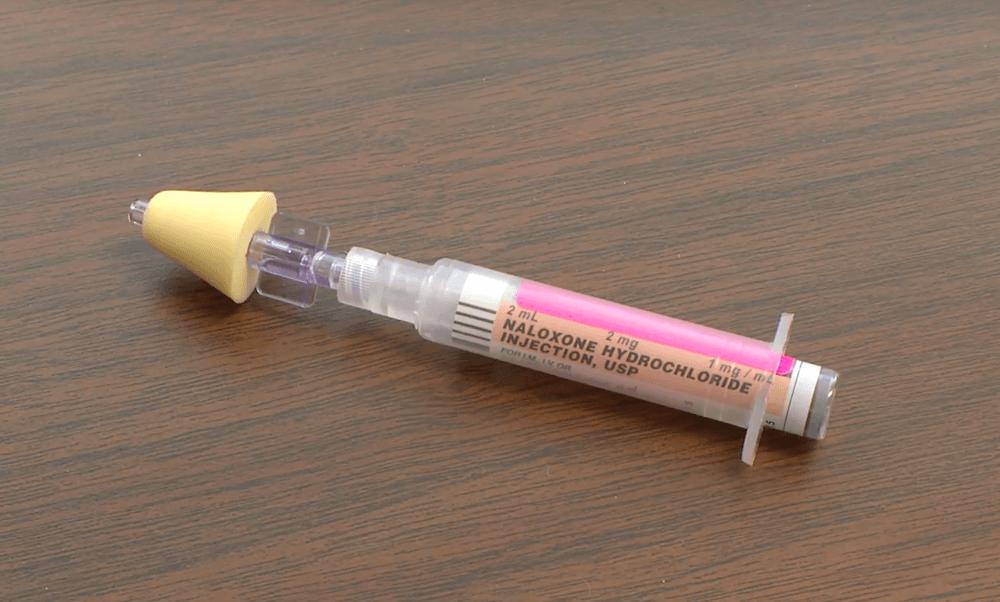
    Naloxone, brand name Narcan, is a drug that can be given through injection or nasal spray. Naloxone binds to opioid receptors in the brain and reverses opioid overdose.

    A large study looked at the possible benefits of Narcan availability in combating opioid overdose deaths.

    The paper, published in Addictive Behaviors, found conclusive positive results, and read, “Naloxone access and Good Samaritan laws are associated with 14% and 15% reductions, respectively, in opioid overdose deaths. Among African-Americans, naloxone and Good Samaritan laws reduce opioid overdose deaths by 23% and 26% respectively. Neither of these harm reduction measures result in increases in non-medical opioid use.”

    Not only did naloxone prevent many deaths, it did not have any unintended harmful side effects, such as increased opioid use. The study recommended that all opioid users, including those prescribed opioids for medical reasons, keep naloxone available at home.

    New Jersey Governor Phil Murphy is a staunch supporter of the new initiative. “The scourge of opioids continues to devastate families and communities across our state, and we must do everything we can to end the opioid epidemic,” said Murphy. “Through this initiative, people who are battling with addiction will be able to receive access to this critical medication and help them get on a path to recovery.”

    When naloxone is made available for free on June 18th at select pharmacies, it will be given away on a first come, first serve basis, no appointment necessary.

    The NJ Department of Health and the NJ Department of Human Services were recently granted $6 million for a program that will address overprescription of opioids in the medical community.

    New Jersey had over 3,000 opioid overdose deaths last year.

    “We are making the opioid overdose reversal drug naloxone available for free on June 18 to help New Jerseyans have the tools they need to support their friends and loved ones and to give us every opportunity to save lives and connect people with opioid addiction to treatment,” said NJ Human Services Commissioner Carole Johnson. 

    To see a list of participating pharmacies click here.

    View the original article at thefix.com

  • Oakland Decriminalizes Shrooms & Other Natural Psychedelics

    Oakland Decriminalizes Shrooms & Other Natural Psychedelics

    Over 100 people testified about how they have been helped by natural psychedelics.

    The use of psilocybin, mescaline or other natural psychedelic “drugs” can no longer be policed in the city of Oakland, California.

    Last Tuesday (June 4), the Oakland City Council voted unanimously to decriminalize psilocybin (magic mushrooms) and other entheogenic plants including ayahuasca, cacti (mescaline) and iboga—i.e., “the full spectrum of plants, fungi, and natural materials… that can inspire personal and spiritual well-being, can benefit psychological and physical wellness, and can reestablish human’s inalienable and direct relationship to nature.”

    Police can no longer “impose criminal penalties… or use any city funds to investigate or enforce the criminal penalties,” CNN explained. And according to the resolution, even people who are currently being prosecuted for the natural psychedelics in question will no longer be punished.

    Denver was the first U.S. city to decriminalize psilocybin in early May. Oakland’s resolution, meanwhile, covers a greater spectrum of natural psychedelics. However, synthetics such as LSD or MDMA are not included in the resolution.

    Councilman Noel Gallo, who introduced the measure after being approached by Decriminalize Nature Oakland, said that growing up in a Native American family, he was familiar with the use of natural medicine. “We didn’t go to Walgreens for medication,” he told CNN. “My grandma had plants in her backyard that would heal us.”

    During the night of the resolution’s passing, over 100 people testified about how they have been helped by natural psychedelics.

    Researcher Matthew Johnson of Johns Hopkins University says there is reason to be optimistic about the ability of psilocybin, in particular, to positively impact mental health issues such as PTSD, depression, addiction and more.

    “The data are really impressive,” he told the San Francisco Chronicle. “We should be cautiously but enthusiastically pursuing these threads.”

    Native communities have a long history of consuming peyote for ritual and medicinal use. Councilman Gallo referred to this fact in his agenda report.

    Another benefit to decriminalization, Gallo said, is freeing police from having to enforce the prohibition of natural psychedelics so they may focus on larger crimes.

    View the original article at thefix.com