Category: Addiction News

  • "Just Between Us" Podcast Earns Praise for Honest Talk About Mental Health

    "Just Between Us" Podcast Earns Praise for Honest Talk About Mental Health

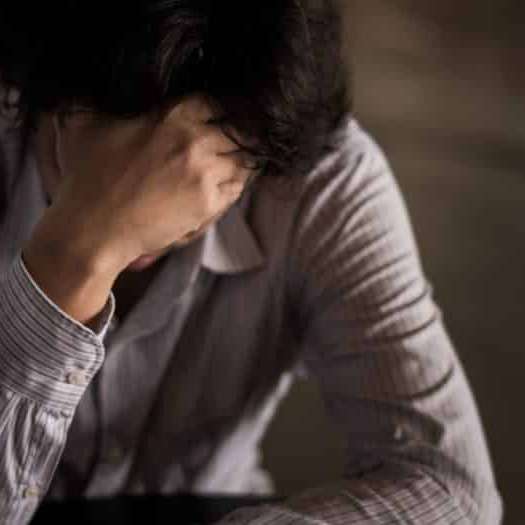
    Hosts Gaby Dunn and Allison Raskin dive deep into many of the associated anxieties and concerns that are linked with depression and bipolar disorder on the podcast.

    A recent episode of the podcast Just Between Us has received widespread praise from listeners for its honest and sympathetic discussion of mental health.

    Hosts Gaby Dunn and Allison Raskin, who are also best friends, talked at length about Dunn’s bipolar disorder—and in particular, feelings around a recent and seemingly insurmountable depressive episode.

    The pair, who are also best friends, delved deeply into many of the associated anxieties and genuine concerns that are linked with depression, from feeling like a burden to others to Dunn’s worry that the tone and subject of their talk would upset listeners. But as they discovered, the “response has been overwhelming,” says Dunn. “[The listeners] were like, ‘This is how I feel, and it’s good to hear it vocalized.’”

    In a conversation with The Fix, Dunn and Raskin—comedians, writers and podcasters whose joint credits include the best-selling novel I Hate Everyone But You and the hugely popular “Just Between Us” YouTube comedy channel—said that the conversation about Dunn’s depression was born partly out of Raskin’s mention of #JustCheckingIn, a hashtag she launched to encourage conversations about mental health.

    From there, as Raskin says, “It became more about personal experience.”

    “I’d been having a bad day, and Allison and I had been talking endless about this sort of thing because we’re best friends,” says Dunn. “I’d casually mentioned in the last few episodes that I’d been depressed, and so it was like, ‘Let’s just fill in the whole thing.’”

    “It felt a lot like impending doom,” says Dunn about the depression. “And because it’s cyclic—it’s cycling moods—it felt like this is what it’s going to be like for the rest of my life.”

    Once she began talking with Raskin, a host of emotions arose for Dunn during the course of the podcast conversation. “I was very annoyed at first,” she laughs. “You don’t ever want to hear about what you need to do, even if [someone is] gentle about it.” The enervating aspect of the depression also took hold: “I deeply believed that this had never happened before, that I would never get better, and it was over for me. So it’s hard to do something actionable when someone truly believes that.”

    And for Dunn, one of the biggest roadblocks was her fear of how the listeners would perceive the conversation. “There’s a lot of mental health talk about ‘how I overcame,’ or ‘here’s what’s happening since I got better,’” she recalls. Guilt over being in “the middle” of her episode, and how it might negatively impact listeners, was pervasive. “There’s a lot of people who care about us, and I was nervous. I was like, ‘Are they going to flip out?’”

    As it turns out, the listeners didn’t. “We have a wonderfully accepting fanbase, which I don’t think is always the case for creators,” says Dunn. “They were like, ‘Don’t worry—we’re not mad. This is how I feel, and it’s good to hear it vocalized.’”

    Many responded to Raskin’s gentle encouragement of rest and recovery. “If you’re having a flare-up, it’s extra important to give your body the rest it needs,” says Raskin. “Have mini-breaks or mini-vacations, and if you have nothing to do, watch a TV show rather than panic about it.”

    Above all, the act of checking in—both by the person struggling with depression or other issues, and from their friend or family member—can be crucial in helping work through many of the feelings that Dunn experienced. For those who may be reluctant to bring up their status with others, Raskin advises reversing the situation.

    “If my friend wasn’t feeling well and needed help, I would want them to let me know,” she says. “You’d want to deal with it with compassion. And that can give you a little perspective, that maybe it would be beneficial to reach out, that people want to hear from you.”

    Alleviating feelings of anger, self-reproach and anxiety can help those in the midst of difficult feelings to open up.

    “Allison always says that there’s ‘the thing’ and ‘how you feel about the thing,’” says Dunn. “You can deal with the actual thing, but you have to get rid of how you feel about the thing, because that’s just adding more stress. You don’t need to add more shame and worry on top of the actual thing. And I thought that was good advice.”

    View the original article at thefix.com

  • Support Groups Offer Food Industry Workers A Way To Help Each Other Through Addiction

    Support Groups Offer Food Industry Workers A Way To Help Each Other Through Addiction

    The passing of Anthony Bourdain is one reason why the restaurant industry is paying more attention to mental health.

    Workers in the restaurant and hospitality industry have among the highest rates of substance abuse, according to SAMHSA. Twelve-step programs like AA have helped, some say, but restaurant industry-specific support communities have emerged out of a need for a more targeted response.

    The growing awareness of these issues in the community was recently featured in the Los Angeles Times.

    With high rates of drug and alcohol abuse come depression, anxiety and disordered eating. Those in the industry say that a “confluence” of factors culminated in more chefs, servers, bartenders and sommeliers, among others, speaking up about their personal struggles with mental health and substance use disorder.

    “Tony’s passing away was a watershed moment,” said TV personality and chef Andrew Zimmern. Chef, documentarian and author Anthony Bourdain died by suicide last June, shocking both the industry and fans.

    “There’s a confluence of events,” said Steve Palmer, who co-founded a restaurant support group called Ben’s Friends. “High-profile chefs getting sober, Bourdain, the opiate crisis, with people dying at a much younger age. That accelerated the conversation.”

    Palmer and Mickey Bakst, both restaurant veterans, established Ben’s Friends in 2016 in Charleston, South Carolina. They named the support community after their friend, chef Ben Murray, who struggled with depression and substance abuse before he died by suicide.

    Ben’s Friends has chapters in North Carolina (Raleigh and Charlotte); Richmond, Virginia; Atlanta, Georgia and Portland, Oregon.

    I Got Your Back is another resource for those in the hospitality industry. The organization was established in Sacramento by chef Patrick Mulvaney, sparked by a recent and “sudden rash of suicides and overdoses in the restaurant industry” in Sacramento.

    Playing off terms familiar to industry workers—like “In the weeds? There’s help.”—IGYB caters to the shared experience of working long hours, often under high pressure.

    Steve Palmer emphasized the importance of having a space where everyone speaks the same language. “We believe that because of the hours and the subculture, we really needed something that spoke to our business. We felt that we needed to come out from the shadows and be a loud voice so that people know that we’re here.”

    “The more conversation, the more transparency, the better—anything that supports folks in this industry, which has always been a great place to hide out,” said Zimmern, who has nearly 30 years of recovery.

    View the original article at thefix.com

  • Fentanyl Spray Maker Files For Chapter 11 After Massive Opioid Settlement

    Fentanyl Spray Maker Files For Chapter 11 After Massive Opioid Settlement

    The bankruptcy filing comes just days after Insys Therapeutics agreed to pay a $225 million settlement for the unlawful marketing of its fentanyl spray.

    Insys Therapeutics admitted to unlawfully promoting its fentanyl spray, Subsys, but it is now seeking bankruptcy protection, which could lessen the blow that the federal government was hoping to inflict on the company for its unsavory deeds.

    Insys filed for Chapter 11 bankruptcy protection, asking the court to allow the sale of company assets to cover more than $250 million in debts, just five days after agreeing to pay a multi-million dollar settlement with the federal government. This is the first time a drug company has sought bankruptcy protection for a legal case stemming from the national opioid crisis.

    Chapter 11 is normally filed by businesses seeking the help of the court to restructure debts and obligations, as explained by Investopedia: “In cases involving fraud, dishonesty or gross incompetence, a court-appointed trustee steps in to run the company throughout the entire bankruptcy proceedings. The business is not able to make some decisions without the permission of the courts.” These include the sale of assets.

    “After conducting a thorough review of available strategic alternatives, we determined that a court-supervised sale process is the best course of action to maximize the value of our assets and address our legacy legal challenges in a fair and transparent manner,” said Insys CEO Andrew G. Long in a statement.

    Companies like United Airlines, General Motors and K-mart have managed to stay in business after filing for Chapter 11.

    If Insys is granted Chapter 11 bankruptcy protection, it may continue to operate as it figures out a plan to pay for legal expenses—including more than $11 million to defend the company’s founder John Kapoor, who was one of five former Insys executives who were convicted in May of widespread racketeering conspiracy relating to the marketing of Subsys.

    Kapoor is among the highest ranking pharmaceutical executives to be convicted as a result of the opioid crisis, NPR noted. He is expected to receive sentencing in September.

    Bankruptcy protection could mean that the federal government will not receive the full amount owed by Insys in the civil settlement: $195 million.

    In total, the sum of the money owed in both the criminal and civil resolutions amounts to $225 million.

    The company has admitted to orchestrating a scheme to unlawfully promote Subsys—a drug 100 times stronger than morphine—that involved bribing doctors.

    “For years, Insys engaged in prolonged, illegal conduct that prioritized its profits over the health of the thousands of patients who relied on it,” said U.S. Attorney Andrew Lelling in a June 5 statement.

    View the original article at thefix.com

  • Lee Daniels Does Not Sugarcoat His Feelings About Sobriety

    Lee Daniels Does Not Sugarcoat His Feelings About Sobriety

    Daniels got candid about how much he hates being sober in a recent interview. 

    There’s apparently nothing magical about being sober for Lee Daniels. He said as much in a recent conversation with Vulture.

    “I’m angsty and I’m sober, so that is really weird to be going to the Met Ball and to other social activities not intoxicated,” said Daniels, co-creator, executive producer and director of the television series Empire. “I hate fucking being sober. It’s a bore. It’s a fucking snooze.”

    Daniels is nearing the end of Empire, which will end after its upcoming sixth season, and Star, a spinoff of Empire. But the Academy Award nominated, director, producer, and film and TV writer isn’t bothered. His most notable projects include Monster’s Ball (as producer), Precious and The Butler, which he directed—working with hit makers like Oprah Winfrey, Jane Fonda, Forest Whitaker, Halle Berry and more.

    When asked if he gave up drinking as well as hard drugs, he replied, “I don’t do anything. It’s really hard, but believe me, I’ve done enough for everybody.”

    Daniels recalled seeking comfort in alcohol as a young gay man in the 1970s. “I never really even liked to drink, but I drank because my father told me if he ever saw me with a man he would kill me,” he continued. “And until I was 22, I had to get drunk to actually go through with the process. And then the drug scene came. And then all your friends start dying of AIDS. Not one, not two, not three, I’m talking intimate friends that you’ve had sex with, you’ve had dreams with, hopes with, people that are better souls than you, gone. And you can’t figure out, Why the fuck am I still here? So then it was like me on drugs and drinking, not even knowing I was an addict but just erasing all the pain.”

    In a 2015 article by IndieWire, he said, “I don’t get it, I really don’t get it. So much so that I went out and did drugs to figure out why I didn’t get it. And then had a heart attack and kept going because I didn’t understand.”

    He breezed over a phone call he’d had with singer Patti LaBelle—“not a little high, a lot high”—and she asked, “Do you know Jesus?” Daniels said, “I said a prayer and I think that was the end of my drugs.”

    View the original article at thefix.com

  • Dark Web Drug Sales Continue To Thrive

    Dark Web Drug Sales Continue To Thrive

    One expert says the ever-changing legal status of various drugs is allowing Darknet drug sales to thrive. 

    An increasing number of illicit drug deals are taking place via the dark web, according to Nikita Malik, Director of the Centre on Radicalisation and Terrorism (CRT) at the Henry Jackson Society.

    While researching for a report on how terrorist organizations such as the Islamic State use the dark web (or Darknet) for their illegal activities, Malik noticed just how many sales of controlled substances were taking place on marketplaces like the now-defunct Silk Road and AlphaBay. This activity, she says, has been boosted by the changing of the legal classification of said substances.

    “A common form of criminal activity on the Darknet is the sale and distribution of illicit drugs, which has been bolstered by a change in the legal statuses of products or substances from ‘legal’ or ‘unregulated’ to ‘illegal,’ ‘controlled,’ or ‘banned’ substances,” Malik wrote for Forbes. “These changing legal statuses, combined with stricter regulation and the implementation of new laws by law enforcement, has meant that sales of the highest category of banned drugs and substances has increasingly migrated to marketplaces on the Darknet.”

    Malik points to the role of the dark web in the sale of fentanyl, the synthetic opioid up to 100 times more potent than heroin, in the UK. The Guardian reported in 2017 that 1,000 “trades” had been made on the dark web involving fentanyl within the space of a few months, citing experts with the Oxford Internet Institute. The same team found that the U.S. “accounts for almost 40% of global darknet trade,” with the UK sitting at 9%.

    After the Silk Road marketplace was shut down in 2013, numerous other dark web sites have popped up that allow users to anonymously purchase goods and services with blocked IPs and using the untraceable cryptocurrency Bitcoin. Though agencies such as the FBI and the National Crime Agency (NCA) work to infiltrate and shut down these operations, fentanyl continues to enter the U.S. at alarming rates. 

    Fentanyl has been named as the driving force in a “third wave” of the opioid epidemic in the U.S. as sales of drugs containing fentanyl increase in number, as do overdose deaths. According to a report by the Centers for Disease Control and Prevention (CDC), overdose deaths involving fentanyl went from 1,615 in 2012 to 18,335 in 2016—an 11-fold increase in the space of four years.

    “These figures, as well as multiple case studies and convictions, clearly reveal that the Darknet provides access to illegal drugs and banned substances,” Malik concludes. “Moreover, sales are expected to increase as the platform remains largely unregulated.”

    View the original article at thefix.com

  • These 13 States Have The Highest Smoking Rates In The Nation

    These 13 States Have The Highest Smoking Rates In The Nation

    The Truth Initiative refers to a cluster of about a dozen U.S. states with higher-than-average smoking rates as “Tobacco Nation.”

    A new report reveals a block of 13 states in the U.S. whose residents have higher rates of smoking and smoking-related diseases than the rest of the country.

    Using data between the years of 2011 and 2018, Alabama, Arkansas, Indiana, Kentucky, Louisiana, Michigan, Mississippi, Missouri, Ohio, Oklahoma, South Carolina, Tennessee and West Virginia were found by The Truth Initiative to have a 6% higher rate of smokers.

    As reported by US News, The Truth Initiative (whose tagline is “inspiring tobacco free lives”) dubbed these 13 states—whose smoking rates rival even the highest smoking populations in the world—”Tobacco Nation.”

    Characteristics of these states as outlined by The Truth Initiative are: 21% of the residents smoke (versus 15% in all other U.S. states); the residents are notably poorer and spend more money on tobacco; residents report more than 20% more bad physical and mental health days; and local governments in these states have significantly less anti-tobacco programs and laws in place.

    In addition, the life expectancy of these residents is three years fewer than the rest of the country, at 76 years of age.

    “This part of the country, which is significant in size—22% of the U.S.—has been suffering from these disparities for many years,” Robin Koval, Truth Initiative’s CEO, told US News. “At the same time, so many advances have been made elsewhere in the United States. I think that makes it particularly egregious.”

    Truth Initiative reported that in these 13 states, there are fewer laws aimed at preventing smoking (such as indoor or public smoking bans) and fewer taxes on tobacco products. While the rest of the country has made significant progress in lowering smoking and smoking-related disease rates, Truth Initiative found no notable progress in Tobacco Nation since 2017, the year of its first report.

    People residing in the Tobacco Nation are just as likely to attempt quitting a tobacco addiction, but are much less likely to succeed, according to the CDC. It is most likely the lack of resources and state-sponsored programs that contribute significantly to this problem, as well as the higher rate of mental and physical distress reported by the residents of these states.

    Koval noted of the residents of Tobacco Nation, “The reality isn’t that these people have the tobacco gene. The problem is that they are living in a part of the country where the system is basically rigged to keep them smoking.”

    View the original article at thefix.com
  • Legal Cannabis Doesn’t Reduce Opioid Deaths

    Legal Cannabis Doesn’t Reduce Opioid Deaths

    States with medical cannabis programs actually have 23% more opioid overdose deaths than states without medical cannabis, a new study found.

    Since the 2014 release of a study that suggested that states with medical marijuana programs had fewer opioid overdose deaths, proponents of legalized cannabis have argued that it can help save lives amid the opioid crisis. 

    A new, broader study released this week, however, has found that states with medical cannabis programs actually have 23% more opioid overdose deaths than states without medical cannabis. The new results called into concern efforts to paint marijuana legalization as a solution to opioid abuse. 

    “It’s become such a pervasive idea. It would be amazing if it was this simple, but the evidence is telling us now that it’s not,” lead author Chelsea Shover told STAT News

    The original study looked at the years 1999 through 2010. During that time, 13 states had medical marijuana programs, and the study found that those states had opioid overdose rates that were 25% lower than states without medical cannabis. 

    When Shover’s team replicated that study, they found the same results in that time period. However, they then expanded the study, looking at years through 2017. During that time, many more states implemented medical cannabis programs, and a handful introduced legalized recreational cannabis.

    During that time period, the researchers found that states with legal medical cannabis actually had higher overdose rates. 

    “Not only did findings from the original analysis not hold over the longer period, but the association between state medical cannabis laws and opioid overdose mortality reversed direction from−21% to +23% and remained positive after accounting for recreational cannabis laws,” study authors wrote

    The authors of the new study concluded that the apparent connection between legalized cannabis and opioid overdose deaths was “spurious,” or false.  

    “We find it unlikely that medical cannabis—used by about 2.5% of the U.S. population—has exerted large conflicting effects on opioid overdose mortality,” study authors wrote. 

    Shover emphasized this point. “This isn’t to say that cannabis was saving lives 10 years ago and it’s killing people today,” she said. “We’re saying these two things are probably not causally related.”

    Because opioids and medical marijuana are both commonly used to treat pain, the theory went that people with access to cannabis for pain relief were less likely to get hooked on addictive opioids. Today, states including Illinois allow people to substitute medical marijuana for conditions that they otherwise would be given opioids for. This is based on the assumption that cannabis is safer—and less addictive—than opioids. 

    Neuroscientist Yasmin Hurd, who directs the Addiction Institute at Mount Sinai in New York, said that further large-scale research is needed to examine the link—if any—between access to cannabis and opioid overdoses. 

    “In a time of an epidemic, we have to think differently,” she said. “We have to be more bold in pushing forward clinical trials on a much faster timeline than we have in the past.”

    Although she agreed that cannabis is less dangerous than opioids, she said that marijuana policy should not be pushed forward as a harm reduction strategy for opioids. 

    She said, “Is cannabis less of a mortality risk than opioids? Absolutely. Hands down. But there’s really no research that says cannabis use per se decreases opioid overdose. You can’t make your medical cannabis laws based on that [hypothesis].”

    View the original article at thefix.com

  • Sophie Turner Talks Mental Health & "Dark Phoenix"

    Sophie Turner Talks Mental Health & "Dark Phoenix"

    The Game of Thrones actress has been open about her struggles with depression in the past. 

    Sophie Turner from Game of Thrones plays Jean Grey in the new X-Men film Dark Phoenix. In researching the role, Turner spent nine months taking an extensive look into mental illness to prepare.

    As Us Weekly reports, Simon Kinberg, the director of Dark Phoenix, sat down with Turner and told her, “Look. This is the story. You know it from the comics. I need you to fully inhabit this sense of losing control, losing your sanity. I need it to feel real… I sent her books, articles and videos about people suffering from schizophrenia, dissociative identity disorder, multiple personality disorder.”

    In preparing for the role, Turner walked around London and New York, wearing earphones, listening to recorded voices to try and understand what it would be like to live with schizophrenia.

    As Turner told Glamour, “When Simon told me about the plot, we decided the things Jean was going through were not unlike schizophrenia and dissociative identity disorder. And so we sent each other documents back and forth—essays, documentaries, all sorts of videos. We really got into it… How the situation affects the X-Men and the people around her is not unlike how addiction affects the people around that person. So we delved into studying those particular subjects.”

    “Sophie knew some people that had struggled with similar types of mental health issues,” Kinberg said. “So we would just talk it through and try to find a way for everything in this movie that is supernatural and fantastical to be grounded in something real.”

    James McAvoy, who plays Professor Charles Xavier, also told Glamour, “I was excited that mental health was such a massive part of the exploration of the character. It’s about somebody’s mental health, but also a family trying to deal with it.”

    Tye Sheridan, who plays Cyclops, added, “I think it’s important, especially in superhero movies, to portray these characters with real problems. I think a lot of people look up to a superhero. You want, as a fan or as someone watching these movies, to believe that you could be like that person… It allows you to believe in growth and the betterment of your person.”

    As it turns out, Turner has had her own mental health struggles as well. She recently revealed to Dr. Phil, “I’ve suffered with depression for about five or six years now, and the biggest challenge for me is just getting out of bed, getting out of the house and learning to love yourself.”

    View the original article at thefix.com

  • Trump Claims Trans Military Members Take "Massive Amounts of Drugs"

    Trump Claims Trans Military Members Take "Massive Amounts of Drugs"

    LGBTQ advocates say the president is making the bogus claims to “pander to his base.”

    Donald Trump continued to defend his controversial transgender military policy on his recent visit to Europe. The policy—essentially “don’t ask don’t tell” for trans service members—went into effect in April.

    Trump first announced the decision to reverse the Obama-era policy that affirmed the equal rights of trans service members in a 2017 tweet.

    The president again defended the policy during an appearance on Good Morning Britain last Wednesday (June 5), citing the high financial cost and drug use. “They take massive amounts of drugs, they have to—and, also you’re not allowed to take drugs in the military, and they have to after the operation,” Trump said.

    Actually, prescription drug use is not prohibited in the military, as NBC News noted. For example, last year the Navy decided to allow pilots to undergo mental health treatment with psychotropic medication while maintaining their flight status.

    “And also, people were going in and asking for the operation,” Trump continued, referring to the same 2016 Obama-era policy that covered the medical cost of gender-affirming surgery for service members. “The operation is $200,000, $250,000. And getting the operation, the recovery period is long, and they have to take large amounts of drugs after that.”

    The claim that the financial cost of allowing transgender people to serve openly in the military would be prohibitively high was already debunked years ago. The New York Times reported in 2017 that a study commissioned by then-Defense Secretary Ashton B. Carter found that it would “cost little and have no significant impact on unit readiness.”

    In Trump’s original tweet from 2017, he stated that the military “cannot be burdened with the tremendous medical costs and disruption that transgender in the military would entail.”

    Another interesting point is to compare the money spent by the military on erectile dysfunction drugs like Viagra with the cost of transgender health care. As Good Morning Britain co-host Piers Morgan noted, the difference is rather large.

    The Military Times reported in 2017 that “the estimated $8 million per year that the Defense Department will spend on health care for about 7,000 transgender troops is minuscule compared to how much the military spends to treat sexual dysfunction in men.”

    The Times first reported in 2015 that in the year prior, the Defense Health Agency had spent $84.2 million on ED drugs for active-duty troops, eligible family members and retirees. It is no surprise that the millions spent on subsidizing Viagra was never an issue.

    LGBTQ advocates say Trump is not only misinformed, he’s merely pandering to his base by pushing the ban.

    “The interview showed the president’s lack of understanding regarding transgender service members, and he shared misinformation regarding the medical care they need and the cost of that care,” said Blake Dremann, a transgender Navy officer and president of the LGBTQ military group SPART*A.

    “For him, it’s never been an issue of financial expenses, nor is it an issue of drug use,” said Dr. Jennifer Conti, an OB/GYN physician who treats transgender veteran patients. She said the president is merely inflating the financial cost of trans health care to “pander to his base.”

    View the original article at thefix.com

  • Guide to Finding the Best Reprexain Rehab

    Guide to Finding the Best Reprexain Rehab

    If you believe that you or someone close to you is becoming dependent on Reprexain, it is vital to find a quality Reprexain rehab center that can help with the recovery effort.

    Table of Contents

    1. What is Reprexain and What is It Used For?
    2. What Adverse Side Effects Could Reprexain Cause?
    3. Reprexain Street Names
    4. Signs of Addiction to Reprexain
    5. Overdosing on Reprexain
    6. Reprexain Withdrawal and Detox
    7. Getting Treatment and Rehabilitation for Addiction to Reprexain
    8. Choose the Best Rehabilitation Center for Reprexain

    Do you worry that someone close to you is taking their Reprexain more often than they should? Are you concerned that you might be a little too reliant on the drug to manage your pain, and you don’t like the idea of quitting? There is certainly a chance that you are becoming dependent on the drug, and perhaps even addicted to it. Coming to this realization can be quite frightening, whether it is a loved one who is addicted or it is you. However, this finally means that you are aware of the problem and you can do something about it.

    It is important to make sure that you take the time to find a quality Reprexain rehab center that can help with your recovery efforts. It is also a good idea to have an idea of what this drug is and why it can be so dangerous. After all, there is a massive problem with opioids today, and this is one of the drugs that opioid addicts seek.

    What is Reprexain and What is It Used For?

    Reprexain is the brand name for a drug that contains hydrocodone and ibuprofen. The hydrocodone in the drug is what makes it addictive, as it is an opioid. The ibuprofen is simply an NSAID, nonsteroidal anti-inflammatory drug, that is available over the counter. The medication is typically used as a means to help provide short-term pain relief.

    When it is misused, Reprexain can cause addiction, as well as overdose and death. It is made even more dangerous when combined with alcohol, which can cause respiratory slowdown. Even the ibuprofen in the Reprexain has the potential to be dangerous and can increase the risk of a fatal heart attack or stroke when used in high doses or over a long period of time.

    What Adverse Side Effects Could Reprexain Cause?

    In addition to the pain relief and the pleasurable feeling that can come with use of the drug, and the potential for respiratory slowdown, there are other possible side effects that can occur. If you or someone you know experiences any of the following side effects, it could be a sign that something is wrong and that you need to seek medical help. Some of the potential side effects include:

    • Slowed heartbeat
    • Skin rash
    • Bloody or tarry stools
    • Coughing up blood
    • Upper stomach pains
    • Dark urine
    • Swelling in the feet and ankles, which could be indicative of a kidney problem
    • Vomiting
    • Dizziness

    Reprexain Street Names

    As with many drugs that are bought, sold, and traded illegally, there are a number of slang names that become associated with it. These names can change based on the location and the individuals. Some of the most commonly used street names for hydrocodone include:

    • Norco
    • Hydro
    • Vikes
    • Perks
    • Tabs
    • Watsons
    • Vic
    • Vico
    • 357s

    Many other names can be used to represent drugs that include hydrocodone. Sometimes, it might just be a shortened version of the brand name. For example, someone who is looking for Reprexain might ask for Reps.

    Signs of Addiction to Reprexain

    How does someone know if they are suffering from an addiction? There are many people who live in denial, believing that they have control over their use of Reprexain. However, that might not be true at all. It is a good idea to look at the 11 potential signs and symptoms of addiction to determine whether you are in control or whether the drug is in control of you. It is important to be honest.

    Those who have even just a couple of these signs are considered to have a mild addiction. The more of these signs that a person exhibits, the more severe the addiction.

    • You take more of the drug, or you take it for longer than you had originally intended.
    • You want to stop, but you find that you can’t.
    • You have cravings to use the drug.
    • You spend an inordinate amount of time trying to figure out how you are going to get the next dose.
    • You forget about obligations that you have for your school, work, and home life.
    • Even though the drug is causing problems, you continue to use it.
    • Your usual social and recreational activities, including work, are no longer important. You are withdrawing from them to use the drug.
    • You use the drug even when it causes dangerous situations, such as driving while on the Reprexain.
    • Even though psychological problems or physical problems are developing, you keep using.
    • You have become tolerant of the drug and need to use more to achieve the desired effect.
    • You are suffering from symptoms of withdrawal whenever you decrease usage of the drug or try to stop.

    Overdosing on Reprexain

    It is possible to overdose on this drug. Some of the signs of an overdose of the Reprexain include:

    • Blurred vision
    • Cold and clammy skin
    • Difficulty hearing
    • A general feeling of being unwell
    • Headache
    • Vomiting
    • Severe stomach pain
    • Slowed heartbeat
    • Trouble breathing

    If any of these symptoms are present, it is important to get in touch with emergency services. An overdose, when not dealt with by medical professionals, can lead to death.

    Reprexain Withdrawal and Detox

    Those who are going through withdrawal from Reprexain will have similar signs and symptoms to other opioid withdrawals. The patients will often have feelings of flu-like symptoms. These can include:

    • Body aches
    • Vomiting
    • Nausea
    • Diarrhea
    • Stomach cramps
    • Fever
    • Rapid heart rate
    • Agitation
    • Chills

    Typically, the signs of the withdrawal symptoms will start to begin within six to 12 hours of the last time the patient had a dose of the drug. These symptoms can be very difficult and painful, but it is necessary to detox before entering a Reprexain rehab center.

    One of the common ways to detox is through medical detoxification. This can help the patients by gradually reducing the quantity of Reprexain they are taking. The doctors might also administer other medications to help with the side effects of the withdrawal. They may even offer opioid replacement therapy, which can provide drugs that will help to deal with the cravings and the withdrawal symptoms.

    Getting Treatment and Rehabilitation for Addiction to Reprexain

    After you have gone through detoxification, the real work at the Reprexain rehab facility can begin. There are different types of facilities that are available, including those that have inpatient and outpatient treatment options. Either of these options could work well, but it will depend on what is best for the patient.

    While it is nice to be able to go home each day after therapy, only those who have addictions that are considered mild should use this straight out of detox. Typically, an inpatient facility is a better option for those who are trying to recover, since it will not allow them any temptations, and there is around-the-clock care. Still, outpatient treatment options can be a good choice for those who have to go to work and who have to take care of their family. They just need to be committed to going to their therapy.

    There are a number of therapies available today, including a range of different types of psychotherapy. Counselors can help people to deal with their addiction, and the underlying causes of that addiction, alcohol abuse, and other issues they might have. There might be individual therapy sessions, as well as group therapy, which can help people to see their situation from the perspective of others. Family therapy can help with this as well.

    Some facilities will offer holistic treatments too, including art therapy. There are a range of options available today that can put recovery within your reach.

    Choose the Best Rehabilitation Center for Reprexain

    You have made the decision to enter a Reprexain rehab facility, or you have talked with a loved one and they will be going into a rehabilitation center. You know some of the types of treatments that you can expect and the types of options that are available with from rehab centers. However, you still need to make sure that you are choosing the one that will be right for your needs.

    It is a good idea to find rehab centers that understand that each individual is unique and that their needs for recovery will also be unique. Finding a facility that can provide you with the types of treatment that you believe will work best for you, that has a variety of treatments available, and that will treat you like an individual is important. You want them to be able to develop a treatment and recovery plan that will work for you.

    You will also want to consider the way you are treated when you speak with the facility about entering their recovery program. They should always treat their patients with the utmost respect.

    Finally, when you are choosing a Reprexain rehab center, you want to make sure that you are choosing a facility that can offer some type of aftercare treatment. This ensures that you will have some help and guidance on how to avoid a relapse and how to stay strong after you are out of the treatment.

    Resources:

    https://www.drugabuse.gov/related-topics/trends-statistics/overdose-death-rates

    https://www.drugs.com/mtm/reprexain.html

    https://www.drugabuse.gov/sites/default/files/podat_1.pdf

    View the original article at thefix.com