Category: Addiction News

  • How Does Crystal Meth Affect Teeth and Gums

    How Does Crystal Meth Affect Teeth and Gums

    Drug addiction is hard on the body in many ways, but some drugs, like crystal meth, can be particularly damaging to the teeth. The term ‘meth mouth’ has become popular due to the severe and long-lasting damage that methamphetamine can do to oral health.

    The drug itself inhibits saliva production and damages tooth enamel, while the effects of and lifestyle associated with using the drug cause even further damage. Read on for details on exactly how crystal meth affects the teeth.

    Dries out the Mouth

    Methamphetamine reduces the amount of saliva produced by glands in the mouth. This leads to dry mouth – a condition which is both uncomfortable and dangerous. Saliva is important in neutralizing acids in the mouth. It cleanses the teeth after eating, killing bacteria and keeping tooth enamel strong. Using meth also causes dehydration, which further reduce the amount of saliva that’s produced. This can cause serious long-term damage.

    Damages Enamel

    The heated chemicals released can lead to severe, progressive enamel damage. Teeth will begin yellowing, with enamel flaking off and leaving teeth unprotected. Years of sustained meth use will destroy the majority of the tooth enamel . Any remaining teeth will appear brown/black in color. Large parts of each tooth will become decayed, causing irreversible damage, meaning that dentures are the only treatment option.

    Causes Bruxism

    Meth use can cause anxiety, paranoia and overstimulation, which often leads users to grind their teeth or clench their jaw – known as bruxism. Regular grinding will cause the already damaged teeth to wear away even more quickly. Clenching the jaw can lead to problems with tooth alignment, or trigger conditions like TMJ.

    Creates Sugar Cravings

    Drugs like meth can cause users to crave sugary sweets and fizzy drinks, which aren’t good for oral health. Consuming too much sugar causes an increase in bacteria in the mouth, leading to decay, tooth erosion and damage to enamel. Meth users live chaotic lives, where oral hygiene isn’t a top priority. Damaging decay is permanent.

    Meth-related tooth damage can be extremely difficult to treat unless the patient stops using meth. The multi-dimensional causes of tooth damage need to be treated with a combination of lifestyle changes, such as better oral hygiene, and dental procedures, like fillings and removal of badly damaged teeth. For long-time users, damage may be so severe that dentures are the only course of treatment.

    Sources:

    Meth Mouth – American Dental Association

    Methamphetamine can devastate your dental health. Find out how and see what “meth mouth” looks like.

    View the original article at bestdrugrehabilitation.com

  • Johann Hari launches Series Two of our digital detox podcast

    Johann Hari launches Series Two of our digital detox podcast

    Johann Hari launches Series Two of our digital detox podcast

    Johann Hari opened Series 2 of our digital detox podcast: ‘Its Complicated‘ last week with a gripping interview on addiction, depression, and looking for connection in all the wrong places. Hari is a New York Times best-selling author and in both his books ‘Chasing the Scream’ and ‘Lost Connections’ he describes the phenomenon of the modern decline of human connection.

    Hari’s TED talk, with over 20 million views, to date: “Everything you think you know about addiction is wrong” expands on his view on the causes of addiction. It particularly illustrates how the so-called connections that we have formed online are severing the bonds that we had between us and our loved ones. Hari links this closely to loneliness and a lack of human fulfilment. He even draws the analogy in our podcast that “the relationship between social media and social life is a bit like the relationship between pornography and sex” in that the former is not designed to, and cannot, take the full place of the latter.

    Hari was raised in an addiction-fuelled environment and as such has expertise in both substance and process addictions. He sees digital addictions in a similar light. In conversation with our founder Tanya Goodin, he questions the focus just on the technology in all of our debates on digital addiction. He suggests instead that we should examine the particular problems within our society and then the people who fall prey to addictions. Throughout the podcast, Hari discusses the natural human needs for connection and how to fulfil them, which may enable us to be able to become more resistant to the temptation of technology addiction. As well as emphasising the need for us to build our lives, not around values of external worth or “extrinsic value”, but rather around the values of service and community.

    What’s next

    We are incredibly excited about the rest of the guests that we’ll be showcasing on Series 2. As well as addiction experts such as Johann Hari, and social media influencers such as Vex King and Kaushal, we’ll be branching out this series and showcasing activists in the tech space who’ll be discussing their take on a whole host of issues relating to digital wellbeing and addiction. It was only this February that we launched our podcast to help people untangle their relationship with their phone, by opening up the conversation on both the positives and negatives (hence the title #ItsComplicated) of relationship with screens. Throughout the first and now the second series, we hope to inspire and motivate our listeners to reevaluate their screen use. As well as to take comfort from the fact that they are definitely not alone in their struggle to put down their phones!

    Summary
    Johann Hari launches second series of digital detox podcast
    Article Name
    Johann Hari launches second series of digital detox podcast
    Description
    Best-selling NYTimes author and TED speaker on addiction Johann Hari launches Season Two of Time To Log Off’s digital detox podcast ‘It’s Complicated’; on our complicated relationship with our phones.
    Author
    Ellen McCarthy
    Publisher Name
    Time To Log Off
    Publisher Logo

    View the original article at itstimetologoff.com

  • #SummerUnplugged Digital Detox Challenge 2019

    #SummerUnplugged Digital Detox Challenge 2019

    #SummerUnplugged Digital Detox Challenge 2019

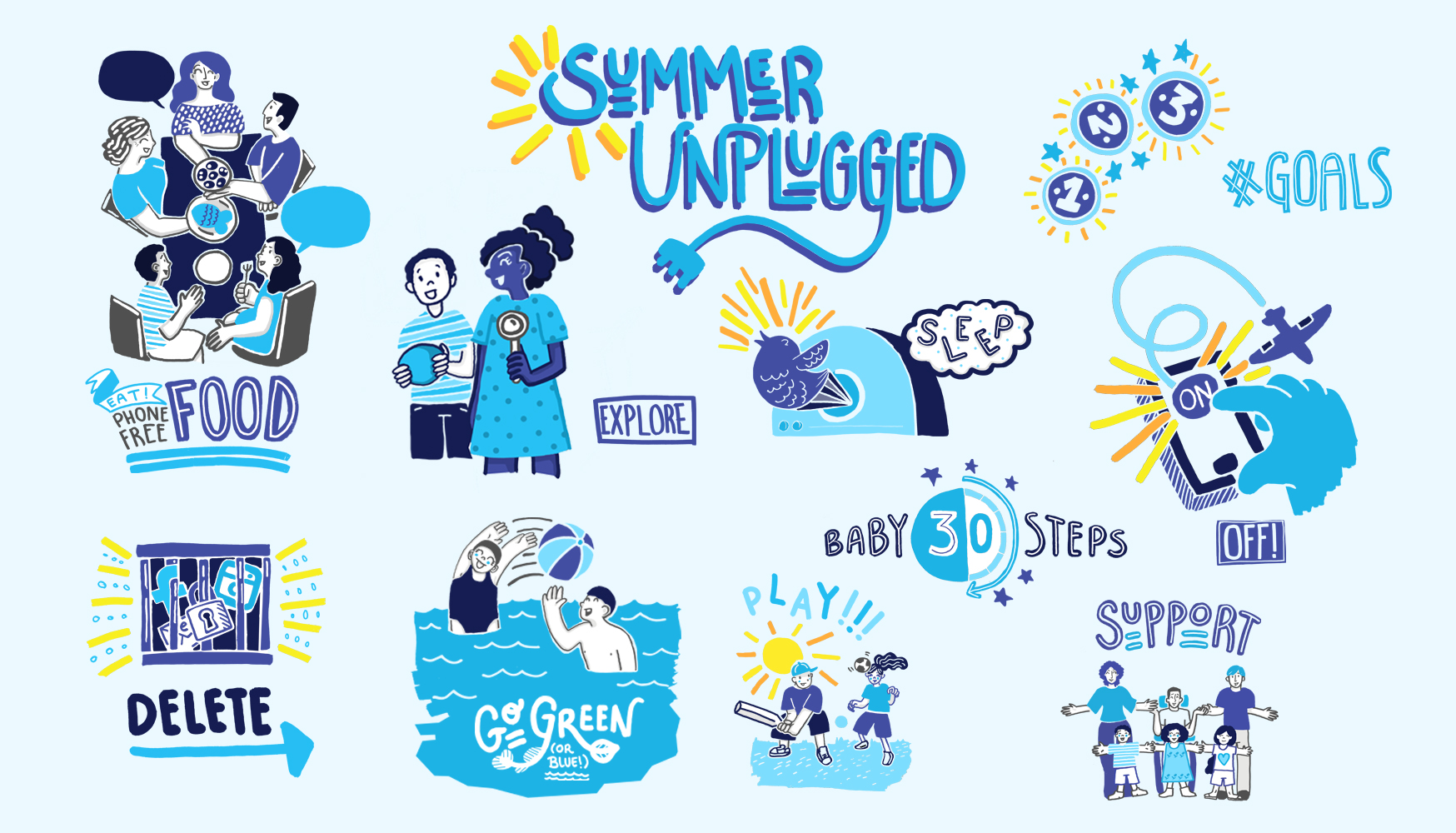
    At Time To Log Off, we love digital detox challenges that get you all practising putting down your phones. We’ve run quite a few over the years; the Phone Free Food campaign, our popular Log Off For Love Valentine’s Day challenge and our regular 30-day Digital Detox challenge. But summer school holidays have now come around again, so we’re welcoming back our family Summer Unplugged challenge!

    What is the Summer Unplugged digital detox challenge?

    It might be a bit challenging in the winter when days are short and the weather is dismal outside, but Summer is the perfect season to start a digital detox adventure. Longer, sunny (we hope), days and balmy evenings will give us all the excuse to step away from our devices more.

    And summer holidays are all about spending time with our families and friends, what better time to re-connect with our loved ones and focus on building stronger connections? Summer Unplugged is all about putting down the phone and reconnecting with those right in front of you – your family. And this is not just for kids, more and more young people tell us that it’s their parents who are struggling to put their phones down – so this is for all of you.

    How to get involved with 2019’s Summer Unplugged challenge

    Print out our print Summer Unplugged challenge poster – stick it on the fridge or on a noticeboard at home – and follow the ten steps to a summer spent unplugged. Don’t forget to let us know how you’re finding the challenge by using the #SummerUnplugged hashtag online, too.

    digital detox challenge summer unplugged

    1. Eat: only eat phone free food – no phones at the meal-table

    We hope you’re already doing this. But just in case you’re not, or it’s slipped a bit over a busy school term, set a specific intention around phones and food and ban phones whenever you’re eating. It’s a great way to practice mindful eating too, without your screens to distract you.

    2. Explore: Have a whole day out without your phones

    This one is definitely a challenge! Don’t try this when you’re going out to a place you’ve never been before and hope to be able to cope with navigating without GPS or maps. Incorporate this in a day out to somewhere you all know well. Agree you’ll all leave your phones behind and set out to enjoy the day screen-free. Ready, set, go!

    3. Sleep: Buy alarm clocks for the whole family, banish phones from the bedroom

    digital detox challenge Summer UnpluggedIt’s our top tip – and for a good reason. Screens in bedrooms interfere with our sleep in a major way. For the summer holidays buy some retro alarm clocks for the whole family and banish phones from the bedroom when you’re sleeping. Cut down on that middle-of-the-night screen scrolling.

    4. Off: Make use of airplane mode to give yourself a break

    digital detox challenge Summer UnpluggedWe love airplane mode and we use it whenever we can. Just toggle the switch to ‘on’ and go about your day as normal. You’d be amazed how much more you can get down without notifications to interrupt you. And your phone is still there to use when you need it.

    5. #Goals: Each set a personal unplugging goal and share it

    We all use our phones in very different ways which means there may be very different things we want to get out of a summer digital detox challenge. Someone may want to log-off work email every night, another may want to cut down on Instagram scrolling. Come up with your personal goals and share them.

    6. Delete: Get social media (and work email) off your phones for your holiday

    digital detox challengeIf you can’t resist checking specific apps on your phone even over the weekends or late at night then they are bound to interfere with your holiday. Decide to delete any particularly tricky apps, the ones that seem to call to you to check your phone, just over the period of your holiday. You’ll find it’ll really help cut down on mindless screen scrolling. And you might just enjoy your holiday more!

    7. Go Green (and blue): get outside and connect with nature, and the ocean

    digital detox challengeWonderful things happen to us when we get out in nature, our blood pressure reduces, our pulse slows, just two hours a week in a green space has been proven to make us healthier and happier. And being by the sea is even better. They don’t call it Vitamin Sea for nothing. So make a plan to get outside in green and blue spaces as much as possible during your Summer Unplugged challenge.

    8. Play: bring out the board games, and the bats and the balls

    Screens do have a way of making us quite sedentary. We sit down with them, usually indoors, and we’re not very active. Make a list of all the games you could play off screens and work your way through them this summer.

    9. Baby Steps: start with small steps, try 30 minutes off screens and build up from there

    A digital detox doesn’t have to be for a week, weekend or even a full day. Just start small with a limited period of time off screens and build up during the time of the challenge. How about setting  a target for the end of the summer that you’ll work up to? A while Sunday off screens could be a good thing to aim for.

    10. Support: have each other’s backs in being off screens more, don’t nag!

    Summer Unplugged Digital Detox ChallengeEveryone is going to find some aspects of this challenge tricky at times. So be each other’s cheerleaders and coaches and support each other in doing it. Tackle this challenge as a team, not a series of individuals and you’ll absolutely ace it.

    Print out our print Summer Unplugged challenge and follow the ten steps to a summer spent unplugged. Don’t forget to let us know how you’re finding the challenge by using the #SummerUnplugged hashtag online (as long as you’re online only occasionally!) so we can see how you’re all getting on.

    DIGITAL DETOX BOOK: Stop Staring at Screens

    * Stop Staring At Screen: a digital detox for the whole family by Tanya Goodin (ILEX, £9.99) is out now.

    Summary
    Summer Unplugged Digital Detox Challenge 2019
    Article Name
    Summer Unplugged Digital Detox Challenge 2019
    Description
    Summer is our favourite season at Time To Log Off. Make the most of those longer sunnier days and take part in our annual family Summer Unplugged digital detox challenge, back for another year!
    Author
    Editorial Team
    Publisher Name
    Time To Log Off
    Publisher Logo

    View the original article at itstimetologoff.com

  • What Are the Most Frequently Asked Questions About Addiction?

    What Are the Most Frequently Asked Questions About Addiction?

    Most people today have a generalized idea about addiction. They understand that there are far too many addicts in the world.  But, the majority of Americans don’t spend much time thinking about the subject, unless a family member becomes addicted. At that point, they want answers about what to do for their loved one.  The following are some of the most frequently asked questions about addiction that may prove helpful to someone who needs addiction treatment.

    FAQ #1: Why Can’t Addicts Just Stop Using?

    The American Society of Addiction Medicine defines addiction as:

    “A primary, chronic disease of brain reward, motivation, memory, and related circuitry.  Dysfunction in these circuits leads to characteristic biological, psychological, social, and spiritual manifestations.  This is reflected in an individual pathologically pursuing reward and/or relief by substance use and other behaviors.”

    “The power of external cues to trigger craving and drug use, as well as to increase the frequency of engagement in other potentially addictive behaviors, is also a charateristic of addiction.”

    When a person first begins using an addictive substance, they believe they can quit any time, and that they can control the behavior.  However, after repeated use, the drug induces changes in brain function. The person then loses their ability to exert control over their drug use, even if adverse consequences have occurred.  It’s important to remember that no one intends to become an addict.  

    FAQ #2:  Can a Person Become Addicted to Prescribed Medications?

    This is one of the most frequently asked questions about addiction.  Many people mistakenly think prescription painkillers are safe. But, in truth, opioid addiction is the leading cause of preventable death in the nation today.  Last year, 70,237 people died from drug overdoses. Of those, more than 17,000 involved prescription opioids, according to the National Institute on Drug Abuse.

    Prescription drug abuse and addiction are not always deliberate.  Some individuals develop a physical dependency that leads to addiction, even when taking the medications as directed.   Or, they often combine medications with other substances such as alcohol. marijuana, or other prescription drugs to enhance the effects.  Furthermore, prescription painkillers are popular with people who want to get high because they are so readily available.  These two scenarios have created an opioid addiction crisis that has reached epidemic proportions today. 

    FAQ #3:  Is It Possible to Detox Without Professional Help?

    A person will seek more of their drug of choice when withdrawal symptoms begin. Withdrawals can be dangerous in cases of prolonged addiction. Depending on the drug involved, a person can experience symptoms such as high blood pressure, irregular heart rate, respiratory depression, hallucinations, seizures, or coma.  Anyone ready to give up drugs should seek professional detox to ensure a safe and effective process.

    FAQ #4:  Aren’t All Rehab Programs the Same?

    Absolutely not.  Addiction treatment programs today provide a wide range of treatment approaches and options.  These programs are as diverse as the people who come for treatment. Some facilities treat specific addictions.  Others are equipped to handle poly-drug addictions or co-occurring disorders.  Also, some facilities offer inpatient treatment, while others provide outpatient programs.

    Treatment programs are available that offer considerations for age, gender, sexual orientation, health issues, economic status, religious preferences, and more.  No one is forced to undergo treatment in a program that doesn’t fit their needs.

    FAQ #5:  Does Relapse Mean the Program Didn’t Work?

    Recent statistics show that more than 85% of individuals relapse following addiction treatment.  In many of these cases, the individuals left rehab before completing the program. In other cases, the person failed to follow-up with an aftercare program. Nevertheless, these numbers don’t mean rehab failed. Nor do they indicate that the individual failed. When relapse happens, it means the person needs to do a little more work.  Many rehabs will allow patients to return to the program if they’ve relapsed.

    Everyone responds to treatment differently.  We need to also look at the positive results.  Many rehab patients return to society as a sober, contributing member of their families and communities without relapsing at all.  

    The National Institutes of Health researched relapse rates and found that only about one-third of alcoholics in the first year of recovery remain abstinent.  However, the success rate increases to more than 50 percent after the one-year mark. The Institute of Behavioral Research at Texas Christian University found that 23.5 percent of cocaine users were using again within one year of treatment.  

    Find More Frequently Asked Questions About Addiction

    Are you or a loved one seeking treatment for addiction?  If so, you can get answers to more of the most frequently asked questions about addiction by contacting us today.  One of our knowledgeable representatives will be happy to assist you in any way.

    Resources:

    https://www.asam.org/resources/definition-of-addiction – Definition of Addiction

    https://www.drugabuse.gov/related-topics/trends-statistics/overdose-death-rates – Overdose Death Rates

    View the original article at bestdrugrehabilitation.com

  • How to Attend Music Festivals, Sober

    How to Attend Music Festivals, Sober

    You’ll be surprised at how much fun you will have.

    When people think of large music festivals like Coachella, Stagecoach and even Burning Man, they almost instantly think of drugs and alcohol.

    Despite the fact that substance use and abuse is prevalent at these events, it’s entirely possible to attend sober and have a fantastic time. Just because you’re in recovery doesn’t mean that you need to give up your love of festival life and stay home this summer.

    Logan Rossman is a clinical support specialist at Asana Recovery, which offers detox, residential treatment and an outpatient program in Costa Mesa, California. He regularly attends festivals sober, and has found that he has more fun now in recovery than he did when he was using drugs and alcohol.

    “I have been able to enjoy everything more sober without any doubt,” Rossman said.

    They key to having fun sober is planning, preparation and communication,

    View the original article at thefix.com

  • Seabrook

    Seabrook

    Nothing about the exterior of this facility resembles what one pictures when they think of the word “rehab.” The campus has sections that look like a state park, with walking trails, wooded areas and carefully placed benches.

    Introduction and Basic Services

    Seabrook is a New Jersey based drug and alcohol rehab that has been around since 1974. The original founders, Jerry and Peg Diehl, opened Seabrook after many years of Jerry struggling with addiction and finally finding peace in recovery through Alcoholics Anonymous (AA). The Diehls became aware that addicts who were experiencing relapses needed a safe environment to be clean long enough for it to stick. That idea eventually led the family to the vacant estate of Charles F. Seabrook, a former pioneer in the frozen food industry. Ultimately this became the main campus of Seabrook.

    Today, Seabrook has a multitude of treatment services, including detox, residential, outpatient and a long term extended care program. The Seabrook Model is solidly based in the 12 steps of AA, and offers a number of complementary holistic approaches, education, wellness programs and recreation. In addition to traditional treatment programs for addicts, there are also specialty tracks for young adults, nurses and those who are in need of Medication-Assisted Treatment (MAT).

    Facility and Meals

    The stunning estate that houses the main treatment facility and residences for clients sits on just over 40 acres in the sleepy town of Bridgeton. Nothing about the exterior of this facility resembles what one pictures when they think of the word “rehab.” The campus has sections that look like a state park, with walking trails, wooded areas and carefully placed benches. The grounds leading up to the main house are carefully manicured with bright flowers and towering trees. The walkway that clients pass as they approach the front door has a multi-tiered stone water fountain, and a charming gazebo.

    There are 146 beds in total at Seabrook, with about 51 of them dedicated to detox. Clients stay in quaint, colonial style homes spread out on the property. Clients generally share bedrooms, which are huge, with one or two other people. However, there are suites and private, en suite bedrooms available for an added fee. The decor feels like a Norman Rockwell painting—very New England, tidy and upscale. The facilities are very comfortable, and clients are provided with dressers and closet space.

    The communal lounge is used during down times in between groups or activities. It has a big screen mounted TV, couches and a pinball machine.

    Clients eat together in the shared dining room for all three meals. Seabrook has a chef who prepares gourmet meals with a couple of different options for lunch and dinner. A well stocked salad bar is open during the afternoon and evening meals. The menus usually include a combination of chicken, pasta, steak or fish. Clients with dietary restrictions are accommodated, as are those who are vegan or vegetarian.

    Healthy snacks are readily available throughout the day. Caffeine is a no-go at Seabrook however, though they do serve decaf.

    Treatment Protocol and Team

    For most the first stop at Seabrook is the detox facilities for withdrawal management. While this is usually a very unpleasant experience, clients are monitored around the clock by medical professionals who supply the correct combination of medications to ease the individual through the roughest parts of withdrawal. During this stage of treatment as clients begin to feel better and stabilize, there are group sessions they can attend along with relapse prevention and psychoeducation.

    The next phase of treatment, which typically lasts between 30 and 35 days on average, entails a combination of group and individual therapy, 12-step support, wellness programs, education, and holistic therapies. The Seabrook Model is comprised of a four tier system, starting with detox and ending in the maintenance, extended care phase. While the standard program length is a little over a month, clients commonly stay in treatment between six and seven weeks.

    The transitional phase is folded into the outpatient program at Seabrook. There are outpatient facilities associated with this facility throughout New Jersey and one in Pennsylvania. Outpatient treatment offers a Partial Hospitalization Program (PHP) and an Intensive Outpatient Program (IOP). While in outpatient clients attend individual and group therapy, and are access to MAT.

    Once the initial phase of treatment is complete, there is an option to move onto the aftercare, or extended care program. This is a long term sober living situation of around 35 weeks to a year. Clients focus on healthy living and getting used to being sober in a supportive environment. They attend regular AA meetings and have a sponsor.

    Seabrook actively encourages clients to continue on with some sort of counseling, whether it’s in a group setting, one on one or with family members. The outpatient program is also an option when clients don’t want to live at home in the early stages of recovery.

    During extended care clients live in a five bedroom, three bathroom home with private and semi private accomodations, and a three bedroom cottage. These facilities are really spacious and provide access to a private, state of the art gym, personal trainer, game room, lounge, cable TV and internet. As clients are learning how to live in acclimate to society they can bring their cell phones and personal devices.

    Seabrook employs a huge staff of clinicians, techs, house managers, assistants and educators. Staff are comprised of LCADCs, LPCs, CADCs, LCSWs, MSWs, APNs, DOs, physicians, psychologists and psychiatrists.

    Bonus Amenities

    Clients work out in the gym on campus, which has a combination of machines and free weights. If running on a treadmill doesn’t sound appealing, there is also a room dedicated to yoga.

    The main campus has several recreational and social activities for clients in the extended care program. This includes beach trips, kayaking, going to the theater or ballet, movie nights, bowling, crafting, and volunteering twice a month. In addition clients get massages, and experience equine therapy, music therapy and a ropes course.

    Summary

    Seabrook was founded with the one goal in mind; to give addicts a safe place to learn how to get and stay sober. The grounds are lovely and programming renowned. Clients also have the option to move forward in their treatment with continued support, live in a facility that continues with the programming ideals, and get a great head start in recovery.

    Seabrook Location

    133 Polk Lane PO Box 5055

    Seabrook, New Jersey (NJ)

    (856) 455-7575

    Seabrook Cost

    $27,500 (90 day program)

    Find Seabrook on Facebook,Twitter and LinkedIn

    To learn more about how we create Rehab Reviews, click here

    Read more Rehab Reviews

  • Recovering Addicts Share Their Reasons for Seeking Addiction Treatment

    Recovering Addicts Share Their Reasons for Seeking Addiction Treatment

    Last year in the United States, 70,237 people died from drug overdoses. Currently, over 21 million Americans have substance use disorders, yet only one in ten receive treatment.  In many cases, those who don’t get help are afraid of detox,  don’t think they can afford rehab or are worried they’ll lose their jobs.  To help you find your reasons for seeking addiction treatment, we offer these inspirational stories as an incentive.

    Finding Inspiration in Stories from People in Recovery

    Each person who struggles with addiction has their different reasons for seeking addiction treatment.  They live a substance-free life now because they got the help they needed.  Here’s what they have to say:

    Stories from recovering alcoholics:

    • Robert J. –  “My five-year-old son had been ignoring and avoiding me. Finally, he told me that he didn’t like me when I drank because I was different.  I got sober by Monday and told him I was going to get help for my drinking problem.  His words were a wake-up call for me.  I got treatment and now, I go out a play ball with my son instead of sitting around drunk all weekend.”
    • Christy M. – “Thanks to my boss and fellow employees, I’m sober. My boss had told me the other employees reported alcohol on my breath at work.  He sent me to the EAP, and they recommended a treatment program. I was embarrassed that I had been caught drinking at work, but it was the incentive I needed to do something about my drinking.”
    • Steve D. – “I found myself in jail one morning after being arrested for public drunkenness.  I realized then that it was time to get real about my drinking problem. My biggest regret is that it took something this drastic to make me seek help.  I should have done something sooner.”
    • Randy T. “My drinking was out of control.  I used to hide bottles of vodka in the bushes beside my driveway.  I’d grab a bottle before getting in the car to go to work because I needed to make the shakes go away.  One day, I couldn’t find the bottles, and I panicked. My wife must have discovered my dirty little secret. But, that’s what got me to wake up and see where my life was headed.”

    Drug abusers tell their stories:

    • Janice B. – “My husband was getting suspicious about where the grocery money was going. He hadn’t found out about all our savings that I’d used to buy cocaine. Then, he came home early one day and found me getting ready to use.  He told me he would leave me if I didn’t get help. I had to choose between him or my drug. I chose him. Cocaine almost ruined everything I loved in life.  But, rehab was amazing. They helped me learn how to get through the day without my drugs.”
    • Sarah W. – “I hate to admit this, but as a nurse, I found a way to steal pills from my patients.  I couldn’t seem to stop. I started lying to my family about my mood swings. Finally, I got worried that the hospital would catch me, and I’d lose my license.  That’s when I decided to get into rehab right away. The pills weren’t worth losing the career I had worked so hard for.”
    • Tamara J. “I was diagnosed with depression when I was 14, and began taking antidepressants.  Sometimes, when the medicine didn’t seem to work, I’d take Xanax, pain pills, or smoke pot to help me feel better.  I kept needing more and more just to feel normal.  But, when one of my friends OD’d, I knew it was time for me to get help.”

    Each of these individuals is thankful that they found the courage to enter treatment for their addictions, and said they wish they had done it sooner.

    Hopefully, their experiences will inspire someone else to do the same.  

    What Will Be Your Reasons for Seeking Addiction Treatment?

    If you are struggling with substance abuse, think about who you once were before drugs entered your life.  Reclaiming that life should be one of your reasons for seeking addiction treatment. If you are ready to begin, please contact us a Best Drug Rehabilitation today.  We can recommend a treatment program that is designed especially for your needs.


    Resources:

    drugabuse.gov – Overdose Death Rates

    drugabuse.gov – Treatment Approaches for Drug Addiction

    View the original article at bestdrugrehabilitation.com

  • Chris Cornell’s Daughter Explains Decision To Take Mental Health Break From College

    Chris Cornell’s Daughter Explains Decision To Take Mental Health Break From College

    The late rock star’s daughter noted that it is always important to take care of your mental health.

    Lily Cornell Silver, the daughter of late rock star Chris Cornell, took to Instagram on Thursday to reveal that she is taking a break from college for the sake of her mental and emotional health.

    “I did not ‘drop out of college’ (although it shouldn’t matter if I did),” she wrote on her Instagram story. “I took a temporary leave of absence to tend to my mental and emotional health, which was in part damaged by those who are gossiping about me.”

    Cornell Silver took the opportunity to rebuke those who would criticize her for the move, saying such people are part of the reason mental health continues to be a pressing issue.

    “Think twice before you judge somebody for experiencing anxiety, depression, trauma, grief, etc., and taking a step back to practise self-care as opposed to forcing themselves through it,” she urged.

    She also blasted people who thought she was simply making an excuse for slacking off. “Mental health and education are two things I take very seriously, which happens to be how I graduated with a 4.0. Nice try tho,” she rebuked.

    The subject of mental health is likely a tender one to Cornell Silver as her own father died by suicide. He battled both addiction and depression for years before his death in 2017.

    His widow, Vicky Cornell, said that he did not seem depressed or suicidal prior to that night in Detroit. “When we spoke before the show, we discussed plans for a vacation over Memorial Day,” Vicky wrote in a statement.

    Vicky, noting that Chris had taken extra Ativan that night, suggested the mood-altering drug was to blame.

    “Approximately a year before he died, he was prescribed a benzodiazepine to help him sleep,” she said. “He had torn his shoulder. The pain in the shoulder was waking him up at night and it was keeping him up.”

    Cornell’s family eventually sued Dr. Robert Koblin for “negligently and repeatedly [prescribing] mind-altering drugs and controlled substances.” 

    View the original article at thefix.com

  • Abstinence vs. Harm Reduction in Addiction Recovery

    Abstinence vs. Harm Reduction in Addiction Recovery

    It’s an age-old question: which is better – harm reduction or abstinence-based recovery? Each have their own set of benefits, yet have completely different approaches to recovery.  We explore both below.

    Historically, addiction treatment has centered upon an abstinence-based model, one which asserts that abstinence is essential in order to recover from addiction.   One of the most popular forms of “abstinence only” recovery treatment is Alcoholics Anonymous (AA), a step-based, peer recovery program that has more than 2 million members worldwide in over 100,000 locally supported groups.  The program is spiritual in nature and calls on its members to turn their lives over to a higher power, as well as complete 12 guidelines – or steps – to help them overcome alcoholism.

    For some people, the AA program has not resonated, mainly due to its spiritual component.  After all, not all people are comfortable with the idea of praying or focusing on spirituality.  Others have found its framework too rigid, especially where the complete abstinence requirement is concerned.  They feel the stigma of labelling oneself as an alcoholic or addict keeps many people from seeking treatment in the first place.  As a result of these concerns, programs that aim to reduce the harm caused by addiction without encouraging abstinence have been developed.

    Harm reduction is a set of practical strategies and ideas aimed at reducing negative consequences associated with drug use and addiction.  It incorporates a spectrum of strategies – from safer use, to managed use to abstinence – to meet drug users “where they’re at,” addressing conditions of use along with the use itself.  Because harm reduction requires that policies designed to serve drug users reflect specific individual and community needs, there is no universal formula for implementing it.

    But while supporters of the harm reduction approach believe it promotes early self-recognition of risky drinking and drugging behavior – thus allowing users to moderate their use before becoming completely addicted – opponents believe it simply enables addicts to continue drinking.  These naysayers also point to low success rates and an unwillingness for those individuals to seek treatment since they don’t want to completely cease using.

    As you can see, both approaches to treatment have their perceived pros and cons; yet there is no “right” choice.  After all, addiction is a personal disease, and recovery can be supported in a number of ways.  Therefore, it is important to find what works for you, and then stick with it.

    View the original article at recovery.org

  • Women Push For Gender-Targeted Harm Reduction, Drug Treatment Programs

    Women Push For Gender-Targeted Harm Reduction, Drug Treatment Programs

    A handful of harm reduction organizations are beginning to take steps to design programs with women’s unique needs in mind.

    Women around the world are being failed by harm reduction and drug addiction treatment programs designed for men, according to a report published in the Pacific Standard.

    In order to address this problem, organizations such as Women and Harm Reduction International Network and Harm Reduction International are taking steps to design programs with women’s unique needs in mind and ensuring that women are well-represented in leadership. 

    In spite of the fact that women who use drugs are just as likely to develop an addiction disorder as men who use, drug policy in many countries has only left women facing additional hurdles to treatment and a massive amount of stigma.

    Women have unique challenges such as pregnancy and the threat of being seen as a “bad mom,” higher rates of becoming victims of domestic abuse, and an expectation of performing sex work in relationships where both partners use drugs. Bree Cassell, a young woman who has struggled with heroin addiction and who was interviewed for the report, says that women assume “he can’t sell his body, I have to sell mine.”

    Sex work exposes these women to a significant additional risk of violence, but when their work is criminalized, they cannot safely report it to authorities.

    If pregnancy occurs when a woman is addicted to drugs, there is an expectation that drug use stops immediately. This is not only unrealistic, it is extremely dangerous to the embryo or fetus. It’s safer to keep using opioids, especially if the switch can be made to methadone or another opioid addiction treatment drug. However, the fear of having their children taken away can keep these women away from treatment programs altogether.

    There are also more addiction treatment programs for men only than for women only, and coed programs can be uncomfortable for women who have experienced abuse, which is more likely among women with addiction disorders.

    In order to try and combat these problems, harm reduction organizations are trying to build programs designed for women from the ground up. Not only do they offer women-only days for their needle exchange programs and offer to bring these services to women’s homes rather than making the patients travel to them, their leadership is structured with women in mind.

    “Men are welcome to participate in Reframe the Blame planning and events, but the campaign is designed from a feminist model in which leadership and decision-making is shared among participants, rather than controlled by a single head,” Tessie Castillo writes. “The model recognizes that women may benefit from different leadership models than those currently operating at most businesses and non-profits.”

    These are essential steps to take as gender gaps in addiction and overdose deaths continue to close and women who inject drugs suffer higher rates of HIV.

    View the original article at thefix.com