Category: Addiction News

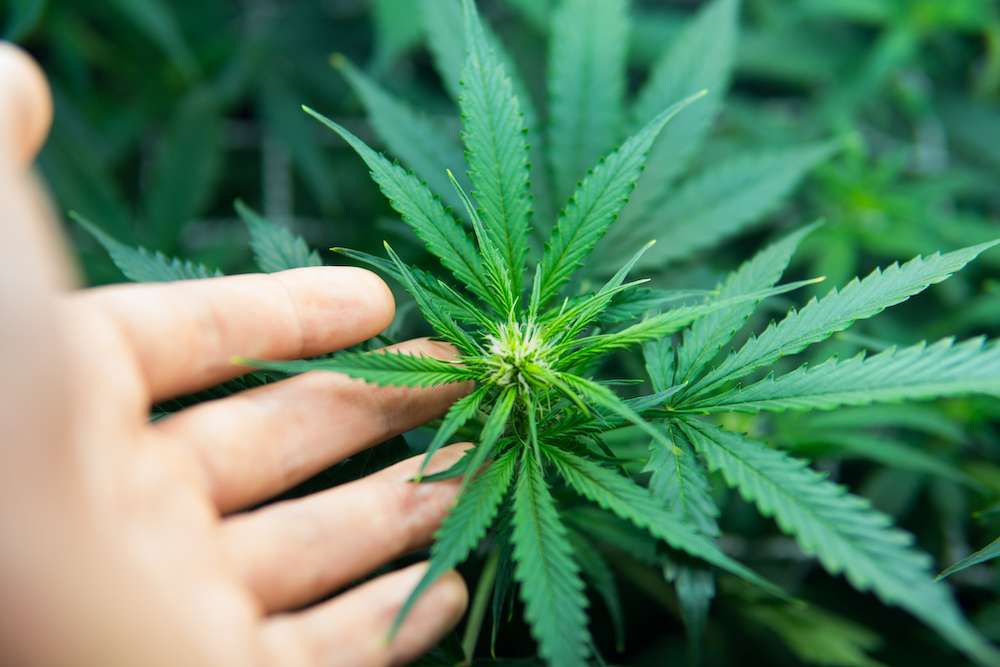
  • Marijuana Licensing Issue May Lead To "Extinction Event" In California

    Marijuana Licensing Issue May Lead To "Extinction Event" In California

    As many as 10,000 growers will reportedly have their temporary licenses expire over the next new month, if a new bill is not passed.

    Confusion and delays in the licensing process for legal cannabis growers in California could be an “extinction event” for the marijuana industry if the legislature does not act to correct it, experts say.

    When recreational marijuana use was approved in California, growers were able to apply for temporary licensing, The Sacramento Bee reports. This was meant to act as a bridge, while growers applied for and met the criteria for a full annual license.  

    However, the state has been incredibly slow to give annual licenses, approving just 56 out of 6,900 applications. This has growers worried, since the deadline to apply for an extension of the temporary license expired at the end of 2018.

    However, a new bill, SB67, would allow growers to apply for an extension until Dec. 31 of this year. 

    “We’ve named these ‘extinction events,’” said K Street Consulting’s Jackie McGowan. The consulting firm represents the marijuana industry in California. “This bill is a bill that the industry is very anxious to see passed.”

    If it does not pass many growers will return to the black market and legal sellers may have to buy their product from the black market, said Sen. Mike McGuire, a Democrat who sponsored the bill. 

    “The bottom line is this: This bill is going to protect thousands of cannabis farmers, in particular, who did the right thing and applied for a state license after the passage of Prop. 64 but their temporary license is about to expire,” he said. 

    McGuire said that as many as 10,000 growers will have their temporary licenses expire over the next new month if the bill is not passed. That could have detrimental effects on the industry, he said. 

    “This is the worst way to transition a multibillion-dollar agricultural crop, which employs thousands of Californians. Without legal licenses, there isn’t a legal, regulated market in California.”

    Terra Carver, who directs a growers’ alliance in the state agreed. 

    “There will be dire consequences such as imminent market collapse of hundreds of businesses in the region and through the state,” Carver said. 

    McGuire said that having passed marijuana legalization, the state is responsible for ensuring the integrity of establishing the legal market. 

    “In a time where the Golden State is working overtime to bring the cannabis industry out of the black market and into the light of a legal regulatory environment we can’t afford to let good actors who want to comply with state law fall out of our regulated market just because timelines are too short and departments have been unable to process applications in time due to the sheer number of applications,” he said. 

    View the original article at thefix.com
  • Justin Bieber Reveals Mental Health Struggles

    Justin Bieber Reveals Mental Health Struggles

    The recently married pop star took to Instagram to get candid about his mental health with fans.

    In an Instagram post on March 10, Justin Bieber told the world that’s he’s experiencing disconnection and feeling “weird.”

    Bieber posted on Instagram that he wanted to update his fans on what he’s been going through. “Been struggling a lot. Just feeling super disconnected and weird. I always bounce back so I’m not worried…just wanted to reach out and ask you guys to pray for me. God is faithful and ur prayers really work thanks.. the most human season I’ve ever been in facing my stuff head on…”

    Teen Vogue reported that the comment section of Instagram shows Justin’s fans came through with prayers and support. One fan shared that they also experience depression, and: “Love you always and I hope you can find a way to feel better and more like yourself again.” Another Belieber (the fond nickname for the pop star’s fans) told the singer, “We all believe in you!”

    Justin has used social media in the past to connect with fans and discuss his mental health. In 2016, he posted that participating in a lot of meet and greets contributed to his depression.

    “The pressure of meeting people’s expectations of what I’m supposed to be is so much for me to handle and a lot on my shoulders,” he wrote at the time. “I end up feeling so drained and filled with so much of other people’s spiritual energy that I end up so drained and unhappy.”

    Justin’s ex-girlfriend Selena Gomez has also struggled publicly with mental health issues. Selena Gomez and Julia Michaels released a song called “Anxiety” that Selena shared was personal to her.

    Justin and those who work for him claim that his current struggles have “nothing to do with Hailey,” but in a recent couple’s interview with Vogue, Hailey and Justin called their marriage “very hard.”

    They discussed the strain of being married so young and their struggle to get over things like their initial breakup, and Justin’s past, faster life with random sex and drugs.

    The Vogue journalist wrote, “It is impossible not to feel, in Justin’s presence, that he is still recovering from something—the fame whose price was his childhood, the mortification of a thousand magnified adolescent peccadilloes, an accumulated uncertainty about the attentions of those in his orbit—and these scars crowd the surface like his innumerable tattoos.”

    View the original article at thefix.com

  • 7 Tips to Help You Find the Right Therapist (and Why You Need One)

    7 Tips to Help You Find the Right Therapist (and Why You Need One)

    It was a therapist who first told me that I wasn’t in therapy because I was bad and out of control, like my mother said; I was in therapy to learn how to deal with having an emotionally unstable mother.

    My mother believes everyone needs therapy. And she’s right, they do. After being around her. Everyone, that is, except her. Don’t be like my mother, requiring the world to change around you. (It won’t.) And don’t be like my Dad either, who tells me I’m overreacting every time I have an emotion. Don’t be like me, either, an asshole exploiting her parents for profit. Wait. 

    Do you need therapy? Probably. Could you benefit from therapy? Definitely. Can you afford therapy? More easily than you think. Many therapists keep sliding scale spots open in their practice, for those who need help but don’t have health insurance or a large income. I found my current gem of a therapist through Open Path Collective, a network of clinicians who offer therapy at a rate of $30 to $60 per session for individuals.

    It was a therapist who first told me that I wasn’t in therapy because I was bad and out of control, like my mother said; I was in therapy to learn how to deal with having an emotionally unstable mother. And I didn’t talk too much and ask too many questions; actually I was curious, the therapist said, and had a lot to say.

    It was a therapist who said: “I can’t see you and your husband at the same time, the relationship is too damaged and he just shuts down and threatens to end it.” The same therapist asked “Are you drinking every single night?” And, “Have you tried AA?” And when I couldn’t get myself to stop or go to AA, she found a rehab, called my parents, and helped make all the arrangements from her office.

    It hasn’t been all Aha! moments and cleansing cries on couches though. I’ve had a couple of negative experiences. None, however, were as negative as the summer I tried to therapize myself on my own with just books. That experiment ended with me smoking crack for the first time, shooting up heroin while smoking crack (neither of those were my thing, but that summer!), and my first DUI.

    Maybe you’re surviving – but you could be thriving. 

    It might be helpful to look for a therapist who specializes in addiction or whatever you believe your specific issues are, but it’s not necessary. Your intuition is your greatest asset in your search. If you don’t like your therapist, leave and find another one. Repeat until you have the seven experiences I describe below.

    1. Your emotions are validated.

    Therapy helps you accept that your emotions are valid, something our culture certainly doesn’t want you to do. Allowing yourself to feel your feelings is an underrated gift. Your emotions may seem out of proportion to the event that caused them, and that’s okay. You learn that they are actually a response triggered by the event to a deeper, older wound. You will learn, as the poet Rumi said, to “meet them at the door laughing and invite them in.”

    2. You get to talk about anything you want.

    This is one of the most exciting things with a trusted therapist, thinking what would I like to discuss today? The toxic friendship I want to find the courage to give up; that awful conversation with my dad; or do I want to recount everything that happened this week? It’s all up to you! You can plan it in advance, and you don’t even have to stick to the plan, you can talk about whatever comes up! Where else do you have this kind of freedom, where you don’t have to dance around sensitive issues, where there is no fear of being judged that isn’t your own projection, where you are safe, completely safe, to talk about the most trivial and most traumatizing of issues? What joy! The time is truly yours.

    3. You don’t have to caretake or worry about anyone else’s thoughts or feelings.

    If you aren’t worried about your friend’s thoughts and feelings at all and constantly dump your problems on them, quit being an asshole. That isn’t their job, even if they think it is. The only thing addicts are better at finding than their drug is codependents. Your therapist is one of only people in the world with whom you don’t have this burden. This doesn’t mean you should abuse them, just that you don’t have to worry if they are sick of hearing about your dumb boyfriend again. 

    4. Unconditional presence.

    Therapists are masters at the art of holding space. They are fully with you as you explore the pains and confusions of life. You are never too much, never unacceptable. You just are. We live in a culture that doesn’t teach anything unconditional, least of all love and presence. People have to learn how to do it. Your therapist knows how, and it is their job to provide this for you. Your therapist isn’t invested in pushing the journey to a certain place for their own benefit. They are just there to walk with you along the way. My therapist held that space and accepted me until I could learn to accept myself. When I beat myself up after another relapse, she didn’t join in. Her unconditional presence and nonjudgmental interest helped me to finally break that pattern.

    5. You’re given the space to work out your problems on your own.

    Therapists aren’t there to solve your problems for you. They are impartial witnesses, bringing a gentle, open, and noncritical attitude to your experience. It’s the exact opposite of my childhood. I can tell you from experience that nothing feels better than figuring out a problem on your own, with someone with no skin in the game standing by as a witness, someone who only wants to see you do well and who isn’t going to scold you when you fall (but will encourage you to explore why).

    6. They notice, and can help point out your patterns.

    After I stopped obsessing about a man who treated me carelessly, my therapist pointed out that I had a pattern of acting as if sex was all I had to offer and offering it to people who didn’t deserve it. I remember the moment because she said it so gently, as a question, and then she paused. She knew to bring it up only after I had described a scenario which shown I had grown in self-love and respect. It blows my mind how she is able to hold back until the moment is right. I had a previous therapist who I never let get a single word in, and when I finally asked after a year, “What do you think?” She said, “I thought you’d never ask!” She told me that she had been planning to bring it up soon, but that she sensed that it was going to take what it took for me to learn to trust her.

    7. Safety.

    Before we can change anything, we first need to get to a place of safety. I breathe a huge sigh of relief every time I walk into my therapist’s office. There is nothing more important than feeling safe. And it is so rare in this world, in this time. To paraphrase the great Eddie Pepitone, “It’s a sign that a society is falling apart when murder is entertainment, though the Ted Bundy special was very good.” I can’t think of anyone I know who hasn’t had their car broken into, or their body broken into, or their mind hijacked by the needs of another who didn’t see them as real. Therapy is a true safe space. And in therapy, you can learn to create safe space within yourself, which is something nobody can take from you. 

    In conclusion, get a therapist. I mean it. What are you waiting for? Give your friends a break. Learn to see your parents as flawed humans who did the best they could. Lean on your sponsor for no more and no less than they can handle. Get. A. Therapist. You don’t have to stay stuck anymore, you don’t have to keep hurting yourself with a million tiny infractions. Help yourself. Allow yourself to be helped.

    I love you. Especially the nastiest among you. You need it the most. Leave your excuses in the comments.

    View the original article at thefix.com

  • What Is Drunkorexia?

    What Is Drunkorexia?

    Experts discuss the relatively new disorder and the way it affects the body and mind.

    Eating disorders and substance use disorders are overlapping more often, according to registered dietitian and author Cara Rosenbloom. 

    What Rosenbloom is referring to is “drunkorexia”—when an individual, often female, does not eat all day or eats very little leading up to an evening of consuming alcohol. They may also exercise aggressively or purge before drinking alcohol. 

    “Drunkorexia addresses the need to be the life of the party while staying extremely thin, pointing to a flawed mindset about body image and alcoholism among college students, mostly women,” Rosenbloom writes in the Washington Post

    Drinking in this manner is dangerous, particularly because the lack of food in the stomach means a faster absorption of alcohol. According to Tavis Glassman, professor of health education and public health at the University of Toledo in Ohio, this can lead to more issues. 

    “With nothing in her system, alcohol hits quickly, and that brings up the same issues as with any high-risk drinking: getting home safely, sexual assault, unintentional injury, fights, blackouts, hangovers that affect class attendance and grades, and possibly ending up in emergency because the alcohol hits so hard,” he tells Rosenbloom.

    Drunkorexia may also lead to nutrient deficiencies such as calcium, B-vitamins, magnesium, fiber and protein, registered dietitian Ginger Hultin says. 

    “Alcohol can negatively affect the liver or gastrointestinal system, it can interfere with sleep, lower the immune system and is linked to several types of cancers,” Hultin tells Rosenbloom.

    Because drunkorexia is a fairly new disorder, our knowledge of the disorder is limited, while the existing research varies widely. 

    Glassman, along with others in the field, is hoping to have drunkorexia added as a legitimate diagnosis in the Diagnostic and Statistical Manual of Mental Disorders. They hope that doing so could establish some guidelines for professionals to identify the disorder, Rosenbloom writes.

    The addition to the DSM would also increase likelihood of insurance coverage for those who may need treatment.  

    Glassman and colleagues are working to combat the issue at the University of Toledo by bringing more awareness to healthy body image and decreasing body shaming.

    “We try to emphasize that the human body comes in different shapes and sizes, and remind students that when they look at the media, with computer enhancement and airbrushing, even the model may not really look like a model,” Glassman tells Rosenbloom. “We remind students to value people based on things besides their appearance.”

    Hultin adds, “If students see friends engaging in this type of behavior, they can intervene and encourage different choices or offer support or resources to address a potential problematic relationship with alcohol and/or food.” 

    View the original article at thefix.com

  • Could Vaping Lead To Heart Attacks, Depression?

    Could Vaping Lead To Heart Attacks, Depression?

    The jury is still out on whether e-cigs are safer than cigarettes—but mounting evidence shows that vaping comes with its own health concerns.

    People who use e-cigarettes may be uninformed about the potential risks of vaping—though it is often portrayed as being a “safer” alternative to smoking traditional cigarettes.

    Health officials worry that young people are using e-cigarettes at rising rates. As a result, the Food and Drug Administration (FDA) has established tough regulations on vaping.

    Now, a hard-hitting new study on e-cigarettes—the “largest-ever study conducted” on the effects of vaping—claims that people who vape are more likely to suffer heart attacks, coronary artery disease and depression.

    Researcher Mohinder Vindhyal, an assistant professor at the University of Kansas School of Medicine Wichita, told Science Daily, “Until now, little has been known about cardiovascular events relative to e-cigarette use. These data are a real wake-up call and should prompt more action and awareness about the dangers of e-cigarettes.”

    According to Vindhyal’s findings, adults that indulge in vaping can be 56% more likely to have a heart attack, and 30% of them are more likely to have a stroke than people who don’t use tobacco products. Similarly, people who vape are also 55% more likely to have depression and/or anxiety than people who don’t use e-cigarettes.

    Vindhyal added, “When the risk of heart attack increases by as much as 55% among e-cigarette users compared to nonsmokers, I wouldn’t want any of my patients nor my family members to vape. When we dug deeper, we found that regardless of how frequently someone uses e-cigarettes, daily or just on some days, they are still more likely to have a heart attack or coronary artery disease.”

    Some look to vaping as a way to wean off of cigarettes—but while e-cigarettes are considered less dangerous than smoking tobacco, “that doesn’t mean that vaping is safe,” Vindhyal says.

    This study gathered information from over 96,000 respondents from the Centers for Disease Control and Prevention’s National Health Interview Survey over a period of several years.

    Vindhyal will present his research findings at the American College of Cardiology’s 68th Annual Scientific Session, which will be held in New Orleans on March 16.

    View the original article at thefix.com

  • Can Binge Drinking Alter DNA?

    Can Binge Drinking Alter DNA?

    For a new study, scientists investigated whether heavy drinkers experienced genetic changes due to their alcohol consumption.

    Researchers have determined that binge drinking may alter a person’s genetic makeup and result in an even greater desire to consume alcohol.

    A recent study suggested that two genes that help to control drinking behavior become altered, and as a result, have different responses in individuals who classify as binge or heavy drinkers.

    The study appears to underscore the notion that genetics play a more significant role in alcohol and drug dependency, as well as the possibility for scientists to determine a predisposition for addiction.

    The study, conducted by researchers from Rutgers University and Yale University and published in the journal Alcoholism: Clinical and Experimental Research, focused specifically on genetic responses produced in binge or heavy drinkers—which according to the Centers for Disease Control and Prevention (CDC) are defined as men who consume five or more alcoholic beverages in a two-hour period, and women who consume four or more in the same period, resulting in a blood alcohol concentration of 0.08% or above, at least four times per month. 

    The two genes at the center of the study are PER2 and POMC, both of which are involved in the regulation of drinking behavior. PER2 plays a role in the body’s biological clock, while POMC regulates the stress response system, according to a press release from Rutgers.

    In binge drinkers, both genes were found to exhibit a change caused by alcohol called methylation, which employs a chemical tag that retains the DNA sequence of the gene but also retains the ability to turn those genes on or off.

    As the Philadelphia Inquirer noted, environmental stressors like drugs or alcohol, but also emotional stress, can cause methylation in different genes.

    To support the notion of genetic change due to alcohol, groups of test subjects—differentiated by their level of drinking (moderate, heavy and binge)—were shown stress-related, neutral or alcohol-related images, as well as containers of beer, and were allowed to taste beer while their motivation to drink was evaluated.

    The researchers found that binge and heavy drinkers who exhibited signs of genetic change also showed an increased desire to consume alcohol.

    Though the exact impact of the DNA change will require additional research, the study authors believe that focusing on genetic alteration will lead to the discovery of a biomarker, or genetic indicator, that can determine if a person is more likely to develop an alcohol or drug dependency.

    “That’s always been the hope of all mental illness,” said Bill Jangro, medical director for the division of substance abuse programs at Thomas Jefferson Hospital, to the Inquirer. “That we would find a medical cause that is somehow reversible.”

    View the original article at thefix.com

  • Mobile Recovery Clinic Provides Vivitrol To Those With Opioid Addiction

    Mobile Recovery Clinic Provides Vivitrol To Those With Opioid Addiction

    The clinic is the brainchild of a registered nurse who has been sober for 13 years. 

    For many who are living with addiction, it can be difficult to get access to help, and in some rural areas, it can require extensive traveling. Now, a mobile recovery clinic travels to these people who need help.

    As CNN reports, the company behind the roving clinic—Positive Recovery Solutions—has been traveling throughout Pennsylvania in an RV, helping and treating people suffering from opioid addiction. According to the U.S. Drug Enforcement Administration, overdose deaths in Pennsylvania have gone up 65% from 2015 and 2017.

    In 2017 alone, there were 5,456 overdose deaths in the state, or 43 overdoses for every 100,000 people.

    Positive Recovery Solutions was created by a woman named Amanda Cope, who is recovering from alcoholism. She told CNN, “I ended up being 27 years old, drinking two fifths of vodka a day to not be sick.”

    Cope hit bottom when she had a blackout seizure in a bar, and she finally went into rehab at the age of 28. “Once I got there, I realized how sick I was,” she continues. “My denial was thick.”

    Having the right nurse taking care of her made all the difference. “That was the first time that somebody saw me for what I was and showed me compassion and empathy… I said, ‘I’m going to be that for someone one day.’”

    Cope is now a registered nurse herself, and has been sober for 13 years. She founded Positive Recovery Solutions with her cousins, who also battled opioid addiction.

    Cope was aware that some of her patients had to travel far to get help, which is one of the reasons why she started the company.

    Patients make their way to Positive Recovery Solutions through referrals, and they use Vivitrol in their treatment program. Cope feels that the recovery process “comes from the behavioral health piece. The medication is meant, by our philosophy, to be a safety net… This safety net will keep this patient craving-free while they do the work of recovery, which is developing healthy coping mechanisms, changing behavior patterns and changing people, places and things.”

    Stuart Masula, who was addicted to painkillers and got clean with the help of Vivitrol, is now driving for Positive Recovery Solutions.

    As he told CNN, “I literally probably have the best job you could ever have. I get to go to work and see people who are trying to change their lives every single day for the better.”

    View the original article at thefix.com

  • Doctor Sentenced To Life In Prison For Patient's Opioid Death

    Doctor Sentenced To Life In Prison For Patient's Opioid Death

    The judge presiding over the trial said that the doctor had an established record of unscrupulous prescribing practices. 

    A Kansas doctor will spend the rest of his life behind bars after he was found guilty of writing prescriptions that led to the death of a man in 2015. 

    “I want this case to send a message to physicians and the health care community,” U.S. Attorney Stephen McAllister said in a news release. “Unlawfully distributing opioids and other controlled substances is a federal crime that could end a medical career and send an offender to prison.”

    Steven R. Henson tried in federal court and found guilty of conspiracy to distribute prescription drugs outside the course of medical practice and unlawfully distributing oxycodone, methadone and alprazolam, the use of which resulted in the death of a victim.

    He was also found guilty of presenting false patient records to investigators, obstruction of justice and money laundering.

    According to KOAM News Now, Henson wrote prescriptions to patients who paid him. He would ask if they were in pain and they would answer “yes,” but he didn’t ask any other questions or perform an exam. 

    In July 2015, one of Henson’s patients, Nick McGovern, overdosed on alprazolam and methadone that had been prescribed by Henson. The judge presiding over the trial said that Henson had an established record of unscrupulous prescribing practices. 

    “The defendant kept no medical records, performed no physical examinations or physical tests, gave massive amounts of opioids to patients with little demonstrated need, wrote unneeded, non-controlled prescriptions in order to defeat pharmacy limits on controlled substances, and knew that patients were traveling improbably long distances to receive opioids,” U.S. District Judge J. Thomas Marten wrote. “There was ample evidence that Henson was prescribing opioid medications in amounts likely to lead to addiction, and in amounts so expensive that the patients would likely be forced by economic circumstances to support their addiction by selling some of the drugs to others.”

    McAllister said that prosecuting doctors who abuse their ability write prescriptions is an important part of confronting the opioid epidemic. 

    “The prosecution of cases involving a health professional’s misuse of medical expertise and authority is extremely important to fight the opioid epidemic,” he said. “The vast majority of health care providers are people of integrity who follow their oath to help others, abide by the law, and do all they can to protect patients from becoming addicted. The evidence showed that is not what Dr. Henson did in this case.”

    KOAM reported that there was a gasp in the courtroom when the sentence was announced. Henson maintained his innocence. 

    “I only had one goal in life as a physician and that is to take excellent care of patients and increase functionality,” he said in a statement in court. 

    View the original article at thefix.com

  • Five Finger Death Punch's Ivan Moody Is One Year Sober

    Five Finger Death Punch's Ivan Moody Is One Year Sober

    “I’m speechless man. A lot of people didn’t think I’d make it 24 hours. To be honest with you there were times I didn’t either,” Moody said.

    Ivan Moody, the lead singer in the rock band Five Finger Death Punch, celebrated one year of sobriety over the weekend, according to his bandmate. 

    “I’m speechless man,” Moody said in an emotional Instagram video. “A lot of people didn’t think I’d make it 24 hours. To be honest with you there were times I didn’t either.” 

    He took time to acknowledge the people who are fighting to stay sober. 

    “I’m with you every step of the way, whether you have 24 hours or 24 years,” he said. “Keep the fight man.” 

    Chris Kael, the group’s bassist, recently achieved his own year of sobriety, and he took to Instagram to help acknowledge Moody’s accomplishment. 

    “Join me in celebrating @ivanmoody today on his One Year Sober Birthday! Roughly 75 percent of those who start the path to sobriety don’t make it a full year,” he wrote. “I’ve seen firsthand the work that Ivan has done through 365 consecutive days to get himself to this HUGE milestone. I’ve seen the amazing, positive changes in him over this past year that have gotten closer and closer to the man we all knew he could be. I’m proud of you, my friend. As are countless people you have inspired along the way. Keep that shit up! #ShitYesSon #SoberAsFuck #PresentAsFuck #IvanAsFuck”

    Moody had tried to get sober before, but always found himself relapsing, according to Blabbermouth

    “Recovery, you have to be committed; it’s an honest program, and I wasn’t being honest with myself at the time. I’m very, very proud of the progress I’ve made,” Moody said on a radio appearance last September. 

    Moody said that he could count on fellow sober rockers when he needed fellowship. 

    “Rob Halford [of Judas Priest] is the person that I called a lot of the time when I was in recovery,” he said. “I think he’s been sober now for going on 40 years — maybe, I think, a little longer than that; I could be wrong. But Jamey Jasta [of Hatebreed] — another one. Jamey’s been sober now for 18 years; Jonathan Davis [of Korn]; so on and so forth. So these were all people that I looked to when I was struggling, and I was very, very lucky and blessed to have them on my team.”

    Moody nearly died from alcohol at one point, and he said that since he’s been sober it’s like he’s living a new life. 

    He said, “I feel I took a nap for about four years and I woke up one day and I saw somebody else wearing my skin. It was like Rip Van Winkle; it was really odd. I feel better than I felt in years, which is really… it’s a plus.”

    In addition to Moody and Kael, Five Finger Death Punch’s former drummer Jeremy Spencer is also sober. 

    View the original article at thefix.com

  • Should Your Mental Health Determine How Your Pain Is Treated?

    Should Your Mental Health Determine How Your Pain Is Treated?

    Patients with a mental health condition might have a hard time accessing opioids for pain relief, while patients with unexplained pain are often referred to psychiatric care, which does little to alleviate their symptoms. Finding treatment can be frustrating and humiliating.

    Four years ago, Dez Nelson’s pain management clinic demanded that she complete a visit with a psychologist. Nelson was surprised, since she had no history of mental illness, but she didn’t feel that she could push back on the request.

    “Of course I said okay — I didn’t want to lose my treatment,” Nelson told The Fix. “I was not happy about it, but I did it.”

    Nelson, 38, went to the appointment and had a mixed experience with the psychologist. She hasn’t been back since and the pain clinic hasn’t asked her to visit a psychologist again. Still, Nelson said that the experience highlighted — yet again — the discrimination pain patients face.

    “It was a condition of my continued care,” she said. “It seemed like they’re bringing it up in a beneficial light, as part of a multi-pronged approach to pain care. But I don’t think [mental health treatment] should be forced on a patient who doesn’t think they need it.”

    Chronic pain and mental illness are among the most stigmatized conditions in modern medicine. The conditions frequently intersect and change the way that patients are cared for and treated. Patients who have a mental illness might have a hard time accessing opioids for pain relief, while patients with unexplained pain are often referred to psychiatric care, which does little to alleviate their physical symptoms. At the same time, research suggests there is a strong connection between mental health and pain: depression can cause painful physical symptoms, while living with chronic pain can cause people to become depressed.

    All of this makes treating chronic pain and mental illness complex and frustrating for doctors and patients alike.

    A Mental Health Diagnosis Affects the Way Your Doctor Treats You

    Elizabeth* is a professor in her mid-thirties who had undiagnosed Lyme disease for eight years. Her Lyme contributed to the development of an autoimmune disease that has led to widespread inflammatory and nerve pain throughout her body. Elizabeth also has bipolar disorder. Despite the fact that she has been stable on medication for a decade, her mental health diagnosis complicates her pain treatment.

    “Doctors’ demeanor changes when I tell them my medications. When I say I have bipolar disorder, it’s a whole different ballpark. To them that’s clearly a risk factor and red flag for drug abuse,” Elizabeth said.

    Opioids are one of the only treatments Elizabeth has found that works to alleviate her pain. But she also takes benzodiazepines on an as-needed basis to control her anxiety (usually once a week). Even though Elizabeth is well aware of the risk of combining the two medications and knows better than to take the two pills together, doctors refuse to prescribe both. They don’t seem to trust her not to abuse them.

    “I could tell them that I wouldn’t take them together. But that’s not a valid choice,” Elizabeth said.

    While doctors were extremely cautious about this drug interaction, they didn’t focus on another drug-related risk: medications that are used to treat nerve pain can cause adverse reactions in patients with bipolar disorder. No one warned Elizabeth of this danger, and she ended up being hospitalized for psychosis after a long stretch of stability.

    “The doctors didn’t talk about it because it’s just a side effect, not a liability concern,” she said.

    On the flip-side, Elizabeth has experienced psychiatric providers who were skeptical of her pain diagnosis.

    “They wrote in my chart that I had a delusion that I had Lyme disease,” she said.

    The Intersection of Pain and Mental Illness

    Treating patients with pain and mental illness is complicated because both conditions rely on patient reports rather than objective tests for a diagnosis and to create or adjust a treatment plan.

    “Pain is a subjective symptom of the people feeling it. There is no way to measure it,” said Dr. Medhat Mikhael, a pain management specialist and medical director of the non-operative program at the Spine Health Center at Memorial Care Orange Coast Medical Center in Fountain Valley, California

    Pain and mental illness can exacerbate each other. In addition, medications for the conditions can interact in rare and serious ways, like what Elizabeth experienced. Finally — and at the forefront for many pain specialists — is the fact that many people with mental health conditions also develop substance use disorders and treating them with highly-addictive opioids can be dangerous. 

    “We address these issues with patients head on, explain that staying on these medications is very risky for them,” Mikhael said.

    Mikhael said that there’s a reason doctors ask patients so frequently about their mental health and substance abuse history. While some patients find that exhausting and repetitive, Mikhael feels it is his responsibility to be constantly evaluating the risk and benefits of using pain medications for people more susceptible to substance misuse or addiction.

    “I have to give them the benefits of the doubt, particularly if the history does not show they’re going doctor shopping. I have to trust them and I have to help them,” he said. “But trust has limits. I can’t say I trust the patient and let go.”

    My Body Is in Pain, I Do Not Need Psychiatric Care

    As the medical community grapples with how to manage pain in light of the opioid epidemic, there is an increased focus on holistic approaches to pain management. Nelson, however, believes this can be harmful to patients who need the pain-relieving power of opioids.

    “They’re trying to turn into bio-psycho-social model, and there are people with real diseases who are dying,” Nelson said. “My pain has nothing to do with my psyche. It has to do with the fact that my body is sick.”

    Before she was diagnosed with arthritis, emphysema and hemiplegic migraines, Nelson was often sent to psychiatric care when she arrived at the emergency room in pain. She had one provider tell her that facial paralysis — later found to be a symptom of her migraines — was psychogenic.

    “Instead of doing their jobs and investigating the physiological issues, they jumped right to the psychological,” she said, pointing to the long history of doctors believing that women’s pain was not real. Eventually, these experiences began to take a toll on Nelson.

    “There was a time when I began to question my own sanity. I thought ‘maybe they’re right, maybe this is just in my head.’”

    Untreated Pain Is Like a “Time Bomb.”

    Both Nelson and Elizabeth have been able to advocate for themselves. While they’ve still struggled with the medical community, they’re been able to improve their care. Yet many people with chronic pain and mental illness don’t have the ability to advocate for themselves in this way.

    “I’ve had a lot of education, so I feel comfortable and confident talking to a doctor,” Elizabeth said. She also has the money to be able to travel to a pain clinic and the support of a spouse and therapist.

    “I have a lot of these privileges that a lot of people don’t have,” she said. “I’m grateful for that, but I shouldn’t have to be. It should be ordinary.”

    Elizabeth often thinks about patients who have uncontrolled or treatment-resistant mental illness, and how that might affect their access to pain relief.

    “Should they just not get pain management because they’re not well with their mental illness? Of course not.”

    Having in-depth conversations, sharing information between different specialists, and providing community support could all help improve outcomes for people dealing with chronic pain and mental health conditions, she said.

    “People need help, not a punitive approach of taking [pain management] away,” she said. “Energy should be put into safe approach to dealing with pain. You can’t ignore it — it’s like a time bomb.”

    View the original article at thefix.com